
Introduction
Coffee is more than just a beverage; it’s a booming industry that connects farmers, roasters, and consumers around the globe. For business owners in the coffee industry, understanding the crucial steps involved in harvesting coffee beans is essential not only for quality control but also for maximizing profitability. The harvest period, often a race against time, requires careful planning and execution to ensure that the beans are picked at their optimal ripeness and prepared for sale. By mastering this process, coffee entrepreneurs can enhance the flavor profiles of their products, thereby captivating customers and fostering loyalty. This article aims to guide business owners through the essential aspects of harvesting coffee beans- from identifying the right picking methods to the significance of sustainable practices. In doing so, we hope to equip you with the knowledge necessary to thrive in this competitive market. Learn more about sustainable coffee sourcing and its impact on consumer preferences.
Coffee Harvesting Process
The coffee harvesting process is a critical stage in the coffee production cycle, involving meticulous methods to ensure quality and yield. The primary methods used in the industry include selective picking, strip picking, and mechanical harvesting.
Selective Picking
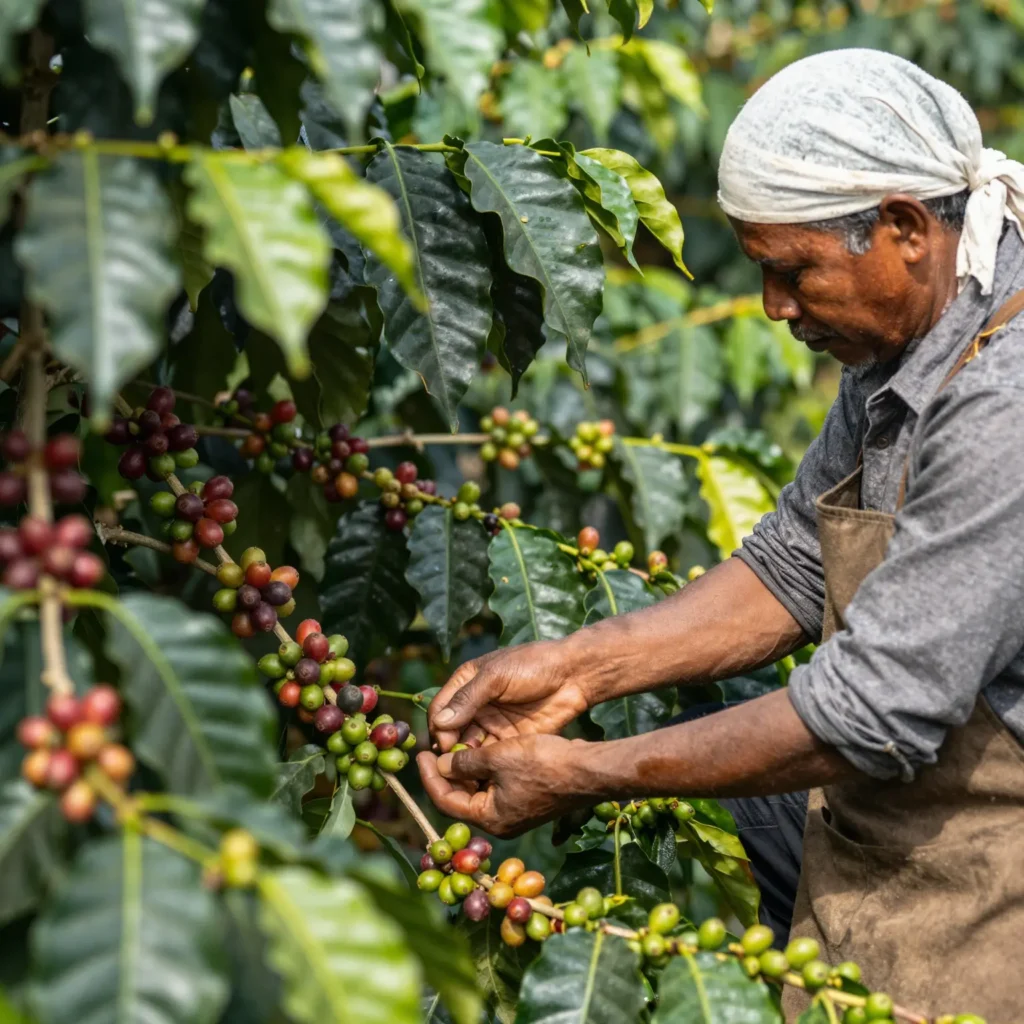
In selective picking, workers hand-pick only the ripe cherries, carefully leaving the unripe ones on the tree. This method, though labor-intensive, is known for preserving the quality of the coffee since only the best cherries are collected. Business owners can enhance efficiency by training pickers to identify ripe fruit accurately and scheduling harvests to coincide with peak ripeness. Maintaining the health of coffee plants also leads to better production outcomes, making this approach ideal for high-quality specialty coffee.
Strip Picking
In contrast, strip picking is the practice of stripping all cherries from the branch, irrespective of their ripeness. This method is much faster than selective picking; however, it can adversely affect coffee quality. To optimize operations with strip picking, business owners should time their harvests to match periods where the majority of the cherries are mature. Additionally, improving post-harvest sorting processes can help mitigate the risks associated with lower-quality cherries being collected.
Mechanical Harvesting
Mechanical harvesting employs machines to shake cherries from the trees. While this method is highly efficient, particularly for larger farms, it may lead to lower quality if not executed correctly. Business owners should invest in regular maintenance of harvesting machinery and ensure that their machines are calibrated for selective harvesting whenever possible. Training staff on the effective operation and handling of machinery can also prevent damage to both equipment and coffee plants.
For a visual comparison of these methods, check the chart below.
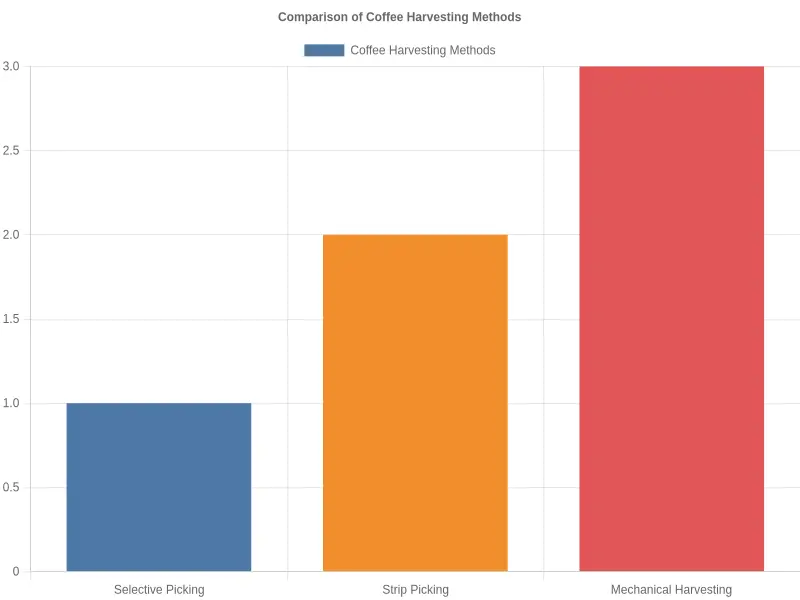
Following these insights, coffee producers can explore methods that best fit their operation scale and quality objectives, contributing positively to their overall profitability. By implementing tailored strategies for each harvesting method, business owners can effectively optimize their processes for better production outcomes.
For more information on operational strategies in the coffee industry, consider reading about effective ways to manage coffee processing and tools for coffee business success.
Coffee bean harvesting methods significantly affect quality, cost, and efficiency-a crucial consideration for business owners in the coffee industry. Here’s a comparison of manual versus mechanical harvesting:
Advantages of Manual Harvesting:
- Quality Control: Skilled workers can selectively pick only ripe coffee cherries, enhancing the overall quality of the coffee produced.
- Adaptable to Terrain: Manual harvesting is more effective in uneven terrains or densely planted fields where machinery cannot operate efficiently.
- Job Creation: Provides employment opportunities within local communities, supporting the economy and promoting social sustainability.
Advantages of Mechanical Harvesting:
- Cost Efficiency: Reduces labor costs considerably; estimated costs range from $0.30 to $1.00 per kilogram when optimized, compared to manual harvesting which can range from $0.50 to $2.00 per kilogram.
- Increased Productivity: Machinery allows for the quick harvesting of coffee over large areas, significantly reducing the time needed for collection compared to manual methods.
- Scalability: Ideal for large-scale farming operations where rapid harvesting is necessary, reducing the risk of fruit overripening or spoilage.
Conclusion:
Choosing between manual and mechanical harvesting depends on factors such as land size, terrain, and desired coffee quality. While manual harvesting is beneficial for premium quality and challenging terrains, mechanical harvesting stands out in efficiency and scalability. For a thorough understanding of the dynamics in occupational therapy’s role in various sectors, you might also want to learn more about job support in diverse fields and consider how these methods directly correlate with business productivity.
Comparing Coffee Bean Harvesting Methods
The method of harvesting coffee beans significantly impacts the costs, efficiency, and quality of the final product. Below is a table comparing the three primary harvesting methods: manual, mechanical, and selective harvesting.
| Harvesting Method | Cost | Efficiency | Quality |
|---|---|---|---|
| Manual | Higher due to labor costs | Lower; slower pace of picking | Higher; only ripe cherries selected |
| Mechanical | Lower operational in the long run, but high initial investment | Higher; can cover vast areas quickly | Variable; may include unripe cherries |
| Selective | Moderate to high; requires frequent picks | Moderate; depends on the method used | Highest; only the best cherries are picked |
Key Insights:
- Manual Harvesting: While it has higher costs due to labor, it yields superior quality beans since only ripe cherries are picked. It’s also beneficial for uneven terrains and less damaging to the environment.
- Mechanical Harvesting: Faster and more efficient at a lower operational cost over time, but often compromises the quality due to the inclusion of unripe cherries.
- Selective Harvesting: Although it may lead to higher initial costs and labor efforts, it greatly enhances quality and is preferred in specialty markets.
The choice of harvesting method should align with business goals, desired coffee quality, and operational budget.
Global Coffee Production Overview
Coffee is one of the most popular beverages worldwide, with an estimated annual consumption of over 10 million tons. As of 2023, global coffee production continues to be influenced by various factors. Major coffee-producing countries, including Brazil, Colombia, and Vietnam, have faced challenges that have impacted overall yield:
- Production Fluctuations: Brazil, the largest producer, has experienced both droughts and excessive rains which have disrupted harvest cycles, contributing to fluctuations in production levels from year to year. For example, production levels face potential declines of up to 20% in certain regions due to adverse weather conditions.
Climate Change Impacts
Climate change is significantly reshaping the coffee landscape:
- Temperature Increases: Coffee plants thrive in specific temperature ranges. With average global temperatures rising, many traditional growing regions are becoming less viable. It is predicted that by 2050, suitable coffee-growing areas may decline by as much as 50%, forcing producers to rethink where coffee can be planted.
- Altered Rainfall Patterns: Changes in rainfall patterns can instigate droughts or flooding, both detrimental to coffee crops. For instance, El Niño and La Niña weather patterns have caused significant variations in rainfall, affecting harvest quality and quantity.
- Pest Proliferation: Warmer conditions encourage pests and diseases that can devastate coffee crops. A notable example includes the coffee borer beetle, which thrives in warmer climates.
Labor Challenges
Labor practices in the coffee industry remain a critical concern, particularly in the face of climate change:
- Working Conditions: Farmers and laborers often work in extreme weather conditions influenced by climate change, posing health risks and reducing productivity.
- Wages and Labor shortages: Many regions are experiencing a shortage of labor due to economic pressures. The coffee sector relies heavily on migrant labor, which becomes increasingly precarious in economically strained environments.
- Vulnerable Communities: Approximately 125 million people globally depend on coffee cultivation for their livelihoods. Labor conditions are often poor, with insufficient support systems to help farmers adapt to climate impacts.
Conclusion
For business owners in the coffee industry, staying informed about these challenges is vital. Investing in sustainable practices and exploring new cultivation techniques that are resilient to climate change can help mitigate these risks. Understanding the labor market dynamics is also crucial to ensuring that the coffee supply chain remains robust amidst these changes.
For more in-depth insights into cultivating and harvesting coffee sustainably, learn more about effective techniques and the broader impacts on mental health in the labor sector.
This summary reflects key statistics and trends that are vital for strategic planning in the coffee business, highlighting the need for adaptability and resilience in the face of ongoing environmental changes.

Expert Tips for Effective Coffee Harvesting Strategies
Harvesting coffee effectively is crucial for maximizing yield and ensuring the best quality beans. Here are five expert tips designed for business owners looking to enhance their coffee harvesting strategies:
1. Understand Seasonal Timing
Coffee cherries ripen at different times depending on the climate and geographical location.
- Mid-Season Focus: Aim to harvest at the peak of the season when cherries are fully ripe. This is typically when the highest quality beans can be obtained, as noted in resources like The Captain’s Coffee.
- Weather Considerations: Monitor local weather patterns; harvest during the dry season for optimal picking conditions. Cherries harvested in wet weather can lead to lower-quality beans due to the increased risk of fermentation.
2. Employ Selective Picking
To ensure that only ripe cherries are harvested:
- Train Workers Appropriately: Educate your labor force to identify perfectly ripe cherries, which are usually brighter in color and firm to touch.
- Pick Regularly: Conduct multiple harvest rounds as cherries ripen at different times, maximizing the quality of your harvest.
3. Manage Labor Efficiently
Effective labor management can significantly impact the success of your harvesting process:
- Schedule Wisely: Organize labor schedules around peak harvest periods, ensuring that sufficient workers are available during the busiest times.
- Incentives for Quality: Consider implementing performance-based incentives to encourage efficient and quality-focused picking, thus creating motivation among your workforce.
4. Invest in Technology
Leverage technological advancements to enhance the harvesting process:
- Use Harvesting Tools: Invest in tools that make the harvesting process quicker and easier, such as portable coffee harvesting machines or even apps that track the ripeness of coffee cherries.
- Monitor Conditions: Use sensors and data analytics to monitor weather and soil conditions, which can inform your harvest timing and technique adaptations.
5. Post-Harvest Handling
Quality control extends beyond the field:
- Immediate Processing: Process your cherries as soon as they are picked to reduce the risk of spoilage and fermentation.
- Quality Control Checks: Implement stringent quality checks post-harvest to ensure only the best beans are processed for sale, which can help in achieving a higher price in the market.
With these strategies, business owners can optimize their coffee harvesting processes, ensuring not just a bountiful yield but also high-quality beans that can contribute to their brand’s reputation. For more detailed insights on coffee farming, consider exploring Java City’s discussion on coffee harvest seasons.
Coffee Production Trends Over the Last Decade
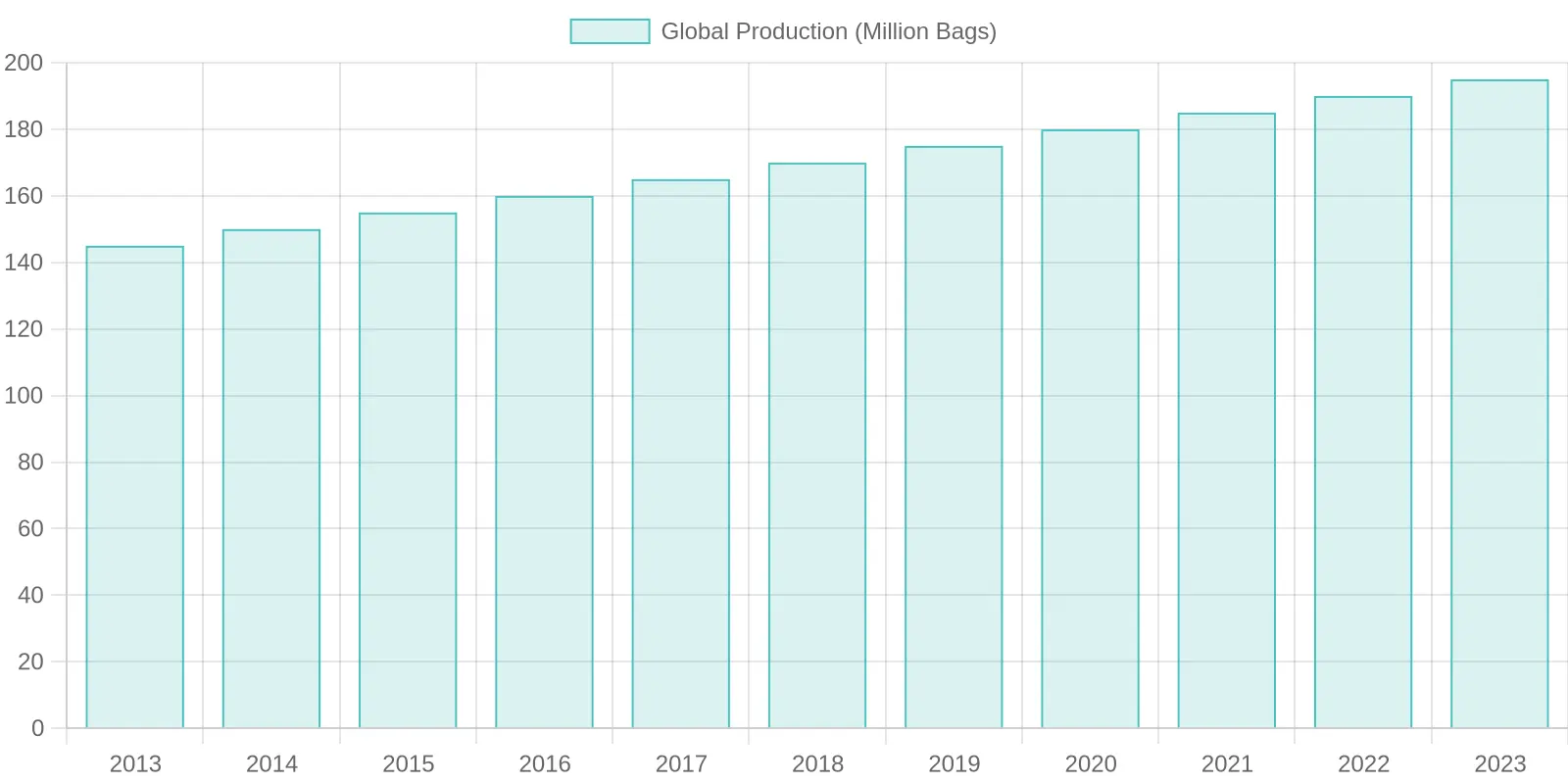
The coffee industry has seen significant fluctuations in production over the last decade, influenced by factors like climatic changes and market demands. Here’s an overview highlighting coffee production trends from 2013 to 2023:
Key Insights:
- Overall Growth: Global coffee production has shown a steady increase from about 145 million bags in 2013 to approximately 195 million bags in 2023.
- Top Producers: Brazil consistently leads in production, followed by Vietnam and Colombia. This trend underscores the importance of these countries in meeting global coffee demand.
- Climatic Impact: Climate change has posed challenges to coffee producers, affecting yields and pushing for more sustainable farming practices.
For more detailed insights and business strategies, learn about techniques for improving coffee quality.
Conclusion
In conclusion, effective coffee bean harvesting is foundational for ensuring quality and maximizing profitability in the coffee business. As discussed, understanding the optimal harvesting season, selecting appropriate picking methods, and applying the right post-harvest processing techniques are crucial for maintaining the integrity and flavor of the beans. This knowledge not only enhances the coffee’s market value but also provides an opportunity for businesses to stand out in a competitive market.
Moreover, it is vital to adopt sustainable harvesting practices to meet consumer demand for ethically sourced products while ensuring the longevity of coffee farming. By investing in the right tools and employing skilled labor, coffee producers can enhance their operational efficiency and product quality.
As a final thought, business owners in the coffee industry should continuously seek ways to improve their harvesting processes and stay informed about industry trends. I encourage you to learn more about sustainable practices and explore innovative tools that can assist in optimizing your coffee harvesting techniques. Remember, the quality of your coffee begins at the root: the careful and informed harvesting of your coffee beans. Stay committed to excellence, and watch your business thrive!
Proper techniques in coffee harvesting are critical for maximizing the quality and yield of coffee beans. Experts agree that adopting best practices directly influences both the taste and sustainability of coffee production.
“The quality of coffee is determined not just by the beans themselves but by how carefully they are harvested. Selective picking, which ensures only the ripest cherries are chosen, is vital; this practice enhances flavor and reduces waste.” – Coffee Harvesting Expert
- Quality Preservation: Selective techniques keep only ripe cherries, preserving flavor.
- Cost Efficiency: Reduces labor costs and enhances overall production efficiency.
- Environmental Impact: Sustainable practices promote the biodiversity of coffee-growing regions.
For more information on efficiency improvements in various sectors, you can learn more about techniques used in occupational therapy.