

For business owners in the coffee industry, understanding the nuances of coffee brewing is pivotal to delivering quality to customers. One fundamental aspect that significantly influences the taste of coffee is the amount of coffee beans used per cup. From the reliability of a drip coffee maker to the sophistication of a pour-over setup, each brewing method demands specific measurements. This guide will delve into standard measurements for different coffee brewing techniques, including espresso and pour-over coffees, ensuring that business owners can cultivate an exceptional coffee experience for their clientele. By learning how to adjust the bean quantities based on brewing style and customer preferences, owners can enhance flavor profiles and boost customer satisfaction.
Brewing Balance: How Many Beans Make the Perfect Cup
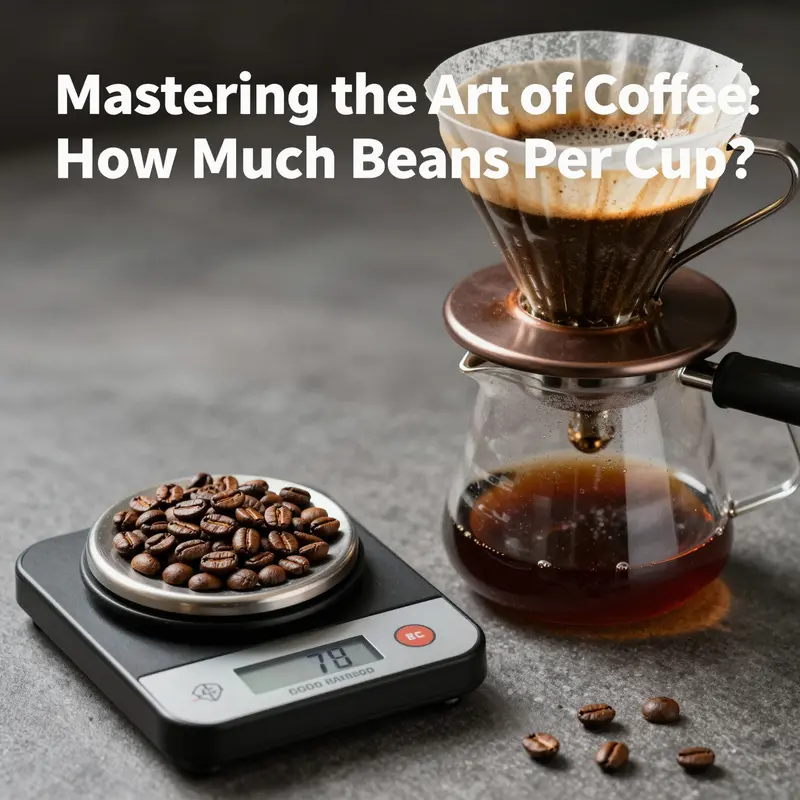
The question of how many coffee beans to use per cup sounds simple at first glance, but it unfolds into a conversation about technique, taste, and the physics of extraction. For most of us, a morning ritual hinges on a cup that tastes right to our own palate, not a rigid formula. Yet behind that subjective satisfaction lies a disciplined framework: a relationship between the amount of coffee, the amount of water, and the way heat, time, and grind interact with each other. When you begin to pull that thread, you realize that the classic images of a single spoonful per cup are only a starting point. The real measure of beans per cup emerges from a blend of method, size of the cup, roast level, grind, and the target strength you want to achieve. In other words, the bean is not a static input but a variable in a living system that responds to how you prepare it. And because the same bean can deliver a different experience depending on how you brew, the craft becomes a matter of dialing in a precise dose that serves your preferred cup, whether you favor a clean, delicate pour-over or a robust, full-bodied French press.
To begin with, it is essential to clarify what we mean by a “cup.” In the United States, a standard cup is not a fixed volume but a commonly used reference point. A typical kitchen coffee mug often holds around 8 ounces, which is about 240 milliliters. Yet in coffee circles, a “cup” for brewing guidelines is usually thought of in terms of 6 ounces, or roughly 177 milliliters, because that size most people pour through a balanced extraction in a home setting. This distinction matters because the suggested gram-to-water ratios shift with the cup size. If you treat a 6-ounce cup as your baseline, a widely cited range is roughly 10 to 20 grams of ground coffee per 6 ounces of water. That range reflects a broad spectrum of grind sizes, extraction times, and personal taste preferences. The lower end tends to yield a lighter cup with more perceived brightness and clarity, often favored for high-quality pour-overs or lighter roasts. The higher end tends to push the cup toward a fuller body and stronger presence, which can suit darker roasts or more forgiving brews like drip coffee that aims for a robust, consistent profile. In practice, many home brewers land somewhere around 15 grams of coffee for a 6-ounce serving, because this amount tends to strike a balance between sweetness, acidity, and body for a standard filter or pour-over brew. These numbers are not universal commandments but pragmatic starting points that respect equipment, grind, and the drinker’s taste.
The famous rule that guides many coffee lovers across the globe is the coffee-to-water ratio, and it has a simple arithmetic heart: your dose of coffee divided by your water, expressed as a ratio. The Specialty Coffee Association, the guiding authority for professional standards, recommends a range of 1:15 to 1:18. That means for every gram of coffee, you should use 15 to 18 grams of water. Following this framework, a 12-ounce brew—roughly 340 grams of water—would require about 19 to 23 grams of coffee. This is a practically useful anchor because it translates directly into the daily rituals of home brewing: you weigh both the coffee and the water, you track the yield, and you adjust from there. It also helps you compare your method with commercial standards, ensuring that you can replicate a café-like balance or tune toward a more intense extraction depending on your goal.
The method you choose becomes the most influential variable after your baseline. A standard drip or filter coffee, poured through a paper filter, often settles around the 1:15 to 1:16 range when using a 6-ounce cup. In this setup, many home brewers discover that 15 grams of coffee for about 225 grams of water (close to 8 ounces) yields a reliable cup with clarity and definition. If you are brewing with a pour-over cone, the precision of the pour and the uniformity of the extraction benefit from the same ratio, yet the resulting flavor tends to emphasize brightness and aroma. Here, many roasters and baristas tilt toward 14 to 18 grams for 8 ounces, experimenting with grind size and water temperature to coax subtler flavors from the bean without tipping into sourness or over-extraction.
Espresso introduces a different set of constraints and expectations. A single shot of espresso typically uses about 7 to 9 grams of finely ground coffee, yielding roughly 25 to 40 milliliters of liquid, depending on the dose and the machine. The regime here is not a 1:15 to 1:18 ratio, but a much tighter brew ratio around 1:2. That is, you’re looking to extract a concentrated, syrupy shot in which the mass of the beverage is about twice the weight of the coffee used. While an espresso shot is not a direct analogue to a “cup” in the home-drinking sense, it is a reminder that the way you extract the bean’s solubles matters as much as the amount of coffee you start with. For households that enjoy an espresso-style morning ritual, the dose remains in the single-digit grams but the water-to-coffee interplay yields a very different sensory outcome than a filtered cup.
A hand-crafted pour-over or a meticulously prepared filter coffee presents another angle on the same equation. In many cafés and home setups, enthusiasts aim for a dose of around 15 grams of coffee for a 240-gram serving, following the approximate 1:16 ratio. The 1:16 ratio has a practical appeal: it tends to be forgiving enough to accommodate small fluctuations in grind or water temperature while still delivering a balanced cup with a respectable body and a clear expression of the bean’s origins. It is common for specialty coffee shops to pare this down a bit for highly concentrated pour-overs, using 13 to 15 grams for a smaller, more intense brew around 200 milliliters. Those small shifts in grams reflect a nuanced dialect of taste, where a handful of grams can tilt the cup toward fruit-forward brightness, or toward a deeper, chocolatey resonance.
All these numbers, in their own right, are not rigid prescriptions. They are practical starting points that acknowledge the variability of beans, roast levels, and equipment. A lighter roast tends to drink more per gram because the solubles are less concentrated; a darker roast can feel stronger with the same grams because the oils contribute to a perception of body. However, darker roasts can also under-extract if the grind size or water temperature is not adjusted to compensate, which ironically makes you want to tweak the dose upward or downward depending on the brew method. In much the same way, the grind size acts as a dial you use to pull more or less flavor from the same dose. A coarser grind reduces surface area and slows extraction, while a finer grind increases surface area and accelerates extraction. When you brew with a fixed coffee-to-water ratio but alter the grind size, you’ll find your cup’s strength and clarity shift in meaningful ways. A good habit is to start with a consistent ratio and then adjust grind size and pour technique rather than simply adding more beans. Doing so preserves balance and avoids the common pitfall of chasing strength by simply dumping in more coffee, which often leads to over-extraction and a bitter aftertaste.
To make this more tangible, imagine you are preparing three different cups with the same 6-ounce target. In the first scenario, you use 10 grams of coffee with 150 grams of water and aim for a bright, crisp cup typical of a light roast in a pour-over. In the second, you use 15 grams with 240 grams of water, a classic middle-ground that many home brewers rely on for a balanced cup with decent body. In the third, you push toward 20 grams with 320 grams of water, yielding a fuller, more intense cup that suits a darker roast or a stronger morning mood. Each setup has its own logic: the first emphasizes extraction precision and aroma, the second prioritizes balance and approachability, and the third leans into depth and persistence. What changes across these three cups is not only the grams measured but the number of variables you manage during brewing: grind size, water temperature, pour rate, and even the time of contact between water and coffee grounds. The interplay among these factors determines how much of the coffee’s character is captured in the cup.
In this landscape, the act of brewing reveals itself as a negotiation between aspiration and practical constraints. The aspiration is to coax from the bean all its nuanced flavors—acidity, sweetness, fruit notes, chocolatey depths, and the comforting roast profile you prefer. The constraints are the physical realities of your equipment and the geometric relationships between bean mass, water mass, and extraction time. The equipment you use constrains the range of workable doses; a drip machine with a built-in grinder, a French press, a V60, or a fancy low-pressure system each imposes subtle demands on how you measure, grind, and pour. The weight of a suggested dose matters less when your grinder insists on an inconsistent grind size, or when your machine’s temperature drifts. In these moments, the best practice is to pin down a baseline that feels dependable in your kitchen, then adjust gradually while testing your palate. It is not the most dramatic change that makes a better cup; it is the smallest, most deliberate adjustments that align the final cup with your taste and the coffee’s true potential.
What often surprises new brewers is how sensitive the cup is to scale. Tiny increments in the dose—say, a gram or two—can have a noticeable impact on the cup’s perceived strength, the rate of extraction, and the cup’s aftertaste. That sensitivity is not a sign to overthink the process; it is a reminder that coffee is a natural product, with variability across harvests, regions, and even within the same batch. The practical upshot is to treat the dose as a variable you can tune through practice rather than a fixed number you must memorize. A good way to approach this is to set a baseline at the start of a new coffee or a new method and then steer toward your preferred flavor through deliberate micro-adjustments. If your goal is a clean, expressive cup that lets the origin notes speak clearly, you might lean toward a lighter dose and longer rise time in a pour-over. If you crave a comforting heaviness with pronounced body, you may tilt toward a richer dose and a coarser grind in a French press or a robust espresso shot.
The precision-driven world of coffee is not at odds with personal taste. It invites you to calibrate your own scale, your own cup size, and your own preferred roast to arrive at a reproducible routine. The numbers 1:15 to 1:18, and the practical “6-ounce cup” framework, provide a scaffold. Once you accept that your cup is a product of many variables working together—the bean’s intrinsic traits, its roast, its grind, its water quality and temperature, and the time you give it to brew—you begin to see why a universal beans-per-cup rule is less meaningful than a robust method for dialing in flavor. The art lies in using the dose as a lever to coax out the right balance for the method you enjoy most, with room to adjust for the bean you’ve chosen and the equipment you own. In the end, the best cup is not the one that adheres to a single number but the one that consistently gives you what you’re seeking: a comforting moment, a moment of clarity, or a celebration of a bean’s distinctive personality.
To anchor this exploration with a concrete reference, consider the widely accepted framework used by many professionals and educators in the field. The Coffee Association’s brewing guidelines advocate a coffee-to-water ratio in the neighborhood of 1:15 to 1:18, guiding brewers toward a lens of balance rather than brute force. Translating that 1:15 to 1:18 ratio into a practical recipe means that as you scale the water up or down, you adjust the amount of coffee in tandem. For a 6-ounce cup, that might translate into approximately 19 to 23 grams of coffee if you follow a 1:15 ratio with 340 grams of water for a larger brew, or downward as you shrink the water amount. For a standard home brew at 6 ounces, the lower end of the range—roughly 10 to 12 grams—may be adequate for a mild cup with bright acidity, while 16 to 18 grams can be ideal for a richer profile that still maintains clarity. The exact grams are less critical than how you consistently apply the ratio and how you tune the grind, water temperature, and pour technique to your taste.
As you navigate the landscape of beans per cup, the key takeaway is that precision in measurement serves taste, not constraint. We measure coffee for the sake of reproducibility and control. We measure water to ensure consistent extraction. We measure grind size and water temperature to unlock flavor compounds at the right pace. And we measure the cup to capture the sensory impression that makes the effort worthwhile. The aim is not a numeric dogma but a reliable method to reproduce a desired flavor profile across different days, roasts, and equipment. The journey from bean to cup is a dialogue between physics and palate, a conversation in which every gram has a role and every second of contact matters. In practice, you can begin with a clear, repeatable baseline—such as 15 grams of coffee for a 6-ounce cup or 19 to 23 grams for a 12-ounce brew—then taste, adjust, and refine. That iterative approach honors both the science of extraction and the art of personal preference.
Beyond the concrete numbers, it is worth keeping in mind a few practical habits that help ensure your beans per cup becomes a reliable predictor of your satisfaction. First, weigh your coffee rather than relying on volume measures like scoops or tablespoons alone. Volume can be deceptive because the density of coffee grounds varies with roast level and grind size. A gram-based approach eliminates many inconsistencies, especially when you change the roast or the grind. Second, grind just before brewing to preserve aroma and prevent oxidation. Freshly ground coffee releases a bouquet that quickly dissipates, and the longer the grounds sit, the more flavor compounds drift away. Third, standardize your water by temperature and quality. Water that is too hot can over-extract, while water that is too cool may under-extract, masking the beans’ subtle flavors. Clean, filtered water generally helps, but the exact temperature you aim for depends on your method: roughly 92–96°C (198–205°F) is a comfortable target range for many drip and pour-over brews, while espresso often benefits from slightly higher stable temperatures.
In sum, the journey from beans to cup is a careful orchestration of variables, with grams of coffee as the anchor that holds the equation together. The exact number of grams you choose will depend on the method and your taste, but the guiding principles remain consistent. Start with a reliable baseline that matches your cup size and method, then adjust gradually as you learn how your specific beans respond to water, temperature, and time. If you aim for a balanced, full-flavored cup, the 1:15 to 1:18 guideline offers a solid frame. If you want something lighter and more delicate, explore the lower end of that range, and if you crave something bold and rich, experiment toward the higher end. The beauty of this approach is that it is inherently adaptable. It respects the individuality of every bean, honors the constraints and possibilities of the equipment, and ultimately serves the most important measure of all—the taste that satisfies you.
For readers seeking a formal standard to anchor practice, the external guidance from the Specialty Coffee Association remains a reliable touchstone. Their brewing guidelines articulate the ratio principles with precision and are widely used by professionals to calibrate and compare recipes across different coffees and methods. This kind of framework is invaluable when you’re learning, because it gives you a coherent vocabulary for discussing adjustments, evaluating outcomes, and sharing results with others. It also reassures you that the numbers you use are not arbitrary but part of a broader discipline that has stood the test of time in the specialty coffee world. As you experiment in your kitchen, you can keep the conversation grounded in this established language while honoring your own evolving preferences. The coffee you drink becomes a personal discovery rather than a static product, and your kitchen becomes the workshop where a simple bean transforms into a precise, expressive cup.
If you wish to explore the more technical aspects behind the guidelines cited here, you can consult the authoritative brewing standards that underpin quality coffee preparation. While individual preferences will always shape final taste, the core framework offers a robust starting point for home brewers who want to bring consistency to their routine and confidence to their experiments. In the end, the relationship between beans per cup is not a single number but a conversation about balance, method, and the pleasures of a well-made cup. The best practice is to cultivate a habit of weighing, tasting, and adjusting, so that your everyday coffee becomes a reliable ritual rather than an unpredictable outcome. The science helps you understand the levers; the art helps you hear the cup’s true note in your own voice.
External resource for further reading: For a precise framework aligned with industry standards, see the Specialty Coffee Association’s brewing guidelines. https://www.specialtycoffees.org/standards/brewing-guidelines/
The Dose That Defines Espresso: Beans Per Cup and the Craft Behind a Perfect Shot

The question of how many beans go into a single shot of espresso sits at the intersection of science, craft, and taste. It is not a simple count but a starting point that opens a conversation about the mechanics of extraction, the geometry of a portafilter, and the sensory consequences of mass, time, temperature, and pressure. In espresso making, the beans per cup are more than a metric; they are the moment when a coffee’s dense, concentrated flavor is coaxed from its raw form. The traditional guidance that many baristas grow to trust is precise enough to guide a novice and nuanced enough to reward a practiced palate. A common double shot uses roughly 18 to 20 grams of coffee grounds. This dose is paired with a relatively small amount of water, typically 36 to 40 milliliters, resulting in a beverage that carries a weighty aroma, a thick, resonant crema, and a texture that seems to hug the tongue. It is a pairing of dose and yield that defines not just the strength but the balance and complexity of the drink. The numbers originate from long standing traditions in coffee culture and are reinforced by contemporary practice across cafes that prize both consistency and character in their espressos. Within the frame of a traditional espresso pull, the 1 to 2 brew ratio—meaning the weight of the dry coffee to the weight of the extracted liquid—has become a touchstone. An espresso that weighs about 38 grams in liquid form from a starting dose near 19 grams exemplifies that classic ratio. It yields a liquid that presents a certain intensity of flavor while remaining drinkable in a single serving. The crema, that delicate, caramel-hued foam that crowns the beverage, tends to reflect this balance as well. A properly dosed double shot often reveals a crema that is thick enough to cling to the surface, an indicator to many tasters that the extraction has found its sweet spot between concentration and nuance. Yet these guidelines are not rigid commandments carved in stone. They are knobs on a control panel, inviting the brewer to adjust based on the beans, the grinder, the temperature of the water, and the shape of the portafilter basket. When a barista increases the dose from 18 to 20 grams, the immediate effect is to raise the potential for extraction within the same time window. With more coffee in the puck, the water faces a denser workload. Unless the grind is adjusted to slow the flow, the extraction can race, often yielding under-extracted flavors if the extraction time falls short of the 25 seconds that many identify as a sweet spot. Conversely, a lighter dose can yield a quicker, brighter cup that may taste cleaner but thinner in body, sometimes at the cost of crema development. These interactions underscore a central truth about espresso: dose is not only a matter of strength; it is a tactile, mass based parameter that shapes the entire flavor architecture of the shot. The espresso shot is, in effect, a carefully resolved equation where dose, grind size, tamping, and the physics of water flow converge to determine the cup’s final profile. Grinding too fine can push extraction toward bitterness and astringency if pressure and time remain constant. Grinding too coarse can lead to thin body and weak crema, with the aroma departing early and the flavors feeling washed out. The skilled operator learns to couple dose with grind and tamp so that the brew time remains close to the target range of roughly 25 seconds for a double shot, with an extraction temperature between 88 and 92 degrees Celsius and a pressure around 9 bars. These numbers are not arbitrary rules but reflections of the physical reality of pulling hot water through compact coffee grounds under pressure. The water must extract the soluble compounds—acids, sugars, oils, and aromatics—in a way that yields a bouquet of flavors rather than a burnt toast or a sour lemon. The interplay of dose and grind, of contact time and pressure, accomplishes this delicate chemistry. When the dose sits near 18 grams and the grind matches accordingly, the water can navigate the puck efficiently, creating a balanced synergy between sweetness, acidity, body, and aftertaste. If the dose trends toward 20 grams, and the grinder is adjusted so that the shot remains in the same time frame, the result commonly shows more body and a slightly denser crema. The flavors can become rounder, with the potential for a longer finish and more aromatic resonance in the mouth. This is the heart of espresso calibration: you can shift one variable, and the entire sensory outcome shifts with it. Still, not all espresso is pulled with the same aim. Specialty shops sometimes experiment with a slightly different mind frame: they may push toward 20 grams even when the water yield remains around 40 milliliters, seeking an extraction that yields a very particular sweetness and a smoother mouthfeel. In such cases the 1:2 ratio remains intact, but the interpretation of what constitutes a well-balanced shot evolves. It is here that the role of the barista as mind and hand comes into play, translating the mathematics of dose into a living sensory experience. It is important to understand the distinction between the dose in a traditional double shot and the dose used for other coffee brewing methods that yield a different kind of cup. For instance, a standard drip coffee typically uses around 7 grams of coffee grounds for an 8-ounce cup, while a hands-on pour over might call for around 15 grams for an 8-ounce cup at a common 1:16 ratio. These numbers, though not interchangeable, illuminate a broader principle: the weight of the dry coffee beans and the beverage yield are tightly coupled in every method, and the optimal dose must be tuned to the method’s extraction dynamics. The espresso dose operates in a tight, high intensity corner of coffee production. It demands a very different balance than a full-bodied pour over or a brisk drip. In espresso, the combination of dose and pressure is designed to extract a concentrated set of flavors quickly, yielding a beverage that can stand up to milk in lattes and cappuccinos while still maintaining complexity on its own. The crema, which is both a color and a texture cue, often serves as a visible confirmation that a proper pressurized extraction has occurred. Crema emerges when enough emulsified oils and microbubbles form under pressure, and its presence can be correlated with the dose and the grind’s fineness. A thicker crema can accompany a heavier dose when the grind is well calibrated and the water velocity through the puck is evenly distributed. However, crema alone is not a proxy for quality. It is a delightful indicator, but the true measure lies in the harmony of aroma, sweetness, acidity, and aftertaste that follow the initial wave of flavor. Brewers who chase this harmony understand that the shot’s final character emerges from chairs on a spectrum—dose, yield, time, and temperature—each dimming or brightening the others, like instruments in an orchestra. When one practitioner experiments with a higher dose of 20 grams, they are not simply layering more flavor notes on the tongue. They are changing the extraction’s mass balance. A heavier dose often requires a finer grind to maintain the same extraction time. If the grinder remains unchanged, the extra coffee can slow the flow too much, risking an over-extracted, bitter finish. In practice, many baristas will adjust grind size slightly finer, or slightly coarser depending on the shot’s behavior during the first 15 seconds of flow. A well-timed shot will pour with a smooth, steady stream, a color that is a chocolatey brown with hints of copper, and a texture that invites the lips to linger. The aroma should be rich and layered, carrying hints of citrus, caramel, or stone fruit depending on the origin and roast. These sensory cues are not merely aesthetic; they guide the craft. The shot’s quality is judged in part by the mouthfeel—whether it coats the palate with a thick, velvety body or feels lean and bright. The level of sweetness can be both a function of the coffee’s origin and its roast level, but it is also shaped by how effectively the extraction dissolves soluble solids from the grounds. In the context of dose, sweetness tends to be more pronounced when the extraction is balanced and the crema remains stable without signaling bitterness or sourness. The body is enhanced when a higher dose is matched with a grind that preserves the colloidal structure of the oils and colloids that give espresso its characteristic mouthfeel. Yet the same dose can yield a different experience when the coffee’s roast is darker or lighter, or when the water’s mineral content shifts. The water temperature—between 88 and 92 degrees Celsius—works together with the grind and dose to modulate extraction speed and flavor release. Heat accelerates the dissolution of soluble compounds; a slight increase in temperature can push a shot toward a richer, darker finish, or, if not controlled, toward bitterness. Baristas tune the temperature to ensure the shot remains within that sweet range where sweetness, acidity, and body are in a pleasing equilibrium. Pressure at about 9 bars provides the force that drives water through the compressed puck. It is the pressure that helps create the crema and also influences the speed and uniformity of extraction. The interaction of dose with pressure is subtle but meaningful. If the dose is increased without corresponding adjustments to grind and tamp or without extending the contact time, the puck resists the water more, and the shot can become under-extracted in the early phase. The result is a flat or sour profile. If the dose is lowered without other adjustments, the shot may become over-extracted or thin, with a hollow finish. The skill in espresso lies in managing this balance so that the dose, grind, tamp, temperature, and pressure converge on a single, cohesive cup. Tea-like clarity is often a sign that a shot has been under-extracted, while a harsh, burnt note hints at over-extraction or excessive heat. For the home barista or the café professional alike, dose becomes a daily calibration exercise. Some practitioners may begin with 18 grams, run the pull, observe the shot’s brightness, crema, and extraction time, and then decide if an adjustment to 19 or 20 grams will yield a shot that better meets their taste target. The process is iterative rather than ceremonial. It is not about chasing a single ideal number but about developing a sonic sense of the espresso’s trajectory as the shot progresses from the first contact with the coffee grounds to the final drop of liquid into the cup. Beyond the double shot, there are variations in practice. A lungo, which expands the water volume and lengthens the extraction, can be pursued with a higher dose, but the brew ratio shifts toward a more diluted profile. In a lungo, the target ratio may hover around 1 to 3, which means a much larger volume of water passes through the same dose, often resulting in more bitterness and less body if not carefully controlled. In this way the beans per cup concept remains central, but the objective changes with the method. A single shot, if it ever appears in professional practice, uses a much smaller dose—around 7 grams with similar time and temperature constraints—producing a different flavor profile and a lighter body. Yet the classic double is the standard by which many espresso programs measure themselves, because it provides the balance of intensity and drinkability that most people expect from a true espresso experience. The broader takeaway for anyone exploring beans per cup across methods is that dose must be treated as a method dependent variable. A one-size-fits-all statement about how many beans per cup is attractive for its simplicity, but it risks ignoring the essential relationships that govern extraction, mouthfeel, and aroma. If the aim is to translate the general idea of strength in coffee to practice, the dose must be tuned to yield in the espresso context what you are seeking from the cup: an engaging bouquet of flavors, a satisfying body, and a finish that invites the next sip. For those who enjoy the ritual of empirical adjustment, the process of dialing in espresso often begins with a standard, widely recognized double shot of 18 to 20 grams. The practitioner then experiments with small increments in dose alongside corresponding adjustments to grind fineness and extraction time, always returning to the core goal: a shot that carries a clear, balanced flavor profile without harsh bitterness or sour acidity. The journey from dose to taste is a journey through the chemistry of solubles and the craft of machine workflow. It is as much about the operator as it is about the beans. In the end, the precise number of beans per cup in espresso is less about a universal constant and more about the art and science of extraction. The accepted ranges serve as a compass, pointing toward a reliable, repeatable shot, while the ongoing experimentation ensures that each cup can reveal new facets of origin, roast, and technique. This approach aligns with the broader coffee landscape where professionals balance tradition with experimentation, always considering the method, the water, and the roast. The espresso dose is a linchpin in that balance, a reminder that even in a highly controlled, high pressure process, the human element remains essential. The cup that finally lands on the saucer is the product of a handful of grams, a measure of time, a target temperature, and a silent agreement between brewer and cup about what counts as a well-made espresso. For readers seeking a deeper dive into the formal standards behind espresso dosing, a primary reference remains the tradition and literature of the profession, which continues to anchor home practice and café discipline alike. External reference: https://www.espresso.org/
The Eight-Ounce Equation: Precision, Palate, and the Pour-Over Bean Count

Beans per cup is a deceptively simple question with a surprisingly nuanced answer. For the pour-over method, the conversation around how many beans to use unfolds as a careful negotiation between mass, water, time, and the chemistry of extraction. The commonly cited figures—15 to 18 grams of coffee for a standard 240-milliliter cup—are not arbitrary. They are the product of decades of brewing experimentation, sensory feedback, and a practical need for consistency. In a pour-over, where every drop travels through a bed of grounds you have deliberately prepared, the margin between a clean, balanced cup and a sharp, sour or muddy brew is narrow. The number of beans, measured precisely, acts as the primary dial you tune before you begin the extraction journey. It is a kind of culinary physics, where a gram or two can shift the perception of acidity, sweetness, and body in the final cup. As with many craft processes, precision matters, but precision without a sense of taste is a map without scenery. The art lies in knowing when to hold the line and when to bend it to suit your beans, your grinder, and your palate.
For a single eight-ounce cup, the guideline sits squarely in the 15 to 17 gram range. Many baristas settle around 16 or 17 grams, especially when aiming for a balanced extraction with a clear, clean cup. If you tend toward a bolder profile, you might edge toward 18 grams, provided your grind size and water are tuned to avoid over-extraction. Conversely, if you prefer a lighter, brighter cup, starting at 15 grams and adjusting water slightly downward can yield a more delicate result without sacrificing clarity. The rule of thumb—often expressed as a coffee-to-water ratio of about 1:16 to 1:17—gives you a practical scaffold: 15 grams of coffee paired with roughly 240 grams of water, or 16 grams with about 256 grams of water, and so on. This ratio is more than a mathematical neatness; it represents a balance point where the solubles in the coffee can dissolve into the water in a way that highlights sweetness and acidity without overwhelming bitterness or flatness.
Precision, however, is not a one-size-fits-all proposition. Pour-over is a highly variable method, and the exact grams you use will shift with your beans, grind, and equipment. A lot of the variation comes from grind size, which acts as a throttle on the extraction, and from water temperature, which informs how aggressively the grounds release their solubles. The beans themselves carry their own fingerprint—the roast level, origin, and processing method shape how quickly flavors are drawn out by hot water. A medium roast from a well-balanced origin may sing at the 16-gram mark, while a lighter roast that highlights delicate fruity notes might respond better to 15 grams and a slightly finer grind. In the opposite direction, a darker roast with pronounced body can sometimes benefit from a touch more mass to help pull out the deeper cocoa and caramel notes without letting the cup taste scorched or hollow.
The practical habit of weighing coffee and water makes the near-universal practice of dialing in a pour-over more repeatable. A kitchen scale becomes a constant companion, a quiet metronome guiding the ritual. When you measure 15 to 18 grams of beans for 240 milliliters of water, you’re not just budgeting flavor; you’re creating a predictable canvas on which the coffee’s chemistry can paint. This is where the idea of the 1:16 to 1:17 ratio reveals its value: it translates a qualitative aim—balanced, clean, expressive coffee—into a quantitative plan that can be followed cup after cup. If your grinder or kettle is out of calibration, the scale helps you notice that mismatch early, before you’ve poured your entire brew and discovered a misstep only in the tasting.
Beyond the core numbers, a pour-over demands attention to grind size and grind freshness. The grounds should be uniformly sized and freshly ground just before brewing. A consistent grind helps ensure that the water percolates through the bed evenly, avoiding channels that bypass some grounds while over-extracting others. For pour-over, the grind is typically described as medium to medium-fine—somewhere between table salt and kosher salt in texture. It’s fine enough to maximize contact time without obstructing flow, yet coarse enough to prevent a sluggish, overbearing drawdown. If the pour is too fast, the cup risks under-extraction, translating to sourness and a weak aroma. If the pour is too slow, resistance builds and the cup tends toward bitterness with a syrupy mouthfeel. The grams you choose are the anchor, but the grind size often becomes the dial that clarifies your aim when you taste the result.
Another factor tucked into this equation is water quality and temperature. Water is not a passive vehicle; it is an active solvent that coaxes flavors from the bean. The recommended temperature window—around 92 to 96 degrees Celsius (198 to 205 degrees Fahrenheit)—is not random. Lower temperatures tend to emphasize sweetness and acidity, sometimes producing a tea-like brightness if the bed of grounds is too finely ground or the ratio veers toward under-extraction. Higher temperatures lean toward more extraction, intensifying body and bitterness if the grind is too fine or the pour rate is too slow. When you align 15 to 17 grams of coffee with 240 milliliters of water at a steady, controlled pour, you create a conversation between grounds and liquid that remains intelligible in the cup: you taste clarity, you appreciate balance, you sense the cup’s personality rather than feeling overwhelmed by one dominant trait.
The tactile rhythm of pour-over can be described as a choreography of patience and feedback. You start by placing the grounds in the filter, letting them settle into their bed, and then initiating the bloom phase. The bloom is the moment when carbon dioxide escapes from freshly ground coffee as it meets water. A well-timed bloom—about 30 to 45 seconds—helps the grounds de-gas, allowing for a more uniform extraction as you continue the pour. A bright bloom, with visible foaming around the edges, often signals a lively, aromatic cup, whereas a flat bloom can indicate a coffee that is a touch stale or that the grind size needs adjustment. The subsequent pours, done in a slow, deliberate spiral from center outward, ensure that all grounds participate in the extraction, rather than letting water slip past a portion of the bed while other grounds remain dry and inert.
The practical recipe for a single eight-ounce cup, therefore, emerges not as a rigid decree but as a starting line. You might begin with 16 grams of coffee and 256 grams of water, a ratio of roughly 1:16. Your first taste will tell you whether you’re extracting sweetness or pulling sharper notes forward. If the cup drinks clean and bright with a pronounced fruitiness, you may have found your sweet spot for that particular bean and grind. If you detect a faint hollow or sour brightness, you may need to adjust a touch toward 17 or 18 grams and/or temper the grind coarseness to slow the extraction slightly. If bitter notes dominate, you may have over-extracted: an invitation to use a coarser grind or a touch less coffee, or to adjust your pour rate to relieve the bed of grounds from becoming overly compact.
The broader takeaway is this: when you brew pour-over, you are calibrating a small set of variables—bean mass, grind size, water mass, temperature, and pour technique—toward a sensory target. A 15–18 gram range for 240 milliliters acts as a credible baseline that accommodates most beans and roasts while leaving room for personal preference and equipment idiosyncrasies. The ratio acts as a lingua franca across kitchens and cafes. You measure the beans, measure the water, and let time and technique work their chemistry. In practice, this means that your next step—whether you are choosing a lighter roast that sings with citrus notes or a deeper roast that emphasizes chocolate and stone fruit—begins with the same disciplined approach to grams. Your palate, not merely your scale, remains the final arbiter, guiding you toward the sweet spot that makes your cup uniquely yours.
An important aspect of applying this knowledge is seeing how it translates into consistency. The idea of 15 to 18 grams per 240 milliliters provides a reliable target, but the real mastery lies in how you translate that target into repeatable actions. The scale, the grinder, and the kettle all become instruments in a ritual of refinement. When you record a successful brew, you document the grams of coffee used, the exact water amount, the grind setting, and the water temperature. The result is a feedback loop you can return to, a recipe you can refine with each brew. Over time, your notes become a map of the landscape of your favorite beans. If you switch origins, you can revisit the mapping by starting from a conservative baseline—say 16 grams for 240 milliliters—and then adjusting based on taste. If you switch to a new grinder, you may need to re-establish your baseline because particle size distribution can influence extraction dramatically. The process rewards patience and curiosity as much as it rewards accuracy.
The cultural dimension of this practice should not be overlooked. Pour-over has grown out of a tradition that values precision and mindfulness, where the ritual of weighing, grinding, and pouring becomes a quiet daily ceremony. The act of measuring beans, watching the bloom, and observing the flow of water through the coffee bed is, for many, a form of personal meditation—a way to anchor one’s attention in the present moment. It’s not merely about making coffee; it’s about shaping a moment of intentional focus. This is where the act of measuring becomes not just a technical requirement but a means of cultivating a sensory literacy—the ability to discern subtle differences in aroma, acidity, body, and aftertaste. In that sense, the eight-ounce cup is more than a beverage. It’s a microcosm of experimental craft, a living test of how small adjustments in grams can orchestrate a more expressive delivery from the same beans.
The conversation about grams per cup also interacts with the equipment you use. A pour-over setup with a precise, consistent pour-over cone and a high-quality filter helps ensure that your grams translate into predictable extraction. A sturdy kettle with a controlled pour spout allows you to mimic the slow, steady pours that the coffee’s bed requires. In environments where water quality may vary—with mineral content shifting between tap sources or between cities—the grams-per-cup baseline becomes especially valuable. It gives you a compass to recalibrate when the water feels different, when the bean batch changes, or when the grind you’re using produces a noticeably different flow rate. In such contexts, maintaining a uniform starting point of 15–18 grams per 240 milliliters makes it easier to compare results across days or across beans without losing the thread of what a given adjustment is doing to the cup.
If we widen the lens a bit and think about how to apply this knowledge beyond a single cup, the scaling principle remains powerful. For a small batch—three cups, roughly 720 milliliters—the guideline grows to about 45 to 51 grams of coffee. Here, too, the 1:16 to 1:17 ratio persists as a sound starting point, though practical adjustments may become more nuanced. A larger batch will accumulate more heat loss and can demand a slightly longer bloom and a more deliberate pour rate to ensure even extraction across the bed. The concept of balancing mass and water becomes less about a rigid rule and more about maintaining a consistent approach across scale. The science stays the same, but the execution becomes a touch more forgiving as you shift from a single cup to a small carafe. The core discipline—the precise weighing of grounds, the careful measurement of water, and a calm, controlled pour—keeps the process coherent as you expand the brew.
The evidence behind these guidelines is practical and experiential. The numbers are not arbitrary, and they are not universal commandments. They are embedded in a tradition of experimentation that links the chemistry of extraction with the sensory evaluation of the cup. The reason the range of 15–18 grams per 240 milliliters endures is that it aligns with the typical extraction yields that produce a cup with good sweetness, clarity, and balance. It’s a compromise that maximizes aroma and mouthfeel while minimizing off-notes that arise from either under- or over-extraction. For many home brewers, starting there and then adjusting based on taste is the most effective path toward consistent quality. The actual grams you end up using in your everyday brewing will reflect your beans, your grinder, and your personal preference. The beauty of the pour-over method lies in this adaptability—the same framework supports the discovery of a cup that tastes like your own version of coffee culture, one cup at a time.
As you continue to refine your pour-over practice, there’s value in anchoring your method in a few shared references that emphasize the science and art of the process. Beyond your own tasting notes, you can consult trusted guides in the specialty coffee world for deeper context on bean selection, grind size, and the finer points of water chemistry. A widely cited resource in pour-over coffee discussions highlights the nuanced relationships among grind, time, and temperature, offering a more granular map of how 15–18 grams and 240 milliliters of water interact to yield a well-balanced cup. While no single source can replace your sensory evaluation, these guides provide a solid framework to augment your personal experiments with data and shared experience. The essential takeaway remains unchanged: for pour-over, a thoughtful, measured approach to grams per cup forms the backbone of consistency and flavor.
To bring all these strands together, consider how the act of carefully weighing and pouring aligns with broader practices of precision in daily life. The habit of treating each cup as a small laboratory experiment—hypothesize, test, taste, adjust—offers a route to ongoing refinement. It invites you to listen to your coffee as you would listen to a patient or a product of careful care in a therapeutic setting. In fact, this parallels an approach found in pieces of guidance around stress relief and mindful routine, where deliberate actions anchored in measurement and repetition build resilience and calm. If you’re drawn to that parallel, you might explore the idea further through resources that connect methodical practice with well-being, including instruction on techniques for stress relief that echo the care and precision of a good coffee routine. For a concrete example of this kind of approach in practice, you can refer to occupational-therapy-techniques-for-stress-relief, which mirrors the value of deliberate, paced activities in daily life. occupational-therapy-techniques-for-stress-relief.
Ultimately, the eight-ounce cup is a vehicle for understanding how a precise gram count sets the tone for the entire brew. It is the starting point from which you explore the interplay of grind, temperature, and pour technique. It is a reminder that small adjustments can yield meaningful differences in flavor, aroma, and mouthfeel. And it is a doorway into the ritual of coffee-making as a mindful practice—one that rewards patience, curiosity, and a willingness to let the bean speak through a measured, attentive process. As you move through your next pour-over, let the grams be your compass, the water your solvent, and your palate the final judge. In that balance lies the quiet satisfaction of a cup that communicates clearly what the beans are trying to say, without pretense or ambiguity.
External resource: For a deeper dive into the science of grind and extraction, see Sprudge’s pour-over coffee guide. https://sprudge.com/pour-over-coffee-guide
Final thoughts
In conclusion, the amount of coffee beans per cup significantly affects the taste and quality of coffee, making it a crucial aspect for any business owner in the coffee industry. By adhering to specific guidelines for standard drip coffee, espresso shots, and pour-over methods, business owners can ensure consistent flavor profiles that resonate with their customers. It’s not just about brewing coffee; it’s about crafting an exceptional coffee experience. Continually experimenting with bean amounts based on feedback will not only refine the offerings but also elevate customer satisfaction, resulting in loyal patrons eager for their next cup.