
In the bustling world of coffee shops and roasteries, the quest for the perfect brew transcends just selection; it hinges significantly on how you store whole coffee beans. For business owners who rely on delivering exquisite coffee experiences, maintaining the beans’ freshness is paramount. Imagine crafting a cup that tantalizes the palate, only to have it fall flat due to improper storage. That’s a lost opportunity! With the right coffee storage tips, you can ensure your beans retain their vibrant flavors and aromas, setting your offerings apart from competitors. Don’t underestimate the impact of storage; it’s a crucial step toward preserving the essence of what makes great coffee great. Join us as we delve into effective strategies that will not only enhance your brews but will also resonate with your customers’ expectations for top-tier quality.
Benefits of Storing Whole Coffee Beans Correctly
For business owners in the coffee industry, properly storing whole coffee beans is essential to retain their flavor and freshness. Here are some key benefits of maintaining optimal storage practices:
-
Flavor Preservation: Whole beans are designed to retain their oils and flavors better than ground coffee. By investing in the right storage methods, you ensure that the natural oils and volatile compounds stay intact, delivering a fuller flavor profile in every cup.
-
Extended Shelf Life: Coffee beans have a shelf life that greatly depends on how they are stored. Proper storage can extend their freshness, allowing for a longer period before they become stale.
-
Resistance to Oxidation: Exposure to air is one of the biggest threats to coffee freshness. Storing whole coffee beans in airtight containers helps to minimize oxidation, locking in the rich flavors and aromas for a longer time.
-
Protection from Moisture: Coffee beans are sensitive to moisture, which can lead to mold and spoilage. Storing beans in a dry environment helps prevent these issues, ensuring that your products remain safe and flavorful.
-
Consistency in Quality: For businesses that pride themselves on serving high-quality coffee, consistent flavor is key. Proper storage methods help maintain the quality of coffee beans, allowing you to serve customers the same great taste every time.
Business owners should adopt best practices around storing whole coffee beans to ensure coffee freshness and enhance overall flavor preservation. For more insights into maintaining quality in your coffee offerings, learn more about techniques for preserving coffee freshness.

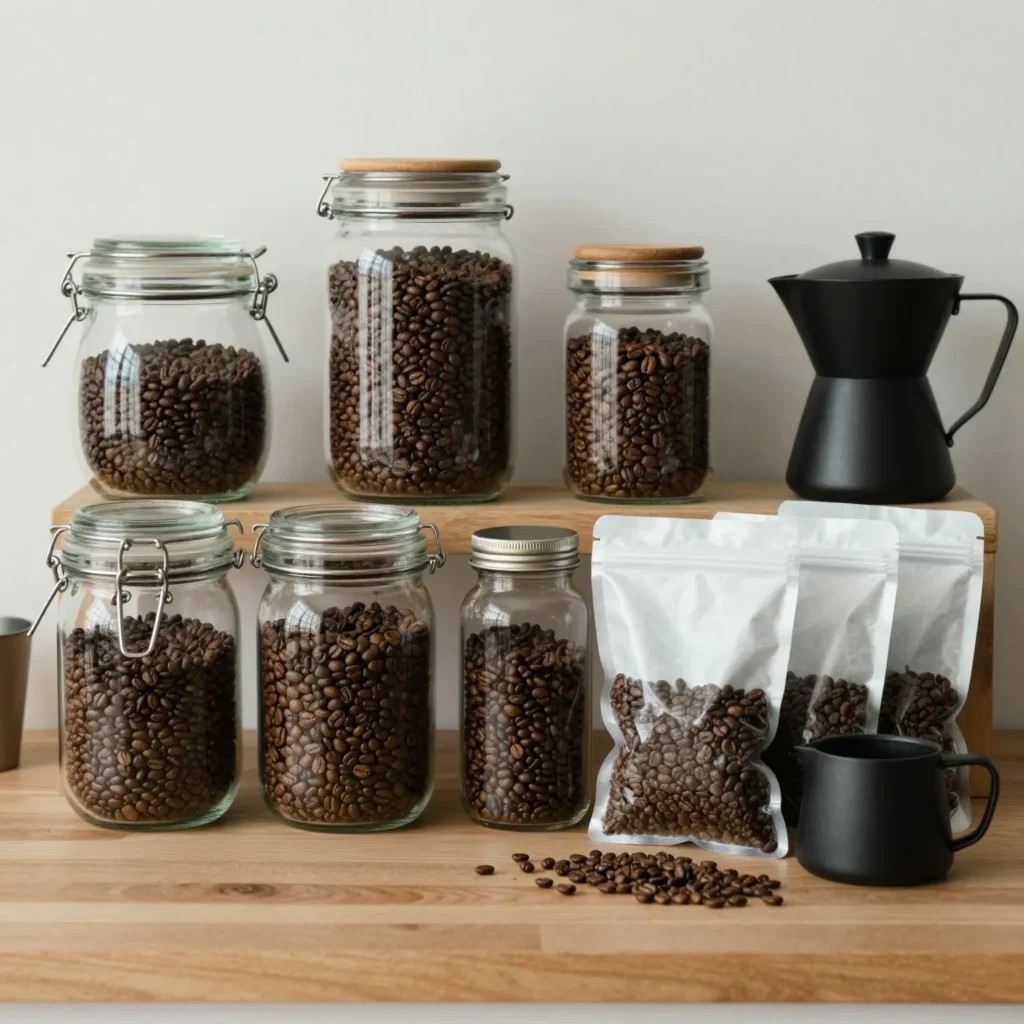
The image above illustrates various coffee storage options that business owners can consider to keep their coffee beans fresh. Proper storage is essential to maintain the flavor and aroma of the coffee, ensuring the best quality for customers.
Methods for Storing Whole Coffee Beans
Storing coffee beans properly is essential for maintaining their freshness, flavor, and aroma. Here are several effective methods for storing coffee beans, using vacuum sealing, airtight containers, and ensuring they are in a cool, dark place.
Vacuum Sealing
Vacuum sealing is one of the best practices for storing coffee beans to ensure their longevity. This method removes air from the packaging, thereby reducing oxidation and the risk of staleness, which can diminish the coffee’s flavor. Here’s how to effectively use vacuum sealing:
- Use a Vacuum Sealer: Invest in a good-quality vacuum sealer to help seal coffee bean bags right after purchasing.
- Seal in Small Portions: Consider storing your coffee in smaller bags, as this allows for easy access without exposing too much of the remaining coffee to air when opened.
Airtight Containers
If vacuum sealing is not an option for you, using an airtight container is the next-best choice for coffee preservation techniques. Follow these guidelines:
- Choose Opaque Materials: Light can degrade coffee beans over time, so select containers made of opaque either glass or ceramic to minimize light exposure.
- Use Rubber Seals: Opt for containers with rubber seals to keep air out effectively, further promoting freshness.
- Store Immediately After Opening: Always transfer opened bags of coffee beans to airtight containers right away.
Cool, Dark Places
Temperature and light play significant roles in how long your coffee remains fresh.
- Ideal Temperatures: The best temperatures for coffee storage are between 60°F to 70°F (15°C to 21°C). Avoid any locations that can experience heat fluctuations.
- Pantries Over Refrigerators: Always prefer a pantry or a cupboard that is away from kitchen appliances that generate heat, rather than the refrigerator, since moisture from the fridge can negatively affect the beans.
Additional Best Practices
- Avoid Freezing: Although freezing is sometimes suggested, it is generally not recommended due to the risk of condensation affecting the beans. However, if you do freeze, keep them in vacuum-sealed bags.
- Buy Fresh: Purchase whole beans in quantities that can be consumed within a few weeks. The flavor starts to decline weeks after roasting.
- Seal Immediately After Use: Every time you access your coffee, ensure the container is resealed tightly to limit air exposure.
By implementing these best practices for storing coffee beans, business owners can ensure that they maintain the delightful and rich flavors coffee lovers expect. For further reading on occupational techniques that can enhance the experience or environment in your coffee shop, learn more about techniques used in occupational therapy.
Conclusion
Storing coffee correctly not only prolongs its freshness but also enhances the overall flavor and quality of your brew. Embracing these coffee preservation techniques will lead to a more satisfying experience for you and your customers.
Comparison of Coffee Storage Methods
When it comes to maintaining the freshness and flavor of your coffee beans, choosing the right storage method is crucial. Below is a comparison table of various coffee storage methods based on their effectiveness, cost range, and usability. This will assist business owners in making an informed decision regarding their coffee storage practices.
| Storage Method | Effectiveness Rating | Cost Range | Usability |
|---|---|---|---|
| Airtight containers | High | $10 – $30 | Easy |
| Vacuum-sealed bags | Very High | $20 – $50 | Requires equipment |
| Freezing | Medium | Low ($0) | Convenient but needs care |
| Glass jars | High | $15 – $40 | Easy |
| Metal canisters | High | $15 – $45 | Easy |
| Plastic containers | Medium | $5 – $15 | Very easy |
Key Takeaways:
- Airtight Containers: Offer a good balance between cost and usability, ideal for regular use.
- Vacuum-Sealed Bags: Provide the best effectiveness but are less convenient for frequent access.
- Freezing: While effective in extending shelf life, it requires careful handling to avoid condensation damage to the beans.
For a deep dive into the best coffee storage practices, check out this informative guide and learn more about how to keep your coffee fresh.
Common Mistakes in Coffee Storage
Coffee is a delicate product, and improper storage can lead to significant losses in flavor and aroma. Here are some common mistakes business owners make in coffee storage and how to avoid them:
-
Exposure to Light: Leaving coffee beans in clear containers exposes them to light, which can deteriorate flavor compounds. Solution: Use opaque, airtight containers to block light and protect the beans.
-
Moisture Exposure: Storing coffee in a humid environment leads to condensation, which can ruin the beans. Solution: Keep coffee in a cool, dry area and avoid refrigeration or freezing, as this also introduces moisture.
-
Poor Sealing: Using bags that are not airtight allows oxygen in, leading to oxidation and stale flavors. Solution: Choose vacuum-sealed containers to keep air and moisture out.
-
Temperature Fluctuations: Subjecting coffee to fluctuating temperatures can accelerate staleness. Solution: Store coffee in a stable environment away from heat sources.
-
Buying in Bulk: Purchasing coffee beans in large quantities without a good plan can lead to waste as beans lose flavor over time. Solution: Buy what you can consume within a reasonable timeframe and store any extra in airtight containers.
These coffee storage mistakes can severely impact the quality of the beverage you serve. Preventing these errors not only helps in maintaining flavor but also enhances customer satisfaction.
For insights on maintaining mental health while handling operational challenges in your coffee business, check out how occupational therapy supports mental health.
Ideal Conditions for Storing Coffee
To ensure the freshness and flavor of coffee beans, it is crucial to store them under specific temperature and humidity conditions. Here are the ideal parameters:
| Category | Data |
|---|---|
| Ideal Temperature | 60-70°F (15-24°C) |
| Ideal Humidity | 30-50% |
For a visual representation, see the chart below depicting these ideal storage conditions:

Maintaining these conditions will help preserve the quality of your coffee beans over time, ensuring that customers enjoy a fresh cup of coffee every time.
For more on why proper storage matters, learn more about the importance of best practices in coffee storage and other techniques.
Conclusion
In summary, properly storing whole coffee beans is essential for maintaining their freshness, flavor, and aroma. Throughout this article, we discussed the following key points:
- Ideal Storage Conditions: Coffee beans should be stored in a cool, dark place away from light, heat, and moisture to avoid deterioration. Air-tight containers are a must to minimize oxidation.
- Avoiding Common Mistakes: We highlighted the common pitfalls in coffee storage, such as using clear containers, which expose beans to light, and keeping them in the fridge, which can introduce moisture.
- Understanding Shelf Life: Whole coffee beans maintain their best quality for longer periods compared to ground beans, making it crucial for businesses that sell coffee to adopt proper storage techniques.
By following these storage guidelines, you can ensure that your coffee retains its rich flavor and delightful aroma, which is vital for any business selling coffee products.
If you’re looking for more exciting ways to enhance your business offerings, why not explore what Truck Pizza has to offer? A pizza truck can be a great addition to your business model, catering to coffee lovers who enjoy delicious meals on the go. Don’t miss out on diversifying your service with mouth-watering pizza options that can complement your coffee selection!
How to Store Whole Coffee Beans for Maximum Freshness
When it comes to storing whole coffee beans, preserving their flavor and freshness is crucial, especially for business owners who rely on quality coffee for their customers. Here are the best practices:
Best Practices for Storing Whole Coffee Beans
-
Airtight Containers: Store your whole coffee beans in airtight containers to minimize exposure to oxygen, which can spoil the beans quickly. Glass or ceramic with a tight-fitting lid works best.
-
Optimal Temperature: Keep the storage temperature between 60°F (15°C) to 70°F (21°C), avoiding places that experience temperature fluctuations, like near ovens or windows.
-
Cool and Dark Places: Always store your beans in a cool, dark environment, free from light and humidity. A pantry is an excellent spot compared to cabinets near sunny windows or high-humidity areas.
-
Avoid Freezing (Unless Necessary): While freezing beans can extend their freshness, only do this if storing for more than a few weeks. Use airtight packaging to prevent condensation when thawed.
-
Keep Away from Strong Odors: Beans are like sponges and can absorb strong smells from other foods. Keep them stored in isolation from items like spices and cleaning supplies.
-
Consumable Portions: Buy your whole coffee beans in small batches, so you’re less likely to sit on them for long periods, ensuring maximum flavor and freshness.
Ideal Storage Conditions at a Glance
| Storage Condition | Ideal Level |
|---|---|
| Temperature | 60-70°F (15-21°C) |
| Humidity | Below 60% |
| Light | Dark, no direct sunlight |
| Air (Oxygen) | Airtight containers |
| Container Material | Glass, ceramic, or food-grade plastic |
| Duration | Consume within 2 months |
For more detailed storage conditions, check out the guidelines from the Specialty Coffee Association.
SEO Considerations
From an SEO perspective, integrating the keyword “store whole coffee beans” and related phrases throughout the article can help attract more visitors. For better visibility:
- Utilize captivating and descriptive headings.
- Ensure to maintain a user-friendly structure.
- Optimize your meta descriptions and alt text for images to enhance discoverability.
In conclusion, maintaining the right storage techniques is essential not just for quality control but also for maximizing the potential of your business’s coffee offerings. With the right practices, your whole coffee beans can deliver consistently great flavors, impressing both you and your customers.