
For business owners in the coffee industry, maintaining the quality and flavor of coffee beans over time is paramount. Proper storage not only impacts the taste but also customer satisfaction and retention. In this guide, we will explore essential principles for storing coffee beans long-term, encompassing the best container practices, optimal temperature conditions for both short and long-term storage, and common pitfalls to avoid. Each chapter provides valuable insights that help ensure your coffee offerings remain fresh and enticing, establishing your business’s reputation as a provider of high-quality brews.
Guardians of Freshness: How Airtight, Opaque Storage Becomes the Long-Term Steward of Coffee Beans

Coffee beans are more than a culinary ingredient; they are a living chemistry set. Each roasting brings forth a chorus of aromatic compounds, oils, and volatile compounds that define whether a cup sings or falls flat. The challenge of long-term storage is not merely keeping beans dry or away from air; it is preserving that delicate balance of aromas and flavors long enough for you to reap the same warmth and complexity you tasted when the bag was fresh. The path to long-term freshness begins with a single choice: the container that cradles the beans. In the world of coffee storage, a single decision—choosing an airtight, opaque container—often determines whether you unlock a world of aroma weeks and months later or invite dullness into the grinder and the cup.
To understand why airtight and opaque containers matter, it helps to picture what happens to coffee beans once they leave the roaster. The beans are porous, their surface coated with delicate oils and volatile compounds that define aroma. The moment they sit in air, those compounds begin to migrate, oxidize, and, inevitably, degrade. Oxygen is the chief antagonist of flavor. It fans the flames of chemical reactions that erode the very something you prize—the bright, fruity, nutty, floral notes that wake your senses. A container that seals well reduces the amount of air that can exchange with the bean surface. It doesn’t stop all oxidation, but it slows it enough to stretch the window of peak flavor from days to weeks, and, with careful handling, even into a thoughtful longer arc.
Light plays a parallel and often overlooked role. Ultraviolet rays and even visible light interact with the oils in coffee, accelerating breakdown and altering flavors. This is not about a theatrical sunbeam through a kitchen window; it is about the steady, everyday exposure that comes from transparent glass or a lid that doesn’t block light. An opaque container acts as a shield, preserving the aromatic oils by denying light a foothold. Materials matter here, too. Stainless steel, ceramic, and dark glass are sturdy choices precisely because they obstruct light. The aim is not aesthetics alone but a practical barrier that keeps flavor compounds intact black and vibrant behind a shield of color and density.
Moisture is another stealthy saboteur. Beans crave dryness, and even a hint of humidity can invite mold or cause condensation that dampens the surface oils. Temperature swings compound the problem. If a container breathes in and out with daily temperature changes, you create micro-condensation on the bean surface. Moisture plus air equals staleness. This is why the seal and the structure of the container are inseparable from long-term flavor. A tight seal, ideally with a gasket or a mechanism that minimizes air exchange, prevents the ingress of moisture and odor, and preserves the beans in a vacuum-like cocoon of stability.
If there is a universal guideline for long-term storage, it begins with the container and the way you interact with it. Choose a container that is truly opaque, made of materials that withstand daily handling, and designed to seal tightly. The seal is not a cosmetic feature; it is a functional shield that reduces air exchange when you open and close the container. A rubber gasket is not a luxury—it is the difference between a container that leaks and a container that keeps its promise. When you invest in a container with a reliable seal, you are investing in the preservation of aroma and body that would otherwise diffuse into the kitchen air or drift away with every pull of the lid.
Portioning becomes a practical extension of the same principle. Buying large quantities invites long cycles of exposure. Even if you use a pristine container, leaving a bulk bag exposed to air means more opportunities for oxygen to work. The guidance that emerges from seasoned practice is simple and repeatable: store in smaller portions, seal each portion tightly, and, if long-term storage is required, consider freezing only as a last resort and only when you can divide the beans into single-serving or small-portioned chunks. The logic is not to freeze for the sake of it, but to minimize the total time the beans spend in a vulnerable state. When you freeze, you are effectively stepping into a controlled pause—one that must be managed with precision to avoid moisture and odor transfer.
The long-term storage procedure has a rhythm that, once learned, becomes almost instinctual. First, select an opaque, airtight container with a high-quality seal. Second, portion the beans into quantities you would use within two to four weeks if possible. Third, if you must extend beyond a month, consider freezing the portions in vacuum-sealed bags or heavy-duty freezer bags designed for airtight sealing. The goal is to lock away air and light in a way that remains stable through the freezer’s chill and avoids the introduction of moisture when you thaw.
The freezing approach, while effective, requires discipline. Beans do not freeze in a way that preserves flavor identically to fresh storage; they simply slow the clock. When freezing, the process must protect the beans from air, moisture, and the odors of other foods. Divide the beans into single-serving portions before freezing. Place each portion into a vacuum-sealed bag or a heavy-duty freezer bag and remove as much air as possible. Freeze at 0°F (-18°C) or below. The key is to avoid frost or ice crystals forming on the surface, which can alter texture and lead to moisture migration when thawed. Never refreeze beans once they have thawed. Instead, plan ahead for thawing so you can minimize repeated temperature swings and the associated moisture risk.
Thawing is a moment that deserves respect. Remove one portion from the freezer and let it sit at room temperature in its sealed bag for at least two hours, or until completely thawed. Do not open the bag before it reaches room temperature. Condensation on the surface of the beans is a moisture hazard that can blunt aroma and flavor. The thawing process should feel surgical rather than impulsive: patience keeps moisture at bay and preserves the delicate balance of aromatic compounds that make coffee memorable.
Even in the best scenarios, there are common missteps that erode long-term quality. Fridge storage is a trap for most households. The fridge is a humid, fluctuating environment that invites moisture absorption and odor transfer. The bean’s surface is porous enough to draw in those odors, which can attach themselves like a flavor shadow across many brews. Leaving beans in air—a weathervane for oxidation—is another frequent error. The moment you open a container, science begins to drift away from perfection. The less air you expose the beans to, the longer you extend their life in the flavor department. And, perhaps surprisingly, proximity matters. Storing beans near strong-smelling foods invites aroma migration, and not in a good way. The goal is to keep the beans in a quiet, neutral environment where every breath of the container is a controlled breath.
A practical practical approach that has proven reliable over time is to buy in smaller quantities and to align consumption with your roasting cadence. In other words, the best long-term strategy is to buy what you can use within two to four weeks of roast and to freeze only when there is a clear need—for example, a surplus from a harvest, or if you have a pantry that stays consistently cold and dry and you can manage portioning meticulously. The logic is not simply to avoid waste; it is to maximize the beans’ ability to retain their aromatic balance as they move through the weeks after roast. The moment you commit to storage discipline, you unlock a surprising continuity of aroma that can carry through even when life makes a detour from your ideal brewing plan.
As you move through your storage routine, the fit with your palate matters. Fresh beans smell vibrant and aromatic—the kind of scent that hints at fruit, floral notes, or warm nutty tones. When you test freshness, trust your senses: a vivid, aromatic perfume at opening is a sign of vitality. A stale, dusty, or cardboard-like scent suggests oxidation and a drop in the volatile compounds that make coffee special. When you brew, the bloom becomes a visible, tactile test of freshness. A robust bloom—foam that rises and laces through the cup as hot water meets ground coffee—signals that the beans released their aromatic oils in the moment of extraction. If the foam is muted or absent, that does not always mean an unsafe product, but it is a cue that the beans have aged beyond peak aroma.
From a historic perspective, the one-month window is often cited as a practical boundary for peak flavor after roasting. It does not imply danger if you push longer; it simply means flavor quality declines with time. The safe truth is that long-term storage aims to slow the clock without pretending that a stale bean can regain its former glory. In a kitchen designed for thoughtful coffee, storage becomes a quiet ritual: a few pristine containers, a controlled environment, and a plan for how much to buy and how often to restock. When executed with care, the practice allows you to keep the taste of a fresh roast alive across weeks, and, with freezing, potentially across several months—though always with the caveat that the flavor may shift slightly, depending on the bean and roast level.
The overarching takeaway is straightforward: the ideal long-term strategy is to buy small, frequent batches and to freeze only when necessary. This approach minimizes the bean’s exposure to air and light and reduces the risk of moisture intrusion during thawing. The most reliable path to consistency is to treat your storage container as a precision instrument—one that fosters stability in an otherwise dynamic kitchen. In practice, this means choosing a container that is truly opaque, with a reliable seal, and avoiding the temptation to keep coffee in a large, partially used bag on the counter. It means planning your consumption to fit a monthly or biweekly rhythm that aligns with freshness rather than with convenience alone.
For readers seeking a deeper dive into the science and the practical steps behind these guidelines, there is a well-regarded, in-depth guide that expands on the nuances of proper storage. It lays out the same core principles in a broader context and offers further refinements for grinders, roasters, and home setups. While a single article cannot capture every kitchen condition, the core message remains: protect air, protect light, control moisture, and minimize temperature fluctuations. The more you honor these four enemies, the more you honor the essential aroma and flavor in your cup.
In the end, the chapter of your coffee’s life that follows roasting is not a mystery to solve but a habit to cultivate. The habit is to build a small, dedicated system around packaging and handling. The reward is measurable: a cup that tastes like a moment of peak freshness, even when that moment arrived weeks or months earlier. The ritual of storage becomes a defining feature of a thoughtful coffee practice—a quiet investment in aroma, body, and balance that pays dividends every time you grind, brew, and savor.
If you want to explore more practical, step-by-step details and professional recommendations on storage containers, sealing mechanisms, and freezing techniques, you can consult a comprehensive guide that covers the topic with depth and clarity. It reinforces the idea that the best long-term storage is not a single magic trick but a disciplined approach built around good containers, mindful portioning, and careful thawing that preserves the sensory edge of freshly roasted coffee. This framework can serve as the backbone for any home coffee routine, especially for those who roast in larger batches or who want to keep a steady supply without compromising flavor.
For further reading, see the detailed guide on storing coffee beans from a trusted culinary resource, which expands on the four key enemies—air, light, moisture, and temperature—and how to counter them with practical storage strategies. https://www.seriouseats.com/ultimate-guide-to-storing-coffee-beans
Guardians of Freshness: Temperature, Time, and Tender Care in Long-Term Coffee Bean Storage
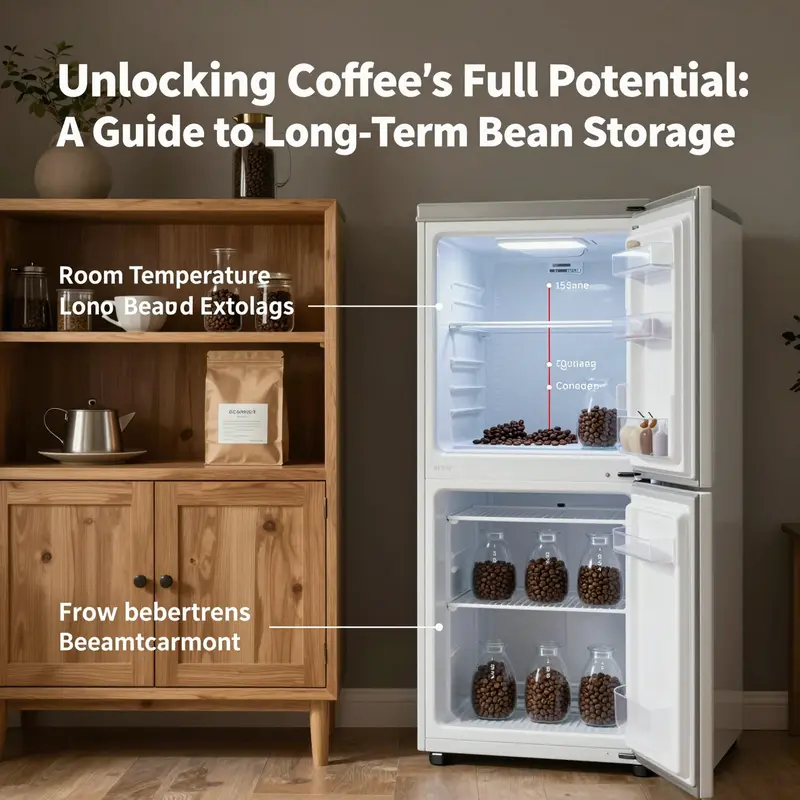
Preserving the aroma and sweetness of coffee beans across months is not magic; it is a disciplined routine rooted in four guardrails: seal, shield from light, stay cool and dry, and limit air exchange. Temperature is the quiet conductor in that orchestra. Even small shifts can alter the chemistry of beans: oils migrate, volatile compounds vent, and the crisp bloom that signals freshness fades. The research that guides best practices emphasizes airtight, opaque containers, and a careful balance between accessibility and protection. In practice, this means choosing vessels that block light and lock oxygen out, then aligning storage with how soon you plan to drink the roast. The goal is not to freeze every batch forever but to keep a steady supply that tastes as close to fresh as possible when you need it. Long-term storage hinges less on a single clever gadget and more on a reliable routine that respects the beans’ physiology and the kitchen’s real-world rhythms.
Consider first the short arc of storage. For beans you expect to drink within a couple of weeks, room temperature in a cool, dark, dry cabinet is perfectly acceptable. The recommended range—roughly 15°C to 20°C (59°F to 68°F)—strikes a balance between accessibility and stability. It is cool enough to slow oxidation and degassing but not so cold that you invite moisture migration or condensation when you switch compartments. The moment the temperature climbs toward heat, the clock starts ticking faster. Heat accelerates staling, amplifying off flavors and dulling fruit notes that once danced in the cup. For many households, this is enough time to finish a bag in a reasonable span, and the insistence on keeping beans away from heat sources—stoves, ovens, dishwashers, or direct sunlight—becomes a simple habit that protects flavor without fuss. Refrigeration, despite its allure of cold storage, rarely belongs in the everyday coffee ritual. The fridge’s humidity and odor-rich environment can coax moisture into the beans and let aromas from other foods cling to their surface. The result is a stale baseline that is hard to improve with any brewing technique.
Longer storage moves the conversation from convenience to preservation. When beans must endure beyond four to six weeks, freezing becomes a practical option, provided it is executed with care. The key is to minimize air contact and to shield beans from moisture and light as they transition through the cold cycle. The procedure begins with portioning: divide the beans into single-serving amounts that you can use in one or two brews. This reduces repeated exposure to air as you open containers over weeks or months. Each portion should sit in a vacuum-sealed bag or a heavy-duty freezer bag, and every bag must be sealed with as much air removed as possible. The goal is a compact, dense package that keeps the inner chemistry stable until you are ready to brew. The ideal freezing temperature is 0°F (-18°C) or lower, and the beans should be placed in the freezer promptly after sealing. Importantly, thawing should occur without breaking the seal on the bag until the beans have reached room temperature. This minimizes condensation on the bean surface, which can reintroduce moisture and diminish aroma and flavor.
When the moment arrives to use frozen coffee, the thawing process matters almost as much as the freezing. Remove a portion and let it sit in its sealed bag at room temperature for about two hours, or until it has fully thawed. Opening the bag before the beans have reached ambient temperature invites condensation—an invisible guest that can dampen aroma and alter mouthfeel. By thawing in a controlled manner, you avoid the water-laden microenvironment that can dull the aroma’s edge. Once thawed, the beans should be used promptly; any remaining portion deserves a return to its sealed state and the freezer. This discipline mirrors the broader principle: limit exposure to air and moisture, and keep flavors contained where they belong—inside the bean, not on the kitchen shelf.
In practice, the most common missteps are about safety margins and assumptions. Do not convert fridge space into a long-term coffee pantry. The fluctuating temperatures and humidity inside a refrigerator can create condensate and odor transfer that degrade the beans’ sensory profile. Do not leave beans exposed to air for extended periods. Each opening invites oxidation, and oxygen is a relentless agent of staling. Do not store beans near strong-smelling foods; coffee is eager to absorb neighboring aromas, and the result is a cup that tastes like last night’s leftovers instead of the roasted promise you intended. Finally, a simple but powerful habit is to buy in smaller quantities. A few hundred grams that you can finish within a few weeks is often better than a bulky bag that rests in a cupboard for months, gradually losing its vibrancy.
Beyond storage mechanics, there are practical tests that help gauge freshness without brewing a full pot. The smell test is the clearest early signal: fresh beans carry a vibrant, aromatic scent—think fruity, floral, or nutty notes depending on roast and origin. Stale beans carry a flat, dusty, or cardboard-like aroma. When you brew, the bloom offers another cue. Fresh beans unleash a lively foam on contact with hot water, a sign of carbon dioxide still escaping from recent roasting. If the foam is weak or absent, the beans might be past their peak. Best-by dates offer a rough guide, but they are not the only rule. While safe to drink for longer, flavor typically peaks within a month of roasting. The longer the time since roast, the more the delicate aromatics fade. The synthesis of these cues—smell, bloom, and the roast date—provides a practical map for deciding whether to drink now or store away for a future cup.
The recommended long-term strategy is a disciplined rhythm: buy small, frequent batches, and freeze only when needed. This approach aligns with how coffee bands itself to the senses. The volatile compounds that define aroma are fragile and temperature-sensitive. Freezing, when done correctly, slows their decay and can preserve peak freshness for several months. The research backing this practice notes that improperly stored beans can lose a significant portion of their aromatic intensity in a short window—up to half within ten days in some poor storage scenarios. When freezing is handled with care, however, the principal flavor notes can be retained for a longer horizon, typically three to six months, with minimal quality loss if you minimize condensation during thaw and return the rest unexposed to air. The practical implication is straightforward: treat your freezer like a dark, stable archive for your beans, not a casual storage shelf. Each batch you pull from the freezer becomes a small experiment in patience and precision, testing whether the routine has kept flavor and aroma intact through the thaw.
To implement this routine, a few procedural touchpoints matter. Label every bag with the roast date and the quantity inside. You do not need to memorize the exact roast date if you are used to a calendar, but having it visible makes it easier to prioritize older stocks before newer ones. When possible, use transparent or opaque labeling that does not demand you pry open the bag to read the information. The container choice, as emphasized, should be opaque and airtight. Dark glass, ceramic, or stainless steel can all work well, provided they seal tightly and prevent air exchange. The lid gasket should be intact, and the container should be evaluated periodically for any cracks or gaps that could invite oxygen or moisture. In a broader sense, the story of storage is a story about alignment: aligning the bean’s vulnerable state with a protective environment that respects the chemistry inside. The small daily decisions—where you place the container, how quickly you finish a bag, and when you decide to freeze—accumulate into a larger outcome: flavor that remains bright and nuanced rather than dull and hollow.
There is also a scientific thread worth following. The Specialty Coffee Association has highlighted how improper storage impacts aromatic intensity and how proper freezing can preserve peak freshness across a practical window. The essence of their guidance is simple: keep beans away from heat and light, minimize air exposure, and freeze only when necessary with careful thawing. This framework does not demand perfection in every kitchen; it asks for consistency. If you adopt a reliable routine—rotate stocks, seal tightly, store in a cool, dark place, and freeze in measured portions—you create a dependable system that preserves what matters most: aroma, flavor, and the cup’s overall integrity. In this light, long-term storage becomes less about heroic preservation and more about disciplined curation of your coffee supply.
The upshot, distilled from the research and practical experience, is that the ideal long-term strategy blends sensible short-term handling with deliberate freezing only when the quantity makes it unavoidable. Use room-temperature storage for beans you expect to drink within a few weeks, but have a plan for longer horizons. When you reach that horizon, freeze in small, airtight portions. Thaw slowly, keep condensation at bay, and use what you thaw promptly. This approach minimizes moisture intrusion and oxygen exposure, two forces that most aggressively erode flavor and aroma. It is a straightforward philosophy: treat coffee beans as delicate, perishable inputs that deserve a stable, protective environment. When you align your storage method with this principle, you protect not only the bean but also the story of the roast—the way it presents itself in the cup, the way its fragrance translates into a sensorial memory, and the way its sweetness, acidity, and body can still sing after months in cold storage.
For readers seeking a deeper owner’s manual on storage, the Serious Eats guide offers an authoritative extension of these principles, detailing practical steps and considerations for optimal outcomes. External resource: https://www.seriouseats.com/ultimate-guide-to-storing-coffee-beans
Guarding Fresh Flavor: A Practical Chapter on Avoiding the Traps of Long-Term Coffee Bean Storage
When you begin to treat coffee like a small, precious library rather than a bulk commodity, you start to notice how its aroma and flavor slip away as silently as a breath in a quiet room. The goal of long-term storage is not to pretend that beans will stay exactly as they were on roast day, but to preserve as much of their original character as possible for as long as feasible. To do this well, you must understand the quiet forces that steal flavor: light, heat, air, and moisture. The most common missteps are not dramatic misfires but small, persistent choices that accumulate over time. Many home roasters and everyday coffee drinkers alike default to the fridge, the clear glass jar on the counter, or large bulk bags that tempt with convenience but betray with aroma loss. The path to better long-term storage begins with restraint and discipline, and it ends with a simple, repeatable routine: seal tightly, shield from light, keep cool and dry, and minimize air exchange. If you keep these ideas in balance, you can extend the life of your beans without turning the process into a ritual of anxiety. You can enjoy the journey as much as the cup that follows it, tasting better because your storage choices were deliberate rather than reactive.
One of the clearest lessons from thoughtful coffee storage is this: avoid the fridge for long-term preservation. The refrigerator seems like a natural home for many perishables, yet coffee beans are porous and curious about their surroundings. The low airflow in a fridge is paired with fluctuating humidity and a chorus of other smells from nearby foods. Beans readily absorb these odors, and the moisture can invite staling rather than keeping pace with it. The result is a cup that tastes flat or oddly seasoned by the fridge’s accomplices. And because temperatures swing when you take a container in and out, the beans experience a microclimate that accelerates oxidation in ways that are hard to reverse. The fridge should be reserved for those rare moments when you need to cool a batch of coffee quickly for a brew that same day, not as a long term home. In short, refrigeration invites a slow drift toward stale flavors, a drift you can easily avoid by choosing storage that guards against both light and air.
If you skip the fridge, the next battlefield is light. Light is a thief as patient as a seasoned perfumer and as persistent as a thawing ice cube. Transparent glass jars, countertop proximity to windows, or any container that lets in photons becomes a fast track to oxidation. Over weeks, light degrades volatile aromatic compounds, those delicate molecules that carry chocolate, citrus, or floral notes. Dark, opaque containers act as armor here. A ceramic, stainless steel, or dark glass vessel with a tight seal and a rubber gasket creates an effective defense against light and air simultaneously. The lid matters almost as much as the container: a gasket helps seal out air that wants to sneak back in with every time you open the jar. So much of the flavor is tied to the fragile oils and esters that can evaporate or degrade with a single bright morning sun. The goal is consistency, not perfection in a single moment, and the proper container supports that with a quiet, watchful presence on your shelf.
Even more subtle than light and temperature is the question of air exchange. Every time you open a container, you invite a little more oxygen to mingle with the beans. Oxygen is the slow sculptor of flavor, turning bright, aromatic oils into dullness over time. That is why airtight, impermeable storage is crucial for long-term care. A proper storage system uses a container that seals tightly, with a gasket that blocks air from slipping past the lid’s perimeter. When you later pull a portion for grinding, you release a small amount of air by design, but the goal is to minimize repeated cycles. A good practice is to portion out only what you expect to use in the near term and keep the rest securely sealed in its own dedicated container. In this way you reduce the total time the beans spend exposed to air and preserve the integrity of their aromatics for longer.
From the perspective of time, there is a practical boundary you should respect: for short term, 2 to 4 weeks at room temperature in a cool, dark, dry cabinet is acceptable. That window suits people who drink coffee more frequently and want to avoid waste. The closet or pantry should host beans away from heat sources such as stoves, dishwashers, or ovens. Even the kitchen counter near a sunny window can become a trap, because heat and light cooperate to degrade flavors. The broader idea here is to keep things consistent and predictable. Coffee does not require dramatic storage tricks; it benefits from restraint and a stable microclimate rather than a dramatic lab setup. When you treat the pantry like a protected reserve rather than a casual shelf, you honor the beans and yourself with a smoother, more trustworthy cup—every time you grind.
For longer horizons, freezing becomes a viable option, but only if you handle it with care. Freezing should be reserved for larger quantities that would otherwise sit idle beyond a 4 to 6 week horizon, with the crucial condition that the beans are divided into single serving portions. Vacuum sealing is ideal, or at minimum a heavy duty freezer bag that you can squeeze almost flat to remove as much air as possible. The goal is to create a microenvironment where ice crystals do not form aggressively and where oxygen is kept to an absolute minimum. When you freeze, you are essentially pausing the clock on the oxidation process, but you are not stopping it because the moment you thaw you reintroduce moisture and heat. Therefore, never refreeze thawed beans. Once you decide to use a portion, thaw it at room temperature in its sealed bag for a minimum of two hours, and only then open. Condensation is a moisture thief that you want to avoid at all costs, because damp beans brew up with a different, often muddy texture and flavor. If you follow these steps—proper division, vacuum sealing, 0 Fahrenheit or below, and careful thawing—you can preserve a surprising amount of the original roast character for up to six months. The important caveat is to avoid repeated freeze-thaw cycles that degrade oils and trap aromas in a damp fog.
Degassing is another detail that many overlook yet is essential for keeping long term storage sane. Right after roasting, coffee beans shed a large portion of their carbon dioxide. In a sealed container, some degree of pressure can build up if you seal them too early. That pressure can distort packaging, warp seals, or increase the chance of moisture entry once the bag is opened again. The practical remedy is simple: allow the beans to rest for about 12 to 24 hours in a vented space before moving them to a storage vessel designed for long term care. This degassing window lets the beans settle into their new internal environment, releasing enough CO2 that the risk of pressure buildup drops dramatically. It may seem like a small detail, but it has a measurable impact on how well the storage vessel performs and how cleanly you can pour out beans for future brews. In short, the post roast rest is not a luxury; it is a safeguard that helps maintain the bag’s integrity and the beans’ flavor trajectory over time.
Across the spectrum of storage choices, another mistake often slips into the plan through bulk purchases and the assumption that more is merrier. Buying large bags with the intention of saving time and money is commendable in principle, but it can sour the experience if you do not have a reliable plan for consumption. Roast flavors begin to diminish after roughly two to four weeks, depending on the bean and roast level, and the larger the quantity you keep, the more time those flavors spend in a vulnerable zone. The right approach is to buy in smaller quantities that align with your weekly or biweekly cadence—think 200 to 500 grams rather than 1 kilogram at once. This practice minimizes waste and keeps your flavor sweet spot within reach. It also reduces the cognitive load of managing multiple storage conditions. When you make peace with the cadence of your life and the pace at which you enjoy your coffee, you make room for better flavor in every cup and a storage routine that feels natural rather than punitive.
To assess freshness while you navigate long term storage, rely on two sensory checks that are quick and surprisingly telling. The first is a smell test. Fresh beans impart a vibrant aroma, sometimes fruity or floral, sometimes nutty or chocolatey, depending on origin and roast. If the beans smell flat, dusty, or like paper, you are already in a zone where flavor is slipping away. The second is a bloom test, particularly relevant to hot water contact. When you pour water over freshly ground coffee, the foam that rises is a sign of carbon dioxide escaping in an active brew chemistry. If you do not see a bloom, the beans may be past their peak. These tests are not perfect guardians, but they provide a reliable quick read on whether your storage approach is working in the moment and help you refine your routine over time. The best practice is to treat the best by date as a rough guide rather than a fixed expiration, understanding that flavor can still be enjoyable beyond that window, but with a more pronounced fade as the days pass. Embracing this realistic view keeps your expectations aligned with the science behind aroma preservation and avoids the trap of chasing perfection where it cannot be sustained.
The practical synthesis of these ideas is a simple rhythm. Roast, degas, and cool your beans briefly before moving them to an opaque, airtight container. For daily use within a two to four week window, keep them in a cool, dark cabinet away from heat. If you must store more than a few weeks, divvy the beans into single serving portions, seal them tightly to minimize air contact, and freeze only if you truly need to bridge a longer gap. Thaw slowly, without opening the bag until it has reached room temperature, and avoid a second freeze. Throughout, avoid the temptations that steal flavor: fridge storage, glass or clear jars on the counter, and bulk quantities that outlive your weekly cadence. If this routine feels almost too modest to matter, you are on the right track. Real flavor retention rests on small, repeatable steps rather than dramatic actions that you cannot sustain. By moving away from the instinct to store everything in one place and toward a disciplined cycle—degassing, sealing, temperature control, and thoughtful portioning—you keep your coffee tasting like the day it roasted, even when it has nimbly traveled through weeks or months of storage. The pleasure of the beans is not just in the moment of grinding and brewing but in the faithful respect paid to their journey from roast to cup.
As you build this practice, you begin to notice how it dovetails with everyday life. It changes not only how you store but how you plan. You start buying smaller quantities more regularly, which reduces waste and keeps flavors bright. You plan space in the freezer for backup portions, and you assign a single container for long term storage rather than scattering beans across several compromised locations. The routine becomes almost a ritual, a quiet moment of care that pays dividends in aroma and balance when you brew. Beans store better than you think if you give them the right home, and you will discover that a well designed storage system does more than protect flavor; it makes brewing feel calmer, more intentional, and more rewarding. In short, the key to long term storage is not a miracle device or a secret technique but a thoughtful framework grounded in the simple truths of light, air, moisture, and temperature. If you hold those truths close, you will find your coffee aging gracefully rather than degrading abruptly, and you will taste the difference with every pour.
External resource for deeper guidance: https://www.seriouseats.com/ultimate-guide-to-storing-coffee-beans
Final thoughts
Effective long-term storage of coffee beans is crucial for maintaining their freshness and flavor, ultimately enhancing your business’s reputation. The right choices in container types, understanding temperature conditions, and avoiding common mistakes can lead to a consistently high-quality product that satisfies customer expectations. By implementing these best practices, you’ll not only preserve the integrity of your coffee but also ensure a delightful experience for your patrons with every cup.