

Selecting a bean-to-cup coffee machine is crucial for business owners aiming to elevate their coffee service. In today’s competitive landscape, the quality of coffee can significantly impact customer satisfaction and retention. This guide discusses key factors when choosing a machine, focusing on essential features such as bean freshness and storage, grinding precision, extraction pressure, and ease of cleaning. Understanding these elements can streamline your coffee operation while ensuring consistent, high-quality brews that satisfy your clientele. Each chapter delves into specific aspects integral to making an informed decision and optimizing your coffee service.
Preserving the Pound: How Bean Freshness and Smart Storage Define Bean-to-Cup Success
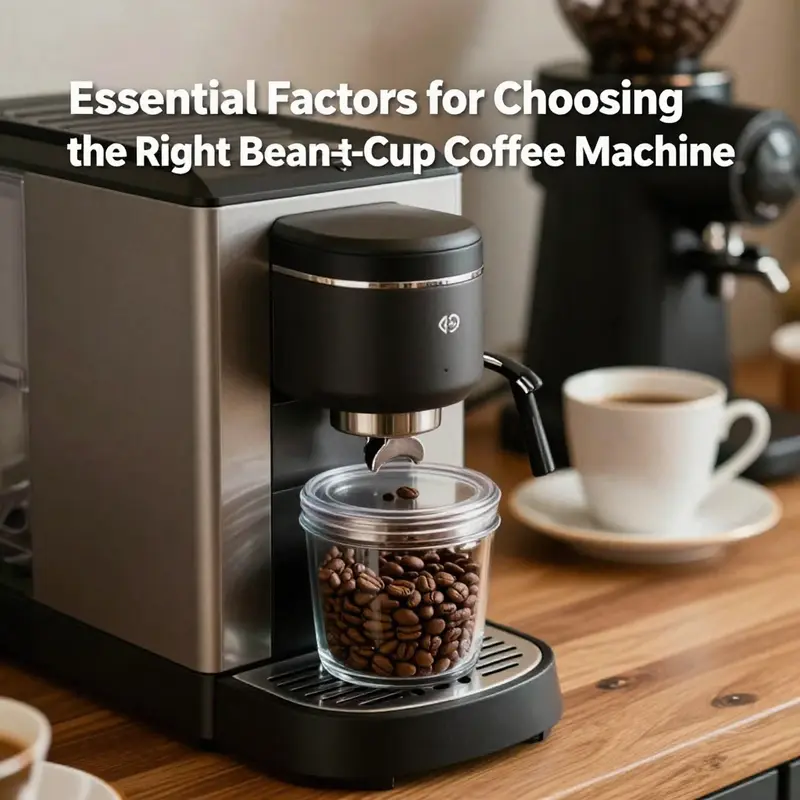
Why Bean Freshness and Storage Matter
Every decision you make about a bean-to-cup machine should start with the beans. The moment coffee leaves the roaster, a clock begins. Aroma compounds and oils bond and dissipate. Oxidation, humidity, light, and heat quietly erode the flavors that make a great cup special. A machine that grinds and brews is only as good as the beans it handles. Choosing a machine with thoughtful storage and freshness features ensures each extraction reflects the beans’ potential.
A built-in grinder changes the whole dynamic. Grinding immediately before extraction preserves aromatic volatile compounds that otherwise vanish within minutes. Machines that integrate a grinder reduce the time between grinding and brewing to seconds. This yields a more vivid aroma, brighter acidity, and fuller body. But not every on-board grinder performs equally. The grinder must sit within a design that protects beans before they are crushed. If beans sit unprotected in a hopper that leaks light or air, freshness is lost long before grinding begins.
Airtight, light-proof hoppers are the unsung hero of long-lasting flavor. An effective hopper seals out oxygen and blocks sunlight. These two protections slow chemical reactions that flatten taste. A light-proof design prevents photodegradation of oils that carry aroma. Airtight lids, silicone seals, and reduced headspace inside the hopper matter. Even a small vent can invite oxidation over days.
Beyond simple sealing, consider how the hopper interacts with the machine. Does the machine allow single-bean loading? Can you lock the hopper so beans don’t spill into service areas? Machines that provide a sealed pathway from hopper to grinder without leaving beans exposed maintain quality. Look for models with clear, removable lids that snap firmly into place. Transparent windows help you check levels without opening the container, preserving the internal environment.
Capacity and bean rotation are practical concerns. A large hopper sounds convenient, but too large encourages beans to sit longer. Beans stored for weeks suffer flavor loss. A mid-size hopper encourages frequent refills, promoting fresher beans in use. For households that favor variety, a smaller hopper allows more frequent bean changes without waste. If you buy specialty beans in small batches, a compact hopper is preferable. Conversely, small offices may need larger capacity, so weigh capacity against turnover and consumption.
Some machines offer multiple hoppers or dedicated chambers. Dual-chamber designs let you keep two different beans ready. This is useful for switching between a dark roast for espresso and a lighter roast for lungo. However, each chamber must be sealed and protected equally. Cross-contamination of aromas is common if compartments share vents or pathways. Confirm that multi-chamber systems isolate beans completely and provide independent seals.
A newer innovation is temperature-controlled compartments. These systems stabilize the ambient environment inside the hopper. They slow the chemical breakdown of aromatic oils and reduce moisture uptake. While not essential for every buyer, temperature control can benefit users in humid climates or near heat sources. For those who store single-origin beans or specialty roasts for limited windows, this feature may preserve subtle floral and fruit notes that heat and humidity suppress.
Humidity control deserves attention. Moisture causes beans to absorb water and clump. It also accelerates mold risk in extreme cases. Seek hoppers and storage chambers that resist humidity through desiccant pockets or materials that limit condensation. Some manufacturers coat the interior with moisture-resistant finishes. Even small design choices, like raised ribs under the hopper, can prevent beans from sitting in condensate.
Another quiet but important detail is the design of the grinder feed. Some machines allow beans to tumble into the burrs, leaving larger fragments lodged in narrow channels. Over time, retained grounds stale and taint fresh grinds. Machines with purge cycles or grinding chamber rinses reduce retention. Similarly, grinders that minimize retention by using vertical feed paths and accessible catch chambers make hygiene and freshness maintenance easier. Regular purging of the grinder after changing beans clears old grounds and prevents flavor carryover.
Consider dosing control and single-dose versatility. A machine that dispenses exact grams improves consistency. When doses are accurate, you can brew by weight rather than guesswork, ensuring repeatable results. Single-dose options let you grind only what you need for each shot. This is ideal for specialty beans where every cup should be a showcase. If the machine supports manual dosing or has a bypass chute for pre-ground coffee, ensure it also includes a tight seal to avoid exposing beans to air unnecessarily.
Think about the interaction between storage and maintenance. A sealed hopper that is difficult to remove or clean may trap oils and stale particles. Choose machines with hoppers that detach smoothly and clean easily. Removable parts that tolerate a simple rinse or dishwashing save time. Also check whether the machine provides instructions for proper hopper cleaning and whether replacement seals are available. Longevity in freshness relies on both good initial design and straightforward upkeep.
The visible details matter too. Clear, well-marked indicators that show freshness status or roast date help you manage beans deliberately. Some machines include simple stickers or writable labels for roast dates. Others incorporate more advanced displays that remind you when beans were loaded. These small aids support best practices: use beans within two to three weeks of roast, store away from heat, and keep containers dry.
Many coffee enthusiasts buy whole beans from roasters who provide roast dates. Even the best machine can’t reverse stale beans. Plan purchases accordingly. Buy smaller lots more frequently. If you must store beans for longer, use opaque, airtight containers in a cool cupboard. Avoid storing beans in the refrigerator or freezer if you access them daily; repeated temperature changes cause condensation and degrade oils.
Degassing is another important consideration. Freshly roasted beans release carbon dioxide for several days. Machines that tightly seal airtight hoppers without a one-way valve for gas release may trap pressure. Look for designs that accommodate degassing without letting oxygen in. Some hoppers integrate micro-vents or one-way valves that let CO2 escape while preventing air ingress. This balance preserves beans without exposing them to oxidation.
When you evaluate machines, examine the materials used in hoppers and seals. Food-safe plastics can be excellent, but they must resist static and oil absorption. Some plastics build static charges that make grounds cling and disrupt dosing. Statically neutral or anti-static coatings help. Silicone seals should be durable and replaceable. Metal or glass windows resist staining and odor retention better than some plastics.
Finally, pay attention to how the machine communicates freshness and storage guidance. Clear, simple user prompts or an accompanying guide that explains best practices will keep your coffee tasting its best. Machines that assume the user will instinctively know storage timelines can leave delicious potential untapped. A short guide on roast dates, ideal hopper capacity, cleaning frequency, and purge recommendations helps you use the machine properly.
Choosing a bean-to-cup machine with thoughtful bean storage features is an investment in flavor control. The best designs pair a high-quality grinder with hoppers that are airtight, light-proof, moisture-resistant, and easy to maintain. Temperature and humidity controls add value in challenging environments. Practical touches such as removable hoppers, anti-static finishes, purge cycles, and degassing accommodations support long-term freshness.
Pairing sound machine selection with smart bean buying completes the equation. Buy beans with clear roast dates. Prefer smaller batches that rotate quickly. Store beans in a cool, dark place and load them into the machine only when needed. Use the machine’s built-in tools to purge grinders and switch beans cleanly. Over time, these habits will reveal subtle layers of flavor that a superior machine preserves.
One last practical tip: treat your machine like any sensitive piece of equipment. Maintenance practices developed for other precise tools can be valuable. For ideas about routine care and tool maintenance principles, refer to resources on tools and equipment for occupational therapists which highlight practical methods for preserving equipment performance and hygiene.
For a broader look at how modern bean-to-cup machines handle freshness and storage, consult this comprehensive guide: https://www.techradar.com/uk/best-bean-to-cup-coffee-maker-2026
null

null
The Pressure You Can Trust: Extraction Stability as the Cornerstone of Bean-to-Cup Espresso

Extraction pressure is more than a spec on a control panel. It is the heartbeat of every espresso shot produced by a bean-to-cup machine, the invisible force that shapes flavor, aroma, sweetness, and crema. When you pull a shot, water is forced through a compact coffee bed with energy and precision. If that energy wavers, the coffee responds with unevenness that is almost impossible to fix after the brew begins. This isn’t merely about pushing water through coffee; it is about how consistently that push is maintained from first contact to the final drip. In the quest for café-quality results at home, understanding pressure stability becomes a practical obsession. As Bean and Brew Technologies puts it, “Pressure must remain stable throughout extraction, as fluctuations can cause channeling and uneven extraction.” That statement crystallizes a truth: the entire extraction process hinges on keeping the pressure steady, so water flows through the puck evenly and captures the coffee’s nuanced flavors rather than racing through weakly or clumping in crevices created by turbulence.
To translate that into the equipment you choose, it helps to anchor your expectations to a practical standard. In espresso terms, a stable target pressure is around nine bars through the bulk of the extraction. That does not mean the pump never goes higher; many machines are capable of higher peak pressures. What matters is how quickly and reliably the system returns to that nine-bar rhythm as extraction progresses. This rhythm is what produces a reliable crema layer, a balanced cup, and repeatable results across multiple attempts and days. It is also what makes the difference between a shot that tastes sharp and sour and a shot that tastes sweet, velvety, and clean. The stability is especially important when you vary your beans—different roasts, different grind sizes, or even slight changes in tamping pressure can perturb flow. A machine that damps those perturbations and holds a steady path through extraction gives you a forgiving baseline for creativity rather than a fragile platform that yields inconsistent results.
The path to achieving that steadiness lies in how the machine regulates both temperature and pressure. Many modern bean-to-cup systems deploy a sophisticated pressure regulation framework that works hand in hand with temperature control. PID—proportional, integral, derivative—controllers are the cornerstone of this approach. A PID controller constantly monitors the brew pressure and temperature, compares them with the set targets, and makes minute adjustments in real time to correct deviations. The result is not merely tighter control; it is a more predictable relationship between grind size, tamping, bean type, and the final cup. When the grind is coarser or finer than ideal, or when a darker or lighter roast alters the flow dynamics, a well-tuned PID system helps the machine respond without sending the shot into a tailspin of under-extraction or over-extraction. In practice, this means steadier extraction curves and a shot that tastes closer to the barista’s intention—consistency that home users can rely on, shot after shot, day after day.
A crucial nuance to keep in mind is that many machines claim lofty pressure figures, sometimes marketing them as the defining feature. The truth is more nuanced: high peak pressure is less valuable than a stable, controllable pressure profile. You want a system that can deliver enough force to push water through a tight puck with confidence, yet has the regulation to keep that force steady wherever the grind lands on the roast spectrum. That is where the idea of pressure regulation comes into play. The best bean-to-cup machines with strong regulation will show a near-flat pressure profile through most of the extraction, rather than a sharp peak followed by a rapid drop or a wobbly oscillation. This steadiness translates into a cup that carries the coffee’s intrinsic sweetness, caramelized sugars, and aromatic oils with less competition from bitter compounds that betray themselves when extraction is uneven.
From a sensory perspective, stability matters in two intertwined ways: first, in the crema’s formation, and second, in the flavor’s balance. A stable nine-bar rhythm supports a crema that is delicate yet resilient, a microfoam that sits atop the shot with a glossy crown rather than a fragile cap that collapses prematurely. Crema is a complex emulsion of oils and colloids created under pressure; when pressure wanders, the emulsification becomes inconsistent, and the crema’s stability mirrors that insecurity. Second, flavor balance. When extraction proceeds smoothly, the water interacts with the coffee bed evenly, extracting a spectrum of compounds in a coherent sequence. You get sweetness and acidity aligned with body, rather than the early extraction of acids and later over-extraction of bitter compounds. The result is a shot that reads as cohesive to the palate—bottom note sweetness, mid-palate depth, and a finish that lingers with clarity. It is no accident that professionals equate stability with repeatability; it is the bedrock on which reliable espresso is built in any environment, including a busy home kitchen.
For the everyday shopper, translating this into purchase criteria can feel abstract until you map the features to the experience. First, examine how the machine controls pressure during extraction. A system that truly stabilizes pressure will provide precise regulation and a clear indication of its performance, whether through a digital readout, a responsive gauge, or an intuitive app that communicates pressure trends. Second, assess how the device handles different bean profiles. A robust regulator with a good PID loop will maintain stability across a range of grind settings and roast levels. Third, consider how the machine behaves as it heats up and as the shot progresses. Some devices show a temporary drift during the pre-infusion phase or early pull; a well-tuned system minimizes this drift, maintaining a steady ramp toward the nine-bar target as extraction continues. This is the difference between a machine that simply produces a shot and a machine that reliably produces a café-quality shot that you can count on every time.
The science behind stable extraction pressure also reminds us that there is a delicate equilibrium among the machine’s subsystems. Grinding precision, for instance, interacts with pressure stability in a subtle feedback loop. A tightly calibrated burr grinder—one that yields consistent particle size distribution—reduces the likelihood of channeling and pressure spikes. Conversely, a grinder that produces a wide range of particle sizes can demand more from the machine’s regulation system. A well-made bean-to-cup machine often features an integrated grinder with micro-adjustment capabilities. This allows you to fine-tune grind size to your preferred roast and to compensate for slight variations in beans from bag to bag. When the grinder and the regulator work in harmony, you’re less likely to encounter pressure disturbances, and your shots become more forgiving and repeatable. The combination of stable pressure with precise grind control yields a practical advantage: you can experiment with different beans and roasts without the fear that your machine will betray you with unpredictable extractions.
An additional consideration is how pressure stability aligns with maintenance and reliability. A system that can maintain a steady nine bars should also be resilient over time. That means components like the brew head, seals, and the pump should resist degradation that could introduce fluctuations. While the average home user does not need to become a technician, a sense of how the machine behaves over weeks and months matters. A device that employs sealed, easily serviceable components, along with software-driven regulation that can adjust to aging hardware, tends to stay closer to that nine-bar ideal longer. In this light, the best machines are not just precise out of the box; they are engineered to maintain precision through normal wear and routine use, with courteous maintenance cycles that keep you from being forced into a makeshift workaround when a simple cleaning or calibration would restore stability.
In the broader arc of choosing a bean-to-cup machine, pressure stability sits alongside other crucial attributes that define real-world usefulness. A machine can be capable of exquisite pressure control, yet if it requires constant fiddling, is difficult to clean, or presents a clunky user experience, it undermines the very habit it seeks to support. This is why the selection process should be holistic: evaluate the regulator as part of an ecosystem that includes bean storage, grinding, extraction, cleaning, and user interface. A well-constructed system integrates all these elements, so you don’t have to treat pressure as a finicky outlier but as a dependable baseline—one that you trust to deliver consistent results no matter the beans you’re using or the time of day. That trust compounds. When a morning shot comes out with the same balance and crema as the evening shot, you’re not just tasting coffee; you’re tasting a machine that remains faithful to its core objective: to extract evenly, to respect the bean’s character, and to do so with minimal daily friction.
For readers who crave a deeper dive into the chemical and physical underpinnings of stable extraction, the science behind how pressure interacts with extraction is laid out in more detail in industry-focused literature. A rigorous source that explains why a steady pressure profile matters across the extraction cycle can be found in The Science of Espresso Extraction. This external resource offers a thorough examination of the interplay between pressure, temperature, grind, and puck dynamics, providing a foundation for the practical guidance discussed here. If you’d like to explore that deeper science, you can visit the resource at the Bean and Brew Technologies site.
In practice, the takeaway is simple but powerful: when you read a spec for a bean-to-cup machine, don’t stop at the peak pressure figure. Look for evidence of a regulated, stable pressure profile and an intelligent control system that maintains that stability under real-world variations in grind and bean. The machines that succeed at home attention to this balance—delivering consistent nine-bar extraction, responsive adjustment via PID, and a design that minimizes drift as the unit heats and ages. These are the machines that not only promise café-quality results but deliver them with reliability you can build a routine around. And while other factors—like a well-sealed bean chamber, an efficient grinder, easy cleaning, and a compact footprint—remain essential, the steady heartbeat of nine bars, kept steady by thoughtful engineering, is the nerve center of truly repeatable espresso from a bean-to-cup machine.
External resource for further study: https://www.beanandbrewtech.com/science-of-espresso-extraction
null
null
Final thoughts
Selecting the right bean-to-cup coffee machine involves an in-depth consideration of essential features that align with your business needs. Prioritizing bean freshness and grinding precision ensures that every cup served is of the highest quality, while stable extraction pressure guarantees optimal taste. Additionally, ease of cleaning and maintenance promotes efficiency within your operation, keeping your machine in prime condition while saving valuable time. By focusing on these areas, your investment will not only enhance your coffee offerings but also improve customer satisfaction, making a significant impact on your business’s bottom line.