

Coffee is more than a beloved beverage; it’s a global industry that significantly impacts economies and cultures around the world. Understanding where coffee beans grow is crucial for coffee business owners seeking to source high-quality products, capitalize on market trends, and appreciate the nuances of flavor that different regions provide. This article delves into the Coffee Belt—the tropical region ideal for coffee cultivation—key coffee-producing areas across South America, Africa, and Asia-Pacific, and the innovative farming practices pushing the boundaries of traditional coffee growing zones. Each section will equip you with the knowledge to make informed decisions about sourcing and understanding the rich tapestry of coffee cultivation globally.
Tracking the Coffee Belt: How Climate, Soils, and Regions Decide Where Beans Grow

A belt of light and weather circles the globe where beans live and come to life. The Coffee Belt is not merely a line on a map; it is a living system shaped by the sun’s arc, the way air and rain fall, and the character of the land beneath. It spans roughly 46 degrees of latitude, from 23 degrees north to 23 degrees south, threading through continents, coastlines, and highland corridors. In that swath, the world’s coffee tells its most honest stories—stories written in flavor, aroma, and the quiet resilience of farmers who coax delicate flavors from stubborn soils. Within this belt, climate acts as both conductor and guardrail. The temperatures stay within a range that allows the plants to photosynthesize steadily without the stress that would push the beans toward bitterness or uneven ripening. The rainfall patterns, too, settle into seasonality that crops the coffee calendar with defined wet seasons for flowering and fruit set, followed by drier periods that help the beans mature and dry without the burden of perpetual dampness. The result is a crop that can be both reliable for large-scale supply and nuanced enough to satisfy specialty roasters with distinct regional signatures.
These conditions—consistent warmth, regular rainfall, and the rhythm of wet and dry seasons—collected over generations, translate into the characteristics coffee buyers prize. A plant that grows in a given microclimate will respond to altitude, soil texture, and mineral content in ways that imprint itself on the cup. Some beans accrue brightness and florality when grown at higher elevations, where cooler nights and slower maturation give acidity a poised, precise edge. Others gain body and depth from rich, well-drained soils or from exposure to sun and wind that moderate the rate of ripening and encourage complex, layered sweetness. The Belt’s geographic breadth makes it possible to cultivate both Arabica and Robusta varieties, two beans with markedly different personalities yet shared roots in the same climate story. Arabica, often the gentler, more nuanced bean, tends to prefer altitude, shade, and careful husbandry; Robusta, hardier and more robust, thrives on resilience and sometimes lower land costs, yet can still deliver distinctive flavor when grown with attention to soil and microclimate.
From the early hills of East Africa to the vast plateaus of South America, the Belt hosts a mosaic of terroirs that explain, in part, why coffee tastes so different depending on where it was grown. Ethiopia, widely regarded as the cradle of coffee, offers beans whose lineage is inseparable from the land and the culture that care for it. The heirloom varietals, nourished by centuries of cultivation in mineral-rich soils, yield beans with floral aromatics, bright acidity, and berry-like brightness that have become treasured in specialty markets. In regions such as Yirgacheffe and Sidamo, farmers often harvest cherries at altitudes where the air is cool enough to slow down the maturation process, allowing sugars to evolve into aromatic compounds and acidity to stay clean and expressive. The flavors that emerge from these regions are not just notes on a palate; they are echoes of altitude, shadow, and light passing through coffee leaves as the fruit swells and ripens.
Moving to the Americas, Colombia offers a different, equally compelling chapter. Here, the profile of washed Arabica beans leans toward balance and clarity, with bright acidity and a clean, sweet finish. The country’s varied elevations—from the Andean highlands to the foothills that roll toward the plains—provide a continuum of microclimates. The wash process often preserves a sense of purity that appeals to roasters who prize traceability and consistency in single-origin coffees. The result is a kind of reliable elegance, a steady baseline from which roasters can highlight distinctive sensory notes without the distraction of overpowering busyness in the cup. In practice, that means a coffee that can travel well across seasons and markets, while still offering farmers and traders a platform to tell the story of origin—its people, its farms, and the careful work that keeps the flavor consistent year after year.
In Brazil, the Belt’s vast scale becomes most apparent. The country is the world’s largest producer, delivering a volume that sustains beverage supply chains across continents. The Minas Gerais region, with its cooperative networks and robust infrastructure, represents a model of cultivation that blends traditional approach with modern scale. Brazilian beans from this zone often exhibit a comforting cocoa and nut profile, with chocolatey sweetness and a low perceived acidity that makes them versatile for commercial roasts and blends. The landscape here—rolling hills, deep soils, and a climate that supports an extended harvest—also offers a kind of economic gravity: a stable supply that supports the global coffee market’s demand for predictable, flavor-stable beans. Yet even within this model of reliability, there is room for distinction. Growers who invest in shade, composting, and precision moisture management can coax more nuanced sensory markers from their lots, showing that abundance and character can coexist in the same geographic canvas.
Across Asia, the Belt’s influence takes different forms. Indonesia anchors the region with a history of distinctive processing practices and a long-standing reputation for deeply flavored beans. Sumatra’s Mandheling, for example, is often prized for its full body, low acidity, and earthy, cocoa-like notes, traits that reflect both the island’s terroir and the traditional wet-hulling processing method that has evolved there. Robusta, too, remains a major player in parts of Southeast Asia, where the combination of climate and economies makes low-cost production feasible while still allowing room for quality when farms commit to improved post-harvest handling. Indonesia’s diverse islands create microclimates that yield a spectrum of profiles, from the heavy and syrupy to the bright and fruit-forward, reinforcing the notion that the Belt is not a single flavor. It is a living range where climate, altitude, and soils shape the cup in intimate and sometimes surprising ways.
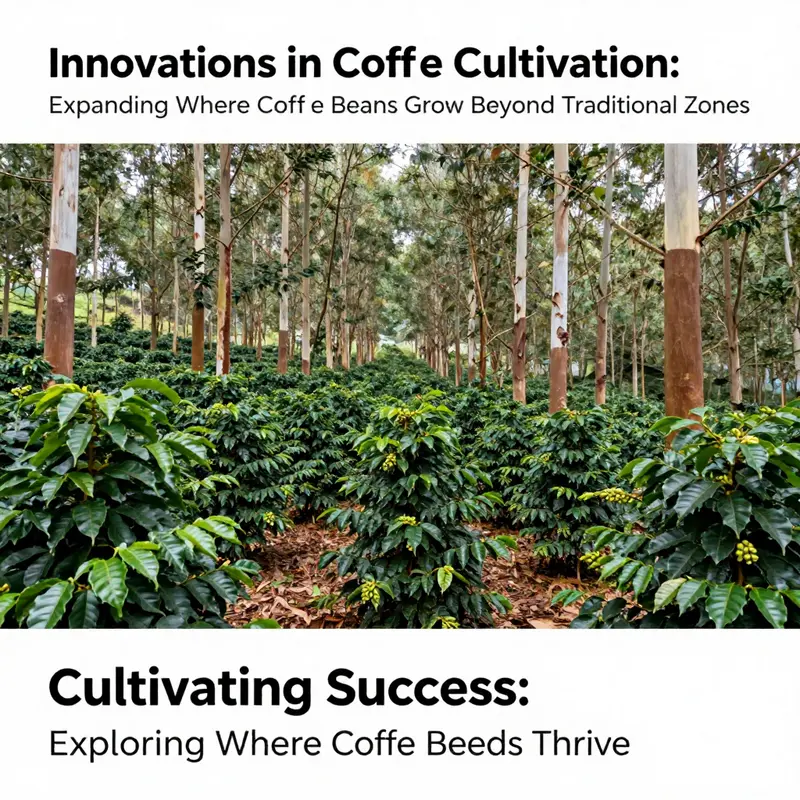
In recent years, the Belt’s boundaries have shown signs of flexibility and evolution. The emergence of new farming practices and microclimate experimentation demonstrates that coffee can be grown outside traditional high-altitude zones. A striking example is the Guangdong initiative in China, where researchers have cultivated premium Arabica under eucalyptus tree plantations in lowland tropical areas. This project shows that with careful attention to microclimate, shade, water management, and soil health, coffee can thrive in settings that were once considered marginal. The lessons from Guangdong reflect a broader shift in how the Belt is understood: not as a fixed line but as a dynamic system capable of expanding to meet growing demand and climate variability. They remind us that the Belt’s potential lies not only in where it is but in how it is cared for—through irrigation strategies, soil enrichment, agroforestry, and innovations in pest and disease management that reduce risk while preserving flavor integrity.
The Belt’s influence on flavor is inseparable from its soils. Volcanic soils, rich in minerals, often confer resilience and a brightness that roasts can reveal beautifully. Farther away from volcanic fields, loamy or clay-rich soils can lend structure and a creamy mouthfeel when paired with careful processing. Soil health—rooted in organic matter, beneficial microorganisms, and appropriate drainage—matters as much as altitude. In coffee, the soil acts like a stage crew, quietly shaping the performance of flavor by affecting nutrient availability, water retention, and root development. The result is a cup whose sweetness may spring from a mineral backbone or a delicate fruitiness born of soil-driven micronutrients. The belt’s broad geography gives producers multiple routes to achieve similar outcomes: brightness expressed through acidity in one region, or fullness and resonance in another, with the common thread being the bond between land and leaf, climate and cup.
As buyers and roasters seek both reliability and complexity, the Belt’s diversity becomes a strategic asset. The best many sourcing teams can do is cultivate relationships that honor both scale and specificity. Brazil’s volume is essential for stable supply and price discipline, while Ethiopia’s distinct varietals offer a gateway to provenance and storytelling in the cup. Colombia’s clear profiles provide consistency, and Indonesia’s bold, textured coffees invite experimentation with blends and roast curves. The challenge and opportunity lie in stitching these qualities into a procurement approach that respects the belt’s complexity without sacrificing the benefits of scale. Ethical considerations, fair-trade practices, and transparent relationships with farmers become part of the Belt’s value proposition, because the climate stories, farm histories, and cooperative models behind each bean matter just as much as the sensory notes they deliver.
The Belt is also a reminder that climate, soil, and human ingenuity together write the future of coffee. As research opens new microclimates and as farmers adopt climate-smart practices, a broader set of landscapes may contribute to the world’s daily cup. The Guangdong example underscores a broader trend: crop diversification and agroforestry strategies that bring shade, soil health, and moisture balance into play in places once thought unsuitable. It is a powerful argument for resilience in the supply chain—an argument that translates into more dependable futures for farmers who adopt sustainable management, and for roasters who depend on those farms to deliver consistent quality across seasons. The Belt’s ongoing evolution invites us to listen closely to the land, to honor regional narratives, and to support the people who steward these ecosystems so that the coffee in our cups remains a source of curiosity, connection, and care.
In practical terms for someone shaping a sourcing strategy, understanding the Belt means recognizing that regional differences are not a barrier to a cohesive portfolio but a map of opportunities. The disciplined buyer will balance quality with quantity, seeking regions known for steady output and the integrity of their supply chains. It means asking questions about fermentation choices, processing reputations, and the environmental footprint of each lot. It means investing in transparency, ensuring that buyers can trace a lot back to its origin, and encouraging practices that protect soil, water, and people alike. It also means acknowledging that the Belt’s diversity can be a market advantage: a single origin can be complemented by others that offset volatility and introduce new sensory dimensions to a brand’s lineup. By embracing the Belt as a living system rather than a fixed grid, buyers can craft a sourcing plan that is both resilient and richly flavored, able to weather climate shifts while continuing to reward farmers who nurture the land and produce beans that inspire roasters and drinkers alike.
The Belt’s story is, at its heart, a human story. It is the tale of smallholders and cooperatives, of families who pass down cultivation wisdom through generations, and of market forces that reward careful stewardship as much as they reward volume. It is a reminder that flavor does not appear in a vacuum; it is a conversation among farmers, processors, exporters, and roasters all the way along the chain. To appreciate where coffee beans grow is to encounter a geography of care, climate, and craft that makes every cup a field note from a particular place. And yet the Belt remains a living map, inviting continual learning as new regions push into coffee as a viable crop, and as innovations in soil health, shade management, and water use redefine what is possible in lowland or high-altitude settings alike.
For professionals focused on sustainability and supply chain integrity, the Belt offers a framework for evaluating risk and opportunity. Regions that maintain robust farming practices, demonstrate transparent permit and certification processes, and invest in community welfare become not just suppliers but partners in a shared mission: to deliver exceptional cups while ensuring fair livelihoods and ecological balance. In this light, the Belt’s ideal conditions—steady temperatures, reliable and seasonal rainfall, and fertile soils—become a baseline: a context in which quality can flourish when farmers are supported by systems that value long-term stewardship as much as immediate yield. As a result, the global coffee market can look to the Belt not only as a source of flavor but also as a framework for resilient, ethical, and enduring production that honors both land and labor.
To those who study agricultural landscapes, the Belt is a living classroom. Its stories emerge from the way crops respond to altitude and microclimate, the way harvest cycles synchronize with the human calendar, and the way communities adapt to shifting weather patterns. It is an invitation to taste, to compare, and to learn from the differences that appear in every cup. It is also a mandate to protect and invest in the ecosystems that make those flavors possible. When roasters and retailers draw on beans that come from the Belt, they are drawing on a global chorus made up of many voices—farmers who cultivate with care, cooperative leaders who organize for shared benefit, researchers who test new agroforestry methods, and communities who preserve seed varieties and traditional processing techniques. The chorus may vary by region, but the music remains unmistakably coffee: a reminder that the place of growth shapes the cup as surely as the water used to brew it.
For readers seeking a concise guide to how these dynamics translate into sourcing choices, a practical frame emerges. Start with regionally informed expectations: Ethiopia for floral complexity, Colombia for clarity and balance, Brazil for scale and consistency, and Indonesia for depth and body. Then layer on farm-level practices: shade management, soil enrichment, traceable harvests, and post-harvest handling that preserves flavor. Finally, build a supply strategy that respects the Belt’s diversity while delivering on business goals. In that sense, the Belt is not only a line on a map but a living toolkit for building flavors, relationships, and futures that honor both people and the planet. It is a reminder that the world’s coffee is grown in a belt that encircles the equator, yet tastes of many lands—and in tasting, we discover a shared commitment to care, curiosity, and connection.
External resource: For a concise overview of the belt and its implications for sourcing, see The Coffee Belt. https://www.sttoke.com/coffee-belt
Where Beans Thrive: A Fluid Map of the Global Coffee Belt and Its Living Microclimates

The story of where coffee beans grow is less a single place than a living map. It unfolds across bands of latitude that cradle a unique set of climate, soil, and seasonal rhythms. This is not just a matter of temperature and rainfall, but of how those elements cooperate with altitude, shade, and processing to shape taste as surely as soil shapes root growth. The concept of a coffee belt is a powerful one because it translates a complex web of conditions into a practical frame for cultivation, commerce, and sensory experience. Between the Tropics of Cancer and Capricorn lies a corridor of tropical climates where the annual dance of wet and dry seasons creates predictable windows for flowering, fruit development, and harvest. In that window, producers have learned to read the land in ways that enable consistent yields, nuanced flavors, and resilient livelihoods. The belt is not a rigid line but a gradient, a spectrum that allows for variation from shaded highlands to sunlit lowlands, from volcanic soils to alluvial plains, from rain-fed plots to carefully irrigated farms. Each spot along that spectrum contributes a distinct voice to the global chorus of coffee flavors, and those voices are increasingly shaped by human ingenuity as much as by nature alone.\n\nIn the core regions, climate acts like a slow, patient maestro guiding how coffee trees grow, bloom, and ripen. The days tend to be warm and steady, with nights that cool enough to slow metabolism just enough to develop complex compounds. The wet season ensures ample soil moisture during critical stages of cherry development, while a well-defined dry season promotes maturation, reduces disease pressure, and concentrates flavors as the fruit hardens and sugars intensify. This rhythm also supports the cultural rhythms of farming communities, whose calendars align with harvests, cupping sessions, and the careful management of soil nutrients. But climate is only one strand of the braid. Elevation adds another dimension, offering cooler air and more stable overnight temperatures that help Arabica varieties express a cleaner acidity and a more nuanced aroma profile. In many belts, high altitude partners with volcanic soils or mineral-rich loams to push flavor into brighter, fruitier, or even tea-like territory, depending on microclimate variables such as humidity, air movement, and soil drainage. The chain from bean to cup begins here, in the way climate and terrain set the tempo for growth, and it ends in the cup as a sensory memory that can be traced back to those early hours of equatorial sun.\n\nSouth America anchors much of the belt in a truly transformative way. Brazil sits at the center of global production, not because it prefers to export a single profile but because its vast landscape offers a remarkable range of microclimates that can produce both typified chocolatey, low-acidity blends and more delicate, nuanced single origins. Minas Gerais, with its rolling hills and varied microterrains, has become renowned for high-quality Arabica that expresses balance and a gentle sweetness. The beans from Minas Gerais often reveal a soft, velvety body with notes that recall cocoa, roasted nuts, and hints of caramel. In regions around São Paulo, plantations and small farms produce beans that carry a subtle nuttiness, a kind of chocolate-caramel chorus that harmonizes with the region’s ample rainfall and disciplined processing, while Paraná contributes volume and diversity, adding to the texture and spread of flavor across Brazil. The overarching character here tends toward middle ground—low acidity relative to many other belts, a broad and approachable sweetness, and an ability to hold well in blends that aim for consistency and rounded comfort. Yet within this broad Brazilian canvas, terroirs diverge. Some farms at higher elevations catch cooler diurnal shifts that brighten acidity; others in the lower hills emphasize body and depth through extended maturation and careful post-harvest handling. The effect is a spectrum rather than a single note, a reminder that a region can be both familiar and surprising to the palate.\n\nColombia contributes a different operatic movement to the South American section of the belt. Its coffee lands, especially in Antioquia, Caldas, and Huila, sit along the spine of the Andes, where altitude and well-drained volcanic soils meet regular rainfall and harvest windows that feel almost engineered for even maturation. Colombian coffees often offer a clean cup with bright acidity and a balanced sweetness that reads as clarity on the tongue. The flavors may drift toward citrus zest, green apple, or delicate stone fruit, with a backbone of chocolate or caramel that keeps the cup grounded. What makes the Colombian profile so captivating is the sense of clarity and lift, the way the fruit and floral notes seem to hover above a crisp, well-defined acidity that never sharpens into harshness. These are coffees that invite a second sip and a third, as if the drinker is retracing the ascent through mountain air that smells faintly of herbaceousness and damp earth. It is no accident that Colombia is associated with precision in the cup and a steadfast ability to be both bright and well rounded, a fusion that mirrors the country’s careful stewardship of high-altitude landscapes and the urban capacity to blend smallholder farms into a coherent national narrative.\n\nAfrica presents a more kaleidoscopic set of flavors and climates, and its contribution to the belt is inseparable from the continent’s long history with coffee as a cultivated, cherished harvest. In Ethiopia, the birthplace of coffee, the story begins with the way landscapes express themselves in the cup. Yirgacheffe, Sidama, and Harrar are not mere places on a map but living ecosystems where altitude, rainfall patterns, and soil composition converge to create floral, citrusy, and sometimes winey or berry-like notes. Somatic hints of jasmine, bergamot, and blueberry often emerge in the cup, carried by a brightness that feels almost musical against a textured body. The Ethiopian palette invites the palate to move between perfume-like aromatics and fruit-forward depth, revealing that coffee can be both a delicate bouquet and a resilient, enduring brew with a legacy of traditional processing styles. Meanwhile, Kenya offers a different African arc, with highland regions around Mount Kenya that yield coffees notable for their vivid acidity and often tea-like brightness. The acidity can sparkle with red berry tones and tropical fruit hints when the fruit is properly matured and the beans are processed in ways that preserve clarity. The Kenyan approach to processing—whether washed to accentuate clean notes or natural to deliver fuller fruitiness—demonstrates how handling choices transform the same bean chemistry into widely varied sensory experiences. Across Africa, the combination of elevation, air movement, and soil chemistry creates a vibrant spectrum that rewards careful cultivation and thoughtful post-harvest strategies.\n\nAsia Pacific presents perhaps the most mosaic-tinged portion of the belt, reflecting a history of trade, local adaptation, and technical experimentation. Indonesia anchors this region with its renowned Sumatra and Java coffees. Sumatra, in particular, is famous for a full-bodied, earthy profile with spice notes and a certain depth of character that comes with traditional processing. The wet-hulling method long associated with Indonesian coffees contributes to a heavier mouthfeel and a sometimes seemingly smoky undertone, along with a lingering finish that invites contemplation. Java contributes its own nuance, often presenting a balanced, medium-bodied cup with herbal undertones and a gentle sweetness that can carry hints of cocoa. The overall image of Indonesia is one of robust presence, where terroir translates into a signature style that feels rooted in the land but open to interpretation by roasters and baristas alike. Vietnam sits prominently on the Asia-Pacific map as a powerhouse of Robusta and a growing share of high quality Arabica in specialty contexts. The Vietnamese profile tends to be bold and chocolaty, frequently with a strong presence of roasted nuts and wood notes. The roasting curve and grind size play outsized roles in translating the bean’s natural intensity into a cup that can be smooth or assertively sharp, depending on how a roaster manages the inherent density of Robusta beans. India, with its own storied coffee tradition, adds remarkable nuance through both Arabica varieties and Monsoon Malabar. The Arabica narratives in India are diverse, ranging from light, aromatic cups to more deeply structured, earthy expressions. Monsoon Malabar, a transformative postharvest development born of altering exposure to the southwest monsoon, yields coffees with a mellow, creamy character and a distinctly nutty finish that lingers with a quiet complexity. This particular profile underscores how processing and environment can sculpt a cup that feels familiar but still offers moments of surprise as the flavors unfold across sips.\n\nWhat ties these regional portraits together is not simply geography but a shared labor of adaptation and innovation. Across the belt, growers have learned to read subtle cues in the climate and soil and to respond with tactics that protect and enhance the crop. Shade trees, composting regimes, terracing, and carefully managed shade levels help to moderate heat stress and humidity spikes that could otherwise push disease pressure and reduce bean quality. Soil health is a foundational element; it is common to see a meshwork of organic matter, trace minerals, and microbial life that supports nutrient availability, improves drainage where heavy tropical rains confound roots, and nudges the flavor profile toward greater complexity. Farmers may employ crop rotations and intercropping to preserve biodiversity and to create resilience against drought or pest outbreaks. The role of end-to-end stewardship—seed selection, nursery management, planting stock, and postharvest drying and storage—becomes a continuous thread that connects family plots to regional economies and global coffee markets. In many places, cooperatives and smallholder networks pool resources, share equipment, and accumulate cupping experiences that help map the terroir loudness of a given plantation. The result is a coffee that is not only a product of soil and sun but a reflection of cultural memory, labor, and the community that nurtures it from seed to beverage.\n\nIf the global map has a central spine, it is also a story of experimentation that stretches beyond traditional highland settings. In the Guangdong region of China, researchers have demonstrated that premium Arabica can thrive under eucalyptus tree plantations in lowland tropical areas. This experimental work points to a broader idea: with the right microclimate and attentive agronomy, coffee can move beyond its historical altitude anchor. Such examples widen the imagination about where coffee can be grown, suggesting that climate zones do not determine an immutable destiny but rather invite creative pairing of shade, soil, and water management. The Guangdong project is not a recipe but a demonstration of potential. It invites a broader conversation about resilience in a warming world, about how innovative agroforestry designs could allow communities to diversify crops, stabilize incomes, and maintain the sensory richness that makes coffee compelling. These microclimates, stitched together, form a fabric that supports a wide spectrum of flavor while maintaining the continuity that comes from shared standards in processing and quality control. The belt remains a living system, capable of absorbing new ideas and responding with measurable improvements in yield, quality, and sustainability.\n\nFor the consumer, the map translated into taste is a sequence of contrasts and harmonies. A cup from a highland Colombian farm can present an aura of brightness with a clear, fruit-forward brightness that clings gently to the finish. A Brazilian lot might offer a lighter, chocolate-sweet baseline with a soft seriousness that lingers in the mouth and pairs well with cream and dessert notes. Ethiopian coffees can awaken the senses with floral lift and citrus sparkle, a combination that can feel almost musical in its balance of perfume and fruit. Kenyan beans tend to punch through with a sharper, tea-like acidity and bold berry or tropical fruit notes that poke through the cup’s surface with crisp clarity. Indonesian coffees often bring depth, earthiness, and spice with an almost syrupy mouthfeel that wraps the tongue in a lingering finish. Vietnamese Robusta, when roasted and blended, can supply a robust foundation with almond or chocolate tones that support a bright espresso profile, while Indian Monsooned Malabar adds a warm, nutty roundness and a mellow elegance that sits comfortably in a wide range of roast levels. Across Asia, Africa, and the Americas, the ongoing work of breeders, agronomists, and farm families continues to refine flavor while strengthening the ecological footprint of the crop. Each region offers a chapter in a larger manual of how climate, soil, and human hands converse to create a beverage that has become a daily ritual for millions and a cultural institution in many communities.\n\nThe story of where coffee beans grow is also a narrative of change. The climate is not static, and neither is the belt. Shifts in rainfall patterns, temperature highs, and extreme events press farmers to adapt. They experiment with irrigation scheduling, revised pruning regimes, and innovative shade strategies that help stabilize yield and quality. They explore high altitude microtopography and microclimates within a single estate, discovering that a few hundred meters in elevation or a variation in aspect can yield measurable differences in cup profile. The result is a coffee landscape that speaks to resilience as much as it speaks to tradition. In this sense, the belt becomes a dynamic classroom. It is a geography of possibility where science and craft meet. The coffee communities who participate in this ongoing collaboration have shown remarkable ingenuity in blending inherited knowledge with new farming practices. They sustain ecosystems, protect water resources, and ensure social stability for families who have led coffee farms for generations. This is not a static map but a living archive of how communities read the weather, respond to risk, and translate climate into cups that delight or surprise, depending on the moment and the palate.\n\nIn sum, the global map of where coffee beans grow reveals a tapestry woven from climate, altitude, soil, and human agency. The belt frames a spectrum of flavors, from the bright clarity of highland Arabicas to the deep, earthy richness of tropical varieties. It is a story of regions that value balance as part of their philosophy of cultivation, a philosophy that seeks to optimize both yield and sensory expression. It is also a story of experimentation and adaptation, showing that the possibilities for coffee cultivation extend beyond the familiar hills of the traditional zones. The Guangdong example adds a hopeful counterpoint to a world that could be perceived as rigidly defined by altitude alone, reminding us that innovation can expand boundaries when the right microclimate is nurtured through thoughtful management. This is the essence of where coffee beans grow: a living geography that continues to evolve, a map that invites tasting, exploration, and dialogue among growers, roasters, baristas, and drinkers. It invites us to imagine a cup that carries the imprint of a specific place, yet speaks to anyone who pauses to listen to its aroma, its body, and its finish. And it invites us to keep learning, to keep cupping, and to keep asking questions about how climate and craft will shape the next chapter of this enduring, global beverage tradition.\nExternal reference: https://www.ico.org\n
Beyond the Traditional Belt: Innovations That Expand Where Coffee Beans Can Grow
The map of coffee cultivation is no longer a straight line drawn along the familiar tropics. It used to be that the richest flavors and most reliable yields centered on the well-worn corridor between the Tropics of Cancer and Capricorn—the Coffee Belt. Here, crop-watchers could anticipate the seasonal rhythms of wet and dry periods, the long slow arc of rainfall through the year, and the steady drama of temperature that keeps Arabica and Robusta in balance. Yet as climate patterns shift and the tools of modern farming become more precise, farmers are testing the edges of that map. They are asking what it would take to grow coffee where it was once impractical, or even impossible. The result is not a single revolution but a quiet, widespread rethinking of terroir, cultivar design, and farming systems. The story of expanding where coffee beans grow is, at its heart, a story of adaptation—not a retreat from tradition, but an extension of it fueled by science, stewardship, and the stubborn curiosity of growers who refuse to let geography dictate flavor and livelihood alone.
The expansion is not just about finding new lands but about reimagining the conditions that coffee plants need. Climate change acts as a stretching force on all agricultural geographies. In some places, temperatures rise beyond the comfort zone for classic Arabica varieties, inviting heat-tolerant substitutions or novel microclimates that can buffer plants from extremes. In other locales, rainfall becomes more erratic, challenging the hinges of plant growth that rely on a predictable rain–dry cycle. These shifts tempt farmers to explore sites previously considered marginal—lowland tropical plains, foothills with gentle topography, even landscapes where other tree crops once dominated. What emerges is a mosaic: a patchwork of microclimates in which shade, soil, drainage, and water management become the real determinants of success, not the latitude alone.
At the level of climate science and agronomy, the logic is straightforward. Coffee plants respond to temperature, humidity, soil moisture, and sunlight in ways that are measurable and repeatable. If a region experiences closer to the coffee-friendly conditions for more days of the year, or if a farmer can mimic those conditions through a suite of management practices, then the economics of coffee become viable there. This is not mere speculation. Across varied geographies, researchers and practitioners have demonstrated that with the right mix of technology and management, coffee plants can thrive outside their traditional ranges. The Guangdong example, where premium Arabica coffee was cultivated under eucalyptus trees in lowland tropical zones, is emblematic. It shows that high-yielding, quality-oriented production can be achieved in climates once deemed unsuitable when the microclimate is carefully engineered and protected by a thoughtful agroforestry system. It is not that coffee has forgotten the altitude or the rainfall patterns it once required; it is that farmers now emulate or compensate for those conditions through structure, shade, water, and soil stewardship.
Among the most consequential drivers of this expansion is climate change, but it sits atop a tripod that includes human ingenuity and the evolving economics of farming. Climate alone will not determine success; it will be the interplay between climate, technology, and market demand that writes the next chapter of coffee geography. As temperatures shift and weather becomes less predictable, the urgency to diversify cultivation regions grows. Diversification serves several purposes. It spreads risk, so a poor harvest somewhere does not translate into global price volatility as readily as before. It also offers consumers a broader palette of flavors, as different climates and soils impart distinctive amino-acid profiles, fruity notes, and acidity patterns. In the Cape Verdean trade routes of the past, producers would have relied on a few varieties in a few districts. Now, farmers curate a lineup of cultivars adapted to each microclimate, sometimes within the same country, sometimes across continents, weaving together genetic resilience with local knowledge.
The engine driving these changes is not only climate resilience; it is precision agriculture. Where once farmers depended on broad agronomic rules, modern coffee cultivation increasingly hinges on fine-scale measurements and controlled interventions. Precision irrigation, for example, replaces guesswork with data-informed decisions about when and how much to water. Sensors in the soil and atmosphere measure moisture, temperature, and vapor pressure deficit, and these data guide irrigation schedules that optimize root health and bean development while conserving water in regions where rainfall cannot be counted on. Precision irrigation works in concert with shade management. Just as a canopy can modulate temperature and light intensity, shade trees can regulate evapotranspiration, reduce heat stress during scorch months, and buffer coffee bushes from heavy downpours that might leach nutrients from the soil. The shade is not a luxury but a functional component of the system, contributing to soil moisture retention, biodiversity, and even pest management through habitat complexity.
In parallel, improved cultivar selection becomes a cornerstone of expansion. Breeding programs and collaborative farmer-scientist partnerships yield varieties with disease resistance, climate tolerance, and flavor profiles that suit new markets. Some varieties may tolerate higher temperatures or altered rainfall patterns with less yield penalty, while others may bring resilience to common threats like leaf rust or coffee berry disease. The result is a portfolio of cultivars that farmers can deploy across a landscape that may include hillsides, terraces, and even flat lowlands. The agricultural system, once bound to a single set of climate conditions, now functions as a modular toolkit. Each module—the cultivar, the shading, the soil amendments, the irrigation regime—can be tuned to the particularities of a site. It is a form of agronomic entrepreneurship, where the act of farming becomes a design challenge as much as a harvest activity.
Soil health stands at the center of this design challenge. Sustainable fertility techniques, including organic fertilizers, composting, and cover crops, create a living system that supports continuous production. When soils are healthy, they retain moisture better, host beneficial microorganisms, and resist erosion on sloped terrains. In the new frontiers of coffee, soil management is not a sideline practice but the core of yield stability and flavor depth. Shade management and soil fertility work together: trees protect the soil from direct sun, reduce temperature extremes at the root zone, and contribute organic matter through leaf litter. The microbial community, nurtured by a diverse plant canopy and careful organic inputs, can improve nutrient availability and suppress soil-borne pathogens. This ecological logic matters because expanding to non-traditional zones implies new combinations of nutrients, pest pressures, and water availability. A resilient system is one that can adjust to those shifts without compromising quality.
Economic viability follows as the third leg of the expansion tripod. In regions where coffee farming has long been marginal, the potential for diversification is transformative. It adds value to rural livelihoods by stabilizing income streams through more predictable yields and by enabling farmers to participate in value chains that require steady production. The pipeline from nursery to harvest becomes longer and more collaborative; researchers, extension services, and farmers co-create solutions that fit local constraints. As new regions enter production, logistics, processing capacity, and market access must evolve to prevent new bottlenecks. This is where policy support, cooperative structures, and access to credit play critical roles. The expansion is as much about building resilient institutions as it is about cultivating resilient plants. When communities invest in training, in shared processing facilities, and in access to markets that reward quality and sustainability, the economic case for expanding beyond the traditional belt becomes persuasive even in places with modest initial endowments.
To illustrate how these dynamics play out in real landscapes, it helps to reflect on a few concrete threads. In Africa, Ethiopia’s position as the cradle of coffee remains a living heritage and a continuing laboratory for flavor diversity. Ethiopian farms, often smallholder-run and connected to shade-grown networks, reveal how a traditional approach can coexist with selective modernization. The flavor signatures—floral notes, citrus brightness, and a complexity that hinges on altitude and varietal mixtures—are products of centuries of adaptation to local microclimates and soil histories. Meanwhile, Kenya’s coffee landscape demonstrates how deliberate management of cherries, moisture, and harvesting protocols can yield a wine-like acidity and berry-like fruitiness that stand out in the global market. In South America, Brazil’s vast plantation networks test the scalability of improved cultivars and precision irrigation, offering lessons in how technologies scale from experimental plots to commercial farms that feed global demand. Colombia’s mountain districts remind us that altitude remains a strong facilitator of flavor, even as other regions push the boundaries of where beans can thrive.
Across Asia-Pacific, new frontiers are being explored with notable nuance. Indonesia’s diverse archipelago presents unique microclimates in which wet mills and post-harvest processing can shape quality just as much as climate and cultivar choice. Vietnam’s rapid expansion of Robusta production has highlighted how high-volume farming can intersect with quality-focused specialization when different processing methods and soils are matched with plant genetics. In recent years, China’s Yunnan province has earned broader recognition for high-quality Arabica, signaling how a robust research and development ecosystem can translate into reliable production in nontraditional zones. The Guangdong case underscores a more radical rethinking: by planting Arabica under eucalyptus-tree shade in lowland tropical areas, researchers demonstrated that microclimates can be engineered to mimic the protective nooks of higher elevations. This is a vivid illustration that the boundary between traditional highland zones and other landscapes is porous, when the right ecological and agronomic levers are pulled in concert.
The broader significance of these expansions lies in the evolving conversation about terroir itself. Flavor profiles, once thought to be tightly bound to altitude and latitude, now reflect a broader set of influences: canopy architecture, soil biology, microclimates shaped by irrigation, and even the social climate of farming communities. The new geography of coffee beans is a geography of agricultural design—where farmers, scientists, and technicians collaborate to shape a landscape that can sustain quality, yield, and livelihoods in a changing world. This does not mean abandoning the well-known centers of coffee excellence; it means augmenting those centers with a thoughtful expansion that respects biodiversity, ecosystems, and the cultural heritage embedded in traditional growing regions. In this light, the expansion is not a threat to established regions, but a networked evolution that enriches both the global palate and the resilience of farming communities.
From a policy and education perspective, the implications are clear. Training programs that blend agronomy with agroforestry and soil science must be scaled. Extension services should help farmers translate climate data into field-ready practices, while local banks and cooperatives can craft financial products that support upfront investments in shading, irrigation equipment, and soil amendments. The social fabric of farming—land tenure, intergenerational transfer of knowledge, and access to markets—also needs attention. When communities participate in decision-making about which cultivars to plant, how to deploy shade trees, and where to invest in processing capacity, the expansion becomes a shared venture rather than a series of individual gambles. The most successful expansions, therefore, are rooted in inclusive governance, transparent knowledge sharing, and a commitment to environmental stewardship. This approach ensures that as geography expands, it does not outpace the social capacity to manage risk and preserve the very ecosystems on which coffee depends.
As researchers knit together climate models with on-the-ground agronomy, a chorus of evidence grows in favor of expansion with discipline. The MDPI synthesis on expanding coffee cultivation beyond traditional boundaries captures the core threads: climate adaptation, agronomic innovation, and socio-economic integration. It is no manifesto for reckless growth but a map for deliberate, evidence-based exploration of new growing grounds. It invites readers to consider not only where beans can be grown but how farms can be designed to honor soil, water, and biodiversity while meeting a rising demand for specialty coffees that reward careful cultivation and patient stewardship. The practical takeaway is that expansion is feasible where careful design, local adaptation, and cooperative learning align with market signals and policy support. This alignment, in turn, can unlock new livelihoods in regions that previously lacked the infrastructure or the climate through which coffee could flourish.
The broader arc, then, is one of recalibrated expectations about place and flavor. The old geographic certainties—the steep Andean terraces, the humid African highlands, the archipelagic mosaics of Southeast Asia—are now part of a living, evolving system. Every new site where coffee can grow becomes a case study in how to engineer resilience into agricultural systems. It becomes a testbed for shade trees chosen for ecological service, for root-friendly soils treated with compost and microbial inoculants, for irrigation schemes that save water without sacrificing plant vigor. It is a field where agronomy meets anthropology, laboratory meets landscape, and farmers meet researchers in shared curiosity and mutual incentives to maintain quality. The challenge and the promise lie in balancing innovation with tradition, ensuring that the flavor complexity that delights consumers remains anchored in meticulous cultivation while expanding the geographic footprints that support growers around the world.
In concluding that expansion is possible, it is essential to remember that not every site will be suitable, and not every innovation will translate into sustainable practice everywhere. Some regions may face insurmountable constraints, whether due to water scarcity, soil degradation, or socio-economic barriers. Yet even in these places, the spirit of expansion matters. The lessons learned—about how shade and soil interact, how you can match cultivar genetics to broader climatic envelopes, and how to structure communities so that investment in processing and market access follows plant health—can inform more sustainable farming across all contexts. The objective is not to replace the established coffee zones but to enrich the global tapestry of coffee production with resilient, high-quality options. If done thoughtfully, expansion can reduce pressure on dense, highly productive regions while offering growers new pathways to improve livelihoods and contribute to biodiversity and soil health.
As we look to the future, the geographic reach of coffee will likely continue to evolve in ways that reflect the complex interplay of climate, science, and human will. The stories of Guangdong, Yunnan, and Kenya, among others, remind us that the plant’s potential is bounded only by our capacity to design systems that honor both the plant’s needs and the ecosystem’s integrity. The next chapter in this ongoing walk across latitude and altitude will be written by researchers who translate dry climate data into living fields, by farmers who tailor their practices to peculiar localities, and by communities that recognize the value of shared knowledge in securing a reliable harvest. The global palate will undoubtedly benefit from this broader palette of growing places, as each new site contributes its own fingerprints to the flavor spectrum of coffee. And while the world’s taste for coffee grows, so too does the responsibility to grow it with care—care for soils, streams, and the smallholders who keep the beans moving from branch to cup. The expansion is not just about more beans; it is about better beans grown with better practices, in a wider array of landscapes that together sustain a vibrant, diverse, and resilient coffee economy.
External reference: For a comprehensive synthesis of current research on expanding coffee cultivation beyond traditional boundaries, see the MDPI article Expanding Coffee Cultivation beyond Traditional Boundaries. https://www.mdpi.com/2073-4395/15/6/1828
Final thoughts
As the global demand for coffee continues to grow, understanding where coffee beans thrive is vital for business owners in the coffee industry. The Coffee Belt provides essential insights into the regions that produce the highest quality beans. From the renowned coffee lands of South America, Africa, and Asia-Pacific to the burgeoning innovations that are expanding coffee cultivation, it is clear that both tradition and innovation play pivotal roles in this vibrant industry. By staying informed about these developments, business owners can better navigate sourcing decisions and enhance their offerings in an ever-competitive market.