

Crushing coffee beans is a crucial step in crafting the perfect cup of coffee. For business owners looking to enhance their coffee offerings, understanding the methods and tools used for grinding coffee is imperative. As consumers become more discerning about their coffee experience, the demand for freshly ground beans has grown significantly. In this comprehensive guide, we will explore four key chapters: starting with dedicated coffee grinders like blade and burr grinders, progressing to household tools such as mortar and pestle and food processors, and understanding the importance of grind sizes based on brewing methods. Finally, we will delve into the importance of preserving freshness for maximum flavor extraction. Each of these sections will provide valuable insights and practical tips to enable you to elevate your coffee game.
Crushing the Beans: A Deep Dive into Blade and Burr Grinders for Flavor-Focused Coffee
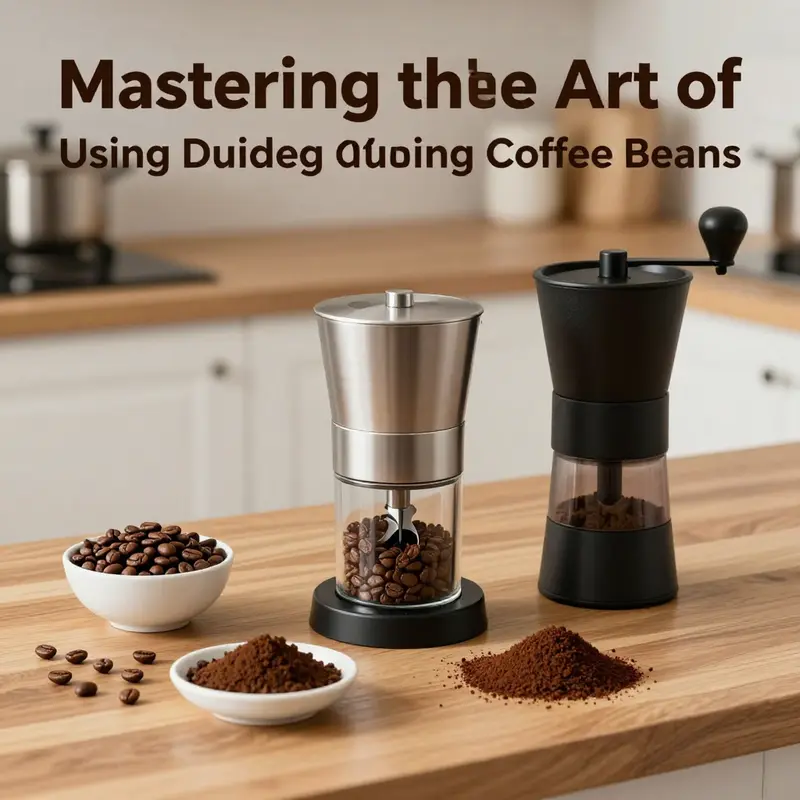
Grinding is the invisible heartbeat of coffee. The moment you expose roasted beans to air and begin to break them into particles, you set in motion a cascade of chemical and physical changes that determine how water will interact with the grounds. This is not merely a mechanical step; it is a culinary decision that shapes aroma, sweetness, body, and aftertaste. The primary options for turning whole beans into the grounds you pour over or press through are blade grinders and burr grinders. Each pathway creates a different landscape of particle sizes, different heat profiles, and, ultimately, a different cup. Understanding these differences helps you align your equipment with your brewing method, your taste preferences, and your level of patience for tinkering in the kitchen.
Blade grinders tend to appeal to the casual coffee drinker who values affordability and compactness over peak consistency. They operate with a single spinning blade that slices the beans into fragments. The result is a ground mixture that is uneven in size: some particles are fine, others are coarse, and many sit somewhere in between. The unevenness matters because extraction relies on surface area and the time water spends interacting with each particle. Fine particles dissolve quickly, potentially leading to over-extraction and bitterness if the brew is aggressive or long in contact with the water. Coarser chunks, by contrast, extract slowly and can leave behind sour notes or underdeveloped flavors if the water has trouble accessing them at the same rate. The overall effect is a cup that can feel flatter, sweeter, or occasionally more caustic than you expect, depending on the brewing method and the bean’s own profile. Blade grinders are typically more affordable and compact, making them appealing to casual enthusiasts who might not yet commit to a more precise apparatus. They are a practical entry point for those just beginning to explore how grind size influences flavor. Yet for anyone chasing consistency, especially for methods like espresso where balance hinges on uniform particle size, blade grinders often prove their limits. The chop is mechanical rather than granulometric, and the lack of a fixed gap means you frequently trade predictability for convenience.
Burr grinders present a different philosophy altogether. They employ two abrasive surfaces—burrs—that crush the beans instead of cutting them. The geometry of the burrs and the distance between them determine the final particle size distribution, and the goal is uniformity. Uniform grind size translates into predictability in extraction. When every particle is similar in size, water interacts with the grounds more evenly, leading to steadier flavors, cleaner clarity, and better control over bitterness or sourness. Burr grinders come in two main types: flat burrs and conical burrs. Flat burrs are often associated with a more exacting level of precision; the grinding surfaces are parallel, and adjusting the distance between them yields fine control over grind size. Conical burrs, on the other hand, present a slightly subtler and sometimes quieter operation. They tend to generate less heat, which matters because heat can accelerate the loss of delicate aromatics and alter flavor compounds in the short window between grinding and brewing. The heat generated during grinding is not just a technical footnote; it can influence aroma and the ultimate perception of body and sweetness. In practical terms, a burr grinder—whether flat or conical—provides a steadier platform for a range of brewing methods, from espresso to pour-over to French press, and it allows you to dial in grind settings with more repeatability.
To be sure, the choice between blade and burr should not be reduced to a single variable. It is a balancing act that weighs budget, kitchen space, quietness, and how seriously you take your coffee. If you are simply curious about how grind size affects flavor and you want a straightforward, low-effort setup, a blade grinder can still serve as a useful device to illustrate the basics of grind impact. It can also serve well for coarse grind tasks unrelated to traditional coffee brewing, giving you a tangible sense of texture. However, if your goal is consistent extraction and the ability to match grind size with specific brewing methods, a burr grinder becomes a worthwhile investment. The burrs, with their adjustable settings, give you a reliable platform for experimentation. They support greater control and enable you to replicate and refine specific grind profiles for espresso, pour-over, French press, or aero press.
As the research emphasizes, one practical rule anchors all these discussions: grind immediately before brewing. Freshness matters because coffee’s aroma and flavor compounds begin to degrade once exposed to air. The moment you grind, you increase surface area and accelerate oxidation, which can dull the vibrant notes you want to experience in the cup. The best tasting coffee often starts with freshness right at the moment of grind. A patient ritual—measuring the dose, calibrating the grinder, and inviting the water to interact with the grounds—can yield a cup that feels bright, balanced, and expressive rather than flat or one-note. This rule holds whether you are chasing the earthy complexity of a medium roast for a pour-over or the velvet intensity of a well-balanced espresso shot.
The research also lays out the relationship between grind size and brewing method with practical clarity. For espresso, you aim for a very fine grind, something close to table salt in texture. The increased surface area and the short contact time of water with the grounds mean you need that fine texture to achieve the necessary resistance and extraction within a brief shot. For pour-over or drip methods, a medium-fine grind works well, one that resembles sea salt in granularity. The water will pass more slowly than in espresso, so a slightly coarser texture avoids over-extraction and helps deliver a clean, nuanced cup. French press calls for a coarser grind, about the consistency of breadcrumbs, because the grounds stay in contact with water for several minutes. The larger particles resist over-extraction and contribute to a fuller body without the fine particles that can make a cup feel muddy. Cold brew rests on an extra coarse texture, similar to coarse sand, to prevent astringent notes and deliver a smooth, mellow cup after a long steep.
These sizes are not mere recipes; they reflect how grind size interacts with extraction dynamics. With a burr grinder, you gain a reliable pathway to those targets because the grind is uniform and repeatable. The conical design’s tendency to generate less heat can help preserve delicate aromatics, while flat burrs can offer crisp precision for exacting espresso calibrations. Either way, the act of dialing in the grind becomes an exercise in listening to the cup. A tweak of a dial or a minor adjustment in the distance between burrs translates into changes that your senses, especially aroma and aftertaste, will reveal. And because flavor is not a fixed property of the bean alone but a dialogue between bean, grind, water, temperature, and time, the journey from bean to cup becomes an ongoing conversation.
Care and routine play a less glamorous but essential role in getting the most from your grinder. For burrs, regular cleaning is a quiet act with outsized payoffs. Oils and fines can accumulate and hinder performance, especially if you grind oily or dark-roasted beans often. A simple, periodic disassembly and brushing of the burrs helps maintain consistent performance and reduces the risk of off-notes sneaking into the cup. Blade grinders benefit from similar attentiveness, though the maintenance routine revolves more around clearing the chamber and blade from trapped grounds and ensuring the housing remains free of stale coffee odors. Calibration is another practical skill worth cultivating. If your grinder offers adjustable settings, treat the process as a calibration exercise rather than a one-off adjustment. Start with a recommended range for your intended method, then brew and taste. A slight change in grind size—often just a click here or there—can move the flavor from bright and vibrant to flat or bitter. The craft of grinding thus becomes a small, deliberate, and iterative practice.
Beyond mechanics, there is an art to using grinding as a bridge between bean selection and brewing technique. The totemic question is not only “which grinder should I buy?” but “how do I train my palate to hear the subtle shifts in flavor that grind changes bring?” A typical exploration might begin with a fresh, well-roasted bean and a modest shift in grind size while keeping other variables constant. You might notice that a move from medium-fine to fine in pour-over emphasizes sweetness or accentuates acidity, while a shift to an even finer texture could push the cup toward a leaner, more intense profile. In espresso, where the margin for error is narrow, you may find that a slightly finer grind yields a creamier body but risks over-extraction if the water is too hot or the shot pulls too long. Conversely, a coarser setting may yield a drink with brighter acidity but a lighter body. These are the nuanced conversations that a good burr grinder enables, letting you chase a particular flavor direction with precision rather than hope.
To integrate these insights into a practical workflow, imagine stepping through a ritual that begins with selecting beans. Roasts with fruity or bright profiles often respond well to a slightly coarser approach in certain methods, while deeper, chocolatey roasts may reveal more balance with a finer grind in espresso or a slightly finer pour-over. The grind size acts as the first handshake between the beans and the water, signaling how aggressively flavors will emerge and how quickly or slowly sugars will dissolve. The next step is to set your method with due care: weigh your dose, measure your water temperature, and time your brew. The grind is not a solitary decision; it plays with these factors to shape a cup’s aroma, sweetness, acidity, and mouthfeel. And the more you align grind size with your chosen method, the more your flavor expression follows a path you can describe and replicate.
In the end, the choice between blade and burr grinders is a choice about consistency, control, and the pace of your coffee journey. If your days are busy and you are content with imperfect but comforting daily coffee, a blade grinder may fit your life. If your aim is to pursue flavor with intention, to chase the nuanced notes that different beans can reveal when ground to a specific size, then a burr grinder stands as a faithful ally. The difference is not only about texture; it is about the expedition through aroma and flavor characters that grind size unlocks. The best coffee rarely happens by accident. It happens when you respect the grinding step as a deliberate part of the brewing process, when you choose a method that aligns with your palate, and when you approach calibration as a continuous practice rather than a one-off adjustment.
As you carry this understanding forward, you also carry a promise: the cup you brew tomorrow can be better than today if you treat grinding as a craft rather than a routine. The details—particle uniformity, heat control, and the exacting alignment of grind with brew method—are not trivial trivia; they are the levers you pull to craft a more expressive, more personal cup. And the journey does not end with a single taste. It invites you to refine, compare, and iterate, to test how a slightly finer espresso grind interacts with a particular bean’s inherent sweetness, or how a coarser French press grind reveals a fuller mouthfeel that remains balanced and clean. This is the essence of becoming a more deliberate home barista: listening to what the cup tells you and adjusting the grind with intention, not guesswork.
For authoritative information on coffee grinding techniques and equipment, refer to Barista Hustle’s guide. https://baristahustle.com/guides/coffee-grinding/.
The Quiet Art of Fresh Grind: Crushing Coffee Beans by Hand with Everyday Tools
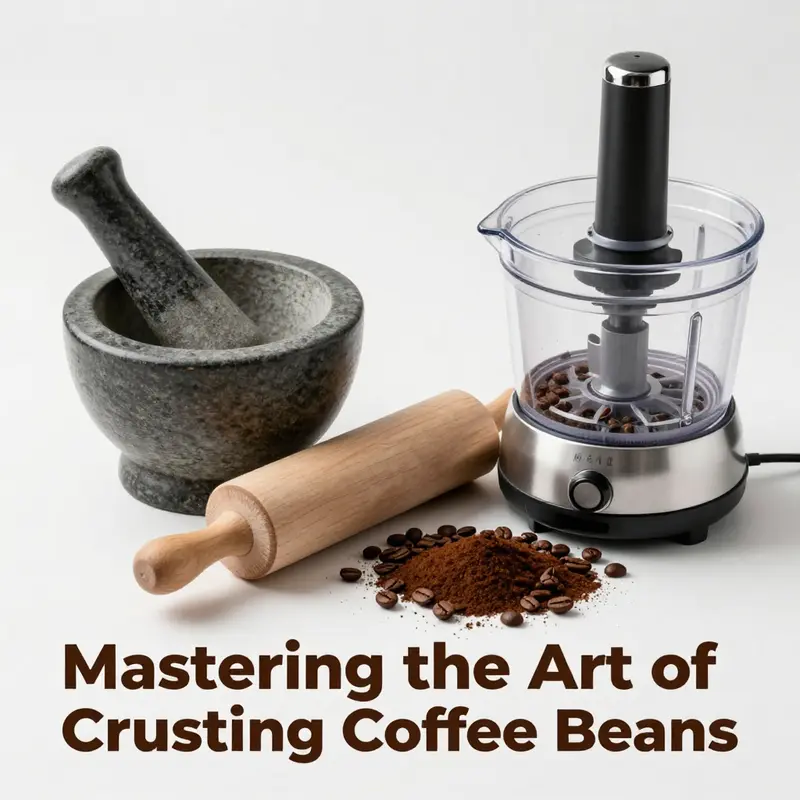
Cracking open a bag of whole coffee beans and coaxing their aroma to bloom in the air is a small ritual with outsized rewards. When you grind beans by hand, you invite a level of touch and control that a blade or burr grinder can’t replicate. The goal isn’t merely to break the beans into pieces; it’s to shape a grind that matches your brewing method, preserves delicate oils, and respects the bean’s freshness. The path described here centers on three common household tools—the mortar and pestle, a rolling pin, and a food processor—and shows how each can yield a range of grind sizes from coarse to medium. The emphasis is on timing, heat management, and the intimate relationship between grind, flavor, and extraction. This approach is especially useful when you’re traveling, camping, or simply out of a dedicated grinder but still want a vibrant, aromatic cup. The underlying principle remains constant: grind just before brewing to maximize aroma and flavor, because freshly ground coffee carries a robust portion of volatile oils that begin to diminish soon after exposure to air. In fact, when ground right before use, you can preserve a substantial share of those aromatic compounds compared with pre-ground coffee, helping you achieve a richer, more nuanced cup that carries the fingerprint of the bean more faithfully than any pre-ground alternative.
The mortar and pestle stands as the most traditional and controlled method among household options. It is a performance of patience and physical engagement, a slow, deliberate conversation with the coffee bean. Start with a small amount—roughly 1 to 2 tablespoons of whole beans. Place them in the mortar and apply steady pressure with the pestle, guiding the grind through a gentle circular motion. The key with this approach is to push and pull the beans outward, then back toward the center, maintaining consistent pressure. This motion breaks the beans with a uniform itch of friction, enabling you to sculpt the grind size with remarkable precision. Because you’re in direct contact with the beans, you can feel the texture shift in your palm—the transition from a rough, irregular surface to a more uniform, sandy consistency. The result is typically a medium to coarse grind, well-suited to French press or a well-tuned pour-over setup that relies on a moderate extraction. What makes this method particularly appealing is its capacity to minimize heat buildup. The grinding occurs gradually, and your hands release a measured amount of warmth as you work, which helps avoid overheating the oils in the beans. Overheating is more of a risk with high-speed blades or electric burrs, and while your hand-generated friction will generate some heat, it tends to be gentler and more controllable than mechanical grinding. This gentler approach preserves the delicate terpenes and oils that give coffee its nuanced brightness, fruitiness, or chocolatey depth, depending on the bean. The intensity of the aroma, released with each deliberate pressure, becomes part of the brewing experience itself, a tangible sign that you’ve coaxed the bean’s inner life to surface.
A rolling pin offers a different rhythm, a balance between speed and touch that can yield a coarse to medium grind with surprising consistency. To contain the mess, slip the beans into a sturdy plastic bag or place them between two sheets of parchment paper. Then roll the pin back and forth with even pressure, rotating the bag or parchment occasionally to ensure even crushing. The advantage here is speed without sacrificing texture; you can cover a larger surface area and produce a grind that’s sufficient for French press, cold brew, or a robust manual pour-over. The key challenge is maintaining uniform pressure across the surface of the beans. If the pin oozes too much force in one spot, you’ll tilt toward a uneven grind, with some chunks still intact while other portions appear powdery. To mitigate this, use long, steady passes and frequently rotate the bag. This technique rewards patience and a steady rhythm, turning a casual kitchen exercise into a reliable way to produce an extractor-friendly grind without specialized equipment.
A food processor introduces a different set of variables. It excels at breaking beans down rapidly, especially when you need a coarse powder or a rough grind to speed up a batch for a crowd. The caveat is heat: processors can heat the grounds quickly if run continuously, and heat can alter the oils in the beans, nudging flavor toward bitterness and staleness. To maximize control, work in short pulses—one to two seconds at a time—stopping to check the texture after each interval. Small quantities are essential here; too much beans in the processor at once invites uneven grinding and overheating. Pulse, pause, and assess until you land on a consistency that resembles coarse meal or a coarse sand texture, depending on your brewing method. This method is especially helpful if you’re aiming for a quick, large-batch grinding that will later be portioned into smaller doses for different brews. Remember, this approach is not ideal for ultra-fine espresso grounds, where precision and uniformity matter more than speed. But for French press, cold brew, or a rough pour-over, the food processor can be a practical ally when a grinder isn’t available.
Across these methods, the fundamental relationship between grind size, water contact, and extraction remains the guiding compass. A fine grind—often required for espresso—maximizes surface area, allowing hot water to extract a high concentration of flavors quickly. A medium grind works well for most standard drip and pour-over setups, offering a balance between extraction speed and clarity of flavor. A coarse grind suits immersion methods like French press, which rely on longer contact times to pull oils and soluble compounds without over-extracting bitter notes. When you grind by hand, the payoff is not just in the grind itself but in the ability to tailor each batch to the brewing method you plan to use. You can feel as you adjust; you can hear the change in texture; you can smell the oils becoming prominent as the grounds mingle with air. The act of grinding becomes part of the ritual of preparation, a tactile prelude that informs the flavor you’re about to taste.
Freshness is the most critical variable, and grinding just before brewing is a simple discipline with powerful consequences. The oils released by the bean—the aromatic compounds that define a coffee’s brightness, fruitiness, chocolate notes, or caramel hints—are most potent when the bean is whole. Once ground, those oils begin to dissipate and oxidize, diminishing aroma and altering flavor. The literature on this topic is consistent: freshly crushed beans retain more volatile components, a scent that fills the kitchen and sets the stage for a more vibrant cup. This is why, even when using a manual method, it’s worth dedicating a few minutes to the grind just before you brew. The short interruption in your routine pays off in a cup that drinks with more liveliness, a cup that carries the bean’s character more faithfully than pre-ground coffee could.
The sensory payoff of hand-crushing goes beyond aroma; it shapes texture and mouthfeel in ways that you can’t easily anticipate with a machine. A mortar and pestle can yield a grind that feels almost tactile on the tongue, with a coarse portion that delivers a bodyful extraction and a finer fill that passes through a filter with ease. The rolling pin method can yield a similar band of particle sizes, but the pace and the space between particles can vary depending on how evenly you apply pressure. The food processor, when used correctly, creates a texture that can be surprisingly uniform for a non-technical grinder, especially when you practice the short-pulse discipline. In practice, you might begin with a rough target—say, a coarse grind for French press—and adjust in small increments, perhaps a few pulses or several seconds more of rolling, until the texture feels right between your fingers and the aroma confirms the direction you’ve chosen. The exact grind you settle on will depend on your beans, your roast level, and your taste preferences, but the process itself teaches you to listen to the coffee.
An important note on technique is the concept of control versus speed. When you grind by hand, speed often increases heat generation, even if unintentionally. The mortar and pestle allow you to modulate pressure deliberately, and the rolling pin invites a steady cadence that reduces the risk of overheating. The food processor, although quick, can generate significant heat in a short time, so small bursts are essential to preserve the beans’ delicate oils. Whatever method you choose, the moment you sense heat in the grind, pause and let the grounds cool briefly before brewing. The goal is to preserve the bean’s oils rather than scorch them with lingering heat. This simple pause can make the difference between a cup that is vivid and a cup that tastes flat or dull.
For those curious about the broader context of hands-on, craftsmanlike work, consider the transferable value of deliberate manual tasks. The sense of touch, rhythm, and attention to texture cultivated while grinding beans by hand can echo in other careful, precision-driven activities. If you’d like to explore a parallel view of hands-on practice in a different field, you can explore resources like occupational-therapy-exercises-for-adults, which highlights how controlled, precise manual tasks train coordination, focus, and dexterity. This kind of cross-disciplinary reflection reinforces why the small acts we perform in the kitchen can have a surprising resonance with skills developed in other domains. occupational-therapy-exercises-for-adults.
As you experiment with these tools and techniques, remember that context shapes quality as much as technique does. The beans themselves carry the story of their origin—the altitude, the soil, the roast date, and the freshness of the bag. The grind is the translator between those stories and the water that will draw them out. The more you practice listening to the texture and fragrance of your grounds, the more adept you’ll become at tailoring your grind to your brew. A good rule of thumb is to align grind size with brewing time. Longer contact times appreciate a coarser grind; shorter contact times demand a finer grind. If you’re unsure, start with a medium texture and adjust based on taste. If the cup tastes thin or weak, you might need a finer grind; if it tastes bitter or overbearing, you may have gone too fine or left the grounds in contact too long. Your sense of taste becomes the final judge, and the act of grinding by hand gives you a direct line of influence over that verdict.
In practical terms, if you’re planning to brew with a French press, aim for a coarse to medium-coarse texture. The grounds should feel like rough sand, with enough size variation to retain the essential oils without slipping through the press’s mesh. For pour-over, a medium grind is usually ideal, providing a balance between extraction and flow rate. For a strong manual brew that imitates espresso, you’ll likely need a finer texture, but achieving consistent fine grounds with a mortar and pestle or rolling pin demands substantial technique and may still yield more unevenness than a proper burr grinder. That said, the joy of hand-ground coffee is that it makes you part of the extraction narrative—the variables you adjust become part of the flavor story rather than hidden behind a mechanical screen.
The practice also invites practical considerations about cleanliness and maintenance. After grinding, wipe or brush away any loose grounds, then store any unused portions in an airtight container away from light. If you’re using a mortar and pestle, a quick rinse to remove any remaining oil residues is good practice, followed by a thorough dry to prevent mildew. When using a rolling pin and bag, check for any tears and ensure the bag is intact to avoid a messy spill next time. Finally, when using a food processor, clean the chamber and blades promptly after use to prevent oils from becoming rancid and to keep subsequent batches free of cross-flavor contamination. The key is to treat these tools with the same care you give your brewing method; the more respectful you are of the process, the more flavor you’ll coax from your beans.
The chapter you’re reading is not only about a method for producing coffee grounds but about a practice that invites you into the kitchen as a place of experimentation, mindfulness, and craft. You don’t need a fancy machine to unlock the potential of a bag of beans; you need a sense of timing, texture, and aroma, plus the willingness to slow down and pay attention. The humble tools you already own become amplifiers for the coffee’s inherent complexity. In this light, grinding coffee by hand is less a workaround and more an act of culinary literacy—an invitation to read your own palate and to adjust your routines as you learn what makes a particular bean sing to your cup. External resources can offer further context about flavor retention and alternative methods, when you’re ready to explore beyond the home kitchen. For a broader perspective on how to manage variables in coffee preparation and learning through hands-on practice, the linked external resource describes practical approaches to equipment-free coffee making and flavor preservation. See How To Make Coffee Without A Machine Using Kitchen Basics for additional ideas and inspiration. https://www.coffeeandtea.com/coffee-making-without-a-machine/
In closing, the act of crushing coffee beans with simple household tools is less about achieving perfect uniformity and more about shaping a personal, sensory relationship with your brew. It’s a discipline that rewards calm technique, careful heat management, and a willingness to adapt to the texture in front of you. The resulting cup, whether you’re sipping through a French press, a pour-over, or a robust cold brew, will carry the imprint of your hands—their pace, pressure, and patience—along with the bean’s own story. That blend of human touch and botanical origin is what makes the scene so intimate. And if you ever doubt the value of a slow grind, recall the aromatic blooms that escape with the first crack of the pestle, the way the kitchen fills with the promise of a bright morning, and the certainty that a small, deliberate act can yield a cup that tastes alive.
The Fine Line of Grind: How Particle Size and Method Shape Flavor When Crushing Coffee Beans
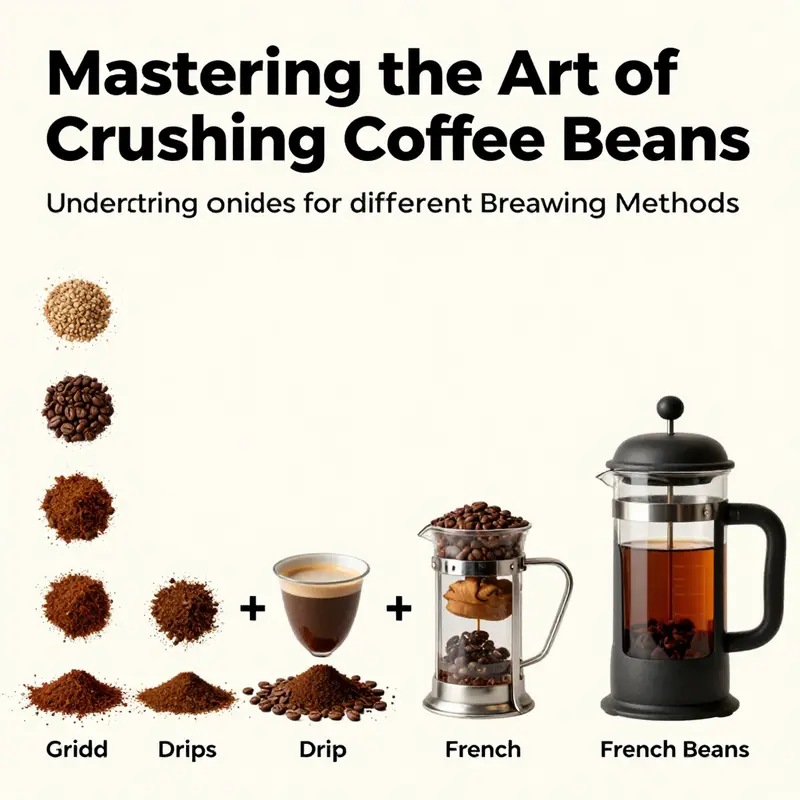
Grind size is the first true test of a cup’s potential. It sits at the crossroads between bean quality, water temperature, contact time, and the method you choose to brew. As researchers and seasoned brewers alike remind us, grind size is the most immediate lever a home brewer has to influence flavor. A small adjustment can shift a cup from harmonious balance to a stubborn bitterness or a sour undercurrent. The idea that a mundane act—grinding—can wield such influence is the reason this chapter treats grind size not as a trivial step but as a fundamental craft. When we talk about crushing coffee beans, we are really talking about shaping how water meets coffee at the microscopic level. The goal is not simply to break beans into pieces; it is to sculpt a distribution of particle sizes that water can interact with evenly, allowing the full spectrum of aromas and flavors to emerge in harmony rather than in discord.
To understand why grind size matters so much, think of grind as a living thing in the cup. It is not only about how fine or how coarse the grounds are, but how consistently those grounds are produced. A uniform particle size distribution means water can extract more predictably, delivering sweetness, acidity, and body in a balanced sequence. Inconsistent particles—many fines that clog the bed and some coarser fragments that pass through untouched—create pockets of over-extraction and under-extraction that blur the cup’s clarity. This is not merely a technical problem; it is a sensory one. When the grind is uneven, the cup wavers between sharp sourness and dull bitterness, never achieving the clean, nuanced profile the beans promise. As Dr. Samuel Lee, a coffee extraction researcher affiliated with the Specialty Coffee Association, asserts, “Grind size is the most immediate lever a home brewer has to control flavor. A small adjustment can mean the difference between balance and bitterness.” The emphasis is clear: the smallest tweaks to grind size can unlock or suppress the very notes your beans carry.
The vocabulary around grind size is simple on the surface but rich in practice. You will hear terms like fine, medium, and coarse, yet those labels are not absolute. They describe approximate ranges tied to a brewing method and a grinder’s behavior. A “fine” for one grinder may resemble a “medium” for another, because the mechanism and burr geometry shape the final particle spectrum. This is why two people using different equipment may experience different extraction even with the same overall setting. A crucial companion to size is distribution—the balance between the finest particles, which extract quickly, and the larger chunks, which release more slowly. The science behind this distribution matters because it governs how evenly water interacts with the bed. James Hoffmann, a world-renowned coffee educator, emphasizes that “grind consistency is the single most important variable after bean quality.” Without uniform particles, repeatable, high-quality extraction remains elusive, no matter how pristine the beans are.
Different brewing methods demand different grind profiles, not only in size but in how the water will flow through the bed. Espresso, with its hallmark pressure and short contact time, requires a very fine grind. The goal is to provide a large surface area for rapid extraction within roughly 25 to 30 seconds. If the grind is too coarse, the shot will under-extract, tasting sour and weak as flavors struggle to bloom before the pressure releases the run-off. Conversely, too-fine a grind can stall extraction, leading to over-extraction and a flat, bitter finish. The balancing act in espresso is delicate; the grind is adjusted in micrometer-like increments to coax the right crema and the right harmonic of sweetness and acidity.
French press, by contrast, favors a coarser grind. The metal mesh filter and the longer contact time—usually around four minutes or more—require grounds that resist rapid passage. A coarse grind reduces sediment and keeps oils suspended long enough to enrich the cup without turning it muddy. If the grind is too fine for a French press, you march into over-extraction territory with gritty grit and a heavy mouthfeel. If it’s too coarse, under-extraction reappears, and the brew feels thin and hollow, lacking the depth the method can offer.
Pour-over methods sit in a middle ground, yet they demand sensitivity. V60, Chemex, and similar devices rely on a combination of filter density, pour rate, and bed structure to shape extraction. Here, a medium to medium-fine grind tends to work best. The goal is a bed that allows water to flow evenly without starving any portion of coffee. Too fine a grind can stall flow and promote over-extraction near the center of the bed, while too coarse a grind risks channeling, where water finds shortcuts and bypasses much of the coffee’s surface area. When you tune a pour-over, you are balancing the rate at which water passes through the grounds with the time you allow for the extraction to unfold. It is a dance between speed and patience, and the grind size sets the tempo.
To keep the story coherent across methods, you also need to consider grind consistency. A uniform bed reduces the risk of uneven extraction across the cup. Blade grinders, with their single rotating blade, tend to chop beans into a mix of sizes. They can produce a spiky distribution with many fines and some much coarser pieces. As a result, the resulting brew is prone to uneven extraction: a rough blend of bitterness and sourness that never quite settles into balance. Burr grinders, on the other hand, intentionally crush beans between two carefully shaped burrs. They produce a more predictable particle size distribution and can be dialed in across a wide range—from espresso to French press—by adjusting the gap between burrs and the rotation speed. The difference is more than convenience; it is the difference between a cup that sings and a cup that sighs.
The practical upshot for home brewers is straightforward, even when the science behind it feels dense. First, choose a burr grinder. This is not the place to settle for speed or cost if your goal is reliable flavor. A burr grinder gives you control over grind size and, crucially, grind consistency. Second, align the grind with the brewing method you plan to use. Espresso calls for a very fine ground; French press for a coarse grind; pour-over for a medium to medium-fine range. Third, grind as close to brewing as possible. Freshly ground coffee releases its aromatics quickly, so the best flavor is captured when you grind just before you brew. If your schedule forces a delay, store beans well to minimize aroma loss, but do not assume grounds will carry the same vibrancy as freshly ground coffee. The underlying principle is simple: the moment of grinding matters because it controls the flavor potential you unleash in the cup.
For those who want a practical roadmap, begin with a burr grinder set to a middle range suitable for your chosen method. Cup-taste and adjust in small increments. A quarter-notch change on many grinders can move you from under-extraction to the sweet spot. If you are dialing in for espresso, you might find that moving from a medium-fine to a slightly finer setting within a narrow window shifts the shot from sour to balanced, with a more pronounced sweetness and a thicker body. When you switch brewing methods, revisit your grind with fresh eyes. The same beans can behave very differently depending on how water interacts with the grounds, and a grind that works beautifully for a pour-over may need reconfiguration for a French press or an espresso shot.
As you refine your technique, you will notice that grind is not a fixed parameter but a dynamic one. It interacts with roast level, bean age, and even water hardness. Lighter roasts, which retain more of the bean’s original acidity and intricate flavors, often reward a slightly finer grind to extract those delicate notes without becoming timid. Medium and darker roasts can tolerate a coarser approach while preserving sweetness and avoiding a harsh bitter edge. The more you experiment, the more you begin to hear the cup’s story unfold in texture and aroma. The grind becomes a language—one you learn to speak through taste, scent, and time.
This is where the concept of a disciplined approach to grinding becomes valuable. Some readers may appreciate a structured, technique-led method to improve control. For a sense of how technique translates into other fields of practice, you can explore techniques used in occupational therapy for a different kind of precision and control. techniques used in occupational therapy. While the contexts differ, the core principle—targeted, deliberate method to achieve a desired outcome—resonates with grinding coffee. The idea is to treat each grind as a deliberate adjustment toward balance, not a hit-or-miss act.
To close this discussion, remember that grind size is a powerful predictor of flavor, but it is not the only factor. Freshness, water quality, temperature, and time all contribute to the final cup. The best way to internalize these ideas is to brew with intention: weigh your beans, measure your water, and note how small changes in grind size ripple through the cup. Track your results, not just in flavor notes but in extraction feel—the way the cup carries sweetness, acidity, and body from first sip to last. The romance of grinding lies in the opportunity to shape a cup that reflects your preferences and the beans’ personality at the moment of brew. When you dial in correctly, you will notice how a well-chosen grind can reveal the beans’ complexity, from citrus brightness to cocoa-rich depth, with a clean finish that invites another sip rather than a wish for improvement.
External resource for further study on grind sizes and brewing methods: https://www.sca.coffee/learn/understanding-grind-sizes-for-different-brewing-methods
Crushing for Freshness: Mastering Bean Preparation to Preserve Flavor Before Brewing
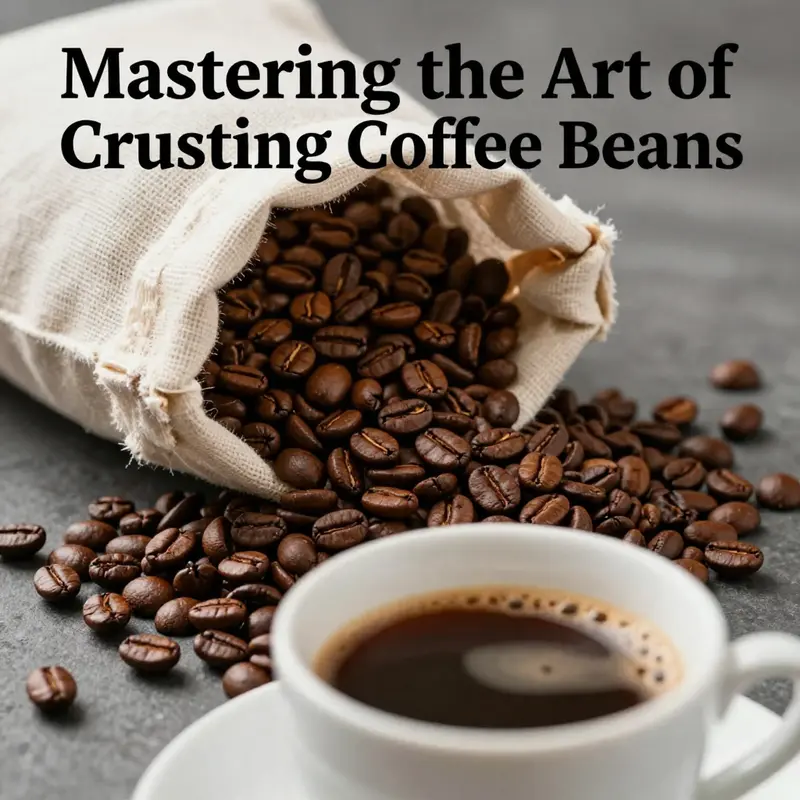
In the quiet rituals of a good morning cup, the crushing of coffee beans reads like a hinge between fragrance and flavor. The moment the beans crack open, a whole world of aroma escapes, and with it the potential for a truly expressive cup. The science and the craft align when you treat bean preparation as its own small ceremony, not as a rushed preface to brewing. The paths you choose—the roast you select, the storage you maintain, and the grind you perform—work together to shape the grind size, the extraction, and ultimately the balance of acidity, sweetness, and body in your cup. The journey begins with choosing fresh roasted beans, and it moves through careful storage, precise grinding, and then the brewing method that can best reveal what those beans offer. The aim is simple, but its execution is precise: retain the beans’ volatile compounds until the moment of contact with hot water, and release them at a pace that yields a harmonious cup rather than a burst of sourness or bitterness.
The first decision—the roast and its freshness—sets the stage. Freshly roasted beans carry a complex bouquet that begins to fade as soon as air touches them. When you buy beans within about 30 to 45 days of their roast date, you are catching them close to their peak, when the oils are lively and the aromas bright. The window is narrow, but the difference is measurable in the cup. Avoid beans that have sat on a shelf for months, because extended exposure to air dulls acidity and muffles sweet notes. This timing matters because the subsequent steps hinge on how robustly the aroma compounds endure, and how reliably the grind can unlock their structure during extraction.
Storage follows that same logic of preserving volatile compounds. Whole beans belong in an airtight, opaque container, ideally ceramic or glass with a tight seal. Light, heat, moisture, and strong odors are their enemies. Room temperature is generally fine, provided the container shields the beans from light. A refrigerator or freezer is not your default storage choice for everyday use. Freezing can be appropriate only for long-term preservation, and even then you should portion the beans into small, vacuum-sealed packets to minimize condensation when thawing. The goal is to keep the beans stable, not to tempt the aromas into a contact with moisture. When you grind, you open the door to oxidation and to the rapid loss of fragrant compounds. If you do freeze, remember to handle thawing with care; a sudden shift from cold to room temperature can create moisture that dampens the flavor one cup at a time.
The act of grinding is the critical hinge in this process. Ground coffee begins to lose its aromatic vitality the moment it meets air. The suggestion to grind immediately before brewing comes from decades of practical experience and sensory testing. When you grind just before you brew, you maximize the presence of volatile compounds and minimize oxidation. This does not simply spare you from a flat cup; it preserves the brightness, the fruitiness, and the delicate spice notes that can vanish with exposure. It also gives you a greater degree of control over extraction, because you are not forced to chase flavor with a longer brew time to compensate for stale aromas.
To achieve the most reliable results, the grind size must match your intended brew method. The relationship between grind and extraction is straightforward in theory, but it becomes a practical art in your kitchen. For espresso, you want a very fine grind, more like powdered sugar than table salt. The reason is simple: espresso extracts quickly and under pressure, so a fine powder allows the water to pass through with high surface contact. For a pour-over method, such as a V60, you aim for a medium-fine grind. The water takes a little longer to drain, so the surface area increases gradually, producing clarity and balance. For French press, you go coarser, roughly the texture of sea salt. The longer immersion required for immersion-brewing methods means you want larger particles to prevent over-extraction. Cold brew demands a coarse grind as well, but the extraction is extended for many hours in a low-temperature environment, which helps maintain smoothness and reduce bite.
These rules of thumb are general guides, but your personal preference can nudge them one way or the other. The key is to understand how grind size shapes extraction channels and clogging. A too-fine grind for a French press can yield a muddy cup with a heavy mouthfeel and over-extracted bitterness. A too-coarse grind for an espresso might produce a weak, sour, and under-extracted shot. The middle ground—the sweet spot—depends on your grinder, your beans, and your taste. The practical consequence is that you want a grind that yields even particle sizes. A uniform grind size extracts more evenly because all particles are exposed to hot water for a similar duration. Conversely, a broad distribution of particle sizes creates a spectrum of extraction rates, leading to uneven flavors, with fines over-extracting and producing bitter notes while larger particles under-extract and taste watery.
That is where the tools and equipment most influence flavor. There are two principal approaches: dedicated grinders and simpler household tools. Within the dedicated grinder family, burr grinders stand out for their consistency. Burr grinders use two abrasive surfaces that crush the beans into a uniform particle size. They offer adjustable settings so you can dial in a grind that fits your brewing method, from a very fine espresso grind to a coarse French press grind. Blade grinders, by contrast, use a spinning blade to chop beans. They tend to produce a mix of particle sizes rather than a uniform grind. The result is uneven extraction, with some fragments dissolving quickly and others remaining underpowered. If you are serious about flavor, a burr grinder is worth the investment because its precision keeps your extraction predictable, batch after batch.
The design of burr grinders—whether flat burrs or conical burrs—introduces a subtle but meaningful variable: the heat generated during grinding. Fresh, well-regulated grinding heat can alter the coffee oils enough to nudge flavor in a direction you may or may not want. That’s why a clean, efficient grinder that avoids excessive friction helps preserve aroma. The choice of grind settings becomes part of a dialog with your beans. Lighter roasts often preserve more delicate aromatics that reward a finer grind and steadier temperature, while darker roasts can tolerate a bolder adjustment and a slightly coarser setting without sacrificing clarity.
The process itself is straightforward once you have the right tools. Begin by weighing your beans to get consistent doses. A common rule of thumb is to aim for roughly 0.5 to 0.7 grams of coffee per milliliter of water, depending on your strength preference and the brewing method. Weighing eliminates the variability that plagues scoops and heaping. Then set your grinder to the target grind size for your chosen method. If you are using a burr grinder for a pour-over, for example, you might start with a medium-fine setting and adjust based on taste testing. A more forgiving approach is to grind in short bursts, checking texture and uniformity. For a burr grinder, you should hear a gentle, steady sound rather than a sudden sharp noise or a grinding accompanied by overheating. If your grinder has a built-in scale, you can optimize the process by listening for a consistent grind rhythm that indicates uniform particle size distribution.
While the act of grinding is central, how you handle the beans before and after matters as well. As you pour beans into the hopper, keep them dry and dust-free. Avoid exposing them to strong odors, which can become absorbed by the oils we want to preserve for the brew. After grinding, it is prudent to pull the ground coffee away from the vibrating ground and measure again to ensure you have the right amount. The result should be a uniform bed of coffee resembling coarse flour or breadcrumbs, depending on your method. The fresher the grind, the more dynamic this bed will look and feel when you pour water.
A practical ritual that supports flavor preservation is regular grinder cleaning. Coffee oils accumulate in burrs and hopper components and can rancidify over time, subtly tainting future batches. Cleaning after a few uses, particularly when you switch between roasts or bean varieties, helps keep flavors distinct. A simple routine might be a quick wipe of exposed surfaces and a periodic deeper clean according to the grinder’s instructions. If you switch from a light roast to a dark roast, you will notice the oils and aromas shift; a clean machine helps ensure the new batch shines through instead of carrying over old flavors.
The overarching idea is that freshness is a consequence of timing as much as technique. Grinding immediately before brewing gives you the best chance to capture the coffee’s aroma, sweetness, and brightness. The more you delay, the more you invite oxidation, stale flavors, and aroma loss to creep into your cup. In practice, this means planning your workflow so that you grind as close to brew time as possible, ideally within minutes rather than hours. You can set up a workflow that includes roasting or purchase, storage, and then a precise grinding window. A simple routine might be to prepare your equipment the night before, roast or buy the beans, store them properly, and then grind just minutes before you pour water.
For those who want an even more tangible sense of how to calibrate grind size, a quick sensorial test helps. After you grind, check the texture by rubbing a pinch between your fingers. It should feel like a coarse powder that distributes evenly when moved. For pour-over, you will want to drizzle water over the grounds and observe the bloom, a brief foaming that indicates CO2 release. If the bloom is too vigorous or too weak, you know you may need to adjust the grind slightly finer or coarser. If you can coax a complex, clean cup from your beans, you have found a baseline that aligns with your palate and your equipment.
An extra note on technique: temperature control matters more than you might expect. Water temperature that is too hot can scorch delicate aromatics and accelerate bitter flavors. Too cool water may fail to extract the full range of flavors. The recommended range is typically between 195 and 205 degrees Fahrenheit (about 90 to 96 degrees Celsius) for most drip and espresso methods. For cold brew, the temperature question shifts toward long steep times rather than rapid extraction, and the grind size must stay wide enough to avoid over-constriction. The goal is a clean extraction, where the water interacts with a uniform ground bed in a way that expresses the bean’s inherent profile rather than masking it with harsh notes.
In the end, the most important single practice is to grind immediately before brewing. This principle is simple to remember, but it requires discipline in your routine and a reliable grinder that produces consistent particle sizes. The reward is a cup that preserves more of the bean’s natural aroma and flavor, yielding a coffee that tastes closer to what the roaster envisioned when they crafted the roast. If you are curious to see how context and equipment shape the approach to grinding in other professional fields, you can explore related equipment considerations in a different professional domain, such as occupational therapy, via this resource. tools-and-equipment-for-occupational-therapists.
For a broader perspective, reading about the rationale behind grinding just before brewing can deepen your appreciation of the process. It helps to anchor your practice in a clear reason rather than habit. If you want a concise summary of why freshness hinges on timing, the explainer linked here offers a thoughtful overview: Why you should always grind coffee just before brewing.
As you develop your own routine, you will notice the cup’s evolution across days, roasts, and methods. A consistent approach to bean selection, storage, and grinding lays a foundation from which you can explore nuanced flavors. You will begin to associate certain grind textures with tasting notes and discover how slight changes in grind size can shift emphasis from body to brightness. The act of grinding becomes less about a mechanical task and more about answering a simple question with precision: how does this bed of grounds respond to hot water, and what flavors will rise with it? With practice, the line between technique and taste fades into a natural confidence about how to prepare coffee that is at once bright, balanced, and faithful to the beans you chose.
Final thoughts
Mastering the art of crushing coffee beans is essential for business owners seeking to provide exceptional coffee experiences. By utilizing dedicated coffee grinders, household tools, and understanding grind sizes relative to brewing methods, you can significantly enhance the flavors and aromas of your coffee. Prioritizing freshness before brewing ensures that your customers enjoy every cup at its peak. Implementing these techniques will not only satisfy coffee lovers but also enhance your brand’s reputation. The journey toward the perfect cup of coffee begins with a solid understanding of these fundamental grinding techniques.