
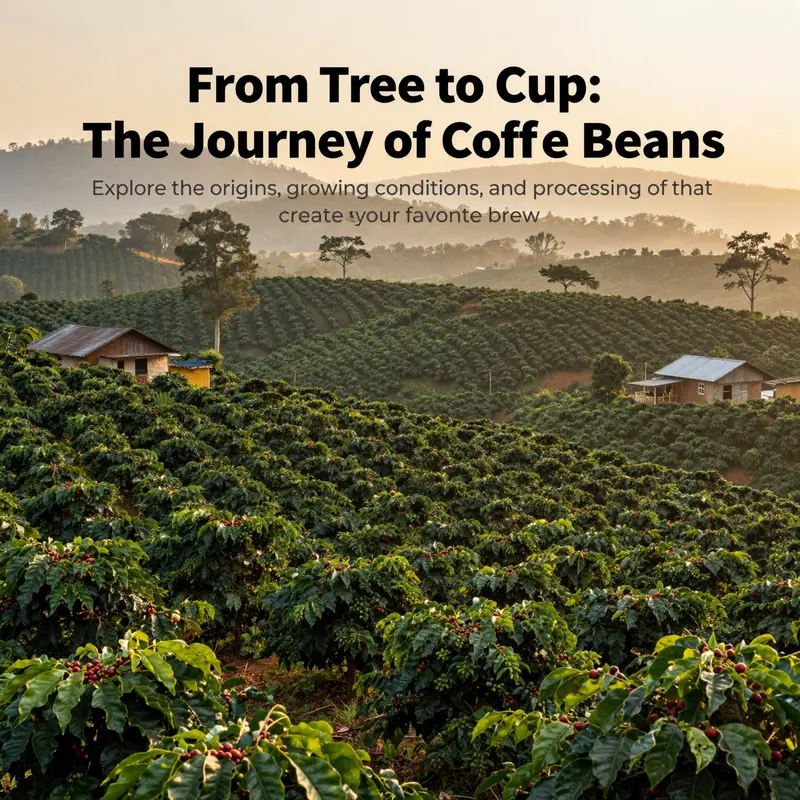
Coffee beans, a staple for many businesses and cafes, originate from coffee trees that flourish in specific climates. Understanding what coffee beans grow on—from the trees themselves to the harvesting and processing methods—can empower business owners to appreciate and market their coffee products better. This article delves into the coffee trees that produce these beans, the ideal growing conditions that nurture them, and the intricate processes involved in transforming the beans into the beverages we savor daily. Each chapter will build a comprehensive view of the essential elements surrounding coffee cultivation, ensuring a well-rounded understanding for business leaders in the coffee industry.
Branch by Branch: The Living Life of Coffee Beans on the Coffee Tree
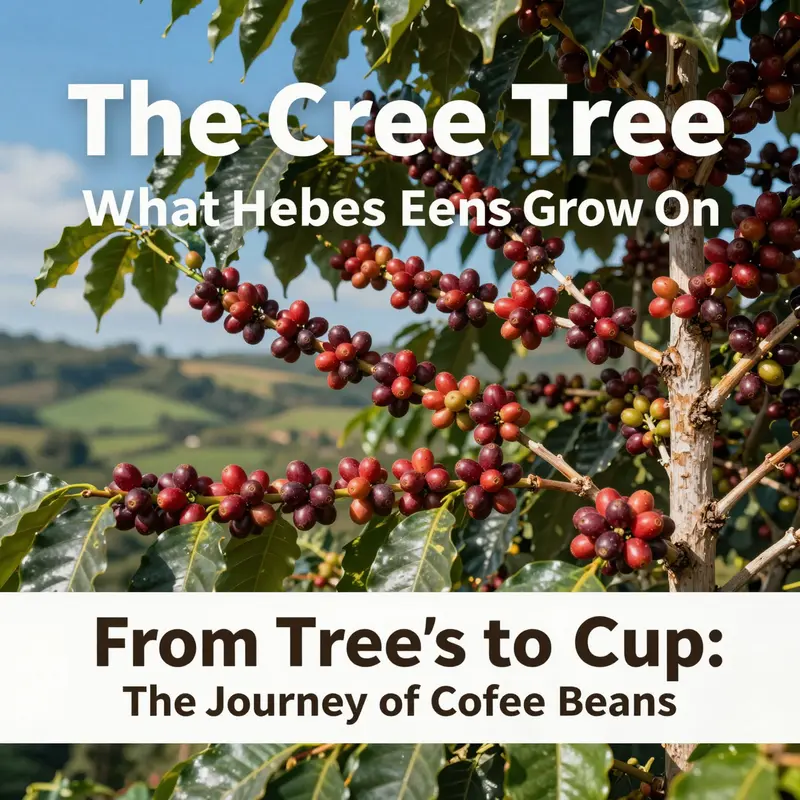
The image of a coffee bean often comes with the bright red cherry that encases it, a small fruit clinging to the glossy leaves of an evergreen shrub or a stout little tree. Yet the bean’s story begins long before it reaches a cup. It starts with a plant in the genus Coffea, a member of the Rubiaceae family, whose fruit ripens in a year or two, and sometimes in a few years depending on the species, climate, and care. The two species that dominate the commercial landscape are Coffea arabica, commonly called Arabica, and Coffea canephora, known as Robusta. These trees and shrubs produce what coffee lovers recognize as cherries, and inside those cherries lie the seeds we grind and brew—two seeds per fruit in most cases, though there are variations that can yield a single seed or, more rarely, more than two. The journey from green fruit to roasted bean unfolds across landscapes that can feel almost engineered for flavor, yet it is really a story of ecology, geography, and human cultivation working in concert over time.
Arabica and Robusta differ in more ways than flavor. Arabica accounts for roughly six in ten of the world’s beans and tends to thrive at higher elevations where the air is cooler and the risk of pest pressure is tempered by the longer maturation period. Robusta, by contrast, is a sturdier performer at lower elevations and in warmer conditions, producing more caffeine per seed and often yielding a hardier harvest. These distinctions map onto a broader agricultural ecology—altitude, climate, soil, and rainfall—factors that shape not only the yield but the aroma and taste that coffee eventually reveals in a cup. Understanding what coffee beans grow on also means understanding where they grow. The cultivated world for coffee sits within a broad band around the equator—the so-called coffee belt—where temperatures, humidity, and rainfall create a hospitable climate for these tropical plants. Within this band, Arabica trees often perch at elevations from about 600 to 2,000 meters, where the cooler temperatures slow development and allow nuanced flavor development to unfold. Robusta, more forgiving of heat and disease, typically thrives from roughly 200 to 1,000 meters in elevation, where its berries rush to maturity and reserve the plant’s energy for higher yields and resilience.
The fruit itself marches through a vivid color progression. When young, cherries are green, then increasingly take on a bright, inviting red or, in some varieties, a vivid yellow as they ripen. The exact color can vary by cultivar and climate, but the essential signal is consistent: ripeness implies readiness for harvest. Inside each cherry are the seeds—most often two—that we call beans once they have dried and prepared for roasting. This process—from picking to processing, drying, hulling, and eventually roasting—transforms raw botanical matter into the familiar aroma and flavor profile that coffee aficionados chase.
To appreciate what grows on the trees, it helps to look at the planet’s growing conditions as a single, persuasive argument. Coffee plants are notably sensitive to temperature fluctuations, rainfall patterns, and soil quality. Arabica, with its higher altitude love affair, benefits from cooler nights and enough elevation to create a longer maturation window. This longer time to maturity often translates into a more complex and refined flavor profile, with sweetness that can mirror floral and citrus notes and a bright acidity that keeps the cup lively. Robusta, with its vigor, adapts to warmer soils and shorter growing cycles, producing a batch of beans that tend to be bolder and more assertive in flavor, sometimes with a heavier body and a higher caffeine kick. The contrast is not simply one of taste; it’s a reflection of the plant’s physiology and its contextual niche in the global landscape of coffee farming.
Within this context, a chorus of varietals adds nuance to the story. Beyond the broad categorization of Arabica and Robusta, selective breeding and natural mutations have given rise to lines such as Caturra, Typica, Geisha, and Pacamara. Each of these varieties carries a memory of particular growing conditions and a fingerprint of flavor expectations. Caturra, a dwarf mutation of Bourbon, brings the advantage of higher planting density and a balanced cup with bright acidity and citrus notes—an echo of its lineage and its adaptation to specific microclimates. Geisha, with its origin in the Gesha region of Ethiopia, has become iconic in specialty circles for its perfume-like aroma and nuanced complexity, revealing how slight shifts in altitude, rainfall, and soil texture can tilt the flavor profile in subtly dramatic ways. Pacamara, a larger-seeded cross between Pacas and Maragogipe, showcases the idea that seed size and surface area can interact with fermentation and roast to produce distinctive mouthfeel and sweetness. Collectively, these varietals remind us that the plant world behind our coffee is not homogenous, but a living library of traits that farmers select, preserve, and pass along across generations.
Another crucial thread in the tale is the processing method—the step that occurs after harvest but before roasting, where the bean’s character begins to take shape. Once picked, the fruit is removed from the seed, and the seeds go through a process designed to separate the husk from the edible seed and to prepare the bean for drying. Wet processing—fermenting the fruit with water to loosen the mucilage and then washing it away—tends to emphasize clarity and brightness in the cup, often highlighting fruitier or wine-like notes. Dry processing—or natural processing—spreads the beans out in the sun to dry with the fruit still attached. This method can yield a fuller body and sometimes more intense sweetness, but it requires precise climate control and timing to avoid mold and over-fermentation. The choice of processing method, together with the roast level, influences the degree to which the intrinsic flavors of the bean—notes of cocoa, berry, citrus, or spice—emerge in the final cup. These technical details remind us that what grows on the tree is only the first act; the transformation occurs through human hands, sensorily attuned to climate, moisture, and timing.
Economics and geography loom large in the life of coffee as well. Coffee beans do not simply grow; they travel. The global industry is a vast network of growers, cooperatives, processors, exporters, importers, roasters, and retailers, all knitting together a commodity with a value chain that has grown into a market worth hundreds of billions of dollars. As of 2023, the global coffee industry stood at nearly five hundred billion dollars, a figure that speaks to the scale and cultural importance of the crop. Brazil has long led in production, but the leadership is shared with Colombia, Vietnam, and Ethiopia, each region contributing a distinctive flavor profile and a distinct set of farming practices. The economic weight of coffee makes the difference between a hillside farm and a factory farm, between a resilient smallholder and a large estate, and between a family living on the yield of their trees and communities building sustainable, long-term livelihoods around a shade garden, a mill, or a cooperative collective. The financial stakes are not only about price or yield; they are about the capacity to invest in better seedlings, pest control, water management, and fair-trade arrangements that support farmers and ecosystems alike.
The life of a coffee bean on the tree also intersects with climate change and biodiversity. Coffee is not a single monoculture crop immune to disease; it is, on the contrary, a crop deeply connected to its environment. The shade provided by companion trees, the microclimates when coffee is grown on sloped terrain, and the soil’s ability to hold moisture all influence resilience to pests and weather extremes. Breeders and farmers today face the task of preserving genetic diversity while adapting management practices to shifting weather patterns. In this sense, every coffee bean is also a tiny archive of ecological history—the result of millions of years of plant adaptation, centuries of cultural knowledge about cultivation, and the modern era’s demand for consistent quality and sustainable production. The flavor in a cup, then, is a living testament to location, climate, cultivar, and care, all converging in a single seed that began its life high above the ground on a leafy branch.
In considering what coffee beans grow on, one can also reflect on how the tree’s life cycle shapes harvest timing and labor. Harvesting is labor-intensive and often region-specific. In some places, ripeness is determined by hand-picking the fully colored cherries, a meticulous approach that prioritizes quality and consistency, while in others, mechanical harvesters gather fruit when it has matured over a broader window. The timing of harvest matters: a harvest that comes too early can yield underdeveloped flavors; one that comes too late risks overripe notes and inconsistent quality. The subsequent processing and drying phases then lock in the sensory attributes that roasters and drinkers will later explore. In many ways, the tree is a patient partner; it sets a cadence that depends on climate, altitude, and the farmer’s attentiveness, while humans respond with methods that preserve or coax out the plant’s potential.
The science of coffee is also a romance with place. The notion that a cup can carry the character of its origin—the rain, the soil texture, the altitude, the harvest season—embodies the terroir concept that has gained traction in wine and now in specialty coffee. What grows on the tree, and how it is processed, can reveal itself in the cup as citrus brightness from a high-altitude Ethiopian lot, or a chocolate-dark sweetness from a Brazilian lowland lot. The varietal’s genetics, the soil’s mineral content, the microclimate at dawn and dusk, and the care taken during harvest and fermentation combine to give each bean its own passport. Farmers protect this passport by maintaining genetic diversity, selecting varieties suited to local conditions, and employing sustainable practices that reduce environmental impact while preserving flavor integrity. The result is not merely a product but a story—a narrative that travels from hillside to port, across oceans, and into our kitchens and cafes.
If we return to the question of what coffee beans grow on, the simplest answer is: on trees and shrubs that live in a delicate, warm, and often shaded ecosystem. But the truth is more nuanced. The beans we crush and brew emerge from a tree that has grown, adapted, and thrived in a specific set of conditions. Arabica’s love for altitude and cool nights, and Robusta’s appetite for heat and resilience, illustrate how a single crop can be diversified to meet different environmental realities and market demands. The dozens of varietals that have arisen from selective breeding further deepen this tapestry, offering flavors that range from bright, citrusy, and tea-like to deep, cocoa-like, and earthy. The processing choices—wet versus dry—act as a second, equally important filter that reveals or mutes certain attributes. And the entire enterprise is woven into a global economy where a seed grown on a hillside can eventually become a shared daily ritual across continents, a signal marker of community, and a product that supports livelihoods across industries and nations.
Ultimately, the question of where coffee beans grow is really a question about how a plant, a climate, and a culture come together to produce something that many people around the world cherish. It is a story of patience and attention: patience from the plant as it charts its growth from cherry to seed, and attention from farmers who decide which varietals to plant, how to manage shade and soil, and how to process the fruit in ways that maximize flavor while protecting the land. It is a story of a beverage that travels far more than the bean itself. The bean’s journey involves transport, roasting, and brewing, but its origin—the living tree on which it grows—remains the root of its identity. As we consider the tree, the cherry, and the seed, we unlock a better understanding of what makes coffee so endlessly variable and yet reliably comforting—an intricate dance of biology, climate, and care that begins high in the treetop and ends in a cup enjoyed around a table, a desk, or a street corner.
For those who want to see the larger arc that connects these details to broader questions of production, trade, and flavor, the story of coffee remains a compelling reminder that even everyday rituals are anchored in ecological complexity. The beans inside a cherry are not merely seeds; they are the living legacies of ecosystems and communities, the tangible evidence of how climate, soil, and human ingenuity can come together to produce a beverage that has shaped economies, cultures, and conversations around the world. The next time you glance at a bag of coffee beans, you are looking at a piece of that enduring collaboration between the living world and human hands—a partnership that began on a branch above and continues with every measured grind and measured sip.
External resource for further exploration: For more information on coffee bean varieties and their cultivation, visit https://www.coffeeinstitute.org/coffee-beans
Growing on Golden Canopies: How Climate and Altitude Write the Story of Coffee Beans
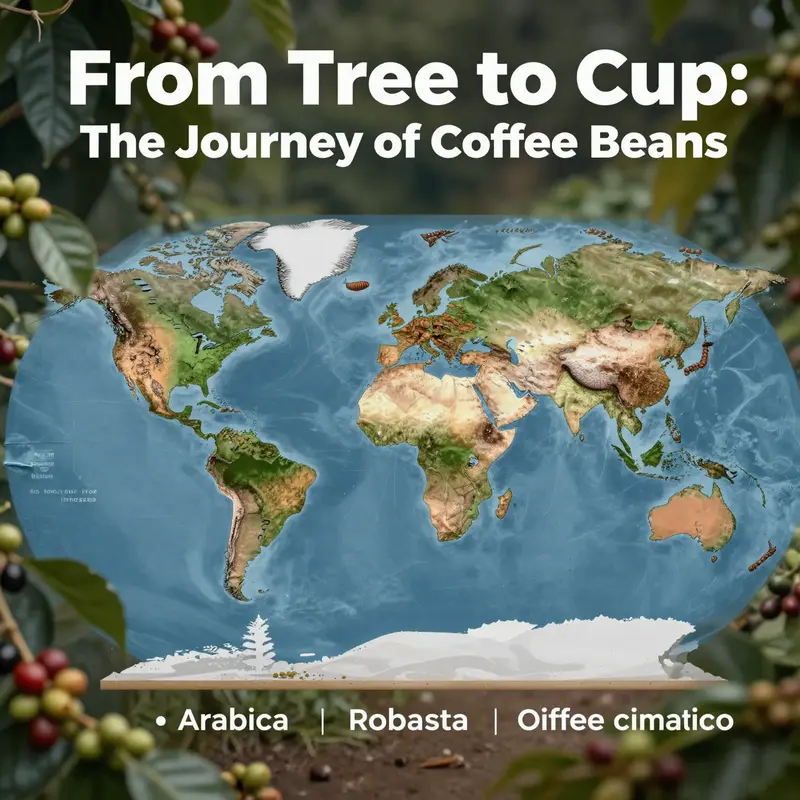
Coffee beans grow on the green, leaf-strewn branches of coffee trees, shrubs by some accounts and small trees by others, depending on how you measure their height and how old the plant is. What seems simple to a casual coffee drinker—beans in a bag from somewhere far away—unfolds as a nuanced botanical and ecological narrative when you look closely. The tree bears fruit, the coffee cherry, and within each cherry lie the seeds we roast, grind, and brew. The journey from cherry to cup is as much about the ground beneath as it is about the climate above. The tree’s life is tethered to the rhythms of the tropics, where sun, rain, and soil mingle to shape flavor, yield, and even the timing of harvests. This is not a story of a single place, but of a band of the world often called the coffee belt, a belt that spans roughly 25 degrees north to 25 degrees south of the equator and hosts the two dominant commercial species, Coffea arabica and Coffea canephora, better known as Arabica and Robusta. Arabica tends to lean toward higher elevations, cooler nights, and a more nuanced acidity, while Robusta often thrives at lower elevations with a sturdier backbone and a different spectrum of bitterness and caffeine content. Yet both beans share a common origin: they grow on trees, and their seeds—the beans—are the product of a fruit that changes color as it ripens, turning green, then red or yellow, signaling that the time is right for harvest. The careful cultivation, the patient wait for cherries to mature, and the subsequent processing steps all hinge on the climate and terrain where the plantation sits, and those conditions ripple forward to influence flavor and aroma in subtle, meaningful ways.
To begin with, the climate matters because coffee plants are supercharged by specific weather patterns. They require warmth as a baseline, but not extreme heat that flats the cherries and stresses the plant. The balance is found in areas that offer a reliable range of temperatures—generally steady warmth without long, brutal dry spells. Humidity supports the development of cherries, not just the leaf canopies that feed them. Rainfall, too, is a careful partner: enough to sustain growth and push the plant through the long arc from flowering to cherry development, but not so much that the crop is washed away or diseases take hold. Within this broad requirement, altitude becomes a powerful magnifier. In mountain climates, cool nights slow the ripening process, giving the cherry time to accumulate more complex sugars and flavor precursors. The same trees grown at sea level would produce a different footprint of acidity and aroma, even when the varieties are the same. This is a central thread in the story of coffee: altitude can sculpt brightness and nuance, while warmth and rainfall shape body and sweetness.
In practical terms, growers have learned to read the land in layers. The higher you climb, the more likely the Arabica plant thrives, given its affinity for cooler nights and a longer maturation period. High-altitude environments, such as those found in Colombia’s Andean regions, Ethiopia’s highlands, and certain Indonesian locales perched on volcanic slopes, create what cultured coffee lovers often refer to as “terroir”—the sense that location, beyond mere variety, animates flavor. The cherries in these regions mature slowly, letting acids and aromatics develop with a more deliberate grace. The trade-off is yield and risk. Higher elevations often come with more fragile trees, sometimes smaller harvests, and a labor-intensive approach to farming. The shrubs or small trees may be shaded under a canopy of native trees, a practice that can regulate temperature, protect soil, and prolong cherry development. When a farm in a misty highland truly gets the balance right, the result is a cup with bright acidity—think citrus, floral notes, and a sweetness that lingers like a soft evening glow.
In contrast, the lower, warmer altitudes offer a different invitation to the plant. Here, temperatures can be steadier but higher, and humidity can be abundant. The ripening period tends to be shorter, the cherries fill out more quickly, and the plant exerts greater energy into producing a robust crop. The flavor spectrum shifts toward a more straightforward sweetness or a bolder, earthier character, depending on soil, microclimate, and processing. In many lowland contexts, robusta varieties find a hospitable home, contributing body and caffeine to blends, and offering a backbone that can support traditional espresso bases. The trade-offs between altitude and latitude also shape disease pressures, pest dynamics, and the precision required in farming practices. Farmers may need to tailor pruning regimes, shade management, and irrigation to the microclimate of a hillside or a flat plain, recognizing that two plots of the same species, adjacent to each other, can produce beans that taste very different because the land sings a slightly different tune.
The story of what coffee beans grow on does not end with climate alone. The tree that bears the cherry is a living system that interacts with soil, rainfall patterns, and terrain. Rich, well-drained soils with balanced mineral content support steady growth and healthy fruit formation. In some regions, the soil’s mineral makeup is a quiet architect, feeding flavors as the plant draws nutrients from the root zone. The elevation not only increases morning coolness but also reduces the risk of certain diseases, while the soil’s texture—whether it is volcanic, loamy, or clay-rich—can influence how water drains and how roots anchor themselves through the long years of production. The precise interplay of above-ground climate and below-ground soil forms a cohesive system. It is a reminder that the coffee tree is not a single-purpose machine but a partner in a living landscape, responsive to the weather, attuned to the soil, and dependent on careful human stewardship.
Harvesting is the moment when climate and altitude reveal their fingerprints most clearly. In places where cherries ripen slowly, workers might pick fewer but better-developed fruits, selecting cherries at the peak of ripeness. In other regions, a larger harvest window means more cherries can be gathered in a single pass. The method of processing then becomes the second major climate-driven decision in the chain from tree to bean. Washed processing, which strains the fruit from the seed by washing away the pulp, tends to emphasize brightness and cleaner acidity, especially in high-altitude coffees where the fruit’s character can be pronounced. Natural or dry processing, in which the entire cherry is dried with its fruit still attached to the bean, often yields fuller body and fruit-forward sweetness, with different roasting and blending implications. Honey processing, a middle ground, can reveal a nuanced union of both worlds. Each processing choice interacts with the bean’s origin characteristics—acidity, sweetness, body, and aroma—often amplifying or softening the traits that climate has already cultivated.
All of these factors converge in the trade’s practical realities. The journey from cherry to green bean involves careful handling, drying, and storage, all of which are sensitive to climate. In sun-drenched valleys or on windy plateau edges, cherries must be dried in controlled conditions to prevent mold and uneven moisture loss. The drying stage is where temperature, humidity, and airflow become coauthors in the final flavor profile. In some regions, cherries are laid out on patios or raised beds, turning regularly to promote even drying; in others, mechanical dryers controlled by trained technicians help ensure consistency across harvests and years. The result is a batch of green beans that will be exported in standard containers, often in 60-kilogram sacks, ready to be roasted by coffee roasters who then interpret the origin’s climate-inflected signature through temperature, time, and technique.
This is where the idea of origin as flavor begins to feel more tangible. For instance, coffees from cool, high-altitude regions tend to deliver a vibrant acidity paired with nuanced sweetness, sometimes floral or fruity in character. Ethiopian beans grown in the highlands are frequently celebrated for their delicate brightness and complex aromatics, with wine-like notes and a lingering sweetness that speaks of the soil and moisture patterns of their specific microclimates. Colombian varieties grown in Andean terraces often produce a well-balanced cup with clean acidity and a caramel-like sweetness that arises from a longer, slower development of sugars in the cherry. Indonesian coffees grown on volcanic slopes often surprise with deeper earthiness and chocolatey notes, a result of both soil minerals and the restorative, almost ritual pace of maturation in a cool, mist-laden atmosphere. In other words, climate and altitude are not mere backdrops but active characters shaping how the same botanical species can yield distinct sensory experiences.
The narrative of growing conditions also underscores the importance of farming practices. The shade cover that can accompany high-elevation plots protects trees from direct sun, moderates temperature swings, and contributes to soil health by reducing erosion and preserving habitat for beneficial organisms. Sustainable farming practices, such as composting, diversified shade trees, and careful irrigation management, help stabilize yields and protect the delicate balance that flavor depends on. In some landscapes, farmers design terraced fields that maximize sun exposure for the cherries while mitigating the risk of soil runoff during the rainy season. The result is not a single flavor profile but a spectrum shaped by the season, the year, and the precise hands of the growers who tend the trees year after year. This is why conversations about origin matter to roasters and connoisseurs alike: a coffee’s identity is forged at the intersection of climate, altitude, soil, and the human craft that transforms the fruit into a coveted green bean.
The broader map of origin also invites a forward-looking view about how climate change and evolving agricultural practices might alter where and how coffee can be grown. Some regions may experience shifts in ideal altitude ranges, changing rainfall patterns, or increased disease pressure, all of which could compel farmers to adapt—moving to higher elevations, altering shade practices, or investing in varieties selected for resilience. Others may expand into new microclimates, gradually widening the geographic possibilities for growing the beloved beans that end up in our cups. The complexity of this dynamic, and the challenge of maintaining flavor integrity while adapting to changing conditions, is a reminder that the story of coffee is a living dialogue between plant, land, weather, and human culture.
Within this larger tapestry, you can glimpse the core takeaway: coffee beans grow on trees, and the nature of those trees—their species, their elevation, and the land they inhabit—shapes not just how many cherries come to harvest but how those cherries taste when they reach the cup. The two principal commercial species embody different relationships with climate. Arabica thrives when the air is cooler and the soil richer, delivering a cup that is often described as nuanced, with heightened acidity and a complexity that rewards careful roasting. Robusta, more forgiving of warmth and lower elevations, tends to offer a sturdier body and sometimes a more straightforward bitterness that can anchor espresso blends or provide a reliable base for milk-based drinks. The human team that tends these trees—farm workers, agronomists, breeders, and caretakers—navigates a landscape that is both predictable in its cycles and variable in its daily weather. Their decisions—when to prune, when to water, how to harvest, and how to process—co-create the sensory experience that many people around the world come to expect from a new bag of coffee.
If the science of growing conditions is the backbone of how coffee beans grow on trees, then the culture of origin—stories of farms, regions, and communities—gives flavor its context. To readers curious about the geography of taste, this means recognizing that a single origin can carry a mosaic of notes that reflect not just altitude and temperature but the particular choices made in processing and post-harvest handling. Ethiopian coffees with their characteristic florals may owe their brightness to high-altitude microclimates and to sun-dried or washed processing choices that emphasize acidity and aroma. Colombian coffees with a clean, balanced profile draw on terraced landscapes where shade and rainfall exhibit a temperate rhythm that supports steady development. Sumatra’s Mandheling, often celebrated for its deep body and earthy tones, speaks to a different set of soil minerals and a traditional processing regime that interacts with humidity and micro-climate to yield that signature footprint. The flavor map that emerges from these regions is not a simple chart of tastes but a living atlas of climate-driven potential, where each harvest adds a new line to the ongoing story of how the world’s coffee beans grow and what they become when they are roasted and brewed.
The broader implication of this story is that the coffee you taste is inseparable from the place that produced it. The “where” of growth—the altitude, the microclimate, the soil, and the farming practices—becomes a kind of map you can read in the cup. The careful choices of harvest timing, processing, and drying are the language through which climate is translated into flavor. As you learn to read that language, you begin to understand why a light roast from a high-altitude Ethiopian origin might sparkle with jasmine and citrus, while a darker roast from a Sumatra clone grown on a volcanic belt might offer an enveloping chocolate-cocoa finish. It is a reminder that coffee is not a mere commodity but a tapestry woven from climate, land, and human hands across continents.
For readers who want to explore further, a broad, authoritative resource on how climate and origin influence quality in coffee origins is available through international institutions that track coffee production and standards. This broader resource helps connect the climate stories discussed here to a wider framework of research and policy that shapes how the world’s coffee is grown, processed, and traded. External resource: https://www.ico.org
In addition, if you want to consider cross-disciplinary perspectives on how environments shape practice and outcomes in different fields, you can explore related discussions in the broader catalog of topics connected to this site, including conversations about how people adapt to changing environments and how education and practice respond to evolving conditions. For example, the following internal link offers a window into how professional practice across diverse fields navigates collaboration and adaptation: how-do-occupational-therapists-collaborate-with-other-healthcare-professionals.
What remains essential is to carry forward the idea that coffee beans grow on trees, in a world of variable climates, altitudes, soils, and farming practices. Each origin is a chapter in a grand, sprawling field guide that models the intimate relationship between a plant’s environment and the flavors that eventually reach our cups. The trees do their patient work year after year, and the people who cultivate them translate climate into care, care into cherries, and cherries into the beans that roasters then turn toward flame and time. The result is a daily ritual that is as much about geography as it is about taste, a reminder that the cup in your hand is the sum of countless ecological conversations told across regions, seasons, and generations.
From Cherry to Cup: The Hidden Life of Coffee Beans Growing on the Plant
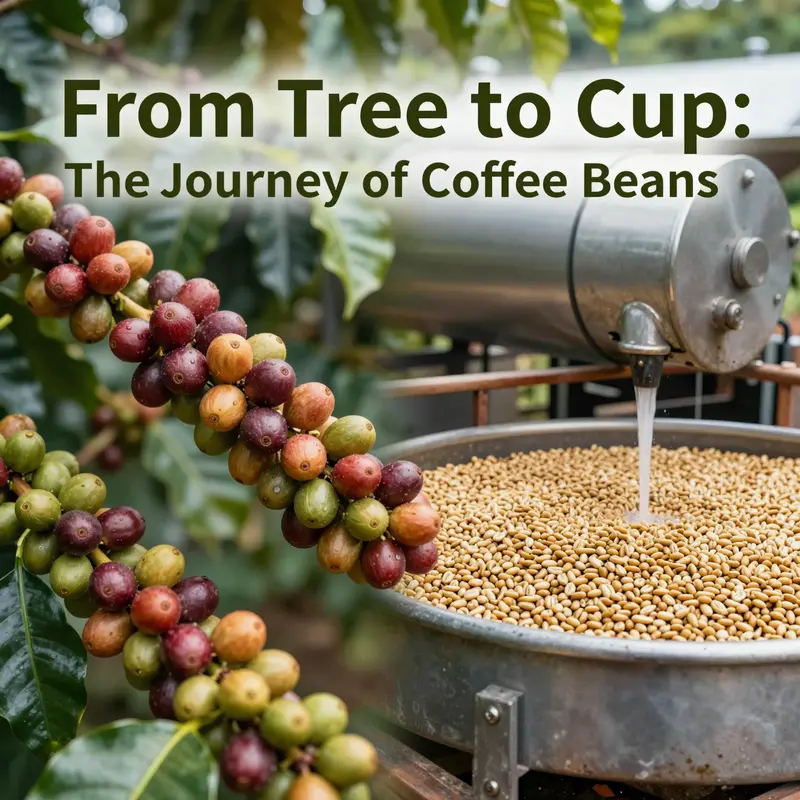
The question of what coffee beans grow on invites more than a simple botanical answer. It opens a doorway into a plant world that most morning rituals barely hint at. Coffee beans do not spring from barren pods in a grocery aisle; they grow on living plants, carried by leaves and branches in tropical landscapes that cradle the plant’s every breath. The plant itself is a member of the genus Coffea, nestled in the Rubiaceae family, a reminder that the very thing we drink has roots in a larger botanical story. In this chapter, we move beyond the bean as a flavor note and trace its life from a flowering shrub to the cup that sits on the kitchen table. The journey binds climate, geography, cultivation practices, and processing choices into a single narrative of what coffee beans grow on and how they reach us in the form we recognize as coffee.
The biology is straightforward, even elegant. Coffee trees are evergreen, often kept as shrubs or small trees that can live for decades in the right conditions. They bear flowers that release a gentle perfume, sometimes described as fruity or jasmine-like, depending on variety and terroir. From those flowers come the coffee cherries, the first stage of the bean’s life. Inside each cherry lies typically two seeds—the coffee beans—that are the very seeds we grind and brew. The cherry itself is a fruit with a careful design: a thin pulp outside, a mucilaginous layer near the seed in some processing methods, and a protective parchment surrounding the seed once the hull is removed. The plant’s fruiting cycle is intimate with its care, its climate, and its altitude, all of which influence how the cherries ripen and what flavor potential resides in the seeds inside.
To understand where coffee beans grow, one must picture the global geography that shapes every harvest. Coffee plants thrive within the so‑called coffee belt—stretching roughly between 25 degrees north and 25 degrees south of the equator. This belt is not a flat zone; it is a mosaic of microclimates, soils, and sun exposure that collectively nurture the cherries as they mature. Within this belt, two species dominate commercial production: Coffea arabica, commonly called Arabica, and Coffea canephora, known as Robusta. Arabica plants prefer higher elevations and cooler temperatures, often growing between 600 and 2,000 meters above sea level. Robusta, on the other hand, is more forgiving of heat and lower elevations, typically found from about 200 to 1,000 meters. These elevation preferences are more than quirks of terroir; they shape the plant’s physiology, the ripening schedule, and ultimately the cup’s character.
The visual drama of the plant is quiet and patient. In the right conditions, a field of Coffea arabica or Coffea canephora bears a canopy of glossy leaves, their veins tracing a quiet map of the plant’s life. When the trees bloom, they do so in a delicate shower of white flowers that seem almost incidental amid the orchard’s green and brown. The blooms attract pollinators and, in a sense, invite the next stage of life: the formation of coffee cherries. The cherries begin green and remain so as the fruit’s sugars begin to accumulate and the seed begins its quiet maturation. Over weeks to months, those green cherries will ripen, turning bright red or yellow depending on the variety and the specific clone’s genetics. It is during this ripening that harvest decisions take on significance. The ripening pattern is uneven, especially on larger trees with multiple branches exposed to sun and shade. That unevenness matters because it means picking must be precise if the goal is to select only cherries with the most desirable flavor potential.
Harvesting is perhaps the most visible moment when the plant and its fruit connect to our morning cups. In many high-altitude regions, picking cherries is done by hand. A skilled picker can distinguish ripe fruit from unripe fruit and harvest accordingly, choosing only the cherries that have reached peak sweetness and flavor development. In other regions where terrain favors mechanization, machines may be used to strip fruit from branches, though this can mix perfectly ripe cherries with less ripe ones and with overripe fruit. The choice between hand and machine harvesting is not merely a matter of labor costs; it is a choice about flavor, risk, and consistency. Hand-picking, especially in steep or secluded plots, often yields cherries that are more uniformly ripe, which can produce a cleaner, more defined cup profile after processing.
Once harvested, processing begins. The berries must be transformed from fruit into a form that allows the seeds—the beans—to be dried, hulled, and shipped. This is where the life of the bean becomes a technical, almost architectural process. There are three primary methods, each with a distinct effect on flavor and texture. The washed or wet process uses water and fermentation to remove the fruit pulp from the beans. In this method, the mucilage is removed after pulping, and the beans ferment for a controlled period before washing, drying, and hull removal. The result is a cup described as bright and clean, with a clarity of acidity that can highlight fruit tones and delicate aromatics. In contrast, the natural or dry process keeps the fruit on the bean during the drying phase. The whole cherry is laid out to sun-dry in thin layers, turning occasionally until the entire fruit exhausted its moisture. This slower, fruitier approach tends to imprint more sweetness and sometimes a fuller body, producing a cup with fruity notes and a heavier mouthfeel. A hybrid approach, often called honey or semi-washed, sits between the two extremes. Here, some mucilage remains on the bean during partial drying, producing a balance of sweetness and clarity. Each method is a deliberate choice about how much fruitiness the bean should carry into the roast and cup.
After drying, the beans are husked to remove the parchment layer that encases the green coffee. They are then cataloged by origin, varietal, and processing method as they move toward export. At this stage the product is commonly referred to as green coffee, a term that can be confusing to newcomers who may expect green to imply a lack of color or life. In truth, green coffee is a stage of readiness, a state in which the beans contain the seeds in a stable, dry form, prepared for long-distance travel and eventual roasting. The journey from farm to roaster is one of logistics as well as geography. Today, coffee has become one of the world’s most traded commodities, with the production landscape dominated by nations such as Brazil, Colombia, Vietnam, and Ethiopia. The industry’s scale is immense; in recent years the global market has hovered around the half‑trillion-dollar mark, reflecting both the abundance of coffee and the demands of a world that treats coffee as part of its daily rhythm.
All along this journey, differences in flavor arise not only from the beans’ genetics but from the environmental conditions and the choices made during processing and handling. Arabica beans generally fetch higher prices because they tend to offer smoother, nuanced flavors with pronounced acidity—notes that echo their high-altitude origins and slower maturation. Robusta beans are known for higher caffeine content and a more robust, sometimes more bitter and earthy profile. They are often used in blends or for instant coffees because their flavor carries well in harsher or more utilitarian contexts. The caffeine content of Robusta can span roughly 1.7 to 4.0 percent, a range that helps explain why Robusta is a staple for blends intended to deliver quick, strong energizing effects and a distinct bite that can sharpen a cup’s overall structure. Arabica, with caffeine levels typically lower, tends to emphasize aromatics and a smoother overall finish. The flavor dictionary for coffee makes sense only when you consider this spectrum of genetics, altitude, and processing as a single, interconnected system.
The global trade layer adds another dimension to the story. Once the green beans are produced and dried, they travel to roasters who transform them into the aromatic beans we grind for our daily rituals. The movement from farm to table involves multiple hands, frail logistics, and careful storage to preserve the beans’ properties. Freshness matters as much as origin; modern packaging experiments with inert atmospheres, vacuum sealing, and barrier technology to protect aroma and prevent oxidation. The science of storing roasted coffee has become as sophisticated as the science of growing it, recognizing that flavor is not only brewed but also preserved, often for months or even longer, against time and exposure to air, light, and heat. This emphasis on freshness underscores how far coffee beans travel—from plant to roasted, ground, and brewed—not only across continents but through layers of technology designed to keep flavor intact.
The plant-based origin of coffee beans means that every cup carries a story of place. Elevation, rainfall, and soil chemistry influence how much sugar the cherry can accumulate and how flavors emerge during the bean’s post-harvest life. Elevation matters because it correlates with temperature fluctuations that slow maturation, allowing more complex flavor development. Soil richness contributes minerals that can subtly tint the bean’s character. Producers in different regions apply cultivation practices that balance yield with quality, selecting clones, pruning regimes, shade management, and precise harvest timing to optimize flavor potential. The story of what coffee beans grow on thus becomes also a narrative about the people who tend the plants—farmers who decide when to harvest, how to process, and when to dry—people whose expertise translates into the sensory experiences of countless cups worldwide.
From this vantage point, the coffee plant appears less as a commodity and more as a living bridge between ecosystems and human culture. The beans themselves are tiny archives of climate and practice, encoding in their seeds the conditions of ripening, the patience of drying, and the choices made by farmers and processors. The cup we pour is the final, widely traveled artifact of that chain: it embodies the climate’s rhythm, the land’s mineral signature, and the craft of people who read the cherries and decide how to release their flavors. It is no accident that arabica and robusta tell different stories in the same geographic window; the microclimates and grower practices that shape one bean will not craft the other in the same way. The plant’s life cycle—from flower to cherry to bean—requires another form of care: careful selection, precise processing, and deliberate handling that honor the plant’s delicate metabolism and the consumer’s expectation for flavor, aroma, and balance.
The chapter’s arc is not complete without acknowledging that the modern coffee industry continuously evolves in response to demand, climate change, and technological innovation. There is growing interest in sustainable farming, shade-grown practices, and high-yield yet quality-preserving clones that can resist pests or heat stress. Growers are experimenting with processing innovations designed to emphasize fruit sweetness without sacrificing clarity, while roasters explore how different origins respond to roast profiles in pursuit of consistency and expression. In this sense, the question of what coffee beans grow on becomes an invitation to view the entire chain as a living system, one that cannot be fully appreciated by peering only at the bean or the cherry in isolation. The plant, the fruit, the harvesters, the processors, the traders, and the roasters all participate in an ever-evolving conversation about how to bring the best of a tropical landscape into a familiar morning ritual.
In the end, the answer to what coffee beans grow on is both simple and profound. They grow on evergreen Coffea plants, within the fruit known as the coffee cherry, in a spectrum of environments that range from shaded highlands to sun-drenched lowlands. They are shaped by two dominant species—Arabica and Robusta—each with its own biology and culinary potential. They are harvested with a mix of technique and timing, then processed through methods that imprint different textures and flavors on the final seed. They are dried, hulled, and dried again in a sequence that preserves moisture at roughly ten to twelve percent, a critical window that ensures beans arrive at roasters in good condition. They journey across oceans to roasters and markets, traveling with the same care that growers give to their trees. And through every step, the beans retain a memory of their origin: the soil’s whispers, the rain’s cadence, and the hands that tended the fruit from bloom to berry. The plant is the beginning; the cup is the end result of a long, intricate life that connects people, land, and flavor in a single daily ritual.
If one breathes deeply the aroma of roasted beans and contemplates their origin, a more intimate appreciation emerges. The plant that bears the fruit is not merely a source of caffeine or a flavor profile to be assessed; it is a living conduit of place and practice. The coffee bean’s journey—from green seed to roasted treasure—tells a story about agricultural resilience, human ingenuity, and the way communities organize around a crop that has become central to many cultures. Understanding what coffee beans grow on invites readers to see the plant as more than a commodity and to recognize the labor and ecology embedded in every cup. It is a narrative that respects the plant’s life, honors the variety of processing traditions, and cherishes the global exchange that turns a tropical harvest into a familiar, comforting routine. In recognizing the plant and its fruit as the beginning of a long chain, we also acknowledge the broader web of relationships that sustain coffee as a worldwide staple—and the way that a single cup can connect so many landscapes, hands, and histories.
External resource: https://www.nespresso.com/uk/en/guide/coffee-bean-guide
Final thoughts
Understanding what coffee beans grow on, from their origins in coffee trees to the nuances of their growing conditions and processing methods, is vital for any business owner in the coffee industry. These insights not only enhance your appreciation of this beloved beverage but also position your business to better communicate quality and value to customers. By recognizing the journey of coffee from tree to cup, you can make informed decisions that will resonate with coffee enthusiasts and contribute to sustainable practices in coffee cultivation.