
Understanding how long roasted coffee beans last is crucial for business owners in the coffee industry. Roasted coffee beans peak in flavor from 2 to 4 weeks post-roasting, making freshness a key factor in delivering high-quality coffee. Beyond this time frame, beans begin to lose their aromatic compounds, resulting in a less vibrant brew. This article explores the lifespan of roasted coffee beans under various conditions, the importance of proper storage, the comparative longevity against ground coffee, and the impacts of aging on flavor. Each chapter addresses essential information to help you maintain superior quality and ensure customer satisfaction.
The Quiet Window: How Long Roasted Coffee Beans Keep Their Spark Before Flavor Fades
Roasted coffee beans begin a subtle, inexorable aging the moment they emerge from the roaster. The aroma that fills the air as they cool is a fleeting prologue to a longer story of chemical change. The question of how long those beans stay vibrant is not a single number but a window of opportunity shaped by the roast, the beans themselves, and the conditions in which they live after roasting. In practical terms, this chapter traces that window with care, balancing laboratory findings with the lived experience of home use, professional cupping notes, and the rhythms of everyday coffee routines. What emerges is a richer, more nuanced picture than a simple countdown on a bag. The flavor life of roasted beans is real, measurable, and surprisingly intimate with the way we store, grind, and brew.
The most precise reads from recent experiments push us toward a surprisingly tight peak. Even under ideal storage, roasted beans seem to begin losing their peak flavor within a narrow arc of roughly 10 to 14 days after roasting. That is the moment when aromas start to dull and the cup’s brightness can soften, a subtle drift that changes the overall perception of the coffee. By the time a month has passed, many specialty-grade beans show a meaningful drop in aromatic intensity. In some batches, that decline can reach 30 percent or more, a quantum shift in how the cup presents itself. It is easy to misinterpret these numbers as the beans having spoiled, but they are not unsafe to drink; the deterioration is a matter of flavor and aroma, not safety. The beans remain usable, but the balance—bright acidity, vibrant fruit notes, or the comforting warmth of a familiar roast—has shifted.
To understand why this happens, we need to consider both the chemistry at work and the physical structure of the beans. Coffee is a complex emulsion of volatile compounds, oils, and carbohydrates. When beans are roasted, these components are driven toward new configurations. Some compounds become more volatile and escape into the air, while others bind more stubbornly to the bean’s interior. Exposure to oxygen then begins a slow oxidation process, which gradually strips away the most lively aromas. The rate of this oxidation is not identical from bean to bean. Roast level plays a central role here: darker roasts tend to degrade faster because their surface oil content is higher and their structural integrity is more compromised. Those oils, while delivering bold, immediate flavors, also open the door to faster oxidative changes once the beans cool. Lighter roasts, with their denser structure and slower oxidation rates, can cling to their aromatic complexity a bit longer, even as the clock ticks.
The way a bean is stored after roasting compounds the story. The enemy is air, light, heat, and moisture. An airtight container is essential, yet the container is only part of the equation. The bean’s environment matters just as much. A cool, dark pantry is far better than a sunlit countertop near a stove, a window with persistent glare, or a cabinet above the oven. Temperature stability is more important than one might expect. Frequent changes in temperature encourage condensation and micro-moisture development on the surface of the beans, and moisture can act like a solvent for aromatic compounds, enabling them to drift away or degrade more rapidly. Friction from repeated opening and closing of a bag can also introduce small amounts of oxygen that accelerate staling over time. Because air exchange is gradual, even a well-sealed bag that’s opened frequently will still allow the beans to age, just at a slower pace than an exposed batch would.
One common practical takeaway rests on the timing of use. For a home kitchen, the simplest path to consistent taste is to treat the roasted batch as a limited resource—a few weeks rather than months—from the moment it leaves the roaster. This does not mean coffee becomes dangerous after a certain date, but its aromatic profile takes a hit as the weeks pass. In everyday practice, many roasters and cuppers advocate consuming beans within the first few weeks post-roast to capture the intended flavor profile. This aligns with the intuitive experience that coffee brewed from beans still near their roast date often presents a livelier acidity, more distinct fruit notes, and a cleaner finish than coffee brewed from beans that have aged beyond that window.
There is another layer to consider: not all beans are created equal. The freshness window interacts with the bean’s origin, processing method, and roast profile. A delicate, lightly roasted bean from a nuanced origin may reveal its character within a shorter arc than a robust, heavily roasted bean whose oils are more exposed to air. The variability is not a flaw but a reminder that flavor is a dynamic conversation between chemistry and context. For the conscientious consumer, this means embracing a mindset of freshness that is flexible rather than dogmatic: understand that a bean’s aromatic potential is real, but also understand that the lesson of the window is to optimize the moment you brew, not to pretend that the clock stops at a precise second.
In practice, this translates to a few actionable habits that honor the science without turning coffee into a ritual of sterile precision. First, buy smaller quantities more in line with your weekly or biweekly consumption. This minimizes the time the beans sit on the shelf before they are ground and brewed. Second, grind closer to brewing time, especially for beans that have ticked past the early weeks post-roast. Ground coffee loses its aroma far more quickly than whole beans because the surface area has exploded, giving oxygen easier access to volatile compounds. Third, store beans in an opaque, airtight container in a cool, dark place. If your kitchen is prone to heat or sunlight, consider moving the container to a pantry or even a cabinet away from heat sources. Fourth, while it may be tempting to tuck beans into the refrigerator or freezer for long-term storage, the routine is a double-edged sword. Temperature fluctuations and moisture migration during cycles of chilling and warming can damage the delicate structure of the beans and degrade flavor. The consensus here is cautious: if freezing is your only option to preserve a big purchase, use it—carefully wrapped, well-sealed, and thawed only once. But for most regular coffee drinkers with average consumption, home storage in a cool, dark place in an airtight container remains the most reliable method to preserve flavor quality.
These principles cohere not only with laboratory observations but with the practical experiences of roasters and tasters who cup daily. A cup prepared from beans that are still within that narrow freshness window often carries a brightness that is more faithful to the roast profile: the acidity is clean, the aroma more defined, and the finish longer and more balanced. After the window narrows, the same beans may reveal a flatter middle and dulled aromatics, even if the body remains satisfying. It is an evolution rather than a sudden collapse. The cup’s character shifts gradually, and a shift in perceived aroma can cascade into a different overall impression—whether the coffee feels lively enough to lift the morning or simply comforting enough to finish the cup with ease.
When we step back and consider the big picture, the search for the definitive shelf life becomes less about a single line in a chart and more about aligning expectations with the chemistry we cannot see but can feel. The numbers—from a few days to a few weeks—are best understood as guidelines that help structure our habits. They remind us that the moment coffee lovers prize most—the moment when the aroma fills a room and the cup sings with clarity—occurs in a window that is both measurable and personal. The beans you roast today are best enjoyed in the near term, but the experience may still be rewarding if you plan wisely, practice mindful storage, and brew with attention to timing. If you find yourself with a batch that has surpassed the ideal aroma by a week or two, remember that flavor often persists; it is simply transformed. You may notice more subtle notes or a softer vivacity, and the cup may still comfort rather than thrill—but it will still be coffee, and there is value in a well-made cup even when its spark has shifted.
For those curious about strategies to coax more life from stale beans, the literature offers practical refresh ideas that many home brewers find surprisingly effective. While these approaches cannot restore an expired peak beyond its natural course, they can often recapture some brightness or clarity with a light touch. A thoughtful reintroduction of warmth and freshness, alongside sensible grinding and brewing adjustments, can yield a cup that feels almost renewed. The possibility of reviving flavor adds another dimension to the ongoing conversation about freshness in coffee culture and invites readers to experiment within a reasonable margin of error rather than accepting staleness as an inevitability. The evolving understanding of how long roasted beans last invites a more nuanced appreciation of time, technique, and taste—reminding us that coffee, like all living flavors, continues to tell its story a little differently with each passing day.
For researchers and serious enthusiasts, the topic remains fertile ground for exploration, and the practical implications can be meaningful for both small cafés and home brew enthusiasts alike. The beauty of the current findings lies not in a strict rule but in a framework that respects the art as much as the science. In this framework, the clock starts at roasting and continues to mark the cup that is brewed, not the bean’s calendar date. When we treat freshness as a sequence of moments to be savored rather than a single deadline, we unlock a more joyful and informed relationship with our daily ritual. This mindset—to chase brightness in the weeks after roasting while recognizing that flavor evolves over time—allows us to enjoy coffee more deeply and to tailor our habits to the way each batch speaks to us.
External resource: For a deeper dive into refresh strategies and practical tips for reviving stale beans, see this article from UC Davis: https://www.ucdavis.edu/news/2026/02/13/how-to-refresh-stale-coffee-beans-and-make-them-taste-almost-new-again
Flavor in Flux: How Long Roasted Coffee Beans Stay Fresh When Stored Properly
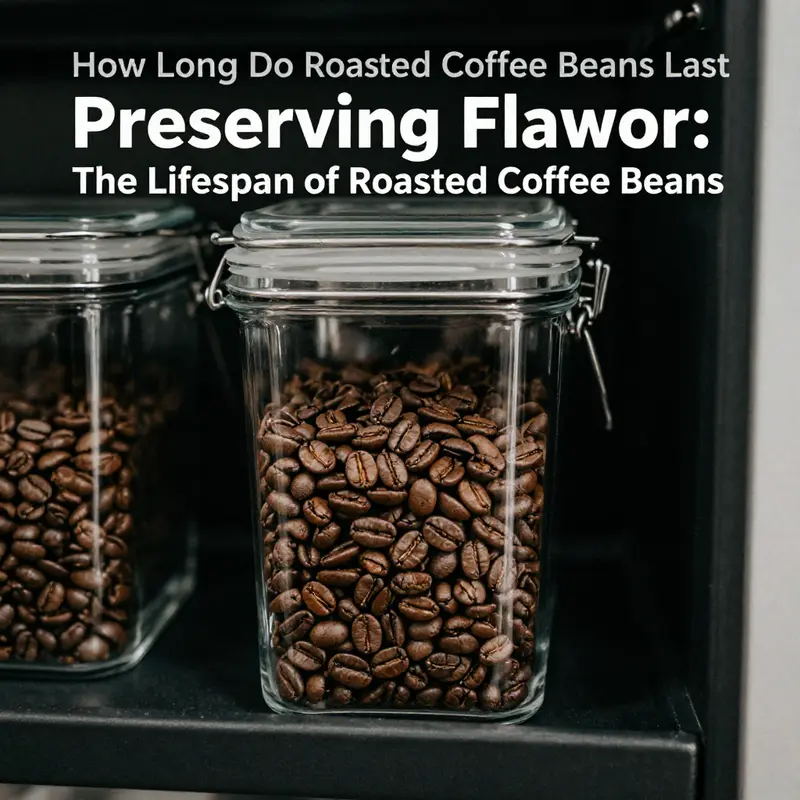
Roasted coffee beans carry a memory of the heat that released them and a promise of the aroma set free in the cup. The question of how long they stay at their best isn’t simply about shelf life; it’s about how quickly a complex mix of aromas and oils begins to drift away once the beans leave the roaster. In a kitchen clock, the minutes after roasting matter as much as the roast itself. The more intact the packaging and the more shielded from light, heat, and humidity, the longer those volatile compounds can linger before they fade into a quieter, flatter cup. The conversation about freshness, then, is really a meditation on balance: timing, temperature, and the gentle art of containment.
Researchers describe the flavor window in careful terms. Some guidance suggests peak flavor appears roughly two weeks after roast. Other sources place that peak a little earlier, or extend it into a two-week to four-week span depending on roast level and storage. What holds constant is this: after the initial surge of aroma, the compounds most responsible for vibrancy begin to diminish. The beans never truly spoil in a harmful sense as long as moisture and mold are kept away, but their perfume and punch do weaken with time, turning what could be a bright cup into something more ordinary, unless you act to protect what remains. The nuance matters because the difference between two weeks and four weeks can be a noticeable shift in brightness, sweetness, and the level of nuance in the cup. In practice, the exact window depends on the bean’s origin, the roast curve, and how carefully the bag or canister is sealed.
Storage decisions amplify or erode that window. The simplest, most effective rule is straightforward: keep beans in an airtight container, stored in a cool, dark place. Light, heat, and moisture are enemy numbers one, two, and three. A pantry shelf away from the stove or oven is ideal; a cabinet with a door that blocks light helps preserve their oils. Temperature should stay as steady as possible; frequent fluctuations accelerate staling. For many households, this means avoiding the kitchen counter near appliances that generate heat and avoiding direct sun on the bag or canister. The moment you expose beans to a warmer cycle—say, a sunny afternoon on the counter—the clock for flavor accelerates, and you may notice the impact sooner than you’d expect. The human palate, tuned to detect sweetness and brightness, can also sense this shift as a softer, less dynamic cup, even when the caffeine punch remains present.
That said, a blanket prohibition on refrigeration or freezing isn’t universal. For short-term use, refrigeration is often discouraged because the fridge’s humidity and occasional condensate can invite moisture into the beans. When warmth returns after opening the container, condensation can form and interrupt the delicate balance inside the beans. For longer horizons, freezing can be a practical option if done with care: portion into small, vacuum-sealed units and only remove what you will use in a single brewing session. Even then, the clock image remains the same: quality has an expiration, even if safety does not. In practice, most home storage experts recommend using frozen beans within about three months to preserve maximal flavor. The idea is to minimize repeated temperature changes, which can lead to moisture diffusion and subtle flavor changes that the nose and palate can detect on brew day. While freezing can extend the usable window, it does not rescue a ruined bean; it merely slows the pace at which flavor ebbs.
Another practical distinction is whether you buy whole beans or grind them first. Whole beans retain their aroma longer because grinding exposes surface area to air all at once. Once ground, a larger share of the surface is exposed to oxygen, and the clock runs faster. This is why many coffee lovers adopt a habit of grinding only what they need just before brewing. It reduces the time between grinding and immersion in hot water, and it helps preserve the volatile compounds that carry sweetness, brightness, and nuance from bean to cup. The same logic applies when you decant ground coffee into a container: keep it away from light and air, use a smaller jar to reduce exposed surface, and consider a lid that minimizes oxygen exchange without sealing in moisture. In other words, the grind itself becomes a race against time, and so the practice surrounding your grind choice becomes part of your flavor strategy.
To tie these ideas to everyday practice, consider a simple mental model of the coffee you buy from the shop or roast at home. When you open a bag, you release a small amount of carbon dioxide that the charring process trapped inside. That escape is a good sign of freshness, but once it slows, the remaining aromatics begin to fade. If you brew with beans that are two weeks past roast, you may notice a cup with a softer, less defined aroma, a touch of flatness in sweetness, and a duller finish. If you wait beyond the two-week mark, flavors can feel muted, even if the caffeine provides a familiar kick. The goal is to align your grind schedule with the roast date so that your brew tastes as close as possible to the roaster’s intention. Some days call for a lighter touch with the grinder, others for a slightly coarser grind to stretch the aromatic window a bit; the point is to keep a sense of timing that respects the bean’s evolving personality rather than fight with it.
Roast level also subtly changes the pace of freshness. Lighter roasts often retain brighter, more volatile compounds that can dissipate quickly, while darker roasts may mask some of the early aromas but develop other oils that persist a bit longer. In practical terms, a light roast is likely at its peak closer to two weeks after roasting, while a darker roast still holds up well for a couple of weeks, but its headline aroma will most reliably arrive when the beans are fresh, perhaps within the first week or two for many home brewers. Regardless of roast level, the storage environment shapes the outcome as much as the roast date itself. A cool, dark, airtight pocket is the difference between a lively cup and a slightly tired one. The romance of a bold espresso profile, for example, can be contingent on keeping those essential aromatics guarded until the moment of grind and brew, a moment that must be timed with the roast’s calendar.
For those who want to extend the window beyond a couple of weeks, freezing offers a careful compromise. Freeze in small portions, if possible vacuum-sealed, and thaw only what you are about to brew. It sounds simple, but the process requires discipline: avoid repeatedly thawing and refreezing, which invites moisture and texture changes that can manifest as off-flavors and a woody or damp finish. Even with proper freezing, the clock is not unlimited. Experts generally suggest keeping frozen beans for up to about three months to preserve quality while maintaining safety. After that, even at low temperatures, flavors can slide toward dullness, and the rich, resonant notes you expect may recede. The decision to freeze is often made by households with tasting and timing preferences that outpace the standard consumption cycle, not out of fear of foodborne illness. It is an expedient, not a miracle, and it demands the same respect you give to a fresh bag opened the same week as the roast.
In the end, the goal is to brew with intention. The coffee you choose on a given day is a reflection of both your taste and the period since your last roast or purchase. If your calendar has your roast date on it, you can plan brewing around that date to maximize aroma and sweetness. Some coffee enthusiasts maintain a rolling rotation: a fresh batch used within a week, a second batch kept for two weeks, and a reserve frozen for longer-term experiments. The point is not fanatic control but a practical balance that respects the chemistry of freshness while fitting real life. A well-sealed canister and a dark corner become allies, turning a simple kitchen shelf into a small archive of flavors, each bean preserving a moment in time that arrives in the cup with its own unique texture and brightness. The result is not only a better cup but a more informed relationship with how we store and use what we brew.
Beyond the kitchen, the broader takeaway is humility. Coffee is a product of chemistry, climate, and craft, and its best moments depend on how careful we are with storage, air, light, and temperature. The pursuit of the perfect cup is as much about managing a fragile, evolving flavor profile as it is about selecting a roast or a grind. The consumer who understands that beans are living in a sense—living in the sense of metabolizing their aromatic compounds in response to oxygen and heat—will better appreciate the window in which they can get the most out of their purchase. The journey from roast to cup is a brief but telling voyage, and understanding that voyage helps you choose when to brew and how to store. The practice is not about rigid rules but about developing a sensibility—an awareness that flavor, like time, changes with subtle conditions and patient care.
For a concise, evidence-based overview that consolidates various viewpoints, see The Spruce Eats guide on coffee beans last: The Spruce Eats: How Long Do Coffee Beans Last?
Flavor in Flux: How Oxygen, Temperature, and Light Decide How Long Roasted Coffee Beans Stay Fresh
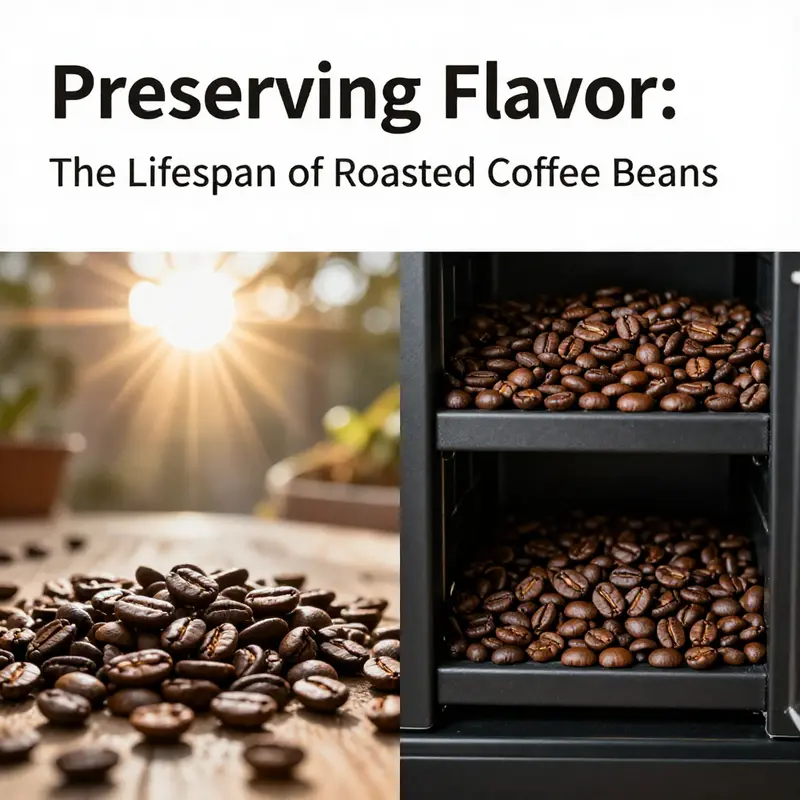
Roasted coffee beans carry more than flavor; they carry a delicate balance of oils, aromatics, and compounds that define what each cup will taste like. The clock starts the moment the beans exit the roaster, and the tempo of that clock is dictated less by a single factor than by a small, interacting set of environmental conditions. In practical terms, the journey from vibrant, bright notes to a softer, flatter profile hinges primarily on how much oxygen the beans meet, what temperature surrounds them, how much moisture they pick up or shed, and how much light penetrates their container. Together, these elements shape the shelf life of roasted beans in a way that turns a few weeks into a narrow window of peak enjoyment and makes longer storage a cautious compromise between safety and flavor. Understanding this interplay helps us approach each purchase with a plan and brew with intention, aiming not just for safety but for a cup that still hints at the roaster’s artistry weeks after the roast date.
Oxygen stands as the most critical antagonist in the coffee world. It is the agent of oxidation, the gradual off-flavor that tightens its grip on aroma and brightness as soon as air is allowed to mingle with the beans. The freshness story begins instantly and continues with a steady tempo. When the beans are sealed away from air in an airtight, opaque container placed in a cool, dark corner, their perfume and vitality can linger for a meaningful stretch—roughly up to three months in many cases. Of course, that is a best-case scenario, a bestiary of flavor preserved by proper housing. The moment the bag is torn, the lid is removed, or the container is made porous to air, the clock speeds up dramatically. In an open bag, or a non-airtight vessel left in a kitchen with a steady current of air and relative humidity, the beans begin to lose their freshness within a week or two. The rate of this decline is a direct reflection of how quickly oxygen can penetrate the surface, how rapidly the aromatic oils volatilize, and how aggressively these components react with the surrounding environment.
Temperature and humidity function as the invisible accelerants of the process. Temperature, in particular, operates like a catalyst for chemical reactions that degrade flavor compounds. Higher temperatures—think a warm kitchen, a sunny shelf, or a pantry near a heat-emitting appliance—tend to speed oxidation and staling. Studies and best practices suggest that exposure to elevated temperatures for as little as a week to a few weeks can mimic the effects of longer storage at cooler conditions, essentially compressing the beans’ usable life. In contrast, a cool, dry environment slows reactions and retards moisture-driven damage, preserving the nuanced character of the roast for longer. Humidity compounds the challenge: moisture can creep into even well-sealed containers if the seal isn’t perfect or if condensation occurs during temperature fluctuations. Moisture can alter the microstructure of the bean’s surface, inviting microbial activity and further diminishing aroma and flavor. For this reason, a pantry or cabinet that remains consistently cool and dry—well away from ovens, dishwashers, or other heat sources—is preferable to a refrigerator or freezer. Temperature swings are the enemy; stable conditions, even if modest in degree, are friend to freshness.
Light, though often overlooked, is another quiet saboteur. Ultraviolent or bright light can degrade sensitive compounds trapped inside the bean, particularly the delicate volatiles that carry aroma and the bright, fruity notes that distinguish a vibrant cup. A dark storage environment acts as a shield against photo-oxidation, enabling the beans to hold onto their aromatic profile longer. This is not just a concern for the kitchen shelf but also for the container and its lid. An opaque container ensures that the light does not nudge the beans toward a slower, but still inexorable, decline in quality. The composition of roasted coffee—once full of volatile oils and aromatics—responds to light exposure by gradually losing its edge, a change that becomes perceptible to a trained palate long before any safety concerns arise.
Taken together, these factors sketch a simple but powerful guideline. Freshly roasted beans reach their peak within two to four weeks after roasting, a window in which flavor and aroma are most luminous. Beyond that window, proper storage can extend the experience, but the quality hump steadily slopes downward as oxygen, heat, moisture, and light sneak back into the story. The conventional recommendation—buy whole beans in small, frequent quantities and use them quickly—stems directly from this understanding. Whole beans, kept under a tight seal and kept out of direct light and heat, will walk a longer line than pre-ground coffee, which offers a much larger surface area for oxidation to act upon. And while it is true that coffee beans are not a safety risk in the same way spoiled perishable food is, the experiential danger is clear: a stale cup betrays the roaster’s intention, dulling acidity, flattening acidity, and muting the nuanced layers that a skilled roast aims to deliver.
In practical terms, the recommended approach to maximize flavor while acknowledging the limits of nature is to treat roasted beans as a finite, precious resource rather than an inexhaustible pantry staple. Choose a storage vessel that is airtight and opaque, designed to keep oxygen and light at bay. Find a cool, dark corner of the kitchen where the beans can rest without vibrating from the heat of the oven or the magnet of the refrigerator’s occasional cold air blast. Resist the temptation to slide the container into the refrigerator or freezer, where the cold can cause moisture to condense on the surface of the beans during temperature fluctuations. Condensation is a hidden saboteur; it may not smell or look alarming, but it invites flavor loss and textural changes that dull the cup. And remember that the roast date on the bag is a compass, not a warranty: it indicates when the journey to peak flavor begins, but it does not guarantee how long the voyage can last under every set of circumstances.
Brewing practices matter, too, because the relationship between bean quality and the final cup can be distorted by the grind, the water, and the time between grinding and extraction. Grinding beans immediately before brewing exposes fresh surfaces to air, starting a localized version of the very oxidation that the whole beans were shielded from. The simplest countermeasure is obvious: grind only what you need for each batch. This practice aligns with the goal of catching the beans at or near their peak aromatic moment and minimizes the loss that occurs after grinding. In addition, maintaining a consistent brewing routine that respects the bean’s evolving flavor profile can help you interpret changes across a batch of beans stored under varied conditions. Tasting through a small, well-curated rotation of roasts can reveal how a given storage method shapes aroma and mouthfeel over the course of several weeks.
To connect these ideas to the larger arc of coffee culture and science, consider the ongoing exploration of how to preserve flavor in the long term. The interplay of oxygen, temperature, humidity, and light has been a central theme in studies of coffee storage, and the consensus remains that the most reliable gains come from minimizing exposure to air and heat while keeping the beans in darkness. Even with the best practices, the story is not about eternal freshness but about stewardship: closed containers, cool corners, and timely consumption. The goal is to extend the pleasure of a well-roasted batch without crossing into the realm of diminishing returns where flavor is lost more quickly than it is regained by convenience. For readers who want a deeper dive into the science behind coffee bean deterioration and preservation, a recent, rigorous examination offers a detailed framework for understanding these processes and translating them into practical storage strategies.
Ultimately, roasting is a moment of alchemy, but storage is a long, patient discipline. The flavor of roasted beans is a finite resource, a living balance held in check by oxygen and temperature and light. When managed thoughtfully, that balance can be sustained long enough to capture the roaster’s intent, letting coffee lovers savor a cup that still carries brightness, nuance, and story weeks after the roast date. The reward is not perfection every day, but reliability—the kind that lets you plan your coffee around the beans rather than the beans around your plan. In the end, the beans teach us a simple lesson: treat freshness as a pursuit with boundaries, and the home barista can enjoy a more vivid, dependable cup across a broader portion of the roasting calendar. For those seeking a rigorous scientific basis for these guidelines, the literature provides a clear, methodical map of how storage conditions influence flavor retention over time: https://www.sciencedirect.com/science/article/pii/S096386522300001X
From Roast to Cup: The Freshness Timeline of Roasted Coffee Beans Versus Ground Coffee
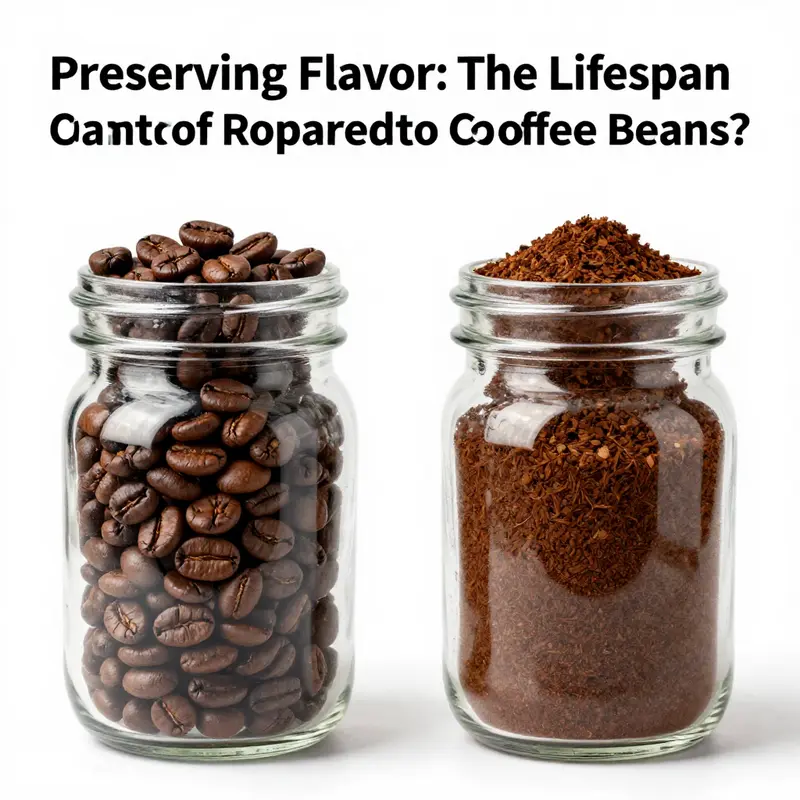
Fresh coffee starts, not ends, with the roast. The moment beans meet air, light, and heat, they begin a slow, steady departure from their peak aroma and flavor. The journey from roast to cup is shaped by chemistry as much as by care. Oxygen is the quiet culprit; it penetrates the surface of coffee, gradually oxidizing the volatile compounds that carry aroma and taste. The more surface area that is exposed to air, the faster the clock runs. That simple truth explains why whole roasted beans and ground coffee diverge so clearly in how long they last at their best. It also underscores why storage choices matter just as much as the moment you grind and brew. When the beans are left in a bag that isn’t airtight, or warmed by a sunny shelf, the clock speeds up. When they’re tucked away in a cool, dark, airtight container, the clock slows down. In that balance lies the practical art of getting the most from each roast.
For most home brewers, the distinction between whole beans and ground coffee translates into two timelines. The beans themselves retain their best flavor for a shorter period after roasting than many casual cooks expect, but they still deliver a tolerable cup for months if kept away from light, heat, moisture, and air. Ground coffee, by contrast, lives a much shorter life once you crack the seal. The pressure of the ground surface area exposes more of the bean to oxygen, and oxidation accelerates. The result is a faster fade in aroma and flavor, even if a layer of protection remains from packaging. A key message here is simple: the moment you grind, you set your clock in motion, and the best practice is to grind as close to brewing as possible.
Whole roasted coffee beans sit at a different tempo than ground coffee. In many roaster profiles and with varying packaging, beans can still show vibrant aroma and bright acidity within the first one to two weeks after roasting. Some experts place peak flavor in a broader window, roughly two to four weeks, especially for lighter roasts that emphasize delicate aromatics. Yet the practical, widely cited standard is a shorter window: the peak quality often resides in the first one to two weeks after roasting, when the aromatic oils are freshest and the crema-like notes in the cup feel most lively. Beyond that window, the flavors begin to recede gradually. The beans are still safe to drink for months, but the intensity of aroma and the vitality of flavor diminish. The difference is subtle but real; the distinction between a lively, nuanced cup and a dull one can hinge on those early days after roasting.
If you view coffee as a continuum rather than a deadline, the safety and quality timelines for whole beans look more generous. When stored properly—airtight container, cool, dark place, away from moisture and heat—whole roasted beans can stay usable for three to four months without becoming unsafe. The important caveat is that the quality gradually slips. The aroma, which is a crucial guide to freshness, fades as the volatile compounds dissipate. The oils responsible for body and sweetness can oxidize or polymerize in ways that alter flavor balance. The cup may still offer warmth and character, but the spark of the original roast will be more muted. In other words, you won’t get dangerous flavors from old beans, but you likely won’t get a coffee that matches the brightness and nuance you tasted at the peak.
Ground coffee tells a different story. Once you grind, you increase surface area dramatically, inviting oxidation to move faster. The timeframe for optimal flavor collapses to roughly one to two weeks after grinding. After that, the blend of aromatics and volatile compounds shifts toward flatness, a duller aroma, and a less expressive palate. Some of the safest packaging notes—such as a sealed bag with a one-way valve—help preserve flavor longer than a loosely stored pack, but the physics of oxidation are uncompromising. Ground coffee can remain safe to drink for many months, but the taste can fall noticeably into stale territory. This is why many coffee lovers champion the practice of grinding beans just before brewing. It’s not merely about maximizing aroma in the moment; it’s about preserving the delicate balance of sweetness, acidity, and body that defines a great cup.
What does this mean in everyday terms? If you buy whole beans and plan to drink coffee regularly, a practical rhythm is to roast or buy beans you can finish within one to two weeks for peak flavor, then rely on proper storage to stretch the window as long as possible. If your consumption is steadier over weeks or you buy in bulk, you’ll still benefit from decanting the beans into a quality airtight container, keeping them out of sunlight, and resisting the temptation to keep the package on the counter in a warm kitchen corner. The broader lesson is straightforward: protect the beans from air and temperature swings, and your roast can maintain its character longer than you might expect. If you find yourself revisiting a bag months later, set your expectations accordingly; the cup may still be drinkable, but the brightness that defined the roast has likely faded.
Storage emerges as the decisive lever in maintaining freshness. An airtight container is non-negotiable, and the location matters almost as much as the container. A cool, dark pantry is ideal, away from heat sources like ovens, light from windows, and humidity from kitchens. The temptation to refrigerate or freeze is common, particularly in hot climates or for people who buy in bulk. Yet the guidance here is cautious: temperature fluctuations invite condensation and moisture migration, both of which can damage the beans and degrade flavor. If you do decide to freeze for long-term storage, which is sometimes done by collectors and value-seekers, this must be handled with care. The beans should be divided into small portions, sealed airtight, and only thawed once, using them promptly after thawing. The coaching here is clear: freezing is a last resort that introduces risks rather than benefits for the everyday coffee drinker who wants consistent, vibrant flavor.
The comparison between whole beans and ground coffee also underlines a broader truth about roast profiles and packaging. Darker roasts may lose their perceived sweetness or nuanced chocolatey notes quicker than light roasts, but both formats share the same core rule: minimizing exposure to oxygen after grinding is essential. Packaging with a reliable seal and a valve that prevents external air from re-entering will help preserve beans longer than loose bags left on a shelf. Yet even with premium packaging, the oxidation process marches on in the background. The more you can limit oxygen exposure, the longer the beans will stay faithful to their roast profile. In practice, this means using airtight canisters, keeping containers away from the stove or sunlit windows, and tolerating nothing more than a gentle rotation of the roster of flavors you want to experience in your morning cup.
Another practical aspect lies in roast timing and consumption pacing. Roasters often design profiles to emphasize specific flavor trajectories over the first few weeks. Consumers, in turn, influence the outcome by aligning their buying cadence with their brewing rhythm. A weekly grocery trip or a biweekly bag swap can keep the beans within a window where aroma and flavor are most alive. For those who prefer to stock up, consider buying smaller amounts more frequently rather than large quantities that risk sitting dormant beyond the optimal period. This approach harmonizes the practical with the perceptual—the cup you brew will reflect the roast’s intended character when you honor the timing and storage guidance that accompanies it.
In sum, roasted coffee beans last longer than ground coffee because their reduced surface area slows oxidation. Whole beans, when stored properly, offer a meaningful window of peak quality in the first one to two weeks after roasting, with safe consumption extending to roughly three to four months while flavor gradually declines. Ground coffee is more fragile, with peak flavor typically within one to two weeks of grinding, and a longer safety margin for consumption that does not guarantee peak taste. The overarching principle remains unchanged: air, light, heat, and moisture are the adversaries. A cool, dark, airtight sanctuary for your beans buys you time and preserves the aromatic language of your roast. If you want the most reliable guidance on shelf life tailored to your roast profile and storage conditions, the industry-wide consensus is to trust freshness as a moving target rather than a fixed deadline—and to adjust your buying and grinding habits accordingly.
For a concise reference on the broader differences between roasted beans and ground coffee and how long they last, you can explore further in external resources that illuminate the chemistry behind freshness. This resource provides a practical overview and aligns with the timelines discussed here: https://www.brewcoffee.com/roasted-coffee-beans-vs-ground-coffee-how-long-do-they-last
Time and Taste: How Long Roasted Coffee Beans Last and How Aging Shapes Flavor
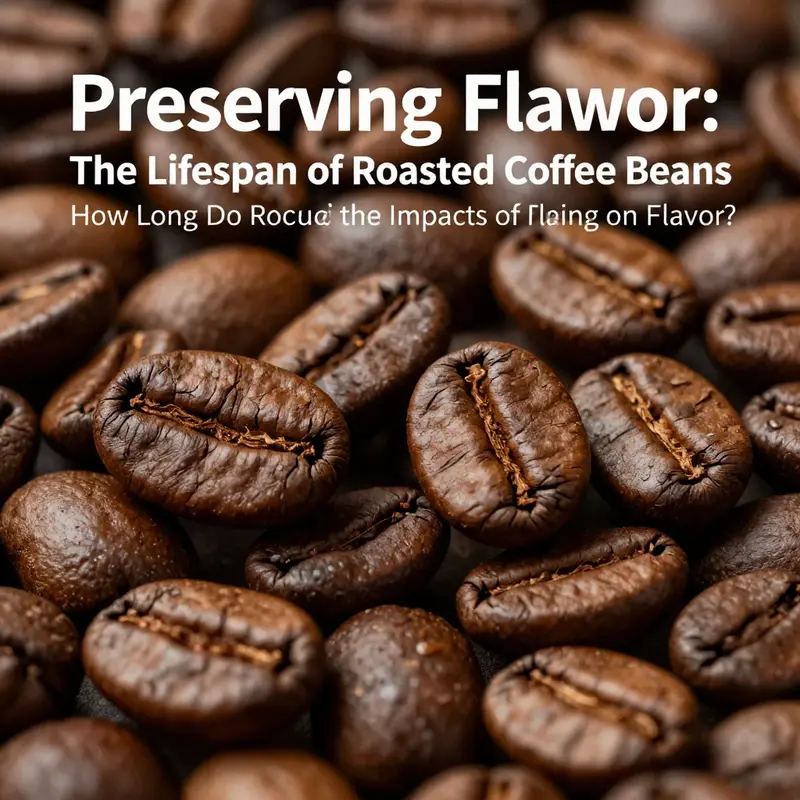
When you crack open a bag of roasted coffee beans, the room often fills with an inviting aroma that seems to promise an impeccable cup. That aroma, and the bright edge of flavor that accompanies it, is most vivid within a defined window after roasting. The idea that a roast has a life span is not about safety alone but about how long the beans can express their full personality. In this sense, roasted coffee beans are at their best during roughly two to four weeks after they leave the roaster. Within that period, the beans crackle with vibrant, complex flavors and a lively aroma that can make a cup feel almost reimagined from one brew to the next. After that window, the clock does not stop ticking; it only shifts the conversation from “how good” to “how much of the original character remains.” The resulting cup may still be drinkable, but the freshness that defined the early weeks begins to fade, and the overall profile can seem flatter, duller, or less nuanced. The truth is often more nuanced than simply speaking of freshness as a single, fixed moment: it is a gradual progression of flavor loss driven by chemistry, packaging, and storage conditions, all of which sculpt how long roasted beans stay expressive, and how quickly aging reshapes the cup you brew day after day.
To understand this better, it helps to separate two ideas that people often conflate: the safety of roasted beans and their flavor longevity. Roasted beans do contain oils and volatile compounds that evolve after roasting, and oxidation continues as degassing slows to a crawl. In practice, this means that while beans can technically remain safe to consume for several months beyond their roast date, their aromatic compounds and essential oils drift away over time. The most dramatic changes occur as those volatile molecules disperse and react with oxygen in the air. As a result, the sharp, fruity, floral, or citrusy notes that defined the roast—notes that give a cup its lift—gradually disappear. A fresh roast often presents with crisp acidity, a bright bouquet, and a lingering finish; as time passes, those elements recede, and the coffee tends toward a softer, sometimes muted profile, which can feel almost as if a chorus has been silenced.
The early weeks after roasting are not purely a contest of flavors; they are also the moment when aroma and perception are most responsive to the brewing method and grind size. In this window, the balance between acidity, sweetness, and body is finely tuned by how you grind, how hot your water is, and how long the contact with the grounds lasts. A well-engineered espresso may still deliver a vivid payoff even as the beans age, but the same beans brewed as a pour-over or a French press can reveal a wider range of flavors that tend to move in the direction of mellower or flatter notes as they age. There is a practical takeaway here: the flavor advantages of a fresh roast are not simply about intensity but about the clarity of aroma and the precision of acidity that makes a cup feel alive. The longer the beans sit, the more likely those cues will soften, and your brew may lose some of its initial spark.
From a consumer perspective, many roasters and researchers suggest aiming to use roasted beans within roughly one month for maximum flavor impact, though the two-to-four-week peak window remains the sweet spot for peak aroma and flavor complexity. The reason for the wider window is the abundance of variables that influence taste—from the roast profile itself to how the beans are packaged and stored in your kitchen. A light roast might begin to show signs of aging a little sooner in some cups, because its inherent acidity and delicate fruity notes can be shy at the start and thus more noticeable when they fade. A darker roast, while it often presents a bolder flavor, can mask some aging effects by offering more chocolatey or roasted notes that endure. Either way, aging is a matter of degree, not an absolute overnight transition. As the weeks turn into months, you will begin to notice that the scent from the ground seems less vibrant, and the cup tastes less animated—an effect that can feel like stepping away from a lively melody to hear the same song played with the treble turned down.
If there is a single practical philosophy to preserve freshness, it centers on limiting exposure to the three elements that drive staling: air, light, and heat. The most reliable outcome comes from transferring beans to an airtight, opaque container that blocks light and minimizes oxygen contact, and then storing that container in a cool, dark place away from any heat sources. Heat accelerates chemical reactions in coffee, speeding up the oxidation that erodes aroma and flavor. Light can catalyze the degradation by pushing more volatile compounds into the air, while moisture can interact with the oils on the surface of the beans, altering mouthfeel and introducing off-notes that feel musty rather than vibrant. These factors reinforce a core practice: buy smaller quantities more frequently and grind only what you need for each brew. Ground coffee has a dramatically larger surface area exposed to air, so it loses freshness much faster than whole beans. The more you can protect whole beans from air until the moment of grinding, the longer you preserve the integrity of the roast’s nuanced qualities.
In practice, a pantry or a dedicated coffee canister that’s kept in a cupboard away from the stove or oven is an ideal home for roasted beans. A cool, stable environment helps maintain consistent flavor. It is tempting to rely on the refrigerator or freezer as a shortcut to extending shelf life, but this approach introduces its own hazards. Temperature fluctuations between the cold storage and room temperature during use can cause condensation to form on the beans, which can lead to soggy surfaces, dampened aroma, and a duller cup when you finally brew. Repeated cycles of cooling and warming can also affect the structural integrity of the beans, potentially leading to uneven extraction and off-tastes. The guidance that emerges from laboratory and roastery experience is explicit: refrigeration and freezing are best avoided unless you are storing beans for a very long time and you can seal them extremely well to limit moisture migration. In most kitchen scenarios, a simple airtight, opaque container in a cool, dark spot suffices to preserve much of the bean’s original character for a meaningful period, particularly when you have purchased fresh beans and intend to use them in a timely fashion.
Another practical lever is the packaging itself. Roasted beans are often shipped in bags with one-way valves that allow the exit of carbon dioxide without letting air back in. This design helps preserve flavor early on, but once the bag is opened, the protection diminishes. Transferring beans to an airtight, sealed container after opening is a straightforward step that can significantly slow the rate of flavor loss. For longer-term storage, some coffee lovers advocate vacuum-sealed bags or canisters with a tight seal, and others favor nitrogen-flushed containers. These strategies minimize the presence of oxygen surrounding the beans, which in turn slows oxidation and preserves aroma longer. And while it may be tempting to stockpile beans in bulk to reduce trips to the shop, the trade-off is clear: larger quantities increase the probability that a portion of your stash will sit uneventfully for longer, aging more than you anticipate. Smaller, more frequent purchases that align with your brew cadence offer a clearer path to tasting the beans at their best.
The relationship between storage and flavor can also be influenced by the roast level and origin of the beans. Lighter roasts carry more volatile aromatics and a bolder perception of acidity; these elements can be more transient, making freshness feel even more critical. Darker roasts trade some of that high-toned brightness for a deeper, more chocolatey, cocoa-like profile that some deem more forgiving as flavors drift. However, aging invariably dulls both ends of the spectrum, reducing the crisp cleanness of light roasts and the sharpness that some associate with a bright cup. Consideration of the origin—whether origin notes lean toward red fruit, citrus, floral, or earthy tones—also informs how noticeable aging is. Some origins present robust backbones that persist longer in the cup even as aroma fades, while others rely heavily on delicate aromatic compounds that dissipate more quickly. The bottom line is that aging is a universal phenomenon, but its perceptual weight varies with roast level and bean provenance.
An additional practical discipline is timing your grind and brew to align with the bean’s strongest moments. Whole beans retain their internal structure longer, offering a stage where aroma and flavor compounds remain protected until grinding. Ground coffee, once exposed to air, begins its rapid march toward staleness. The moment of grinding becomes a critical inflection point; minutes later, the oils and volatile molecules begin to oxidize rapidly, and the cup’s character can shift noticeably. Every cupping session or daily ritual benefits from grinding on demand and brewing promptly after grind. If life requires you to buy in advance, aim to store the beans whole and avoid grinding until you are ready to brew. In this light, the phrase “freshly roasted” does not just describe a brand’s marketing; it captures a critical quality condition that significantly shapes your sensory experience in the cup.
As you balance the desire for convenience with the demands of flavor, you may find that the most reliable path is a realistic calendar for consumption in relation to roast dates. Labeling can be a practical ally. A roast date is a more precise guide than a best-by date when judging whether a bag will deliver peak aroma and crisp acidity. A two- to four-week peak, followed by a gradual aging phase, means you can plan a tasting cycle that minimizes the risk of sipping stale coffee. This is not a rigid rule but a framework: use the beans in the order you buy them, prioritize the most recently roasted for the cups you expect to savor, and reserve more distant coffees for times when you are less particular about brightness and nuance.
Even with careful storage, the aroma and the bite of a coffee inevitably change as time passes. The most noticeable signs of aging are not just a muted scent but a shift in flavor balance. The bright, lively notes that once danced on the tongue may retreat into a softer, less distinct profile. Acidity can become more subdued, and the perceived sweetness can flatten, leaving a perception of bitterness or a mustier aftertaste if oxidation has progressed too far. These changes are not uniform; they reflect the complex chemistry of the roast, the bean’s natural oils, and the storage environment. Yet the core message remains practical and actionable: protect the beans from air, light, and heat; grind only what you need; and use the beans within the window that preserves the distinctive character of the roast.
For readers who want a concise map of freshness and aging, the takeaways are clear. Peak aroma and flavor live in the first two to four weeks after roasting, with best results often achieved within the first month. After that, while beans can remain safe to drink, flavor complexity declines as volatile compounds wane and oils oxidize. The recommended storage approach—an airtight, opaque container in a cool, dark place, with minimal air exposure—helps preserve as much of the original character as possible. Avoid refrigeration or freezing as a regular practice, since condensation and temperature fluctuations can accelerate staling, unless you are dealing with an exceptionally large quantity or a very long storage plan and you can seal the beans airtight to minimize moisture migration. And remember the practical habit that makes a big difference: grind fresh, brew with attention to water temperature and extraction time, and buy in quantities that align with your brewing rhythm.
For readers seeking a deeper dive into the science of roasting freshness and storage beyond this overview, see the detailed guidance on roast freshness and storage provided by the external resource cited here. https://www.coffeereview.com/roast-freshness-and-storage/
Final thoughts
In summary, the freshness of roasted coffee beans is vital to ensuring the best flavor and aroma in every cup. By understanding their lifespan—typically peaking within 2 to 4 weeks—and recognizing the importance of proper storage techniques, business owners can maintain product quality and meet customer expectations. Always prioritize using roasted beans within one month for optimal taste and be mindful of the environmental conditions that can affect their longevity. Taking these steps ensures that your customers enjoy the rich, vibrant flavors they seek, reinforcing their loyalty and satisfaction.