
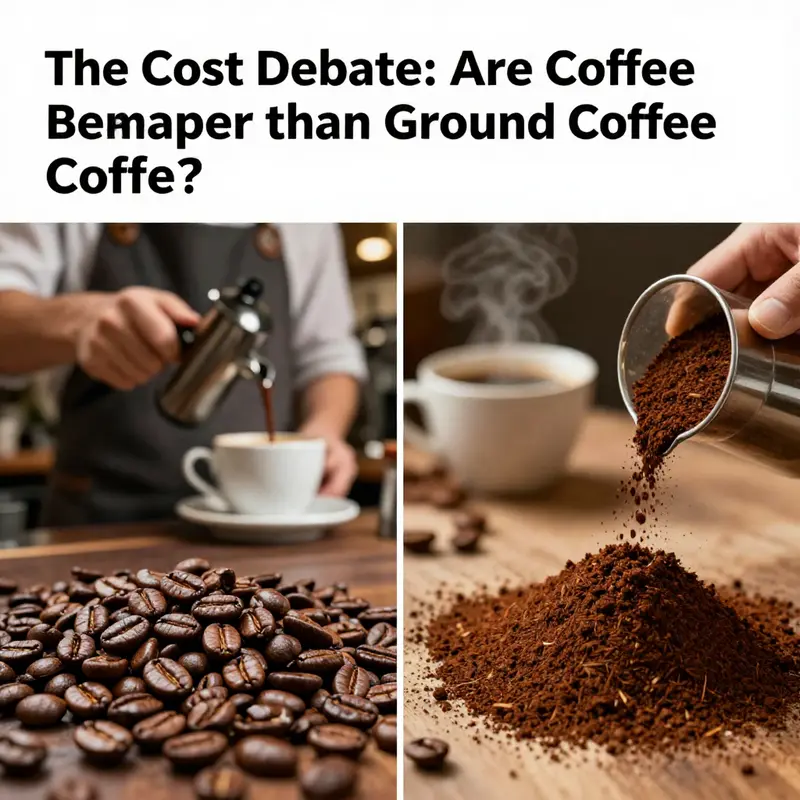
In the coffee industry, choosing coffee beans over ground coffee can significantly impact a business’s bottom line. Understanding whether coffee beans are cheaper than their ground counterparts involves examining multiple factors, from shelf life to storage logistics and consumer preferences. Business owners must navigate these considerations to make informed purchasing decisions and optimize their offerings. This article delves into key elements influencing the cost dynamics between whole coffee beans and ground coffee, providing insights that can help businesses make strategic financial choices.
Beans vs Ground: Unraveling the Hidden Costs Behind Your Morning Brew
The question of whether coffee beans are cheaper than ground coffee is easy to ask and surprisingly easy to misinterpret. Most shoppers can tell that a bag of whole beans often costs less per pound than a tub of pre-ground coffee labeled with the same quality and origin. Yet price per bag is only part of the story. When you translate price into the number of cups, and then factor in storage, freshness, and the way you brew, the economics become richer, more nuanced, and more practical for everyday decisions. That is where the real value of understanding cost factors lies: not in a single price tag, but in a full map of what it takes to turn a bag of beans or a can of ground coffee into a satisfying cup each morning. The journey from bean to cup is as much a matter of economics as it is of aroma and taste, and the way you choose to buy and prepare coffee can compound into meaningful differences over time.
The most intuitive distinction between beans and ground coffee begins with processing and packaging. Ground coffee has already undergone milling, a step that requires additional machinery, energy, and handling. It is packaged for immediate use, with seals and barriers designed to preserve aroma for a limited window after opening. Those extra steps—grinding, immediate packaging, and an emphasis on convenience—add to the total cost. Beans, by contrast, retain a longer window of freshness because whole beans offer less surface area exposure to oxygen. The oxidation process that degrades flavor happens more slowly when the beans stay whole. In practical terms, this means producers and retailers can incur lower losses along the supply chain with beans than with ground coffee, especially when the product must survive long journeys or broad distribution before it reaches the shelf.
That difference in processing cascades into storage and transport as well. Whole beans tend to be less sensitive to rapid staling than ground coffee. In warehouses, a bag of whole beans is more forgiving of delays and minor temperature fluctuations. Once the bag is opened, however, even beans begin to lose momentum as aromas slowly drift away. The key to preserving value is to minimize exposure to air and heat after opening—an airtight container, a cool, dark cupboard, and sensible portioning that avoids repeated opening of the same bag. Ground coffee, already more oxidized on the moment of packaging, benefits even more from strict packaging and faster consumption. The long and short of it is simple: when you compare cost in a vacuum, beans look cheaper; when you consider how long you’ll actually hold onto flavor and aroma, beans provide a broader margin for error and a longer window to enjoy a good cup.
A separate, practical layer of cost arises from consumer behavior and home preparation. Buying whole beans puts the onus of milling on the consumer. A grinder—whether a modest manual mill or an electric appliance—becomes a one-time investment that can pay off over years. The upfront cost of a grinder is real, but the annualized expense per cup can shrink dramatically if you brew daily and buy beans in bulk. Grinding just before brewing preserves volatile compounds that contribute to aroma and flavor; the same mechanism that preserves freshness translates into better perceived value. In effect, beans empower the home roaster and home brewer to control not only flavor but also timing, which translates into perceived quality and, over time, a more economical use of each bean.
Pricing dynamics complicate the simple equation of beans being cheaper. The market features a spectrum: affordable, everyday blends and single-origin beans sold at premium prices, alongside ground coffees that chase budget-conscious shoppers with discount labels or larger-volume packaging. The price per bag is not a direct warranty of quality, but it is a meaningful signal of the kind of cost per cup you can expect. For everyday routines, a standard 12-ounce bag of quality ground coffee commonly sits in the $12–$15 range. If that bag yields roughly 30 six-ounce cups, you’re looking at about 40 to 50 cents per cup. Those numbers are rough, but they give a baseline for comparison. In contrast, ground coffee in capsule or pod systems paints a different picture. A single capsule can cost between 60 and 90 cents per serving, with premium brands cresting above a dollar per cup. The economics are clear here: capsule-based systems tend to erode the cost advantage you might otherwise enjoy from beans if your primary goal is minimizing the price per cup.
Yet the calculus isn’t only about which option is cheaper per cup. It is also about what you are buying: convenience, consistency, and the breadth of choices. Pre-ground coffee is chosen for speed and uniformity; its packaging is designed for quick use, reducing the time from bag to cup but often at the expense of a shorter flavor window. Capsules build on convenience with precise dosing, consistent grind, and built-in portioning, but the premium baked into that convenience can raise the price per cup beyond what a careful grind at home would cost. Whole beans, when bought in bulk and ground at home, offer a blend of cost efficiency and flavor flexibility that is hard to beat over time, especially for households that drink several cups daily and are committed to maintaining freshness.
Another layer of nuance involves the quality spectrum and the origin stories behind coffee. Not all beans are created equal, and the price per pound can swing dramatically based on bean quality, roast profile, and origin. High-end, specialty beans with meticulous processing may command premium prices, and in such cases the per-cup cost comparison becomes less revealing of value and more a reflection of the experience you seek. In scenarios where flavor nuance and terroir are a priority, the cost per cup may rise, but the consumer’s willingness to pay often follows due to perceived value. On the other hand, commodity-grade beans or mass-market blends can keep costs sharply down, whether you buy them as whole beans or as ground coffee. The important point is that the raw price of coffee beans doesn’t automatically translate into a lower per-cup price; the broader cost structure—storage, waste, and preparation—shapes the final value you experience in your mug.
A practical way to visualize these differences is to lay out scenarios that coffee drinkers actually encounter. If you stay with ground coffee, a 12-ounce bag delivering about 30 six-ounce cups sits in the mid-range of price, with per-cup costs hovering around the 40–50 cent mark. When you switch to capsules, the per-cup cost generally increases, reinforcing the idea that convenience often comes at a premium. If you invest in whole beans and own a grinder, you unlock the possibility of paying a similar or even lower per-cup price than ground coffee, but with more flavor control and longer storage life. The key is to look not only at the price per bag but at how many cups you plan to drink, how quickly you consume a bag after opening, and how much you value freshness. If your household drinks several cups a day, the savings from buying beans in bulk and grinding fresh can accumulate quickly, especially when you factor in the reduced waste from less frequent repackaging and resealing.
A useful takeaway from these considerations is that the most economical route—over the long run—typically involves buying whole beans in bulk and grinding at home. The initial cost of a grinder and a larger bag of beans is offset by a lower per-cup price, provided you maintain proper storage and a reasonable rotation rate. This approach also minimizes packaging waste and reduces the environmental footprint associated with single-use capsules. Of course, the end value depends on personal preferences: how much you value aroma, how sensitive you are to freshness, and how important convenience is to your morning routine. If you prize the quickest possible brew and are not particular about flavor nuance, ground coffee and capsules still have a place in your kitchen. The decision, in other words, is not a single number; it is a balance of cost, time, taste, and lifestyle.
Evaluating cost across these dimensions also invites a more mindful buying habit. If you choose whole beans, you can leverage bulk pricing and regional roasters to optimize cost without sacrificing the quality that matters to you. The flip side is that bulk purchases demand storage discipline and a commitment to timely usage. Ground coffee invites less planning but more frequent repurchases and a higher likelihood of waste if you stock up beyond your rate of consumption. Capsules, while the most convenient for those with limited time or equipment, often push cost per cup higher and can contribute to a cycle of continuous replacement. Each path has its own logic, and each path can support a budget-conscious approach if you tailor choices to your actual brewing habits.
For readers weighing their options, a few practical guidelines help translate these ideas into action. First, estimate your own usage: how many cups do you brew each day, and how quickly do you go through a bag or a box? Second, compare the per-cup cost using real-world numbers: ground coffee around 40–50 cents per cup in common scenarios, capsules 60–90 cents (or more) per serving, and whole beans in bulk potentially dipping below ground coffee per cup when ground at home. Third, consider shelf life and storage. If you buy in bulk, you’ll want to freeze or refrigerate portions to preserve freshness and minimize waste. If you drink modest amounts, a smaller bag that you can finish within a short window may yield better flavor and less risk of stale coffee.
From a broader perspective, the coffee industry itself offers a lesson in cost structure: the value of a product is not determined solely by its shelf price but by how that price translates into quality, usability, and the sensory experience over time. For most households aiming to maximize value, the arithmetic favors whole beans ground at home when usage is steady and the consumer is committed to proper storage and regular grinding. The savings accumulate not just in dollars per cup but in the freedom to choose a broader palette of flavors and roast profiles, a flexibility that pre-ground options cannot easily match. In the long arc of daily rituals, those choices compound into a meaningful difference in both satisfaction and expenditure.
To capture the essence of these cost dynamics, it helps to return to the practical, everyday numbers that frame so many kitchen decisions. Ground coffee in typical markets tends to offer a predictable price band, with a reasonable yield in cups that makes budgeting straightforward. Coffee beans, while sometimes more expensive upfront, present greater room to optimize over time through bulk purchases, efficient storage, and the magical benefit of grinding fresh right before brewing. The interplay between price, freshness, and brewing method matters most when you consider how it aligns with your routines, your palate, and your wallet. In other words, the cheaper option on a shelf price tag might not always translate into cheaper cups after you factor in waste, storage, and the value of freshness. Conversely, a price-per-cup calculation that heavily favors beans can be—and often is—an accurate reflection of long-term value, particularly for those who drink several cups daily and who appreciate the craft of grinding just before extraction.
For readers who want a grounded reference to these comparisons, the broader research landscape agrees with the practical conclusions sketched above. The cost per cup for ground coffee tends to sit in the 40–50 cent range for standard brands, while capsules typically sit higher, and whole beans ground at home can approach or undercut that ground-price by leveraging bulk purchases and careful storage. The key caveat is that these numbers are estimates. Variables such as roast level, bean origin, seasonal pricing, and retailer promotions can shift the math. Nevertheless, the central takeaway remains robust: beans are not inherently more expensive per cup; when viewed through the lens of per-cup cost, shelf life, and user behavior, whole beans ground at home often emerge as the most economical path for the regular coffee drinker who values freshness and flavor as much as value.
External resource for further reading: The Spruce Eats offers a comprehensive breakdown of the differences between coffee beans and ground coffee, including real-world pricing considerations and practical implications for daily use. The Spruce Eats: Coffee Beans vs. Ground Coffee: What’s the Difference?
Beans vs Ground Coffee: The Hidden Economics of Freshness, Storage, and Flavor
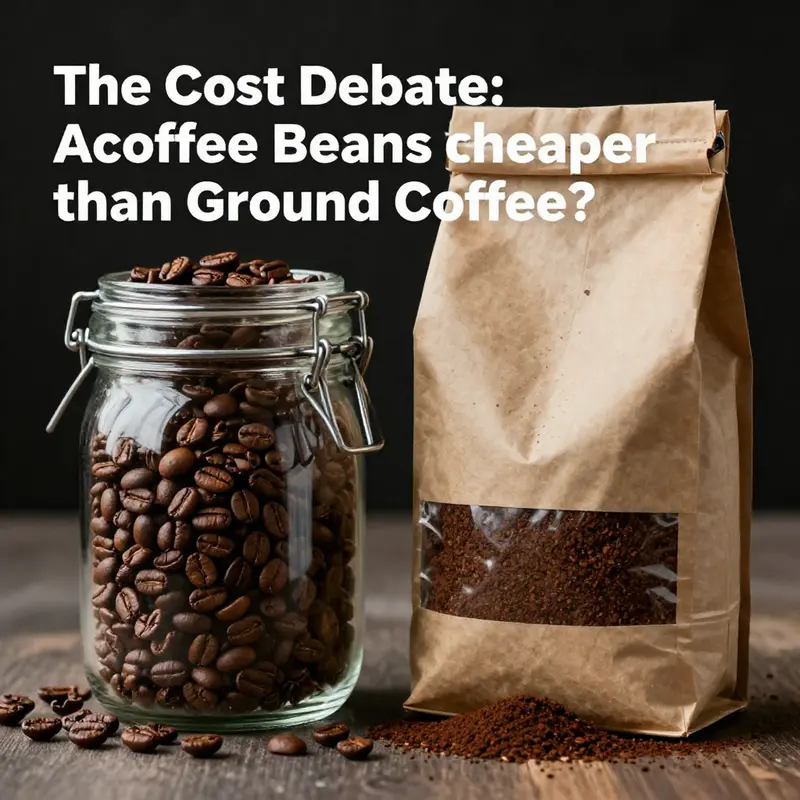
Fresh coffee is a function of time, storage, and how you choose to grind. Ground coffee offers convenience but loses aroma faster because of exposure to air. When coffee is ground, the surface area increases dramatically and the oils that carry aroma begin to dissipate. The result is not just a faint whiff of aroma fading but a measurable decline in brightness, body, and aftertaste over days. Sensory work and practical testing show that peak aroma can be brief once the beans are ground, and stale notes creep in as the week wears on. In other words the value of ground coffee rests on convenience, not on long term flavor fidelity.
Whole beans, by contrast, hold their character longer when stored properly. Kept in a cool dark place in an airtight container, roasted beans can stay vibrant for several weeks, especially if they are kept away from heat and sunlight. Grinding just before brewing lets the oils and aroma bloom in the moment of extraction, yielding a more nuanced cup with greater clarity of acidity, sweetness, and mouthfeel. The up front decision to buy whole beans and a grinder is a cost in time and money, but it can pay off in the number of truly satisfying cups you drink over the next several weeks.
The economics of beans versus pre ground coffee depend on how you value freshness and waste. Pre ground coffee may appear cheaper per bag, and it often sits at a lower sticker price on the shelf, but it loses its potential quickly after opening. If you track how many cups you actually enjoy at peak freshness, the per cup cost of ground coffee can rise as you throw away dull or stale grounds. Whole beans impose a higher initial price per bag and require a grinder, yet they tend to deliver better value over a typical shelf life by reducing waste and enabling on demand grinding.
In addition to freshness, storage and handling matter. Beans compact more efficiently, travel better, and are less prone to clumping in storage. They also offer practical advantages for households that roast their own coffee or purchase a rotating selection, because you can segment purchases to match consumption pace and avoid large dwell times on stale coffee. The extra shelf life of whole beans means you can experiment with origins and roast levels without paying a premium in waste. Grinding on demand also opens up the possibility of tuning grind size to your brew method, which further enhances flavor extraction.
For many drinkers the math tilts toward beans over time, especially when the priority is flavor, ritual, and consistency. The additional effort of grinding on demand is offset by a richer, more dependable cup and by the ability to go longer between purchases if you buy and store properly. At the same time, the convenience of pre ground coffee remains attractive for those who prize speed and simplicity above all else. The best choice depends on your style, your kitchen setup, and how much you care about maximized aroma and body in each cup. The larger lesson is that value in coffee is not a fixed price tag but a living calculation that includes freshness, waste, gear, and daily brewing ritual.
Are Coffee Beans Cheaper than Ground Coffee: Transportation and Storage Economics
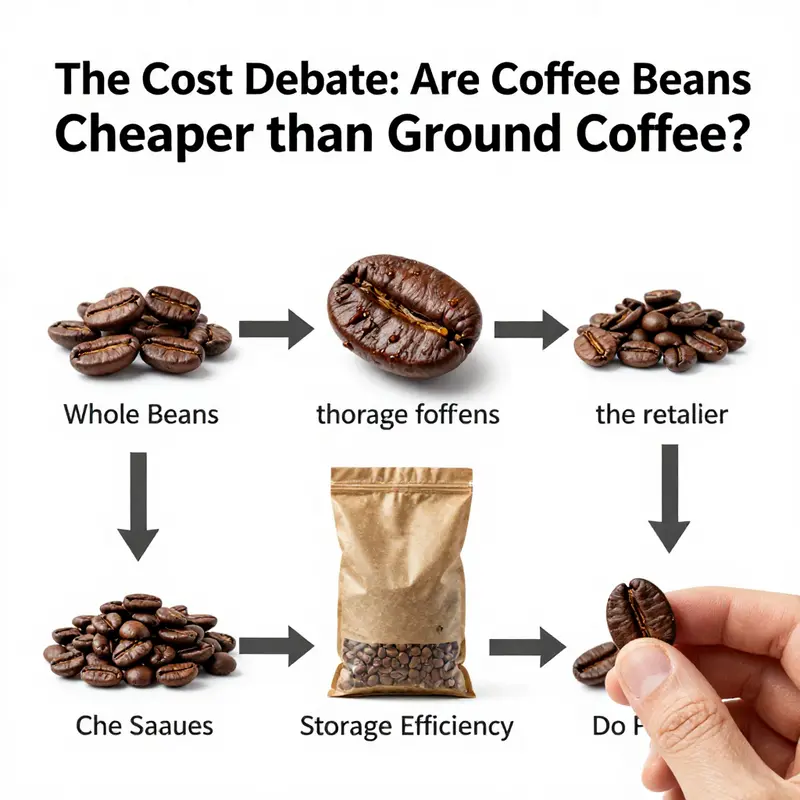
Price is a starting point, not a full accounting. When we ask whether coffee beans are cheaper than ground coffee, we must travel beyond sticker prices to the long, winding ledger of logistics, storage, and household care. The simplest comparison—price per ounce at the point of purchase—often hides a more consequential truth: the real cost burden for any coffee form is shaped by how well it travels, how long it stays fresh, and how efficiently a consumer translates stock into cups. In that light, the question becomes an invitation to unpack how a product’s form interacts with the movement of goods through time and space, with the consumer’s kitchen acting as the final, critical hinge in the chain. The key insight is that beans, by their nature, offer advantages in transportation resilience and shelf life that can yield lower costs per usable cup over the long run, even if the initial price tag on some bags may look higher at a glance.
Transportation costs account for a sizeable slice of the total cost of coffee, and the shape of those costs changes with whether the product is whole beans or ground powder. A 2026 study examining hinterland freight for coffee beans in a major producing region highlights how distance, road quality, port infrastructure, and shipment volume together drive freight expenses. In this landscape, whole beans tend to incur fewer spoilage-related penalties along the route because their denser, more protective packaging makes them less vulnerable to incidental damage and moisture ingress. Ground coffee, already exposed to air, is more sensitive to handling rough edges in transit, temperature fluctuations, and delays that can truncate shelf life. The practical takeaway is not simply that beans are cheaper to transport, but that their resilience reduces the likelihood of wasting inventory before it reaches the roaster, distributor, or consumer. In aggregated terms, the cost per pound of moving beans through a multi-stage supply chain can be lower when spoilage risks are accounted for, even if the immediate transport fee per pound seems similar on a per-leg basis.
Beyond the freight line, storage in transit and in the warehouse further tilts the scales. Whole beans carry a distinct advantage in longevity. Oxidation accelerates once ground coffee meets air, which means that ground coffee can lose its aroma and flavor much faster than beans, particularly in warm, humid, or fluctuating environments. This difference in storage stability ripples outward through the supply chain. Roasters may optimize their inventories by storing beans in bulk and roasting on a schedule that aligns with demand, but ground coffee often demands quicker turnover and more aggressive stock management to keep flavors at peak. A 2020 economic analysis of coffee processing underscored that roasting costs themselves remain consistent whether the product is sold as beans or grounds; the divergence appears in how downstream handling and storage influence waste and resale value. In practical terms, proper sealing and a cool, dark, dry storage environment can keep whole beans fresh for months, while ground coffee pressed into canisters and sachets typically starts to lose its pristine profile within weeks. When households adopt airtight containers, nitrogen-flushed packaging, and habit-forming discipline around consumption pace, the long-term unit cost of beans can decline relative to ground coffee as the effective shelf life stretches.
The consumer lens then refracts this logistical geometry through the prism of habit, equipment, and space. Buying beans in bulk becomes a lever for price efficiency when households commit to grinding just before brewing and storing the grounds in as airtight a system as possible. The upfront investment in a grinder and a robust storage solution is not trivial, and it reshapes the cost calculus. The consumer who grinds at home pays for electricity and time, but avoids some of the manufacturing and packaging costs embedded in ground coffee sold pre-ground at retail. If home storage is executed well—cool temperatures, shielded from light, sealed against moisture—beans preserve their flavor profile and yield more consistent cups, which translates into value beyond mere cost per ounce. Yet this is not a universal prescription. The same logic that makes beans appealing can be undercut by poor home storage, inconsistent grinding, or a kitchen where heat and humidity creep into the cabinet. In such settings, the theoretical long-run savings may erode, and grounds purchased for convenience can appear more economical on paper, at least in the short term.
The market reality adds another layer of nuance. Different origins, processing methods, and roast levels create a spectrum of prices within both beans and grounds. High-end beans may command premium prices due to terroir, processing nuances, or limited availability; conversely, lower-cost ground coffees aim to maximize mass-market efficiency and rapid turnover. Price per ounce alone cannot reveal the true economics, because the value of flavor, aroma retention, and user satisfaction varies with storage discipline and brewing fidelity. In a supply chain tuned for beans, bulk sourcing, stable packaging, and longer shelf life can drive down the effective cost per cup when waste is minimized. The counter-trend—where ground coffee dominates—reflects a different philosophy: prioritize convenience, minimize storage footprint, and accept a potentially faster decline in aromatic quality. The intelligent buyer weighs not just the price tag but the probability of keeping a fresh product in usable condition until the last bean or last granule is deployed.
This framing naturally returns us to the broader question of long-term value. For households that brew daily and value flavor consistency, beans often yield superior value when the owner embraces proper storage and a reasonable grinding cadence. The economics of bulk purchasing can spread fixed costs across more units, producing a lower amortized price per cup, especially when the supply chain is stable and the consumer location remains within a logistical comfort zone. In contrast, for busy households that favor speed and minimal upkeep, ground coffee offers predictable, quick results with less reliance on a grinder and less concern about storage conditions. The trade-off is not merely a price comparison; it is a balance between the cost of equipment, the risk of waste, and the perceived premium of aroma and freshness. For the average household, these factors intersect differently across climates, storage spaces, and consumption rhythms. A cooler, drier kitchen environment, with consistent routine, makes the beans-versus-grounds decision easier to optimize toward the longer-term value of whole beans.
The practical implication for shoppers and policy-makers alike is to recognize the invisible costs woven into the logistics narrative. When a supply chain is robust enough to move beans efficiently, with packaging optimized to minimize oxygen intrusion and with warehouses designed to protect the product from moisture, the downstream costs—waste, wasteful rotation, and flavor loss—shrink. That narrowing of risk is what allows unit costs to fall for beans in many real-world settings, despite moments when a consumer might encounter a lower sticker price on a bag of ground coffee that was purpose-built for immediate use. At the household level, the decision becomes a disciplined exercise in aligning storage capability, brewing cadence, and financial tolerance for upfront investment in equipment with acceptance of the longer-term flavor payoff that beans can deliver. The broader arc of this discussion is not simply about price per ounce; it is about how the architecture of transportation and storage determines whether a given form of coffee truly costs less over time when all losses and gains are tallied.
In closing, while there is no universal rule that applies to every market, distance, or household, the evidence from transportation and storage economics tends to favor whole beans as the more economical option in the long run. The durability of beans through transit, the reduced spoilage risk in storage, and the capacity to leverage bulk purchasing all contribute to a lower effective cost per usable cup for many buyers. The caveat remains: the home must be prepared. A cool, dark, properly sealed pantry, a reliable grinder, and a deliberate brewing schedule are the trifecta that unlock the economic advantage of buying beans. Without those conditions, the potential savings can stall, and the apparent price gap may narrow or even reverse. The best practice for a consumer seeking cost efficiency is to treat beans as a strategic asset—one that pays off when logistics and storage are managed with care, not as a simple substitution for a more expensive form that happens to be cheaper at the shelf. In this light, the answer emerges with clarity: coffee beans often carry a lower total cost of ownership than ground coffee, but only when the logistics of storage and transport—and the daily habits of the consumer—are aligned to preserve flavor and minimize waste.
External resource: For deeper logistics analysis, see Coffee beans special handling analysis: the cost of hinterland freight. Coffee beans special handling analysis: the cost of hinterland freight
null
null
Final thoughts
In conclusion, while coffee beans generally tend to be cheaper than ground coffee when considering various cost factors—including shelf life, transportation, and consumer preferences—individual choices may vary. Business owners need to weigh these aspects along with their specific operational structures and customer demands. Making informed decisions about which type of coffee to stock can not only enhance your product offerings but also improve your overall profitability in the competitive coffee market.