
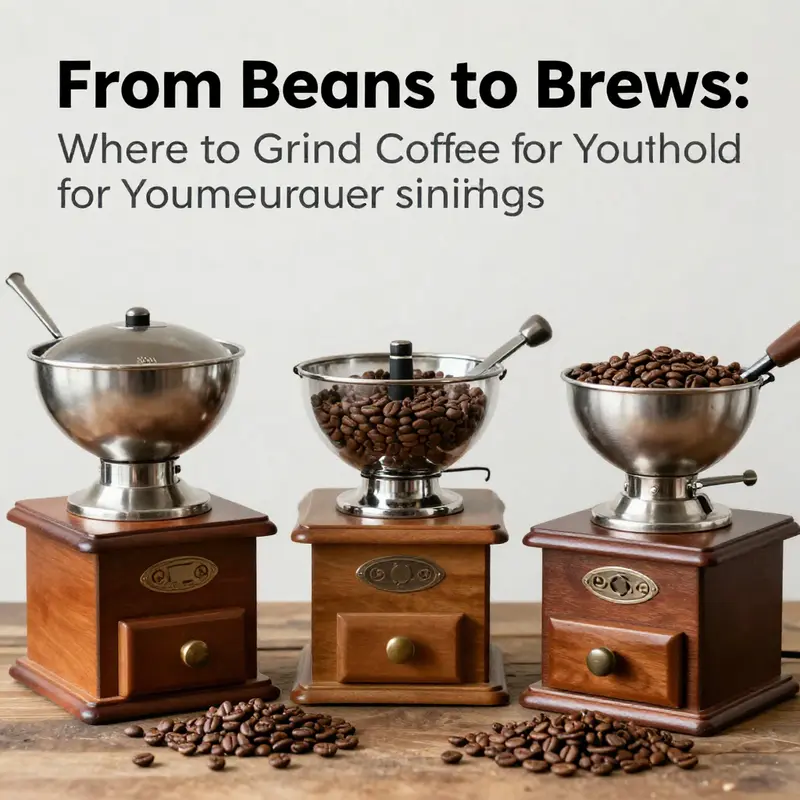
Grind quality is a cornerstone of exceptional coffee, influencing flavor, aroma, and overall experience. As a business owner in the coffee industry, understanding where to grind coffee beans can dictate your product’s quality and customer satisfaction. This guide explores various locations—from home setups and coffee shops to on-the-go solutions and immersive experiential venues—allowing you to consider the best options to suit your business model. Each chapter will delve into specific grinding methods and locations, ensuring you can provide your customers with the freshest and most delicious coffee possible.
Grounded at Home: Choosing the Right Grinder to Unlock Fresh Flavor from Your Coffee Beans
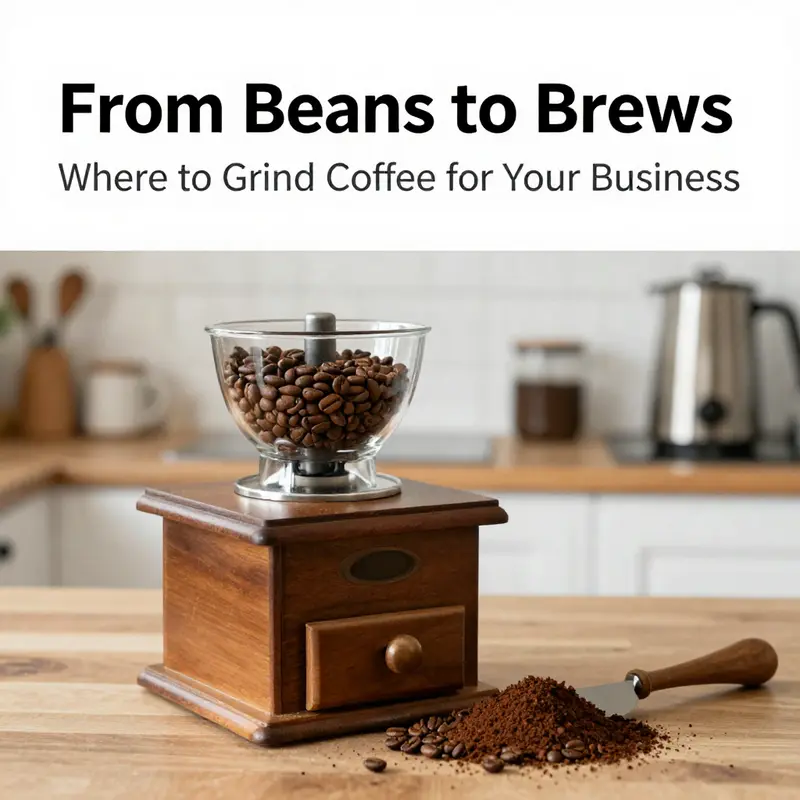
The ritual of making coffee begins long before the water meets the grounds. It starts with a decision that often feels small but is, in truth, foundational: where and how you grind your coffee beans. At home, that choice translates into flavor, consistency, and the ease with which your daily brew becomes a dependable friend. The kitchen counter becomes a workshop, and the grinder sits at the center of your brewing compass. You might be tempted to take a shortcut with a blade grinder or to treat grinding as a one-size-fits-all operation. But as many seasoned tasters will remind you, the grind is not merely the first step; it is the shaping of the coffee’s destiny. A blade grinder, while common in many households, is not designed for coffee. It relies on a chopping action that shears beans into irregular fragments. The result is a spectrum of particle sizes—some pieces too small, others too large—leading to uneven extraction. Water will rush through the finer particles while the larger chunks linger and under-extract, producing a cup that can taste flat, sour, or bitter in ways that are hard to trace to any single variable. In short, blade grinding introduces variability where consistency matters most: the interaction between coffee and water during extraction.
That is why the conversation around home grinding almost inevitably returns to burr grinders. Burrs, two wheels that pull beans through at a controlled pace, are engineered for coffee. They crush and shear in a way that produces uniform particle sizes, a prerequisite for even extraction and predictable flavor. From a practical standpoint, a burr grinder is the tool that makes your brewing method viable: it gives you the range and repeatability you need to dial in properly for French press, pour-over, or espresso. The science behind this matters because coffee chemistry is unforgiving once beans are ground. Fresh beans begin to oxidize as soon as their surface area is exposed to air, and grinding expands that surface area dramatically. The aroma compounds—the delicate esters and volatile oils—start fading quickly. The longer the interval between grind and brew, the more their essence slips away. So, grinding just before you brew is not a ritualistic preference; it is a practical tactic to preserve the aroma and flavor you paid for. The moment the coffee hits water is the moment the clock begins to tick on flavor quality, and the best home setups are designed to minimize the time between those two events.
Within the realm of burr grinders, the split is typically between manual and electric. A manual burr grinder requires a bit more effort and time, but it shines where portability and quiet operation are valued. It suits travelers, campers, or anyone who wants a tactile, hands-on experience. The act of turning a handle becomes part of the ritual, a slow, deliberate process that rewards patience with a steady, uniform grind. There is a certain intimacy in watching the beans yield to the burrs and hearing the quiet sound of the grind as it happens. The trade-off is that you may clock a few extra minutes into your morning routine, and consistency can hinge on technique and stamina. Yet the returns are tangible: a compact device that travels well, with a grind that remains faithful from batch to batch and from beans to cup.
An electric burr grinder, in contrast, answers the call for speed and uniformity. It brings a wider range of grind settings into range, letting you switch quickly between brew methods without sacrificing consistency. For many, the electric option is a practical centerpiece of the kitchen: it delivers a reliable, repeatable grind and can handle larger volumes with ease when entertaining guests or making multiple cups in a row. The key, as with any tool, is to choose a machine whose grind consistency matches the methods you actually use. Inexpensive electric burr grinders can provide solid, uniform particles for everyday use, but some models may drift in consistency when asked to run long or grind a large dose. Higher-end electric burr grinders tend to hold tight tolerances across longer sessions and more frequent changes in grind size, giving you confidence as you dial in a precise espresso shot or a delicate single-origin pour-over.
Regardless of whether you opt for manual or electric, a central truth holds: grind quality matters as much as bean freshness. A burr grinder doesn’t just chop; it channels flavor by providing a predictable particle size distribution. A roaster can bring out a wide range of flavors, but those flavors will only emerge clearly if the grind is uniform. A trusted roast professional once emphasized that grind quality is as important as freshness. The idea is not merely to crush beans into powder but to manage the surface area in a way that water interacts with evenly. When you achieve uniform particle size, you unlock a consistent extraction profile. This is the practical reason many home brewers invest in burr grinders—not only for their ability to produce the correct grind size but also for the control they offer over particle distribution across a wide range of brewing methods.
Taste, in this sense, is a conversation between the bean and the grind. The grind size dictates how quickly soluble compounds are extracted, and the distribution of particle sizes contributes to the total extraction. A well-built burr grinder gives you the tools to shape that extraction precisely. For example, a coarser grind is more forgiving in a French press where immersion time is long, but it can underperform if the grind is uneven. A medium grind serves pour-over methods well, allowing water to pass through at an even pace and carrying sweetness and clarity with it. A fine, uniform grind is essential for espresso, where the goal is to create enough resistance to build a strong crema and to extract the right balance within a short contact time. These relationships are not arbitrary; they exist because the physics of filtration, flow, and diffusion are consistent across setups. Understanding that relationship helps you choose a grinder that can cover your typical day-to-day coffee needs and still offer room to explore new styles as your tastes evolve.
The decision about where the grinding happens within your home also matters. A dedicated setup near a kettle, a scale, and a timer can become a compact ritual—a sequence in which you weigh the beans, adjust the dial, and time the bloom and contact for your preferred method. A compact manual grinder works beautifully in small spaces, serving as a quiet, discreet starter kit that still delivers performance. If your routine includes guests, a reliable electric burr grinder can keep pace without requiring extra minutes at the counter. The overarching aim is to reduce the odds that stale coffee makes its way into the cup, and to ensure that your beans’ character can surface instead of being ground away by inconsistency.
Beyond technique, practical considerations shape the home grinding setup. The quality of the grinder is the long game: it will wear, parts will drift, and burrs will dull over time. Regular maintenance becomes part of the craft. A burr grinder rewards a light touch: brushing out chaff, wiping away oil residues, and running short cleaning cycles to keep oils and fines from affecting flavor. A monthly deep clean—carefully removing and brushing burrs, wiping housings, and reassembling with the burrs properly aligned—helps maintain grind consistency. When you finish a cleaning, you’ll often need to re-check your calibration because mechanical drift can occur during disassembly and reassembly. This routine keeps your grind uniform and minimizes the risk of uneven extraction over weeks of use.
Bean storage and freshness also enter the picture. Whole beans stay vibrant longer when kept in a dark, cool, airtight container away from heat and light. Ground coffee, once produced, loses aroma quickly and should be brewed promptly. If you must store beans for longer periods, freezing them in airtight bags in small portions can preserve flavor, but avoid repeated thawing and refreezing. Ground coffee should be avoided for long-term storage; it’s better to grind what you need for immediate use. This practice ensures that when you sit down with your grinder and your scale, you are working with the most potent expression of the roast and the beans’ inherent character. The result is a cup with an intended balance, not a compromise born of older grounds.
As you map out your home setup, you may also consider how routine routines can influence outcomes in other domains. Consistency matters not just in kitchen science but in many disciplines where small daily acts compound into meaningful results. For readers curious about how steady routines influence outcomes beyond coffee, consider a resource that explores how structured practice supports mental health and well-being. how-occupational-therapy-supports-mental-health offers a perspective on how regular, deliberate activities yield measurable benefits, reinforcing the idea that discipline and care—whether in grinding or self-care—can elevate everyday experiences. This parallel isn’t about copying a discipline; it’s about recognizing that deliberate, repeatable actions build mastery and confidence over time, whether you’re chasing the perfect cup or cultivating healthier daily habits.
To bring this to a practical close for the home brewer, start with a simple, balanced strategy. If you often brew with a French press, seek a grinder with coarser settings and a robust mechanism that can hold up to a longer grind time without overheating. For pour-over fans, aim for a medium grind with tight particle uniformity that facilitates even extraction and sweetness. If espresso is on the menu, a fine, consistently small grind is essential to build flavor within a brief contact window. The right grinder—whether manual or electric—helps you achieve those targets with less guesswork, turning skill into a repeatable result. And while the exact gear is a personal choice, the underlying principle remains universal: a burr grinder designed for coffee is necessary to preserve flavor and provide reliable control over your brew.
In daily practice, your home grinding should be a living part of your routine, not a one-off event. The more you design your space for coffee rituals—an orderly station, a precise scale, and a clock ticking toward brew time—the more you’ll notice how the grind aligns with aroma, taste, and memory. A compact manual grinder can sit unobtrusively on a shelf and become a gift to mornings; a steady, well-calibrated electric burr grinder can serve as a hub for social mornings with friends and guests. Either path can be the right path; the decision rests on how you value time, noise, and the effort you’re willing to invest in your craft. The reward, when you commit to the right approach, is a cup that captures the roast’s intention, the bean’s origin, and your own palate’s preferences in a single, satisfying sip.
For those who find themselves curious about the broader ecosystem of coffee, the journey from bean to cup is a combination of science, habit, and taste. The home option for grinding coffee beans becomes a mindfulness practice as much as a culinary technique. The difference the grind makes is not simply a matter of flavor; it’s about control and confidence—the sense that you can shape a cup to reflect your mood, time of day, and the people you share it with. When you choose a burr grinder, you choose a path that honors the coffee’s journey and the brewer’s intention. When you decide to grind just before brewing, you honor the coffee’s volatile compounds and the delicate balance that makes each origin distinct. And when you upgrade from a humble manual to a more capable electric model, you invest in your own growth as a taster who enjoys precision and consistency without sacrificing the rituals that make coffee more than a routine.
External resource: For a deeper dive into grinding science and practical tips for various brewing methods, see this external guide: https://www.origincoffeelab.com/blog/mastering-the-perfect-grind
Grinding Grounds: A Rich Exploration of Where to Grind Coffee Beans, from Shops to Roasteries and Beyond
The journey from bean to cup is built on decisions that begin long before you press a button or twist a knob. Among the most consequential choices is where you actually grind your beans. Ground coffee begins to lose its aroma and flavor the moment it’s exposed to air, so the venue where you grind matters as much as the grind itself. You can choose the comfort and control of grinding at home, or you can embrace the social, sensory, and educational advantages of grinding in public spaces that celebrate craft, accuracy, and hospitality. The path you select will shape not only the taste of your next brew but your relationship with coffee as a daily ritual, a hobby, or a doorway to a broader appreciation of flavor, technique, and community. In this chapter, we examine the spectrum of options, from the accessible, convenient home setup to the immersive, re-creative environments of coffee shops and specialty roasteries, and even to travel-inspired, on-the-go solutions. The thread that binds them is a common commitment: to ground with intention, to respect the bean, and to honor the craft that transforms hard seeds into a fragrant, liquid expression of time and place.
At home, the most reliable way to unlock the full potential of your beans is to cultivate a setup that fits your routine and your preferred brewing method. A personal grinder—whether manual or electric—serves as the primary conductor of your at-home coffee orchestra. Manual grinders offer portability, quiet operation, and a tactile connection to the process. They invite you to slow down just enough to notice how small adjustments to grind size or burr alignment can ripple through the cup. An ideal manual grinder is compact, durable, and capable of delivering consistent particle size across a range of settings. Electric grinders, by contrast, prioritize speed and repeatable results. They excel when you want to experiment with multiple brews, or when you optimize for a precise grind for espresso or a clean, bright filter. The value of a good electric grinder lies not only in grind consistency but also in the ability to explore different roast profiles and bean origins with minimal friction. When you curate a home setup thoughtfully, you create a baseline quality that makes every other grinding option a useful complement rather than a necessity.
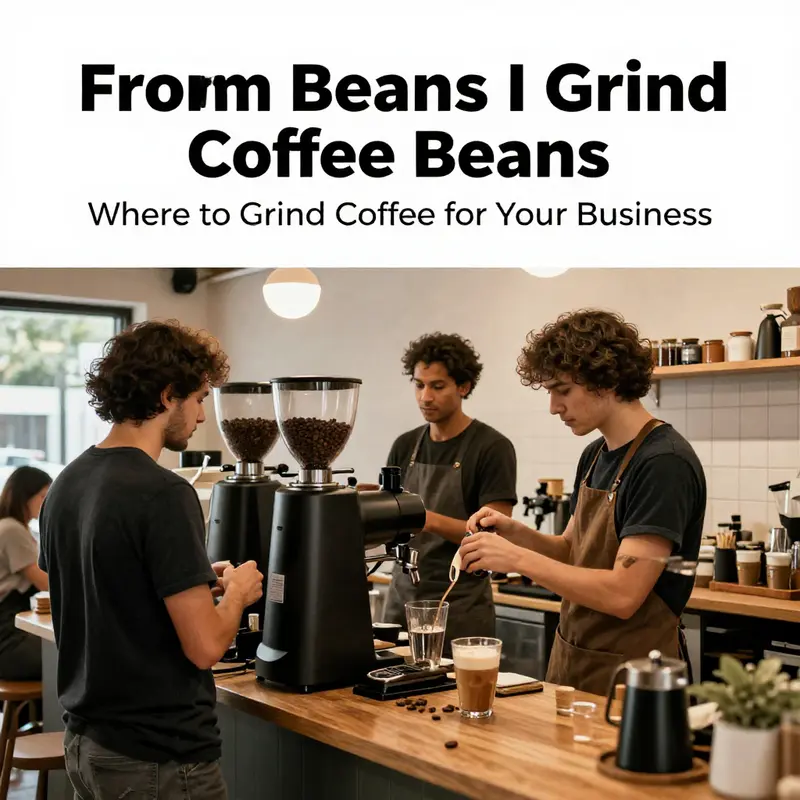
Yet the home bench has its limitations. It does not replace the tactile joy or the social dimension of grinding in a dedicated space that treats coffee as an experiential craft. This is where coffee shops and specialty roasteries come to the forefront. These venues are more than vendors; they are archives and studios where technique is demonstrated, tested, and shared. In many shops, the baristas are more than technicians; they are storytellers who can illuminate the intricate routes from farm to cup. They can explain how different grind sizes correlate with extraction time, how the roast level interacts with grind uniformity, and how weather, humidity, and bean age subtly alter the flavor profile you perceive. When you bring your own beans to a shop and request a grind for a particular brew method, you tap into a professional workflow that balances equipment performance with human discernment. The result is a performance in a cup that often surpasses what you achieve at home, especially if your home setup is still learning its own limits.
In this kind of setting, the actual grinding experience is a form of social learning as well. The hum of industrial burrs, the precise cadence of a barista’s hands, and the aroma that swirls in a bright, well-lit space can all sharpen your sensitivity to grind size and dose. You may discover that a light, delicate pour-over demands a finer grind and a slower extraction, while a robust espresso calls for a coarser note and a shorter contact time. The shop environment can also expose you to a wider range of beans and roast profiles than you might encounter at home, inviting you to compare origins, flavors, and processing methods side by side. This direct exposure is especially valuable for someone who is building a palate and seeking a more nuanced vocabulary to describe acidity, sweetness, body, and aftertaste. A well-run roastery or shop will welcome questions and may offer brief workshops or cupping sessions that deepen your understanding of how grind, brew method, and roast interact.
For travelers, or for those who like to transpose their coffee rituals into different spaces, there are portable, purpose-built solutions that preserve freshness and flavor while keeping the process intimate and personal. Compact manual grinders are designed to be light, durable, and easy to pack, making them ideal companions for camping, hiking, or hotel stays. The portability of such devices does not come at the expense of performance; many models offer adjustable burrs and reliable consistency, which means you can still chase good extraction away from your own kitchen. The appeal here lies not just in practicality but in the habit of maintaining a ritual that travels with you. Fresh grinding, even in unfamiliar surroundings, can anchor your day and provide a moment of control, a stable touchstone when everything else is in flux.
Beyond the immediate practicality, there are locations that turn grinding into an immersive experience. Agricultural regions and highland towns that cultivate coffee beans often offer experiential programs that let visitors participate in the harvest and learn to brew with the very beans they picked. In these settings, you do not simply grind; you engage with terroir and context. You observe how altitude, microclimate, soil, and processing choices shape flavors, and you feel the connection between the landscape, the farmer, and your cup. The act of grinding in such spaces becomes more than a routine; it becomes an opportunity to witness a living ecosystem and to participate in a longer tradition of cultivation, processing, and artistry. These experiences remind us that grinding is not an isolated act but one link in a chain that includes farmers, roasters, baristas, and dreamers who seek to share the best of what the world produces.
Of course, the practical question remains: how do you choose where to grind, and when to grind? It starts with your brew method and your bean profile. If your daily routine revolves around pour-over or café-filter brews that cherish clarity and brightness, a medium to medium-fine grind at home can be a reliable baseline. You can fine-tune your technique through small, deliberate changes—adjusting grind size, altering water temperature, and tweaking bloom times—to coax the cup toward the flavors you’re seeking. In a shop, you can test a broader range of bean profiles, and you can observe how the grind interacts with a specific espresso machine or a pour-over station. A roastery’s on-site grinding capability often aligns with their in-house espresso bar or lab, offering a controlled environment where you can sample several roasts and understand how different origins feel across extraction methods.
When considering travel-ready grinding, look for devices that strike a balance between weight, durability, and ease of use. It helps if the device offers a robust range of grind settings so you can adapt to different brewing devices and water qualities, which may vary from place to place. It’s not merely about grinding; it’s about preserving aroma and structure while you move. The best portable grinders provide a reliable seal on the hopper, a consistent grind across a broad spectrum of settings, and a design that minimizes heat buildup during longer grinding sessions. These attributes matter because heat can prematurely alter volatile aroma compounds, subtly dulling the very characteristics you want to taste in your cup.
In addition to the equipment considerations, the social and cultural dimensions of grinding should not be underestimated. A coffee shop or roastery is a social hub where knowledge, curiosity, and appetite for good flavors come together. You will likely encounter conversations about harvesting seasons, roast profiles, and the ethics of sourcing. Such exchanges can broaden your understanding of what you drink and why you love it. You may discover a new origin that aligns with your palate or a roast level that you had not considered. You might learn how a shop calibrates its grinders to optimize extraction for a particular brewing method, or how a roastery’s tasting notes translate into actionable steps for home brewers. The act of grinding in these spaces becomes a doorway into a community that values craft, transparency, and ongoing learning.
For anyone who wants to connect more deeply with flavor, the digital layer of this story is not a distraction but an extension. Online retailers and educational platforms provide access to a wider world of beans and profiles, even when you cannot physically visit a shop or roastery. While the online experience cannot replace the sensory richness of grinding beside a live grinder and smelling the aroma of a fresh roast, it can complement your practice by widening your awareness of origins, roast practices, and recommended grind sizes for specific brew methods. The key is to use online resources as a map rather than a substitute, guiding you toward shops and roasteries that embody the values you seek—freshness, transparency, and a commitment to quality—while continuing to cultivate your at-home routine and your own evolving preferences.
In summary, where you grind your coffee beans should be guided by what you want your cup to express. If you value personal control and routine, a dependable home setup—manual or electric—offers a solid foundation. If you seek education, discovery, and community, public spaces like coffee shops and specialty roasteries provide a dynamic laboratory where you can observe, compare, and taste. If you crave adventure and connection to origin, experiential tourism and farm-to-cup programs invite you to participate in the full arc of the coffee journey, from harvest to your cup. And if you travel or simply want to test the waters, portable grinders and compact gear let you maintain your grinding discipline anywhere you go, preserving freshness and flavor across environments. Each choice has its own rhythm and its own set of rewards, and together they form a mosaic of opportunities for anyone who asks, with curiosity and care, where can I grind coffee beans. The answer is not a single door but a corridor of options, each leading to a different facet of coffee culture and, ultimately, to a more flavorful, more informed cup.
As you explore these possibilities, remember that the most important principle is mindful preparation. Freshness is a finite resource, and grind size matters. The goal is not to chase perfection from the very first cup but to establish a practice that reveals more of what the bean can offer. You can begin with a simple home setup and a reliable grinder, then widen your horizon by visiting a local roastery or a shop that invites you to grind on their equipment, and finally incorporate travel-friendly gear for the days you roam. In doing so, you cultivate a sensibility for taste, a respect for origin, and a personal routine that can sustain your curiosity for years to come. The world of grinding is not a set of rigid rules but a living practice, continually refined by taste, experimentation, and shared experience. When you treat grinding as an integral part of the brewing process, you unlock a richer relationship with coffee—one that respects the bean’s journey and celebrates the craft that makes each cup a small, daily miracle.
On-the-Go Grinding: Mastering Fresh Coffee Beans When Your Day Takes You Off the beaten Path
Grinding coffee on the move is less a convenience and more a compact ritual that keeps the aroma of a good morning alive wherever you are. The decision to grind away from a fixed kitchen isn’t only about speed; it’s about control—the control to extract flavor rather than surrender it to time and transit. When you travel, or simply roam between meetings, the grind becomes the bridge between the bean you chose and the cup you crave. And because travel changes the conditions of brewing—water temperature, water quality, even air pressure—the grind you choose becomes part of a portable recipe you can trust. This perspective helps you navigate the on-the-go landscape with a clear idea of when to rely on a purpose-built device and when to improvise without sacrificing quality.
A first truth about grinding on the road is that improvisation can backfire. The temptation to use a pepper grinder or a household blade is strong when you’re in a hotel room or an office kitchenette. But pepper grinders are designed for a different task, with materials and tolerances optimized for spice rather than coffee beans. The risk isn’t only inconsistency; it’s flavor contamination. Beans, especially when fresh and vibrant, release their nuanced oils in the grind. A pepper grinder’s residue or the wear on its mechanism can mingle with those oils, altering the aroma and taste in subtle, unappealing ways. In practical terms, pepper grinders tend to produce uneven particles. They can shear some beans and leave others nearly whole, producing over-extracted flavors from fine fragments and under-extracted flavors from coarser pieces. For methods that demand precision—French press, pour-over, or even AeroPress in some setups—the consequences are evident in the cup. Even more concerning is the risk of flavor carryover. Residues can linger and mingle with the next grind, giving each brew a muddier, less predictable profile. The bottom line is simple: if you’re serious about a good cup on the road, keep dedicated coffee gear dedicated to coffee.
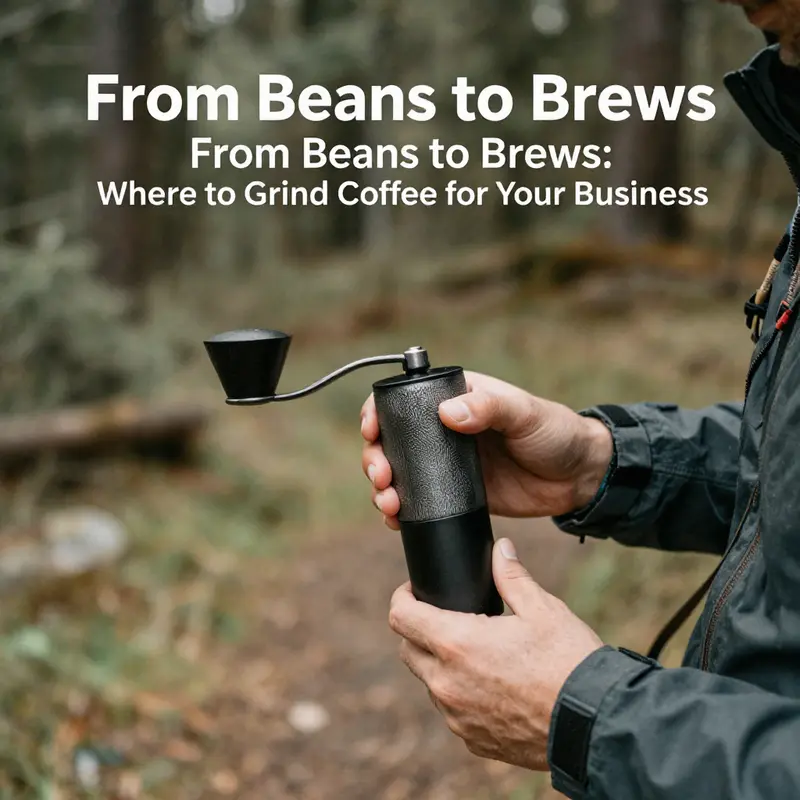
What, then, are your best options when you’re away from a traditional setup? The core answer is portable burr grinders, with two broad paths: manual (hand-cranked) burr grinders and small, battery-powered or USB-rechargeable electric burr grinders. Both are designed to deliver consistent particle sizes and to handle beans with the same care you’d expect at home. The distinction lies in your priorities. If quiet operation, portability, and reliability without batteries are paramount, a high-quality manual burr grinder shines. It excites the craft spirit—the tactile feel of each rotation, the sound of burrs meeting beans, the visual groove of uniform particles appearing in the chamber. If speed, convenience, and minimal effort take precedence, an electric portable grinder becomes a practical ally. It can deliver a near-uniform grind in seconds, preserving the moment you want to capture—the first hot sip after you’ve set your travel cup by you, the morning light catching steam as it curls above a mug, the simple pleasure of a well-ground brew before a day of meetings or hike routes begins.
A well-made manual burr grinder is built to travel. Its durability often surpasses that of electric models because it lacks delicate electronics, its weight balanced by a sturdy construction and robust burrs. For travelers and campers, it’s the ideal companion. When you use it, you bring a ritual that travels with you: loosen, fill with beans, adjust the grind setting, and rotate the crank with deliberate, even turns. The feel matters—each click, each turn, each click through the grind setting is part of the brewing choreography. And because this routine doesn’t rely on power sources, it is perfectly suited to markets, hostels, trains, or remote cabins where electricity may be scarce. You can still achieve a thoughtful grind if you’re in a hotel room, but you’ll want to keep the device clean and dry and avoid any exposure to moisture that could tarnish the burrs.
Small electric grinders shift the balance. They provide speed when time is tight and can create a more uniform grind with less physical effort. In many cases, these devices are compatible with travel mugs or have integrated dosing chambers designed for compact transport. They often offer adjustable settings that let you tailor the grind to your brewing method on the go, from a coarser grind for a quick pour-over to a finer grind for a brisk, espresso-like extraction in a press pot scenario. The tradeoffs are clear: while you gain speed and consistency, you risk relying on power sources that may be unreliable during a long journey or in a rural destination. Battery life matters. A portable electric grinder shines in city hotels or caravan stops where power is accessible, and a quick, regular schedule keeps your caffeine ritual anchored. In harsh outdoor environments, a manual device may outperform an electric one because of the risk of dust, humidity, or rough handling in transit. The best approach is to match the tool to your typical travel tempo: light, frequent trips with a manual unit, or longer trips or remote workdays with a compact electric grinder that’s already charged and ready.
An essential piece of practical wisdom is the grind size mapping to the brewing method, a rule you can apply instantly when you’re away from your usual setup. For most on-the-go pour-overs, aim for a grind that resembles kosher salt in texture, with enough uniformity to ensure even extraction. That mid-coarse range will prevent channeling in dripper systems while preserving clarity and aroma. For a travel-friendly French press, a grittier medium-coarse grind helps prevent over-extraction and keeps the bloom of oils accessible in the cup. If you happen to be chasing a stronger, espresso-like shot on the road, you’ll want a finer grind—but scarcity of time and the size of your device will often dictate that you skip espresso-level pressure and instead savor a robust, well-balanced cup brewed with a pour-over or a compact immersion method. The goal is to preserve the integrity of the beans you brought with you, not to coerce them into a brewing method that demands a different environment.
Beyond the mechanical choice, there are a few habits that make on-the-go grinding more reliable. Pre-fill a small bag with the exact amount you’ll need for a single brew. This keeps you from opening and resealing beans in a bag repeatedly, which can cause oxidation and flavor loss. A travel scale, even a tiny one, makes it easier to dose consistently, especially when your plans shift and you end up brewing at an alternate time. Keep your grinder clean and dry. A quick wipe with a dry cloth after each use saves you from oil buildup or bean residues that can impact taste in subsequent uses. If you’re staying in a place with a hot climate or if you’re near the coast, consider a protective sleeve for the grinder to shield it from humidity. These protocols aren’t about luxury; they’re about preserving the nuanced flavors of the coffee you chose, even when your day is a whirlwind.
The cultural moment around on-the-go grinding is also worth noting. Travel experiences can turn a simple coffee routine into a moment of learning and immersion. In some regions, people combine grinding with local practices, turning the morning ritual into a small public event—friends sharing routes, a shop where you can grind on-site while watching the beans release their fragrance, a moment when the day’s plans slow down long enough to savor the scent of fresh grounds. Such moments aren’t just about caffeine. They’re about attention, a pause in the day to recognize how much flavor depends on the freshness of the grind. In more scenic destinations, like hillside towns where coffee farms are embedded in the landscape, you can find experiential spaces where visitors harvest, roast, and grind to taste. The act of grinding becomes a memory of the journey, a sensory signpost of place and time that you can carry with you in a mug.
For those who want to minimize the guesswork, having a compact grinder with a reliable, repeatable setting makes the difference. A good portable burr grinder provides a consistent grind at the touch of a button or the turn of a dial. It makes the act of traveling with coffee feel less like a compromise and more like a continuation of your daily ritual. The advantage of a burr system—compared to blade grinders or improvised approaches—lies in the way burrs shear the beans to a uniform particle size. That uniformity translates to more predictable extraction, less risk of over- or under-extraction, and ultimately a cup that reflects the beans’ true character rather than the idiosyncrasies of a mismanaged grind. When you’re on the road, consistency matters as much as convenience, because it’s the difference between a cup that tastes practiced and a cup that tastes improvised.
In addition to gear choices, consider the environment you’ll encounter. Airports, trains, and hotel rooms pose different constraints. A compact, well-sealed grinder with a small hopper reduces spill risk and helps maintain cleanliness. If you’re staying in a hostel or a guesthouse, you’ll appreciate a device that’s easy to share and easy to clean, since you’ll likely be sharing space with others and moving between rooms. In more remote locations, a hand-cranked device can be the single most dependable piece of gear you carry. It requires no electricity, it’s rugged, and it rewards careful technique with a steady, repeatable grind. The more you travel, the more you’ll learn which configuration fits your routes: shorter trips with a simple manual grinder, or longer stays that justify a compact electric model with faster returns and less manual effort.
A few practical tips can help you plan your grind for the day ahead. If you know you’ll be away from your usual grinder, stash a small travel kit: a compact burr grinder, a small brush for cleaning, and a tiny measuring spoon. Pack beans in a protective bag that minimizes exposure to air, ideally with a sealable inner liner. Consider carrying a lightweight silicone mat or a microfiber cloth to wipe any spills quickly; it keeps bars and counters tidy and makes the coffee ritual feel more intentional. In the hotel kitchenette, you’ll often have access to hot water and a minimal setup. A well-timed grind can transform a simple kettle and mug into a satisfying morning routine. If you’re in a campsite or a cabin, your approach might skew toward a more robust technique, where you’ll have to compensate for suboptimal water temperatures or less refined brewing equipment. Your grinder becomes the most reliable constant in an ever-changing landscape of coffee circumstances.
The travel narrative around coffee is also a reminder of the social dimension of grinding. Whenever you can, share the experience with someone else. Show a fellow traveler how you adjust grind size to match your brew method, or invite a barista at a café to demonstrate the difference between a fine grind for an espresso shot and a coarser grind for a pour-over. The act of discussing grind, aroma, and flavor adds an extra layer of appreciation. It’s a reminder that brewing coffee is as much about conversation and environment as it is about technique. A well-ground cup on the go can become a small ceremony that anchors your day and invites others to slow down and notice the moment with you.
If you’re curious about the science behind why fresh grounds matter, a deeper dive into the subject is rewarding. Freshly ground coffee presents a more vibrant aroma and more nuanced flavor because the volatile compounds begin to dissipate once the beans are ground. When those compounds remain intact, they contribute to fuller body, brighter acidity, and a cleaner finish. The contrast is immediate and often surprising, especially for those who previously relied on pre-ground coffee or long-stored beans. For a broader understanding of freshness and grind quality, you can explore scholarly and practical analyses that highlight the difference a proper grind makes in cup quality. These perspectives reinforce the practical advice discussed here and offer additional context for travelers who want to optimize every step of their on-the-go coffee routine.
In sum, the on-the-go grinding experience blends practicality with craft. A reliable portable burr grinder, whether manual or electric, empowers you to preserve bean integrity and tailor grind size to your chosen brewing method. The decision between a hand-cranked device and a compact electric model rests on balance: durability and independence versus speed and ease. Regardless of the choice, the goal remains the same—grind at the moment of brewing to retain aroma, texture, and flavor. The journey to great coffee is not only about the beans or the water; it’s also about preserving the brilliance of the grind wherever you happen to be. And when you stand in a place that invites you to savor the day with a cup in hand, that grind becomes your compass, guiding you to a cup that tastes like your own little corner of home, even if home is a train car, a campsite, or a motel room far from the familiar.
To situate these ideas within a broader experience, consider the value of experiential coffee settings that honor the craft. In some regions, travelers can engage directly with growers, harvest coffee beans, and learn to brew their own cup in a setting that overlooks mountains and sunset skies. These experiences offer more than a taste; they provide a sense of place and a narrative of the coffee you drink. The combination of fresh grounds, local stories, and a setting that invites contemplation can transform a routine into a memory, a reminder that coffee is as much about the journey as the destination. Whether you’re wandering through a bustling city, trekking along a rural route, or resting in a quiet lodge, bring your grind, bring your method, and bring your curiosity. The cup you pour will taste like that curiosity, and the aroma will carry a moment of travel into your day.
For readers who want to expand their knowledge and develop a more informed approach to grinding on the go, a few curated resources can offer deeper guidance without overwhelming the practicalities. The essential takeaway is that freshness of grind matters, and that a well-chosen portable grinder makes a tangible difference in your cup. The extra minutes spent on a reliable setup will pay off in a richer aroma, a cleaner finish, and a more consistent result across many cups in many locations.
External resource for further exploration: https://baristahustle.com/blog/why-freshly-ground-coffee-tastes-better
Grinding in Real Time: Experiential Spaces to Ground Your Coffee Beans
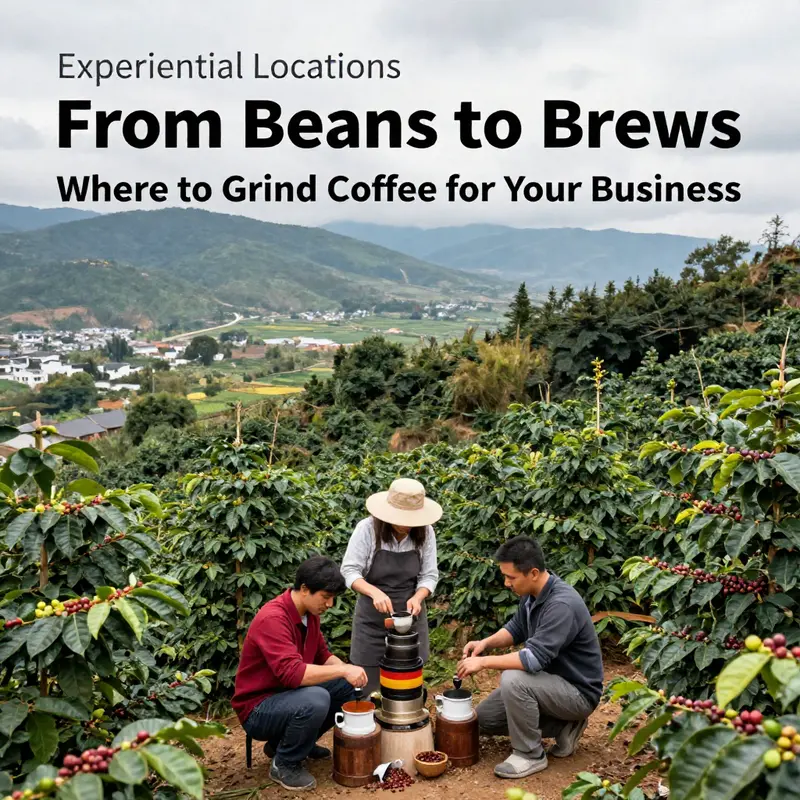
Grinding in Real Time: Experiential Spaces to Ground Your Coffee Beans
The act of grinding coffee beans is often treated as a prerequisite step, a quiet moment between roasting and brewing. Yet when you shift the scene from the home kitchen to an experiential space, grinding becomes more than a routine task. It becomes a guided inquiry into texture, aroma, and timing. In these spaces, the grinder is not merely a machine; it is a teacher. The sound of burrs, the weight of a precise dose, and the way the grind resembles or diverges from the beans’ origin all carry information about flavor. Visitors learn to read those signals and, in the process, discover what kind of grind yields the cup they actually want to taste. The journey from bean to brew now includes a stop in a workshop, a lab, or a cafe that curates the grind as part of the overall sensory experience.
Imagine first stepping into a purpose-built coffee laboratory tucked into a city known for its coffee culture. The room hums with quiet purpose. On a line of sturdy tables sit professional burr grinders—each one tuned for different grind ranges, each bearing the marks of countless tastings. A guide explains that grind size is a dial you turn to control extraction. It is not the only dial, but it is one you can turn with a precise hand and an attentive palate. The guide demonstrates how coarse grounds resist extraction and slow water flow, producing a mellower cup with more subtle flavors. Then the same beans are ground finer, and the water meets the surface area with different vigor. The taste shifts; the acidity tightens, the body grows, the finish becomes crisp or soft depending on the setting. The lesson lands through hands-on repetition: you grind, you brew, you taste, you compare. There is no substitute for feeling the difference between a French press grind and a pour-over grind, between a grind calibrated for low water turbidity and one meant for clean, bright extraction.
The experience in the lab is not a spectacle but a conversation. The facilitator invites participants to discuss goals—whether they seek a cup that shines with clarity or one that coats the tongue with a velvety richness. The science behind grind size becomes a shared language. Surface area, which increases as the particle size shrinks, accelerates extraction. But too much surface area can lead to over-extraction, bitterness, or a cup that tastes hollow if the water is not invited to mingle in the right way. The participants learn to pair grind size with method: a coarser grind for immersion methods that require longer contact with water, a medium grind for balanced pour-overs, and a finer grind for quick shots where contact time is brief. Each adjustment reveals a different facet of the same bean, an exercise that sharpens memory and sharpens palate together. The room’s quiet energy encourages curiosity. The purpose is not to win a taste contest but to understand how small changes yield meaningful differences in the final cup.
Beyond the lab, the same spirit of immersion travels with you into a boutique grinding studio that sits in a bustling city square or a lively neighborhood corner. Here, the atmosphere is intimate, almost like a studio for a sculptor. The staff guide you through the process of selecting beans—no, not merely picking a favorite origin but choosing beans that will reveal themselves through grind. You are invited to observe how the roast level interacts with grind size. A light roast often shows delicate floral notes that can vanish if the grind is too fine and the brew time too short; a darker roast can bloom with deeper chocolate and caramel when the grind is right for a longer contact time. The session unfolds with a sequence of small experiments: adjust the grinder, weigh a precise dose, time the pour, and then taste. The differences become tangible. The crispness of a medium grind may highlight citrus brightness; a coarser grind for immersion may bring out sweetness that a finer grind can sometimes bury under more intense tannins. The aim is not to chase a single perfect cup but to deepen the student’s ability to sculpt flavor. The importance of fresh grinding is underscored here as well. Ground coffee begins to change the moment air touches it. In the studio, you taste this transformation side by side with freshly ground beans and slightly aged grounds, learning to discern where oxidation begins to mask the desired flavors. In this environment, the grinder is a brush, and the brewer is an artist who tunes the canvas with water temperature, time, and technique.
A short journey from urban studios, you may encounter a rural cafe that runs seasonal Bean-to-Brew events. The setting is different—the air smells of earth and pine, the light is softer, and the pace invites reflection. In these programs, participants trace the bean’s journey from farm to cup with a hands-on sequence that culminates in grinding using traditional methods. A hand-cranked burr grinder, sturdy and tactile, becomes a bridge between time-honored craft and modern taste. The ritual of manually feeding beans into the grinder fosters patience and a deeper respect for the work that goes into a single cup. The group then brews with methods like Chemex or a manual espresso setup, savoring the direct connection between grind size, grind freshness, extraction, and flavor. The experience emphasizes sustainability and craft, reminding visitors that each bean carries a story. They see how small, mindful decisions in the grinding stage can influence the overall environmental footprint of the cup they drink. The rustic setting also invites social learning—participants discuss why certain beans behave differently, how altitude and processing affect texture, and how a shared tasting can shift opinions about what constitutes a “good” cup.
What makes these experiential locations compelling is the way they frame grinding as a tactile, auditory, and olfactory practice as much as a technical one. The grinder’s rhythm, the hiss of steam from a nearby kettle, the aroma released as oils bloom from rested grounds—all of these sensations become part of a structured education. You learn to calibrate your expectations with the equipment in front of you rather than with a memory of a favorite café. You learn to listen to the coffee, not just smell it or look at it. The knowledge acquired in these spaces travels back to the home kitchen, but it does not stay there. It reshapes how you approach your daily routine: the choice of grinder, the grind’s fineness, the water’s temperature, and the brew method you trust most. In short, experiential grinding spaces convert a step in preparation into a portal for exploration.
This approach also reframes what it means to “have a coffee ritual.” A ritual is often thought of as a fixed set of steps. In experiential spaces, however, ritual becomes a learning curve that invites experimentation. You arrive with a plan and leave with a refined palate and a more flexible technique. The staff’s role is to guide rather than dictate, to pose questions rather than to supply all the answers. They encourage you to compare different beans, but they also invite you to listen to your preferences. You may discover that your favorite cup in a café is not the same as your favorite home recipe. The key takeaway is that grinding is not a one-size-fits-all move. It is a variable-driven practice that reveals how personal taste can shift with context, equipment, and approach.
For many travelers and locals alike, these experiential spaces offer a bridge between the romance of coffee culture and the rigor of practice. The rooms are designed to be welcoming to beginners while still offering depth for seasoned tasters. They provide a framework in which the art and science of grinding can be taught with clarity, yet without sacrificing the sensory pleasures that make coffee so compelling. The guidance emphasizes not only how to produce a good-tasting cup but also how to understand why a given grind works for a particular bean and brewing method. This is where theory becomes tasting notes you can trust. The experience becomes a map of the coffee world—each station a checkpoint that explains the impact of grind size, extraction dynamics, and aroma release. And because grinding is a portable skill, these spaces often serve as anchors for travelers who want to maintain quality while on the road. A compact, well-tuned burr grinder can be carried along, turning even a hotel room or hostel kitchen into a learning lab.
The practical path to participation in these experiences is straightforward but worth a careful look. Seek out programs that emphasize hands-on grinding and tastings rather than lecture-style demonstrations. Confirm that the gear on offer includes adjustable burrs, multiple grind settings, and a method-focused approach, so you can connect the theory you learn with the actual sensory results. Bring your own beans when possible, but be prepared to sample a selection. Ask about the differences you should expect when switching from a pour-over setup to immersion methods. Some programs will allow you to record notes in a tasting journal; others will guide you through a structured tasting with a scorecard, so you can articulate what you hear, smell, and feel as the grind changes. If a space offers a pre- and post-tasting comparison, that can be especially valuable as you calibrate your senses. The ultimate aim is not to collect certificates but to cultivate a more nuanced relationship with coffee—the kind of relationship that makes your home routine mirror the attentive care you observe in an experiential setting.
While the specifics of each venue will vary, the continuity across experiential grinding spaces is clear. They democratize access to precise, methodical coffee making. They reveal that great flavor begins not only with the bean’s origin or roast but also with how finely or coarsely that bean is ground and how faithfully the grinder’s output is matched to the brew method. They remind us that the difference between a good cup and a great one often hides in the details—the grind’s texture and distribution, the freshness of the grounds, and the way water interacts with the surface of the coffee. They show that the act of grinding can be an act of listening: listening to the burrs, listening to the scent of the grounds, listening to the water as it weaves through the ground bed. And in listening, you learn to discern the flavors you actually enjoy, rather than the flavors someone else tells you to crave.
In the wider sense, experiential grinding spaces participate in a long tradition of coffee as craft. They emphasize the farm-to-cup philosophy by drawing attention to how beans travel through the process and how our choices in the grinding stage shape the final cup. They acknowledge that taste is not static but a conversation among origin, roast, grind, water chemistry, and technique. They invite participants to become both observers and participants—curators of their own sensory experiences. The end result is a more informed consumer and a more confident home brewer. You leave with not just a recipe but a framework for experimentation: a plan for testing grind sizes, a method for evaluating whether your coffee truly shines in a given brew, and a clearer sense of which variables matter most to your palate.
If you are considering where to begin, start with curiosity. Look for spaces that prioritize hands-on grinding, open sharing of methods, and opportunities to taste the impact of different grind sizes side by side. Embrace the process of comparison, where you note what changes when you alter the grind, the method, or the water. Bring a notebook or a tasting journal and write down your impressions. The aim is not to chase a single universal truth but to refine your own preferences and the accuracy with which you can reproduce them. The more you engage with these spaces, the more you realize that grinding is not a hurdle to overcome but a gateway to taste. Each session trains your palate, hones your technique, and enriches your daily ritual with informed choice rather than guesswork.
External resource for further learning: https://www.origincoffeelab.com/workshops
Final thoughts
Understanding the various options for grinding coffee beans can significantly impact the quality of the coffee you offer. From personal grinders in home setups to the collaborative atmosphere of coffee shops, every method brings unique benefits tailored to different business models. Portable solutions cater to the needs of active consumers while experiential locations provide unforgettable connections between coffee lovers and their drink of choice. By leveraging these diverse opportunities, you can enhance your brand and elevate the coffee experience for your customers.