
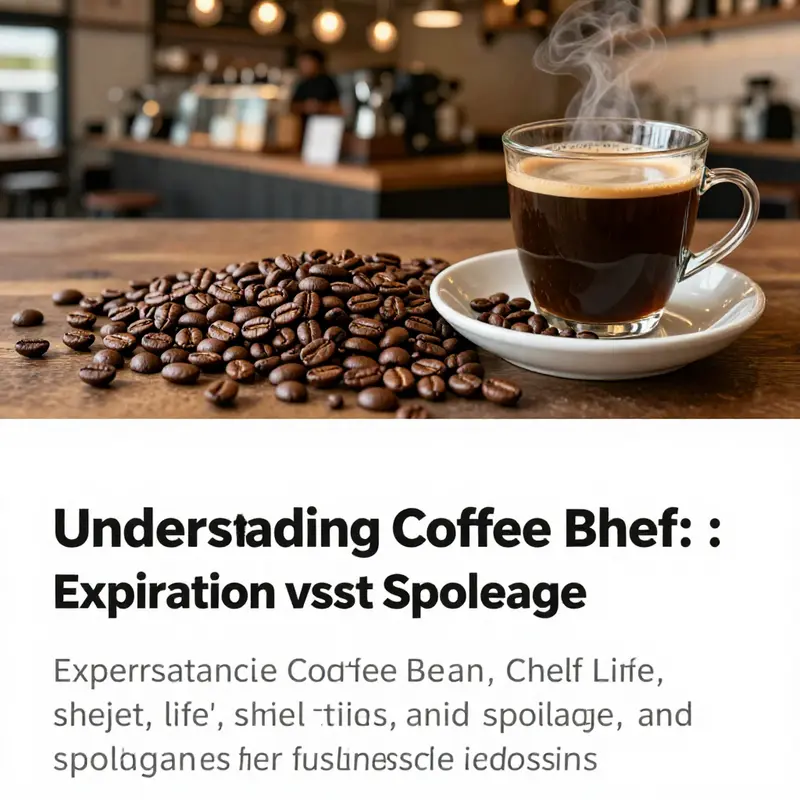
For business owners in the coffee industry, understanding the nuances of coffee bean shelf life is essential for maintaining product quality and customer satisfaction. Coffee beans can lose flavor over time, and knowing how expiration and spoilage affect quality helps optimize inventory management. This article clarifies expiration versus spoilage, outlines typical shelf lives under common storage conditions, and identifies reliable spoilage indicators to help sustain quality across product lines.
Expiration vs. Spoilage: The Quiet Timeline of Coffee Beans — Why Flavor Fades but Safety Stays

People often ask whether coffee beans expire. The short answer is nuanced. Beans do not become unsafe after a date, but flavor and aroma fade over time. To understand why, we must separate expiration from spoilage, a distinction the industry recognizes but that home brewers sometimes overlook. Expiration marks a calendar milestone on packaging. Spoilage signals a breakdown of storage conditions that allows mold, dampness, or off odors to creep in. This chapter traces how storage choices shape taste and aroma, and what to do when the calendar moves beyond a beans peak without turning the product into a health risk. The path from bean to cup is a journey through chemistry and physics as much as it is through grind and brew. Oxygen, light, heat, and moisture do not merely sit nearby; they actively drive chemical reactions that alter what you smell and what you taste. A little oxygen begins to oxidize oils, a process that can dull brightness and complicate sweetness. Light can trigger photochemical reactions that nudge flavor toward flatness or, worse, sour notes that tarnish even a strong roast. Heat accelerates these processes, speeding flavor loss and muting the delicate balance that defines a good cup. And moisture invites a double trouble: it can weaken texture and invite mold if the beans live in damp air for too long. In practice, the terms you see on packages reflect a strategy for ensuring that the consumer experiences coffee at its best. When you see best by or best before dates, those numbers aim to signal a flavor peak, not a safety threshold. The coffee industry wants you to enjoy the aroma, acidity, and body that roasted beans deliver at their finest. As a result, the idea of safety around roasted beans is more about avoiding spoilage than about preventing illness. If the beans are dry, intact, and free from mold or strange odors, they are generally safe to drink even if the flavor has faded. That is the core distinction that guides home storage and professional practice alike. The sensory reality is that coffee is a living product, albeit a long lived one with a finite flavor window. Roasted beans begin their decline the moment they leave the roaster. Aromatic compounds—the molecules that produce the beloved coffee perfume—start to evaporate and degrade. Some favorites, like fruity esters or certain floral notes, disappear more quickly than others. The rate of decline is tied to the roast level, the bean origin, and the degree of freshness at the moment of packaging. The hotter the roast and the longer the time since roasting, the more pronounced the flavor drift may become. Within minutes of grinding, a large portion of the aroma is already escaping. The Specialty Coffee Association notes that freshly ground coffee can lose a significant portion of its aroma almost immediately. This underscores a practical reality: peak flavor is a brief window that benefits from immediate brewing. The idea of a long lasting peak is a marketing comfort more than a culinary science. Yet there is a practical middle ground. Many containers marketed to home users aim to preserve quality for several weeks to a few months after roasting. They do so by sealing beans in light protected, nitrogen-flushed or foil bags and keeping them in a cool, dry place. This strategy slows down oxidation, slows heat exposure, and minimizes moisture uptake. The balance between flavor preservation and safety lies in how carefully one handles the beans once the seal is broken. Storage is not just a habit but a protective function. When a bag is opened, air begins to flood in. Oxygen accelerates oxidation, and oils that carry aroma react with it. Every breath the bag takes is a tiny experiment in flavor retention. A simple rule helps many home brewers navigate this stage. Use the beans within a few weeks after opening. If you must extend the timeline, transfer to an airtight, opaque container and keep it in a cool, dark place away from sunlight. In the kitchen, the concept of temperature stability matters as well. Extreme fluctuations, such as moving beans from a warm counter to a cold cabinet, can cause moisture to condense on the surface when paths are later opened. Condensation triggers flavor dulling and can invite mold if moisture remains. That is why refrigeration is generally discouraged for everyday storage. Refrigeration can slow down flavor loss, but it invites condensation and moisture migration during temperature changes. If you truly must freeze or refrigerate for longer storage, the beans should be vacuum sealed to minimize moisture exchange. Even then, thawing must be gradual to avoid condensation on the surface. The tension between extending freshness and maintaining flavor is a practical art. For most home setups, a cool, dry, dark environment in an airtight container provides a balance between maintaining as much aroma as possible and ensuring the beans remain visually and olfactorily sound. The literature and industry guidance converge on a few practical timelines. Roasted beans stored in airtight containers at room temperature tend to retain optimum flavor for two to three weeks in terms of aroma and brightness. Some sources extend the practical window to a little longer, up to six months for peak freshness in well sealed packaging, though the intensity of flavor will be notably diminished over time. Beyond these horizons, you will still drink coffee without danger, but the organoleptic experience is unlikely to mirror the fresh roast. The idea of a best by date is not a safety check but a flavor plan. Even after the peak window, the beans can produce drinkable coffee. The trade off is that the drink will usually show less nuance, with flatter acidity and muted sweetness. These flavor losses are not arbitrary. They reflect the cumulative effect of oxidation, polymerization, and the slow degradation of volatile compounds. Grind time magnifies the problem because grinding exposes a larger surface area to air, accelerating aroma loss. That is why many roasters recommend grinding just before brewing rather than in large batches for later use. The sensory reality is that aroma compounds vanish rather quickly after grinding, and the best flavor profile is achieved when grinding and brewing occur in close temporal proximity. There is another important dimension: spoilage. Spoilage is not the same as staling. It implies moisture ingress that enables microbial growth. When moisture accumulates in or on the beans, you can encounter visible signs such as dampness, clumping, or mold. Mold can appear as fuzzy patches of white, green, or gray. The presence of mold must be taken seriously. Some molds produce mycotoxins, such as aflatoxins, which can be harmful even in small amounts. The safe rule is straightforward: if you see mold, or if the beans smell rancid or moldy, discard them. If you notice dampness, off odors, or a musty, sour, or chemical smell, discard. These cues are more reliable than the printed date, because they reflect the real time condition of the beans. A flat and stale smell often indicates aroma loss, while a strong sour or chemical odor signals chemical reactions that have gone awry. In practice, most home storages do not reach the point of spoilage, provided the beans have remained dry and free from water exposure. The majority of households can keep coffee safely for longer than a few weeks if careful steps are followed. The core idea is not fear of danger but a focus on experience. The purpose of coffee is to deliver a sensory experience that is lively, balanced, and expressive. When the beans have aged beyond their prime, a different question emerges. Can you still use them in some way that preserves the experience or recovers a portion of it? The answer is yes. Expired beans that show no signs of spoilage can often be repurposed for creative uses. One simple path is to blend older beans with fresher beans when you grind or brew. This approach can help reintroduce complex notes from the fresher lot while still delivering a familiar base. Another option is to use stale beans for cold brew, where the slow extraction process is more forgiving of flavor decline. Cold brew can pull out smoother, chocolatey, or nutty facets that may be less sensitive to the precise aromatic profile. Even if the aromas are subdued, the final beverage can still be enjoyable, particularly when you adjust the grind size, brew ratio, and extraction time. For those who brew espresso, older beans can still yield drinkable shots when milk, cream, or syrup adds sweetness and balance. The crema may be lighter, and the perceived acidity lower, but the drink can still please in a way that is not possible with stale beans brewed plain. Beyond drinking, old beans have practical uses that do not involve consuming them as a beverage. They can be ground and used as a compost component, providing carbon-rich material that supports soil health. They can act as a natural deodorizer in the kitchen or even as a small-scale scenting agent in closed spaces when treated carefully. In some cases, households who roast their own coffee can repurpose expired beans as a playful ingredient in experiments such as aroma comparisons, where the goal is to understand how roast level and age affect aroma. The key point remains that the best practice is to use beans while they are still vibrant, and to treat older beans as a resource rather than a waste product. The storage strategy then becomes a thoughtful routine rather than a one-time action. A typical approach is to brew with beans within weeks of cracking the seal, and to buy in quantities that align with your planned consumption. This often means purchasing in smaller bags and roasting or purchasing fresh within a short window of time. The practical consequence is that you will typically plan your coffee purchases around a cadence of roasting and consuming. The literature also emphasizes a simple but powerful practice: keep beans dry. Moisture is the enemy of flavor and safety alike. A tight seal, an opaque container, and a cool location ensure that air and light do not prematurely erode your beans. A light, dry cabinet away from the stove or oven is often sufficient. If you must store longer than a couple of months, consider a dedicated storage solution that minimizes exposure to air. This could be a small, high-quality canister with a one-way vent and careful sealing that aims to reduce oxygen infiltration. The overarching theme is clear: the concept of expiration exists in the mind as a flavor memory, not as a hard threshold of danger. The difference between expiration and spoilage is the difference between a coffee that simply lacks pep and a coffee that could pose an actual health risk. When you approach a bag that has surpassed its prime, start by examining it. Look for moisture, visible mold, a sour or rotten smell, or any soft, damp texture. If any of these signs exist, discard the beans. If the bag looks and smells normal, you can still use them with the understanding that flavor may be dull. The guidance offered by reputable sources suggests that the best route is to align your expectations with the realities of coffee chemistry. Flavor loss is expected, safety is not the primary concern unless you see spoilage signs. This perspective helps avoid waste while maintaining a practical approach to home coffee culture. For those who wish to explore the science in more depth, the Coffee Scientific resource offers an in-depth guide to storage practices and the science behind freshness. It provides a practical overview of how to maximize flavor while respecting the limitations of stored coffee beans. For readers who want to trace the argument through the layers of storage and chemistry, this external resource serves as a helpful companion piece that complements the practical guidance discussed here. In sum, coffee beans do not expire in the sense of becoming toxic, but they do expire in flavor. The clock on flavor is a function of exposure to air, light, heat, and moisture. Spoilage remains a rare but real risk if moisture finds its way into storage. The responsible approach blends careful storage, realistic expectations, and an openness to repurposing older beans when appropriate. By adopting such a mindset, coffee lovers can enjoy a brew that is both safe and satisfying, even as time marches forward on a bag that once held the peak aroma of a freshly roasted batch. External resource: https://www.coffeescientific.com/blogs/coffee-101/how-to-store-coffee-beans
The Quiet Window of Freshness: How Long Do Coffee Beans Really Last Before Flavor Fades?

In the world of coffee, time wears two faces. On one side, there is safety—the assurance that a cup will not make you sick simply because a pack has aged. On the other side lies flavor—the evolving, sometimes elusive aromatic profile that defines what we call a good cup. The longer we watch coffee beans sit, the more the aroma migrates away and the more the cup betrays its origin, roast level, and brewing method. This chapter follows that distinction between expiration and spoilage, tracing how storage conditions shape both the safety and the sensory life of beans. It asks not whether coffee beans can go bad in the sense of becoming hazardous to drink, but how they lose their magic over time, and what practical steps a drinker can take to keep that magic within reach for as long as possible. The answer, like a well pulled shot, rests on balance, moisture control, darkness, and temperature, all tuned to preserve those volatile compounds that define aroma, acidity, sweetness, and body.
The first clarity comes from separating expiration from spoilage. A best‑by date is not a safety deadline; it marks the peak flavor window—the moment when beans are most likely to deliver the aroma and balance they promised at roast. Most roasted beans carry a shelf life that spans roughly a year to a year and a half when they remain unopened and stored in a protective environment. Yet this is a window of flavor potential, not a verdict of danger. Spoilage, by contrast, is a sign of moisture intrusion, heat, or light—the conditions that invite mold, rancidity, or deterioration of texture. When moisture slips in, a foreign dampness can invite microbial activity that no date can compensate for. When heat or light intrude, they accelerate the oxidation process. And when the beans are ground, the clock accelerates even more quickly because the exposed surface area is vastly larger. In that sense, coffee beans don’t expire in the same literal way as perishable foods; they dissipate flavor and aroma gradually, and they can become unsafe to taste only if they have been stored in ways that invite spoilage.
With that framework, we can translate storage into a practical forecast. The Specialty Coffee Association—an industry reference point—emphasizes a few core truths: aromatics and acidity begin to fade once beans leave the roaster, and the rate of loss accelerates after grinding. That aromatic evaporation is fastest in the minutes immediately after roasting and grinding; within about half an hour, the challenge to preserve the shotgun blast of volatile compounds becomes real. The exact numbers vary by roast level, bean type, and storage, but the trend is consistent: the clock starts ticking the moment the beans are packaged and roasted, and the balance of flavor has a preferred window for capture. In practical terms, unopened, nitrogen-flushed bags can protect flavor for several months while preserving safety. Once opened, the beans begin a more rapid decline, and the window for optimal use shortens markedly.
In simple terms, what you lose is flavor, not safety, when coffee beans cross a certain age. The flavor window is not a single horizon line but a graded slope. For unopened, well sealed coffee, the peak flavor often stretches roughly six to twelve months after roasting, though many drinkers still enjoy beans beyond that period with acceptable aroma and taste. If your storage is ideal, some beans can hold up a bit longer, but the likelihood of experiencing a stale or dull cup grows with time. The safety question, meanwhile, remains favorable for a long stretch as long as contamination risks are controlled. That is why the guidelines stress moisture control, darkness, and stable temperatures over rigid dates. A bean that has aged past its best flavor window but has not developed mold or an off odor remains safe to drink; it just might not taste the way it promised at roast.
Consider the opened can and the sealed bag as two different stages in the life of a coffee bean. An unopened bag, in its nitrogen-flushed environment and protected from light, offers a longer period of flavor integrity. In practice, many roasters and retailers suggest consuming within six to nine months after roasting for the best taste, with some leeway depending on how the bag was sealed and stored. The distinction between six and nine months is not a hard safety line but a flavor recommendation. An unopened package can stay safe beyond nine months, sometimes up to a year and a half under optimal conditions, but the aroma and complexity will gradually flatten, and the perceived acidity may soften or shift away from the varietal character that the producer intended.
Once you open the package, the situation changes markedly. Oxygen starts to accompany the coffee, and those delicate aromatics begin to dissipate. The general guidance is that opened beans should be used within a window of roughly two to four weeks to enjoy peak flavor, provided they have been kept in an airtight, cool, and dark place. That said, safety remains a practical possibility for much longer. If the beans have not developed mold, off odors, or visible signs of dampness, they can remain safe to drink for several months after opening, especially if the container is airtight and kept away from heat and light. The key change after opening is not danger but diminishing flavor and aroma, a process that accelerates with exposure to air, moisture, and heat.
The question of long-term storage leads to a familiar quandary: should beans be refrigerated or frozen? The conventional wisdom is nuanced. Refrigeration is generally discouraged for long-term storage in domestic settings because the fridge cycles can introduce condensation each time the container is opened. Condensation brings moisture into contact with the beans, which can initiate flavor loss and, more concerning, mold growth. Freezing becomes attractive when you must store beans for extended periods beyond the typical window, but it requires careful handling. The beans should be stored in airtight, vacuum-sealed packaging to minimize moisture migration. When you thaw, you should allow the beans to come to room temperature gradually and avoid exposing them to warm air in the moment of opening. If done correctly, freezing can significantly extend shelf life, but it is not a free pass to ignore quality. The process must be paired with a method that protects the beans from moisture and repeated temperature fluctuations.
All of these considerations presuppose a steady, favorable environment. The best practice is simple in concept: protect the beans from moisture, light, and heat, and purchase in quantities that align with your consumption tempo. Buying in small quantities and roasting to consume within a reasonable timeframe helps retain freshness without the need for complicated storage. The aroma of freshly roasted coffee is a demonstration of the delicate chemistry at play. When coffee is roasted, it releases a cascade of volatile compounds that define the cup. Those compounds begin to oxidize and evaporate as soon as they are exposed to air. The rate of loss is fastest after grinding, when the surface area is maximized and the aroma compounds are released into the air rather than trapped in the bean. This is why many coffee professionals emphasize the importance of grinding only what you will brew within a short period and keeping grinds away from air as much as possible.
If your beans have aged beyond their prime but show no signs of spoilage, there remain several practical ways to keep using them. The reserve of flavor may be flatter, but you can still coax pleasing results with a few adaptations. Cold brew, for instance, is more forgiving of stale beans because the long extraction time tends to mellow sharp edges and emphasize different flavor notes that still exist in the coffee. Espresso, too, can benefit from aged beans when balanced with quality water and a thoughtful layering of milk or syrups that can round off any harshness. Non-drink uses are also worth noting. Dried coffee can be ground and used as a natural odor absorber, a garden mulch component, or even as an energy-rich ingredient in certain culinary experiments that rely on bitter, roasted notes. The point is not to force the stale beans into a context where they feel vibrant, but to respect their current flavor profile and adapt accordingly so they still serve a purpose rather than being discarded as waste.
A crucial safety reminder accompanies all of this practical advice. Mold or musty odors must never be ignored. The presence of mold, whether white, green, or fuzzy patches, is a clear signal to discard the beans. Mold can produce mycotoxins, including aflatoxins, which pose health risks even in small amounts. Dampness or a soft texture is another red flag; these symptoms indicate moisture intrusion, which can support microbial growth. In such cases, the beans should be disposed of rather than repurposed. If any of these signs present themselves, the responsible action is to discard the beans to avoid any potential risk. This is the one scenario where safety overrides the temptation to salvage a stale bag. The remaining times are a matter of flavor management rather than risk management.
So can coffee beans expire? In the strict sense of safety, not immediately. In the everyday sense of flavor, yes. The expiration is flavor oriented, not health oriented. The flavor you can expect to enjoy will recede with time, more or less quickly depending on how you store them. Unopened beans in a well sealed bag may still deliver a satisfying cup well beyond the average recommended window, but the peak will occur within a defined span. Opened beans demand more attentive handling to preserve the experience you paid for. If a bag has lived through light, heat, or moisture, its best use might shift toward methods that forgive softening aromatics, rather than those that demand bright, nuanced notes.
In the end, the practical rule is about balance and awareness. Keep beans dry, dark, and cool. Use them within the windows that correspond to your storage method, and always trust your senses. Aroma, taste, and even the body of the brew are reliable indicators of whether a batch still carries the distinction you expect from a well roasted bean. When in doubt, and especially if you notice mold, off smells, or a damp texture, err on the side of caution and discard. This approach aligns with a broader industry ethic—a respect for authenticity in flavor and a commitment to safety. The calendar can serve as a rough guide, but the real test of freshness lies in the cup and in the careful handling that preserves the integrity of what you brewed yesterday, yesterday afternoon, or last week.
As a closing thread that ties together safety, flavor, and technique, consider how these principles translate into daily practice. The everyday coffee ritual benefits from a simple routine: purchase only what you can reasonably use in the near term; store in a container that blocks air and moisture; keep it in a cool, dark place away from direct heat; and grind only what you will brew within a short horizon. If you heed these guidelines, you will see flavor staying closer to its peak longer, and you will minimize waste by avoiding the needless disposal of beans that are still safe but fatigued in aroma. The tale of coffee beans aging is not a grim timer counting down to a toxic end; it is an invitation to finesse, to adapt to the evolving character of the roast, and to honor the relationship between time, temperature, and taste that makes coffee a living, evolving beverage. In that space, expiration becomes not a final limit but a guide to when a cup will require a more discerning hand, a softer grind, a longer bloom, or a different brewing method to coax the best from what you have.
For readers who want to anchor these reflections in professional standards, the Industry’s working guidance notes that the best practice is to treat the best‑by date as a peak flavor indicator rather than a safety boundary. This distinction matters because it changes how we purchase, store, and brew. It also encourages a more sustainable approach to coffee consumption, one that respects the environmental costs of both waste and wasteful tasting experiences. If you love coffee, you already know that the cup you brew is a negotiation—between bean, roast, grind size, water chemistry, and your patience. Understanding the life span of coffee beans helps you navigate that negotiation with intention rather than impulse, and it sets the stage for a more mindful, flavorful, and safe coffee routine.
In sum, coffee beans do not expire in the way milk or meat does. They lose their best flavor as time passes, especially after grinding, and storage conditions largely determine how long a bean remains enjoyable. The safe window is broad, but the flavor window narrows steadily. By keeping beans dry, dark, and cool, using them within the recommended time frames for unopened and opened states, and avoiding moisture intrusion during freezing or refrigeration, you can maximize your chances of a satisfying cup over an extended but realistic horizon. And when all else fails—if you detect mold, dampness, or an off odor—discard with confidence. The goal is to enjoy what you brew, not to gamble with safety or flavor. For more structured guidance, industry resources offer detailed storage recommendations and are worth consulting as you calibrate your own kitchen practices. External resources such as the storage guidelines provided by professional bodies can offer a deeper dive into the nuances that a home setup might not fully capture, and they serve as a reminder that you are part of a broader craft that values both safety and sensory delight. External resource: https://www.specialtycoffee.org
Reading the Signs: How to Tell If Coffee Beans Are Spoiled or Simply Past Their Prime
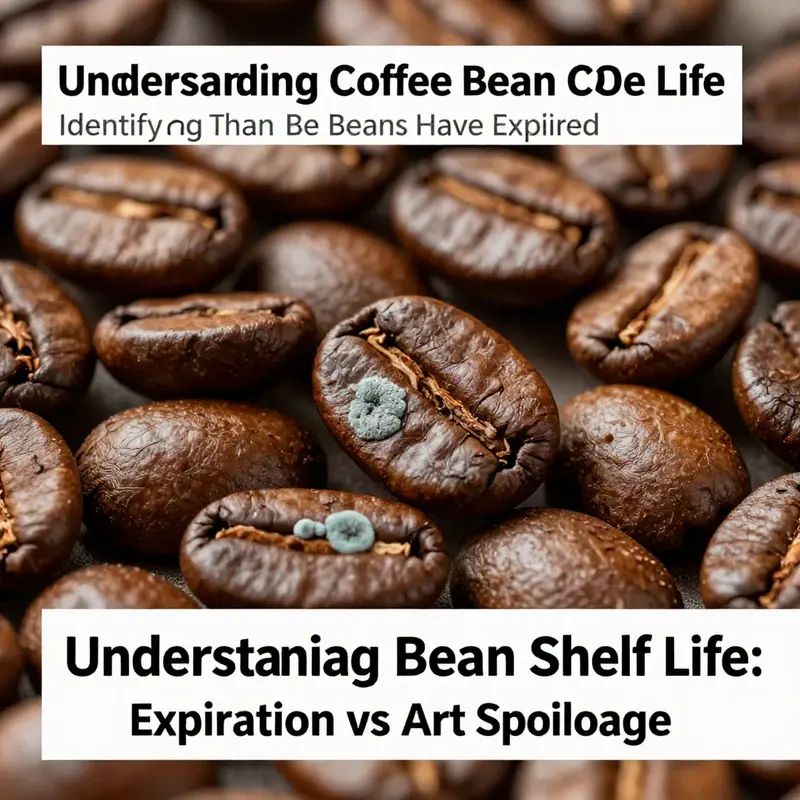
When you reach for a jar of roasted coffee beans, you are not just choosing a flavor. You are choosing a moment in time. The scent, the brightness in the cup, and even the way the grind feels in your fingers all tell a story about how the beans have aged. The idea that coffee beans can expire presses on our curiosity: is there a danger in drinking old beans, or is the real issue simply that flavor and aroma fade with time? The truth sits in the middle. Beans do not usually become dangerous to drink after a labeled date. They can, however, pass the peak of freshness and slip into a realm where a suboptimal brew becomes the norm. This distinction matters because it shifts our attention from safety toward sensory quality. We are not chasing a health risk here so much as we are chasing the most expressive cup we can achieve with the beans we have on hand.
The conversation about expiration versus spoilage starts with a simple contrast. A best-by or use-by date on a bag is about flavor potential, not safety. Roasted beans begin a decline the moment they leave the roaster. They start losing volatile compounds that give aroma and brightness. The flavor can grow dull as those compounds evaporate and break down. If the storage environment is steady and dry, the decline is gradual and predictable. If the storage environment is chaotic—exposed to heat, moisture, or light—the decline accelerates, and flavor can disappear in a matter of days rather than weeks. In other words, time is a foe of aroma, not a hazard to health, unless something else has gone wrong.
Many readers might feel a twinge of relief or a twinge of anxiety at this point. It is normal to want a concrete rule. The rule, in practice, is not a single number but a set of conditions. The beans’ safety hinges on moisture, mold, and rancidity, not on the clock. A bag that has been kept dry, away from heat, and out of direct light can stay drinkable long after the best-by date. But a batch that absorbed moisture, developed mold, or heated up enough to rancidify will taste wrong or smell off, and many brews will betray it with flat aroma, thin body, or a harsh aftertaste. The key is to learn to read the signs with your senses as a guide, not to rely solely on the calendar.
There are unmistakable cues that the spoilage flag should be raised. Mold is perhaps the most alarming. If a bag shows white, green, or fuzzy patches, if there is visible dampness, or if the beans feel strangely soft, discard them. Mold can produce toxins that pose real health risks, and no aroma or flavor is worth risking. A rancid smell is another red flag. Fresh coffee has a vibrant, inviting scent with hints of fruit, toast, or chocolate depending on the roast. When the odor shifts toward old oil, cardboard, or vinegar, the beans have likely deteriorated beyond the point where flavor can be restored by brewing. Dampness itself is a signature warning sign. Moisture invites microbial growth and accelerates staling through oxidation and other chemical processes. If the beans are damp, the risk of spoilage rises even if there is no visible mold yet.
The actual aroma and flavor losses are often more nuanced. You may notice a flat or absent aroma. Aroma is the warm invitation of a good cup. When it fades, the brew rarely redeems itself with a surprising brightness or complexity. A thin, lifeless taste follows. The cup may register as merely bitter or dull, lacking the sweetness and the layered notes that defined the roast when it was new. Some tasters describe a bland or cardboard-like aftertaste. That cardboard note is a sign that the volatile compounds responsible for aroma and flavor have degraded. It is not a sign of danger, but it is a sign that the coffee has slipped from peak freshness and may no longer deliver the experience you expect from high-quality beans.
Behind these sensory changes lie the processes of staling. Degassing is a natural post-roast phenomenon where carbon dioxide exits the beans. While some degassing is essential for optimal extraction, exposure to oxygen for a prolonged period accelerates staling. Oxygen is the enemy of freshness. The more air the beans encounter, the faster the aromatic compounds break down. Light and heat speed up these reactions. Even small amounts of moisture can have outsized effects by promoting oxidation and mold growth. These interactions are not mysterious or magical; they are chemistry at work in your kitchen, a reminder that flavor is the product of a careful balance of conditions, not a single moment of roasting. When the storage environment is consistently dry, dark, and cool, the beans can retain their vibrancy longer. When it is not, the flavor fades faster, and the cup tells the tale of time and temperature rather than a dangerous health outcome.
The guidelines offered by a leading industry body emphasize the practical implications of storage on flavor life. They describe a window of peak flavor that can end quickly if care is neglected. Freshly roasted beans begin losing volatile aromatic compounds almost immediately, and within a short time after grinding, the aroma can thin drastically. These realities shape how we approach buying, storing, and using coffee. They also frame the question of what to do with beans that are past their prime but still safe. The answer is not to gamble with safety but to manage quality. If the beans are dry, show no signs of smell, mold, or dampness, and taste passes a cautious test, many cooks and baristas still find value in them. They can be repurposed for cold brews, which tolerate a longer flavor arc, or used in recipes that involve strong milk, syrups, or spice to balance any minor flatness. Some beans find a second life as compost or garden mulch, returning their nutrients to the earth while you respect the original harvest by using every drop of potential they still offer in non-beverage ways.
Of course there is a practical checklist that helps individuals decide when to discard. If you discover mold, dampness, or a strong rancid odor, discard the beans immediately. If the beans are simply past the best-by date but show no signs of spoilage, they are likely still safe to drink, though the flavor may be lackluster. A sniff test is a quick, intuitive method that aligns with professional recommendations: if the aroma is faint or off, the beans have likely lost their vibrancy and may not brew well. It is a moment to be honest with yourself about whether the brew will meet your expectations for an afternoon cup or a morning ritual. The test is not a guarantee, but it streams from a long history of cupping and sensory analysis in which aroma is a predictor of flavor accuracy. Flavor, after all, travels through aroma; when the aroma is compromised, the flavor is likely to follow.
In discussing these signs, it becomes evident that the notion of expiration is not about a sudden safety hazard. The real concern is how the sensory profile holds up against your standards. Some people enjoy a rustic, slightly aged profile that proves excellent for certain brews and recipes. Others desire the bright, nuanced notes that only come from beans consumed within a narrow window after roasting. The point is not to clamp down on a universal deadline but to tailor use to your palate and your tolerance for change. A bag of beans that has traveled a few more months can still offer a satisfying session if stored correctly and brewed with those expectations in mind.
Storage remains the practical anchor of freshness. The most effective strategy is to keep beans in an airtight, opaque container that shields them from light and air. The container should be cool and dry, away from heat sources like ovens, stoves, or direct sunlight. The general advice from the industry calls for keeping beans in a place where the temperature hovers roughly between 15 and 25 degrees Celsius (59 to 77 degrees Fahrenheit). For some time, refrigeration and freezing were debated as a method to preserve freshness. The prevailing view now leans away from freezing for most home setups, unless the beans are vacuum-sealed tightly and then allowed to come to room temperature before breaking the seal. Freezing can protect flavor when done properly, but it also risks condensation and moisture if not executed with care. These nuances underscore a simple principle: consistent, moisture-free conditions beat extreme cold whenever airflow or moisture can sneak in during changes in environment.
Another practical aspect concerns the rate at which you purchase and consume. Buying in small quantities that you can roast and use within a reasonable period aligns with peak flavor. This approach reduces the distance between roasting and brewing. When possible, roast-to-consume within about a month of roasting. The closer the beans are to their roast date, the more likely you are to enjoy the intended profile. Those who choose to keep a larger stash often favor best-by dates as a loose guide rather than a rule carved in stone. If you need to stretch a bag’s life, consider grinding only what you will use within a short period. Ground coffee loses aroma much faster than whole beans, and this reality further reinforces the importance of choosing a storage plan that mirrors your brewing tempo.
The broader takeaway is clear. Coffee beans do not pose a safety threat simply by aging or crossing a date. The flavor risk is real, measurable, and highly personal. The signs of spoilage—mold, off-odor, dampness, and a rancid or musty flavor—are your safety cues in the kitchen. The absence of these cues, paired with dry storage and proper handling, keeps the beans usable far beyond the printed date. The experience of coffee is a sensory journey, and spoilage is a detour along the same road. It does not nullify the beans’ edible status, but it can erase the joy a well-made cup can offer. When you accept that, you can approach every bag with a mindful eye for signs and a practical plan for preservation.
In closing, a thoughtful approach to spoilage does not require complex equipment or excessive suspicion. It invites a careful, curious relationship with your coffee. If the beans look dry, smell fresh, and brew with some life in their cup, they likely remain usable for daily rituals. If any sign raises doubt, lean toward caution. When in doubt, discard. And when you do, carry forward the knowledge that freshness is a balance between chemistry and care. Treat your beans as a living product of harvest and cure, steward them with proper storage, and you will often be rewarded with a cup that truly reflects the moment of its roasting. If you want to dive deeper into best practices for storage and freshness, you can consult the official guidelines from the Specialty Coffee Association, which offer practical details that align with professional cupping traditions and home brewing routines. External resource: https://www.specialtycoffee.org/learn/coffee-storage-best-practices
Final thoughts
In conclusion, coffee beans do not expire in the traditional sense of safety concerns, but their flavor and quality can diminish over time. Understanding the distinction between expiration and spoilage, monitoring storage conditions, and recognizing spoilage signs are essential for maintaining high-quality products. By implementing best practices in storage and quality control, businesses can safeguard product integrity and customer satisfaction.