

Understanding whether coffee beans are truly beans delves into botanical classifications, culinary perspectives, and cultural meanings. This article unravels the truth behind the name ‘coffee beans’ and clarifies their actual identity as the seeds of coffee cherries. Chapter one explores their botanical classification, detailing why these seeds, often misleadingly labeled as beans, indeed don’t fit traditional definitions. Chapter two investigates the origins and nature of coffee beans as part of the coffee cherry, highlighting the fruit’s role in cultivating a globally adored beverage. Lastly, chapter three examines the culinary and cultural implications of coffee beans, emphasizing their significance beyond mere classification; they represent a rich cultural heritage and culinary versatility, impacting how we perceive and enjoy coffee today.
Seeds in a Cherry: The Botanical Truth Behind Coffee Beans and Why Names Lag Behind Biology
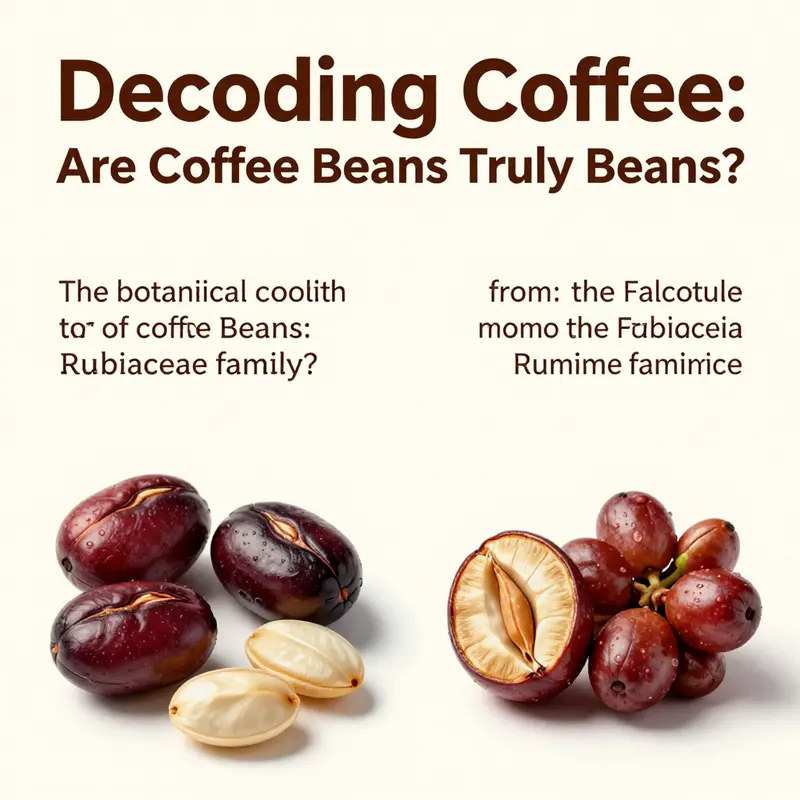
When we reach for a bag of coffee and mutter that familiar word—beans—we are participating in a linguistic habit that blends familiarity with a hint of botanical misdirection. The phrase “coffee beans” is so entrenched in coffee culture that it feels almost impossible to separate language from experience. Yet, a careful look at the plant world reveals a subtle but persistent discrepancy: coffee beans are not beans in the botanical sense. They are the seeds of a fruit, a bright red or yellow cherry that ripens on a Coffea plant. This distinction matters not only to botanists but to anyone curious about where coffee comes from, how it is processed, and why, at a deeper level, the act of roasting a seed of a cherry resembles, yet differs from, what we call true beans. To follow this thread is to walk through the garden and into the laboratory, to notice the tiny structures that shape flavor, aroma, and even our understanding of plant classification.
From the outset, the coffee plant presents a structure that confounds casual expectations. The Coffea genus belongs to the Rubiaceae family, sometimes nicknamed the madder family due to a different plant’s historic uses, but better known in the coffee world for the fruit it produces. The coffee cherry in ripe form is a drab, fruit-like sphere—often red, sometimes yellow—that houses two flat, oval seeds, side by side, nestled in a fleshy interior. Those seeds are what we grind and brew, and they are what the world markets as the beans of coffee. The two seeds inside each cherry are secured by a protective outer layer, the endocarp, which is the inner hard shell of the fruit wall. In many cherries, two seeds develop, yielding the familiar pair that roasts into our classic coffee beans. But occasionally a single seed matures within the cherry, a phenomenon known as a peaberry. Peaberries are not the norm, but they appear with enough regularity that they have become a kind of curiosity within the coffee trade, sometimes associated with slightly different flavor characteristics when roasted and brewed.
Botanically speaking, this simple image—two seeds pressed together inside a berry—illustrates a broader distinction between seeds and true beans. True beans belong to the Fabaceae family, the legume family, and their seeds emerge from a different architectural plan than those of coffee. When botanists classify plants, they group entities by ancestry and universal structural features. The coffee plant, with its two seeds per fruit and a fruit that functions as a protective chamber around those seeds, fits squarely into the Rubiaceae family, not the legume family. The seeds housed within the cherry are, indeed, seeds—the plant’s reproductive units. But because they are the seeds enclosed within a berry-like fruit rather than legume seeds housed within a pod, calling them “beans” is a misnomer in strict botanical terms. The everyday use of “bean” emerges from the seed’s appearance—its size, shape, and the manner in which it looks when roasted and ground—rather than from its botanical origin.
This is where language meets biology in a revealing way. The term bean has traveled far beyond the sciences into everyday language. People speak of “green beans” or “navy beans,” which are indeed legumes with pods that release seeds when dried. Coffee seeds, though, arise from a different reproductive scenario: a flowering plant produces a berry, the fruit, and the seed resides inside the protective endocarp. The sensory and culinary revolution we associate with coffee—its aroma, its roast levels, its flavor profiles—emerges from processes that happen after harvest: the removal of the fruit’s outer layers, drying or washing, and eventual roasting of the seeds. Each stage does not alter the botanical identity of the seeds; rather, it transforms the seeds’ chemistry, flavor precursors, and aroma molecules—traits that constitute the experience we call a cup of coffee.
To understand the seeds as seeds requires attention to the anatomy of the coffee fruit. The fruit’s exterior, the exocarp, is what we perceive as the cherry’s skin. Beneath that lies the mesocarp, the pulpy, fleshy layer that carries the sugars ripe for fermentation and the microbial life that sometimes participates in the processing methods. The inner boundary, the endocarp, is the hard shell that encases the seed itself, forming a protective barrier similar in intent to the stone inside a peach or cherry, though with its own botanical distinctions. Inside the endocarp are the seeds, each seed a future plant if it avails itself of the right conditions. The seed’s two cotyledons are what we ultimately roast and grind. The seed’s dormancy can be broken by heat, and the chemical transformations unleashed by roasting unlock the flavors we experience as coffee: acids, sugars, aromatics, and a cascade of volatile compounds that define a roast profile as individual as a fingerprint.
This structural reality—two seeds per cherry, the seeds protected by a hard endocarp, all within a berry-like fruit—helps explain why coffee roasting is often described in terms of seed quality rather than fruit quality alone. Roasting is a dance with chemistry: heat drives moisture loss, Maillard reactions sculpt the browning surface, and complex reactions between sugars, amino acids, and other compounds produce flavor notes that can resemble chocolate, fruit, nuts, or spices. The presence of two seeds per fruit influences not only the chemistry of the seed’s interior but the way coffee plants allocate resources during fruit development. The seeds’ size, shape, and arrangement also affect how evenly they roast in a drum, how evenly heat penetrates, and how uniform a batch might be. Rogues of peaberries, with their single, often rounder seed, can introduce variations in roast behavior that caffeine enthusiasts and roasters alike have observed and discussed for generations. Even these small deviations become part of the story of coffee’s biogeography and its sensory profile.
What does this mean for our central question: are coffee beans actually beans? The concise answer remains: no, not in the strict botanical sense. The seeds inside the coffee cherry are not beans because beans, botanically, belong to legumes. They arise from a plant that belongs to a different family, produce seeds inside a pod, and share a distinct lineage history with the rest of the legume world. Coffee seeds are seeds within a fruit; their name has persisted because of their seed-like appearance and the way we interact with them in roasting and brewing. The misnomer is a linguistic shortcut that has endured because it is practical and evocative, not because it is botanically precise. Yet precision matters in the sciences—and in education—because it helps us trace the origins of what we eat and drink back to specific plant lineages, ecological relationships, and evolutionary pathways.
To grasp why these distinctions matter beyond taxonomy, it is useful to consider the life cycle of the coffee plant from flowering to fruiting to seed maturity. In the tropical belt where coffee thrives, the plant blossoms with tiny, fragrant flowers that attract pollinators. After pollination, the petals fall away and a small, green fruit emerges. As it grows, the fruit becomes a coffee cherry, its color shifting through stages until it reaches maturity. The two seeds inside each cherry begin life pressed together by the endocarp, sharing a common watery environment and a rich matrix of sugars and acids that will shape their developmental trajectory. When harvest time arrives, workers carefully pick cherries at their peak ripeness, a process that recognizes the fruit’s color cues and sweetness. The subsequent processing methods—whether dry (natural) or wet (washed)—remove the fruit’s outer layers and reveal the seeds, which will be dried to a moisture content suitable for storage and transport. Each step in this chain—from blossom to cherry to seed—is a chapter in the plant’s reproductive strategy and in the human system that will eventually turn those seeds into the beverage many people crave. In this way, the botanical truth about coffee seeds connects to agricultural practices, trade networks, and even the sensory dictionary that coffee professionals use to describe aroma and flavor.
One might wonder how the two-seed pattern per cherry, and the occasional peaberry, translates into real-world diversity. The two seeds typically align side by side, flattened on opposing faces, each seed contributing its own profile of fatty acids, sugars, and caffeine. The relative proportion of lipid content to carbohydrate content on each seed influences how heat travels through the bean during roasting and how flavor compounds are formed at different roast levels. Peaberries, by contrast, involve a single seed that occupies the space within the endocarp differently. Some tasters report slight differences in sweetness, acidity, or body when comparing peaberries to standard twins, though conclusive, universal distinctions are still a matter of taste perception and roast methodology. Either way, these differences arise from physics and chemistry working on a seed that is, in every structural sense, a seed—no matter how it looks or how it is prized by certain niche markets.
The broader significance of understanding the seed-versus-bean distinction becomes evident when we consider how coffee is consumed and enjoyed across cultures. People often talk about the origin of the bean—its country, altitude, cultivar, and processing method—but the botanical reality remains constant: the object at issue is a seed. Recognizing this helps us appreciate the labor and science that connect crop to cup. It clarifies why different coffee regions produce beans with characteristic flavor profiles that reflect climate, soil, and farming practices. It also sheds light on why certain processing methods emphasize different flavor elements. In washed coffees, for instance, sugars released from mucilage while the fruit is removed may influence subsequent fermentation and aroma. In natural processing, where the fruit remains on the seed for longer, the sugars can imbue the seed with varying levels of sweetness. All these effects trace back to the seed inside the cherry and the way heat and moisture interact with that seed during roasting.
From a learning perspective, this topic invites readers to cultivate a habit of looking more closely at everyday items. The coffee bean—one of the world’s most studied seeds—offers a doorway into plant anatomy, chemistry, and history. By distinguishing seed from bean, we also acknowledge the imperfect but enduring language we use to describe the natural world. The word bean conjures a familiar shape and culinary role; the seed reveals a more precise botanical lineage. In the science community, this distinction matters because it anchors our discussion in reality and directs attention to the correct plant family, the Coffea genus, and the broader Rubiaceae family. It is a reminder that science often asks us to see beyond convenience and to accept that language is a helpful map rather than the terrain itself.
Historically, the mislabeling of coffee seeds as beans has roots in the close resemblance of the seeds to other edible or familiar seeds. The seeds’ size, their smooth, oblong geometry, and their role as the primary edible component after processing all contribute to a powerful metaphor: a small, hard object that can be ground and heated to release aroma. Yet this metaphor is a double-edged sword. It invites a broader appreciation for what a seed does in the plant’s life cycle, and it pushes us to consider how cultural adoption of terminology shapes our understanding of nature. If one cluster of people emphasizes the “seed” aspect, others will hinge on the “bean” concept because beans connotate nourishment, familiarity, and a certain culinary predictability. In coffee, the seed’s particular evolutionary tale—its fruit’s growth patterns, its seed development, and the plant’s strategy for reproduction—carries meaning that goes beyond taste and into the story of a plant lineage spanning thousands of miles and decades of human cultivation.
This exploration also serves as a gentle invitation to viewers and readers to engage with botanical nuance without becoming overwhelmed by jargon. The lesson is simple and valuable: names are useful shorthand, but they are not immutable laws. When a term like bean gets attached to a seed that is not technically a bean, it becomes a case study in how human language adapts to consumption patterns, trade routes, and cultural memory. The coffee bean’s story—its origin in a flowering shrub, its development into a fruit, its journey through processing into a pair of seeds, and finally its transformation in the roasting drum—offers a compact, vivid narrative about biology in everyday life. It is a reminder that the everyday objects we think we know well often conceal a deeper, more precise reality. Understanding that reality enriches the experience of coffee itself, from cup to origin, bean to seed to cherry, and beyond the sensory pleasures we chase with each brew.
In closing this reflection, the botanical truth behind coffee’s familiar packaging sits at a curious crossroads. It confirms that coffee beans are better described as seeds—seeds that grew inside a fruit, the coffee cherry, and that the way we talk about them reflects centuries of poetic license and practical use. The distinction matters because it anchors our appreciation of where coffee comes from, how it is produced, and why its flavors emerge the way they do under heat. It also highlights the beauty of scientific literacy: by learning to differentiate seed from bean, we gain a clearer sense of plant diversity, evolutionary strategy, and the way human culture both mirrors and reshapes the natural world.
For readers who want to explore this topic further, a detailed botanical discussion is available through scholarly sources. External resource: https://www.researchgate.net/publication/324875916BotanicalClassificationofCoffee
Seeded in a Cherry: Reframing What We Call Coffee Beans
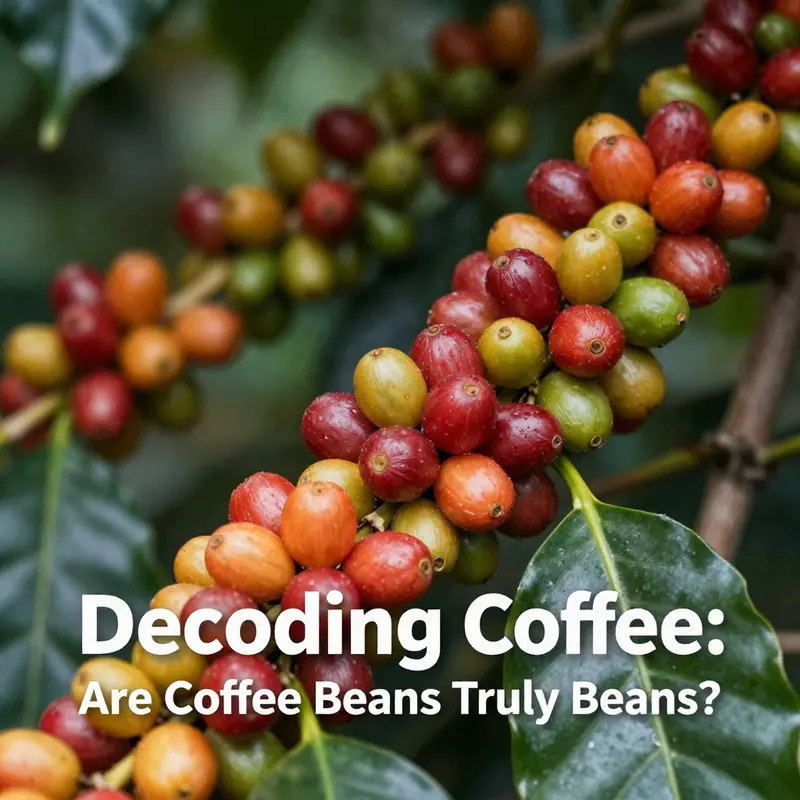
Many of us reach for a bag labeled coffee beans with an ease born of habit. We grind them, brew them, and savor the ritual, rarely pausing to wonder what exactly those little objects are in botanical terms. The everyday language surrounding coffee invites a playful misdirection: we talk about “beans” as if they were a simple, legume-like seed. In truth, the item commonly sold and roasted as coffee is a seed—a small, hard, nutrient-rich pit that sits inside a fleshy fruit. This chapter invites you to trace the journey from cherry to cup with a careful eye on what science calls the seed, what culture calls a bean, and how that distinction matters for flavor, cultivation, and even the surprises that accompany two seeds instead of one. The answer to whether coffee beans are beans is, in a sense, both yes and no: they are beans in name, seeds in fact, and part of a berry in botany.
The coffee cherry is a modest fruit, often bright red or yellow when ripe. Inside its thin skin and pulp lie two symmetrical seeds pressed together along one flat edge. The shape is unmistakably bean-like, which is precisely why the term stuck. Yet the botanical identity of these seeds sits in a broader plant family and a different structural narrative than most people expect. The seeds we call beans are located inside a fruit—a berry, to be exact. If you crack open a ripe cherry, you would see the two seeds protected by a surrounding tissue, much as the pit of a peach is enveloped by the fruit’s flesh. The outermost layer of the seed’s enclosure is the endocarp, a hard shell that encases the embryo and the nourishing tissue that, in many seeds, is the chief store of energy for germination. In coffee, that enclosing structure is what endures the roasting process and provides the backbone for the beverage’s texture and aroma. The same principle governs many fruits with large seeds that we remember not for their seed’s botanical identity, but for the role the seed plays once it is processed and cooked, roasted and ground, brewed to release its distinctive flavors.
One of the most intriguing variations in this story is the peaberry. In about ten to fifteen percent of coffee cherries, you will find only a single seed where there would normally be two. This single seed—peaberry—stands a little solitary within the fruit, a reminder that even within a single cherry there is variation. The peaberry is often talked about in terms of flavor concentration, sometimes described as offering a more vibrant, sometimes more nuanced cup. But the science behind this perception is not unequivocal. The flavor differences that roasters chase often reflect a tapestry of growing conditions, processing methods, and roasting profiles as much as, or more than, the seed’s solitary form. The peaberry, then, serves as a curiosity that highlights how much our experience of coffee depends on how a seed matured inside a fruit, how it was harvested, how it was processed, and how it ultimately met the heat of the roaster’s oven.
The seed’s anatomy helps explain why coffee is not a typical “bean” in the legume sense. Brazil nuts and white rice are sometimes invoked as comparisons for seed composition because they are dominated by endosperm—the nutrient-rich tissue that nourishes the embryo as the seed develops. Coffee beans are likewise primarily endosperm. In practical terms, when you grind and brew coffee, you are transforming the endosperm’s chemistry and structure into aromas, oils, and acids that define the cup. The embryo itself is a tiny player in this narrative, tucked away inside the seed, but the endosperm is the main actor when heat begins to act upon it. The endosperm holds starches and later develops into the aromatic oils that, when roasted, release the familiar coffee fragrances—nutty, chocolatey, fruity, sometimes citrusy—depending on the seed’s origin and the grower’s hands.
Within this botanical framework, two principal species dominate global production: Coffea arabica and Coffea canephora, commonly known as Robusta. Arabica is widely celebrated for its smoothness and complexity and has historically claimed the larger share of high-quality, premium coffee. Its appeal is tied to a cascade of preferences: a cooler microclimate that encourages shade growth, a humid atmosphere that spreads evenly across the hillside farms, and a longer maturation period that helps develop nuanced flavor notes. Arabica’s origins lie in the Ethiopian highlands, and that legacy travels with it in the cup, often described as having a balance of sweetness, acidity, and a refined aromatic profile that invites sipping rather than shouting for attention. Robusta, by contrast, is robust by design. It tolerates harsher, drier, and more disease-prone conditions with a tenacity that Arabica rarely matches. Robusta’s seeds are the backbone of many blends and instant coffees, valued for their higher caffeine content and their ability to bring a stronger, more bitter intensity to a cup. The trade-offs between these species are not merely about bitterness or caffeine; they reflect an agronomic calculus—yield stability, resistance to pests, and the economics of furrow and shade management that influence price, accessibility, and the rhythm of harvests across continents.
To understand the seed’s journey from fruit to bean is to understand a practical geography of cultivation. Arabica thrives in altitude; cool nights and slow maturation encourage complex sugars to accumulate, shaping flavor profiles that can include floral notes, fruity brightness, and a delicate acidity. Robusta’s resilience typically comes with a shorter maturation window and a higher content of chlorogenic acids and other compounds that contribute to a more steadfast, often heavier body and a stronger caffeine jolt. These differences, while captured in tasting notes and roasting charts, arise from a broad set of variables—altitude, soil mineral content, shade density, rainfall patterns, and even microclimates that appear across a single hillside. The burden on farmers is heavy because these variables scale into the end product: beans that can withstand travel, storage, and the whims of global demand while preserving aromatic integrity across roasting and grinding.
It is often said that coffee is a story of terroir translated into aroma. In a botanical sense, this story begins with the seed inside the fruit and ends with the flavor compounds released during roasting. The endosperm malleability, the lipid content, the proteins and sugars present, all contribute to how the seed responds when heat and moisture are applied. Your sense of flavor is, in large part, the expression of a seed’s particular chemistry—chemistry shaped by the plant’s genetics and the environment in which the seed matured. When you roast, you are coaxing and sometimes transforming those compounds. The Maillard reactions, the breakdown of sugars, and the volatilization of aromatic compounds all begin with the seed’s composition. The result is not merely a stronger or gentler taste, but a choreography of aromas: hints of caramel, chocolate, fruit, or spice, each traceable to the seed’s innate chemistry and to the care with which it was cultivated.
Culturally, the misnomer persists because the word bean is deeply embedded in the lexicon of coffee culture. People say “a bag of beans” as if describing an edible legume, even though the seed’s botanical identity is far from that family’s defining traits. This linguistic slippage is not a trivial error. It reflects how intimately we associate coffee with a long process—from plant to cherry to seed to cup—and how language can lag behind scientific nuance. Yet the misnomer carries a sort of warmth, a reminder that the seed we drink from is inseparable from the fruit that housed it. The seed’s story is the public face of a global agricultural system, a framework of communities cultivating and processing a crop that travels thousands of miles before meeting the grinder’s blade and the barista’s care.
From a botanical perspective, the coffee plant belongs to the Rubiaceae family, a diverse group that includes many shrubs and small trees adapted to a variety of climates. Within that family lie the two major cultivated species that have shaped global coffee culture. Arabica and Robusta share the same overarching structure: a fruit that houses seeds, seeds that are protected by an endocarp, and a set of genetic and environmental variables that sculpt what we eventually taste. Yet there is a distinction worth underscoring: true beans emerge from plants in the Fabaceae family, commonly known as legumes. Coffee beans do not come from leguminous plants; they come from a fruit-bearing shrub in the Rubiaceae. The contrast matters in botanical terms because it locates coffee within a separate evolutionary pathway, one that has produced a seed designed to endure the rigors of drying, shipping, and roasting, and one that has a flavor potential that owes much to the coffee cherry’s particular lifecycle.
The singular focus on the seed’s identity as a seed becomes practical when we think about what remains constant through processing. The cherry’s flesh is removed to access the seed, and this processing step—whether the fruit is dried, pulped, or fermented—shapes the seed’s surface chemistry and the residue of sugars and acids that can influence roasting behavior and aroma development. The endosperm’s composition determines how moisture interacts with heat, how uniformly the seed roasts, and how oils and aromatics emerge. In this sense, the seed is the true veteran of the roasting theater, the endosperm acting as the primary stage where flavor and aroma are rehearsed, while the embryo’s micro-scale presence is a quiet, genetic whisper that occasionally affects germination potential if seeds were to be planted. And yet in commerce, the seed’s identity as a seed is precisely the element that makes coffee grain more stable as a commodity: a seed’s physiological characteristics can be more predictable across storage and distribution than the more delicate tissues of a fully developed fruit would be.
If we zoom in on the two most widely grown species, Arabica and Robusta, the differences reveal themselves not only in flavor but in agronomy. Arabica plants typically require cooler temperatures and more stable humidity. They thrive in higher elevations, where the sky’s cloak of mist lends gentleness to the harvest and allows the beans to mature slowly, revealing complex layers of sweetness, acidity, and aroma. This slow maturation is part of why Arabica is often associated with nuanced sensory experiences—notes of citrus, berry, chocolate, or floral hints, depending on the origin. The trade-off is a greater susceptibility to pests and disease and a greater sensitivity to climate variability, all of which can raise the cost of cultivation. Robusta plants, by contrast, are sturdier, more disease-resistant, and able to tolerate harsher climates. They yield more cherries per tree and are less forgiving of environmental stress. The seeds it produces tend to be stronger in body and caffeine content, which is why Robusta frequently anchors espresso blends and instant coffees, lending the brew a punch that is often tempered by the softer, more aromatic Arabica base in many consumer products.
Understanding the seed’s life inside the cherry also illuminates why some consumers and roasters pay attention to the fruit’s origin at the farm level. The cherry’s ripeness and the way the flesh surrounding the seed is removed can leave residues that either complement or complicate the bean’s later roast. Pulped natural processing, washed processing, and other methods influence the seed’s surface chemistry in ways that roasters interpret through the aroma and body of the cup. The seed’s endosperm is what interacts with heat to produce the familiar aroma compounds—the sweet, nutty, or fruity notes that define a coffee’s identity. Yet the overall cup profile is not the seed alone; it is the seed in its environment, the plant’s genetics, the soil’s minerals, the shade that protects delicate flavors, and the time the cherry spends maturing under the sun or beneath a canopy. All these factors converge in the seed that finally arrives on the roaster’s tray, labeled and ready for transformation by flame and air.
null

null
Final thoughts
The journey of understanding whether coffee beans are technically beans reveals a deeper narrative about our beloved beverage. By exploring their botanical classification, we find that calling them ‘beans’ is a misnomer—coffee seeds, derived from the coffee cherry, play a crucial role in global culture and culinary practices. These insights highlight the importance of being informed about our products, enriching our appreciation for coffee. As coffee business owners, recognizing this distinction can enhance marketing strategies and customer education, fostering a deeper connection between consumers and the world of coffee.