

For business owners venturing into the world of coffee, sourcing quality green coffee beans is a crucial aspect of ensuring the success of your products. Not only do green coffee beans influence the flavor profile of the final brew, but their quality, origin, and how they are sourced can greatly impact your brand’s reputation. This article delves into essential platforms where you can purchase green coffee beans, key factors that influence pricing and quality, and a comprehensive overview of regional suppliers worldwide. By understanding these elements, you will be well-equipped to make informed purchasing decisions that align with your business goals.
null
null
null
null
Global Regions, Local Choices: Navigating Regional Green Coffee Bean Suppliers for Smart Buyers
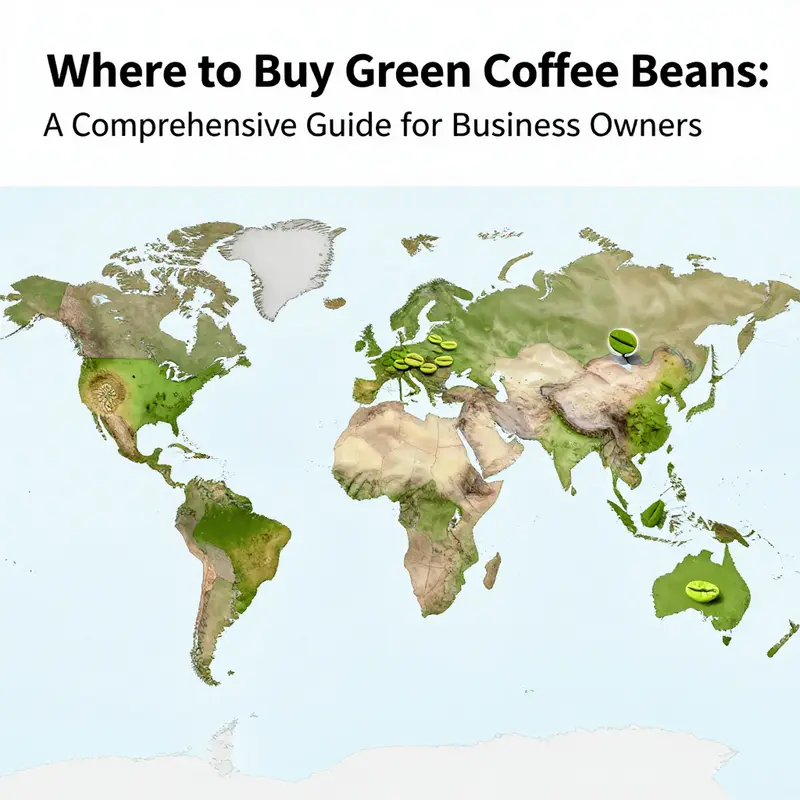
Sourcing green coffee beans is less a simple transaction than a careful orchestration of regional strengths, logistical finesse, and quality signals that travel from farm to bag. For anyone charting a path to purchase, understanding where beans come from matters as much as knowing what you want to brew. The global market sits on a map of distinct regional hubs, each with its own climate, processing habits, and export infrastructure. This chapter traces those hubs not as a catalog of origins, but as a map you can read to anticipate availability, price, and flavor. A buyer who learns to read the regional fingerprints–volume, cost, and reliability–will cultivate a sourcing approach that matches both the roast profile in mind and the budget at hand. In practice, regional knowledge translates into smarter orders, steadier supply, and clearer expectations about what a shipment will taste like before the beans ever reach the roaster.
Southeast Asia has become a powerhouse for green coffee production, especially in Robusta, a species renowned for its vigor, higher caffeine content, and cost efficiency. The region’s dominance is not merely a tale of volume but a story of logistics, export networks, and predictable turnarounds. Within this corridor, one country rises as a primary producer in Robusta terms, offering robust yields and a price edge that many buyers chase when planning large batches for espresso blends or instant coffee lines. The region’s climate and farm structure support scalable production, which means buyers can access sizeable consignments with relatively short lead times if they align with the region’s seasonal windows and shipping cycles. The practical takeaway for a procurement team is straightforward: if your goal is to bolster volume and keep costs contained, this region remains the most reliable generator of bulk green coffee for commercial needs, provided you are comfortable with the flavor backbone that Robusta typically delivers and the consistent processing methods that accompany high-volume supply chains.
Indonesia sits alongside its Southeast Asian neighbor in shaping the market’s backbone, offering both Arabica and Robusta and presenting a blend of traditional cultivation and modern infrastructure. The archipelago’s long-standing coffee culture coexists with an export framework that moves large quantities efficiently, leveraging established port facilities and a network of regional exporters. For buyers, the Indonesian landscape presents an interesting balance: ample supply and competitive pricing paired with a wide range of bean profiles. The Java region, in particular, has historical resonance and a reputation for sturdy, earthy notes that appeal to roasters crafting bold espresso or deeper-roasted blends. Yet it is essential to understand that the same factors that enable consistent delivery—a dense logistical web, standardized lots, and clear traceability—can also push buyers toward bulk pricing and longer lead times if they require highly specific distinction in flavor, origin trace, or meticulous processing. The seller’s side can bundle lots with varied processing options, and buyers must be prepared to negotiate minuscule details about wash versus natural processing, milling distinctions, and packaging formats to secure precisely defined lots.
East Africa is celebrated for Arabica of remarkable purity and character, with flavor notes that often carry the story of their hillside origins. Ethiopia, the cradle of coffee, is a focal point in conversations about origin purity and sensory complexity. The region’s beans are prized for vibrant acidity, floral nuances, and fruit-forward profiles that roasters describe as expressive and distinctive. The East African model emphasizes single-origin lots, traceability, and direct relationships with producers, all of which align with the desires of specialty roasters and cafes seeking authenticity and storytelling in a cup. The emphasis on sustainable farming practices and ethical sourcing reflects a broader trend toward transparency and responsibility in the global supply chain. For buyers, the East African pathway invites a careful appraisal of how lots are sourced, how harvests are sequenced, and how futures or spot purchases align with roastery calendars. It also invites dialogue with suppliers about farm-level practices, community benefits, and long-term partnerships that incentivize consistent quality rather than short-term price games.
Latin America remains a steady heartbeat of Arabica production, balancing quality, volume, and dependable supply. Colombia, Guatemala, and Brazil–each in its own way–contributes a spectrum of flavors and a track record of reliable delivery. The region’s well-developed agricultural and logistics infrastructure translates to a predictable flow of beans that can satisfy a roaster’s needs across a range of roast levels and brewing methods. Flavor profiles vary from bright citrus and red-fruit tiness in some Central American-influenced lots to chocolatey, nutty, and caramel notes commonly associated with Brazilian beans. The availability of both washed and alternative processing styles, along with growing interest in specialty lots, gives buyers a toolbox for shaping roasts that align with customer preferences. In Latin America, the emphasis on consistency and scale is paired with increasing attention to sustainable practices, certifications at origin, and direct-trade models that add a layer of confidence to purchases. Buyers who want reliable baseline supply without sacrificing character will find Latin American origins a dependable core of their green coffee portfolio, with occasional forays into more experimental lots when the season and market push invite exploration.
Latin America’s neighbor to the north also reinforces the notion that origin geography matters for logistics and timing. Brazil’s vast plantation network helps stabilize volumes, while Colombian and Guatemalan programs often deliver cleaner flavors that sit well in washed profiles. The region’s export channels, anchored by established port facilities and long-standing trade routines, provide a familiarity that large roasters rely on during peak seasons. The trade-off, of course, is that the same scale that ensures reliability can sometimes flatten nuance if a buyer seeks highly specialized micro-lots in minute quantities. That tension–the push and pull between scale and specificity–defines much of the decision matrix for buyers who navigate Latin American suppliers. A practical takeaway is to tend a diversified portfolio: keep a steady stream of core beans from well-understood Latin American sources, and reserve a portion of the budget for specialty lots from East Africa or Southeast Asia when the flavor curiosity warrants investment.
Singapore operates not as a producer but as a strategic transshipment hub, and its role in the global coffee ledger is often underappreciated. For buyers who manage large inventories or require rapid access to premium varieties from multiple origins, Singapore’s logistics ecosystem offers a rapid, centralized gateway. The urban port city’s infrastructure supports efficient customs, warehousing, and consolidation, which translates into shorter lead times for bulk orders and easier risk management for importers navigating currency swings and harvest calendars across continents. In practice, Singapore can be the anchor point where regional beans converge before distribution to roasters, cafes, and industrial customers. The hub’s value lies not only in the speed of delivery but also in its capacity to protect supply chain resilience: if a region faces disruptions, a transshipment node with flexible routing can reassemble orders from alternative origins with minimal downtime. For a buyer, that translates into a more predictable procurement plan, tighter control over storage and inventory, and the opportunity to fine-tune flavor profiles by mixing origins with greater ease.
The rationales behind choosing a region expand beyond flavor potential. Price dynamics, minimum order quantities, and the availability of samples strongly influence decision-making. Prices, in particular, reveal much about regional health and market expectations. Ethiopian green beans, historically associated with premium quality, can show a wide price spectrum—from modest figures per piece for smaller lots to more premium ranges for specialty, carefully processed lots. Southeast Asian Robusta, with its high yield and lower unit cost, often presents a different calculus, favoring roasters who need consistent volume at a lower per-kilogram cost. Vietnam’s bulk shipments, typically priced at a lower range per kilogram for large orders, illustrate how scale and proximity to export routes translate into cost advantages. In Indonesia, the mix of Arabica and Robusta underlines how buyers can adjust flavor and price through origin and processing choices. Traders frequently juxtapose these regional signals with demand forecasts, logistics windows, and the roaster’s target price bands to craft a sourcing plan that remains agile in a shifting market.
The buyer’s path through this regional landscape is not a mere quest for discounts; it is a careful negotiation of quality signals, reliability, and provenance. Origin-specific preferences–washed versus natural processing, cup profiles, and farm-to-door traceability–play a decisive role in shaping orders. The push toward sustainability and ethical sourcing adds a further layer: buyers increasingly seek verifiable certifications, clear farm-level practices, and transparent supply chains. Recognizing these scripts in the market helps in curating a portfolio that supports both flavor goals and social responsibility. A practical approach blends a stable core of well-understood origins with periodic injections of new lots. This keeps a roastery’s offerings fresh without sacrificing consistency. It also allows a team to build stronger relationships with regional exporters who understand the buyer’s cadence, quality bar, and delivery rhythms, rather than hunting for last-minute deals that compromise long-term partnerships and flavor continuity.
Given the regional mosaic, how should a buyer approach the sourcing journey? Start with volume planning and timeline mapping. Decide how much green coffee you need to secure within a season, and align that with the harvest calendar and port schedules of your preferred regions. Develop a blueprint of origin priorities: a primary region for bulk supply, a secondary region for flavor nuance, and a third region that offers experimental lots or micro-lots with distinctive profiles. A robust sourcing strategy also cares for risk–currency fluctuation, political or climatic disruptions, and transport bottlenecks. Diversifying suppliers across regions reduces vulnerability and expands options when a particular origin faces a crop year constraint. It is equally important to balance sample exploration with commercial realities. Request samples early, test them in small batches, and document cup profiles against a sensory rubric that your roasting team trusts. The tasting notes will become a practical guide to when and why certain origins should be scaled up or trimmed from the portfolio.
Alongside these regional considerations, the practical mechanics of procurement matter. Minimums vary widely, as do the options for smaller lots and split lots. The most cost-effective paths often emerge from suppliers who can accommodate flexible packaging, mixed lots, and scalable shipments. The ability to negotiate terms around packaging format, palletization, and documentation is not a luxury but a core competence for strategic buyers. Suppliers who offer clear, verifiable batch information–harvest year, processing method, origin lot, and proof of quality–make it easier for a buyer to forecast flavor consistency and to perform supplier audits when needed. Certifications, even if not a legal requirement in every market, may influence preferred sourcing partners. They help assure customers that the beans have traveled through safe handling processes, with attention paid to hygiene, traceability, and quality control at each step of production and export.
As the global map of green coffee beans reveals, every region carries a distinct advantage, and savvy buyers learn to leverage those strengths rather than chase a single, universal solution. Southeast Asia’s volume and cost advantages meet East Africa’s purity and depth, while Latin America offers reliability and breadth of flavor. Singapore’s logistical prowess seals the chain, allowing for smoother bulk movements and resilient planning. The result is a sourcing ecosystem that rewards preparedness, regional awareness, and a willingness to blend origins for the best of both worlds: a steady supply and a cupping bench that can explore bold profiles without destabilizing the business. The chapter’s core insight is simple yet powerful: where you buy green coffee beans matters because origin is not only about flavor—it is about how your supply chain behaves when the calendar tightens, when currency shifts, and when climate or market shocks require quick, thoughtful pivots. The regional lens gives buyers a clearer mental map for making informed, strategic choices that hold up through seasons of demand and change.
In this landscape, the decision-making process becomes a blend of art and logistics. A buyer must consider price bands, desired flavor characteristics, and the degree of flavor stability required by the roasting program. It is not enough to choose a region solely for its most affordable beans or for the most exotic tasting notes; the best choices come from a balanced, region-aware strategy that aligns with a company’s roasting philosophy and customer expectations. The goal is to build a sourcing framework that scales with growth while preserving the distinctive identity of the cuppings and blends that appeal to customers. That means planning for both the predictable supply of bulk origins and the occasional foray into specialty lots from regions known for innovation in processing techniques and farm-level stewardship. It means recognizing that a well-rounded green coffee portfolio benefits from the interplay of robust, cost-efficient Robusta sources and nuanced Arabica profiles, each matched to the roaster’s target profiles. It also means accepting that logistics, not just flavor, governs success. A reliable regional mix is a buffer against disruptions that can otherwise choke a roasting calendar or inflate costs at the last minute.
The regional map also points toward a future in which supply chain resilience takes center stage. Climate pressures threaten traditional harvest patterns, currency volatility adds a layer of risk to long-term contracts, and shifting consumer preferences push roasters toward both lower environmental impact and higher traceability. Buyers who keep a pulse on the regional dynamics–where farms are expanding, how processing facilities are scaling, and where port capacity is expanding or contracting–will be better prepared to adjust procurement strategies in real time. Singapore’s role as a hub will likely grow more central as companies seek integrated, end-to-end solutions that minimize downtime and maximize inventory control. The blend of origin diversity with a streamlined logistics backbone creates a buffer against shocks and a smoother path from farm to warehouse to roaster. In this sense, regional sourcing is not just about securing beans; it is about building a resilient, responsive supply system that can adapt to a market that values both consistency and curiosity.
For buyers, the chapter’s synthesis is clear: cultivate a regional portfolio that respects the flavor map while preserving the ability to adapt to price movements and supply realities. Maintain a regular rhythm of sample testing to keep your sensory memory aligned with market offerings. Keep an eye on processing methods and origin narratives because these elements will often guide subsequent purchase decisions and flavor development. Above all, remember that the regional sourcing strategy is a living framework. It should evolve with your roasting program, your customers’ evolving tastes, and the shifting contours of the global market. When you design your procurement approach with this global-regional lens, you transform sourcing from a routine task into a strategic advantage. The beans you buy become less a commodity and more a carefully curated component of your brand’s identity, reliability, and flavor storytelling.
Final thoughts
Understanding where to buy green coffee beans is vital for business owners looking to deliver exceptional coffee products. The choice of platform, the analysis of quality and pricing factors, and awareness of regional suppliers can significantly affect the overall quality of your offerings. With the rise of e-commerce and a global supply chain, effectively sourcing green coffee beans is more accessible than ever, allowing you to craft unique coffee experiences that resonate with your customers. By leveraging the insights provided in this guide, you’ll be positioned to make informed and strategic purchases that enhance your brand’s presence in the competitive world of coffee.