

Understanding the classification of coffee beans is crucial for business owners in the coffee industry. Confusion often arises regarding whether coffee beans fall under the category of legumes, which can impact product marketing, sourcing, and culinary applications. The upcoming chapters will dissect the botanical classifications, highlight key differences between coffee beans and true legumes, delve into coffee’s role in culinary contexts, and finally, explore the economic impact and cultural significance of coffee cultivation globally. By the end of this article, business owners will gain essential insights into the nature of coffee beans, enabling them to make informed decisions in their operations.
From Berry to Bean: The Botanical Truth Behind Coffee Seeds and Legumes
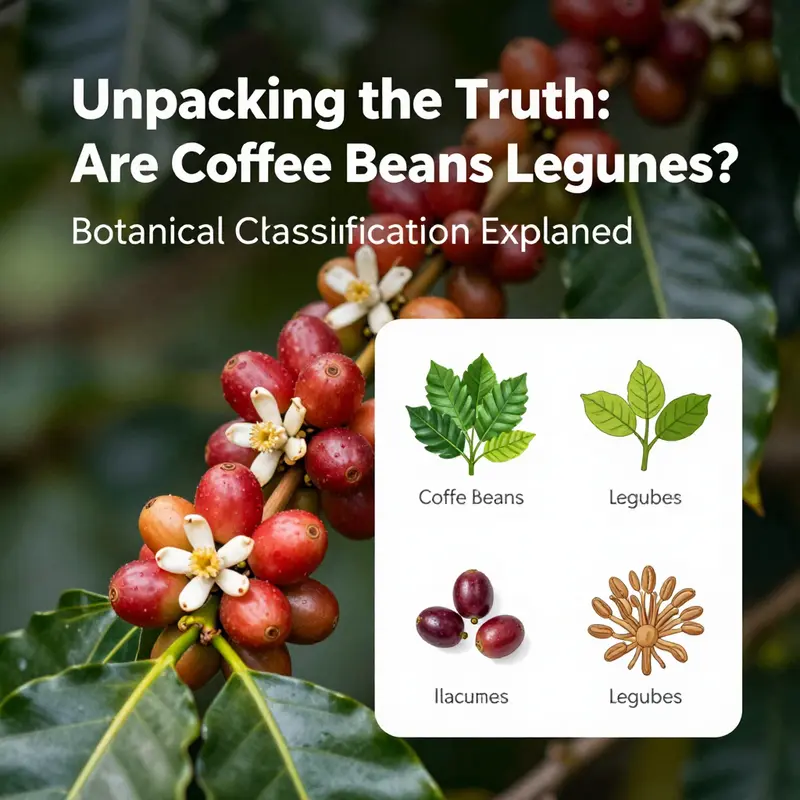
A seed is a seed is a seed, or so the familiar coffee bean might tempt us to think. Yet the journey from plant to seed to kitchen table is littered with misnomers and easy-to-mistake labels. When we talk about coffee beans and legumes, we’re straddling two different continents of botanical meaning. The casual term “bean” travels widely in everyday speech, but the science behind it points to two very distinct plant lineages, life strategies, and fruit structures. This chapter follows that logical thread, showing why coffee beans are not legumes, how the plant families differ, and how language has layered a culinary shortcut over a botanical map that can teach us more about the world of plants than we might expect. The result is a clearer picture of how a seed’s origin and its surrounding fruit shape not only science, but also the way we eat, drink, and think about food categories. The answer to whether coffee beans are legumes is a straightforward one—no—but the reasoning to reach it invites a broader appreciation for plant diversity and the labels we use to describe it.
Where Names Trick Nature: The Botanical Reality Behind Coffee Beans and True Legumes

Names matter, but they can mislead. In everyday talk, we reach for a familiar term like bean and assume it marks a single botanical family. Yet in the natural world, the word bean is a label that travels with very different plant stories. The question of whether coffee beans are legumes sits at the crossroads of language, botany, and everyday cooking. It is a reminder that science often lives behind the convenience of everyday vocabulary. The careful answer is straightforward: coffee beans are not legumes. They are seeds, yes, but the plant they come from belongs to an entirely different botanical lineage from the true legumes. To understand why, one must follow two paths that usually run in parallel but rarely meet in casual conversation: the path of botanical classification and the path of how a seed becomes part of a human meal or a human drink.
Begin with the legume family, Fabaceae. Legumes are plants that typically produce pods, the kind of fruit that splits along two seams to release flat seeds. This pod-splitting behavior, called dehiscence, is a defining feature of many members of the Fabaceae. Think of beans, lentils, chickpeas, peas, and peanuts in their broader culinary use—these are the seeds that accumulate inside a pod and are harvested as a staple source of protein or carbohydrate in many cultures. The botanical journey of a legume begins in a flowering pea-like plant, the pod develops, matures, and, at harvest, exposes a row or cluster of seeds within. Those seeds, whatever their eventual culinary form, belong to plants whose evolutionary history is tied to nitrogen fixation, a relationship that enables some legumes to enrich soil with nitrogen through symbiotic bacteria in root nodules. This nitrogen-fixing trait has shaped agricultural practices for millennia and has cemented legumes as foundational crops in many food systems.
Coffee, by contrast, starts with the Coffea plant, a member of the Rubiaceae family. The tree or shrub grows in tropical climates, and its fruit is a small berry commonly called a coffee cherry. Inside that fruit lies the seed we call a coffee bean. The key botanical distinction is not just the family name, Rubiaceae versus Fabaceae, but the very nature of the fruit that encases the seed. A coffee cherry is a drupe, a fleshy outer layer surrounding a hard inner pit where the seed resides. In a drupe, you find a single central stone or stone-like seed surrounded by pulp. In many drupes, the outer layer may be sweet or edible, and in the case of coffee, the flesh around the seed is removed during processing before roasting and brewing. The two seeds commonly found within a single cherry are the coffee beans we eventually roast, grind, and pour as a beverage. This is a crucial distinction: while both legumes and coffee beans are seeds, their fruit type and their plant families set them on different evolutionary tracks.
The term bean in coffee’s case is a linguistic artifact—an image that sticks because of the seeds’ shape and the historical convenience of the word. When we call them beans, we lean on a familiar silhouette rather than a precise botanical label. That linguistic shortcut has a long cognitive history. It is tempting to think of seeds as beans in the same sense across plants, but seeds can be very different in their development, structure, and ecological role. In the coffee plant, the seed is embedded in a fleshy fruit, and its maturation involves a sequence of stages that culminate in a dried and roasted product aimed at delivering aroma, flavor, and caffeine. The beans are not the product of a pod that opens along two seams; they are seeds contained within a single fruit that is harvested, processed, and then transformed through roasting and grinding. The result is a beverage with a complex chemistry of acids and aromatic compounds that differ significantly from the proteins, starches, and fibers you would expect to find in true legumes.
To appreciate the difference more clearly, consider the two trajectories side by side. Legumes of the Fabaceae family emerge from a floral structure that, after fertilization, forms a pod. The seed within is built to detach from the pod along the seam, a mechanical release that suits seed dispersal. Many legumes have a high protein content relative to other crops and have historically served as a primary plant-based protein source for humans and livestock. The plant’s physiology emphasizes a robust interaction with soil microbes, especially nitrogen-fixing bacteria. This microbial partnership has shaped agricultural landscapes and crop rotations for generations. The fruit type—pod—reliably encases multiple seeds that are harvested together, often in dry form, for cooking as beans, lentils, or peas.
The coffee plant, in contrast, produces a drupe. You could imagine a tiny fruit the color of a cherry, though far more delicate in texture. When the fruit ripens, its flesh is typically removed during processing, leaving behind the seed inside. The seed’s development is governed by a different suite of tissues and a distinct embryology that aligns with the coffee plant’s place in Rubiaceae. The resulting product, after curing, roasting, and sometimes aging, becomes the aromatic commodity we drink. The two seeds inside the coffee cherry are not a pair that detaches from a single pod in the manner of legume seeds; instead, they are seeds of a drupe that have to be split apart and prepared for roasting. This distinction—drupes rather than pods, Rubiaceae rather than Fabaceae, and a fruit-based seed context rather than a pod-based seed context—anchors the difference in a way that goes beyond the weight of a label.
The practical upshot of this botanical difference is not merely academic. It translates into how we use these seeds in kitchens and cafés. Legumes, when cooked, nourish with a profile dominated by starches, proteins, and a range of fats depending on the species. Their culinary roles are diverse: stews, soups, salads, and many regional specialties rely on the textural and nutritional properties of beans and lentils. Coffee beans, in contrast, do not serve as a staple food in the same way. They are not typically eaten as beans in the raw or dry-roasted form; rather, their primary utility lies in brewing a beverage that emphasizes aroma and acidity over bulk nutrition. The caffeine content is part of that experiential profile, a psychoactive compound that researchers study for its effects on alertness and metabolism. In the kitchen, coffee beans appear primarily as flavoring agents or the star of a drink, whereas true legumes appear as a protein-rich staple that can form the backbone of many meals. This divergence in purpose mirrors the underlying botanical reality; it is not merely a difference in taste but a difference in plant history, structure, and ecological role.
A further layer of contrast lies in the ecological and agricultural implications of their classifications. Legumes have earned a reputation for nitrogen management in soils. Their roots host bacteria capable of converting atmospheric nitrogen into forms usable by the plant, a process that can enrich soil for subsequent crops. This nitrogen-fixing trait has been a cornerstone of sustainable farming in many regions, enabling rotations that reduce the need for synthetic fertilizers. Coffee plants, though productive and adapted to tropical environments, do not rely on the same nitrogen-fixing dynamics in the same way. Their nutritional and growth strategies are tied to different soil interactions, climate tolerances, and pest pressures. The distinction is not a matter of mere curiosity; it influences how farmers cultivate, rotate, and manage resources in coffee-growing regions. The result is a different agricultural footprint and a different set of husbandry practices that echo the plant’s botanical lineage rather than the legume narrative.
These botanical realities help explain why the same everyday word—bean—crosses into both domains without collapsing them into a single category. When we see a cup of coffee and a bowl of beans side by side, the mind is quick to call both things beans. Yet the botanist would insist on a precise taxonomy: coffee seeds are drupes from the Coffea plant in Rubiaceae, legumes are seeds within pods from Fabaceae. If we trace the logic back to plant anatomy, the coffee seed is not the product of a two-part pod that splits along seams; it is the seed of a fleshy fruit, with its own unique seed coat, embryo arrangement, and germination pattern. The difference is more than a matter of nomenclature; it is the difference between two evolutionary strategies for seed dispersal, nutrient allocation, and ecological interactions. And while both seeds share a common trait—their usefulness to humans as a source of energy and flavor—their biological identities remain distinct.
This distinction matters in everyday life, especially for readers who want to understand what they are eating or drinking and why those foods behave differently in cooking, nutrition, and farming. If a person is seeking plant-based protein, legumes are often a reliable option because of their amino acid profiles and high protein density. If a person is seeking a beverage with complex aromatics and stimulating compounds, coffee offers a different kind of reward—an interaction of volatile compounds that emerges through roasting and extraction rather than a simple protein matrix. The vocabulary of seeds—the very word bean—should not obscure the biology beneath it. It should provoke a moment of curiosity about how plants invest energy in fruits, how seeds become harvestable, and how humans, in turn, decide which seeds to roast, grind, and drink, and which seeds to soak, simmer, or sprout.
As a final thread, consider how this topic appears in the broader landscape of botanical literacy. The public understanding of plant relationships often rests on convenient groupings rather than precise classifications. Recognizing that coffee beans are not legumes invites a closer look at plant families, fruit types, and seed anatomy. It invites us to appreciate the nuance that two seeds can occupy the same culinary category of beans in the popular imagination while themselves being products of entirely different developmental journeys. The resulting understanding becomes a more robust base for discussing crops, their origins, and their roles in human culture. It helps demystify why certain foods share a name but diverge in biology and function and why the term bean can be both a helpful shorthand and a potential source of confusion.
For readers who want to explore the botanical background even more, authoritative reference work on the topic provides a rigorous synthesis of plant families, fruit types, and seed anatomy. The Encyclopaedia Britannica offers a concise, expert overview of the coffee plant and its seeds, including its placement in the Rubiaceae family and its status as the seed of a drupe. This resource helps to ground the discussion in a dependable framework and invites further reading into related plant groups and fruit structures. External resources such as this can illuminate the subtleties of plant classification that everyday language often glosses over, reminding us that the journey from fruit to seed to cup is as much about biology as it is about culture and taste.
Beyond the Legume Label: The Botanical Truth and Culinary Role of Coffee Beans

Are coffee beans legumes? The question invites a moment of closer look, because language often travels faster than science. In kitchens and cafés, ‘bean’ is a friendly word. In the library of plant science, though, beans are something else entirely. The distinction matters not only for taxonomy, but also for how we understand flavor, cultivation, and the roles coffee plays in food culture.
Botanical classification places the coffee plant in the genus Coffea, within the family Rubiaceae. The coffee we drink is not a seed from a pod; it is a seed within a fleshy fruit, commonly called a cherry. Each coffee cherry usually contains two seeds, though sometimes there is only one, or even none if the fruit drops early. Legumes, by contrast, come from the Fabaceae family and produce pod-like fruits that split open along two seams to reveal the seeds inside. In other words, coffee beans are seeds of a berry, while true legumes are seeds inside a pod.
Growth patterns and morphology reinforce the difference. Coffee plants grow as shrubs or small trees in tropical climates. They bear clusters of small, ovate fruits that ripen through shades of red or purple. Legumes, in turn, tend to form elongated pods that hold several seeds; these pods increase the likelihood of mechanical harvesting and are tied to nitrogen-fixing symbioses in soil, a feature not shared with Coffea. The pod versus the berry distinction is not merely semantic; it points to different plant families, different pollination strategies, and different resource cycles. The word ‘bean’ in the coffee context is a historical metaphor, not a botanical verdict.
Culinary context and applications depart further. Legumes are foundational in many world cuisines: pulses, stews, salads, and fillings rely on texture and protein. Coffee, by contrast, occupies a different culinary orbit. It is roasted and ground to extract aroma and caffeine, then brewed into beverages that range from bright and fruity to dark and chocolatey. Yet coffee also functions as an ingredient in a modern pantry: it can deepen chocolate desserts, enrich marinades for meat, and appear in savory sauces and rubs. The roasted bean’s bitter-sweet character, toastiness, and aromatic compounds offer a counterpoint to sweetness, fat, and acidity in a dish. When used as a flavoring, coffee carries an unmistakable lineage of cultural exchange—from colonial trade routes to contemporary cafe culture—rather than the nutrition-driven dining contexts that legumes often inhabit.
Flavor profile and chemistry. The coffee flavor landscape is famously complex. Beyond its caffeine content, volatile compounds release notes of chocolate, nuts, dried fruit, and spice as beans transform through heat. The same seeds that carry caffeine also hold oils, sugars, and a matrix of phenolics that interact with roasting degree. In culinary practice, those compounds can be amplified or muted by grind size, water temperature, and brew method, or by adding dairy, citrus, or chocolate. Legumes, meanwhile, are more defined by their textures and their earthy, protein-forward flavors when cooked. The contrast is not about one being ‘better’ than the other; it is about how different botanical paths yield different sensory experiences and different culinary strategies. This difference matters when a cook riffs on a dessert that needs both the brightness of coffee and the grounding effect of a legume’s protein-rich texture in a dish such as a chocolate tart or a composed salad with beans.
Naming conventions and public understanding. The term ‘bean’ has a comforting familiarity, and it recurs in many languages. The fact that coffee seeds earn the label ‘beans’ is a reminder of the long heritage of naming by shape rather than by botanical lineage. Kidney beans, chickpeas, and lentils are true legumes with pod-type fruits and distinct family connections. The coffee seed’s placement inside a berry makes it a seed in a fruit, a small story of plant anatomy playing out in a cup and in the kitchen. When people ask whether coffee is a legume, the answer depends on which wheel they want to spin: classification, culinary usage, or cultural association. Botanically, no; in everyday talk, yes, as a familiar silhouette that makes sense in markets and recipes. The distinction also matters in nutrition labeling and agricultural policy, where precise categorization informs crop rotations, soil management, and trade standards. The broader takeaway is that language often travels faster than strict biology, and science benefits from clarifying terms without erasing cultural nuance.
Historical and practical notes. The metaphoric ‘bean’ kinship helps explain why some people expect coffee to behave like a legume in the kitchen. Coffee’s protein content is modest and its primary nourishment comes from caffeine, polyphenols, and aroma compounds, not from starch or digestible protein as in legumes. Coffee beans are harvested, fermented, dried, and roasted before reaching the consumer; legumes are harvested when mature and dried or processed into ready-to-eat forms with different cooking expectations. The global coffee trade relies on a complicated chain of farming, processing, and roasting, which underscores that the seed inside a cherry travels a far longer journey than many legume seeds do from field to plate. If you consider nutrition alone, coffee and legumes occupy distinct positions: one anchors a beverage and a sensory ritual; the other anchors a class of plant foods central to protein supply and dietary variety. The botanical clarity doesn’t erase the beverage’s social and cultural weight, but it does ground our understanding of what kind of seed we are dealing with and what to expect when we prepare or combine it with other ingredients.
Pulling it together for culinary contexts. When we interpret recipes, menus, and markets, recognizing the difference between a berry’s seed and a pod’s seeds helps us anticipate texture, cooking times, and pairing logic. A dish that relies on the heartiness of legumes will require soaking, controlled heat, and longer simmering to coax starches and proteins into tenderness. A dish built around coffee or coffee-inflected flavors will hinge on aroma, roast level, and balancing bitterness with sweetness or fat. The two pathways converge in modern gastronomy when chefs experiment with coffee emulsions, coffee rubs for meat, or desserts that use coffee to sharpen the contrast between chocolate and fruit. In such experiments, the botanical truth behind the seed and the culinary truth behind the flavor work in different registers, yet they support each other. The result is a richer culinary vocabulary that can be both scientifically informed and sensorially adventurous. The word ‘bean’ becomes a bridge rather than a barrier, a reminder that language can house multiple truths at once: botanical classification on one shelf, kitchen technique on another, and cultural memory in the air of a bustling café.
Conclusion within the chapter’s scope. The short answer to ‘Are coffee beans legumes?’ is no. Coffee beans are the seeds of the coffee cherry, and the cherry is the fruit of a plant in the Rubiaceae family. Legumes belong to Fabaceae and produce pod-like fruits that release seeds along two seams. Yet the longer answer reveals how language, function, and flavor interweave in our menus, markets, and meals. The distinction is not a fault line to be defended but a map that helps cooks, nutritionists, farmers, and scholars understand where coffee sits in the tapestry of human foodways. In culinary contexts, coffee functions as a flavor agent and aroma source with a particular chemistry that can echo chocolate and nuts, or cut through fat and sweetness with citrus brightness or spicy warmth. Legumes, in contrast, contribute texture, protein, and earthiness that define stews, salads, and bulk dishes. That juxtaposition is a useful lens for reading recipes, assessing dietary choices, and appreciating the global journey of coffee—from seed to cup to plate.
From taxonomy to table, the conversation about coffee seeds prompts a broader curiosity about how we name, classify, and cook. If readers want to explore a more formal botanical portrait, a trusted reference is Britannica’s overview of the coffee plant, which situates Coffea within Rubiaceae and explains how the berry-like fruit matures into the familiar roasted beans we use every day. This grounding helps us savor coffee with accuracy and imagination, while also honoring the playful persistence of the term ‘bean’ in culinary traditions. Britannica: Coffee
Beyond the Bean: Debunking the Legume Label and Tracing Coffee’s Global Life

Are coffee beans legumes? The direct answer is no, yet the question travels through kitchens, classrooms, and market reports with a stubborn confidence that defies botanical nuance. The word bean carries a familiar texture and taste, a comforting shape we associate with soups, salads, and familiar pantry staples. When people hear coffee described as a bean, they instinctively imagine a plant in the legume family, neatly aligning with the idea of edible seeds harvested from pods. The reality, however, is more intricate. The seed we roast and grind into a cup is the seed of a fruit known as a cherry, produced by the Coffea plant, which sits within the Rubiaceae family. The fruit is a berry, not a pod, and its internal seed is the product we celebrate as coffee. This botanical distinction matters beyond taxonomy. It informs agricultural practices, processing methods, and the legal and economic frameworks that shape one of the world’s most traded commodities. To understand why the coffee bean sits outside the legume family, we must trace the life cycle of the plant that bears it. The Coffea shrub or small tree flowers, setting fruit that ripens into a cherry like berry. Inside each berry are typically two seeds, sometimes one, sometimes a twin arrangement with a parchment like layer surrounding them. Those seeds, when roasted, release the complex spectrum of flavors we recognize as coffee. The key botanical signatures of legumes, in contrast, include pods that split open along two seams when ripe, a form of dehiscence that aligns with Fabaceae. Legumes often play ecological roles such as nitrogen fixation in soils through a symbiotic relationship with rhizobia bacteria. Coffee plants, though not legumes, have their own ecological story: they thrive under careful shade and selective altitude zones, with growers adapting to microclimates to preserve quality and yield. The contrast between a berry’s seed and a legume’s pod is not merely academic; it maps onto distinct agricultural ecosystems, harvest cycles, and post harvest processing workflows that shape the price and availability of beans in global markets. The language of everyday food often travels faster than botanical precision. The term bean has become a cultural shorthand for a seed’s shape or culinary role, even when the plant lineage tells a different story. Kidney beans and garbanzo beans are true legumes, celebrated for protein content and soil enriching cycles. Kona coffee beans though admirably associated with smooth flavor and low acidity are not related to legumes at all. The semantic bridge between bean and seed is a useful mnemonic for coffee drinkers and farmers alike, but it does not indicate kinship in plant taxonomy. This misalignment reveals how people balance scientific accuracy with practical familiarity when discussing food systems. It also underscores why clear labeling and public education can help audiences appreciate the full arc of a product from seed biology and farm level stewardship to roasting profiles and cup quality. Beyond identity and classification lies a world of economic transformation that coffee has relentlessly driven for centuries. The economic impact of coffee stretches across continents, cultures, and currencies. It is among the most traded commodities on the planet, with a market value that has approached the scale of major energy products at different points in history. The crop sustains the livelihoods of more than 125 million people across more than seventy nations, with a heavy concentration in developing regions such as Ethiopia, Colombia, Brazil, and Vietnam. In 2023, the global coffee market stood at roughly one hundred twenty billion dollars, a figure that continues to grow as consumers chase specialty offerings with traceable origin, distinctive processing methods, and transparent supply chains. The growth of specialty coffee has created new pathways for smallholders to participate in higher value markets, yet it has also introduced vulnerabilities. Prices swing with climate conditions, pest pressures, currency fluctuations, and political developments in supplier countries. A single harvest can alter national budgets and household incomes in communities that depend on it. In this context, the coffee trade becomes not just a product exchange but a driver of development, income distribution, and investment in rural infrastructure. The cultural life that coffee sustains is perhaps as consequential as its economic weight. In Ethiopia, many communities pass down practices associated with the traditional coffee ceremony, a ritual that roasts beans, grinds them, and brews coffee in a jebena, a distinctive vessel. The ceremony is not only about flavor; it is a social act that signals hospitality, memory, and community cohesion. In Turkey, coffee and its grounds lend themselves to social rituals and in some traditions a post consumption reading of fate. In Italy, espresso culture frames urban life—brief, intense, and communal in its own way—while in the United States, coffee houses and home-brew routines form the backbone of many daily rhythms, workflows, and social networks. Across these contexts, coffee becomes a medium for identity, conversation, and shared experience. The economic system that supports these rituals—farming practices, cooperative models, and regional specializations—rests on a foundation of geography, climate, and human ingenuity. The crop’s success depends on farmers who steward land, select shade trees and soil amendments, and invest in drying patios and washing stations that improve consistency and quality for roasters and retailers. The coffee story also embodies a continuum of technical knowledge and artisanal precision that mirrors broader shifts in agricultural science and food systems. The move from commodity coffee to specialty coffees has emphasized traceability, terroir, and post harvest innovation. Producers adapt their practices to protect flavor profiles across varieties, elevations, and weather patterns. This has spurred investment in cupping labs, quality control protocols, and capacity building at farm and cooperative levels. It has also encouraged a more nuanced conversation about sustainability, fair pricing, and climate resilience. The economic resilience of coffee thus rests not only on global demand but also on the ability of producers to access capital, diversify income streams, and engage in cooperative governance that supports both livelihoods and quality. In this sense, the plant’s botanical identity intersects with economic strategy and social policy, shaping how farmers navigate risk and opportunity in a sector that remains deeply labor intensive and culturally saturated. In considering the broader implications, one can glimpse how the misperception of coffee as a legume does not derail our understanding of its significance; instead, it invites a deeper engagement with the plant’s biology, its farming realities, and the human networks that translate a seed into a sensory and social experience. The seed’s journey from cherry to cup is a long one, and each step cultivating harvest processing shipping roasting and brewing adds a layer of meaning, flavor, and value. The botanical truth anchors discourse in science, yet the cultural and economic narratives keep the conversation alive in everyday life. When people learn that coffee beans are not legumes, they can still relish a broader appreciation for the crop’s ecological requirements, its geographic diversity, and the ways in which communities around the world cultivate a product that fuels daily routines, intellectual exchanges, and restaurants, shops, and homes. This awareness also invites readers to consider how language shapes perception and policy. Clear distinctions between plant families can inform agricultural research priorities and biodiversity conservation strategies, while an equally clear grasp of the crop’s social trajectory can guide development programs, fair trade discussions, and consumer education. The lesson is not to extinguish curiosity about taxonomy but to complement it with a lived understanding of how a seed’s biology interacts with soils, climates, people, and markets. The coffee seed’s identity, then, becomes a meeting point for science, culture, and economics a small seed with outsized influence on landscapes, livelihoods, and rituals around the world. For those seeking a concise reference on the botanical classification, the Encyclopaedia Britannica offers authoritative context on the plant and its seeds. The entry describes how the coffee cherry houses the bean and how the plant’s family place it among rubiaceous relatives, distinct from legume crops that produce pods and dehisce in two halves. That entry also helps readers appreciate how a simple seed from a berry can be the seed of a global industry, capable of shaping farms, markets, rituals, and identities across continents. In short, coffee beans are not legumes, but they are seeds that anchor a remarkably intricate global system of cultivation, commerce, and culture. External reading: For a careful botanical overview, see Britannica’s article on coffee: https://www.britannica.com/plant/coffee
Final thoughts
In conclusion, the classification of coffee beans sets them apart from legumes, underlying their unique characteristics and significance in both culinary and economic contexts. Understanding this distinction is crucial for business owners, providing a clearer perspective on how to position coffee within your offerings. The role of coffee transcends mere consumption; it speaks to cultural appreciations and serves as an economic powerhouse in many regions. Thus, a firm grasp on the nature and classification of coffee beans is not just academic—it is an asset that can enhance your business strategy and marketing endeavors.