

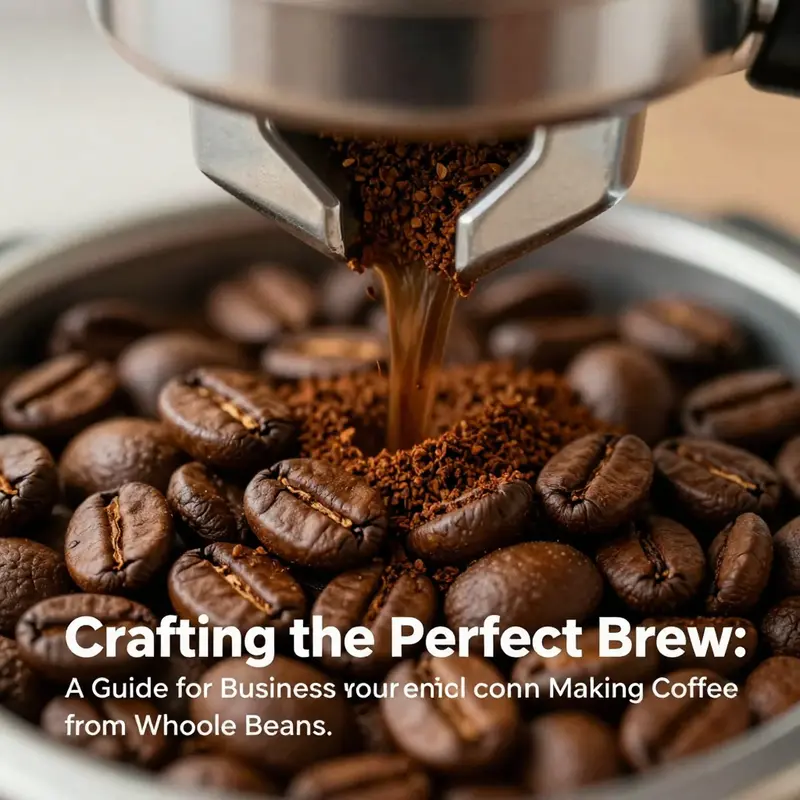
Coffee is more than just a beverage; it’s an experience that can enhance your business environment and elevate customer satisfaction. Understanding how to make coffee from whole beans can set your establishment apart, allowing you to serve a superior product while keeping costs manageable. This guide offers a deep dive into creating coffee using accessible methods for beginners, from making cold brew to other efficient brewing techniques tailored for your business needs. Each chapter will provide valuable insights, easy instructions, and essential tips to ensure your coffee-making process is simple yet rewarding.
Cold Brew Foundations: A Gentle, Budget-Friendly Path to Coffee Bean Mastery

A quiet morning ritual can begin with something as simple as a pitcher, a handful of whole coffee beans, and patience. The path from bean to brew doesn’t have to be complicated or costly. For beginners, cold brew offers a forgiving, low-acid alternative that highlights the natural sweetness and subtle nuances of the beans you choose. It isn’t about chasing perfection in a single shot but about building confidence through a method that respects the bean and rewards curiosity. When you start with whole beans, you take control of flavor from the moment you grind, and you set the stage for a coffee that can be as bold or as delicate as you like. The beauty of this approach is in its accessibility: a simple jar, cold water, and time can yield a compelling, refreshing drink that still carries the essence of the original bean. The steps are straightforward, yet the outcomes invite experimentation, which in turn makes the process part of the joy rather than a chore to be endured.
Choosing the right beans is the first layer of this journey. For cold brew, many enthusiasts gravitate toward medium to dark roasts because their deeper, chocolaty, caramel, and nutty notes tend to shine through the cooler extraction. The cold environment doesn’t pull out harsh, hot-water acids as readily as a hot brew does, which can smooth harsh edges and create a drink that feels lush and rounded. Freshness matters more here than with many hot brews. Beans roasted within the past two months tend to deliver brighter, more defined flavors in the cold brew concentrate. Stale beans, on the other hand, can yield a flat profile that deprives you of the brighter notes and the sense of life you want in a first cup of the day. If you can, grind just before you brew; the moment you release a bean’s aromas is the moment you maximize its potential.
Grind size is the next important decision and perhaps the most practical one for beginners. A coarse grind, roughly the texture of sea salt or coarse sand, ensures the water can move around the grounds without taking too long to extract. A finer grind risks over-extraction in a long cold steep, which can impart bitterness that undermines the smoothness you’re seeking. If your grinder allows for adjustments, aim for a consistent, chunky texture rather than a powdery one. Inconsistent grinds can lead to uneven extraction, leaving parts of the coffee underdeveloped while other parts become overly intense. Precision here pays off with clearer flavor and a cleaner final concentrate.
The core ratio for cold brew is deceptively simple. A common starting point is one part ground coffee to about 1.5 to 2 parts water. In practical terms, that might look like 30 grams of coffee to 450 milliliters of water. If you want a slightly stronger concentrate from the same batch, move toward the 1:1.5 side; for a lighter yield, head toward 2.0. Don’t be afraid to adjust as you go. The beauty of cold brew is that you can marginally alter the strength without redoing the entire process. The idea is to begin with a ratio that feels practical for the amount of concentrate you’d like to store in your refrigerator, and to tweak from there based on taste and how you plan to serve it.
Ground coffee meets water in a simple, patient embrace. Place the grounds in a suitable container—a wide, clean jar, a pitcher, or a dedicated cold-brew vessel works well. The water should be cold or at most room temperature, never hot. Pour evenly so that all grounds become moistened, then give the mixture a gentle stir to ensure no pocket of dry coffee remains at the bottom or along the edges. The stirring step is small but meaningful; it helps saturate every particle, which reduces the risk of uneven flavor and bitter spots.
Now comes the steeps. Cover your container to protect the brew from stray flavors in the fridge and to prevent dust from finding its way in. Place it in the refrigerator or keep it at a cool room temperature for a period typically ranging from 12 to 24 hours. The sweet spot for many beginners sits around 16 hours: long enough to extract sweetness and body, but not so long that the concentrate takes on an overpowering, gritty edge. The exact timing isn’t a rigid law; it’s a dial you can tune. If you leave it too long, a slight bitterness can creep in; if you pull it too soon, the concentrate may taste thin. A consistent schedule—start the same night, bottle or filter the next day—helps you notice how small changes in time impact flavor.
Filtering is where clarity and mouthfeel begin to come together. After steeping, pour the mixture through a fine-mesh sieve lined with a coffee filter, a cheesecloth, or a dedicated cold-brew filter. This two-step approach reduces fines and fine sediment, leaving a smooth, drinkable concentrate. If you’re using a jar with a built-in strainer, you can still run the liquid through a paper filter for extra clarity. The goal is a clean, smooth concentrate that doesn’t feel gritty on the tongue. Proper filtration matters more than most newcomers expect because the texture largely dictates how comfortable the drink feels when you pour it over ice or into a glass with a splash of milk.
Storage is the final practical piece of the cold brew equation. Once filtered, transfer the concentrate to a clean bottle or jar and keep it in the refrigerator. A well-made cold brew concentrate can remain good for up to two weeks, provided it’s kept cold and sealed. The longer you store it, the more the flavor can recede, so many folks plan to drink their concentrate within about a week for peak brightness. When you’re ready to drink, the standard approach is to dilute the concentrate with an equal part of cold water or milk. That 1:1 ratio yields a balanced beverage that respects the original flavor while staying refreshing on warm days or as a pick-me-up during a long afternoon. If you prefer a stronger finish, you can adjust the dilution, remembering that the base will always taste more concentrated than a hot cup because cold brew concentrates feel richer and more viscous than a standard coffee drink.
Beyond the basic method, there’s room to tailor the cold brew to your palate. The beans you choose, the grind you settle on, and the steep time you adopt all contribute to a flavor profile that can run from chocolatey and caramel-filled to bright and fruity. You might discover that a bit more steep time pulls out deeper cocoa notes in a dark roast, while a lighter roast shines when you shorten the steep and increase the water ratio slightly. Some people enjoy adding a pinch of salt to the concentrate to counter bitterness, or a touch of vanilla bean or cinnamon with the final dilution to infuse a whisper of spice. These are small culinary touches rather than drastic changes, and they underscore the flexibility of cold brew as a daily ritual rather than a one-size-fits-all recipe.
As you gain experience, you’ll begin to hear the subtle differences between different beans, roasts, and grind sizes. The process rewards attentive tasting: take note of what happened when you used a finer grind versus a coarser one, or when you let the coffee steep a little longer. The notes you identify—dark chocolate, almond, citrus, berry—become your compass in choosing the next batch. The acts of grinding, steeping, and filtering aren’t simply steps; they’re parts of a sensory dialogue with the beans you select. The more you brew, the more confident you’ll become in selecting beans that align with your preferences, even before you consider experimenting with other methods.
It’s also helpful to remember that cold brew is a flexible starting point that doesn’t demand a large investment. Given that the equipment is basic and the process is forgiving, you can begin with whatever jar you already own, a basic filter, and a source of good beans. The emphasis remains on freshness, proper grind size, and a reliable steep time. The result is a drink that feels smooth, balanced, and refreshing—an excellent foundation for expanding your coffee repertoire. As you experiment, you’ll begin to see how cold brew can coexist with other methods, offering a different lens on the same beans you’re buying. You’ll find that the goal isn’t to master every possible technique at once but to learn the language of coffee through a few well-chosen experiments.
The next layers you explore will naturally expand your options. For instance, if you’re curious about how to approach coffee in an even more budget-conscious way, you’ll discover there are very accessible low-cost methods beyond cold brew. The French Press, for instance, can be a straightforward, economical entry point that produces a bold, full-bodied cup with minimal equipment. A pour-over offers clarity and brightness, while the Moka pot provides a robust, espresso-like experience with a simple stovetop setup. Each method has its own rhythm, its own set of trade-offs, and each can be pursued with the same respect for fresh beans and proper grind size that cold brew begins with. Although these techniques require slightly different workflows, they share a common core: the quality of your coffee starts with the bean and the care you take in preparing it. In this sense, cold brew is not the lone path but a trustworthy, approachable gateway into more nuanced techniques that follow.
The appeal of cold brew also lies in its schedule. It doesn’t demand hot water, precise timing, or high-heat equipment. You mix, you wait, you filter, you store. The ritual becomes a comfortable, repeatable routine, a small ceremony of anticipation that culminates in a glass of coffee that’s already learned your preferences. If you wake up with a craving for something smooth and ready to go, the cold brew concentrate can be measured out and served quickly, which is a practical advantage on busy mornings. If you’re entertaining, a single batch can yield multiple servings, and the dilution can be adjusted for each guest to taste. The lack of pressure—no precise crest of the crema, no temperature-controlled pour, no rapid extraction—can actually be liberating. It invites you to slow down, observe, and savor the tiny shifts in flavor as your palate becomes more attuned to the character of your chosen beans. This mindfulness is, in itself, a kind of practice in kitchen confidence—a gentle form of coffee literacy that you can carry forward into other brewing adventures.
As you settle into this approach, you may begin to notice a natural cadence in your kitchen—beans ground in a few minutes, water added, a long patience in the fridge, and a morning ritual that pays dividends in a drink that’s easy to love. The essential idea is rooted in simplicity: fresh beans, a coarse grind, the right ratio, a steady steep, a clean filtration, and thoughtful storage. This is enough to yield a satisfying cold brew that many people come to rely on as a dependable daily drink. When you’re ready, you can apply the same care to other methods. You’ll see how the same beans behave differently when hot water is involved, how a pour-over reveals brightness you hadn’t noticed, or how a French press brings a heavier body to the surface. The journey from bean to cup is not a single destination but a travelogue of flavors, each stop offering new insights about what you enjoy and how you want your coffee to feel in your mouth and your day.
In this sense, cold brew is more than a technique. It is a practice of restraint and curiosity—an invitation to observe, adjust, and celebrate small victories. You’re learning to read the beans, to respect time, and to recognize when a batch aligns with your taste and when it invites a new trial. The learning curve is gentle, and the payoff is a coffee that remains versatile, forgiving, and deeply satisfying. And because the method aligns with low equipment costs and straightforward steps, it can be a starting point that grows with you. Whether you’re preparing a quiet weekday cup or a larger, social pitcher, cold brew offers a reliable foundation from which your coffee education can spread to other techniques without losing the through-line: respect for the bean, a patient process, and a taste that grows with your practice. The beauty of this approach is that you don’t have to abandon the simplicity that drew you in at the start; instead, you can carry that clarity forward as you explore the broader world of coffee, one bean, one grind, and one steep at a time.
From Beans to Brew: Mastering Fresh Coffee with Minimal Gear and Simple Ritual

A cup of coffee begins long before the first sip, with a choice as simple as it is foundational: the beans themselves. Whole beans, freshly roasted, hold the promise of aroma and flavor that grinds of pre-ground coffee rarely deliver. The journey from bean to cup, when tackled with minimal equipment, becomes less about chasing perfection and more about embracing a small, repeatable ritual. It is the kind of ritual that travels well—into a dorm room, a tiny apartment, or a cluttered kitchen counter—and it rewards patience with clarity of taste, a gentle bitterness that speaks of chemistry rather than commerce, and a warmth that travels through the body before the mind fully registers the day’s first caffeine lift. The central truth is simple: freshness is king. Ground coffee exposed to air loses its vigor quickly; the moment you grind, you begin a countdown to staleness. Knowing this, you learn to grind just before brewing, to measure against a dependable ratio, and to respect the temperature and timing that unlock the coffee’s particular notes. In this chapter, we walk through the core methods that require little more than heat, a sturdy vessel, and a willingness to experiment. The essence of the approach is to keep the process accessible, repeatable, and forgiving enough that you can grow into it without feeling overwhelmed.
The allure of minimal equipment is not about sparing yourself effort; it is about reducing friction so the focus stays on the coffee’s character. You begin with beans you trust, roasted to a level that remains expressive rather than overpowering, and you carry a few ergonomic habits into your routine. Grind just before brewing, and match your grind size to the method you choose. Water matters as a solvent that dissolves coffee compounds in a way that reveals sweetness, acidity, body, and aroma. Temperature, though often overlooked, is a silent partner in flavor. Too hot, and harsh compounds dominate; too cool, and you miss the bloom of volatile aromas and the clarity of distinct flavors. The water you use should be clean and free of off-flavors, which means avoiding overly soft or heavily mineralized sources unless you adjust with your grinding and steeping times. The caffeine content and flavor profile you experience are not merely a function of the beans; they are the result of interaction between grind size, water temperature, brew time, and the surface area of the coffee exposed to the water. With minimal gear, you learn to respect this dialogue rather than fight it with gadgets or complex timers.
The practical core of this approach is a triad: a reliable heat source, a vessel that can function as both brewing chamber and decanter, and a method that provides a clear path from water to cup. The French press stands as the most straightforward embodiment of that triad. It is, in essence, a simple plunger-and-cylinder device that relies on immersion rather than flow-through filtration to extract flavor. In a single, deliberate sequence, you heat water to just below a boil, measure your beans, grind them to a consistency akin to coarse sea salt, and combine them with the hot water in the press. The grounds steep, the aroma rises, and the pressure of the plunger separates liquid from the spent solids with a quiet, reliable press. The grind’s coarseness is critical here: too fine, and you risk over-extraction as the water stalls with the grounds; too coarse, and you miss the full spectrum of flavors. A common starting point is about 1 part coffee to 16 parts water, a ratio that yields a balanced cup with body and clarity. For a practical example, 30 grams of coffee for roughly 480 milliliters of water forms a robust base that remains approachable through the brew’s life cycle. The water temperature around 200 degrees Fahrenheit, just off the boil, invites the proper extraction without scorching delicate notes. The recommended steep time of four minutes is a rhythm you can adjust as you taste. If you like a brighter cup, shorten the brew slightly; if you prefer more fullness, extend the steep a touch. When you press, do so slowly and with steady pressure, letting the grounds release their remainder only as you approach the end. Pour promptly to preserve the aromatic compounds that define the cup’s personality, and pre-warm your mug if possible to keep the heat from escaping too quickly.
Beyond the French press, the manual pour-over represents a refined minimalism that honors the same bean and water relationship but introduces a different kind of control. A simple dripper, a paper or mesh filter, and a mug create a gentle, almost meditative brewing ritual. The process can be as spare as placing a small mesh filter in a mug and adding a teaspoon of ground coffee, steeping briefly, and letting the water pass through with gravity. The mug pour-over method reduces equipment to the essentials and highlights the very first contact between hot water and ground coffee. The trick here is to adapt to the scale of your mug and the possible flow rate of your setup. One practical approach is to start with a familiar, modest amount of coffee—about 10–12 grams for a single cup—and adjust with experience. The grind in this minimal pour-over should be slightly finer than the French press, more akin to the texture of coarse table salt, to allow for an even extraction as the water filters through. The water temperature remains near 200 degrees, and you pour in small, controlled increments, allowing the grounds to bloom briefly as the water saturates them. The bloom—an initial surge of bubbles caused by trapped gases escaping from freshly ground coffee—signals that sufficient CO2 is being released, a sign of freshness and vitality in the bean. A steady drizzle of water, not a heavy pour, guides the flavors out of the bean as you watch a gentle slurry form and slowly drip into the cup. The result is a clean, nuanced cup with a delicate balance of brightness and depth, where the sweetness of the roast holds its own against the acidity that can sing when coffee is fresh and properly ground.
In calmer circumstances, the cowboy coffee method might feel almost ritualistic in its simplicity. It is the image of coffee-making without gear—a boiling pot or kettle, coarsely ground coffee, and a makeshift filter such as a cloth or fine sieve. The method suits situations where gear is scarce more than it does the average kitchen, yet it delivers a robust, straightforward cup that encourages patience and careful pouring. The process is a reminder that utility can trump precision, especially when constraints demand resilience. You boil water, drop in a measured amount of coffee, let it steep briefly, and then strain or ladle the brew into a mug, careful to leave the grounds behind. The flavor tends to be deeper and less nuanced than the more refined methods, but for a morning when you crave warmth over polish, it is a dependable ally. The lesson here is not to pursue perfection with this approach but to embrace a pragmatic realism: even with limited resources, you can coax a meaningful cup from quality beans when you treat the process with respect.
If you are drawn to speed and efficiency, you might wonder whether cold brewing offers a viable alternative within the same minimal framework. Cold brew, once set up, asks for patience more than precision. It uses a coarse grind and a long extraction in cool water, typically requiring twelve to twenty-four hours, depending on taste. Its strength lies in its forgiving nature and the smooth, low-acidity profile it produces, which makes it particularly accessible to new coffee drinkers or those sensitive to the sharp bite of hot-brewed coffees. The essential idea is to grind the beans and steep them in cold water, then strain the mixture to separate the grounds from the concentrate. When you’re ready to drink, you dilute the concentrate with water or milk to taste. The minimal equipment here can be as simple as a jar or container with a lid, a fine sieve or cloth, and a dedicated pitcher for serving. Cold brew can be a friend to beginners because it reduces the risk of over-extraction that comes with high heat and short brew times. It introduces a different cadence to the day: a longer anticipation that culminates in a smooth, cool, and distinctly less acidic cup. While it may require extra planning, the equipment footprint remains deliberately small, and the payoff is a clean, versatile base that can be reheated or mixed into beverages throughout the day.
These methods share a single, guiding principle: fresh beans ground just before brewing are where flavor begins. The act of grinding releases the bean’s essential oils and aromatics, which begin to dissipate the moment air touches the grounds. That is why your grinder’s proximity to the kettle matters. A compact, hand-cranked grinder or a small electric grinder sits on the counter, ready to transform whole beans into a meal-scented powder that invites a conversation with your senses. The grind size must be tuned to the chosen method, which is not merely about texture but about the interaction between the coffee’s surface area and the water’s capacity to dissolve flavor compounds. A coarse grind reduces the surface area and slows extraction, which can lead to a fuller-bodied brew in methods like the French press. A slightly finer grind facilitates a quicker extraction and a cleaner cup in pour-over or mug-based methods. The key is to adjust gradually and taste along the way, letting your palate become your guide. You will inevitably discover that your favorite method changes with mood, season, and even the beans you choose. This is not a sign of inconsistency; it is a natural interaction between your preferences and the coffee’s evolving flavor notes as it meets water.
The choice of bean matters as well. Lighter roasts often reveal brighter acidity and more intricate fruit-like notes, while medium roasts tend to balance acidity with sweetness and a satisfying body. Dark roasts, though they can taste robust and bold, risk muting some of the nuanced flavors that beans can show when heated too aggressively. The guidance here is to select a roast level that complements the method you prefer. For the French press, a medium to medium-dark roast can offer depth without overwhelming the palate, preserving the sweetness and maintaining clarity in the cup. For a mug pour-over, a lighter to medium roast can emphasize the aroma and brightness, allowing the nuanced flavors to come forward without the roast masking them. For cold brew, a medium roast often works well, delivering a smooth cup with enough character to keep interest without the sharp bite of acidity that hotter preparations can spotlight. Regardless of the roast, the freshness of the grind remains the most critical factor. If you can, purchase beans in small quantities more frequently, so you grind and brew while the aroma is at its peak. The sensory experience—the scent of the beans as you crack the seal, the way the grinder sounds as it works, the way you can almost taste the future cup as you measure—becomes part of the ritual that makes coffee with whole beans feel more like a craft than a chore.
In practice, the workflow for minimal equipment is about rhythm and readiness. Before you begin, heat your water to the desired temperature, whether you are aiming for the precise 200°F for a French press or the more forgiving range appropriate for a simple mug pour-over. While the water heats, grind your beans. A small, clean scale proves invaluable here, letting you measure with precision and avoid guessing. The scale helps you maintain a consistent ratio, which is essential when you are experimenting with different methods. The moment you grind, the aromatic oils begin their brief ascent into the air; you want to capture as much of that aroma as possible by brewing soon after grinding. After the grounds meet the water, give them a gentle stir if the method allows for it. This step helps ensure even extraction and reduces the risk of uneven flavors appearing in your cup. Then, set a timer that matches the method’s needs. Four minutes for a classic French press is a reliable baseline; for pour-over, you might aim for a predictable drip rate that yields an evenly extracted cup. In the mug pour-over, you manage the pour rate to sustain a consistent flow. For cowboy coffee, timing is flexible, but a brief rest before decanting can help settle the grounds and produce a cleaner sip. The act of pouring itself is a moment of attention where you notice how the color changes, how the aroma develops, and how the flavor shifts as the cup cools slightly. The simplest path to a satisfying brew is to keep the routine consistent, learn from each cup, and gradually introduce small changes—perhaps a slightly finer grind, a touch cooler water, or a few more seconds to let the grounds mingle with the water—until you hear your palate whisper that you have found your own sweet spot.
As you gain confidence, you may notice the understated elegance of the minimalist approach. You do not accumulate a mosaic of gadgets; you accumulate a dependable practice. Your kitchen becomes a laboratory of flavor where each cup teaches you something about balance, time, and the role of air and heat in shaping taste. The beauty of minimal equipment is not the absence of gear, but the clarity of your focus: you are not chasing a perfect machine; you are cultivating a precise relationship with your ingredients and your environment. In this light, even the simplest setup can yield a coffee that feels special, a daily moment that you can savor with intention rather than rush through. The practice invites you to slow down just enough to listen to the grounds crackle as they meet hot water, to watch the bloom rise and fall, to smell the coffee’s evolving bouquet, and to taste with curiosity. When you approach coffee this way, you begin to realize that the most satisfying cup is often the one you brew with patience and a quiet respect for the bean’s possibilities. The path from bean to brew becomes less about chasing a flawless result and more about honoring a process that keeps you connected to the beans you chose, the water you heated, and the time you allowed for extraction. In that sense, minimal equipment becomes a mentor rather than a constraint, guiding you to a simpler yet deeper relationship with coffee.
In closing, the journey from whole beans to a daily cup is not a race but a conversation. The equipment you own is a reflection of your priorities: simplicity, reliability, and accessibility. The methods you choose—French press for a robust, rounded cup; mug pour-over for a clean, nuanced sip; cowboy coffee for rugged practicality; or cold brew for a smooth, forgiving experience—each offers a distinct lens on your beans. The most important tests are your taste tests: does the cup feel balanced, does it carry the aroma you expected, and does it leave you sensing the bean’s story rather than a generic coffee flavor? The answers come with practice, not purchase. And as you grow more comfortable, you’ll discover that the joy of making coffee from whole beans—without a tower of gadgets—rests in your ability to listen to the coffee’s voice and respond with a measured, mindful approach. For those who want to deepen their understanding beyond practice, a well-crafted guide to home brewing can offer step-by-step pathways and nuanced insights into technique, water chemistry, and grind optimization. These resources can illuminate the science behind flavor while remaining faithful to the intimate, kitchen-table experience that minimal equipment invites. If you ever feel unsure, remember this: start with fresh beans, grind just before brewing, choose a method that matches your pace, and brew with intention. In that combination lies the quiet craft of turning simple ingredients into a daily ritual worth savoring.
External resource for further reading: https://www.baristahustle.com/guide/how-to-brew-coffee-at-home/
From Bean to Brew: Essential Rules for Brewing Delicious Coffee at Home
Mastering the essentials — from beans to brew
Great coffee begins before water touches grounds. The single biggest lever you control is the bean. Fresh, well-sourced whole beans deliver aromas and flavors that pre-ground coffee cannot match. Look for roast dates on packaging and aim to use beans within three weeks of roast for best results. When you buy, favor smaller bags that you can consume in two to three weeks. Store beans in an airtight container at room temperature, away from sunlight and heat. Avoid the fridge or freezer for daily-use beans; humidity and odor transfer can dull flavor.
Grinding immediately before brewing preserves volatile oils and aromas. When beans sit ground, they lose fragrance and complexity quickly. A consistent particle size is essential for even extraction, and that consistency comes from a burr grinder. If you must use a blade grinder, pulse gently and accept that extraction will be less predictable. Match your grind to the method: coarse like sea salt for immersion methods, medium for many drip and pour-over brewers, and fine for high-pressure techniques. Adjust one step finer to increase extraction and one step coarser to decrease it.
Weighing both coffee and water moves brewing from guesswork to repeatable results. Start with a sensible range and tune to taste. For a simple guideline, use a ratio between 1:15 and 1:17 (coffee to water by weight). For example, 20 grams of coffee with 300 grams of water yields a balanced cup at roughly 1:15. For stronger coffee, move toward 1:13; for lighter, toward 1:18. If you prefer tablespoons, a general starting point is 1 to 2 tablespoons of ground coffee per 6-ounce serving, but scales are far more accurate.
Water quality and temperature influence extraction dramatically. Coffee is mostly water, so use clean, filtered water free of chlorine and strong mineral tastes. Avoid distilled water; it lacks minerals that help draw flavor from the beans. Heat water to between 195°F and 205°F (90°C to 96°C). Boiling water will briefly exceed this range; let it rest 30 seconds after boiling before pouring. Water too hot extracts bitter compounds. Water too cool leaves the cup flat and sour.
A few procedural details make a big difference. Rinse paper filters with hot water before brewing to remove any paper taste. This also warms your brewer or carafe. Preheat the vessel that will hold your coffee; a cold carafe cools extraction and wastes aroma. When using filter methods, use a gentle, steady pour and aim for even saturation. If grounds clump, stir gently or adjust your grind finer; clumping causes uneven extraction.
Recognize under-extraction and over-extraction quickly so you can correct them. If your coffee tastes sour, bright but thin, you are likely under-extracting. Common causes include too coarse a grind, too low a water temperature, too little brew time, or too little coffee. Fix it by grinding slightly finer, raising water temperature within the safe range, or increasing brew time. If the coffee tastes overly bitter or harsh, you are probably over-extracting. Common culprits are too fine a grind, water that is too hot, or a brew time that is too long. Coarsen the grind, reduce temperature slightly, or shorten the brew time.
Match technique to your tool and treat each method as a living process you can tune. For immersion methods, like the French press, use a coarse grind to limit sediment and bitterness. A typical French press brew uses a 1:12 to 1:15 ratio and a four-minute steep. Press slowly and steadily. Pour immediately into a serving vessel to stop extraction. With pour-over methods, grind medium-fine and use a 1:15 to 1:17 ratio. Start with a 30-second bloom: pour a small amount of water to saturate grounds and let trapped carbon dioxide escape. Then continue pouring in slow, concentric circles to keep the bed level and extraction even. For automatic drip machines, use medium grind and clean the machine regularly. Mineral buildup and trapped oils reduce clarity and flavor, so descale as needed and clean the brew basket and carafe.
Cold brew deserves special mention as a friendly method for beginners. It requires minimal equipment and produces a smooth, low-acidity drink. Use a coarse grind and steep grounds in cool, filtered water for 12 to 18 hours. For ready-to-drink cold brew, try a ratio near 1:8 coffee to water by weight. For a concentrate that you can dilute later, use a stronger ratio near 1:4 to 1:6. After steeping, strain the grounds through a fine mesh or cheesecloth, and refrigerate the finished coffee for up to a week. The long, cool extraction draws many flavor compounds while avoiding much of the acidity and bitterness that hot brewing can emphasize.
Small details in equipment and workflow compound into better results. Use a burr grinder to greatly improve consistency. A simple kitchen scale reduces variability more than any other inexpensive upgrade. A gooseneck kettle gives better control of pour speed and placement for pour-over methods, though any kettle can work if you pour steadily. Keep your tools clean. Coffee oils build up quickly on filters, carafes, and machines. Rinse and wash with warm water and mild detergent. Periodic deep cleaning of grinders and machines prevents stale flavors.
Tasting and adjusting is the practical heart of getting better. Taste with intent. Take the first sip to notice overall balance across sweetness, acidity, and bitterness. Then consider texture and aftertaste. If it feels thin and acidic, you need more extraction or a finer grind. If it is heavy and bitter, reduce extraction. Small tweaks produce noticeable changes. Change only one variable at a time: grind size, water temperature, brew time, or ratio. That way you can tell which adjustment improved the cup.
Roast level plays a strong role in how you should brew. Avoid the darkest burnt roasts if you want nuanced flavor. Lighter and medium roasts retain more origin character—fruit, floral, or nutty notes. They also benefit from slightly higher brewing temperatures and a careful pour to fully extract their delicate flavors. Dark roasts emphasize roast-derived notes and often mask origin complexity. If you prefer dark roasts, slightly coarser grinds and lower temperatures can reduce harshness.
Pay attention to dose and yield. For methods where the final liquid is measured, like pour-over, record the wet weight of coffee you produce. For example, if you start with 20 grams of coffee and 300 grams of water, your final brewed coffee weight will be less than the water poured because grounds retain liquid. If your yield varies, adjust the amount of water you pour, not just the grind or time. For immersion methods, drain or decant coffee promptly to stop further extraction.
Grind retention matters for consistency, especially with small doses. Many grinders hold a small amount of grounds in the chute, which can become stale and affect flavor. Flush a few grams through before you grind for a fresh dose. When switching beans, clean the grinder components or grind a bit of the new bean and discard it to avoid blending flavors.
When experimenting, keep notes. Jot down bean origin, roast date, grind setting, coffee weight, water weight, temperature, brew time, and your tasting notes. After a few sessions you will discover patterns. You will see which beans respond to higher temperatures, which grind sizes highlight fruit versus chocolate notes, and which ratios deliver the balance you prefer.
Time and patience reward you. Allow yourself to taste and learn without chasing perfection. Coffee is forgiving. A small change can transform a cup. Make incremental adjustments and sample the outcomes. Invite friends to taste with you. Sharing impressions can uncover details you might miss alone.
If you want a low-cost, effective starter setup, focus on these essentials: whole beans, a burr grinder, a basic scale, a kettle, and a simple brewer like a French press or a pour-over cone. This kit covers most needs and keeps costs reasonable. You can upgrade over time as your taste and budget evolve.
Finally, build a simple troubleshooting checklist to consult when a brew goes off. If the cup is sour, check grind size, temperature, and brew time, and confirm the beans are fresh. If it tastes flat or watery, increase dose or grind finer. If it is bitter, coarsen the grind and shorten extraction. If it tastes stale or cardboard-like, check water quality and cleanliness of equipment, and ensure beans have not been exposed to oxygen or moisture. These checks will quickly lead you to the right correction.
With a clear focus on fresh beans, a recent roast date, grinding immediately before brewing, correct ratios, good water, and brewing technique tuned to your method, you will consistently brew satisfying coffee at home. Start with cold brew if you want the simplest path to a pleasing cup. When you are ready, move to pour-over or French press and apply the same principles. Make small, deliberate changes and take notes. Above all, enjoy the process of discovery. Coffee is as much about the ritual as the result. Treat each brew as an experiment, and you will steadily improve.
For a deeper look at how brewing variables affect extraction and flavor, consult this resource: https://www.seriouseats.com/the-science-of-coffee-brewing-techniques-and-variables-10028532
Final thoughts
Mastering the art of coffee brewing can significantly enhance your business’s appeal and customer loyalty. By focusing on simple yet effective brewing methods that utilize whole beans, you can serve high-quality coffee that keeps customers coming back for more. The key takeaways from this guide include embracing cold brew for its simplicity, using minimal yet effective brewing equipment, and always prioritizing fresh ingredients. With these steps, you can create a delightful coffee experience that elevates your business offerings and fosters a sense of community around quality coffee.