

Understanding the origins of coffee beans is crucial for business owners aiming to offer quality products. Coffee, cultivated from the seeds of the coffee plant, first took root in Ethiopia, a country that continues to influence the coffee market today. As coffee becomes a global phenomenon, each region cultivates its own distinct flavors, shaped by local conditions and traditions. This article will explore the journey of coffee beans from their Ethiopian roots, through the vibrant flavors of Africa, and across Latin America, eventually touching upon their global dispersion, allowing business owners to grasp the importance of origin in quality differentiation.
From Ethiopia’s Forest Cradle to the World’s Roasts: Tracing the Birthplace and Global Journey of Coffee Beans
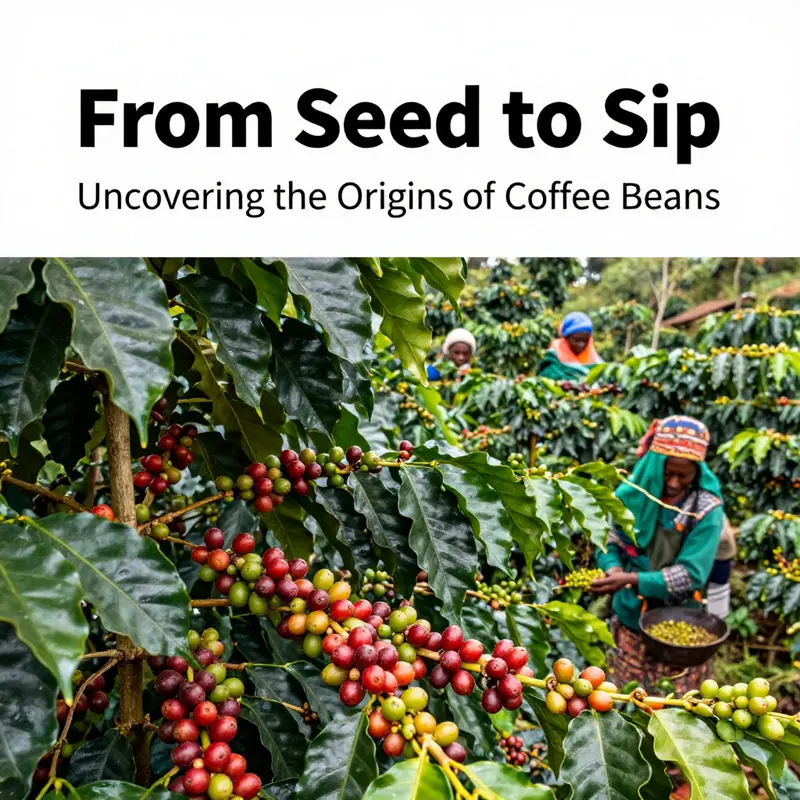
Long before the modern cafe culture transformed coffee into a global language of connection, people in the highland forests of Ethiopia were discovering a plant whose berries would become one of the world’s most influential crops. The wild origins of Coffea arabica are believed to lie in the southern Ethiopian highlands, where dense woodlands shelter a mosaic of plant life and microclimates that shaped the early character of the beans we now chase in roasteries and tasting notes. In these ancient forests, the coffee plant likely grew among other flora, adapting to shade and moisture in ways that would later become hallmarks of quality in the hands of careful growers. The earliest stories of coffee drinking in this region were less about industrial supply chains and more about the daily rhythms of communities that found ritual, ritualized warmth, and social cohesion in the simple act of sharing a hot beverage. The discovery itself reads like a narrative of human curiosity crossing paths with plant biology: berries ripe with seeds, a bitter-sweet taste, and a cultivation knowledge passed from generation to generation. This cradle of coffee is not just a tale of origin; it is a story about biodiversity, culture, and the intimate relationship between people and the land that feeds them. It is within these southern highlands that the first cultivars took shape, not in the commodified sense of today but through selective preference guided by taste, aroma, and resilience against climate variation. The region’s biodiversity—its varied heirloom varieties, each with a slightly different genetic makeup—offers a spectrum of flavors that roasters today still pursue as a passport to terroir. In the foreground of this story, Yirgacheffe and Sidama emerge as symbolic landscapes where high altitude, mist, and fertile soils conspire to yield beans with floral brightness, citrus lift, and a tea-like clarity that many tasters find intoxicating. The beans from these areas often carry a footprint of the seasons, the microclimate, and the way farmers nurture the land with traditional knowledge. They are cherished not only for their distinctive sensory profiles but also for the way their cultivation reveals a system of smallholder farming that has endured across decades and, in many places, centuries. The practice of shade-grown cultivation, which allows coffee trees to thrive under a canopy of trees rather than in sun-baked rows, has far-reaching implications beyond flavor. Shade-grown coffee tends to preserve soil health, maintain biodiversity, and provide habitat for wildlife, creating a more sustainable farming system. It is a method closely tied to community livelihoods, since many Ethiopian farmers connect land stewardship with family and village economies. And within this framework, the social fabric of farming is intimately linked to the sensory outcomes celebrated by cuppers worldwide. The coffee ceremony, a social ritual embedded in Ethiopian culture, epitomizes the idea that coffee is not merely a commodity but a social practice deeply rooted in hospitality, storytelling, and shared experience. The ceremony emphasizes patience, careful preparation, and the deliberate pace of gathering, all of which mirror the agricultural process that begins in the field and culminates in the cup. In modern markets, Ethiopia occupies a special place, not only as a source of exceptional beans but as a symbol of authenticity in origin. The country’s emphasis on preserving indigenous genetics and heirloom varieties fosters a sense of continuity with the past while reinforcing the idea that origin matters for flavor, aroma, and aroma memory. For a business seeking to source high-quality beans, Ethiopia offers more than extraordinary sensory profiles. It presents opportunities to form ethical partnerships that support rural communities through transparent supply chains and direct relationships with farmers. Traceability, from field to bag, is a focal point of premium sourcing, and it is here that a buyer can align taste with responsibility, ensuring that the people who nurture the beans receive fair compensation and that environmental stewardship remains central to the production system. Yet the Ethiopan story does not exist in isolation. The global map of coffee today looks very different from the forested cradle where the journey began. If the tale begins in Africa, it travels through a network of ecosystems and economies that have created a realm of diverse flavor profiles and production practices. Africa remains a stronghold of vibrant, fruit-forward cups, with Ethiopia and Kenya often cited for their distinctive profiles. In the wider African context, the Rift Valley and surrounding highlands continue to influence the terroir of many beans, while the broader region’s soils and microclimates contribute to a spectrum of acidity, brightness, and depth. In Latin America, the narrative shifts toward balance, clarity, and sweetness, a reflection of different soil types, altitude ranges, and processing traditions. Brazil, as the largest producer, presents nutty, chocolatey, and low-acidity beans that form the backbone of many everyday brews. Colombia is celebrated for smooth, medium-bodied coffees with a harmonious reconciliation of sweetness and acidity, a result of consistent climate conditions and careful processing techniques. Across Asia and the Pacific, flavor tends to lean toward earthiness, spice, and fuller body, with Sumatra’s distinctive earthy and herbal notes standing out as a defining example, while exceptional microregions in places like Hawaii have produced refined cups with a pronounced delicacy and sweetness. The global supply chain thus preserves a lineage that starts in the forests of Ethiopia but rapidly becomes a mosaic of regional identities. This is not to erase the central truth that origin shapes flavor; rather, it is to acknowledge that the journey of the bean is a tale of adaptation, exchange, and ongoing refinement of cultivation and processing methods that respond to land, climate, and market demands. The beans that eventually reach roasters and drinkers around the world are the products of complex interactions between genetics, environment, and human stewardship. A single bean may carry within it the memory of the altitude at which it grew, the rainfall patterns that fed it, and the shade that sheltered it during the months of development. It may also bear the imprint of a community’s daily rhythms—the early morning routines of farmers who tend the plots, the careful attention to soil health, and the patient patience required for labor-intensive processing. The Ethiopian model of smallholder farming, with its emphasis on community collaboration and shared infrastructure, provides a different blueprint for success compared with factory-style mass production. In Ethiopia, many farmers work plots that are a small part of a larger mosaic, often cultivating a mosaic of varieties that are adapted to microclimates in specific locales. This diversity can be a challenge for uniformity, but it is precisely this mosaic that yields a richer palette of flavors for global markets. The regional emphasis on heirloom varieties contributes to the sense of place that roasters seek when designing single-origin offerings. Roasters often pursue beans that reflect the particular micro-regions from which they originate, because those tiny differences in cultivar selection, soil chemistry, altitude, and harvest timing produce nuanced cups. The negotiation between tradition and modern demand is evident in how Ethiopian coffee is processed. Traditional washing, natural processing, or other local methods can reveal different aspects of the same bean, from bright fruitiness and tea-like aromatics to deeper, wine-like notes. The choice of processing method becomes another form of terroir, shaping the final cup in ways as influential as the soil or climate. This dynamic is not purely academic. For buyers and baristas, it matters in practical terms: it guides decisions about how to roast, how to blend, and how to showcase the bean’s heritage. The social and economic fabric surrounding Ethiopian coffee is equally consequential. Smallholder farmers, cooperative unions, and buying stations together create a robust infrastructure that makes traceability possible and profitable. Direct trade and long-term partnerships can transform a farmer’s life, enabling reinvestment in soil health, education, and community development. In this way, Ethiopian origin is not simply a flavor profile on a tasting note; it is a narrative about responsibility, equity, and a sustainable path from field to cup. The broader global appetite for ethically sourced, high-impact coffee has elevated Ethiopia as a reference point for premium and specialty markets. Buyers increasingly seek not only sensory excellence but also transparent procurement practices that ensure fair compensation for farmers and investment in sustainable farming methods. The convergence of flavor and ethics is gradually reshaping how coffee is grown, traded, and experienced. As the beans travel from Ethiopian farms to processing centers, exporters, importers, roasters, and ultimately cafés, the story widens into a global conversation about quality, sustainability, and cultural preservation. The emphasis on preserving indigenous genetics and promoting traceability reinforces the idea that origin matters. It is not simply a matter of where the bean comes from but how the people who care for it are treated, how the land is stewarded, and how the chain of custody remains accountable to the communities involved. Looking beyond Ethiopia, the map of coffee production reveals the enormous reach of the crop. Brazil’s vast plantations produce consistent, comforting flavors that many consumers recognize as a reliable baseline. Colombia’s steady, balanced profiles offer a counterpoint to Brazil’s fuller, more chocolatey notes, enriching the global tapestry. Indonesia’s Sumatra presents an entirely different texture, with heavy body and earthy, herbal resonances that anchor the spectrum in the earthy end of the scale. Vietnam has emerged as a major producer with a focus on robust, efficient production that nonetheless yields beans with nuanced character when properly processed. Hawaii’s Kona demonstrates that even within a vast ecosystem of producers, there exist pockets of artisanal excellence that challenge linear expectations of flavor. The overall picture is not a simple ladder from origin to consumer, but a web of interconnections where climate, altitude, soil chemistry, and microclimates combine with processing, packaging, and transport logistics to shape each cup. In this light, the origin of coffee beans—especially in Ethiopia—becomes a story about more than flavor alone. It is a story about people, ecosystems, and a global market that increasingly respects accountability and sustainability as essential dimensions of quality. For businesses, this means designing supply chains that honor the land and the hands that nurture it. It means recognizing that the best beans do not merely travel; they travel with stories. They move through networks that value direct relationships with farmers, cooperative governance, and transparent sourcing data. They travel through communities that invest in education, soil health, and climate resilience. And they travel toward roasters and baristas who understand that a cup of coffee can carry meanings beyond taste—meanings about place, care, and the shared future of a global coffee culture. The journey from a forest in southern Ethiopia to a bustling café in a distant city is a reminder that coffee is not an abstract commodity but a living conversation between land and palate, between ancestors and modern consumers, between local livelihoods and global tastes. As this chapter unfolds, the reader is invited to consider not only where coffee beans come from but how a single bean can carry with it a whole ecosystem of ideas—about biodiversity, craft, ethics, and the enduring human desire to connect through a shared, restorative ritual. The origin narrative is, at its core, a map of relationships: to land, to people, to markets, and to the future we want to build around this venerable plant. For those who wish to explore further, the Ethiopian coffee story remains a touchstone of sustainability and cultural preservation in global coffee discourse. External resources that detail Ethiopia’s role in sustainable coffee production offer deeper context on the practices that help keep the land healthy and the farmers resilient over time. https://www.coffee.org/what-we-do/sustainability/ethiopia-coffee
From Ethiopian Highlands to Global Cups: The African Roots and Flavor Maps of Coffee Beans
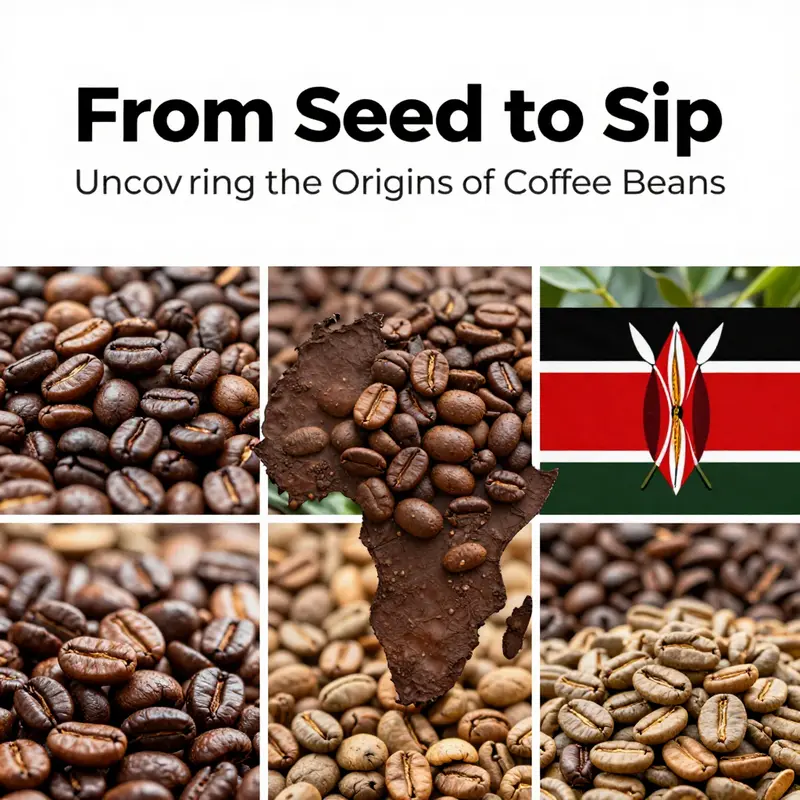
Across the vast and varied landscapes of Africa, the story of coffee moves from a whispered legend in shaded valleys to the global ritual of morning and afternoon alike. To understand where coffee beans come from is to trace a path that begins in the highlands of Ethiopia, where the plant that would become a worldwide commodity first took root in wild and cultivated forms. It is a narrative braided with climate, soil, altitude, and the patient labor of generations who have learned to read the land through the plant’s growth cycles, its cherries turning from green to bright red as a cue to harvest, and its aroma rising like a memory of forests once swept by monsoon winds. In this arc, Africa is not merely a source region but a dynamic laboratory where flavor is engineered by ancient tradition and modern craft alike. The birthplace of coffee, most scholars agree, lies in Ethiopia, a country whose name has become almost a synonym for the plant’s origin story. The Ethiopian highlands cradle a wild population of Coffea arabica that long survived as a forest legacy, a living library of flavors carried in the trees and in the air between the trees. The earliest coffee forests fed a local culture that would one day export a global curiosity, but even before it traveled beyond village fences, this land had already begun to shape what coffee could be: bright, often floral aromas; acidity that can feel like citrus zest upon the tongue; and a nuanced sweetness that arises when fruit and sun are allowed to mingle with the bean’s inherent sweetness. The “birthplace of coffee” label is both geographic and cultural, a reminder that place matters when a seed grows into a global commodity. Yet Ethiopia is not the entire African chapter; it is the prologue in a larger continent’s ongoing dialogue with the bean. The coffee trade spread through East Africa and down into the African Great Lakes region, where the soil carries a different memory, where altitude rises in long terraces, and where processing choices—how the cherry is dried, fermented, or washed—pull distinct voices from the same plant. In Kenya, Rwanda, and Tanzania, the landscape speaks in high-pitched brightness, tartness that carries notes of red fruit and a certain wine-like sharpness. In Ethiopia itself, the ranges of Yirgacheffe, Sidama, Harrar, and others show how microclimates yield an almost kaleidoscopic set of profiles. In Yirgacheffe, the altitude and the coastal breeze combine to give a cup that can feel like a bouquet—floral notes, citrus brightness, a clean finish. In Sidama, the heavier rainfall and slightly more forgiving soils can deliver a body that lingers pleasantly, while maintaining crisp acidity and a complex fruit character. Harrar, in the east, is often associated with more intense fruit and sometimes a hint of wine-like vigor, the cherries sun-dried to deepen sweetness and concentrate flavors. The range within Ethiopia alone suggests that Africa, as a whole, provides not a single characteristic but a spectrum, a map of flavors that roams as freely as the birds that migrate across the Rift Valley. In neighboring East African countries, the story continues with Kenya, whose coffee is celebrated for its bright acidity, a lively, sometimes peppery bite, and flavors that recall red currants, blackberries, or green apple. The Kenyan profile often emerges most clearly in washed coffees, where meticulous processing and precise water management reveal the fruit’s sharp character and the bean’s clean aftertaste. The stony soils of the central and eastern regions, plus the high altitude and equatorial sunlight, combine to produce coffees with a crispness that can feel almost mineral in its clarity. Rwanda and Burundi add another layer to the East African picture: perhaps a silkier texture, a balanced acidity, and a fruit-forward sweetness that can recall delicate cherry or apricot, an impression that sits gently on the palate rather than shouting it out. Yet the African map of flavor is not limited to East Africa or to the Ethiopian highlands. West and Central Africa present a counterpoint to the East with coffees that speak of depth and earthiness, sometimes accompanied by herbal notes, cocoa-like undertones, and a sense of anchorage that comes from richer, sometimes denser soil profiles. In some of these regions, natural or semi-washed processing methods can lift fruit-forward flavors from the beans while building a sweetness that seems almost caramelized, offering a contrast to the sometimes forest-like brightness of East African lots. The cultural dimension of African coffee is inseparable from its agronomic roots. The methods of cultivation and processing are not mere technical steps; they are living practices shaped by climate, community, and market realities. In many parts of the continent, smallholder farmers plant varieties that have existed for generations, then select new genetic forms with careful hands, balancing yield with cup quality. The result is a lineage of beans that can be traced to a village or a cooperative, a lineage that roasts and pours into a cup much as it was grown—slowly, thoughtfully, and with a sense of place. It is impossible to separate origin from flavor in Africa without acknowledging processing, which is the most intimate dialogue between bean and environment. In Africa, as in many other coffee regions, the choice between washed and natural processing can transform the cup. Washed coffees tend to emphasize clarity, a cleaner acidity, and a more defined fruit character that stands up to the bright, sometimes citrusy notes that East African beans often present. The natural or dry process, by contrast, fosters fruity sweetness and body, often yielding winesy or berry-forward profiles that feel round and lush. This divergence is particularly pronounced in Ethiopia, where farmers and cooperatives experiment with both methods, watching how the same varietal can produce a very different sensory memory when the cherry skins are left to dry in the sun versus when they are washed and fermented before drying. The producer communities in Africa have learned to harness microclimates—slight shifts in altitude, the direction of prevailing winds, or the mineral content of the soil—to coax specific flavors from their crops. In the best cases, the result is a bean that carries the memory of a landscape into the cup: the puff of eucalyptus in a highland breeze, the scent of citrus carried on a primrose morning, the softness of red fruit after a rainstorm. The flavor profiles thus become a map rather than a set of fixed notes: a memory of place that roars in some cups and whispers in others. This is part of Africa’s enduring contribution to the world of coffee. The continent has always been a laboratory for excellence, a place where careful observance of nature and patient cultivation yield a product that roasts bring to life in new ways for countless palates. Ethiopian beans have become a touchstone in specialty circles because they offer credible windows into the range of possibilities that coffee can realize when grown with a strong sense of terroir and processed with respect for the bean’s potential. But it would be a mistake to view Africa as simply a source of bright, floral cups or as a single source of novelty varieties. Africa contributes a disciplined premium to the global coffee conversation: the insistence on traceability, the value placed on soil health, the respect for farm-to-roaster relationships, and the willingness to bet on smallholders who demonstrate a consistent pursuit of quality. Consumers around the world are increasingly aware of the social and environmental dimensions of coffee farming in Africa, recognizing that the beans carrying Africa’s signature complex acidity and vibrant fruit are not just flavors but stories—stories of land, labor, and community that make the experience meaningful as well as pleasurable. If we move beyond the well-known Ethiopian and East African profiles, we also encounter the more earth-toned, woodsy, and sometimes spicy notes that emerge from certain Central and West African regions where soils are richer and the microclimates can create slower maturation. There, coffees may reveal deeper cacao-like tones, hints of clove or cardamom, or a nutty sweetness that sits under a longer, more meditative finish. The global market’s demand for African coffees is not just about variety; it reflects a hunger for authenticity, for beans that carry the imprint of the land in which they were nurtured and harvested. Roasters and baristas have learned to work with this integrity, to celebrate the way a specific lot can evolve from green bean to cup, and to tell the story of each origin in a language of aroma and taste. In this light, Africa’s role in the story of coffee becomes a bridge between ancient forest heritage and contemporary craft. The same hands that guarded coffee’s early days continue to steward the crop today, adjusting shade networks, irrigation where needed, and harvest calendars to optimize quality rather than volume alone. This balance—between tradition and experimentation—explains why African coffees have become sought after by those who prize nuance and resilience in a cup. As the global palate grows more sophisticated, the African origin question—where coffee beans come from—transforms into an ongoing exploration of how climate, culture, and care together shape what arrives in the cup. Ethiopia remains a touchstone, not only a country but a symbol of origin’s importance in coffee’s identity. Yet the broader African continent offers a living gallery of flavors: the bright, orchard-like profiles of East Africa, the deeper, earthier notes from other regions, and the countless micro-lots that whisper their own stories in the hands of roasters who seek to honor the land before the bean ever meets the flame. The chapter of Africa’s coffee narrative is ongoing. Each harvest adds a new texture to the map, inviting drinkers to trace a line from the leaf and cherry to the arcuate arc of aroma and finally to the lingering aftertaste that lingers on the tongue. It is a reminder that origin matters not only to what we taste but to how we value the people who cultivate the beans and the communities that hold the ecosystem together. The global appreciation for African coffees, with their inherent complexity and their capacity to surprise, is an expression of a broader shift in how we think about food and drink: not as a simple product to be consumed, but as a cultural artifact to be understood, shared, and celebrated. For anyone who pauses to follow the seeds from soil to cup, the African origin of coffee is a delicate, instructive, and delicious reminder that the world’s most beloved beverage can also be a map of human care and ecological stewardship. As research and practice continue to evolve, and as consumers increasingly demand transparency and fairness, Africa’s coffee story will remain a central thread in the tapestry of global coffee culture. It is a story that invites curiosity, patience, and a willingness to savor nuance—the traits that have kept coffee a partner to human ritual from the mountains of Ethiopia to the far corners of the world. For those who want to dig deeper into the origins and flavor profiles of African coffees, the Specialty Coffee Association’s resources offer a trusted lens on how these beans are grown, processed, and celebrated within the wider coffee ecosystem. External readers may consult foundational literature and updated profiles through its official channels. For a broader, authoritative overview of origins and flavor profiles, see https://www.sca-cafe.org.
From Volcanic Slopes to Island Estates: How Latin America and the World Shape Coffee Bean Origins
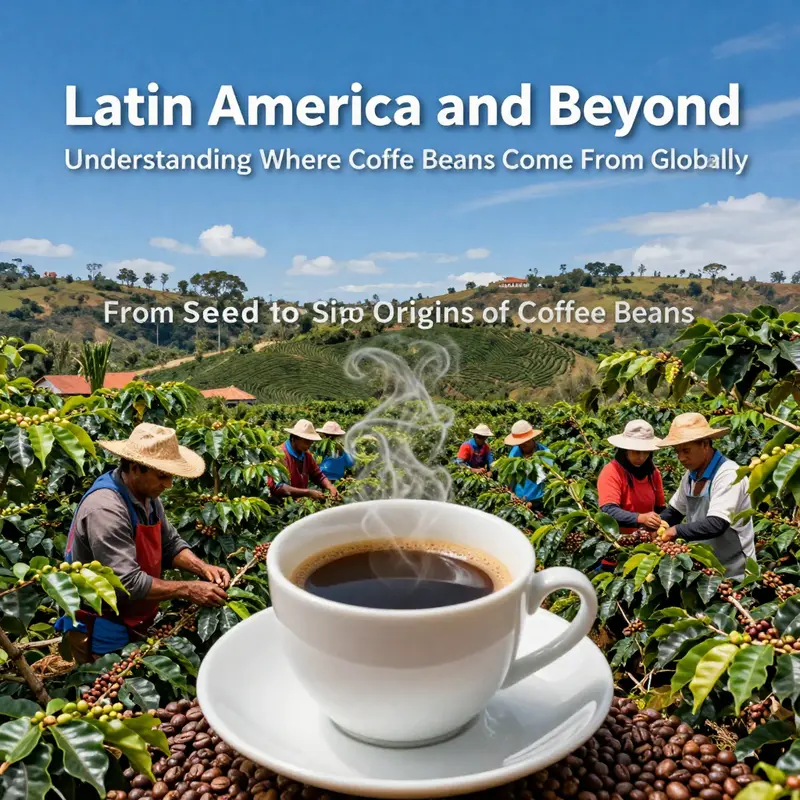
Latin America sits at the heart of the coffee map, yet the story of coffee beans stretches far beyond a single continent. The seeds in your cup traveled centuries of migration, cultivation, adaptation, and trade. They carry the imprint of soil, altitude, climate, and human hands. This chapter traces how Latin America built its dominance, how other regions complement and complicate the global landscape, and how geography, processing, and socioeconomic realities together determine the character of coffee beans.
Regional Roots and Global Reach
Latin America’s rise as a coffee powerhouse traces to a convergence of natural and human factors. Volcanic soils, equatorial climates, and mountainous terrain create ideal conditions for Arabica coffee. Countries from Mexico to Peru and from Colombia to Brazil developed distinct growing systems. These systems range from smallholder plots on steep slopes to vast plantations on rolling plains. As a result, Latin America supplies a huge portion of the world’s green beans while also providing a broad palette of flavors.
Brazil exemplifies the scale and diversity of Latin American coffee. It remains the world’s largest producer, accounting for roughly thirty-eight percent of global output in recent years. This is not a single, uniform product. Brazil produces both hard-wearing varieties for bulk Robusta-style blends and high-grade Arabica beans for specialty markets. Large farms on the Brazilian plateau favor mechanical harvesting and processes designed for efficiency. Meanwhile, smaller mountain farms produce washed and natural coffees prized for nuanced sweetness, chocolate, and nutty notes. The country’s production methods shape both price-sensitive bulk markets and the higher-margin specialty sector.
Colombia, in contrast, built its reputation on mountain-grown Arabica cultivated by small family farms scattered across steep terrain. These producers often rely on manual harvesting and selective picking. The result is more consistent ripeness and a cup profile that many describe as balanced, with medium body and pleasant acidity. In the specialty world, Colombian microregions have become recognized for distinct terroir-driven qualities. Cooperative networks and national institutions have historically supported quality control and export systems, helping Colombian beans penetrate premium markets worldwide.
Central America contributes another layer of nuance. Countries such as Guatemala, Costa Rica, Honduras, and Nicaragua grow coffee at high altitudes on volcanic soils. The combination of altitude, cooler temperatures, and well-drained soil fosters slow berry maturation. This slower development allows complex sugars and acids to form. High-altitude coffees often present bright acidity with floral and fruity aromatics. Within these countries, microclimates and small variations in slope and sun exposure create a surprising range of flavors, even within the same valley. Farmers and cooperatives have leveraged this diversity to market single-origin lots and microlots to specialty roasters.
Mexico and parts of Central America also supply organic and shade-grown coffees. Agroforestry systems integrate shade trees, fruit trees, and native vegetation. These practices preserve biodiversity and support soil health. Shade-grown coffee tends to develop different flavor balance, sometimes producing milder acidity and rounder body. Such environmental practices increasingly matter to buyers who care about sustainability and social impact.
Beyond Latin America, the global coffee landscape expands dramatically. Ethiopia is widely recognized as coffee’s birthplace. Wild coffee varieties grow there, and traditional cultivation includes heirloom Arabica strains. Ethiopian coffees often display bright, wine-like acidity, with floral, citrus, and berry notes. They are the source of some of the world’s most distinctive single-origin expressions. Kenya, also in East Africa, contributes intensely aromatic coffees with bold acidity and pronounced fruity or blackcurrant-like notes. These coffees are often processed using wet fermentation methods that emphasize clarity and brightness.
Southeast Asia and the Pacific offer contrasting profiles. Indonesia, particularly islands like Sumatra and Sulawesi, produces beans with heavy body and earthy, herbal characteristics. These flavors come from a mix of wet-hulling processing and the humid, low-elevation growing environments found in parts of the archipelago. Vietnam has become a major player by specializing in Robusta production. Robusta is generally harder, more disease-resistant, and offers higher yields. It brings bitterness and crema-enhancing properties to espresso blends, and it supports large-scale commodity markets. Yet Vietnam is also investing in Arabica at higher altitudes, seeking entry into specialty markets and portfolio diversification.
India and Papua New Guinea contribute uniquely textured coffees, often presenting spicy, woody, or tropical-fruit notes depending on processing and microclimates. Hawaii, though much smaller in output, produces a sought-after island coffee known for delicate sweetness and a clean profile. Islands and continental highlands each leave distinct signatures on the beans they produce.
Two species dominate global coffee production: Arabica and Robusta. Arabica generally favors higher elevations and cooler, stable climates. It offers greater acidity, sweetness, and complex aromatics. Robusta tolerates hotter, wetter conditions and resists disease better. It contributes body and bitter-sweet notes. The chosen species influences where coffee can be grown and how farmers respond to evolving threats like pests and climate change. Regions adapt by shifting varietals, altering planting elevations, and experimenting with hybrid cultivars bred for resilience.
Geography matters, but so do post-harvest decisions. Processing methods—washed, natural, honey, and newer experimental fermentations—profoundly shape flavors. Washed processing removes mucilage early, producing clarity, brightness, and clean acidity. Natural processing dries whole cherries, concentrating sugars and often producing fruity, wine-like aromas. Honey processing sits between washed and natural, leaving some mucilage to ferment on the bean and adding sweetness with medium clarity. Fermentation methods, including anaerobic fermentation, can intensify and modify flavor development. Coffee processors and farmers choose methods based on local climate, infrastructure, and market demand. Those choices often determine whether a lot can command specialty premiums or will move into commodity channels.
Smallholders account for a large share of the world’s coffee producers. In many countries, family plots of one to a few hectares, worked by households, supply the market through cooperatives or intermediaries. In such systems, traceability can be difficult, yet small farms often produce specialty lots prized for unique terroir. Cooperatives play a crucial role by aggregating beans, investing in processing infrastructure, and facilitating access to international buyers. At the same time, larger estates bring scale, mechanization, and often lower production costs. This mix of farm sizes creates a global market that supports both commodity-grade exports and high-value specialty lots.
Economic realities shape farmer decisions. Coffee prices fluctuate on global commodity markets. Those prices often fail to cover production costs during downturns, straining rural livelihoods. In response, many growers diversify incomes. They plant fruit trees, cultivate other cash crops, or develop ecotourism and farm-to-cup experiences. This diversification supports resilience and creates alternative revenue streams when coffee prices fall.
Environmental pressures intensify these economic challenges. Climate change alters temperature and precipitation patterns. Areas once perfectly suited for Arabica at certain elevations may become marginal. Coffee leaf rust, a fungal disease, has caused devastating crop losses across the Americas. Farmers adapt by migrating plantings upslope, changing varietals to disease-resistant strains, or altering shade and water-management practices. Breeding programs seek varieties that combine cup quality with resistance to pests and heat. Agroforestry, water conservation, and soil management become central strategies to protect both yield and quality.
Sustainability and traceability are no longer optional for many buyers. Certifications and voluntary standards can move premiums down the chain, but their complexity can also burden small producers. Newer direct-trade models and transparent sourcing practices aim to link roasters and buyers directly to farm-level realities. This transparency helps ensure fairer pricing and better incentives for sustainable practices. It also allows consumers to appreciate single-origin stories—who grew the coffee, how it was processed, and what makes a lot special.
The logistics behind moving beans from field to cup create another layer of complexity. After processing and drying, green beans are graded, bagged, and shipped. Exporters and trading houses broker sales to importers, who supply roasters worldwide. Specialty lots may go through more meticulous quality control, cupping assessments, and documentation. Commodity lots focus on uniformity and cost efficiency. Both pathways feed global demand and shape how producers prioritize their operations.
Roasters and blenders translate origin characteristics into approachable products. Blends combine beans from different regions to create desired balance and body. Single-origin offerings highlight terroir and processing. Consumers increasingly seek both traceable single-origin experiences and consistent blends. This demand shapes market incentives. When buyers value distinct origins, producers and cooperatives invest in quality. When markets favor low-cost uniformity, production trends toward high-yield varieties and streamlined processing.
Innovation in post-harvest and farm practices continues to evolve. Techniques once reserved for specialty micro-lots, such as controlled fermentations, tailored drying beds, and meticulous sorting, are finding broader adoption. Digital tools—blockchain traceability systems, farm-level monitoring, and mobile-market information—help close information gaps between producers and buyers. These technologies can improve price discovery and support more equitable value distribution.
Cultural and historical factors weave into coffee’s global distribution. Colonial agricultural policies, plantation systems, and trade relationships determined where coffee first spread beyond its African origins. Over centuries, botanical exchanges seeded coffee in new continents, while local knowledge adapted cultivation to novel terrains. Today’s map reflects those layered histories. It also reflects modern trade flows shaped by infrastructure, investment, and international demand patterns.
Looking ahead, the interplay between regions will become ever more important. Producers in Latin America face pressures from climate, disease, and market volatility. Regions in Africa and Asia offer genetic diversity and alternate growing conditions, useful for breeding programs and varietal exchanges. The global system will likely see more cross-regional learning, sharing of best practices, and collaborative initiatives to support resiliency. Investments in rural development, farmer training, and processing infrastructure will determine which regions can maintain or expand high-quality production.
For the coffee drinker, these dynamics matter. The cup in front of you carries clues about its origin. Bright acidity and floral notes often point toward high-altitude Arabica from Latin America or East Africa. Heavy, earthy body may signal Indonesian wet-hulled coffees. Smooth, chocolatey character likely comes from lowland Brazilian or some Central American lots. Understanding origin helps consumers make informed choices, and it connects them to the environmental and social contexts of production.
The geography of coffee is not static. New growing regions emerge. Established areas adapt. Breeders and farmers develop cultivars for new climates. Processing innovation reshapes flavor expectations. As demand for ethically sourced, traceable, and richly flavored coffee rises, the global supply system adjusts. That adjustment will determine which regions prosper and how coffee’s sensory diversity evolves.
In short, Latin America anchors the global supply through scale and terroir-driven quality. Other regions add genetic diversity, distinct flavors, and production systems for different market needs. Together, they form an interconnected network from seed to cup. Each origin contributes something essential: soil profiles, elevation-driven acidity, processing traditions, and human stewardship. The next time you taste a bright, citrusy brew or a deep, earthy espresso, consider the layered journey behind those flavors. Geography, history, and human choices converged to produce that moment.
For further reading on coffee origins and cultivation practices, see this external resource:
https://www.starbucks.com/food-and-beverage/coffee/origin-of-coffee-and-its-cultivation
Final thoughts
Bringing together centuries of cultivation and the global coffee industry, understanding where coffee beans come from offers invaluable insights for business owners. The journey of coffee from its roots in Ethiopia through diverse regions like Africa and Latin America illustrates how each area contributes to flavors and characteristics that consumers adore. By leveraging this knowledge, owners can make informed decisions to ensure the quality and uniqueness of their coffee offerings, ultimately appealing to a discerning clientele seeking authentic coffee experiences.