

Understanding caffeine content is crucial for coffee business owners aiming to meet customer preferences and health guidelines. The type of coffee bean—primarily Arabica and Robusta—plays a significant role in the caffeine quantity each bean contains. Additionally, the brewing method and roasting process further influence caffeine extraction. This article breaks down the specifics of caffeine in coffee beans, examining the differences between bean types, how brewing affects extraction, the impact of roasting on caffeine concentration, and comparing caffeine levels in coffee beans to other common sources, providing a comprehensive guide for informed business decisions.
From Bean to Buzz: Decoding Caffeine in Arabica and Robusta
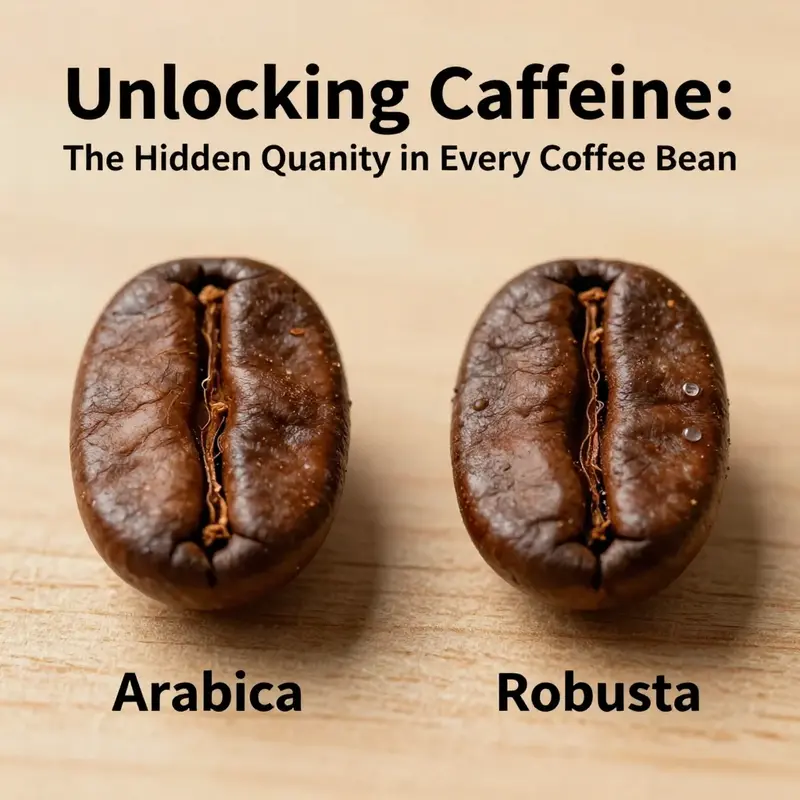
Caffeine is not just a stimulant; it is a defining chemical signature that travels from the plant’s leaf to your cup and subtly alters how a coffee tastes, smells, and feels in the body. When we talk about how much caffeine ends up in a cup, we are really tracing a chain of decisions from the seed to the brew. The caffeine content of the bean sets the ceiling, while roast level, grind size, water temperature, contact time, and the brewing method determine how much of that caffeine actually makes it into the final beverage. In this broader map, two species stand out because they frame most people’s experience: Arabica and Robusta. They differ not just in flavor and aroma, but in the chemistry of caffeine itself. Arabica beans, the more widely cultivated and cherished for their nuanced, often sweeter profile, harbor lower caffeine levels by weight. Robusta, by contrast, carries a noticeably higher caffeine load, contributing a sharper edge and a more immediate sense of stimulation. The contrast is not merely a matter of taste or alertness; it is a window into how evolution, genetics, and environment push a plant to balance defense with the productivity of a crop that reaches the consumer’s cup.
Across sources, the exact percentages vary, but a consistent pattern emerges. Arabica beans typically range around 1.2% to 1.5% caffeine by weight, while Robusta sits higher, near 2.2% to 2.7%. Some earlier summaries describe Arabica as roughly 0.9% to 1.4% and Robusta as 2% to 4%, with averages that hover in the mid to upper single digits of a percent. Those ranges reflect real diversity among cultivars, terroirs, processing methods, and even storage conditions. Even with this variability, the takeaway for most readers is clear: Robusta beans carry more caffeine per gram of coffee bean than Arabica beans. That difference matters not only to how you feel after a cup but also to how a coffee plant survives in its environment and how roasters and blenders craft a blend with the intended balance of flavor, body, and energy.
To translate those percentages into something tangible, consider a typical bean weighing about 0.15 grams. If Arabica lands at 1.2% to 1.5% caffeine by weight, a single bean contains roughly 1.8 to 2.25 milligrams of caffeine. If Robusta sits at 2.2% to 2.7%, the same bean pack carries about 3.3 to 4.05 milligrams of caffeine. If you round for everyday talk, Arabica beans give you around two milligrams of caffeine each, Robusta beans around four milligrams per bean. Those numbers align with the rough rule of thumb that Robusta can deliver roughly double the caffeine per bean of Arabica. Yet the real effect a person experiences when sipping a cup is mediated by a second set of variables: how many beans are used, how finely they are ground, how hot the water is, and how long the water sits in contact with the grounds. A single shot of espresso may deliver a concentrated dose because of the small volume and the high extraction efficiency, while a larger cup of drip coffee can yield more total caffeine simply because more liquid passes through more coffee grounds. The bean’s caffeine content provides the upper limit; brewing discipline and mass per serving decide how much of that limit is actually realized.
A useful way to grasp the practical implications is to connect these percentages to the way brewing works. Caffeine is relatively stable under heat, and it is water-soluble, meaning its extraction rises with longer contact times and with finer grind sizes that increase surface area. However, caffeine also shares the stage with dozens of other compounds—acids, oils, sugars, and bitter-tasting alkaloids—that shape flavor and mouthfeel. The roast level gently rebalances this crowd. Lighter roasts, with more of the original bean’s moisture and structure, tend to preserve a wider spectrum of flavor notes and can retain more of the bean’s initial caffeine content, kilogram for kilogram, than darker roasts. Yet the difference in caffeine unless measured precisely by weight is modest enough that most of the variation coffee drinkers notice comes from how much coffee is used and how it is brewed. In other words, if you brew with the same weight of Arabica grounds as Robusta grounds, the Robusta brew will typically carry more caffeine, but the flavor and aroma will also diverge because caffeine is paired with an entire constellation of flavor compounds that vary by species and roast.
This nuance matters for the everyday coffee ritual. When a barista talks about espresso versus drip, or when a home brewer contemplates a single-origin cup versus a robust blend, the caffeine story helps explain why those choices feel different in energy, not just in taste. An espresso shot uses a small amount of coffee, often around seven grams, to produce a concentrated brew. Because the volume is limited, the perceived intensity is amplified by aroma concentration, crema, and the rapid extraction of oils that carry flavor and texture. Arabica, with its gentler caffeine profile, tends to offer a smoother, more nuanced energy, letting the drinker experience sweetness, acidity, and fruity notes in tandem with stimulation. Robusta, with higher caffeine content, brings a more direct and robust sensation of wakefulness, often accompanied by a heavier crema and a stronger, sometimes more bitter, edge in the cup. The sensory balance is not only about caffeine; it is about how a plant’s chemistry interacts with roasting, grinding, and brewing to create a perceptible effect on mood, attention, and physical readiness.
From a practical farming and production perspective, the caffeine difference also intersects with agricultural realities. Arabica plants are more sensitive to pests, diseases, and climate variations, which drives higher cultivation costs and influences the final product’s price and availability. Robusta plants, more resilient and forgiving in hotter, lower-altitude environments, contribute to crops that are easier to scale, often used in blends and instant coffee for reasons of cost, stability, and mass production. The caffeine advantage Robusta offers is part of what makes it a staple in espresso blends and instant formulations, where a strong, fast-acting lift is valued and the crema quality can be memorable. But the premium feel of Arabica—its aromatic complexity, the delicate fruit and floral notes—aligns with those who prioritize flavor complexity and a gentler but sustained energy. The choice between these two beans, then, is a three-way negotiation among flavor, caffeine, and cost, each factor colored by growing conditions, harvesting methods, processing decisions, and the roasting philosophy that follows.
It is instructive to keep in mind that caffeine content is only one axis of a much larger quality and experience profile. The same Arabica bean that carries a modest caffeine percentage can yield a cup with pronounced aromatic intensity if roasted and brewed in a way that preserves delicate esters and fruity compounds. The same Robusta, when carefully roasted and prepared, can deliver a bold, creamy, and distinctly assertive cup—an effect that is as much about the texture and the crema as about the caffeine itself. The sensorial narrative of coffee is rarely told by caffeine alone; it emerges from a symphony of chemistry in which caffeine is a leading, but not solitary, instrument. That is why caffeine’s role in coffee is both technical and cultural: it informs the caffeine-driven energy people seek and shapes the flavor preferences that guide how producers roast, blend, and market beans across regions with very different climates and histories.
For the curious consumer who wants to understand the boundary between science and taste, the best approach is to think in terms of relative, not absolute, quantities. If you repeatedly brew with the same mass of Arabica grounds, you will often extract less caffeine per cup than if you use the same mass of Robusta grounds, all else being equal. Yet you can easily modulate the experience by choosing a longer or shorter brew time, a finer or coarser grind, and a different water temperature. The real magic lies in knowing that each bean type carries its own caffeine fingerprint, and that fingerprint interacts with roasting, grind, and brew technique in ways that can amplify or dampen the final sensation of alertness. The result is a cup that tells a story—not just about whether you feel energized, but about how the drink was crafted, where the beans came from, and how those beans were harvested and processed. As with so many aspects of coffee culture, understanding caffeine in Arabica and Robusta deepens appreciation for the craft and helps align a morning routine with personal preferences for flavor, aroma, and stamina.
For readers seeking a deeper technical dive into caffeine extraction, kinetics, and standards, a technical resource provides a rigorous framework that complements the narrative above. See the detailed discussion at the following external resource: https://www.caffeineincoffee.com/caffeine-in-coffee-beans-technical-details-and-standards
Brewing the Caffeine Gauge: How Method, Time, and Temperature Sculpt Your Cup
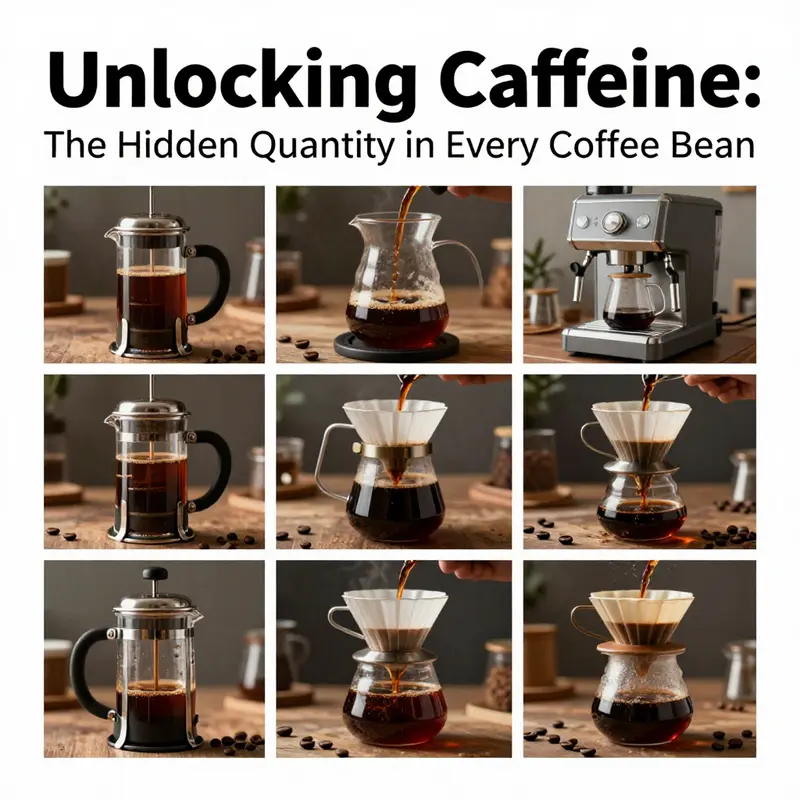
The caffeine that ends up in your cup begins long before the kettle boils. It starts with the bean, its species, its weight, and its native caffeine concentration. The study of caffeine in coffee is not about a single universal number but a spectrum that tracks with bean type and with the steps that bring flavors and stimulants together. In rough terms, Arabica beans carry about 0.9% to 1.4% caffeine by weight, while Robusta beans range from 2% to 4%, with averages hovering around 2.2% to 3%. A single Arabica bean, weighing around 0.15 grams, contains roughly 1.35 to 2.1 milligrams of caffeine; a Robusta bean of the same size holds about 3 to 6 milligrams. Those percentages matter most when you scale up to a cup because coffee is typically brewed from many beans, and the final caffeine per cup emerges from a complex interplay of bean type, grind size, water temperature, brew time, and the coffee-to-water ratio. The simple arithmetic of caffeine per bean is a starting point, not a guarantee, because every brew is a conversation between ground coffee and hot water, and the conversation changes with method as well as with the character of the beans themselves.
The next layer of complexity comes from roast. Roast level does influence caffeine, but not in the dramatic way that roast labels might suggest. Caffeine is relatively stable under typical roasting temperatures, yet the process does reduce the weight of the beans slightly as complex carbohydrates burn away and moisture escapes. Dark roasts therefore tend to have a tiny edge in mass loss, which means a dark-roasted bean may present slightly less caffeine per bean than a light-roasted counterpart of the same origin and size. The practical upshot is that, when you measure caffeine by weight, light roasts can show modestly higher caffeine content than dark roasts. When you measure caffeine by a brewed cup, however, the difference can vanish because a darker roast grabs water differently and changes extraction dynamics. This subtlety matters because many people judge strength by flavor, not by caffeine, and that misalignment between taste and caffeine is precisely where the science clarifies a common assumption: strength and caffeine are related, but they do not move in lockstep.
Brewing is the art of extraction, and extraction is the extraction of a spectrum of soluble compounds, not caffeine alone. The key variables—the type of bean, the grind size, the water temperature, the brew time, and the coffee-to-water ratio—work together to determine how much caffeine dissolves into the brew. The grind size matters because it governs surface area; a finer grind presents more surface for water to contact, accelerating extraction, while a coarser grind slows the process. Espresso uses a fine grind and high pressure to force water through a small bed of coffee quickly, yielding a bold, concentrated shot with a surprisingly high caffeine content per unit of volume. In contrast, a drip brew uses a medium grind and a longer contact time with water, delivering more caffeine in a larger final volume but often with a different flavor profile. Cold brew embodies another pattern altogether: a long steep in cool or room-temperature water can extract substantial caffeine, but because many cold brews are served as concentrates and diluted before drinking, the per-cup caffeine can end up similar to or even lower than a standard hot brew. The essential point is that longer contact does not always translate to a higher caffeine concentration in the final cup once serving size and dilution are accounted for; it translates into a higher potential caffeine yield that can be realized in a ready-to-drink form when the brewer chooses to dilute or preserve the concentrate.
Water temperature acts as the catalyst in this chemical conversation. Hot brewing methods, such as drip coffee, typically pull caffeine efficiently because water temperatures hover around 195–205°F (90–96°C). The heat acts as a solvent that speeds the dissolution of caffeine from the grounds into the water, even though the brew time is relatively short, usually around four to six minutes for a standard batch. This combination—high temperature and moderate contact time—creates a balance that favors caffeine extraction while still preserving a broad spectrum of flavors. In espresso, the water temperature is also high, but the process relies on pressure and a finely tuned grind to extract caffeine rapidly within about 25–30 seconds. While espresso yields a compact dose of caffeine per shot, its high concentration and the small volume mean that caffeine per milliliter is much higher than in most other brewing methods. Cold brew, by contrast, defies typical temperature expectations. The water is near room temperature or cooler, which slows the extraction of certain compounds but, with a 12–24 hour steep, allows caffeine to accumulate gradually. The result is a beverage that can deliver substantial caffeine, especially when the concentrate is used without heavy dilution. In all cases, temperature interacts with time and grind to shape the final caffeine content in a cup, and the same combination can yield different outcomes depending on how the brewer chooses to manage batch size and serving style.
Brewing method, too, matters beyond the obvious labels of “espresso” and “drip.” The mechanical forces at play—pressure, immersion, and agitation—transform the water’s ability to extract caffeine. An immersion method, such as a French press or a full-immersion cold-brew system, keeps grounds in contact with water longer and with less agitation, which can lead to a steadier extraction over time; the resulting cup often carries a robust flavor and a dependable caffeine yield, particularly when the brew is left to steep for longer times. Percolation methods, on the other hand, use gravity and flow rate to move water through a bed of grounds, often producing a cleaner cup with a different extraction profile. The coffee-to-water ratio then becomes the final control knob. A higher ratio—more coffee per unit of water—yields a stronger brew and, other things equal, more caffeine per ounce. But because the serving size increases with dilution and the drink’s final concentration depends on how much water is present in the cup, a higher ratio does not always translate to a proportionally higher caffeine amount per cup. Here again, the practical takeaway is that the same bean can yield very different caffeine experiences depending on how it is brewed and served.
The concept of dose is essential. If you want to estimate caffeine in a cup, you have to consider how many beans were used to produce the grounds and how those grounds were transformed by the brewing method. A standard-size drip coffee might use roughly 40 to 60 Arabica beans per cup, depending on the grind and the desired strength, translating into a caffeine range that reflects the bean’s inherent concentration and the extraction efficiency of the method. If Robusta beans are used, the coffee can deliver more caffeine per bean, but the drinker may notice a stronger, heavier flavor as well. Nevertheless, the fundamental pattern remains: the same starting material can end up with different caffeine levels in the cup simply by altering the variables of grind, temperature, time, and dilution. The practical implication is clear for both casual drinkers and caffeine-conscious readers: to gauge caffeine, one must track the beans and the brewing choices and then relate those choices to the serving size.
Perception often drives language about strength. Many people equate “strong coffee” with high caffeine, but the two do not always align. A finely brewed shot may feel intense in aroma and bitterness, yet its caffeine per ounce can be lower than a larger cup produced by a method with lower extraction efficiency. Conversely, a cold brew concentrate, if diluted to a similar final volume as hot coffee, can carry a higher caffeine content than a standard cup of drip coffee simply because the concentrate starts with more total caffeine extracted during the long steep. The reconciliation of flavor and caffeine is part chemistry, part sensory, and part habit. If you drink coffee primarily for a caffeine boost, you may choose a brewing approach that maximizes caffeine yield per serving, then adjust the serving size to keep flavor balance aligned with your taste. If you savor flavor first, you might prioritize temperature control and grind consistency to optimize aroma and mouthfeel, accepting that the caffeine dose may vary with each batch. The beauty of this approach is that readers can tune their routines to their goals, knowing that the underlying chemistry is governed by the same rules across beans and methods.
In closing this careful mapping of variables, the message is both practical and hopeful. The caffeine in a cup is not a fixed value pasted onto a bean. It is the product of the bean’s inherent chemistry and the brewer’s choices about grind, temperature, time, and dilution. A single Arabica bean contains roughly 1.35 to 2.1 milligrams of caffeine, while a single Robusta bean holds about 3 to 6 milligrams, but the final cup’s caffeine depends on how many beans you grind and how you extract them. If you want to estimate caffeine for a given brew, start with the target serving size and work backward to the dose of beans needed, then apply the brewing method’s known extraction tendencies. This approach helps demystify the often opaque relationship between “how much caffeine” and “how strong it tastes,” turning a potentially mysterious number into a practical guide for everyday coffee routines. For readers who wish to explore the science more deeply, a peer-reviewed synthesis of brewing parameters and their influence on caffeine extraction offers a rigorous framework that can be consulted for further detail and nuance. External reference: https://www.sciencedirect.com/science/article/pii/S096399692300275X
null
null
Bean-to-Buzz: Unraveling Caffeine in Individual Coffee Beans and What It Means for Your Cup
Caffeine is a natural chemical that plants use for defense, and humans use it for a nudge of wakefulness. When we talk about how much caffeine is in a coffee bean, we are really tracing a journey from a single seed to a familiar morning cup. The amount contained in an individual bean varies with species, genetics, and even the tiny quirks of the growing season. In practical terms, that means every bean carries a fingerprint of caffeine that is shaped by its origin. Within the Coffea genus, two species dominate: arabica and robusta. Across studies, arabica beans tend to hover around the lighter end of the spectrum, while robusta carries a stronger, more robust caffeine signature. If you weigh a typical small bean at about 0.15 grams and examine caffeine by weight, arabica commonly falls in a range roughly around 0.9% to 1.5% caffeine, whereas robusta often sits between about 2% and 4% caffeine by weight. When you do the quick math, a single arabica bean might contain roughly 1.3 to 2.3 milligrams of caffeine, while a robusta bean of similar size can contain about 3 to 6 milligrams. Those per-bean figures are small, but they accumulate quickly in a cup when you grind and brew. The practical takeaway is simple: the caffeine punch you experience in a cup does not come from a single bean alone, but from many beans passing through a brewing process, and the final number is shaped by the beans themselves as well as the path that caffeine travels from bean to cup.
That path is not a straight line. Caffeine is water-soluble, so its fate in any given brew hinges on how much ground coffee you use, how fine or coarse you grind it, how long the water stays in contact with the grounds, and how hot that water is. The roast level matters too, not because it creates more caffeine, but because it changes the structure of the bean and thus how much caffeine can be dissolved during brewing. In general, darker roasts are less dense and can slightly alter extraction dynamics, but the caffeine content per bean remains relatively stable compared with other chemical changes that occur during roasting. The practical effect is that you could have two cups that look and taste different—one with a deeper roast and one with a lighter one—yet the caffeine per cup might be more a function of how much coffee you used and how you brewed it than of the roast alone.
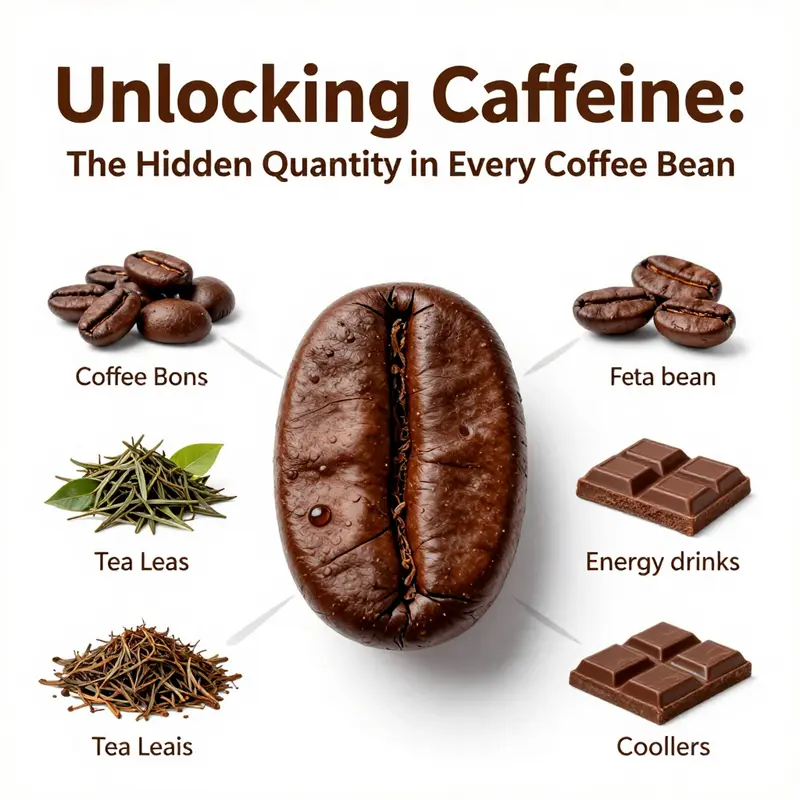
When we widen the lens to consider caffeine content beyond coffee beans, a broader landscape emerges. The arabica vs. robusta distinction persists, but the total caffeine you ingest depends on serving size and preparation. If we compare per-gram concentrations, robusta is reliably stronger, but per-cup caffeine often comes out differently because a typical serving of tea, chocolate, or an energy beverage may involve different amounts of liquid and different extraction efficiencies. Tea leaves, for example, can contain a higher percentage of caffeine in dry form—often around 3% to 5% in black tea leaves—but brewing typically extracts less caffeine per cup than a standard 8-ounce serving of drip coffee. In brewed tea, 40 to 70 milligrams of caffeine per 8-ounce cup is common, while brewed drip coffee often lands in the 95 to 120 milligram range. The reason lies in both the amount of plant material used and how the infusion is prepared. Caffeine in tea is released over a shorter steep and at a lower water temperature on average, whereas coffee grounds are subjected to a longer extraction with hotter water and more grounds per cup, which increases total caffeine delivery.
The contrast grows more telling when you stack coffee against other caffeine sources such as chocolate and energy drinks. Cocoa beans themselves carry about 1% to 2% caffeine by weight, not unlike arabica coffee in spirit, but the final product’s caffeine content is dramatically diluted by fat, sugar, and processing into chocolate. A modest 1.4-ounce (40-gram) portion of dark chocolate yields roughly 12 to 25 milligrams of caffeine, a fraction of what a typical cup of coffee delivers. The contrast is even starker with energy drinks or certain sodas. An 8-ounce serving of an energy drink can house 80 to 120 milligrams or more, and a large 16-ounce can can reach caffeine totals that surpass those in multiple cups of coffee, depending on exact formulation. In other words, caffeine content per gram is a useful guide, but it does not map one-to-one to caffeine per serving, because serving size and the efficiency of caffeine extraction matter just as much as the bean type.
All of this brings us to a more nuanced understanding of what “strength” means in coffee. The sense of a drink’s intensity often reflects flavor, aroma, and body—qualities that trade heavily on roast level, bean origin, grind size, and brewing method. Caffeine, by contrast, behaves more like a hidden variable that quietly shifts with the recipe. A single shot of espresso carries a higher concentration of caffeine by volume—a single ounce can hold roughly 60 to 80 milligrams—yet a standard 8-ounce cup of drip coffee can deliver nearly double that amount because the volume is larger and the grounds may be more abundant in everyday brewing. This is why the hot “burn” from a strong espresso shot does not always align with caffeine content when you compare it to a full mug of drip coffee. For those monitoring daily caffeine intake, the lesson is practical: the way you brew and the size of your cup can overshadow the inherent differences between arabica and robusta in the final beverage. If you want more caffeine per bean in a single swallow, robusta wins on the per-bean and per-gram metrics. If you want more caffeine in your daily total, brewing method and serving size steer the outcome.
Entering this landscape with a clearer mind means acknowledging how little a single factor predicts the final caffeine your body absorbs. The caffeine in a coffee bean is just one element in a chain that includes the bean’s species, weight, and caffeine percentage; the roast’s impact on the bean’s structure; the grind’s surface area; the water’s temperature and contact time; and the scale of your brew. Each piece interacts with the others to determine the actual caffeine delivered into your cup. In practical terms, a higher caffeine percentage in robusta can translate to more caffeine per bean, but a standard cup might still deliver less caffeine than a larger drip brew if the grind is inconsistent, or more if you use a higher coffee-to-water ratio. The variability explains why caffeine claims in coffee are seldom a simple one-number story. Instead, they emerge as a spectrum shaped by species, bean size, processing, and brewing choices, all interacting with human taste and caffeine tolerance.
This perspective reframes how we think about caffeine content when planning a day’s intake. If you prefer precise per-bean comparisons, it helps to think in terms of ranges rather than fixed numbers. Arabica beans typically provide about 1.3 to 2.3 milligrams of caffeine per 0.15-gram bean, while robusta beans deliver roughly 3 to 6 milligrams per similarly sized bean. When you move to brewed cups, the conventional ranges hold steady: a drip 8-ounce cup commonly yields about 95 to 120 milligrams, a single espresso shot about 60 to 80 milligrams, and tea at about 40 to 70 milligrams per 8-ounce cup. Chocolate remains a modest contributor, with dark chocolate in the vicinity of 12 to 25 milligrams per typical 1.4-ounce serving, depending on the formulation. Energy drinks complicate the picture further, offering a broad range—sometimes 80 milligrams to well over 200 milligrams per 8- to 16-ounce serving. These numbers reveal a simple, important truth: caffeine content is a function not only of the plant’s chemistry but also of how we translate that chemistry into a drinkable form through human choices around preparation and serving size.
Consider the set of influential factors as a single story of extraction. If you grind coarser and brew a shorter, cooler infusion, you reduce extraction efficiency. If you grind finer and extend contact time with hot water, you push caffeine into the brew more aggressively. The caffeine in coffee thus travels from bean to cup via a pipeline governed by physics and technique as much as biology. As a reader, you can see why a “strong” cup in taste terms does not always correspond to a correspondingly high caffeine load. The cup’s caffeine content can be surprisingly modest if you drink a small amount of coffee that was carefully brewed, or surprisingly high if you overbrew with a generous amount of grounds. For people monitoring caffeine for health, sleep, or medication interactions, this distinction between bean potential and cup reality is essential. It encourages a practical approach: know your usual serving size, understand your brewing method, and track your tolerance to tailor caffeine intake to your daily rhythm.
In the end, the journey from the single caffeine-containing seed to the familiar mug is a study in contrasts. The bean tells you what could be possible, while the brew reveals what is actually delivered. Caffeine content is not a single constant reading tied permanently to arabica or robusta alone; it is a dynamic endpoint created by the dance between seed chemistry and human technique. If you want a quick mental picture, picture robusta as the heavier-handed caffeine contributor, arabica as the more delicate option, and brewing as the stage on which their possible caffeine takes center stage or recedes into the background depending on how you choose to prepare your coffee. And if you ever wonder why your morning cup feels different on different days, you can blame the interplay of bean biology with brewing practice, a collaboration that determines how much caffeine you actually experience as you start your day.
External resource: For a deeper technical overview of caffeine in coffee beans, see this external source: https://www.cafemag.com/caffeine-in-coffee-beans-technical-details/
Final thoughts
In reflecting on caffeine content across various coffee types and preparation methods, it’s clear that business owners must incorporate this knowledge into their service and product offerings. Understanding the caffeine levels in Arabica and Robusta beans, along with the impact of brewing techniques and roasting, will empower you to craft optimal coffee experiences for your customers. This insight can enhance product quality and drive business success, ensuring that you remain competitive in the evolving coffee landscape.