
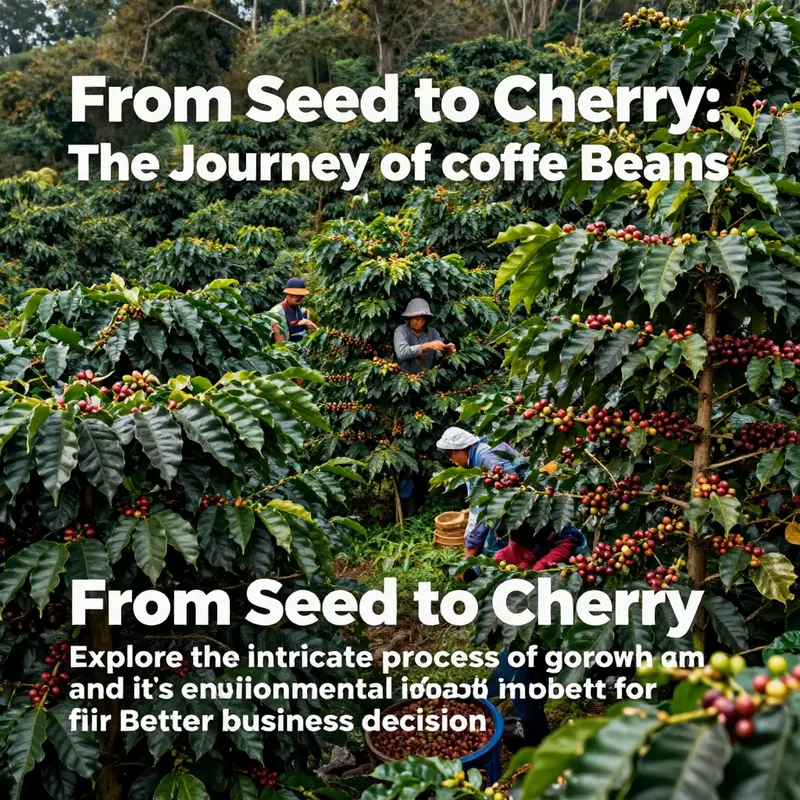
Understanding how coffee beans grow is essential for business owners in the coffee sector. This journey from seed to cherry involves various stages, influenced by environmental factors and intricate harvesting techniques. Each chapter delves into crucial aspects: the lifecycle of coffee, the impact of climate and environment, and the processing and harvesting techniques that culminate in a superior product. Grasping these elements can enhance your coffee business strategy and ensure quality and sustainability.
From Seed to Cherry: Tracing the Quiet Lifecycle of Coffee Beans
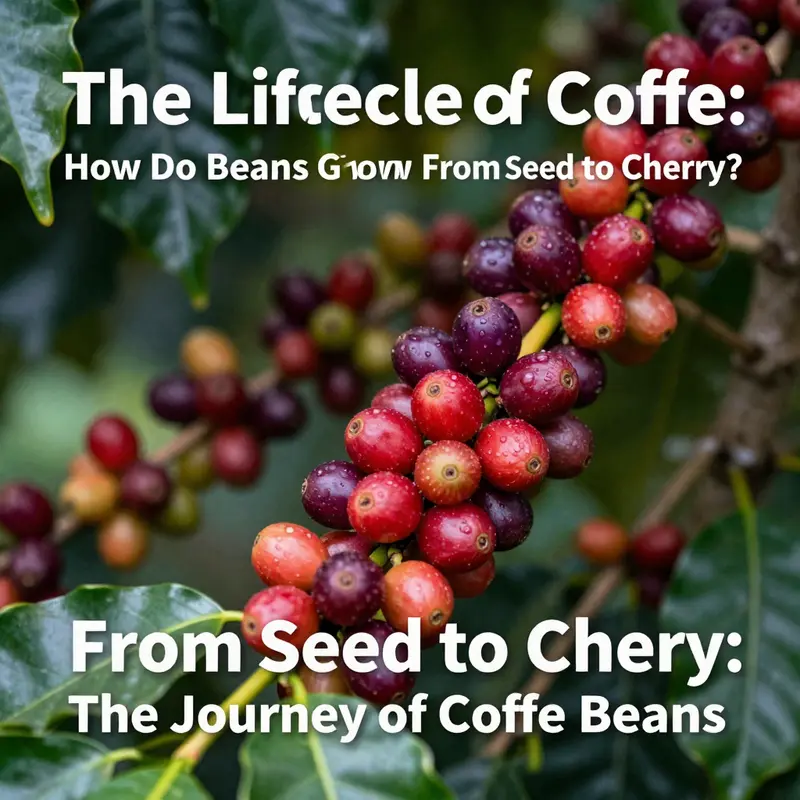
The life of a coffee bean begins far from the bright, crowded shelves of cafés and far from the aroma that lingers in a kitchen. It starts in the shade and warmth of tropical landscapes, where evergreen Coffea shrubs rise as patient, unhurried witnesses to a cycle that unfolds over years, with a rhythm tuned to rain, light, and soil. To understand how coffee beans grow is to trace a quiet, spatially aware drama. It unfolds not at a sprint but in steady, seasonal work of roots, leaves, blossoms, and fruit. The story is one of delicate chemistry and careful human habit; of patience rewarded by the moment when a cherry blushes red and the beans within begin their journey toward the cup that will carry the day’s flavors to a person somewhere far away. This is the tapestry behind the everyday experience of drinking coffee, a tapestry woven through geography, climate, cultivation, and a very particular kind of attention to detail.
The journey begins with a seed, planted into soils that have warmed for thousands of years by the sun’s constant cast. In these lands, conditions align for just the right mix of moisture, mineral content, and microbial life. A single seed, sown in the right pocket of soil, will germinate after a window that can range from a few weeks to a couple of months. Out of the earth pushes a tiny sprout, and with it the first hints of the future canopy’s shape. The sapling is slender and fragile at first, its roots still finding purchase and its stem learning to bear the weight of leaves that will eventually shade the delicate fruit beneath. In this stage, the plant’s ambitions are modest, but the work is essential: the seed has to become a seedling that can withstand weather, pests, and the daily rhythms of a plantation.
In many growing regions, seedlings are nurtured in nurseries for a period that allows the plant to strengthen its root system and develop a robust trunk before being transplanted into larger spaces. When a young plant has reached roughly 20 to 30 centimeters in height, it is moved to a field setting where it will have room to grow more fully. The next phase—three to five years, depending on variety and growing conditions—sees the tree mature, its roots extending deep into the soil, its branches spreading wide enough to create shade and microclimates that protect the delicate blossoms and fruit. Coffee trees thrive in versions of this climate that reward a careful balance: warm daytime temperatures, cooler nights, and a steady supply of water that never eclipses the roots’ need for air. The presence of shade is not merely decorative. It reduces heat stress during peak daytime hours, filters intense sun, and helps maintain an even moisture regime that the tree needs to reach the flowering and fruiting milestones that define its yearly cycle.
And then the plant reaches a new, crucial stage: flowering. The trees bear small blossoms, typically white and highly fragrant, a scent often likened to jasmine or other garden floral notes. The blossoms appear in clusters, a delicate shower of scent that announces a window of potential rather than an inevitable harvest. The pollination process that follows is assisted by wind, insects, and the gentle chance that accompanies any perennial. After pollination, each blossom leaves behind a tiny fruit in the making. The transformation is vivid and patient. Green cherries form, and the fruit then begins a long period of ripening, a slow color shift that marks the passage of time through the year.
The ripening of coffee cherries is not uniform. It is a process that varies from tree to tree, branch to branch, even on a single plant. The cherry’s color shifts from green to yellow and finally to a vivid red or sometimes purple, depending on the coffee variety. Farmers often harvest in multiple passes, picking only the fully ripe fruit each time to ensure a high standard of sweetness and balance in the final beans. The timing of harvest is a craft in itself. While some regions benefit from a well-defined single harvest, others require several rounds of picking to capture the cherries at their peak ripeness. The result is a harvest that feels almost like a rotation through the orchard across weeks rather than a single moment of labor.
Inside each cherry lie the seeds we know as coffee beans. A cherry typically contains two beans, nestled within a fleshy pulp and protected by a parchment layer—the parchment is a thin, protective skin that will later be removed before roasting. These beans are not seeds in the botanical sense of a single seed with a hardened coat; they are the stone inside the fruit, a remnant of the plant’s reproductive structure that has acquired a coat to withstand the journey from fruit to roast. The early days after harvest are a race against time, for the quality of the beans begins to decline as the fruit’s mucilage dries and ferments, affecting both flavor and aroma. This is why processing—whether through washed, natural, or honey methods—becomes such a decisive step in determining the bean’s final character.
Processing is the art of translating ripeness into drinkable potential. In the washed or wet method, the fruit’s outer layers are removed soon after harvest, and the beans are fermented briefly to separate the mucilage from the parchment before washing and drying. The natural or dry method preserves the fruit’s sugars by drying the whole cherry with the mucilage intact, then removing it later. The honey method sits somewhere in between, leaving some of the fruity mucilage on the bean as it dries, often contributing to a sweeter, more textured cup. Each approach alters the moisture content, the surface chemistry of the bean, and the coffee’s eventual flavor trajectory. Drying is the final, crucial phase of processing. The beans, still coated in parchment, are dried to a target moisture level—usually around ten percent—to prevent mold and to preserve the delicate aromas that will carry through roasting. Only after thorough drying are the parchment layers removed in a process called hulling, revealing the raw, green beans that are ready for shipping to roasters and markets around the world.
This lifecycle—from seed to cherry to bean—sounds straightforward when described in steps. In practice, it unfolds with a choreography that is both ecological and human. The land and climate provide conditions; the farmer and farmworkers apply knowledge accumulated through generations; the processing mills apply a sequence of mechanical and chemical steps to stabilize the product. The result is a green bean with a seed coat that protects its life in transit and beyond. The green bean holds more than potential; it holds a geography. Its shape and size, its density and moisture content, and the precise way its moisture will transform during roasting are all the legacy of place—the slope of the hillside, the altitude at which the tree grows, and the daily weather patterns that shape growth from budding to harvest.
Among the most widely grown varieties are Coffea arabica, commonly known as Arabica, and Coffea canephora, known as Robusta. Arabica beans generally carry a more nuanced aroma and flavor profile, with higher acidity and a broad range of sweetness, while Robusta tends to contribute body and a stronger caffeine kick, often with earthy or chocolate-like notes. The preference for one over the other is often a matter of climate, altitude, and the end cup target. Arabica plants typically prosper at elevations between roughly 600 and 2,000 meters above sea level, a band within which temperature and rainfall patterns create a stable, extended maturation window that allows the beans to develop their complex flavors without becoming too harsh or too flat. Robusta, with its hardier constitution, thrives at slightly lower elevations and warmer conditions, and is frequently used in blends where high caffeine content and a solid, robust backbone are desirable features. The distinction is not simply about taste; it reflects a long history of cultivation in diverse climates and soil types, with each variety requiring particular husbandry practices to produce a strong, consistent yield year after year.
In this sense, coffee farming is a study of geography as much as horticulture. The land dictates the pace and output; the plant dictates the physiological processes that lead to flowering and fruiting; the post-harvest practices translate harvest into a product that can travel across continents to reach a cup. The farmer’s knowledge becomes a bridge across the globe, a bridge that ensures that the tree’s slow growth, the blossoms’ brief life, and the cherry’s ripening color all culminate in a coffee bean with recognizable potential. Protecting that potential requires attention to soil health, shade management, pest control, and water resources, all of which must be managed with care to prevent losses and to sustain production across seasons. Climate change adds a new layer of complexity to this work. Shifts in rainfall patterns, rising temperatures, and the spread of pests threaten the careful balance that coffee plants require. In response, many growers adjust shade structures, plant new varieties with greater resilience, and employ sustainable farming practices that aim to preserve soil fertility and water quality while maintaining productivity. The lifecycle, in other words, is not only biological. It is socio-environmental, a thread that weaves together ecology, economy, and culture.
For enthusiasts and learners who want to connect more deeply with the lifecycle, the education it offers goes beyond flavor. It invites observers to consider how a season’s work on a hillside translates into the morning ritual of millions of people around the world. It frames the cup as a product of a long line of caretakers—mother trees, weather, soil microbes, harvesters, and processors—whose combined labor yields what many people expect to be a daily moment of pause and pleasure. The plant’s life is patient; its yield is contingent on weather patterns that may vary from year to year. Still, the capacity to adapt—through selective harvesting, microclimate management, and careful processing—helps farmers maintain quality. In this light, tasting becomes a form of storytelling, an experience that communicates climate, soil, altitude, and human decisions through the language of aroma, acidity, sweetness, and body.
The intrinsic drama of the lifecycle also invites contemplation of home cultivation. While the commercial world superimposes a vast, interconnected system of farms and mills onto the cup we drink, there is a quiet parallel in home growing where a person can observe a plant’s growth over months or years. Growing coffee at home is a commitment to observing the plant’s needs: fertile soil, consistent water, sufficient light, and protection from pests. It becomes a way to appreciate how fragile yet resilient these plants are, how a little garden can reveal the same cycles—germination, vegetative growth, flowering, fruit set, and fruit ripening—that define the larger industry. Even for hobby growers, the plant’s lifecycle offers a framework for understanding how climate, soil, and care converge to shape the quality of the beans that eventually arrive at the roaster’s door and, long after, at the consumer’s cup.
The lifecycle described here offers a lens through which to see coffee not as a product alone but as a natural and cultural phenomenon. The ripening windows, the flowering bursts, and the careful timing of harvest reveal how human labor and environmental conditions must align for the harvested beans to carry the hallmark of a region and a season. It is a slow, incremental art whose success rests on the fidelity of farmers to the tree’s natural timetable while applying a modern agricultural sensibility—integrating soil health, water management, pest prevention, and post-harvest chemistry to preserve the bean’s integrity through processing and distribution. Although the world economy now connects these distant hills with metropolitan cafés, the root of the experience remains a patient growth in a hillside microclimate, a farmer’s patient decision-making, and a careful, repetitive sequence of steps that begins with a seed and ends with a cup that invites reflection as much as it invites consumption.
In the broader arc of the narrative, coffee farming embodies the balance between patience and intervention. Nature provides the seed and the climate; people provide irrigation where rainfall is inconsistent, prune when growth threatens yield, harvest when color and texture indicate peak ripeness, and process with methods that define the profile a particular lot will carry. The resulting flavor notes—fruity, chocolatey, nutty, floral, or spicy—are expressions of this balance, a chorus of terroir and technique that can be traced back to the plant’s basic life cycle. The bean, once green and hard, travels through careful processing, is shipped across oceans, and, through roasting, is transformed into an edible, aromatic, and culturally significant product that has become a daily ritual for millions.
The lifecycle is also a reminder of the vulnerability that accompanies cultivation. Coffee trees are sensitive to day length, rainfall, and rising temperatures. They depend on stable weather patterns that modern agricultural systems sometimes struggle to preserve. As a result, researchers and farmers continue to explore more resilient varieties, sustainable farming methods, and innovative processing concepts. The aim is not merely to stabilize supply but to maintain the integrity of the cup—the sensory memory of a place that a person might only visit in memory or through a single sip. In this sense, every bean’s journey from seed to cherry is a small biography of its region, its farmer, and its season, a narrative the cup makes available to anyone who tastes it with curiosity and patience.
For readers who crave a more concrete map of the lifecycle, a concise pathway helps to anchor the story: a seed is sown; a sapling grows; a tree reaches maturity after years of quiet development; flowering occurs; cherries form and ripen across months; harvest captures the ripest fruit; processing strips away the fruit to expose the beans; beans are dried, hulled, and readied for transport; and finally, roasting transforms green beans into the aromatic seeds that unlock the sensory world of coffee. Each step is a hinge in the door that opens onto flavor. The door remains the same, but the view beyond it changes with varieties, climates, and human practices. The lifecycle thus serves both as a natural history and a practical guide, bridging the biology of a plant with the culture of a beverage that has circled the globe.
As you reflect on this lifecycle, you may notice that it is a story told many times, in many languages, across continents. It is a story of soil and sun and rain; of pollinators and pests; of the careful hand of a picker and the patient attention of a processor. It is a story of people who, with time and intention, coax flavor from a plant that asks for nothing more than favorable conditions and steady care. In the end, the bean’s life—long, patient, and collaborative—culminates in a cup that carries memory, place, and shared ritual. To understand how coffee beans grow is to grasp a broader truth about the world: that nourishment often travels from distant hillsides through networks of people and practice before it becomes a moment of pleasure shared across tables, offices, and streets. It is a life in which biology and culture are inseparable, and where every bean carries the footprint of a climate, a season, and a community that tended it with care.
If you wish to see a more authoritative synthesis of the lifecycle, including detail on cultivation, flowering, fruit development, and processing, the International Coffee Organization’s guide offers a comprehensive reference that aligns with the overview provided here. For readers who want to explore this material further, the ICO’s resource on the coffee lifecycle is a reliable starting point: https://www.ico.org/coffee-lifecycle
Breath of the Highlands: How Climate and Elevation Shape Every Coffee Bean from Flower to Cup
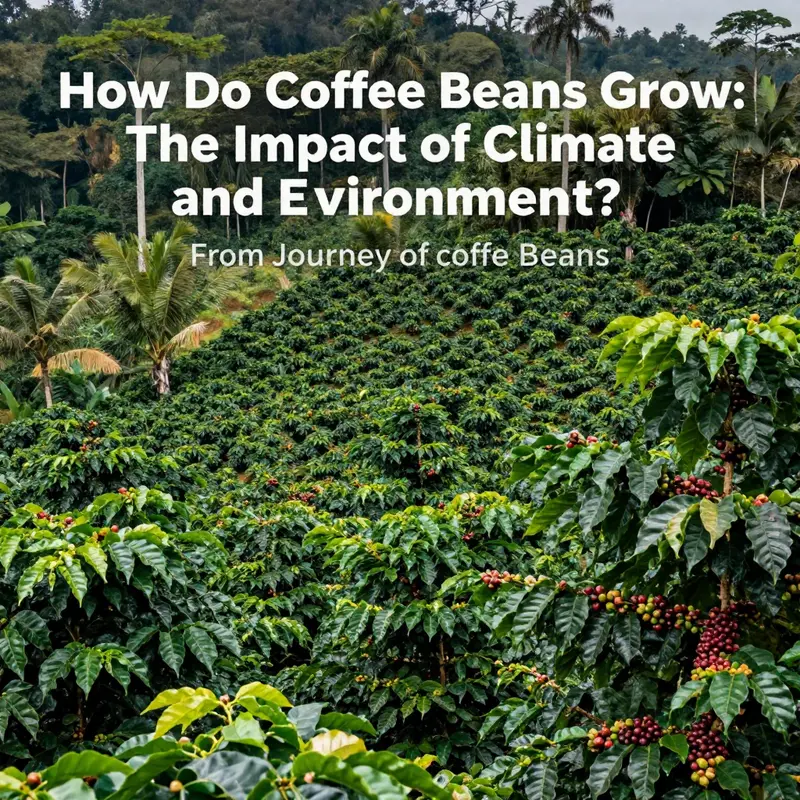
The story of a coffee bean begins long before a cup is poured. It starts on a plant that, in many regions, grows as a resilient evergreen shrub or small tree in the genus Coffea. The journey from bloom to bean is a performance written by climate and landscape, a choreography that rewards attentive cultivation with flavors that mirror the very air in which the beans ripen. To understand how coffee beans grow, one must follow not just the bean, but the climate that surrounds it—the temperature bands that cradle the plant, the altitude that tunes flavor, the humidity that sustains growth, and the ecological balance that keeps the system singing through the seasons. The result is a bean whose quality and quantity hinge on a delicate environmental balance, a balance increasingly tested by a warming planet and shifting landscapes. The pathway from tree to cup is as much about weather, soil, and shade as it is about genetics and harvest timing, and it is through this lens that we glimpse the intricate interplay that determines what ends up in a consumer’s mug.
In the earliest days of a coffee shrub’s life, a gentle climate acts as a quiet gardener, guiding the plant through years of growth toward a reproductive stage that culminates in blossoms of small, white, fragrant flowers. These blooms appear in clusters, and their scent is often described as sweet and inviting—the aroma signaling a hinge point in the plant’s annual cycle. Pollination completes the transformation from flower to fruit, and the resulting cherries—green at first—begin a slow metamorphosis. The color changes that follow are not arbitrary; they reflect the biochemical choreography within the cherry as it matures. The transition from green to yellow, then to red or purple, marks the progress toward ripeness. Within each ripe cherry lie two beans, tightly encased in a fleshy pulp and protected by a parchment layer. Those beans are not simply seeds in a classic botanical sense; they are the stone of the fruit, carrying within them the potential to become the aromatic compendium of flavors that coffee lovers seek. The ripening window, the rate at which cherries reach full maturity, and the uniformity of ripening are all colored by climate—by how warmth, humidity, and sunlight interact with the plant’s biology.
The harvest marks a second climate-facing moment. When the cherries reach the right hue and firmness, farmers pick them, often by hand in smallholder contexts or with machinery where labor costs and terrain allow. The subsequent processing stage—whether washed, natural, or honey methods—depends on the regional tradition and the practical realities of the environment. Temperature and humidity during drying, for instance, influence how evenly beans shed their moisture and how the parchment peels away. The fate of the bean, then, is inseparable from the conditions in which it is dried and stabilized after harvest. A consistent drying climate reduces the risk of mold and underdeveloped flavors, while erratic moisture can push a batch into uneven drying and inconsistent quality. This is not merely an agricultural detail; it is a key determinant of whether the final cup carries bright acidity, layer after layer of aroma, and the balance that distinguishes a coffee’s character.
Two species dominate commercial coffee: Coffea arabica and Coffea canephora, better known as Arabica and Robusta. Arabica beans are often preferred for their nuanced flavors, greater complexity, and delicate growing requirements. Robusta, while typically hardier and higher yielding, contributes a different texture and caffeine profile. The climate sensitivity of these species is distinct, with Arabica usually thriving in cooler, more temperate microclimates and at specific elevations where shade and moisture help sustain growth. Robusta, in many contexts, tolerates hotter temperatures and lower elevations but can suffer when heat stress becomes chronic or when pest pressures intensify. The environmental story of each bean variety unfolds differently, yet both face a common thread: climate shapes both yield and quality, and climate change is redefining what is viable across traditional coffee-growing regions.
Altitude emerges as a powerful environmental dial in this unfolding drama. Higher elevations tend to yield beans that, for many tasters, carry more complex flavor notes and higher perceived acidity. This is not a mere myth of terroir; it is a function of the way cooler air at altitude interacts with the plant’s metabolism and the slow maturation that ensues. As altitude influences caffeine content and the distribution of other compounds that contribute to aroma and taste, it also interacts with humidity and shade to create microclimates favorable to particular flavor profiles. However, altitude does not operate in isolation. It is a buffer against some heat stress but a conduit for others. Climate change is gradually shifting suitable elevations upward. It is not only about cooler nights or a longer growing season; it is about the broader ecology that altitude sustains—forest cover, biodiversity, and the natural balance of pests and diseases that keep a coffee ecosystem in check.
The nuanced relationship between altitude and bean chemistry reveals how climate steers flavor without us always realizing it. Caffeine content, for example, often shows a tendency to decrease with increasing altitude, while other compounds contributing to aroma and acidity may rise. The practical implication is that growers must select the right altitude range, microclimate, and cultivar to achieve a target flavor profile. Yet even these sensory aspirations are tempered by climate realities. As temperatures rise, lower elevations become less hospitable to optimal Arabica production, nudging farmers to relocate to higher ground or to employ strategies that create favorable microclimates at existing sites. This migration is not a trivial logistical matter; it carries ecological consequences. Upward shifts in cultivation can entail converting forested highlands into agricultural land, with potential losses of biodiversity and ecosystem services that forests provide, ranging from soil stabilization to climate regulation and watershed protection. The long-term sustainability of the coffee supply chain hinges on weighing the environmental benefits of shade-grown, biodiverse systems against the economic pressures that drive farmers to seek new lands or varieties that better tolerate warmer, drier conditions.
Humidity and rainfall patterns shape every other aspect of growth as well. Coffee plants depend on a fairly reliable distribution of rainfall and a moist air environment that supports steady transpiration and nutrient uptake. Shifts in rainfall regimes—either through intensification of wet seasons or prolonged dry spells—alter flowering, fruit set, and cherry development. A climate that is too dry at key moments can stunt ripening; one that is too wet can encourage fungal diseases that attack leaves, branches, and the fruit itself. The health of the canopy and the soil beneath it matters deeply here. A well-managed canopy that provides shade can moderate temperature spikes and help retain soil moisture, creating a more stable environment that promotes uniform ripening and better bean development. Yet shade itself is a balancing act: too much shade can suppress photosynthesis, slow growth, and delay harvest, while too little exposes plants to harsh sun and heat stress. Growers optimize shade by selecting compatible companion trees and adjusting planting density to foster a microclimate that suits a given species, cultivar, and soil type.
Soil health and biodiversity enter the conversation as the invisible scaffolding that supports climate resilience. Healthy soils store water, cycle nutrients, and host microbial life that influences nutrient availability to the coffee plant. In a warming world, soils that retain moisture during dry spells are more valuable than ever. Practices that sustain soil organic matter—cover crops, appropriate composting, and reduced tillage—help buffer roots from temperature swings and disease pressure. At the same time, a diverse agroecosystem can cushion the plant against pests with natural predator populations. The ecological balance matters not just for the plant but for the farm’s long-term viability. When climate stress rises, farms that embrace shade, soil health, and biodiversity often weather the shocks better, maintaining yields and protecting the cultural landscapes that define many coffee-growing regions.
The genetic dimension adds another layer of complexity. Arabica and Robusta have limited capacity to migrate or adapt rapidly to new environments. As traditional growing zones become less viable due to rising temperatures and changing patterns of rainfall, both species face pressure to grow in less suitable climates. That stress can reduce yields and heighten vulnerability to heat, pests, and disease. The result is a tension between preserving cherished flavor profiles and expanding coffee into new frontiers. Breeders and farmers respond by exploring resilient cultivars that maintain desirable attributes while tolerating warmer conditions. This is not a simple substitution of one bean for another; it is a careful, region-by-region negotiation that weighs flavor potential, agronomic performance, and ecological impact. Even with better genetics, the climate story remains central: there is only so far genetic improvements can push growth into a climate where water becomes scarce, soils erode, or forests retreat in the face of warming.
The interplay between climate and environment does not exist in a vacuum. It is echoed across landscapes and economies, shaping decisions from farm gate to cup. The risks of climate-induced variability extend beyond yield to quality. Small changes in temperature during key developmental windows can alter the balance of sugars, acids, and aromatic compounds that define a coffee’s sensory profile. For producers, this means that maintaining consistency—an essential feature for buyers, roasters, and consumers—becomes more challenging as the climate wobbles. Producers may need to adjust harvest timing, alter processing methods to compensate for moisture differences, or explore new building blocks of flavor that still align with consumer expectations and market demands. In this evolving landscape, climate-smart practices are not a luxury but a necessity. They represent a pathway to sustaining both the livelihood of farmers and the integrity of the bean’s character across seasons and generations.
The full lifecycle—bloom, cherry, parchment, drying, and eventual processing—unfolds within a climate envelope that is ever shifting. The envelope is defined by temperature bands that keep the plant within optimal physiological ranges, by altitude that shapes microclimates and flavor, by humidity that sustains or stresses growth, and by the broader ecosystem that supports soil, water, and biodiversity. When any component shifts, the others respond, often in a cascade that alters both quantity and quality. The lesson is clear: the climate and environment are not peripheral influences; they are central to the coffee’s destiny. The cup you raise is, in a real sense, a record of the weather and the land that nurtured the bean from bud to harvest. The questions facing producers are as much about stewardship as they are about productivity. How can farms maintain ecological balance while meeting rising demand? How can shade, soil health, and crop diversification be used to create resilient systems that endure heat, drought, and disease? And how can communities preserve the cultural and economic institutions that have grown up around coffee as a shared resource and a shared story?
In contemplating these questions, one glimpses the broader arc of coffee cultivation in a warming world. The research points to a future where much attention will be paid to elevating cultivation strategies through agroforestry, precise microclimate management, and the integration of climate science with traditional agricultural knowledge. It points to communities that adapt not by abandoning existing lands but by shaping them more thoughtfully—by weaving shade trees, soil stewardship, water management, and pest resilience into a tapestry that sustains both ecologies and livelihoods. It points to a future where the flavor of a cup reflects not only terroir but a concerted effort to harmonize agricultural practice with the planet’s changing climate. In this sense, growing coffee becomes a study in partnership with the environment, a practice of listening to the air as much as tending the plant. The climate that surrounds a coffee tree is the melody to which the bean must align, and the art of cultivation lies in mastering that melody through careful cultivation, intelligent adaptation, and a respect for the delicate balance that makes each bean unique.
For readers who wish to explore the scientific foundations of how climate change affects coffee cultivation in greater depth, a rigorous review synthesizes current findings on temperature thresholds, altitude shifts, and ecological consequences. The evidence underscores a sobering reality: the area suitable for coffee production could shrink markedly in the coming decades if warming trends persist, unless adaptation measures are embraced across producing regions. This motivates not only farmers but policymakers, researchers, and observers worldwide to consider how to sustain this globally beloved crop while preserving the biodiversity and ecological health of coffee landscapes. The central message is that climate and environment are inseparable from the story of growth, development, and the sensory identity of coffee beans. The bean that ends up in a cup is, in many respects, a tangible record of the land and climate that nurtured it, a record that invites us to think with care about how we cultivate, conserve, and consume.
External reading: For a broader scientific context on climate change impacts on coffee cultivation, see https://www.ncbi.nlm.nih.gov/pmc/articles/PMC7587935/.
From Bloom to Bean: A Living Chronicle of How Coffee Beans Grow, Harvest, and Transform
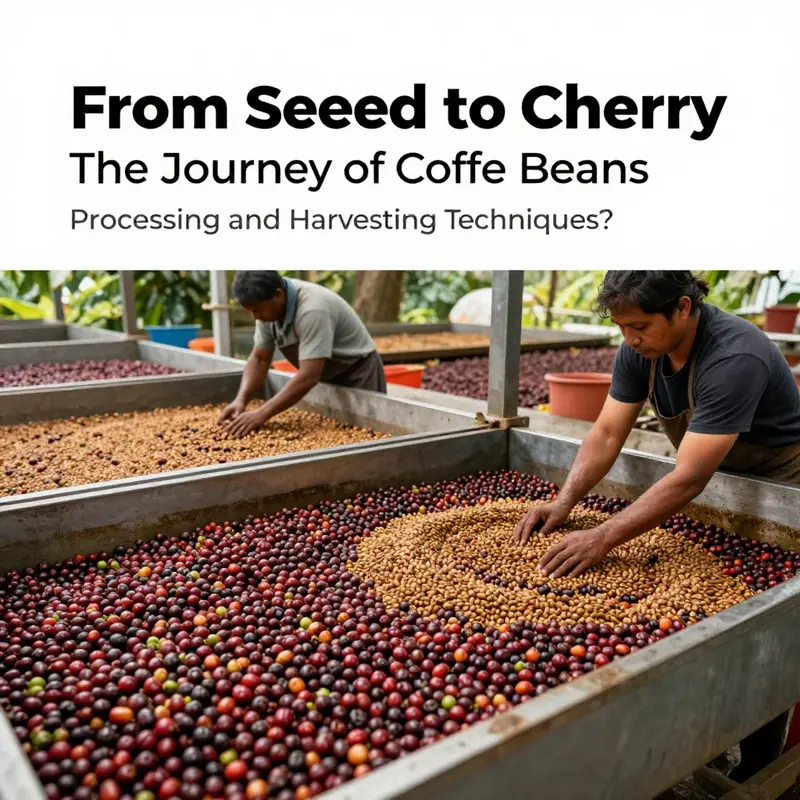
The journey of a coffee bean begins on a small evergreen shrub in the coffee belt and travels through a living web of soil, shade, insects, and careful human care. The plant first flowers, and fruits develop into red or yellow cherries, each housing two beans wrapped in parchment. Harvesting methods vary: selective picking for quality, strip picking for speed, and, in some regions, mechanized methods on large plantations. After harvest, processing methods reshape flavor: washed, natural, and honey. Washed coffee yields a cleaner, brighter cup; natural drying emphasizes body and fruity notes; honey preserves some sweetness while maintaining clarity. Drying, fermentation, and moisture control are as important as the harvest itself. Elevation, climate, shade, and soil color the final cup, shaping acidity, aroma, and body. Arabica and Robusta offer different profiles, with Arabica prized for complexity and nuance and Robusta contributing caffeine and bold backbone. The chain from orchard to cup is a story of terroir, labor, and deliberate decision at every stage. Roasters tune heat and timing to reveal the bean’s character, while tasters seek balance that reflects origin. In this light, coffee is not just a beverage but a record of place, season, and human craft.
Final thoughts
In essence, the growth of coffee beans is a meticulous process influenced by various factors, from the conditions under which they are grown to the techniques used in harvesting and processing. Understanding these details fosters better business practices and ultimately leads to superior coffee quality. As you manage or expand your coffee business, attention to these aspects will enhance product excellence and sustainability.