

Understanding the distinction between espresso and coffee beans is crucial for coffee business owners seeking to refine their offerings. While espresso is a brewing technique, coffee beans serve as the base ingredient, which can affect quality, flavor, and customer satisfaction. This comprehensive overview will dissect the nuances between these two coffee components, focusing on their definitions, roles in preparation, brewing methods, flavor profiles, and caffeine content. Each chapter aligns to provide a detailed understanding, empowering businesses to make informed decisions in their coffee service.
From Bean to Brew: Demystifying Espresso, Coffee Beans, and the Art of the Shot
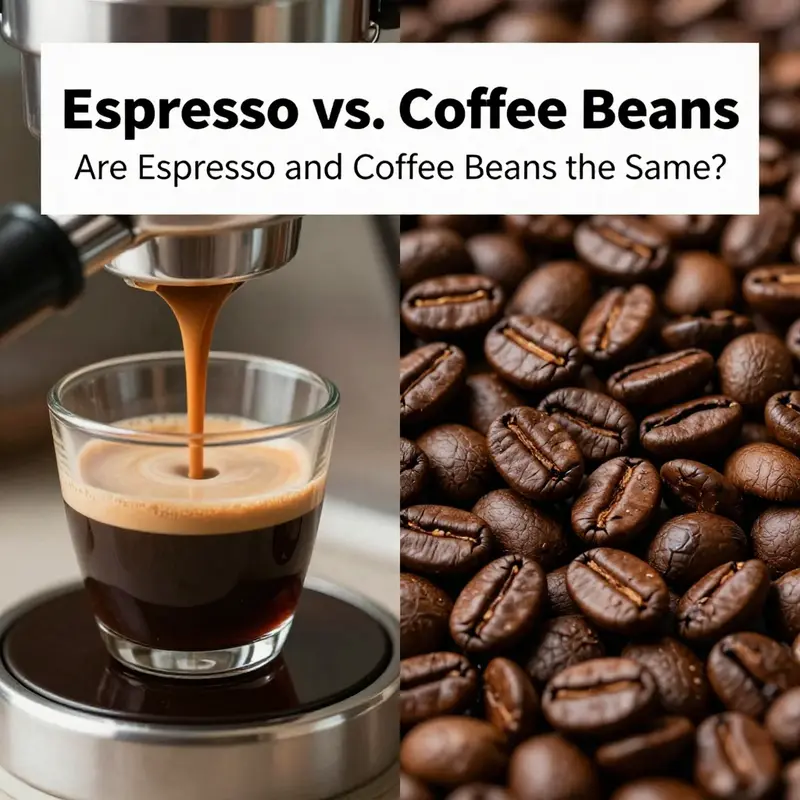
When people ask whether espresso and coffee beans are the same, they often collide two different ideas: what a bean is, and how a brew gets its shape. The answer rests in clarity about each element. Coffee beans are the raw, roasted seeds of a plant, the fundamental ingredient for every cup of coffee you might pour. They arrive from diverse origins, from highland Ethiopia to the valley-rich soils of Colombia, carrying a spectrum of flavors shaped by climate, altitude, soil, and harvest practices. Roasting then crowns those flavors with its own distinct arc. A light roast can reveal bright fruit and citrus notes, a medium roast tends to balance sweetness with acidity, and a dark roast brings chocolatey depth and a fuller body. Within this roasting spectrum, varieties such as Arabica and Robusta offer further personality, from nuanced sweetness and complexity to stronger, more robust notes. All of this matters because the bean supplies the potential flavor that a brewer will unlock through extraction. Espresso does not conjure a new kind of bean; it conjures a specific method of coaxing flavor from whatever beans you choose. The distinction is essential, and the difference in result is a story of technique, not an intrinsic difference in the seed itself.
Espresso is a brewing technique characterized by a demanding sequence of steps designed to maximize flavor extraction from a tightly packed bed of ground beans. The process relies on forcing hot water through fine grounds at high pressure, typically around nine bars, for a short period—usually about 25 to 30 seconds. The goal is a concentrated shot that measures roughly 25 to 30 milliliters. The presence of crema—the thin, golden foam that sits atop the liquid—has become a hallmark of classic espresso, signaling a particular balance of emulsified oils and dissolved solids that the high-pressure extraction creates. When you hear about espresso, the emphasis is less on the bean and more on the way the machine and the grind interact with the water. The bean is the medium through which the method expresses itself; the method is the sculptor that shapes intensity, mouthfeel, and aroma in a way that whole-bean coffee prepared by gravity or pressureless filtration would not.
This distinction helps explain why espresso is often associated with a darker roast, yet it is not a universal rule. Dark roasting can indeed contribute to a fuller body and a smoother mouthfeel, which many tasters associate with espresso, but espresso-friendly flavors can emerge across roast levels. The crucial variables are grind size, grind uniformity, dose, water temperature, and the duration of contact between water and coffee. The grind for espresso is exceptionally fine, enough to create substantial resistance to water flow. That resistance, in combination with pressure, drives extraction more quickly and intensively than other methods. In contrast, drip-style or pour-over coffee uses coarser grounds and relies on gravity or slower filtration, yielding a different balance of sweetness, acidity, and aroma. This is why the same beans can deliver very different experiences when prepared as espresso versus a daily-filtered cup—the variables of extraction rewrite the flavor map.
Roast level is another axis where beans and brewing methods intersect. Darker roasts can amplify body and bitterness, which many people associate with the boldness of espresso. But a bright, medium-roast bean can also yield a compelling espresso with lively acidity and floral or fruit-forward notes, if the grind and extraction align correctly. The bean’s origin—its terroir—still matters, because inherent flavors from origin, whether citrusy acidity from a high-altitude Ethiopian lot or caramel sweetness from a Central American profile, emerge differently under the pressurized, short-contact regime of espresso versus the gentler, longer extraction of other brews. In other words, the bean’s potential does not vanish under espresso; it is refracted through the method’s pressure and timing.
Because espresso is a technique rather than a bean type, a single batch of beans can support multiple brewing styles. A barista might grind the same beans finer for an espresso and coarser for a batch brew, adjust the water temperature, alter the dose, and tune the extraction time to highlight different facets of the same origin. The same seeds reveal a spectrum—nutty, chocolaty notes with the heavy body when extracted quickly under pressure, or brighter fruit tones and cleaner acidity when approached with different grind sizes and temperatures in non-espresso methods. This plasticity is one of coffee’s most compelling traits: the bean supplies potential, while the brewer decides how to unlock it.
What, then, is the practical takeaway for someone who wonders whether their espresso uses a different kind of bean? The answer is straightforward: beans are the raw material, and espresso is the method. The choice of bean does matter, but not because espresso demands a distinct category of bean. It matters because the origin, roast, and grind interact with the high-pressure extraction to create the distinctive shot. If you prefer a strong, velvety, crema-topped cup, you might gravitate toward a dark roast with a fine grind that yields a syrupy mouthfeel and pronounced roasted notes. If you want a more nuanced, syrupy espresso with brighter acidity, you might experiment with a lighter or medium roast, selecting beans with aromatic compounds that can bloom under pressure and short extraction. Either way, the same fundamental ingredient—the bean—serves as the source material.
The differences between espresso and other coffee experiences are therefore not rooted in the beans themselves but in the extraction journey. When evaluating strength, flavor, and caffeine, it’s important to separate the idea of “strong beans” from the idea of “strong brew.” A shot of espresso delivers a concentrated amount of caffeine per ounce, but it is usually consumed in much smaller quantities than a typical cup of drip coffee. Caffeine content depends on many factors—bean type, roast level, grind size, dose, and serving size—but the perceptual difference between espresso and drip is often a product of both concentration and the sensory profile created by rapid extraction. A single shot can be robust and intense, while a larger cup brewed through a slower process might deliver a more balanced or nuanced experience, even if the total caffeine differs depending on serving size.
For anyone who wants to explore this topic more deeply, the practical path is experimentation. Start with the same batch of beans and compare two brews side by side: espresso and a standard drip or pour-over. Note how the grind size, pressure, and contact time change the aroma, sweetness, bitterness, and mouthfeel. Then switch to a different roast level with the same beans and repeat the comparison. You may discover that the bean’s inherent flavor profile remains recognizable across methods, but the method reveals or suppresses different components. This approach makes clear that espresso does not belong to a different family of beans. It belongs to a different family of extraction techniques that reveals a portion of the bean’s personality in a way that’s distinct from gravity-fed or filtration-based brews.
Another layer worth considering is the cultural and historical context behind the espresso ritual. The method arose in environments where speed, consistency, and a high-volume workflow drove the development of equipment capable of delivering a standardized shot. The result is a beverage that embodies precision and craft: a small, intensely flavored excerpt of a larger coffee story, crafted with attention to grind, pressure, and timing. Yet the beans themselves carry centuries of cultivation behind them—the varieties, the soils, and the farmers who selected, harvested, and roasted them long before a machine pressed water through them at high speed. In this light, espresso becomes less about redefining the bean and more about orchestrating a particular moment of flavor that reveals how versatile the humble seed can be when it meets the right force and the right timing.
In sum, espresso is not a different species of bean; it is a distinctive method of extraction designed to unlock concentrated flavor quickly. The bean’s origin, roast, and grind all shape that flavor, but the defining feature remains the brewing technique: high pressure, short contact, and a carefully measured dose that yields a small, jewel-like shot with a crema crown. Understanding this clarifies a common confusion and invites a more nuanced appreciation of both the raw material and the artistry of preparation. When you appreciate the bean as the source of countless possibilities, and the espresso method as a precise instrument for drawing those possibilities to life, the question of sameness becomes not about beans versus brew, but about the dialogue between seed and technique that every cup embodies.
null
null
Between Bean and Brew: Understanding How Espresso Is a Method, Not a Bean
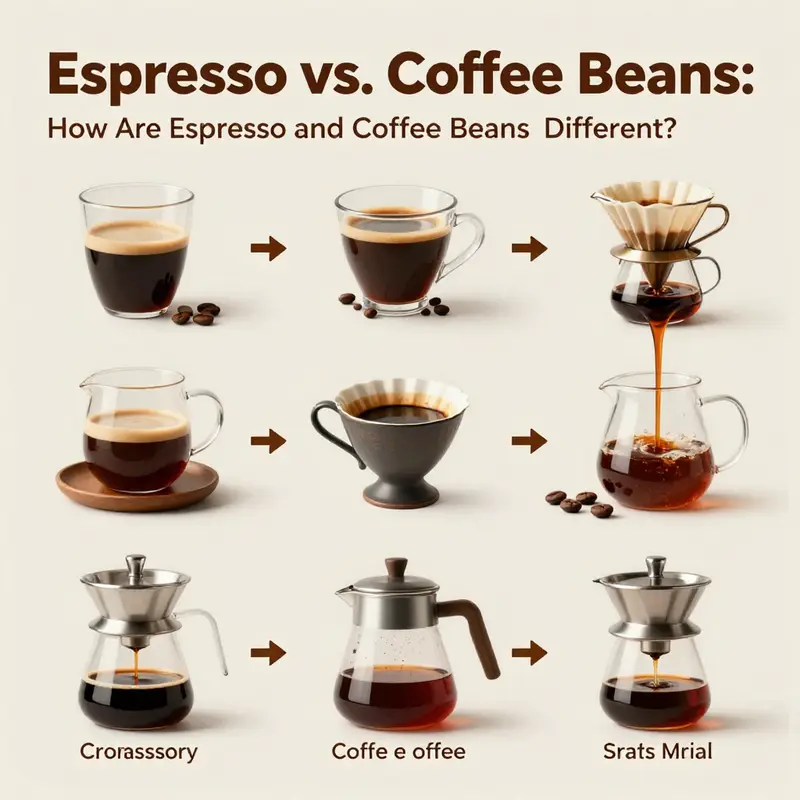
Many of us reach for a mug and assume that espresso is a different kind of bean, something categorically separate from the coffee we pour over the drip tray. In truth, the distinction lies not in the bean itself but in how we extract flavor from it. Espresso is a brewing technique that uses pressure, precision, and a short window of time to transform grounded beans into a concentrated, crema-topped shot. The beans that go into that shot are the same raw material that can yield a clean, light-bodied cup when prepared with a different method. The confusion is understandable because the two forces—the bean and the brew—work so closely together that they seem inseparable. Yet if we disentangle them, a clearer picture emerges: beans set the potential, and brewing method defines the actual experience in your cup.
Steam, pressure, and grind size cooperate in a way that makes espresso a study in mechanical artistry as much as culinary science. The process begins by forcing near-boiling water through finely ground coffee at a high pressure, typically around nine bars, in a fraction of a minute. The goal is not just to saturate the grounds but to propel a cascade of oils, sugars, and aromatics into a tiny, intense shot—usually about 25 to 30 seconds for a standard serving. That brief, forceful interaction is what yields the characteristic crema, a golden foam that carries volatile compounds just beneath the surface. It also intensifies flavor perception, allowing bitter, sweet, and acidic notes to mingle in a way that a slower, gravity-driven extraction rarely achieves. The mechanics matter as much as the beans themselves; a slight deviation in grind, dose, or water temperature can tilt a shot toward sourness, bitterness, or a dull, flat profile.
In contrast, regular coffee—whether drip, pour-over, or a French press—relies on gentler physics and longer contact times. Gravity or immersion guides the extraction, and the grind is coarser to accommodate slower flow or longer steeping. The water can dwell with the grounds for several minutes, and the result is a cup that often emphasizes clarity, balance, and a cleaner articulation of origin notes. The differences are tangible: espresso tends to deliver a fuller body, more intense sweetness, and a lingering mouthfeel that coats the palate; drip or pour-over tends toward transparency, where the distinct fingerprints of the bean’s origin—its terroir, its varietal character, its roast level—are allowed to emerge with less interference from dense oils and concentrated sugars. Both approaches celebrate the same raw material, but they coax it into an altogether different personality.
This is where the question of “the same” versus “different” naturally arises. Are espresso and coffee beans the same? The straightforward answer is no. Beans are the seed and the source of aroma compounds, caffeine, and soluble solids. Espresso is a method of bringing those soluble solids into a small, concentrated, texturally unique beverage. The same bean can be used to brew a shot and a mug—the same origin and roast can yield a wildly different expression depending on the chosen method. The bean’s origin—geography, altitude, soil, farming practices—imparts inherent flavors, while the roast level shapes how those flavors present themselves under pressure or through gravity. Dark roasts bring caramel and chocolate notes forward, masking some acidity, and they can feel sturdier in a dense espresso shot. Lighter roasts reveal bright fruit tones and nuanced florals, which can emerge vividly in a pour-over but may clash with the high-intensity extraction that espresso demands if not handled with precision.
Freshness matters profoundly for both paths. Freshly roasted beans release a bouquet of aromatics that fade with time, especially once ground. For espresso, where contact time is brief and the extraction is rapid, those aromatics are especially delicate and quickly depleted if the grind isn’t matched to the machine’s pressure and temperature. This is why many roasters blend beans for espresso, selecting two or three varieties that balance sweetness, acidity, and body. A well-chosen blend can provide a more forgiving, harmonious shot when push comes to pull. Blends are not about masking deficiencies; they’re about sculpting a flavor architecture that leverages the espresso process. The same beans, if ground coarser and brewed slowly as drip coffee, can reveal different aspects of the blend’s character—the sugars become lighter, the body less viscous, and the acidity more pronounced depending on the grind and brew parameters.
The roast level selection often becomes a practical conversation about balance. Darker roasts are popular for espresso because their lower perceived acidity and more syrupy sweetness can translate into a bold, forgiving shot even when the grind is slightly off or the tamping pressure is not perfectly even. That forgiving quality is useful in cafes where consistency under time pressure matters. Yet the same dark roast can complicate a pour-over, where the goal is a cleaner, more transparent cup that highlights nuanced flavors and a crisp acidity. Conversely, lighter roasts can be superb for pour-over, where the journey of the water through the grounds carries a high degree of flavor precision. But in espresso, a light roast demands refined technique—the grinder must be precise, the dose measured, the water temperature tightly controlled—to avoid under-extraction and unwanted sour notes.
Extraction is the common thread that binds these conversations. In espresso, the interplay of grind size, dose, distribution, and tamping pressure creates channels or avoids them. Channeling is a risk when water chooses the path of least resistance, rushing through certain grounds and bypassing others. In a well-tuned machine, the tamp is even, the bed of coffee is uniform, and the pressure creates an even infiltration that dissolves a broad spectrum of compounds. The result is a dense, oil-rich beverage with a tactile mouthfeel, a complex aroma, and a layered flavor profile that can include hints of chocolate, caramel, toffee, and sometimes a whisper of fruit or spice. In drip or pour-over, the aim shifts toward even saturation and a steadier extraction rate. Water flows more slowly, interacting with a broader surface area of grounds and extracting flavors in a more measured, sometimes more delicate, fashion. The ability to control flow rate and saturation makes pour-over a favorite for exploring a bean’s subtlety, while espresso emphasizes intensity and structure.
If you were to pick up a bag of beans with the idea of using them for both espresso and regular coffee, you would be choosing a versatile starting line. The same bag can yield dramatically different results under the right conditions. A barista might blend beans to craft a balanced espresso shot that still retains distinctive origin notes; that same blend, ground coarser and brewed as a filter coffee, could reveal different facets of the blend’s character—perhaps more sweetness, or a cleaner acidity, or a longer finish. The key is to tailor the grind size, the brew ratio, and the extraction time to the chosen method. A precise grind for espresso, often fine and consistent, is not interchangeable with the coarser grind used for a good drip. Water temperature matters too: near-boiling water accelerates extraction in espresso, while slightly lower temperatures can reveal more nuanced flavors in pour-over or drip, without tipping into over-extraction.
This interconnectedness has consequences for everyday practice. Home brewers who want to taste both worlds can begin with a single bag of high-quality beans and let the technique be the differentiator. If you want an espresso-like intensity at home, you would grind finer, dose with careful attention, and extract for a fixed window around 25 to 30 seconds under steady pressure. If you want a more transparent, expressive cup from the same beans, you would grind coarser, adjust the water-to-coffee ratio, and pour or drain over a longer period. The objective is not to force one bean to do the job of another but to understand how the same starting material can be coaxed toward very different outcomes by changing the journey from grounds to cup.
Behind the scenes, equipment shapes the experience too. Espresso machines, with their built-in pressure capability, thermostatic control, and consistent pump performance, are calibrated to deliver that precise extraction. A reliable grinder is essential, one capable of producing uniform particles so the water can contact the grounds evenly. With regular coffee, the array of acceptable tools is broader—drip makers, pour-over setups, and French presses each demand different grind sizes, filtration considerations, and timings. Yet the underlying science remains the same: grind, water, time, and temperature—each variable tunes the flavor, caffeine perception, and mouthfeel of the finished cup.
In the end, the distinction between espresso and coffee beans is not about a different species or a separate category of bean. It is about the marriage between bean and brew. Espresso embodies a controlled, high-pressure, short-exposure extraction that concentrates flavor and body into a compact shot. Regular coffee presents a longer, gentler relationship between water and grounds, yielding a cup that often emphasizes clarity and origin character. The beans themselves carry flavor potential shaped by where they come from, how they are roasted, and how fresh they are. The method of extraction unlocks or guards those flavors, shaping what you experience on the palate.
For anyone curious about the craft, the takeaway is practical and empowering. Your beans are a source of potential, not a fixed outcome. By understanding how grind size, dose, tamping, water temperature, and extraction time interact, you can predict—at least to a useful degree—whether your next espresso shot will taste like dark chocolate and caramel or more like a bright citrus bouquet. You can also anticipate how the same beans will respond when brewed as a pour-over or a filter coffee, and adjust your technique accordingly. The goal is not to choose one path and read it as the sole truth but to explore the spectrum of possibilities that emerges when a single bean line is invited to participate in more than one kind of brew.
As you navigate this landscape, remember that the magic lies in balance. The best espresso and the best regular coffee share a common fidelity to the bean’s origin, its roast, and its freshness. They diverge in how aggressively we coax flavor from that bean, how much body we demand, how we measure sweetness, acidity, and bitterness, and how we perceive the texture of the mouthfeel. The journey from bean to brew is a reminder that coffee, at its heart, is a dialog between material and method. Beans speak in aromas and sugars; brewers listen through heat, pressure, and time. The result is a cup that reveals different stories depending on the route you take, yet both stories come from the same seed. In that sense, espresso is not a separate bean at all—it is a crafted expression, born from a method that, when paired with the right bean, can transform ordinary grounds into an extraordinary moment.
Roast, Grind, and Pressure: How Flavor Profiles Distinguish Espresso from Ordinary Coffee Beans

Espresso is not a bean, yet it cannot exist without the beans that feed it. The difference between a shot and a pot of drip coffee becomes clearest when we listen to flavor, aroma, and texture rather than to the labels we attach to them. In this chapter, we explore how the flavor profiles and roast levels of coffee beans are shaped by the method that uses them. The espresso process is a marriage of grind size, pressure, water temperature, and time. When these elements align, the result is a dense, aromatic shot that carries warmth and intensity in a small volume. When they misalign, the shot can taste sour, bitter, metallic, or thin. The beans, however, are not to blame for these extremes alone. They are the raw material whose inherent traits are amplified or muted by the brewing method.
The core idea is simple: espresso is a brewing technique, not a bean type. Yet the technique pulls on certain bean characteristics more than others. Roasting, for instance, becomes a crucial instrument in balancing espresso’s high-pressure extraction. A darker roast is not universal; it is a studied choice. It is chosen because it tends to temper acidity, boost sweetness, and contribute to a fuller body. The caramelized sugars released by the longer roast offer a natural sweetness that helps cover the sharp edges that espresso extraction can reveal in a bright or delicate origin. The roast also affects crema—this lacy, golden layer that sits on top of a well-pulled shot. The crema is not merely decorative. It protects and carries aroma, and its stability is often linked to the roast’s oils and colloids. In this sense, darker roasts sometimes have an edge, because their oils emulsify in a way that helps create lasting crema.
But the relationship between roast and flavor in espresso is not a simple matter of darker equals stronger. The quick, forced extraction that defines espresso emphasizes acidity, sweetness, bitterness, and body in a compact profile. The same bean roasted dark may produce a shot that reads as chocolatey and syrupy, yet another dark roast of a different origin might taste burnt or flat if the grind size or tamping pressure is off. Here the grind size matters as much as the roast. Espresso demands a fine grind that allows water to contact a large surface area in a short time. The delicate balance of contact-time around 25 to 30 seconds is not an arbitrary target. It is the window in which the roast’s sugars, acids, and aromatics release in a way that feels cohesive rather than fractured. If the grind is too coarse, the extraction is underdeveloped; the shot may taste thin and sour. If it is too fine, over-extraction steals sweetness, leaving bitterness that lingers on the palate. In either case, the roast level has made a promise to the brewer about what flavors will emerge when pressure and time compress the bean’s character.
In contrast, drip coffee leans toward a different set of constraints and possibilities. The grounds are typically coarser, the brew time longer, and gravity or filtration does the heavy lifting. These conditions allow more of the bean’s origin story to speak—its terroir, its floral notes, its citrus zest, its fruit brightness. A lighter or medium roast is often preferred for regular drip because it preserves delicate acidity and preserves the bean’s inherent sweetness without overwhelming the palate under extraction. The resulting cup can reveal a broader map of flavors, from the perfume of jasmine to the brightness of lemon, or from wild berry to a honeyed sweetness depending on origin and processing. The same bean, under different conditions, can deliver dramatically different experiences depending on whether it is extracted through a slow pour-over or through the fast, high-pressure routine of espresso.
An important nuance is that many espresso blends are carefully engineered. They are not a single origin but a curated harmony of beans chosen to complement the espresso method. Usually two or three beans from different origins are blended to balance acidity, sweetness, and body. The goal is not to showcase a single terroir but to create a consistent, reliable flavor profile that holds together under pressure and at the crema’s surface. The blend gives roasters more tools to tune the shot, to shape the mouthfeel, to guide the aromatic release, and to stabilize crema across different batches. A specialty espresso might still lean toward a single-origin bean, but the broader market often relies on blends deliberately designed to respond well to an espresso machine’s demands.
Drip coffee, by contrast, may embrace single-origin beans more readily because the gentle extraction can highlight the distinct flavors of a given farm or processing method. When a single-origin bean is used for drip, the brewer becomes a curator of origin notes, guiding the cup toward a particular region’s character. In this light, roasters and baristas are balancing two essential impulses: to preserve origin-defined flavors and to ensure that the roast and grind settings reveal those flavors without betrayal by over-extraction or under-extraction. The result is a spectrum of experiences that can range from bright and fruity to deep, chocolatey, or nutty, each with its own sensory signature.
The practical upshot of these relationships is that, yes, you can technically use the same coffee bean for espresso and for drip, but you will seldom get the same flavor experience from both unless you adjust the roast profile and grind size to fit the method. A bean roasted slightly lighter may shine in a pour-over, while the same bean roasted darker might carry more forgiving sweetness through an espresso shot. Yet even with adjustments, the underlying origin notes—whether they come from a high-altitude Ethiopian lot or a sun-dried Central American bean—will be presented differently. It is not the bean that changes, but the story the brew tells.
Flavor and roast level are not the only variables; water temperature and pressure play their parts too. Espresso shoots a narrow beam of hot water through compressed grounds at around nine bars of pressure. The higher pressure intensifies flavors and textures, extracting more solubles in a shorter window of time. This mechanical intensification is part of what makes espresso feel so concentrated. The sensitivity of the process means even subtle shifts in variables can yield noticeable changes in acidity, sweetness, and bitterness. A fine-tuned grinder, a precise tamp, and a well-calibrated machine all contribute to a consistent extraction that lets the roast’s character come through in a stable, balanced way. When a barista nails this balance, the shot presents an integrated picture: a bright, crisp start, a fuller mid-palate, and a lingering, sometimes cocoa-like finish that makes crema sing and the aroma cling to the lips.
In contrast, drip coffee leans toward a different set of constraints and possibilities. The grounds are typically coarser, the brew time longer, and gravity or filtration does the heavy lifting. These conditions allow more of the bean’s origin story to speak—its terroir, its floral notes, its citrus zest, its fruit brightness. A lighter or medium roast is often preferred for regular drip because it preserves delicate acidity and preserves the bean’s inherent sweetness without overwhelming the palate under extraction. The resulting cup can reveal a broader map of flavors, from the perfume of jasmine to the brightness of lemon, or from wild berry to a honeyed sweetness depending on origin and processing. The same bean, under different conditions, can deliver dramatically different experiences depending on whether it is extracted through a slow pour-over or through the fast, high-pressure routine of espresso.
The difference between espresso and drip coffee, when viewed through the lens of flavor profiles and roast levels, is not a debate about which is better or worse. It is a reminder that coffee beans are not a uniform thing; they are the raw material whose potential becomes a spectrum of experiences only when we choose a roast, a blend, a grind, and a method that suits the intended brew. Espresso leans on darker roasts and carefully built blends to balance the intense extraction and the crema’s texture. Drip coffee tends to lean toward lighter or medium roasts to reveal a broader array of origin flavors and to allow a longer extraction to unfold more leisurely. Yet both paths are valid routes through which the same living plant’s flavors are revealed, shifted, and sometimes transformed by the alchemy of preparation.
For readers who want to explore further, a deeper dive into espresso beans and their impact on flavor can be found in external resources that map the terrain of crema, body, and aroma. This broader perspective helps distinguish the bean’s inherent properties from the craft applied during brewing. The conversation about beans and methods is ongoing, vibrant, and deeply personal; it invites experimentation, tasting, and careful observation. In practice, many coffee lovers grow confident enough to switch between methods with a single, well-chosen bean, adjusting the grind and extraction time to tell new stories about the same origin. Others prefer to keep a dedicated espresso blend and a separate drip roast, testing how each profile performs under the appropriate conditions. Both approaches celebrate the bean’s versatility and remind us that the boundary between espresso and ordinary coffee beans is not a wall but a doorway to variety.
To truly grasp these differences, many tasters perform side-by-side flights, tasting a single origin roasted lightly for drip and the same origin roasted dark for espresso. The exercise highlights how extraction time and pressure alter the perception of acidity and sweetness. You may notice that the bright notes fade in the espresso but the roasted sweetness or cocoa becomes more pronounced. The body and mouthfeel also shift; the crema’s texture can carry aromas that drip coffee never captures in the same way. Tasting in a controlled setting—brewed with consistent water quality, temperature, and grind size—helps isolate the variables and deepen understanding. Keep a tasting notebook: note the origin, roast level, and method, and compare aromas, acidity, sweetness, bitterness, and body. Over time, you’ll learn to recognize which profiles align with your palate and how to select beans for your favorite method. It is this experiential knowledge—the result of careful roasting and method design—that makes the relationship between espresso and coffee beans so enduring and dynamic. The bean remains constant, the roast evolves, and the brewing method invites you to hear a different part of the coffee’s story.
For a deeper exploration of the nuanced approach to espresso bean selection and its impact on flavor, see the external guide linked below. https://www.coffeereview.com/
Caffeine in Context: Why Espresso Isn’t the Bean, and the Bean Isn’t the Brew
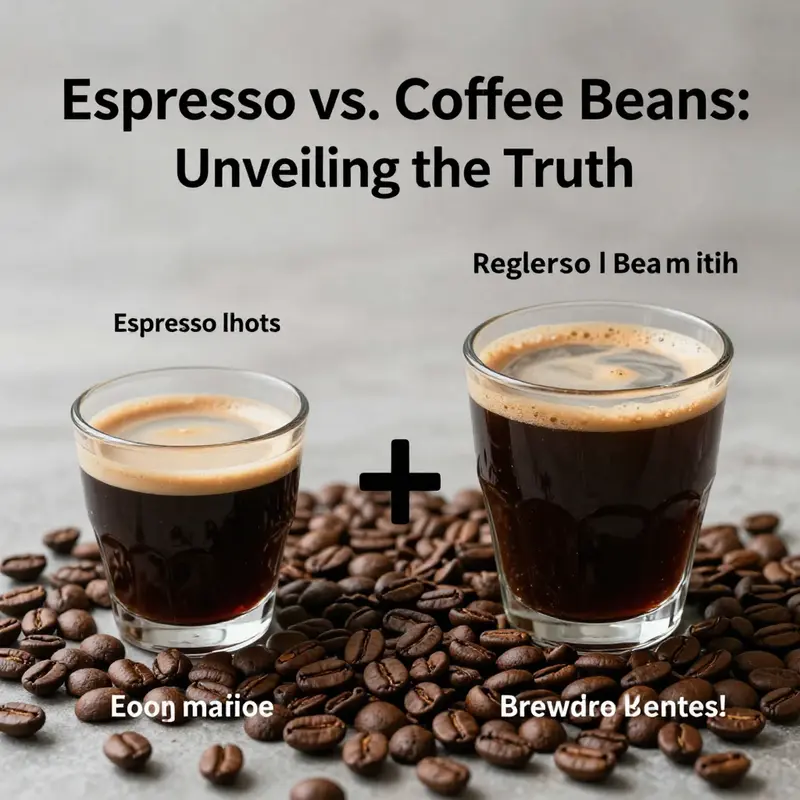
Espresso and coffee beans are related but not the same. A bean is a seed from a plant, a raw material with a caffeine profile, while espresso is a brewing method that uses pressure to extract flavor and caffeine into a small, concentrated shot.
Caffeine content is measured per serving, not per bean. Robusta beans generally contain more caffeine than Arabica, often about twice as much in the green bean, but the final caffeine in a cup depends on how much liquid is consumed and how completely the coffee is extracted.
Espresso relies on high pressure (about nine bars), a fine grind, and a short extraction window (roughly 25–30 seconds). A typical shot is 1 to 2 ounces and yields about 60 to 80 mg of caffeine, though numbers vary with bean type, roast level, and grind consistency.
Drip coffee, by contrast, often yields more caffeine per cup because the serving size is larger. An 8-ounce cup commonly contains about 95 to 120 mg of caffeine, though this depends on grind size, brewing time, and filtration.
Strength is about concentration and flavor, while caffeine is a separate metric that depends on serving size. A strong-tasting espresso may deliver about the same caffeine in total as a larger cup of drip simply because the espresso serving is smaller.
The roast level and species influence the caffeine story, but caffeine content is anchored more in the bean’s potential and the amount of beverage you drink than in the roast appearance. Robusta-forward espresso can deliver more caffeine per ounce, but the total caffeine per serving still depends on how much liquid you drink and how the shot is prepared.
In practice, understanding your caffeine intake means considering serving size, bean species, roast, grind, and brew method together rather than in isolation.
Final thoughts
In conclusion, espresso and coffee beans are fundamentally different, despite their close relationship. Espresso is a specialized brewing method that utilizes coffee beans, typically with finer grind sizes and specific roast levels to create a distinct flavor experience. Understanding these differences allows coffee business owners to capitalize on the unique characteristics of each, enhancing their offerings and meeting customer preferences. By investing in the right coffee beans and mastering brewing techniques, you can elevate your coffee service and strengthen your brand’s market presence.