

Grinding coffee beans is not just a routine task; it is an art that can significantly enhance the quality of your coffee offerings. As a business owner in the coffee industry, understanding the nuances of how to grind coffee beans is essential for delivering a superior product. This article delves into the two primary grinder types, burr and blade, highlighting their differences, benefits, and the impact of grind size on popular brewing methods. Furthermore, we will discuss techniques to preserve the freshness and flavor of your coffee, which can set your establishment apart in a competitive market. Each chapter builds a comprehensive understanding of how to grind coffee beans effectively to achieve optimal results for your business.
Grind Mastery: Burr vs. Blade for Fresh Coffee

Grinding coffee beans is the stage where aroma takes its last leap toward your cup. It is about shaping those pieces so water can extract what you want from each bean. The grind you choose – burr or blade – sets the stage for extraction, flavor balance, and aroma. Think of grind size as a spectrum, where the position on the spectrum helps determine whether your coffee tastes like a chocolatey, citrusy chorus or a brittle, uneven cup that fades quickly. Grinding is a craft that interacts with water, heat, time, and brewing method to reveal the bean’s character. \n\nA blade grinder chops beans with a single rotating blade, producing an uneven mix of fine dust, mid-sized particles, and larger chunks. This variability affects extraction because surface area and particle distribution drive how water interacts with the grounds. Finer particles dissolve quickly and can over-extract, bringing bitterness. Coarser fragments underperform, leading to under-extraction and a sour edge. The result can look balanced but often reads as uneven in flavor and aroma. \n\nA burr grinder, by contrast, crushes beans between two surfaces to produce a uniform particle size. Conical burrs, in particular, tend to be quieter and generate fewer ultra-fine particles that can cause over-extraction. Uniform grounds let water flow more evenly, delivering a cleaner cup with clearer bean sweetness, acidity, and body. The grind size is just part of the story; consistency enables more predictable extractions and better alignment with water temperature, brew time, and filtration. \n\nMaintenance matters: burrs need occasional cleaning to stay sharp and cool, while blades are easier to clean but dull more quickly, which can worsen inconsistencies. If you are short on time or budget, a blade grinder can still work for simple drip, but a burr grinder offers greater precision and versatility across methods. \n\nAs you experiment, let aroma, sweetness, acidity, and body guide you. Start with a standard setting for your method, then adjust up or down by small steps and taste. The goal is a calm, balanced cup where the aroma matches the flavor and the finish is clean. \n\nExternal resources and hands-on practice can help you refine your technique and build a reliable grind routine.
The Right Size, The Right Brew: How Grind Size Shapes Flavor Across Brewing Methods

Grind size is not just a technical spec on a grinder’s dial or a laboratory term for baristas and coffee nerds. It is the invisible conductor of a brewing symphony, guiding how water meets coffee and how that encounter unfolds in aroma, body, and finish. When you start with whole beans and a good grinder, you are not simply breaking seeds into bits; you are deciding how quickly and how evenly those bits will reveal the coffee’s character. The conversation between grind size and brewing method is ancient and practical at once. It is ancient because humans have long noticed that the texture of ground coffee changes the way it tastes when hot water passes through. It is practical because we now have a spectrum of methods, each calling for a distinct particle size to unlock its best expression. The result is not a single best grind for all cups, but a precise tuning of grind to method, a careful negotiation between speed of extraction and the complexity of the flavors inside the bean’s cellular structure. In this chapter, we wander through that landscape with a steady hand and a curious palate, letting the science of particle size meet the art of taste.
First, imagine the bean’s interior as a lattice of pathways and chambers. When hot water hits the coffee, it begins to dissolve soluble compounds—acids, sugars, oils, and aromas—while leaving behind insoluble components. The grind size acts like a sieve and a dam at once. Fine particles increase the surface area, inviting water to interact with more surface in a shorter time. Coarser particles reduce surface contact and create fewer touched surfaces for extraction. The balance between these forces—surface area, contact time, and water pressure—determines whether flavors emerge as vibrant brightness, chocolatey depth, fruity acidity, or a dull, muddy profile. This is why the method you choose carries such weight, why a coarse grind that works beautifully for French press may taste flat in a pour-over, and why a fine grind is essential for espresso but ruinous for a French press. The grind is the variable that makes the method work or falter, and it is the variable you can control with intention every morning.
Let us begin with the French press, a method that invites a bold, unadorned expression of coffee’s character. If you ever brewed coffee and found it muddy or heavy, chances are the grind was not aligned with the method’s needs. A coarse grind, roughly the texture of breadcrumbs, is the ally here. Its larger particle size slows extraction, giving water time to dissolve the most desirable compounds while leaving behind much of the fine, bitter, or astringent residues that can accompany a finer grind. With a correct coarse grind, the water acts as a patient courier, pulling from the grounds the oils and aromatics that contribute body and depth while keeping the cup sediment-light. When the grind leans toward too-fine, extraction accelerates, leading to over-extraction, a bitter edge, and a heavier mouthfeel. A texture that is too coarse, on the other hand, can produce a weak cup, where the delicate sugars and acids remain largely untapped. The trick is not simply coarse in general but consistently coarse across the entire bed of grounds. In practice, this means using burr grinders that allow you to dial in a specific setting rather than guessing by feel. Conical burrs have the advantage here; they tend to produce fewer fines and deliver a more uniform, predictable bed. The result is a cleaner, more sediment-light French press experience that still carries a satisfying body. The grind’s size, when paired with a steady immersion time and a careful stir, yields a cup that glows with clarity and a finish that lingers pleasantly, like the memory of a roast that touched a few of your best sensory notes without shouting at you.
But the ground coffee universe does not stop at the press. If we pivot to pour-over or drip coffee, the wheel of grind size turns to a finer setting than the French press but not as fine as espresso. The medium grind sits between coastal shorelines of texture, a texture that resembles wet sand and that dissolves with the water’s patience. Pour-over demands this balance: enough surface area to allow a steady, even extraction, yet not so much that the water saturates the grounds too quickly or too aggressively. When the grind is medium and the pour is deliberate—favoring a slow, controlled pour that wets all grounds evenly—the result is often a clean cup with precise sweetness, a balance of acidity and body, and a finish that feels precise rather than blunt. Drip coffee shares a similar geometry, though many brewers encounter their own idiosyncrasies because the machinery—filters, flow rates, and basket design—introduces variables beyond grind alone. In these methods, the grind size must harmonize with the brewer’s flow dynamics: too fine, and you might choke the filter and over-extract; too coarse, and you risk under-extraction and a watery cup. The art, then, is to tune the grind so it matches the machine’s rhythm and the human palate’s desire for clarity, sweetness, and a sense of the bean’s origin in the cup’s aroma.
Espresso, by contrast, asks for a very fine grind, nearly powdered sugar in some examples, because the extraction occurs under pressure and in a very short window. The grind here is not just about fineness; it is about consistency at a microscopic level and the ability of the grounds to compact into a puck that water can force through uniformly. A high level of consistency matters more in espresso than in most other methods because any unevenness translates into uneven extraction during the high-speed, high-pressure brew. The tiniest variations in particle size can become magnified when water pumps through the bed in a matter of seconds. A grinder that produces a uniform, finely milled texture helps ensure that the extraction proceeds evenly, yielding a cup that has sweetness, crema, and a layer of aromatic complexity on top of a robust body. A grinder that generates too many fines—tiny particles that are almost powder-like—can clog the espresso bed, leading to over-extraction or channeling, where water carves a shortcut through the puck rather than traversing evenly. The antidote is a high-quality burr grinder with precise settings, an occasional calibration check, and an understanding that espresso is a method where a slight deviation in grind size can lead to a noticeable shift in flavor, acidity, and aftertaste. In this realm, the texture is not a minor detail; it is the architecture of flavor under pressure, and it demands both care and a willingness to experiment within narrow bounds.
To truly grasp how grind size interacts with extraction, we must also attend to the consistency of that grind. Inconsistency—the presence of a spectrum from coarse to fine—speaks to trouble in extraction. If every particle were the same size, water would extract at a uniform rate, and the resulting cup would reflect the bean’s true profile with fewer aberrations. Uneven particles, conversely, create a tug-of-war inside the brewer. Some grounds hue fast, releasing their soluble content early and leaving behind stubborn, under-extracted chunks. Others take their sweet time, contributing a sweetness and nuance only after the initial wave of brightness has passed. The chaos of inconsistent grind sizes is what coffee professionals call “fines evenings,” and while some very patient home brewers attempt to salvage flavor via technique—pulsing, stirring, or adjusting pour rates—consistency remains the keystone of predictability. A high-quality burr grinder helps minimize this problem by delivering a narrow particle size distribution. In practice, that means the grounds are more uniform, extraction proceeds more evenly, and the final cup tends to be cleaner, with fewer harsh notes and fewer silt-like sediments in the bottom of the cup.
The type of grinder matters here, though it is not the only factor. Blade grinders, with their spinning blades, shatter beans in a somewhat chaotic fashion, producing a mix of coarse chunks and fine powder. The result is often a cup that tastes uneven. You may manage this with technique—brief pulses, a careful shake to redistribute grounds, or a repeat grind for a more uniform outcome—but the constraints of a blade grinder are hard to overcome. The fundamental trade-off is that blade grinders are typically more affordable and convenient, yet they undermine the precision many brewing methods require. The better experience, especially for those who drink coffee daily or explore multiple methods, comes with a burr grinder. The burrs grip the beans and release them in a more controlled fashion, enabling you to dial in a precise setting that yields the texture your chosen method demands. For those who chase the most refined cup, the burr grinder becomes less of a gadget and more of a culinary instrument, a tool that translates the beans’ inherent complexity into a cup that is faithful to their origin and roast.
Roast level also taps into how grind size interacts with extraction. Darker roasts display different dynamics than lighter roasts. A darker roast often presents with more solubility, which can make the grind’s effect more pronounced; a medium grind might achieve a smoother extraction with less lingering acidity, while a finer grind could exaggerate an already bold, roasty profile. In contrast, a lighter roast tends to reveal more delicate aromatics and nuanced acidity. The grind must respect that sensitivity: a slightly finer grind can bring out brightness and complexity without sacrificing balance if the brew parameters are adjusted—pour rate, water temperature, and contact time—so that extraction remains even. The interplay between roast, grind, and method is a dance of variables, and the more you understand their relationships, the more you can coax a coffee’s origin story into the cup. Whether you are chasing a bright, clean cup or a dense, syrupy one, grind size and consistency are the levers you press to shape the narrative.
A practical truth emerges from this exploration: grinding your beans just before brewing yields the strongest aromatic profile and the most vibrant flavors. Once the bean is ground, its surface area is vastly increased, and volatile compounds begin to evaporate. Oxygen exposure accelerates this process, and aromas can fade over minutes if the grounds sit idle. This does not mean you must race to the grinder every morning; it does mean that precautions matter. Store whole beans in a cool, dark place, and when you decide to brew, grind only what you will use in a single session. This approach preserves the bean’s essential origin notes—citrus from a high-altitude region, chocolatey undertones from a mid-roast, or fruity perfume from a coffee that developed its sweetness in a sun-drenched environment. A simple ritual can help here: as the cup rests in its warm cup, you can take a moment to inhale the aroma before you sip, a reminder that the grind size is not a mere technicality but a pathway to a deeper sensory experience.
Let us consider the broader consequences of choosing the right grind size. The extraction yields—how much of the coffee’s solubles are dissolved into the brew—are tightly coupled with grind size, contact time, and water temperature. A fine grind in a long brew, or a fast brew with a fine grind, tends to over-extract, pulling from the bean bitter compounds and leaving a heavy, dry finish. A coarse grind in a short brew risks under-extraction, erasing the delicate acids and sugars that give brightness and clarity to the cup. The sweet spot rarely sits at one exact number; it exists in a small range where your water flow matches your grind’s surface expression and your taste preferences. A well-calibrated burr grinder with a steady grind size, used with the appropriate brewing technique, yields a cup that tastes like a clear window into the coffee’s origin: its terroir, its roast, and the care of the roaster who coaxed its flavors from the bean. The bottom line is not merely “grind finer” or “grind coarser” but rather “grind with intention for this method,” a principle that becomes more meaningful the more you brew and taste with attention.
As you grow more confident, you may seek to tailor your grind to your equipment and the beans you use. Your grinder’s mechanics matter: ensure the burrs are clean, aligned, and in good condition. A bad alignment can produce micro-variations in particle size that ripple into extraction in unpredictable ways. Regular cleaning removes built-up oils that can alter grind texture and flavor. If you notice a waxy residue on the burrs or a metallic tang in the cup after long stretches of use, it is a sign that the grinder may need maintenance. In this sense, grind size is not simply a variable; it is a practice that requires attentiveness to both the beans and the machine. The tactile feedback—the feel of the grind, the sound of the burrs, the scent that rises from new grounds—becomes a way to calibrate your senses toward a more repeatable experience. And repeatability matters: it is what allows you to move beyond recipes and into a deeper relationship with the coffee you drink, to understand how tiny changes in grind texture can shift the balance between sweetness and acidity, between aroma and aftertaste.
To connect these ideas with a practical mindset, consider the end result you desire in your cup. If you want a cup with clarity, a bright aroma, and a clean mouthfeel in a pour-over, aim for a medium grind and a slow, even pour that saturates all grounds evenly. If a French press is your daily ritual and you crave a full-bodied, comforting cup with a hint of chocolate, a coarse grind with a longer immersion and a gentle stir can yield a sturdier brew without excessive sediment. If you chase espresso’s iconic intensity and a velvety crema, you will refine toward a fine, uniform texture and a stable extraction that respects the machine’s pressure and your dose. Each intention maps to a different grind size and a different approach to the brew, and the discipline of measuring and adjusting—through small, incremental changes—becomes the engine that drives flavor toward your palate’s preferences. In this sense, grind size is not a fixed rule but a flexible instrument, a way to translate bean variety, roast, and technique into the cup’s sensory signature. The better you understand this instrument, the more your morning ritual becomes a dialogue with the bean, a conversation about origin, roast, and craft, rather than a simple act of making coffee.
For readers who enjoy a more tactile or experimental approach, there is value in practicing with a single origin and varying the grind size while keeping other parameters constant. Start with a medium grind for pour-over and observe how the cup’s brightness, sweetness, and body shift as you move to slightly coarser or finer textures. Note the point at which the cup loses balance or gains clarity. This navigational map helps you learn the landscape of your grinder and your brewer, turning the abstract idea of “grind size matters” into an actionable personal preference. In this way, the science and the art of grind size converge into a daily quest for flavor, a pursuit that rewards curiosity, patience, and careful tasting. The more you practice, the more your intuition grows, and the more your choices feel like confident decisions rather than guesses.
The overarching message, then, is straightforward and empowering: the grind size you choose for your beans defines, more than any other single variable, how a cup will open on the palate. For those who want a reliable, repeatable path to superior coffee, a burr grinder with an ability to dial in precise settings becomes a worthy investment. For those who enjoy the slow, ritualistic pleasure of manual grinding, learning to adjust the grind by eye, by feel, and by aroma can deepen one’s relationship with coffee. Either path invites you to treat grind size not as a mere step in a recipe but as a doorway to flavor, aroma, and texture—an invitation to honor the bean’s origin and to respect the craft of brewing. The journey through grind sizes across methods is a journey through taste, a reminder that the small things—the particle size, the way water finds its way through the grounds, the time you allow for extraction—are often what make the biggest difference between a cup that is merely drinkable and one that becomes a memorable experience. In this sense, the right grind is not a gimmick or a luxury; it is a foundational tool for extracting the truth held within each coffee bean, a truth that reveals itself when water, heat, time, and texture meet with careful intention.
For readers who want to go deeper into the nuances of grind and method, consider exploring further guidance on achieving the perfect grind for your preferred approach. Mastering the craft of grinding is not just about mechanics; it is about listening to the bean’s story as it awakens in the cup, about aligning the grind with the method to reveal what the roast and the origin intended. In the end, the cup’s character—its sweetness, acidity, body, and aftertaste—speaks through the grind, inviting you to return to the coffee’s roots and to savor the moment when the grind size and the brewing method finally align. The art, after all, is in the balance: a balance between precision and play, science and sensation, and the daily ritual that turns a simple moment into a doorway to flavor.
External reading for broader context on grind optimization and French press flavor can be found here: https://www.coffeereview.com/mastering-the-perfect-grind-how-to-grind-coffee-beans-for-the-best-french-press-flavor/
For a related internal exploration of environmental and adaptive considerations in kitchen practice, see this linked resource about adapting environments for patient needs. how-do-occupational-therapists-assist-in-adapting-environments-for-patient-needs
From Fresh Beans to Bold Flavor: The Precision and Quiet Ritual of Grinding Coffee Beans
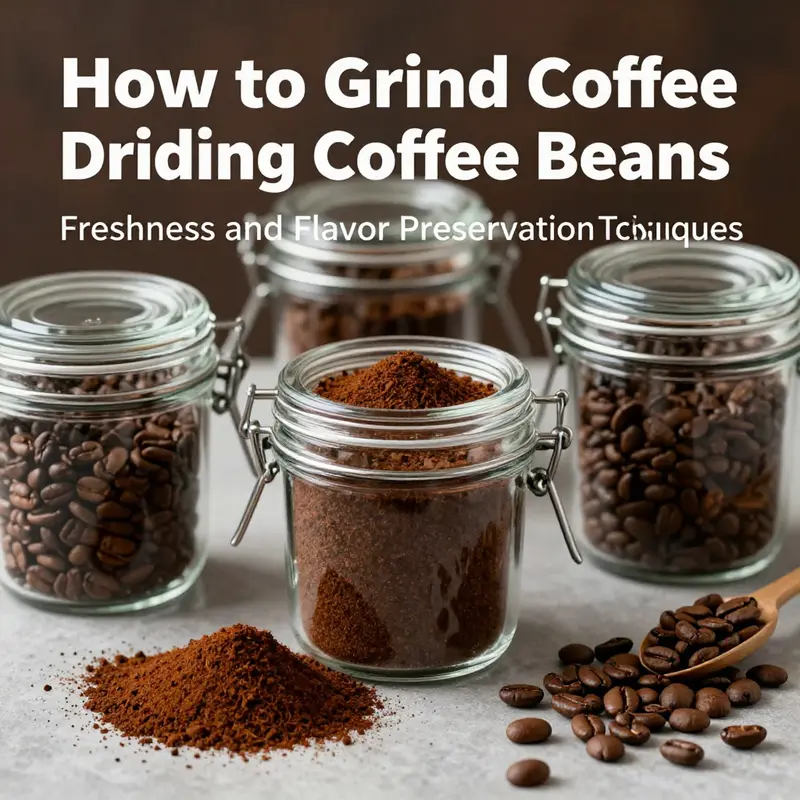
The moment you slide a fresh, roasted bean into the grinder is the moment you decide how your cup will taste. The aroma that escapes as the roast cools is a map of possibilities, a scent trail that edges toward bright fruit tones, chocolate sweetness, or earthy gravitas. Yet that aroma fades quickly once the beans are ground. The surface area of ground coffee is exposed to air far more completely than whole beans, and oxygen begins nibbling away at the very compounds that give coffee its brightness, nuance, and body. If you want a cup that carries the roast’s original intention—without letting the air steal the show—the timing of grinding matters as much as the grinder you choose. In practice, this means grinding just before brewing and approaching the task with a quiet precision that respects both science and craft.
There are two broad kinds of grinders—burrs and blades—and the difference between them is about more than noise and cost. It is about consistency, predictability, and how evenly the bean is broken down before contact with hot water. Blade grinders, with their spinning blades, chop the beans in an irregular, almost improvisational way. The result is a mosaic of particle sizes: some chunks that resemble crushed rocks, others fine dust that behaves more like flour. That incongruity in grind size is a recipe for uneven extraction. Fine particles over-extract and taste bitter or ashy, while coarse fragments under-extract and leave the cup weak or milky. It is not impossible to coax good results from a blade grinder, especially with careful pulsing and gentle shaking to break apart clumps, but it is a compromise you likely have to accept. In contrast, burr grinders crush the beans between two abrasive surfaces, producing a more uniform particle size. The grind is predictable enough to tailor to the brew method and the water you use, which makes a real difference, particularly when you’re dialing in a new roast or a new method.
Within burr grinders, conical burrs—the cone-shaped pair that sits inside a hopper—have earned a particular reputation for consistency and quieter operation. They tend to create fewer fines—tiny dust particles that can lead to over-extraction when present in large numbers—and they generally feel gentler on the bean, with less heat generated during grinding. That gentleness matters because heat can accelerate the loss of volatile aroma compounds. When you’re aiming for a bright, clean cup, conical burrs help maintain clarity from the first aromatic note to the finish. The precision of a good burr grinder, then, is not a luxury; it is a practical safeguard for flavor.
Understanding grind size is a different but equally important side of the craft. Each brew method benefits from a specific range of particle sizes because the water will extract flavor from the grounds at a rate tied to those sizes. Coarse grinds resemble sea salt and work well for French press and cold brew, where immersion is long and the goal is a more forgiving extraction with minimal sediment. Medium grinds—think desert sand—are the versatile middle ground for pour-over and drip coffee, offering a balance of extraction speed and evenness. Fine grinds, like powdered sugar, are reserved for high-pressure methods such as espresso, where the water is forced through the bed of coffee quickly and the grind must resist over-extraction while delivering a rich crema. These distinctions aren’t just about texture; they shape the rate at which flavor compounds dissolve into water, the development of acids and sweetness, and the presence or absence of bitter notes in the final cup.
The wisdom of grinding just before brewing is not merely a preference statement. It is a practice grounded in the physics of oxidation and the chemistry of aroma. Coffee starts to lose its peak flavor within a window after roasting—two to four weeks, depending on roast level and storage conditions. Once ground, this decline accelerates. The aromatics that carry brightness and complexity—volatile compounds like esters and pleasant aldehydes—tend to dissipate quickly when exposed to air. Ground coffee offers a large surface area, a double-edged sword: more contact with water during brewing yields faster, more complete extraction, but it also means flavor compounds disappear faster once exposed. Ground coffee begins to oxidize the moment it meets air; grinding right before brewing minimizes the oxygen exposure that bleeds away the delicate nuances that make a cup feel alive.
To translate these principles into practice, start with timing as the first lever you pull. Before you grind, check the roast date and decide how soon you plan to brew. A roast that is a day or two old can still deliver vibrant flavors, while one that is three or more weeks past roast may have faded brightness or a softer profile. When you grind, you’re not just producing a uniform bed of particles; you’re creating a fresh interface that will interact with the water in a finite window. Your goal should be to maximize aroma delivery into the cup at the moment of extraction while maintaining control over the texture that determines extraction speed.
A quality burr grinder is the cornerstone of this approach. The ability to set precise grind size—down to fractions of a step on many models—allows you to translate a chosen method into a real, repeatable particle distribution. A well-tuned burr setup makes a difference even before you pour water. It stabilizes the bed you’ll later saturate with hot liquid, reduces channeling risks (where water finds paths of least resistance through the grounds), and helps ensure that flavor compounds are extracted evenly across the bed rather than unevenly around clumps or fines. In practical terms, a burr grinder with a dial you can trust contributes to a cleaner cup, with less sediment in the French press and more clarity in a pour-over.
The literature on grind consistency points to a simple truth: evenness in grind size reduces extremes in extraction. Rafael Perez, a home coffee technician and blogger, has framed this idea as a practical humility: consistency isn’t about perfection—it’s about reducing extremes. A few deliberate tweaks to grind settings, water temperature, and dose can transform a chaotic grind into something usable. That mindset—measured, iterative, patient—belongs in every kitchen where coffee is treated as an experiment rather than a ritual alone. The art of grinding becomes the art of stabilizing variables so that when you brew, you aren’t chasing a moving target.
If you are new to the ritual, begin by selecting a method as your baseline. For a classic pour-over, aim for a medium grind; for a French press, a coarse grind; for an espresso, a fine to very fine grind depending on the machine and roast. The relationship between grind size and extraction time is intimate; a change of one notch on the grinder dial can shift the brew significantly. It is not about chasing a single perfect grind but about building a reproducible routine where you know how much coarser or finer you must go when you adjust roast, temperature, or dose. One practical approach is to establish a default grind setting for each method and then adjust only in small steps as you refine your technique with a given roast. This discipline keeps you from chasing a perfect shot that keeps sliding away as your memory of the last brew fades.
Alongside your grinder, consider how you handle the grounds as you prepare to brew. Often overlooked is the way the grounds are transferred and how you manage clumps. If you see uneven clumps, you might be dealing with humidity in the environment or a hopper that isn’t feeding evenly. A quick tap to settle the grounds, or a gentle shake of the chamber to break up clumps, can help you achieve a smoother bed. Yet the goal remains to preserve flow dynamics that will allow water to move through evenly. A bed that is too compact can create resistance; a bed that is too loose can lead to uneven saturation. The right balance will emerge as you adjust grind, dose, and technique based on the brew you’re targeting.
The science behind grind uniformity is complemented by practical maintenance. A grinder that is clean and well-calibrated yields more consistent results over time. Small amounts of old coffee and oils can accumulate in burrs, subtly shifting grind size or creating uneven extraction. Regularly brushing out the chamber, wiping the burrs, and running a few grams of a neutral, dry run can help preserve the integrity of the grind. Calibration—checking that the grinder’s digital or mechanical marks align with the actual particle distribution—becomes especially important if you switch roast levels or switch between methods that require notably different grind sizes. The difference between a clean, sediment-light French press and one that tastes muddy is often found in the minute details of grinder cleanliness and calibration.
Beyond the grinder itself, the way you store whole beans matters for what happens when you grind them. Whole beans should be kept in an airtight, opaque container in a cool, dark place. Light and air degrade beans quickly, which is why you want to avoid clear jars and plastic materials that can exchange odors or moisture. If you are contemplating long-term storage, freezing can be viable but is not without caveats. Freezing slows the chemical changes that degrade quality, but it does not stop them. If you do freeze, use a vacuum-sealed or airtight container and thaw beans at room temperature before grinding. Never grind frozen beans; moisture from condensation can ruin the flavor profile you’re hoping to capture at brew time. Ground coffee, once produced, should be used quickly. The best practice remains: grind just before brewing, then brew with intention and attention to technique.
In the end, flavor preservation during grinding comes down to a few tight principles anchored in timing, equipment, and routine. Grind just before you brew. Invest in a burr grinder, preferably with conical burrs, and dial in your grind size in a way that aligns with your method. Maintain a consistent grind size across brews for each method by documenting the setting and how it translates to extraction when the water hits. Clean your grinder regularly to minimize flavor contamination from older grounds. Store beans properly to maintain their freshness, and if you must store for longer, freeze them with care and thaw correctly before grinding. These practices form a coherent path from the moment a bean leaves the roaster to the moment hot water embraces its surface, extracting a cup that carries the roast’s true character with minimal distraction from oxidization or uneven extraction.
As you adopt these habits, you’ll notice that the craft of grinding is less about chasing a single flawless grind and more about embracing a disciplined approach that respects flavor as a living profile. The grind becomes the bridge between bean and brew, a stage where aroma, acidity, sweetness, and body are arranged in anticipation of the water’s choreography. For French press, you’ll notice a clean, sediment-light bed via a consistent coarse grind that breathes as the press seals and plunger descends. For pour-over, you’ll experience a bloom of aroma as the medium grind settles into the filter, water washing through evenly, extracting sugars and acids with balanced clarity. For espresso, the attention shifts to the final cadence—how the fine grind resists over-extraction while delivering a bold, nuanced cup with a persistent crema.
In the practical sense, the chapter of grinding is a personal dialogue with your own preferences, roast levels, and equipment. It is a conversation that begins with the decision to grind just before brewing and evolves into a steady routine that yields predictable results. It is also a conversation that acknowledges the limits of gear while celebrating the small, repeatable adjustments you can make. The ability to produce a clean, bright, and nuanced cup is not a matter of chance. It is the product of a habit—one where you respect the bean’s energy, the ground’s volatility, and the water’s potential by choosing the right grind, then letting your patience guide the final moment of flavor release.
If you are looking to deepen your understanding of the science behind grind and extraction, you’ll find that the principles outlined here align with expert guidance that emphasizes consistency and timing as the core of flavor preservation. When set correctly, burr grinders deliver the consistent coarse grind needed for clean, sediment-light French press coffee. This sentiment captures the practical payoff of investing in a precise burr system, particularly when you’re balancing a variety of roasts and brew methods. The broader takeaway is not simply about achieving a specific texture but about building a repeatable process that yields reliable results across multiple brews. The goal is a cup whose aroma lingers, whose acidity feels sharp but balanced, and whose body carries the roast’s intended mouthfeel.
To support this journey, bear in mind that grind size is only one of several variables to master. Temperature, water quality, and bloom dynamics all interact with grind to shape the final cup. A clean, well-calibrated burr grinder helps you stabilize the grind and reduces the number of variables you must chase in brew day. The rest is practice: tasting, noting, and adjusting; tasting again; and gradually building a mental map that tells you when a slight adjustment to grind size will bring more sweetness, or when a longer contact time will bring out deeper fruit notes, or when a finer grind is needed to pull a richer crema without tipping into bitterness. The more you practice, the more you’ll hear, feel, and taste the alignment between grind and brew method, roast level, and personal preference. The chapter of grinding thus becomes a lifelong, evolving dialogue—not a onetime adjustment, but a habit that sharpens your taste perception and your kitchen’s routines.
For readers who want to place these ideas in a broader context, the emphasis on freshness and precision remains a common thread across reputable guidance. Freshness preservation, particularly through minimal exposure of grounds to air, is consistently identified as a major determinant of cup quality. The recommendation to grind just before brewing is echoed across sources that study coffee’s sensory profile and the chemistry of extraction. The emphasis on using a burr grinder for uniform particle size, and on the strategic use of grind size to match brewing method, also aligns with expert guidance. The practical takeaway is not simply procedural; it is a philosophy of mindful preparation. Ground coffee invites you into a moment of careful control, where even small adjustments can reveal new layers of aroma and flavor and where patience is rewarded with a cleaner, more expressive cup.
In sum, grinding coffee beans with an eye toward freshness and flavor is less a set of rules and more a disciplined approach to flavor stewardship. Grind just before brewing, ideally with a burr grinder that can produce a uniform particle distribution. Calibrate for your chosen method and roast, maintain the grinder to keep its performance steady, and store beans to protect their sensory vocabulary until the moment you open the bag and grind. These practices do not merely improve the cup; they transform a routine into a deliberate act of craftsmanship, a small ritual that honors the journey from roasted bean to the moment of first sip. For those seeking a concise guide to perfecting grind for the French press and beyond, the core message remains: precision, timing, and care are your strongest allies in preserving aroma and flavor from the roast to the cup.
Further reading on storage and grind preservation can deepen your understanding of the science behind these recommendations. Serious Eats offers a thorough exploration of how to store coffee beans to maximize flavor, which complements the grinding-focused guidance in this chapter. By combining careful storage with precise grinding, you create a foundation for flavor that can withstand the inevitable aging that accompanies every bag of coffee. As you continue to brew, keep in mind that the best coffee you drink is the coffee you grind only when you are ready to brew, and that the act of grinding is your first opportunity to shape the experience you want in your cup. For more on storage and freshness strategies, you can explore trusted resources that examine how light, air, and temperature influence bean quality over time.
External reference: https://www.seriouseats.com/how-to-store-coffee-beans
Final thoughts
Understanding how to grind coffee beans effectively is a crucial element for any coffee business aiming for excellence. From selecting the right grinder to mastering grind sizes and preserving freshness, each aspect plays a strategic role in coffee quality. Prioritize investing in a good burr grinder and implementing the best practices for storage to maintain the integrity of your coffee offerings. This knowledge not only enhances your customer experience but also builds a loyal clientele that appreciates well-crafted brews. Ultimately, consistent and quality grinding leads to better coffee and a thriving business.