

As businesses increasingly recognize the importance of community engagement and inclusive practices, understanding the role of occupational therapists (OTs) in schools has become vital. These specialists provide essential support to students with various physical, cognitive, and emotional challenges, allowing them to participate fully in their education. In this article, we delve into the crucial contributions Occupational Therapists make in school settings, examining their collaboration with educators and families, the customization of interventions to enhance academic performance, and their commitment to promoting inclusion and equity in education. By understanding the multi-dimensional role of OTs, business owners can gain insights into fostering supportive environments that benefit students and the community alike.
Enabling Participation: How School Occupational Therapists Remove Barriers to Learning

Enabling Participation: How School Occupational Therapists Remove Barriers to Learning
An occupational therapist (OT) in a school is fundamentally an expert in participation. Rather than focusing only on diagnoses or discrete skills, the school-based OT looks at the whole rhythm of a child’s day and asks: what prevents this student from taking part in meaningful classroom activities, moving through the school routine, or forming productive social connections? From that vantage point, interventions are purposeful, practical, and tied to functional outcomes that matter to teachers, families, and the students themselves.
In practice this means the OT assesses and intervenes across three intertwined domains: physical access, cognitive supports, and emotional or regulatory strategies. Physical access covers fine motor precision, gross motor coordination, visual-motor integration, and the ergonomic setup that makes tasks like writing, cutting, and opening containers possible. Cognitive supports include attention, sequencing, visual perception, and the organization of materials and time. Emotional and regulatory strategies address how a child manages arousal, frustration, and sensory input so they can engage in lessons and social activities. The OT’s task is to translate these domains into changes that allow the student to succeed within the classroom context.
Assessment begins with observation and collaborative listening. A skilled OT watches a child across activities: how they enter the room, settle, follow multi-step tasks, handle transitions, and participate in group work. Assessment is not confined to a clinic room; it happens at the desk during math, on the playground, and in lunchrooms where sensory challenges often surface. OTs combine standardized measures with functional observations and reports from teachers and caregivers to create a realistic picture of strengths and barriers. This comprehensive approach ensures interventions are relevant to the demands of school life rather than isolated skill drills.
Once needs are clear, the OT designs individualized plans that integrate seamlessly into the education setting. These plans balance direct therapy with strategies teachers can implement. Direct sessions can be brief and targeted, such as a focused block to build pencil grasp, or longer, aiming to consolidate new self-regulation routines. Many OTs use small-group formats to teach shared skills—handwriting warm-ups, fine-motor stations, or social motor games—while preserving peer context and generalization. However, the most powerful work often occurs indirectly: consulting with teachers to adjust tasks, suggesting simple environmental changes, or coaching staff to use cues that support attention and independence.
Environmental modifications are a core strength of school-based OTs. A seemingly small change—angled writing boards, a slant tablet, non-slip chair cushions, or a forearm stabilizer—can transform a child’s ability to access the curriculum. Equally important are classroom routines and materials: chunked instructions, visual schedules, color-coded folders, and alternative pencils or grips for students who fatigue quickly. These adaptations promote equity because they allow students with different needs to perform tasks with less effort, reducing stigma and increasing classroom participation.
Sensory processing is another area where OTs make practical, evidence-informed differences. Sensory differences influence attention, behavior, and learning. Rather than pathologizing behavior, the OT frames sensory needs as variations in how a child interprets input—sound, touch, movement, and visual stimuli—and offers strategies that help the child remain regulated and ready to learn. This can include establishing predictable sensory breaks, recommending movement or heavy work activities, or adjusting lighting and seating. Sensory strategies are never one-size-fits-all; they are individualized, measured, and adjusted to the student’s response.
Developing executive function and organizational skills is central to sustained academic success. OTs collaborate with teachers to teach routines that reduce cognitive load. Simple interventions—checklists for multi-step tasks, visual timers, desk organizers, and consistent placement of materials—support planning and task initiation. The OT trains students in metacognitive strategies: how to break assignments into manageable steps, monitor progress, and use self-reminders. Over time these strategies promote independence and reduce the need for adult prompts.
Collaboration defines effective school-based practice. OTs are members of multidisciplinary teams that include teachers, special educators, speech-language therapists, psychologists, and families. In Individualized Education Program (IEP) and 504 Plan meetings, OTs contribute functional goals tied to classroom participation. They translate therapeutic gains into measurable educational outcomes: improved handwriting speed that reduces time needed for written assignments, or increased tolerance of classroom noise that allows participation in group reading. This alignment ensures that therapy supports overarching educational objectives rather than existing in a separate silo.
Communication and training are practical tools OTs use to scale their impact. Rather than working with one child at a time, OTs often deliver in-service training to staff on topics such as sensory-friendly classrooms, handwriting instruction, and use of assistive technology. These sessions build teacher confidence, provide consistent strategies across classrooms, and reduce the need for individual pull-out services. OTs also empower families with home strategies that mirror school interventions, ensuring consistency across settings and reinforcing skills.
Measurement and outcome tracking are essential. School OTs use both standardized tools and simple, classroom-friendly measures to monitor progress. Data might include the number of cues a student needs to start an assignment, the time taken to complete handwriting tasks, or behavioral indicators of regulation during transitions. Regular review of these measures informs whether adaptations are effective and whether goals need revision. This pragmatic approach demonstrates value to school administrators and ensures resources target meaningful improvements in participation.
Inclusion and equity are embedded in the OT’s lens. OTs work to minimize barriers so students with diverse needs can access the same curriculum and social experiences as their peers. For students with physical disabilities this might mean recommending assistive devices or modifying classroom layouts. For students with neurodevelopmental differences such as autism spectrum disorder, targeted supports help with sensory regulation and social participation; readers can find a focused discussion on how occupational therapy supports autistic students in the blog post about occupational therapy and autism. These interventions often increase a student’s sense of belonging and reduce exclusion.
Technology and assistive tools expand the OT’s toolkit. From low-tech solutions like pencil grips and adapted scissors to high-tech options such as speech-to-text software and tablet-based visual supports, technology can bridge gaps between a student’s abilities and classroom expectations. The OT evaluates tools for fit and trains staff and students to use them effectively. Importantly, decisions about technology consider durability, ease of use, and the potential to promote independence rather than dependency.
The school OT also plays a preventive role. By providing classroom-wide supports, training staff, and recommending early accommodations, OTs reduce the risk that minor difficulties escalate into chronic problems. Early intervention in handwriting, seating, or sensory regulation can prevent frustration, avoid repeated failure, and support long-term academic engagement. Prevention is cost-effective and fosters a classroom culture that anticipates differences rather than reacting to crises.
Real-world examples illustrate this work. A second grader who avoids writing may present as oppositional; assessment reveals fatigue from an inefficient pencil grasp and difficulty organizing thoughts on paper. An OT might introduce a shorter writing task with a scribe for extended work, teach a more efficient grasp, and provide a graphic organizer for planning. Within weeks the child begins to attempt writing independently and shows fewer avoidance behaviors. Another case involves a middle-school student with attention difficulties: the OT implements a visual schedule, a quiet corner for test-taking, and a sensory toolkit for breaks. These changes decrease off-task behavior and increase assignment completion.
Beyond individual cases, OTs advocate at the systems level. They inform school policy on inclusive design, accessibility, and classroom management. They help craft school-wide initiatives such as quiet lunch areas or sensory-friendly assemblies. By bringing a participation-focused perspective to school planning, OTs ensure that environments support diverse learners from the outset.
Funding and service models vary across districts, which affects how OTs deliver services. Some schools offer more direct, intensive therapy; others emphasize consultation and classroom-based support. Regardless of the model, effective OTs prioritize interventions that generalize to everyday school tasks. They seek to embed strategies in routines so benefits continue when therapy sessions end.
The impact of school-based occupational therapy is measurable and meaningful. When barriers to participation are removed or reduced, students show improved academic performance, better behavior, and stronger social connections. Teachers report greater classroom efficiency and fewer disruptions. Families notice increased independence at home and higher self-confidence in their children. These outcomes reflect the OT’s central aim: to design functional solutions that allow each child to engage fully in the life of the school.
For practitioners and school leaders who want to deepen their understanding of school-based occupational therapy practices, the American Occupational Therapy Association provides current guidelines and resources that explain best practices and service delivery models.
For more detailed and up-to-date information on the role of occupational therapists in schools, refer to the AOTA resource: https://www.aota.org/Students-Graduates/Professional-Development/Continuing-Education/CE-Courses/School-Based-Practice
Bridge Builders in the Classroom: The Collaborative Role of School-Based Occupational Therapists

In the rhythm of a school day, the presence of an occupational therapist (OT) often looks less like a single service and more like a sustained, shared commitment to participation. The classroom is not only a place for academics; it is a complex ecosystem where movement, perception, emotion, and daily routines intersect with learning goals. A school-based OT enters this ecosystem with a simple yet powerful premise: every student can participate meaningfully in tasks that matter to them, when barriers are understood and addressed through purposeful activity. This is not a one-size-fits-all approach. It is an adaptive, collaborative practice built on observation, data, and a respectful alliance with teachers, families, and the students themselves. The core work centers on enabling the highest possible level of independence, from handwriting to transitions, from self-regulation to social engagement, by designing interventions that translate into real classroom participation rather than isolated therapy moments. In this sense, the OT’s role extends beyond the therapy room and into every corridor, corner, and classroom routine that shapes a learner’s day.
At the heart of school-based occupational therapy is a careful, multi-context evaluation. OTs gather information not only from formal assessments but also from ongoing observations in both home and school environments. They watch how a child approaches a math task, how they transition between activities, how they manage noise and movement in a busy hallway, and how daily routines—lining up, distributing materials, packing a backpack—unfold under varying demands. This holistic view helps identify foundational skills that support learning, such as fine motor control for writing, visual-motor integration for reading, and the sensory processing patterns that can either anchor or derail attention and participation. The culmination of this process is a tailored intervention plan embedded in the student’s daily life rather than confined to a therapy schedule. It may involve direct therapy, but it also relies on consultation, classroom accommodations, and adaptive equipment recommendations. What matters most is not the number of sessions but the consistency and relevance of supports across contexts.
A cornerstone of effective school-based practice is collaboration. An OT does not work in isolation; rather, collaboration with educators is fundamental across all service delivery models. Teachers illuminate classroom dynamics—where attention wanes, how seating affects engagement, how transitions are managed, and which tasks align with the curricular demands of the day. In turn, the OT translates those insights into functional supports. For example, a teacher may notice that a student’s handwriting slows a lesson’s pace, or that a child with sensory sensitivities becomes overwhelmed during circle time. The OT responds with strategies that fit the classroom reality: seating arrangements that optimize posture and focus, or a simple, predictable routine that reduces cognitive load during transitions. The influence of collaboration is bidirectional; educators gain access to the OT’s expertise in functional skills, sensory needs, and strategies for managing attention, while OTs gain a clearer picture of how academic demands shape performance. This partnership is essential not only for immediate task success but for cultivating a learning environment where students feel capable and included.
Research and practice alike underscore that collaboration must extend beyond the classroom door. As highlighted by Ianni (2025), effective partnerships between educators and school occupational therapists are fundamental across service delivery models. When teachers and OTs co-create plans, the resulting interventions are practical, coherent, and sustainable. They flow into daily routines, minimize disruption, and reinforce growth across subjects and activities. Consider the concrete outcomes of such teamwork: a seating plan that reduces fidgeting and improves sustained attention; a handwriting program that integrates with keyboarding when neat script is not the sole measure of progress; or a sensory strategy tray that a student can use during independent work to regulate arousal without leaving the room. These are not occasional adjustments; they are a shared framework that students can recognize, anticipate, and rely on, fostering a sense of predictability and safety that is central to learning.
Yet classroom collaboration cannot thrive without meaningful family involvement. School OTs recognize that learning and development unfold across settings, and families are essential partners in extending practice beyond the school day. Regular, clear communication with parents and caregivers helps translate in-school observations into home routines and practice. Assessment findings, progress updates, and concrete home strategies become a shared language that supports continuity of learning. Families contribute crucial context, including cultural expectations, language preferences, and daily realities that influence what works at home and at school. Inclusive practice invites families to participate in IEP (Individualized Education Program) meetings, curriculum planning, and goal-setting. When families feel heard and informed, interventions gain coherence and legitimacy, and students experience a consistent thread of support that travels with them from classroom to home. This collaborative model also acknowledges the social dimensions of learning—peer interactions, classroom roles, and community belonging—and invites families to help nurture inclusive norms that extend beyond the child’s immediate needs. In practice, this means sharing progress in accessible language, inviting questions, and valuing family expertise as a resource that strengthens the student’s overall development.
The role of the OT is often visible in tangible classroom adaptations, yet much of the work occurs in subtle, everyday decisions that shape participation. Fine motor skills and handwriting, for instance, are not only about neat letters; they are about how a student manages a tool, situates the body for sustained work, and maintains focus through a lengthier task. Visual-perceptual skills influence a child’s reading and comprehension, as do eye–hand coordination and the ability to anticipate and plan steps in a sequence. Sensory processing contributes to a student’s tolerance for noise, light, textures, and the sometimes chaotic tempo of a school day. OTs help teachers implement organizational strategies that reduce cognitive load: color-coded materials, consistent daily schedules, checklists for tasks, and explicit visual supports that guide attention and memory. They propose adaptive equipment and seating solutions that support independence without drawing attention to the child’s differences; solutions that normalize participation rather than isolate it. When done well, these adjustments become routine features of the classroom, valued by all students for the sense of stability and structure they provide.
In autism and other neurodevelopmental profiles, the role of the OT often intersects with specialized supports aimed at enhancing social participation and communication. For autistic students, targeted interventions may focus on sensory modulation, flexible thinking about tasks, and strategies to manage transitions. The literature and practice highlight a direct route from individualized supports to classroom inclusion: when sensory needs are understood and accommodated, a student can engage with peers and tasks with greater confidence and persistence. The link between occupational therapy and autism-specific strategies is well recognized in school settings, and readers may find further insights into this area in dedicated explorations of autism-focused OT practice. For instance, occupational therapy for autism spectrum disorders offers a synthesis of approaches that can inform school-based adaptation. This is not about pulling a child out of the classroom; it is about enriching the classroom with tools that enable meaningful participation alongside peers.
The practical moments of collaboration are often as simple as a teacher asking, “What can I do next week that would make this task more accessible?” and an OT responding with a clear, actionable plan. It might be something as modest as a different desk height to improve handwriting posture, a movement break embedded at specific intervals to reset attention, or a visual checklist that helps a student organize materials. It could also involve more proactive measures, such as establishing a predictable sequence for daily routines to reduce anxiety and support self-regulation. Across settings, the aim is consistency—so that the student experiences similar strategies in the classroom, the library, the cafeteria, and at home. In this sense, the OT’s work resonates with a broader educational goal: to cultivate habits, tools, and supports that empower students to participate in school life with autonomy and dignity.
A robust collaboration framework also emphasizes equity. Inclusive practice means recognizing that access to participation is not uniform and that some students face structural barriers that require thoughtful design. OTs contribute to universal design for learning by informing teachers about strategies that benefit a wide range of learners, not just those with identifiable disabilities. They help translate curricular demands into achievable tasks, offer adaptations that can be generalized across classrooms, and train staff to recognize sensory cues and regulate environments in ways that support all students. This approach strengthens the school’s capacity to respond to diversity, fostering a climate where differences are understood as part of learning rather than as deficits. In such an environment, the success of one student can become a shared standard of practice that elevates every learner.
To illustrate how these strands come together in practice, consider a hypothetical but typical scenario: a middle school student who struggles with handwriting, sustaining attention during long tasks, and following multi-step directions. The referral comes from the teacher, who notes slower task completion and fatigue at the end of the day. The OT conducts a classroom observation and a short home interview, mapping how demands and supports shift from one setting to another. The team designs a plan that includes (1) adaptive seating and desk setup to optimize posture, (2) a visual-motor activity sequence that aligns with reading and writing tasks, (3) a sensory break menu that students can choose from during transitions, and (4) a set of organizational tools, such as labeled bins and stepwise task lists. The plan also includes a home practice routine and a monthly check-in with the family to adjust goals as needed. Over several weeks, the student shows improved endurance, faster task completion, and increased participation in group discussions. The teacher uses teacher-friendly prompts derived from the OT’s guidance, the family reinforces strategies at home, and the student gains a growing sense of self-efficacy. This integrated approach demonstrates how the OT’s expertise translates into meaningful classroom gains, while still honoring the student’s pace and preferences.
The overarching aim is not to fix a single skill but to cultivate a network of supports that travels with the learner. Collaboration with educators provides the context and the curricular frame; collaboration with families supplies consistency and relevance beyond school walls; and the student’s lived experience remains central in shaping which strategies endure and adapt. When these elements align, the student’s learning becomes less anchored to interventions and more woven into everyday practice. The school, in effect, becomes a learning laboratory where participation is valued, differences are understood, and progress is measured not just through test scores but through a richer spectrum of daily task engagement, social connection, and personal growth. In this sense, the OT’s role extends far beyond therapy hours into the core of school culture—an enduring partnership that promotes inclusion, equity, and lifelong participation in learning.
For those seeking digital resources to deepen understanding of autism-specific strategies within school settings, the cited internal resource offers further insights into how occupational therapy can support communication, social engagement, and sensory regulation in autism. See occupational therapy for autism spectrum disorders.
As schools continue to evolve, the model of collaboration between educators and occupational therapists remains a critical driver of successful outcomes. The interplay of evaluation, planning, classroom adaptation, family engagement, and ongoing measurement creates a dynamic workflow that supports both academic goals and the broader developmental trajectory of each student. The practice invites educators to see beyond discrete tasks and to recognize how everyday arrangements—where a chair is placed, how a task is sequenced, or how a child is supported to transition—can be the difference between participation and exclusion. And it invites families to participate as co-designers of the child’s growth, reinforcing the idea that learning is a shared journey. The effectiveness of this approach rests on clear communication, mutual respect, and a shared commitment to seeing every student not as a label but as a person capable of growth through supported participation.
To extend professional understanding and keep practice aligned with evolving evidence, educators and OTs may consult professional development resources such as those offered by the American Occupational Therapy Association. For a comprehensive professional perspective, see the external resource: AOTA continuing education resource.
From Fine Motor to Focus: How School-Based Occupational Therapists Tailor Interventions to Elevate Learning
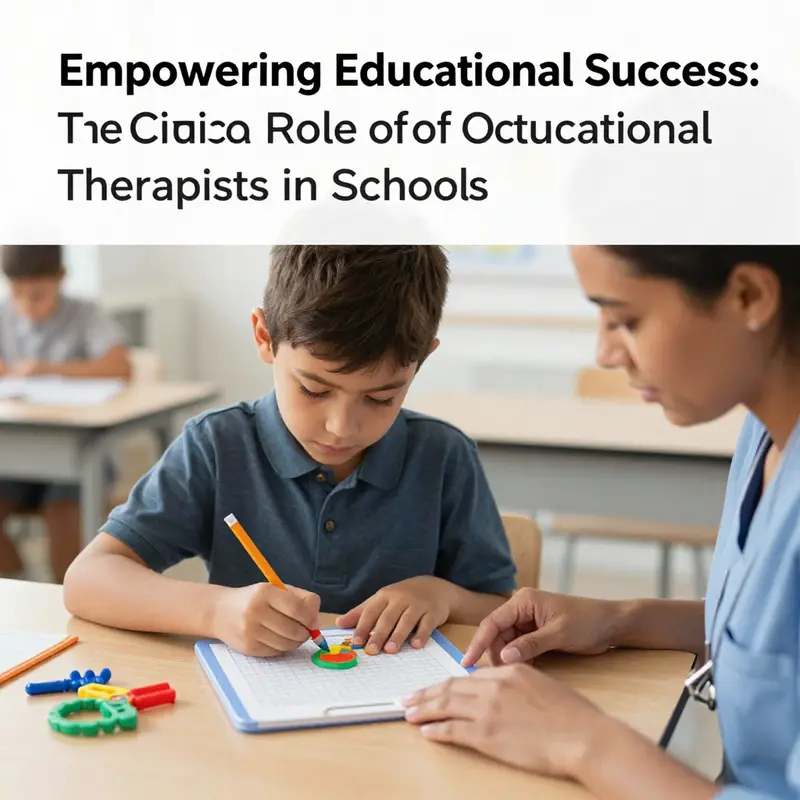
In classrooms where every child’s pathway to learning is unique, school-based occupational therapists (OTs) stand as steady navigators of participation. They enter the school day not as specialists who fix a single problem, but as partners who illuminate how daily routines, classroom tasks, and social interactions can be translated into achievable, meaningful activities. Their work begins with a clear understanding that learning is not confined to reading and math milestones alone. It is deeply interwoven with how a child moves, thinks, and regulates emotion and sensation in concrete, school-life contexts. An OT’s lens looks at a student as a whole: a learner who may struggle with handwriting, organization, attention, sensory overload, or the stamina to stay engaged through a long day. By aligning therapeutic goals with the realities of the classroom, OTs help students participate more fully in academic tasks, peer interactions, and school routines, thereby promoting independence, confidence, and sustained well-being over time.
Comprehensive assessments in school settings are the starting point for this work. An OT conducts observations across multiple environments within the school day, gathers input from teachers, parents, and, where appropriate, the student themselves, and analyzes how a child’s motor, sensory, cognitive, and emotional processes influence classroom performance. These assessments are holistic and dynamic rather than a single snapshot. They consider how a child writes, cuts, cuts, and grades papers; how they organize materials and manage transitions between activities; how they respond to noise, crowds, or unexpected changes in routine; and how these factors intersect with learning goals. The evidence gathered guides a collaborative plan that is designed to be flexible, responsive, and measurable. In practice, this means calling on a toolbox that blends evidence-based strategies with individualized ingenuity. A therapist may recommend adaptive tools like weighted pencils or fidget devices to support attention and fine motor control, suggest modifications to seating or desk height to optimize posture and comfort, and advocate for environmental tweaks such as reduced visual clutter or predictable sensory boundaries in the classroom. Each recommendation is paired with practical training for the student, the family, and the school team so that the strategies become consistent across settings. For students on the autism spectrum, the approaches often include structured routines, predictable transitions, and tools that help interpret social and environmental cues. See how this looks in another domain of practice through the topic of autism-focused occupational therapy: Occupational Therapy for Autism Spectrum Disorders. The resource explores how evidence-based sensory and regulatory strategies can be tailored to daily school life, reinforcing how a thoughtful OT plan translates into real-world improvements in school participation.
Beyond this initial assessment phase, OTs contribute meaningfully to the IEP process. They are not mere observers but active co-builders of goals that connect to both academic demands and functional independence. An OT’s perspective emphasizes how a student’s capacity to complete classroom tasks—such as preparing materials, following multi-step directions, and managing time—sits at the center of learning outcomes. In IEP meetings, they translate observable functional abilities into measurable targets, ensuring that therapeutic aims align with literacy or numeracy objectives while also safeguarding a child’s capacity for school routines. The collaboration within the IEP team—teachers, speech-language pathologists, school psychologists, families, and the OT—creates a holistic framework. This framework recognizes that gains in handwriting fluency, visual-perceptual processing, or sensory self-regulation can ripple into improved reading comprehension, task persistence, and participation in group work. In addition, the OT’s contribution reinforces the school’s broader commitment to equity and inclusion. By addressing barriers that specifically impede learning for individual students, OTs help cultivate an environment where diverse learners can access the curriculum alongside their peers and contribute to classroom life with comparable opportunities for success.
The day-to-day interventions that fall under an OT’s purview are as varied as the students themselves, yet they share a common purpose: to convert daunting tasks into doable steps. Fine motor development, such as pencil grip, sequencing with handwriting, and dexterity for cutting or manipulating classroom materials, is often a regular feature of therapy plans. However, the scope goes well beyond motor skill enhancement. OTs support visual-perceptual skills that influence reading and writing, assist with executive functioning strategies like planning and organization, and offer sensory regulation tools that help students maintain focus and stay engaged in learning activities. In practical terms, this can manifest as a combination of environmental adaptations and personal strategies. A classroom might be rearranged to reduce sensory distractions, with a centrally placed student work area or a moveable seating option intended to support alertness. A teacher might receive structured visual schedules, chunked tasks, and explicit cues to facilitate transitions. The student may use a quiet zipping routine before a demanding activity, a tactile tool to anchor attention during a lengthy math problem, or a timer that supports time management. It is this blend of environmental design and personal regulation that enables a student to approach tasks with less anxiety and more clarity.
In this collaborative approach, the school OT’s relationship with teachers is foundational. OTs work not only by offering direct sessions but also by embedding strategies into daily classroom practice. They model the kinds of supports that become part of the routine, rather than one-off interventions. This seamless integration—where the classroom runs as a space that accommodates varied needs—depends on clear communication, shared language, and ongoing data collection. Progress is tracked with objective, accessible measures, so the team can observe patterns, adjust supports, and celebrate incremental gains. When teachers see how a small adjustment in seating, schedule, or task presentation leads to students’ improved ability to attend, participate, and complete tasks, the collaboration becomes a sustainable engine for learning.
An essential element of this work is the deliberate choice of interventions that are functional and meaningful to the student’s life at school. The aim is not to create dependence on therapy sessions but to cultivate tools the student can use across contexts. For example, a student who struggles with handwriting might benefit from exercises that strengthen finger strength and coordination, paired with a strategy like using a writing aid that improves control. The same student might also practice visual-motor tasks that support the alignment of letters and spacing, then transfer these skills to more efficient note-taking or a legible, organized bibliography project. An OT might also introduce self-regulation strategies that help the student recognize signs of overload and implement grounding techniques before anxiety escalates. These interventions are designed to promote independence and empower students to participate in classroom life with confidence.
Inclusion and equity lie at the heart of the school OT role. When classrooms are designed to be accessible to students with a wide range of needs, the entire learning community benefits. Universal design for learning, flexible grouping, and accessible materials become shared priorities, and the OT supports teachers in implementing these principles in concrete ways. The Rainbow Project charity grant example illustrates how funds can be allocated to remove barriers to participation, including speech and occupational therapy services, ensuring that autistic students have access to the supports they need to reach their full potential. While funding and resources vary across districts, the underlying commitment remains clear: equity means recognizing that every learner can participate meaningfully when supports are thoughtfully chosen and consistently applied. The OT’s voice in this discourse centers on translating evidence into everyday practice—turning principles of inclusion into tangible classroom realities that reduce frustration and elevate achievement for all students.
The evidence base guiding school-based OT practice is robust yet remains, in many districts, a work in progress. Therapists continually translate research into practice by selecting interventions with demonstrated efficacy for the school setting and by adapting those interventions to the local context. This requires staying current with professional guidance from organizations like the American Occupational Therapy Association (AOTA). The AOTA resource on schools outlines how OTs operate within educational settings, including the collaborative dynamics, assessment approaches, and program development that underpin effective service delivery. For readers seeking a structured overview of school practice, the link below points toward a centralized authority that frames OT roles in schools, supports evidence-informed decision-making, and connects practitioners to a broad community of educators and therapists. In practice, clinicians pair this knowledge with patient-centered insights to create plans that reflect a student’s unique strengths and challenges, ensuring that interventions are not only scientifically sound but also personally meaningful.
The day-to-day reality of school-based OT work also involves ongoing communication and professional reflection. Therapists regularly review progress with families, adjust goals as a child develops, and coordinate with school staff to maintain consistency across settings. This continuous loop of assessment, implementation, and reassessment helps ensure that gains in the clinic translate to the classroom. It also anchors the student in a sense of agency; when children understand the purpose of each strategy and recognize that their own efforts contribute to progress, motivation becomes a natural companion to learning. The OT’s role thus extends beyond therapy rooms or resource offices. They are present in the classroom as adaptive problem-solvers and champions of participation, helping to normalize a range of learning styles and sensory experiences within the school day.
Of course, every school context presents its own set of challenges. Large caseloads, limited prep time for teachers, and competing priorities can complicate the implementation of OT-driven strategies. Yet the resilience and adaptability of school-based OTs are evident in how they prioritize interventions, lean on evidence-based practices, and tailor plans to fit both student needs and school logistics. When a classroom environment feels overwhelming for a student, the OT’s contribution is not to reform the entire system overnight but to enact small, sustainable changes that accumulate into meaningful progress over weeks and months. Those changes can include staggered transitions between activities to reduce cognitive load, a simple visual action plan to guide tasks, or a seating arrangement that allows for dynamic concentration without drawing attention to the student’s differences. In many cases, these adjustments also positively affect peers—normalizing flexible approaches to learning and reducing stigma linked to differences in processing or behavior.
As the field continues to grow, so too does the emphasis on data-driven practice. OTs collect evidence of functional gains, not merely improvements in a skill area in isolation. They document how a student’s improved handwriting translates into clearer written expression, how better sensory regulation enhances on-task behavior during math tasks, and how organizational strategies support the student in completing assignments on time. This data supports conversations with families and school leaders about resource allocation, program development, and the ongoing need for professional development. In the broader scope, school-based OT practice aligns with the idea that education is most effective when it treats the whole child: physically comfortable, cognitively engaged, and emotionally regulated, so that academic pursuits can unfold with curiosity, persistence, and joy.
The collaborative, holistic, and iterative nature of school-based OT work makes it a cornerstone of inclusive education. It embodies a philosophy that learns from each child’s experience and translates that knowledge into practical supports that travel beyond a single session. The chapter’s opening premise—that OTs help students participate fully in educational and daily activities by addressing physical, cognitive, and emotional challenges—resonates through every classroom corner. A student navigating the demands of a typical school day might wrestle with fine motor tasks, organize a messy desk, regulate sensory input during a loud assembly, or switch between tasks with minimal disruption. In each case, the OT’s interventions are designed to empower, not to segregate; to unlock potential, not to limit it. And as schools strive to prepare students for a world that values autonomy, problem-solving, and collaboration, the OT’s role becomes ever more central. The result is a learning environment where differences are not obstacles but pathways to stronger participation and richer educational experiences. External resources from professional bodies help sustain this growth, offering guidelines that translate research into classroom-ready practices while inviting educators, families, and clinicians to join in a shared mission of equitable access to learning for every student.
External resource: https://www.aota.org/Students-Researchers/Research/Practice-Settings/Schools.aspx
Equitable Classrooms: How School-Based Occupational Therapists Level the Playing Field

Occupational therapists (OTs) in schools do more than treat difficulties; they reshape classroom access so students can learn, belong, and thrive. Their practice sits at the intersection of health, education, and social participation. By focusing on function rather than diagnosis, school-based OTs remove barriers that limit a child’s ability to engage in everyday school tasks—writing, joining group activities, moving through routines, and managing sensory or emotional responses. This chapter traces how OTs assess needs, design targeted interventions, collaborate with educators and families, and advocate for systemic changes that support inclusion and equity.
School contexts present diverse challenges. Some students struggle with fine motor tasks like handwriting and cutting. Others have sensory processing differences that make a noisy classroom overwhelming. Still others cope with organizational deficits that disrupt learning. An OT’s first role is to identify which challenges prevent participation. Assessment is not confined to a checklist. It involves observation in authentic settings, conversations with teachers and caregivers, and standardized tools when appropriate. Crucially, effective assessment considers the student’s goals and the classroom demands. OTs examine how a child approaches a seated task, how long they can attend, how they transition between activities, and how environmental factors influence performance. Because learning unfolds across settings, these evaluations often extend beyond the classroom to include playgrounds, cafeterias, and home routines.
From assessment flows individualized planning. An OT translates observed barriers into functional goals that matter to the student and school. Rather than focusing solely on reducing impairment, interventions are designed to support participation. For a student who avoids group work because of poor social motor skills, the OT might create a graded plan that first builds tolerance for proximity, then practices shared tasks, then supports communication during play. For a child whose pencil grasp hinders legible writing, the plan could include strengthening exercises, ergonomic suggestions, and adapted tools. These interventions are delivered through direct sessions, classroom consultation, or embedded support during academic activities. The OT chooses methods that maximize carryover and minimize pulling students out of inclusive contexts.
Collaboration is central. Teachers understand curriculum and classroom rhythms. Parents provide insight into behavior across settings. Speech-language pathologists, school psychologists, and special educators bring complementary expertise. An OT frames recommendations in practical terms that teachers can implement without disrupting instruction. Strategies might include seating choices that support posture, break schedules that prevent escalation, or visual organizers to scaffold complex tasks. Rather than issuing a list of accommodations, effective OTs prioritize a few high-impact changes and coach staff on how to use them. They also provide brief professional development sessions to build teacher confidence in supporting diverse learners. This consultative role is both preventive and empowering: small changes in routines and environment can reduce referrals and foster classroom climates where differences are accommodated naturally.
Equity through universal design is a core principle. OTs advocate for environments that anticipate variability in student needs. Universal design for learning (UDL) and physical adaptations intersect in many practical ways. An OT may recommend adjustable desks and ergonomic seating to support varied body sizes and motor needs. They might propose visual schedules, tactile materials, or quiet nooks to help students with sensory sensitivities remain regulated. These adaptations benefit many students, not just those with identified disabilities. A student recovering from injury, a child with temporary vision changes, or a classmate who struggles with attention can all gain from a classroom designed for flexibility. When universal changes are implemented schoolwide, the need for individualized interventions diminishes and access becomes routine rather than exceptional.
School-based OTs also build capacity. They train teachers and support staff to recognize early signs of difficulty and to implement simple strategies. This capacity-building extends equity beyond the caseload. When teachers feel equipped, they can differentiate instruction more effectively and reduce the stigma of receiving support. OTs can lead classroom workshops on sensory regulation techniques, executive function supports, or motor-friendly handwriting approaches. These sessions often include practical tools like checklists or short activity plans that teachers can use immediately. The result is a more inclusive culture where adaptations are viewed as part of good teaching rather than special treatment.
Interventions are evidence-informed and goal-directed. For motor skills, OTs use task analysis to break complex tasks into teachable parts. For sensory challenges, they design modulation strategies that help students maintain an optimal level of arousal. For executive function difficulties, interventions focus on organization, time management, and self-monitoring. These approaches are embedded within academic routines to ensure relevance. Rather than isolating therapeutic activities, OTs integrate strategies into classroom tasks—turning therapy into instruction that contributes directly to curriculum goals. This integration preserves instructional time and normalizes support.
Measuring outcomes matters for equity. When OTs track progress using functional indicators—improved participation in group activities, increased independence with daily routines, fewer behavior escalations—schools can see tangible benefits. Data supports advocacy for resource allocation, whether it’s funding for adaptive equipment or positions for additional therapists. Positive outcomes often extend beyond academics. Improved regulation and participation lead to better peer interactions and higher self-esteem. These social gains reduce marginalization and support a sense of belonging, which is a core component of equitable education.
Representation and culturally responsive practice strengthen service delivery. OTs who reflect the community’s cultural and linguistic diversity are better positioned to understand family priorities and to design relevant supports. Cultural competence also shapes assessment choices and intervention goals. An OT sensitive to cultural attitudes about disability and learning will collaborate respectfully with families, ensuring plans align with home routines and values. This responsiveness prevents mismatches between school-based recommendations and family expectations, which can hinder follow-through and equity.
Systems-level advocacy extends the OT’s impact. Therapists can identify patterns that suggest systemic barriers, such as classroom layouts that consistently challenge students with mobility needs or school schedules that make access to meals or therapy difficult. By bringing these patterns to administrative attention, OTs help shape policies and budgets in ways that expand access for all students. Advocacy can also take the form of influencing referral practices, ensuring that referrals are based on participation challenges rather than stereotypes or limited expectations. When OTs contribute to inclusive policies, the school becomes a place where adaptations are the norm, not the exception.
Practical supports often make the difference between participation and isolation. Simple classroom modifications—like alternative paper sizes, slant boards for writing, or built-in movement breaks—reduce barriers quickly. Technology also plays a role: text-to-speech tools, timers, or organizational apps can be recommended when appropriate. OTs balance technology use with hands-on strategies, tailoring interventions to the student’s needs and the classroom’s capabilities. Importantly, OTs consider sustainability. Recommendations are most effective when they are low-cost, easy to implement, and aligned with teacher routines.
Equity is also about access to services. Ongoing efforts are needed to ensure timely evaluations and culturally sensitive services for all students. Some districts address this by embedding OTs within schools rather than relying solely on pull-out services or outside providers. Embedded models increase visibility, foster collaboration, and reduce wait times. They also increase the likelihood that interventions will be integrated into classroom life, promoting equitable outcomes for students across the school.
When occupational therapists are active partners in education, outcomes improve. Students who receive OT support participate more fully in classroom tasks. Teachers gain practical strategies and confidence. Schools develop policies and environments that honor diverse ways of learning. Families see their children included and supported. The cumulative effect is a more equitable school system where differences are accommodated, and every student has the chance to reach their potential.
For practitioners and school leaders seeking deeper evidence and frameworks, the study “Building Inclusive Connections: The Role of Occupational Therapy in Enhancing Children’s Interaction within Inclusive Education” offers further research-based insights into how OT contributes to children’s interaction and inclusion in educational settings. For specific strategies and perspectives on supporting autistic students through occupational therapy, see the internal resource on occupational therapy for autism spectrum disorders.
Ultimately, the role of the school-based OT is pragmatic and principled. It balances individualized support with a vision for systemic inclusion. It combines hands-on skill-building with coaching, and short-term interventions with long-term cultural shifts. In doing so, occupational therapists help create classrooms where participation is the expectation and equity is operationalized through everyday practice.
Final thoughts
Occupational therapists play an indispensable role in schools, working diligently to support students with diverse needs, collaborating with educators and families, providing customized interventions, and advocating for inclusion and equity. These efforts not only benefit the individual students but also foster a more supportive learning environment for all. Understanding the impact of OTs can inspire business owners to contribute to initiatives that promote educational equity and inclusivity, ultimately benefiting the entire community.