
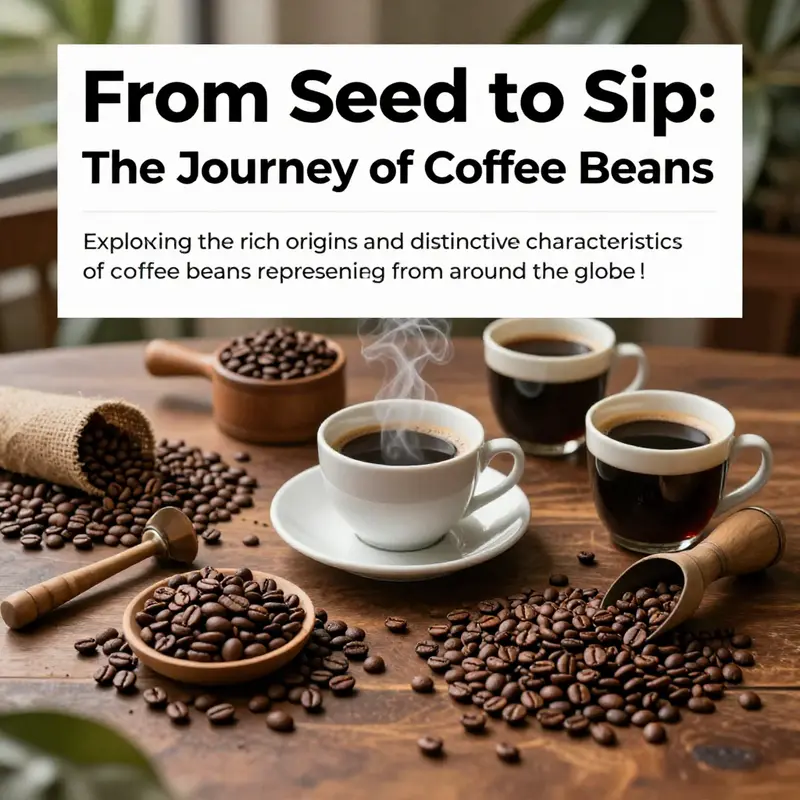
Coffee, a beloved beverage worldwide, has its roots deeply embedded in several key regions across the globe. Understanding where coffee beans come from is essential for business owners in the coffee industry, as it impacts everything from sourcing decisions to flavor profiles. This exploration covers the remarkable journey of coffee beans from Latin America, where robust production thrives, to Africa, the cradle of coffee cultivation, and finally to the emerging sources in Asia-Pacific. Each region offers unique contributions to the coffee landscape, influenced by climate, soil, and traditions, shaping the varieties that ultimately reach consumers’ cups.
null
null
null
null
Emergent Beans, Distinctive Profiles: Asia-Pacific’s Quiet Rise in the Global Coffee Origin Map

Asia-Pacific is emerging as a significant player in the global coffee map, not through a single harvest but through a mosaic of microclimates, farming traditions, and technical innovations that reshape the origin story of beans. The region’s diversity is striking—from sea level plantations to highland farms perched above misty passes, the continent yields a spectrum of beans that challenge the assumption that origin is anchored in a few famous mountains. The story of origin in this part of the world is becoming a narrative of adaptation, experimentation, and collaboration across generations of farmers, millers, and researchers who share a common goal: to coax more character from the same plant while preserving resilience in the face of climate shifts and pest pressure.
In terms of volumes, Robusta remains the workhorse of many Asia-Pacific systems. Its hardiness, quick maturation, and higher yield contribute to rural livelihoods where land and labor can be scarce. Yet beneath the Robusta majority, a quiet but measurable ascent of Arabica is underway. Industry observers project a compound annual growth rate of about 6.88 percent for Arabica production in the region through 2031, a signal that producers are steering toward the quality end of the market and toward the storytelling power of origin. Arabica’s rise is not simply about more beans; it is about different flavor possibilities, refined cup profiles, and the ability to participate in the burgeoning specialty-coffee segment that prizes acidity, clarity, and nuanced aroma. The shift also reflects a maturation of supply chains that can bring selective beans from farms to roasters with traceable paths that satisfy both curiosity and care for the environment.
Several factors converge to drive this shift. First, consumer demand for specialty coffee has shifted the economics of farming in Asia-Pacific. Roasters and retailers increasingly seek beans with distinctive fruit and floral notes, terroir-driven sweetness, and clean finishes that can stand up to nuanced roasting profiles. This demand creates incentives for farmers to invest in higher-quality inputs, from improved pruning cycles to selective picking and careful fermentation. Second, tangible improvements in cultivation techniques across the region are reshaping what is possible. Farmers are adopting better pruning regimes, shade management, soil fertility programs, and more precise irrigation, expanding from traditional terrace farms into more diversified systems that blend shade trees with more modern inputs. They are experimenting with higher-density plantings and grafted varieties that balance yield with resilience against pests and disease. Third, the development of distinct flavor profiles reflects both the range of microclimates across the region and the evolving processing methods that transform green beans into a sensory experience. Elevation matters in Asia-Pacific as it does elsewhere, and even within a single country, altitudinal bands can produce different aromatic signatures, from bright citrus to deep chocolate or herbal undertones. The result is a palette of beans whose journey from plant to cup reads like a map, with each village, valley, and hill contributing a note to the final cup.
Vietnam stands as a compelling example of how tradition and experimentation intersect. For many decades, the country has been best known for robusta production, which has supplied everyday brews the world over. Today, however, Vietnamese producers are moving beyond that baseline. In elevated regions where mornings stay cool and soils remain rich, Arabica is gaining a foothold. The beans from these zones tend to carry a mild, chocolatey backbone with subtle fruit notes, a profile that aligns with consumer interest in approachable, drinkable specialty blends. The transformation is not only about flavor; it also reflects improvements in altitude-specific farming practices, adaptation to seasonal monsoons, and more careful post-harvest handling. Drying beds that allow controlled moisture reduction, improved sorting to separate density classes, and basic fermentation experimentation are enabling more consistent cup quality across diverse microclimates. The country’s coffee culture is evolving as growers, millers, and exporters experiment with a spectrum of processing methods—from washed to naturally dried and, increasingly, careful harvest selection that emphasizes uniformity in green beans. This change is partly a response to global demand for traceable origin stories, where a coherent narrative of place becomes a value proposition for premium buyers.
Indonesia offers another lens on Asia-Pacific’s contribution to the origin map. The archipelago’s beans owe much of their character to traditional wet-hulling processes known locally as Giling Basah. This method, widely used in Sumatra and surrounding regions, yields coffees with a heavy body, lower perceived acidity, and earthy, herbal, and sometimes spicy notes. The flavor profile is not a uniform fingerprint; rather, it reflects the particular island, village, and the specific harvest conditions of the year. Indonesian beans have long been prized for their complexity and depth, even if they do not always present the clarity prized by some specialty consumers. In recent years, producers have begun to diversify processing methods, including improved sorting, alternative fermentation practices, and more consistent sun-drying or controlled mechanical drying, with the aim of reducing variability and capturing more expressive aromatics. The result is a bean that can range from cacao-like chocolate and forest floor to peppery spice and resin notes, depending on terroir and technique. Sustainability considerations, too, shape Indonesia’s evolution. Many farms operate within cooperative networks that emphasize soil health, water stewardship, and fair pricing, while innovative milling facilities are linking farmers to roasters and exporters with sharper quality goals and better price signals. The interplay between traditional craft and modern quality demands is visible in every corner of the archipelago, as growers balance heritage with the need to compete in a market that rewards consistent performance.
India’s Western Ghats remain a focal point for aromatic complexity. The monsoon-influenced climate in this region fosters a distinctive maturation cycle that can produce coffees with floral brightness and citrusy lift. Indian coffees often showcase a perfume-like aroma and a crisp acidity that feels balanced against a sometimes creamy body. Many producers in this belt experiment with processing styles that accentuate these traits, such as monsoon processing, which uses seasonal humidity to influence moisture content and fermentation patterns, sometimes yielding a bright, wine-like acidity coupled with citrus rind notes. The terroir here is nuanced, with soil, microclimate, altitude, and shade contributing to a nuanced aromatic tapestry. India’s expansion into higher-altitude plantation landscapes is opening doors to more consistent Arabica production and the development of new varieties bred for disease resistance and flavor stability. This is not merely a shift in quantity; it is a deliberate strategy to participate more robustly in the global marketplace by offering beans whose cup profiles can stand alongside the finest origins in other regions.
China’s Yunnan province has emerged as a pivotal frontier for Asia-Pacific’s specialty coffee narrative. While the country’s coffee sector is younger than those in Vietnam or Indonesia, Yunnan’s landscapes, with their mosaic of highland foothills and lower valleys, create gradients of sweetness and brightness that can translate into nutty or citrus-forward cups. The growth in Chinese specialty coffee is as much about consumer culture and cafe ecosystems as it is about agronomy. Growers are learning from cupping traditions around the world, investing in soil health, and adopting post-harvest practices that emphasize consistency and traceability. The result is a portfolio of beans that reflect both rustic and refined tendencies, depending on sub-region and season, yet all connected through a shared aim: to tell a credible origin story through flavor, aroma, and texture. As China expands its production base, researchers and farmers collaborate on pest management and climate-adaptive varieties that promise steadier yields without compromising the delicate aromatics that define high-quality lots.
The region’s distinctive characteristics do not exist in isolation from the broader, global supply chain. Asia-Pacific beans intersect with Latin American and African offerings in an increasingly integrated market. The flavor landscape grows more dynamic when buyers acknowledge how a single region can contribute multiple flavor vectors. Robusta’s resilience and high yields often accompany Arabica’s refined sweetness and acidity, creating a continuum rather than a dichotomy. This interplay matters for roasters who evaluate beans by their ability to express a terroir over a broad spectrum of roast levels and brew methods. It also matters for farmers who navigate the realities of climate variability and market demand. In many parts of Asia-Pacific, producers are adopting climate-smart farming practices that preserve soil structure and microbe life, ensure water efficiency, and safeguard yields under shifting rainfall patterns. The adoption of precision agriculture—sensors, shade management, drip irrigation, and soil analytics—helps farmers optimize inputs and reduce waste, a practical step toward higher quality and more consistent harvests. As these methods spread, the region becomes more capable of producing beans that can carry consistent quality across years, a crucial factor for roasters seeking reliability alongside distinctive flavor.
The emergence of Asia-Pacific as a source of distinctive coffee beans also reflects a broader reimagining of what origin means in a global market that has historically centered on a few iconic geographies. The story is no longer about mountains known by name and altitude alone. It is about the web of farms connected through cooperatives, exporters, and roasters who insist on meticulous curation: careful picking by hand, selective blending, controlled fermentation, and rigorous sorting of green beans. The result is a diversity of cup profiles that can range from citrusy brightness and tea-like aromatics to deep, earthy presence with a hint of cocoa or spice. In this sense, Asia-Pacific coffee is less a single destination than a gradient of places where soil, climate, and human practice meet to create something new and, in some cases, unexpectedly delicate. Those readers who begin their origin journey in this region may find that what starts as a search for beans with a particular roast level or body can easily become a study of microclimates and cultural practices that make each harvest a narrative of place.
Across the region, smallholder farmers, often working on limited parcels, harness community networks to share knowledge and increase bargaining power. They adopt new varieties, refine post-harvest techniques, and experiment with fermentation windows that influence acidity and aroma. They are also increasingly connected to export channels that reward quality and consistency rather than simply volume, a shift that incentivizes investment in soil health, water management, and early pruning. These shifts are not uniform, and pockets of traditional practice persist, but the trend toward higher quality and more transparent supply chains is clear. This is where origin becomes not only a matter of geography but also of social and economic organization. The cooperative model, better price signals, and shared access to training programs are gradually altering what it means to harvest a bean that can travel far and still arrive in a roastery with integrity. The result is a more dynamic origin dialogue in which terroir speaks through both soil composition and the social architecture that supports sustainable farming.
The regional narrative also has implications for how coffee is experienced in cups around the world. Roasters who want to convey a story of place are increasingly looking for beans that carry a sense of elevation, rainfall patterns, and community labor behind them. The sensory map of Asia-Pacific is expanding to include notes not typically dominant in the global trade: delicate floral perfumes, citrusy zest, herbal brightness, and earthy undertones that can blend with the fruit-forward tendencies of other origins in a balanced blend. In this sense, Asia-Pacific is less about replacing traditional origin hubs and more about enriching the global palette. It invites a reevaluation of what constitutes a premium bean, encouraging curiosity about how processing choices, altitude bands, and microclimate windows converge to produce nuanced flavors. The shift also rises to a challenge for quality control and traceability, because as beans travel from small villages through cooperative mills to international distribution, maintaining consistent quality requires clear standards, reliable analytics, and robust logistics. The momentum here is not ephemeral; it reflects a broader movement in agriculture where farmers, scientists, and entrepreneurs collaborate to elevate small-scale production into a sustainable, quality-driven sector.
Ultimately, Asia-Pacific’s emergence as a source of distinctive beans enlarges the origin story of coffee in a world where taste evolves with markets and climate. The region’s blend of Robusta backbone and Arabica experimentation demonstrates the flexibility of the coffee plant to express different identities across space and time. The flavors that reach roasters and consumers from Vietnam, Indonesia, India, and China are more than culinary impressions; they are evidence of a set of human choices—how trees are pruned, how fruit is harvested, how wet or dry processing is conducted, and how beans are sorted—that collectively produce a cup that speaks of a place. Those who follow the origin thread across chapters will see how a region once viewed as a producer of bulk beans now contributes some of the most interesting cups on the market, not by accident but through deliberate, collaborative work aimed at sustainability, quality, and authenticity. The cup is many voices: the farmer who tends the land, the miller who reads the beans, the roaster who judges the aroma, and the consumer who chooses a cup because it carries a memory of a landscape. The Asia-Pacific chapter, with its emphasis on resilience, adaptation, and continuous improvement, helps complete the map of where coffee beans come from, underscoring that origin is not a fixed line on a map but a living fabric woven from soil, climate, culture, and care.
External resource: https://www.grandviewresearch.com/industry-analysis/coffee-market
Final thoughts
The journey of coffee beans from their origins to our cups is a reflection of diverse cultures and practices. Latin America remains a powerhouse of production, with its beans offering comforting, balanced flavors. In contrast, Africa imbues coffee with its distinct, vibrant profiles, while the Asia-Pacific region is swiftly carving out its niche in the specialty coffee market. For business owners, a deep understanding of these origins can guide sourcing decisions and enhance product offerings, ensuring that every cup of coffee served tells a unique story.