
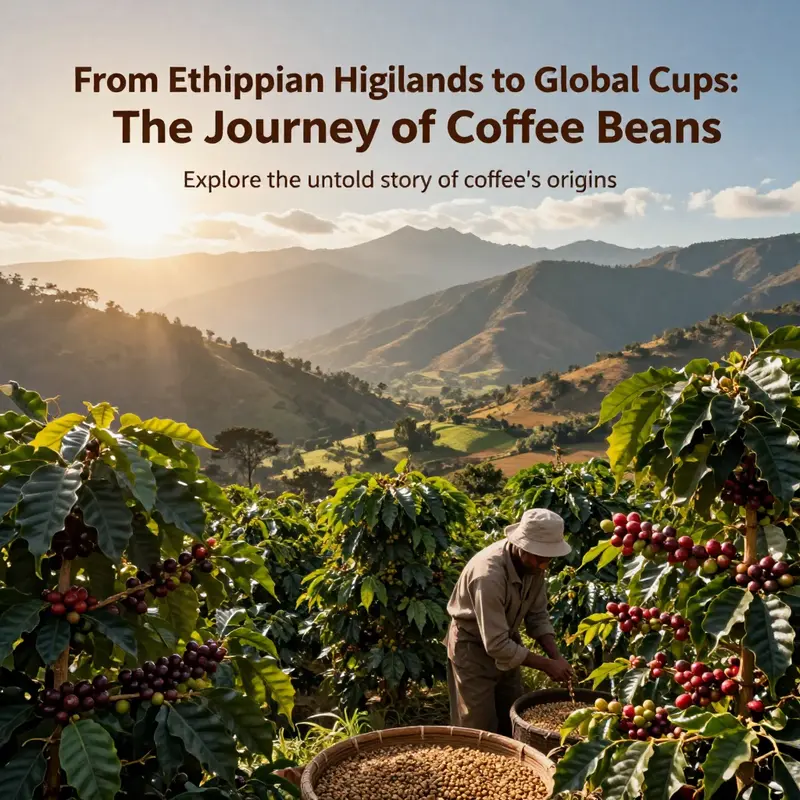
The rich aroma of coffee resonates beyond a mere morning ritual; it encapsulates centuries of history. The journey of coffee beans from their birthplace in Ethiopia to coffee shops worldwide is a fascinating tale of discovery, trade, and cultural significance. This article delves into the historical origins of coffee in Ethiopia, tracing its spread to the Arabian Peninsula, the profound impacts on global trade and economies, and its cultural importance. Understanding these facets provides business owners with insight into the coffee industry, helping you appreciate not just the beverage itself but its role within a broader economic landscape.
From Kaffa to the Cup: Tracing Coffee’s Ethiopian Origins
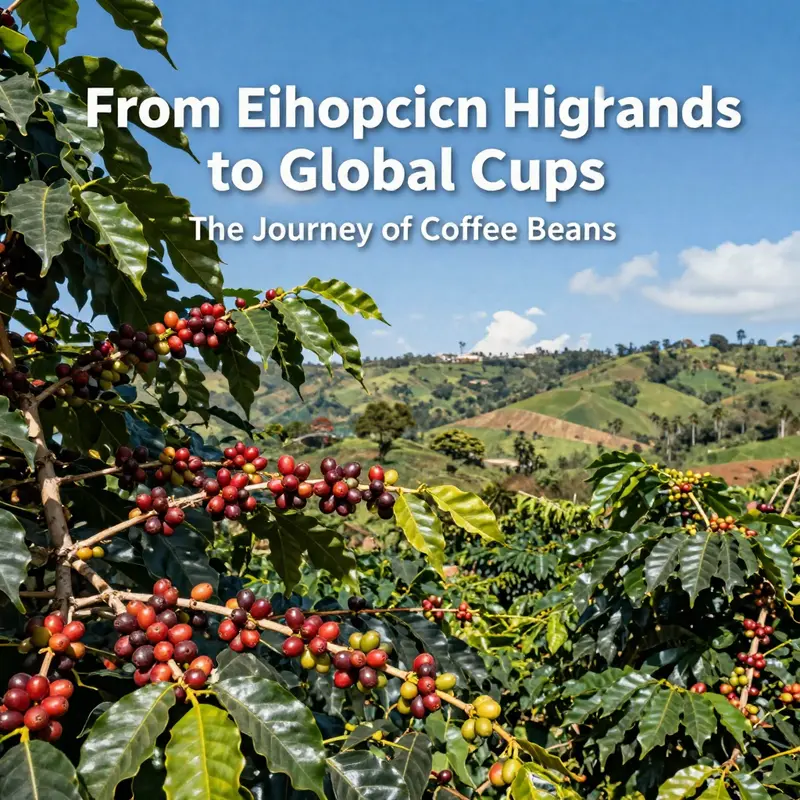
**From the forested highlands of southwestern Ethiopia to the bustling cafés of the world, the story of the coffee bean unfolds as a thread through culture, trade, and curiosity.” Where did coffee beans come from?” The answer begins not in a kitchen, but in a landscape where mountains reach toward the sky, and where people have long learned to listen to nature’s signals and to coax flavor and energy from humble cherries. In this sense, the origin of the bean is not simply a date or a place, but a continuous dialogue between a plant and a people who shaped its use, its name, and its ritual.
The earliest narratives about coffee are inseparable from legend. In the hills around the Kaffa region, a young goat herder named Kaldi is said to have noticed his goats prancing and bleating with unusual vigor after nibbling red berries from a certain shrub. The story, rich in color and cadence, has a way of sticking to memory because it frames a basic truth: a plant once overlooked can become a doorway to community and commerce when humans pay attention to its effects. Kaldi’s curiosity—reaching beyond the ordinary and testing the berries himself—created a fable that travels as easily as the scent of roasted beans. Though many scholars treat this tale as myth, its persistence in Ethiopian tradition underscores a central point: Ethiopia is not merely a cradle of coffee as an agricultural product; it is a cultural and spiritual landscape where the plant belongs, where stories about it are told, and where its early use electrified social life long before the drink traveled across the world.
The botanical heart of the matter lies in the wild origins of Coffea arabica, a species that seems almost perfectly suited to the Ethiopian highlands. The region’s altitude, mist, and volcanic soils provide a combination of climate and biodiversity that nurtured a plant family into which farmers learned to invest time, patience, and trial. In Ethiopia, coffee is not simply grown; it is tended as a living archive of microclimates, soil types, and processing possibilities. This is not a claim about a single cultivar but about a landscape that preserves genetic diversity, a reservoir of flavors waiting to be explored. In the highlands, farmers have long engaged in a range of processing practices—varying between washed, natural, and semi-washed methods—that highlight how terroir can emerge in a single cherry. The result is a spectrum of profiles that reflect not only a plant’s biology but a people’s choices, rituals, and tastes.
What makes the Ethiopian origin particularly resonant today is the country’s enduring relationship with the bean. Even as coffee spread abroad and transformed into a global commodity, Ethiopia retained deep connections to its own crops and to the traditional practices that shaped flavor and social life. The best-known Ethiopian coffees—often associated with regions such as Yirgacheffe and Sidamo—are celebrated for floral aromatics, citrus brightness, and sometimes wine-like finish. These descriptors speak to a botanical and cultural richness that has become a hallmark of the country’s coffee identity. It is in these landscapes that the ceremony of preparation grows from a simple act into a communal ritual, a testament to hospitality and shared experience. The Ethiopian coffee ceremony, with its steps of roasting, grinding, and brewing in front of guests, reveals how a cup of coffee can be more than a beverage. It becomes a mediation between land, family, and neighbors—a ritual that has carried across continents even as the beans themselves traveled far from their ancestral hills.
If we trace the bean’s journey beyond Ethiopia, the next chapter in its migration is as instructive as the Ethiopian chronicle itself. After its discovery by communities within the highland forest, coffee and its beans began to travel toward the Arabian Peninsula, carried by traders and travelers who recognized, sometimes almost instinctively, the beverage’s potential to energize, to focus, and to unify people in shared spaces. By the 15th century, Yemen and other parts of the Arabian world had begun to cultivate coffee more intensively, and roasting and brewing techniques began to crystallize into a recognizable craft. The Arabs refined the process, experimenting with heat, grind, water, and spice in ways that shaped what many of us now know as coffee culture. From the Arab world, the drink moved toward Europe and the broader Indian Ocean world, shifting forms, intensities, and temperatures as it passed through markets, ports, and homes. In this wider arc, Ethiopia’s role remains foundational: the plant’s presence in the wild, its genetic variety, and its early cultivation planted the seed of a global habit that would later transform into a world economy of sorts—one built on supply chains, harvest cycles, and a shared appetite for a cup that could sustain conversation as much as wakefulness.
To talk about the origin of the bean is to talk about a plant’s capacity to adapt and a culture’s receptiveness to new flavors. The Arab world’s roasting experiments, the emergence of distinct brew techniques, and the establishment of markets all contributed to the modern art of coffee. Yet even as coffee traveled, Ethiopia did not surrender its own identity to the world’s palate. The country remains a major producer, a place where smallholders cultivate remarkable Arabica varieties, and a region by region mosaic of profiles continues to shape international expectations about what coffee can be. The Yirgacheffe region, for instance, has become a shorthand in the coffee lexicon for bright, nuanced aromatics—floral notes paired with citrus or stone fruit—and it exemplifies how regional microclimates and processing choices can yield a signature character. The presence of these distinct profiles in the global market is a reminder of coffee’s origin story as a dialogue between place and plant, between local practice and global curiosity.
This dialogue is not locked in the past but alive in present-day farming and processing practices. In Ethiopia, traditional farming methods persist alongside modern improvements that seek to balance productivity with the preservation of genetic diversity. The country’s approach to coffee, then, is not a static relic but a living tradition: farmers who alternately guard heirloom varieties and embrace improved cultivars; communities that nurture soil health and water management; and processors who experiment with natural and washed processes to coax different personality from the same cherries. Such a balance supports both smallholder livelihoods and the global demand for distinctive flavors. It is this blend of continuity and innovation that explains why Ethiopian beans have remained a touchstone for quality, even as the world’s palate has grown more adventurous and more discerning about what a coffee can express.
Beyond flavor and method, the origin of coffee beans is a story about how a plant becomes a bridge across cultures. When traders and travelers began to seek coffee in earnest, a single seed carried a world of associations—hospitality, ceremony, trade, and ritual. The bean became a vehicle for social connection, a way for people who spoke different languages to share a moment of consideration, to slow down, to listen, and to respond to one another with conversation and warmth. In modern coffee culture, this deeper thread remains visible in the way a well-prepared cup invites a moment of pause, a chance to reflect on how a small fruit from a hillside can ripple outward into cities, markets, and social rituals across the globe.
As we consider the question of origin, it becomes evident that the answer is not a single point in time but a chain of influences: a legend that embodies a people’s memory, a landscape that nurtures a plant’s diversity, a series of migrations that sparked a global habit, and a culture that continually reinterprets a bean’s potential. The story of Ethiopia and its coffee is thus a reminder that origin is not merely birthplace but a continual process of cultivation, exchange, and meaning-making. It is the way a plant, a community, and a world learned to recognize something in common—a flavor that could speak across distances and, in the process, change how people see their own routines and their shared future around the table.
For readers who wish to explore a detailed Ethiopian account of the bean’s origins in a formal context, the following external resource provides a narrative anchored in Ethiopian traditions and history: https://www.caffeluxxe.com/origin-story-ethiopian-coffee. This link offers a complementary perspective to the story sketched here, grounding the legend of Kaldi in a broader cultural and historical frame while highlighting the significance of Ethiopia’s land, climate, and people in shaping coffee as we know it today.
From Ethiopian Highlands to the Arabian Sea: The Dawn of Coffee’s Global Journey
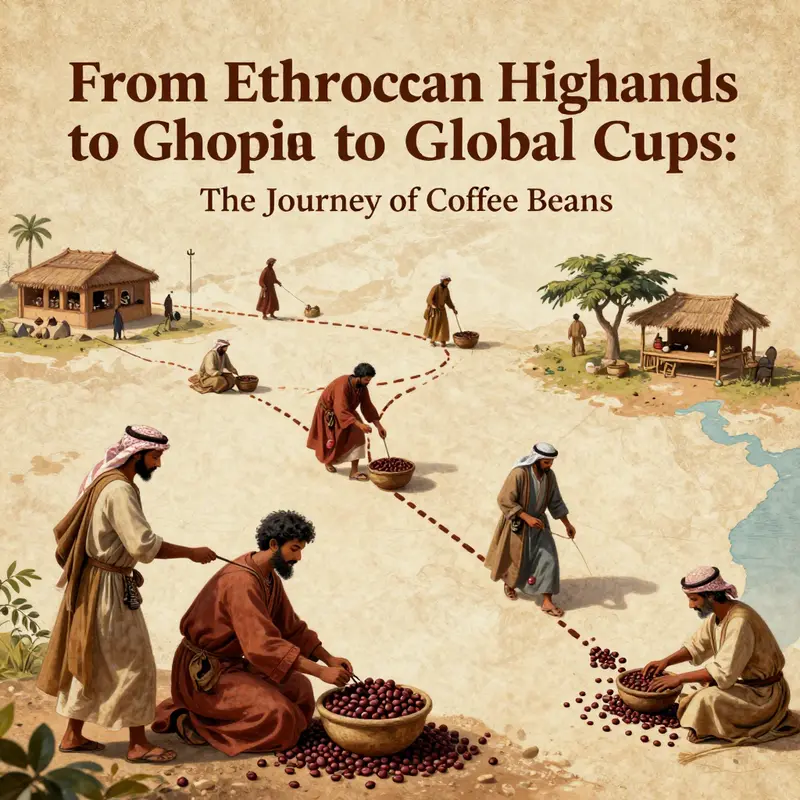
On the plateaus of southwestern Ethiopia, where cedar and grass meet the dawn light, the plant that would later travel the world begins its quiet story. The earliest whispers say a goat herder named Kaldi noticed his flock dancing after nibbling the red berries from a tree. The energy of the goats seemed to pass into Kaldi, who tasted the berries and felt a lift that contradicted the fatigue of his days. Whether legend or history, this tale crystallizes a truth: coffee’s origin lies at the junction of landscape, ritual, and human curiosity. The beans that would one day wake continents grow in Coffea arabica, a shrub whose wild roots trace the Ethiopian highlands. The climate, altitude, and soil there shaped the aroma and character that would become the plant’s signature. The earliest uses of the berries were not yet commerce but a folk remedy, a tonic for weariness and perhaps a spark for social ritual. Yet the story hints at a deeper truth: to drink coffee is to partake in a memory of place, a memory of the land where the plant first found its home.
From those highland origins, the plant’s scent began to travel with people who traded and explored. The route northward to the Red Sea and into the Arabian Peninsula was both slow and transformative. By the fifteenth century, coffee found new soil in Yemen, where growers and traders recognized more than curiosity in the red berries. In Yemen, cultivation and commerce took on a more intentional form. Monastic and religious communities adapted the berries to sustain long vigils, yet it was in the bustling markets and harbors that coffee assumed its role as a social habit. The city of Mocha, or Al-Makka, became a name travelers would remember for the taste and the promise of the drink. The term mocha would travel with the bean, linking a coastal place to a global curiosity long before modern logistics could prove its reach.
On these winds and waves, coffee moved from a curiosity to a daily practice. The early adopters on the Arabian Peninsula built a new kind of public space, the qahveh khaneh. These coffeehouses were not mere places to drink; they were stages for conversation, music, poetry, and debate. They earned a reputation as schools of the wise, where merchants, scholars, poets, and craftsmen could exchange ideas, hear news, and test new ways of thinking. The beverage, once a garden herb, became a catalyst for urban sociability and intellectual exchange. It was here that coffee earned its first global identity, not simply as a stimulant but as a social instrument, a means to widen the circle of discourse in a world that would soon crave more than a cup to wake up its day.
The chemistry of the plant and the tides of trade together produced a broader diffusion. Monastic devotion and Sufi practice, with long vigils and intense rituals, found in coffee a practical ally. The practice of staying awake during nocturnal devotions aligned with the plant’s properties, and the drink was soon woven into rituals, storytelling, and daily life in mosques, markets, and homes. This fusion of uses—spiritual, social, and economic—helped ensure coffee’s staying power as more than a stimulant; it became a companion to contemplation, conversation, and community. The exchange network that connected Ethiopian growers with Yemenite traders, and then with Mediterranean ports, laid a pathway that would later power the global diffusion of the beans. The Arabian Peninsula offered not only a climate suitable for cultivation but also social structures able to absorb and reinterpret the plant, enabling it to travel with caravans and ships toward new lands.
Mocha’s fame was both geographical and cultural. It denotes a way of thinking about coffee rooted in a coastal city yet resonant far beyond its harbor. The beans carried with them the memory of Red Sea winds and the words of traders who described the drink to curious Europeans. In this sense, the journey of coffee was less a single migration and more a sequence of cultural translations: from a plant in Ethiopian highlands to a commodity traded in ports, from a domestic ritual to a shared social practice, from a religious aid to a cosmopolitan brew enjoyed in drawing rooms, wine houses, and kitchens around the world. Each stage altered the bean and its meaning, adding new nuances to aroma and flavor as it crossed climates and cultures. The Mocha trade, the Arab world’s adaptation of a New World plant’s value, and later European curiosity all contributed to coffee’s transformation into a global commodity.
Even as centuries passed, Ethiopia remains a wellspring of coffee’s identity. Today the country is among the most important producers of high-quality Arabica beans, with varieties from regions such as Yirgacheffe, celebrated for their floral and citrus notes. The plant’s genetic diversity in Ethiopia is not only a matter of taste but a reflection of a landscape where subtle differences in altitude, soil, and microclimate yield beans that vary in acidity, sweetness, and aroma. This rich terroir reminds us that the cradle of coffee did not shut its doors after the voyage to Yemen. It remains a living archive, a place where the stories of the plant’s origin are nourished by farmers who cultivate it and researchers who map its genetics and growing conditions. The narrative of coffee’s origin thus becomes a bridge between antiquity and modern specialty coffee, a reminder that a cup in one corner of the world can carry the scent of another place half a world away.
Looking at this story as a continuum helps explain why the simple act of sipping coffee can feel like a ceremony of global connection. The beans that traveled from an African hill country to a coastal port behind the Red Sea carried centuries of human curiosity and exchange. The ritual of drinking coffee, the architecture of public spaces built around it, and the vocabulary used to describe its many varieties all trace back to that long arc of movement that began with a plant adapted to highland life and a community ready to experiment with a new stimulant. In this sense, the coffee bean tells a story not only of taste but of networks—land and sea routes, markets and monasteries, caravans and coffeehouses. It is a narrative inviting us to consider how a single botanical specimen can become a catalyst for culture, commerce, and conversation across diverse societies.
To understand the spread as more than a simple migration is to recognize how a landscape’s climate and a culture’s rituals together formed the conditions under which coffee could thrive. The Ethiopian highlands offered a resilient plant with flavors that could be perceived across continents, while Yemeni soils and port towns provided a conduit through which the plant’s reputation and aroma could travel. In the centuries that followed, coffee would cross into the Ottoman Empire, then into Europe and the Americas, each transit adding layers to what a cup can mean—comfort, ritual, curiosity, and even a sense of belonging to a shared human habit. Yet even as coffee spread, its Ethiopian origin did not fade. The region’s diverse varieties and the depth of its sensory notes kept the memory of the original earth alive in cups around the world. The story of the spread from Ethiopia to the Arabian Peninsula, and onward, is not simply a tale of transport. It is a story of cultural adaptation and mutual influence, a reminder that a plant can become a bridge across cultures when people listen to its potential and create spaces where it can be enjoyed together.
For a detailed scholarly overview, see Britannica’s History of Coffee: From Ethiopia to Arabia: https://www.britannica.com/food/coffee#ref679432
From Ethiopian Highlands to Global Markets: The Coffee Bean’s Economic Odyssey
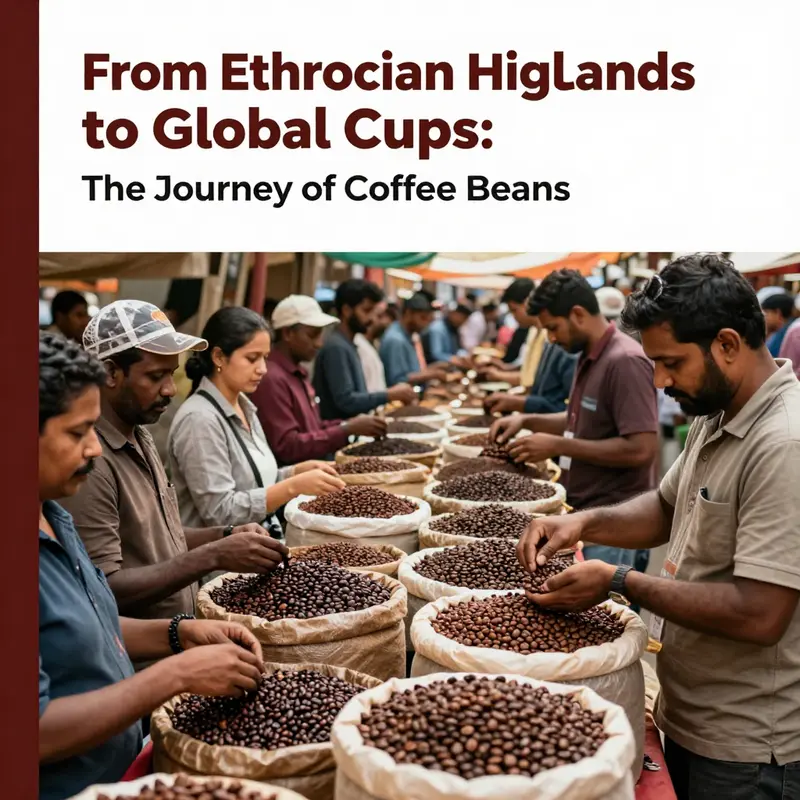
The story of the coffee bean begins in the Ethiopian highlands, where wild shrubs grew in humid shade and farmers learned to harvest fruit with seeds rich in aroma. The cradle of origin is often wrapped in legend as much as in science, but the idea remains: a humble seed traveled far beyond its birthplace to become a global commodity. The earliest chapters speak of Kaldi and his curious goats, a tale that gestures toward networks of exchange that would knit together farmers, traders, and tasters across continents.
From Ethiopia to the Arab world, the bean moved from forest glades into cultivated plants on the Arabian Peninsula, where scholars and merchants gathered in coffeehouses to share ideas as much as to drink beverages. This transition transformed a local plant into a portable commodity, refined by roasting and processing methods that began to create regional profiles.
In Europe and the wider world, coffee became a cash crop tied to colonial and industrial expansion. The pursuit of wealth funded ships, plantations, and financial systems, even as it placed heavy burdens on producing communities that faced price volatility and labor challenges. Yet the story also carries the promise of innovation: new farming methods, better logistics, and a growing demand that incentivized improvements across the supply chain.
Today, the coffee trade sits at the crossroads of economics, politics, and ethics. Tariff disputes, climate risks, and the push for sustainable sourcing shape prices and futures for farmers and roasters alike. Consumers increasingly demand transparency and fairness, while producers seek stability and fair prices that recognize the costs of production. The global south is asserting itself as a partner rather than a peripheral participant, reshaping how supply chains are governed and how value is distributed.
The bean’s journey, from soil to cup, offers a lens on globalization itself: a chain of exchange that nourishes communities, catalyzes innovation, and also tests resilience. It invites us to consider not only how a beverage connects tastes, cultures, and economies but how the terms of trade can honor environmental stewardship, rural livelihoods, and shared prosperity.
From Highlands to Hearth: Tracing the Ethiopian Roots of Coffee and Its Global Story
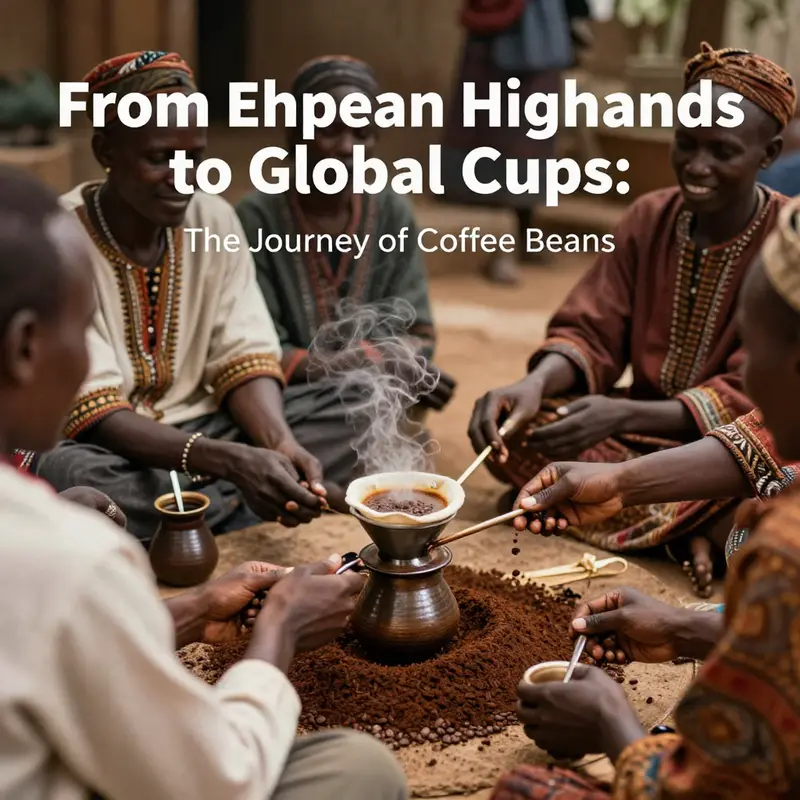
The answer to where coffee beans come from begins not in a distant market or a glossy bag on a shelf, but in the highlands of southwestern Ethiopia, where the story of a potent bean began long before modern coffee culture took shape. This origin is more than a point on a map; it is the cradle of a plant and a practice that would travel across continents, oceans, and centuries to become a daily ritual in countless households around the world. The plant that would become coffee—Coffea arabica—likely germinated in the sheltering shade of Ethiopia’s volcanic soils and high elevations, a climate that favors slow maturation, complex flavors, and a quiet resilience. In these landscapes, the bean took root not merely as a commodity but as a living thread weaving together soil, sun, farmers, and communities. The precise botanical origin matters less as a single pristine source and more as a living web of interactions—from seed to cup—that shaped the beverage we now know globally.\n\nThe most enduring stories about coffee’s beginnings are legends as much as they are histories. The tale of Kaldi, a wandering goat herder, is vivid, almost cinematic: the goats munched on bright red berries, bounced with unaccustomed energy, and Kaldi, curiosity piqued, tried the fruit himself and discovered a similar lift. Whether this folkloric origin is literally true or not, its resonance is powerful. It captures a moment when a wild plant stumbled into human notice and became intertwined with social life, ceremony, and exchange. In Ethiopia, such narratives are not just anecdotes; they carry a sense of stewardship and a reminder that coffee was, and remains, a gift that invites sharing.\n\nGeography matters as much as myth. The homeland of arabica coffee sits in the uplands where altitude, rainfall patterns, and soil types converge to shape flavors as varied as the landscapes themselves. Ethiopia’s coffee is not a monolith but a spectrum. Within its borders, the same species can produce a kaleidoscope of profiles, depending on microclimates, processing methods, and the patience of countless farmers who tend plots small enough to be tended like family plots yet diverse enough to preserve a wide genetic reservoir. Ethiopian producers have nurtured Arabica for generations, refining techniques that balance yield with nuance. This is why Ethiopian coffee often carries a sense of brightness and clarity, a quality that discerning drinkers describe as floral or citrusy, with a backbone of sweetness that lingers in the finish. The highland soils and the interplay of sun and rain in places like Yirgacheffe and Sidamo create what many tasters recognize as distinctive aromatics—flowery notes, citrus zest, and a tactile, wine-like acidity that feels both lively and precise.\n\nThe journey of these beans from Ethiopian hills to markets abroad is a long thread through history, one that intersects with trade routes, religious and social structures, and evolving ideas about cultivation. After the first spark in East Africa, the coffee plant traveled north into the Arabian Peninsula, where it found a new home in the coffee houses and monasteries of the Islamic world. From there, it would move further, carried by merchants who kept careful records of harvests, varieties, and methods. The early spread of coffee was as much about people and ideas as it was about plants. Each culture that adopted coffee added its own rituals, preferences, and interpretations, weaving a larger tapestry that we now call global coffee culture.\n\nWithin Ethiopia itself, the cultural significance of coffee cannot be separated from its botanical roots. The coffee plant is not just a source of flavor; it remains a symbol of social life, memory, and identity. In the Ethiopian imagination, the act of preparing coffee is a communal act, a deliberate ritual that honors guests and kin. The iconic Coffee Ceremony, in which coffee beans are roasted, ground, brewed, and shared in a sequence of intimate steps, embodies how everyday life can become a stage for hospitality and connection. The ceremony is more than a sensory experience: it is a pedagogy of presence. Steaming cups, the careful toasting of green beans, the deliberate grind, the fragrance that fills a room—all of these acts teach patience, respect, and generosity. The UNESCO recognition of this ritual as part of the world’s intangible cultural heritage formalizes what many Ethiopians already know: coffee is a living practice that binds people to place, memory, and one another.\n\nThe sensory life of Ethiopian coffee further anchors its cultural authority. Regions such as Yirgacheffe and Sidamo have become almost legendary among coffee connoisseurs because their beans routinely deliver bright acidity intertwined with delicate sweetness. The origin stories of these regions are inseparable from flavor profiles: Yirgacheffe’s coffee often carries an airy, floral perfume and a crisp citrus edge, while Sidamo can present a nuanced fruitiness that dances on the palate with a polished sweetness. These profiles do not emerge overnight; they reflect a precise confluence of altitude, microclimate, and soil—the quiet geology that shapes taste as surely as weather shapes the landscape. The cultivation practices handed down through generations—selective pruning, seed selection, shade management, and careful harvesting—are all part of an intimate, regional knowledge that keeps the vines healthy while preserving the distinctive character of the region’s harvests. In this sense, Ethiopian coffee is not just a flavor; it is a living archive of a people’s agricultural wisdom.\n\nEven as the world’s appetite for coffee grew, the Ethiopian model of smallholder farming persisted. Many farmers operate within cooperative networks that support shared milling and processing facilities, enabling them to maintain quality control and access to markets that would otherwise be beyond reach. This system preserves a degree of artisanal variation across farms, a factor that contributes to the diversity for which Ethiopian coffees are celebrated. The social fabric that supports this farming—families passing down cultivation knowledge, neighbors sharing labor at harvest, and communities gathering for the ceremonial roasting of beans—encourages a sense that the coffee plant is as much a social crop as it is an economic one. In regions where land is parcelled into terraces and coffee trees shade fundi-werved coffee shrubs, the labor of keeping the ecosystem in balance becomes part of a broader cultural ethic—one in which the land itself is something to be stewarded with care rather than exploited.\n\nThe global ascent of Ethiopian coffee has never meant its traditions were displaced. Rather, the beans carried Ethiopian practices into new environments, where roasters, baristas, and consumers began to notice how origin shapes experience. The cultural import is subtle but enduring: a heightened expectation for complexity and brightness, a willingness to explore processing methods that emphasize different facets of a bean, and a recognition that the way coffee is grown matters as much as the way it is brewed. In the modern marketplace, Ethiopian coffee offers a bridge between tradition and innovation. Farmers continue to innovate with sustainable farming methods, reforestation, and climate-resilient practices, while international buyers and roasters create pathways that respect the origin stories embedded in every harvest. The result is a global appreciation that does not erase local specificity but rather elevates it, inviting drinkers to consider where their cup began and who cultivated it.\n\nThis is a story about place and memory, but it is also a story about possibility. If the Kaldi legend marks a moment of awakening in a handful of goats, the broader Ethiopian narrative marks a continuous, communal awakening—an ongoing confirmation that coffee can be a force for social cohesion, economic resilience, and cross-cultural exchange. The ceremony’s ritual cadence—roasting, grinding, brewing, and sharing—offers a model not just for hospitality but for how communities can honor the origins of their daily rituals while inviting strangers to become part of a shared experience. The flavor notes that identify Yirgacheffe or Sidamo are more than sensory details; they are signposts pointing back to a landscape, a farming community, and a way of life that treats coffee as a living entity rather than a mere commodity. In this sense, the origin story is not a static footnote but a dynamic invitation to listen to the land, to understand the labor behind each cup, and to recognize how the act of drinking coffee can connect people across cultures and continents.\n\nFor readers seeking to appreciate the global tapestry of coffee with a sense of its Ethiopian roots, the layered history invites careful attention to where coffee beans come from, how they are grown, and how communities have shaped their journey. The answer is not only in the bean’s botanical lineage but also in the rituals, landscapes, and people who have sustained its cultivation. The Ethiopian origin is a lens that clarifies why coffee tastes the way it does and why it carries with it a sense of place. It is a reminder that flavor, tradition, and globalization are not opposing forces but interwoven strands of a single story—one that begins high in the Ethiopian hills and travels, sip by sip, toward shared human experience. As the world savors a cup of coffee, it tastes not just roasted beans but centuries of cultivation, ceremony, and communal life that have traveled across time and space to arrive in that moment of attentive enjoyment.\n\nFor those who wish to explore an external perspective on this enduring heritage, UNESCO provides a formal recognition of the Ethiopian Coffee Ceremony, underscoring its significance beyond taste and commerce. Learn more about the ceremony’s place in world culture here: https://ich.unesco.org/en/RL/ethiopian-coffee-ceremony-01297
Final thoughts
The journey of coffee beans from the highlands of Ethiopia to coffee cups around the globe underscores not only the beverage’s rich heritage but also its pivotal role in global economies and cultures. For business owners in the coffee sector, understanding this journey can enhance marketing and establish valuable connections with customers who appreciate the depth and history of their favorite beverage. Embracing this narrative can lead to a more enriched experience for both your business and your customers.