
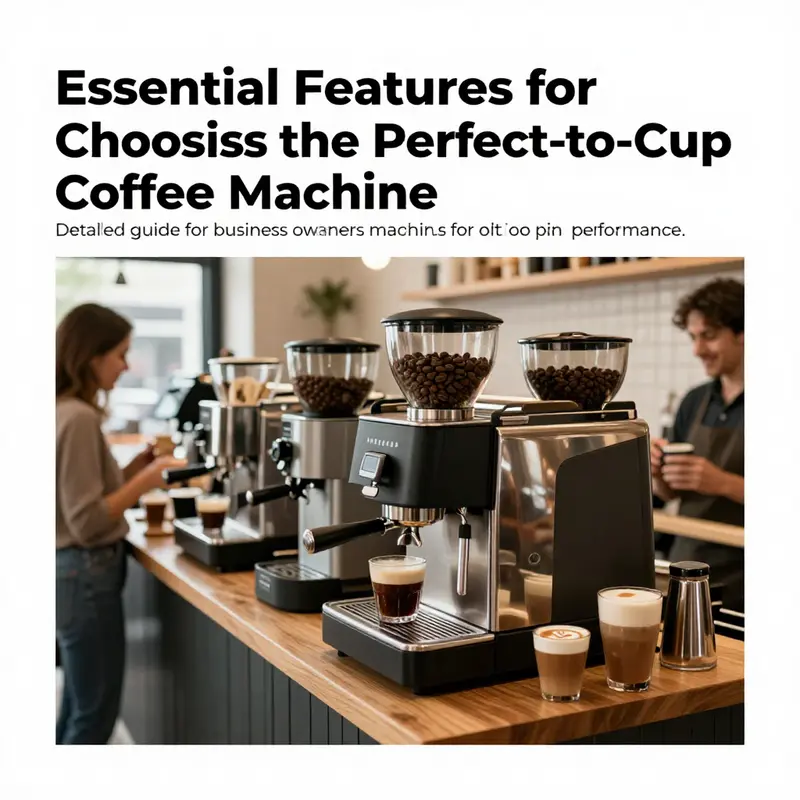
Selecting the right bean-to-cup coffee machine can significantly impact your business by improving customer satisfaction and operational efficiency. In today’s competitive market, high-quality coffee served seamlessly is a centerpiece of customer experience. Business owners must prioritize essential features that enhance the brewing process, ensure reliable performance, and simplify maintenance. The journey toward selecting the optimal machine begins with understanding the importance of integrated grind systems, adjustable extraction pressures, and clean water path designs. Each chapter delves into these crucial aspects, providing insights that aid in making a well-informed decision tailored to business needs.
Grounded in Freshness: The Subtle Strength of True Integrated Grinders in Bean-to-Cup Machines
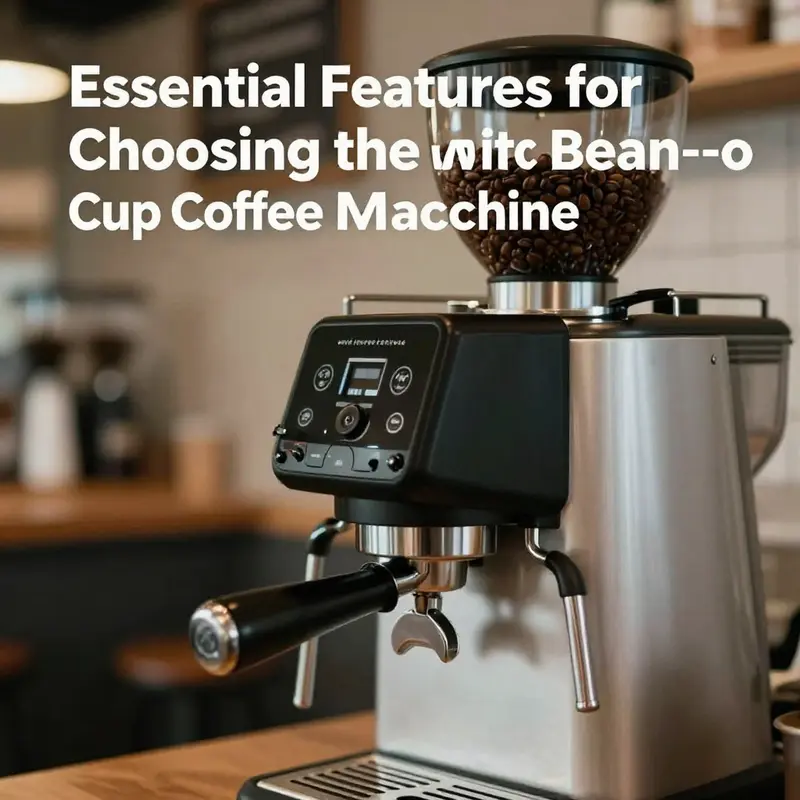
A bean-to-cup machine that really earns its label is not just a box that holds a grinder and a boiler. It is a carefully engineered path where fresh coffee meets precise control at every turn. The heart of that path is the integrated grind system. When a machine truly integrates the grinder into its core design, the act of turning beans into liquid becomes a single, seamless sequence rather than a juxtaposition of components that happened to share a chassis. A genuine integrated system treats grinding as a step that must be synchronized with dosing, tamping, water temperature, and pressure. It is about continuity: the grind, the bloom, the extraction, and the finish all aligned as if they were parts of a single instrument rather than separate gadgets pressed into one body. The idea is simple in theory but demanding in practice. If grinding feels like a sidestep in the workflow, the brew will reflect that misalignment in forgone aroma, uneven crema, or a cup that shifts with bean age and ambient conditions. True integration matters because it preserves the aroma and enables dependable performance after weeks and months of use, not just in the first few days after unboxing.
To appreciate what true integration buys you, picture the grind as the machine’s mouth, the moment at which the beans release their aroma and start the clock on extraction. In a fully integrated system, the grinder is not an add-on or a peripheral accessory; it is wired into the machine’s logic. The grind setting becomes a fluent part of the brewing sequence, with micro-adjustments that carry through to the shot’s profile. This is why the specification you want to scrutinize is not simply ‘grind settings’ in isolation, but the depth of that integration—the extent to which grind quality, dose accuracy, and timing are managed as a single, cohesive process. A machine that drafts its grind settings in isolation may still produce fine coffee once, but repeatability becomes a gamble, especially as beans age and temperature drifts. In contrast, an integrated system stabilizes the baseline grind across batches, reducing the chance that the shot veers toward sourness from uneven particle sizes or bitterness from over-extraction caused by fluctuating grind quality.
Beyond the idea of integration itself lies the practical matter of grind consistency. The equipment that performs the grinding must deliver uniform particles with minimal variance. The most reliable grinders in integrated designs use durable burrs—ideally conical or flat burrs—driven by a motor calibrated for steady rotation and low heat generation. The goal is not to pulverize beans into a fine dust but to yield a consistent particle size that extracts evenly during the short contact window of espresso. Adjustable grind levels should extend well beyond a handful of coarse and fine steps. A robust range, such as thirteen or more precise settings, guards against the temptation to hack a coffee more finely when the beans are fresh and require a slightly different extraction curve. The consequence of less-consistent particle size is familiar to home baristas: a cup that can swing from bright and clean to muddy and harsh within the same morning, simply because the grinder could not hold a stable balance as the beans and ambient temperature shifted. The deeper the grinding system is integrated, the less the user must compensate with trial and error. That makes the experience not only more satisfying but also more approachable for people who want café-quality results without becoming technicians themselves.
The capacity of the grinder matters too, but not in isolation from integration. A grinder that handles a large hopper and a rapid cycling rate without overheating will support a steady daily routine. If the grinder runs hot, fines can clog the pathway and lead to channeling during extraction. A well-integrated system manages heat within the grinding chamber and coordinates with the dosing mechanism so that beans are ground and immediately pushed toward the brewing head. This shortens the distance between grinding and brewing, which helps preserve volatile compounds that define aroma and sweetness. It also reduces waste, because the timing is tuned to minimize stale grounds forming aromas that quickly fade once exposed to air. The importance of seamless integration extends to how the machine starts and stops the grinding at the right moments in the brewing cycle. If the machine grinds with a fixed cadence that does not account for the dose or the tamped puck, the result can be an inconsistent extraction that shifts cup to cup and week to week.
Maintenance is the practical test for any integrated system. Coffee oils and fines accumulate in places that are not obvious to the casual user, especially where the grind chamber meets the dosing path. The most graceful integrated systems acknowledge this reality and design for accessibility. A grinder that is easy to disassemble, with removable burrs or built-in self-cleaning cycles, reduces the burden of routine maintenance. It is reasonable to expect that, after several months of daily use, the machine will require a thorough cleaning. In an integrated design, the maintenance routine should not feel like a scavenger hunt through a maze of screws and tiny parts. Instead, it should be straightforward: a quick wipe, a burr removal for a gentle brushing, a rinse of the grinding chamber, and a simple reassembly. This keeps the grind parameters stable and reduces the risk that oil buildup compounds with fines to alter flavor. In a well-maintained system, the taste of the espresso remains faithful to the bean’s origin and roast profile many weeks after purchase, a reminder that the grinder’s health is inseparable from the cup’s integrity.
The footprint of an integrated grinder, while a less glamorous metric than grind quality, matters in homes and workplaces with limited counter space. A compact, purpose-built grinder that is snugly integrated into the machine’s frame tends to be quieter and more efficient than a separate, external unit perched on a shelf or tucked under a cabinet. The mechanical footprint is not merely about inches of width and height; it is about how the machine sits on the counter and how accessible the grind adjustment and cleaning ports are during daily use. In practice, a thoughtful integrated design reduces the risk of knocking the grinder whenever a cup is removed or a milk pitcher is moved. It also lowers the overall heat load by keeping the grinding chamber within the machine’s body where thermal management is coordinated with the brewing system. Noisy operation is not unusual for high-performing grinders, but the best integrated systems manage noise thoughtfully through chamber design, motor control, and vibration dampening. The experience becomes one of quiet confidence rather than a reminder that precision incurs a sonic penalty.
In parallel with noise and footprint, the user experience plays a decisive role in how widely these advantages are realized. A truly integrated system should feel natural from the moment you add beans to the hopper. The grind should respond to the first tap of the start button with a single, purpose-driven motion: a clean dose, a precise grind, and a calm synchronization with the brewing sequence. The best designs lean toward minimalism in practice. The user should not have to navigate a maze of settings, confirm temperatures, or recalibrate after minor bean changes. The most convincing assertion of integration is not a long list of adjustable parameters but a quiet reliability: one morning you enjoy a balanced shot; the next morning you enjoy another balanced shot with almost no re-tuning required. In that sense, effective integration becomes a form of taste insurance, preserving the nuanced flavors of a given bean across routine daily use.
What does this mean for you as a consumer evaluating machines? It means that when you read a spec sheet, your eyes should travel beyond the number of grind settings or the size of the hopper. You should look for signs that the grinder, the dosing system, and the brewing group are designed as a single family. Look for a grinder with a durable burr material and a geometry that supports consistent particle production across a broad range of grind settings. Consider how the machine handles the transition from grinding to extraction—does it deliver a measured dose in a predictable time frame, or does it rush the process and risk waste or over-extraction? Consider the maintenance pathways: are the burrs accessible for cleaning, and is there a straightforward way to flush the path if you switch beans frequently or encounter stale grounds? These questions may seem technical, but they translate directly into the daily joy you will derive from your machine. A well-chosen integrated grinder is not a luxury; it is a practical commitment to flavor stability, energy efficiency, and continued ease of use.
In the end, the chapter of your home barista career that centers on grind integration is not about chasing the perfect grind in every minute detail. It is about trusting that the machine’s design has done the heavy lifting so that you can focus on the larger arc of flavor. You want a system that nudges you toward the ideal extraction window with minimal friction, that makes the act of grinding feel like it belongs to the same disciplined workflow as tamping, pouring, and tasting. You want a machine that keeps the beans fresh, the aromas vibrant, and the shot predictable enough that you can plan your day around your preferred cup rather than around your equipment. A truly integrated grind system, when executed with care, makes the bean-to-cup journey coherent rather than chaotic. The result is a cup that tastes as fresh as your beans, as balanced as the roast intends, and as reliable as the ritual you bring to your morning routine.
For readers who want to place this topic within the broader landscape of home brewing technology, remember that grind integration is one component of a larger philosophy: machines that succeed at home are those designed to fade into the background, letting your preference and your beans take center stage. The five criteria outlined in this discussion—true integration, adjustable pressure, clean water path design, flexible power options, and minimalist operation—form a holistic framework. They are not only about what a machine can do, but about how smoothly it can do it, how easy it is to maintain, and how consistently it can reproduce your best efforts. When this philosophy is embedded in the design, the result is a bean-to-cup machine that makes a personal ritual feel a little less like a project and a little more like a habit you look forward to every day. It is in that daily reliability that integrated grinding earns its reputation—not as a flashy feature, but as the quiet engine of flavor, aroma, and enjoyment that keeps you coming back to the morning cup.
External resource for further reading: For a broader technical perspective on grind size, extraction dynamics, and how integrated grinders influence cup balance, you can explore an external guide that delves into these concepts in depth. https://www.amazon.com/dp/B07X5Y1F9R
Tuning Brew Precision: How Adjustable Extraction Pressure Elevates Bean-to-Cup Espresso at Home

Adjustable extraction pressure is not the loudest feature on the showroom floor, but its impact reverberates through every cup you brew. The journey from bean to cup rests on a precise rhythm: water meets coffee, pressure rises, flavors dissolve, and the brew travels to your cup. In many home machines, this rhythm is fixed, a single cadence that can be too rigid for the wide variety of beans you might experiment with. A flexible pressure system, by contrast, invites you to tailor the tempo of extraction to the coffee you have in your hands. It is not about blasting the grounds with more force; it is about guiding the extraction to reveal what the bean has to offer without forcing it to fight against the machine’s defaults.
To appreciate why adjustable pressure matters, start with the simple physics under the hood. Water at pressure acts like a solvent with tunable aggressiveness. At one end of the spectrum, low pressure delivers a gentler dialogue with the coffee bed. It can preserve delicate compounds and highlight sweetness, particularly in lightly roasted beans that carry fragile aromatics. At the other end, higher pressure can extract more solubles, enhancing body and intensity but risking bitterness or harshness if the interaction with the grounds becomes too aggressive. The skill in using adjustable pressure is to navigate that spectrum with a sense of how the roast and grind size respond to different pressure curves. A specialty of better machines is the ability to hold a chosen pressure steadily as the shot pulls, avoiding sudden surges that can disturb the extraction balance. When a device delivers a smooth, predictable pressure profile, the resulting crema tends to be more persistent, and the flavors in the cup feel coherent rather than fragmented.
Beans, roasts, and freshness all shape the pressure story. A fresher bean bed can cling to oils that respond to pressure differently than aged grounds. A lighter roast often carries vibrant acidity and nuanced floral or fruity notes that can fade under aggressive extraction. A darker roast tends to benefit from enough resistance to develop a fuller body and caramelized sweetness, but too much pressure can drag out burnt notes. An adjustable-pressure machine equips you to respond to these subtleties without swapping equipment or grinding anew each time. The adjustment might be as simple as selecting a lower pressure for a bright origin or dialing up slightly for a robust, chocolate-forward profile. If your machine offers presets or programmable profiles, you can save the exact pressure curves that work best for a given bean and roast — then recall them with a couple of taps when you switch beans. This capability is where pressure control really earns its keep, turning a single device into a flexible flavor instrument rather than a one-note appliance.
From a brewing technique perspective, pressure interacts with the broader performance envelope of the machine. The pump delivers a baseline pressure, but the way the machine manipulates that pressure over the course of the shot—sometimes ramping up gradually during pre-infusion, sometimes maintaining a steady pull, and occasionally stepping down in the latter stages—defines the character of the extraction. A pre-infusion phase, if included, helps to moisten and soften the coffee bed before the full pressure arrives. This can be especially beneficial for those using more delicate grinds or denser tamping, because it minimizes channeling and fosters a more uniform extraction. The machine’s ability to modulate the ramp profile—how quickly pressure climbs to its peak and how it behaves as the shot approaches its end—adds another layer of control. When a brewer can explore different ramp patterns, they unlock variable sweetness, body, and aftertaste that would otherwise be locked behind a single extraction curve.
Consider the practical path a consumer would follow when evaluating adjustable-pressure capability. In the showroom, you might encounter a dial, slider, or digital menu that allows you to set a target pressure and observe a gauge or readout during extraction. A well-designed interface communicates not only the chosen pressure but also how evenly the machine maintains it. If the interface is opaque—if you cannot confirm that the pressure you set remains constant during the brew—it can be difficult to translate your adjustments into repeatable results. Clarity matters because your learning curve depends on feedback you can trust. It is also worth noting that pressure control is most effective when paired with a consistent grind and dose. If your grinder slips or your dose varies shot to shot, even the best pressure system cannot fully compensate. The integration of a reliable, precise grinder with a robust pressure-control system is essential to achieving the repeatability that makes a home espresso routine feasible and enjoyable.
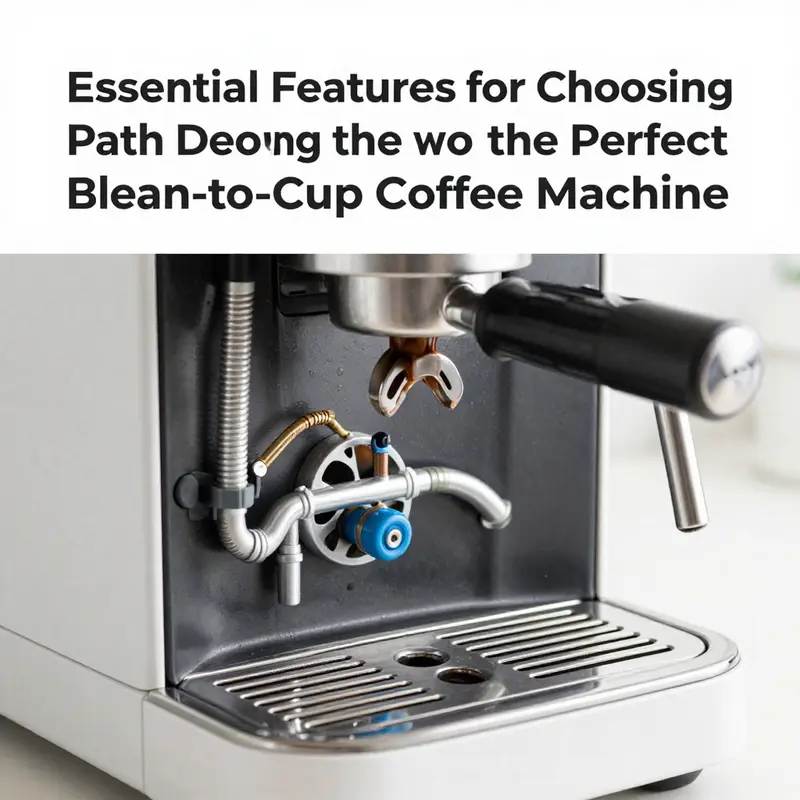
Maintenance and reliability become part of the story here as well. A machine that interrogates pressure without offering durable seals, resilient pumps, and stable circuitry can deliver impressive specifications for a week or two before creeping variances arise. You should look for build quality that communicates durability under pressure: sturdy materials around the group head, well-sealed pathways that resist mineral buildup, and components designed to withstand repeated pressure cycling. Equally important is a design that facilitates cleaning. Pressure can reveal weaknesses in a machine’s water path: if there are dead zones, residue can accumulate and alter flow, dampening flavor and masking the benefits of pressure adjustments. A system designed with easy disassembly for routine cleaning and a self-cleaning pathway will help preserve the integrity of pressure control and the consistency of results over time.
For many buyers, the appeal of adjustable pressure lies in its promise of experimentation with a relatively familiar workflow. You can keep the convenience and speed of a bean-to-cup machine while embracing a more nuanced approach to flavor. The three-step reality—beans in, brew starts, and pressure-driven extraction out—becomes a spectrum of options rather than a rigid path. The process invites you to think about how your beans, roast, and even your mood for the moment interact with pressure. It invites a small laboratory mentality: you test a bean, you adjust the pressure, you note the results, and you refine your approach. In this sense, adjustable pressure mirrors the iterative nature of real coffee craftsmanship: you learn what works, you adapt, and you grow more confident in your palate.
And yet it is important to anchor expectations. Adjustable pressure is not a magic wand that fixes every flaw in grind quality or bean quality. If you grind inconsistently or if the beans are stale, you may still end up with suboptimal results even with a broad pressure range. The most consistent and satisfying outcomes come from harmonizing pressure control with a robust system for grind integration, water path cleanliness, and thermal stability. In practice, a well-rounded bean-to-cup machine will present adjustable pressure as a means to tailor extraction to the bean’s personality, not as a standalone solution that erases subpar grinding or poor bean selection. When you approach it with this balance in mind, adjustable pressure becomes a practical, value-adding capability rather than a cosmetic feature.
In the landscape of home espresso, where the goal is to reproduce café-level quality with reliability, the takeaway is simple: prioritize a machine where pressure control is purposeful, transparent, and durable. It should be part of a cohesive system that respects the grind, the water path, and the thermal handling of the brew cycle. With such a machine, you can experiment with confidence, adapt to a wider variety of beans, and develop a clear sense of how different profiles shape the final cup. This is the essence of turning a bean-to-cup appliance into a flexible instrument for your personal coffee artistry. As you weigh different options, let adjustable extraction pressure be a critical criterion—one that signals a design philosophy oriented toward flavor control, consistency, and long-term satisfaction rather than a short-term novelty. In that light, you are not buying a gadget; you are investing in a tool that respects the science of extraction and your evolving tastes.
External resource: external resource for further exploration of adjustable-pressure concepts and user reviews.
null
null
Final thoughts
Choosing the right bean-to-cup coffee machine is vital for enhancing customer satisfaction and streamline operations in your business. By focusing on integrated grind systems, adjustable extraction pressures, and clean water path designs, you can ensure that your coffee offerings stand out in quality and consistency. Prioritizing these features will not only elevate your coffee service but will also contribute to the overall success of your business. Make a strategic investment in coffee equipment that aligns with your operational needs and customer expectations.