
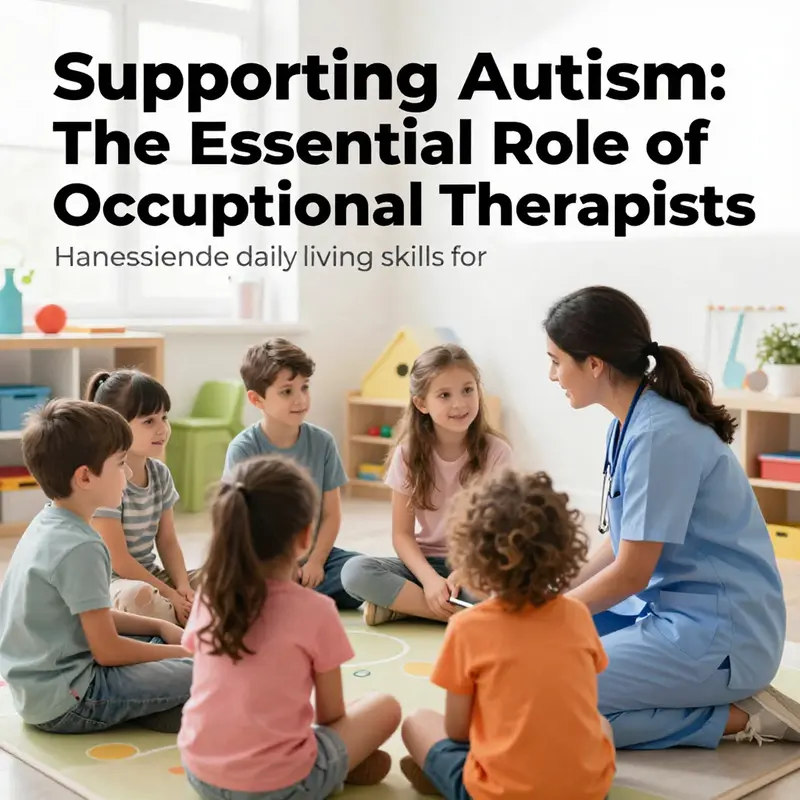
Occupational therapists play a vital role in enhancing the quality of life for individuals with autism spectrum disorder (ASD). By focusing on essential skills necessary for daily living and meaningful activity participation, occupational therapists create tailored interventions that empower individuals. This article delves into the multifaceted role of occupational therapists in autism therapy, exploring their significant contribution to skills development, the challenges they face, and the importance of collaboration with other professionals. Each chapter builds on the previous one, providing a comprehensive understanding of how occupational therapy can profoundly impact the lives of autistic individuals.
Hands, Habits, and Harmony: How Occupational Therapists Guide Autistic Lives Toward Independence
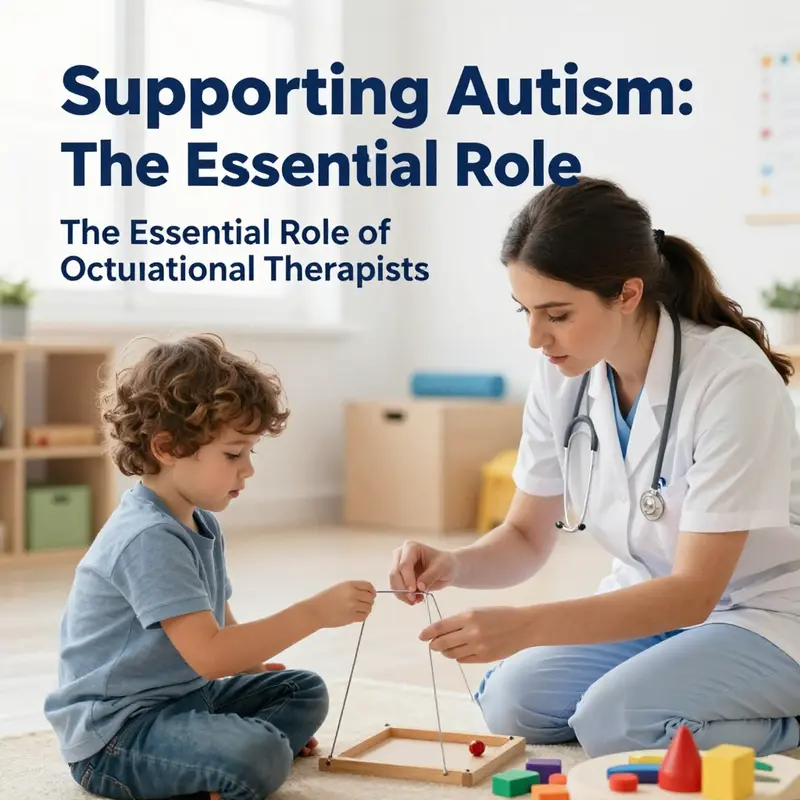
When people think about autism and therapy, they picture quiet rooms and drills. In truth, occupational therapists weave a broader story; they work at the intersection of daily life and personal aspiration, helping autistic individuals shape routines, skills, and environments that let them participate with confidence. This work isn’t about forcing a single script; it’s about listening to each person’s strengths, sensitivities, and goals, then translating those insights into practical steps. OT for autism is a living process that moves with the person through childhood, adolescence, and adulthood, anchored in meaningful activities that matter to them and their families.
A central premise is a holistic view of ability. Therapists look at how a person navigates the day—from greeting a teacher to managing a backpack or a phone alarm—considering physical mechanics, planning, emotion, sensory experiences, and social participation that enable or limit daily activity. A task like packing a school bag becomes a canvas: zip a pouch, organize items, recall assignments, regulate the nervous system for a bustling corridor. The goal is growth over time in multiple domains that reduce friction and increase satisfaction.
Sensory processing is a core thread. For many autistic individuals, sensory input drives behavior and participation. A child overwhelmed by cafeteria noise or harsh lights may withdraw; an adult sensitive to fabric textures or crowded transport may avoid meaningful activities. Therapists use strategies that respect differences while expanding coping repertoires. They may introduce graded exposure to sensory environments, anchor regulation with tactile cushions, weighted vests, regulated breathing, or timely breaks. The aim is to support participation without suppressing sensitivity.
A second pillar is self-care and functional independence. Fine motor skills like handwriting are often highlighted, but the broader objective is independence in dressing, feeding, hygiene, and safe mobility. An OT might help a child refine dressing sequences or adapt clothes, a teen design a personal routine that balances preparation with self-expression, and an adult organize meals, medications, and appointments. Each task becomes a doorway to agency and confidence.
Routines, predictability, and environmental design shape progress. Transitions—home to school, class to class, work to leisure—pose challenges. Therapists help create predictable structures with visual schedules and checklists, while recognizing that rigidity can hinder growth. They teach flexible problem-solving within a comprehensible framework, such as a schedule that includes a pause for processing before the next activity.
Collaboration in schools scales impact. An autistic student’s progress depends on teachers and support staff understanding and implementing supportive practices across environments. Therapists partner with educators to adapt routines, seating, feedback, and task demands; they help families and schools design practical adjustments like chunking tasks and scheduling sensory breaks. This is a sustained effort to embed supportive practices within school culture so benefits extend even when therapists are not present.
Beyond therapy rooms, occupational therapists illuminate pathways for social participation. Social growth is not taught in isolation but integrated with regulation and routines. They may guide turn-taking, help practice initiating conversations, or coach recognizing emotions during exchanges. The aim is meaningful interaction, not mere compliance. Structured opportunities—quiet zones at events, small-group activities aligned with interests—make participation more authentic and enjoyable.
This approach ties into broader life trajectories. Family-centered care sits at its core: therapists partner with families, coach them to reinforce independence, and help interpret sensory or behavioral cues to reduce conflict. Shared goal setting, progress reviews, and adjustments to plans create a long-term road map and, when needed, advocacy for services in educational and community settings.
Assessment and goal setting provide the quiet architecture for progress. An initial evaluation looks at daily engagement, barriers, and growth opportunities. Goals arise from collaboration with the individual and family, balancing practical improvements like handwriting with personal aims like navigating social settings with less anxiety. Progress is tracked through functional outcomes—how well a person can participate in daily life—rather than isolated tests.
Evidence supports the value of this approach. Research shows OT improves daily living and adaptive behavior in autism, with ripple effects for families, schools, and communities. When therapists collaborate, benefits multiply as people learn underlying patterns of attention, organization, and problem-solving that transfer to new contexts. The aim is expanded opportunity, not normalization.
A practical thread is thoughtful use of tools and adaptations. Equipment, schedules, and environmental modifications reduce friction while preserving autonomy. Simple tools like adaptive grips, color-coded organizers, or sensory-safe spaces support regulation and participation. Tools evolve with the person’s growth. Technology and digital aids can plan and sequence tasks, amplifying self-efficacy and enabling more complex learning and life.
Finally, the model proposed by Grandisson (2020) reminds us that school-centered capacity matters: empower teachers and staff to weave supportive strategies into daily classroom practice. This doesn’t diminish direct therapy; it sustains gains by arming educators to recognize sensory needs, support regulation, and scaffold participation. When schools become laboratories of inclusive practice, autistic students experience less stigma and more chances to learn and belong. The ripple effects extend to peers and the wider school culture.
In narrative terms, the work is about agency: cultivating a sense that goals are reachable, that plans can be made, and that support aids rather than replaces personal choices. Independence is a dynamic process, evolving with each day, challenge, and new skill. OT connects micro-level hand skills and sensory regulation with macro-level realities of schools, families, and communities, lighting pathways to broader participation and dignity.
For readers seeking practical understanding, several resources offer guidance on intervention planning, assessment, and collaboration. These tools help tailor methods to different contexts and communities, preserving person-centered care while expanding daily participation, autonomy, and belonging.
External resource: https://www.autism.org.uk/advice-and-information/occupational-therapy
Practical Skill Building: How Occupational Therapy Shapes Daily Life for People with Autism
Practical Skill Building: How Occupational Therapy Shapes Daily Life for People with Autism
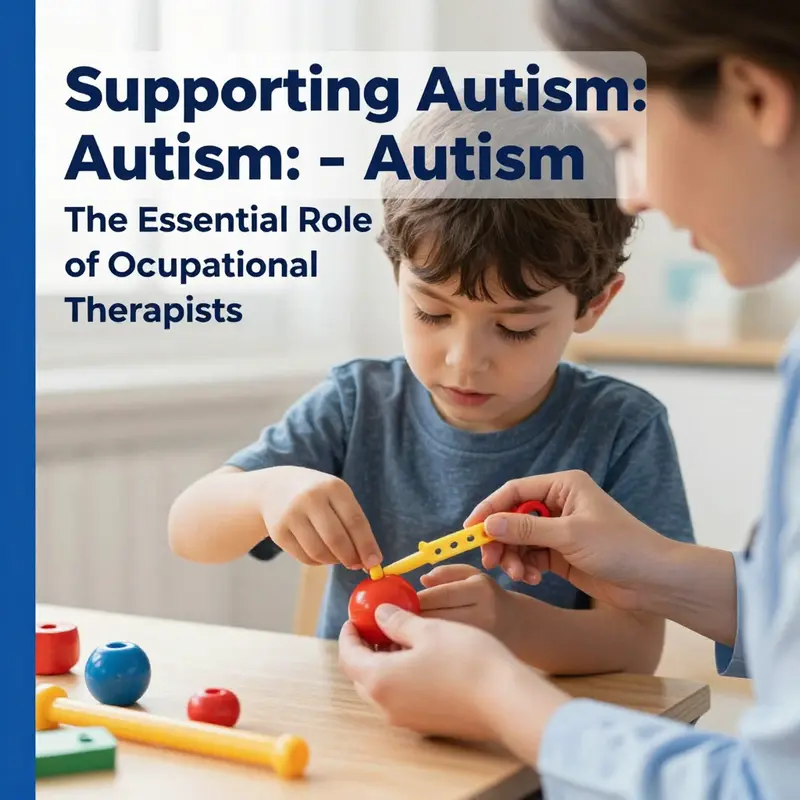
Occupational therapy (OT) transforms the abstract goals of independence and participation into concrete, repeatable skills that change daily life for people with autism. Rather than treating symptoms in isolation, occupational therapists evaluate how sensory processing, motor planning, emotional regulation, and social expectations interact in real environments. The result is a focused program that targets meaningful tasks—handwriting, dressing, using utensils, managing transitions between activities, participating in class routines, or navigating a community outing—and teaches them in ways that match how a child or adult learns best.
A key strength of OT is its insistence on relevance. When a therapist selects an activity to teach, that activity matters to the person and to the people who support them. Teaching a child to button a shirt is not an isolated exertion of fine motor skill. It is a pathway to greater self-reliance in morning routines and a reduction in caregiver burden. Helping a teenager use a planner is not only about organization; it is about reducing anxiety, improving homework completion, and enabling participation in school clubs. This functional focus keeps intervention grounded in everyday life and motivates practice.
Therapists begin with a careful, individualized assessment that goes beyond checklists. They observe the person in natural contexts and consider sensory responses, attention patterns, motor control, and emotional triggers. For young children, observation of play and parent interviews reveal what supports or hinders participation at home and in early learning settings. For school-aged children and adults, therapists assess classroom demands, workplace tasks, transportation needs, and social expectations. The assessment informs a prioritized plan with measurable goals tied to real tasks rather than vague benchmarks.
Sensory processing is frequently a central area of intervention because sensory differences often underlie challenges in daily activities. A child who avoids messy textures may refuse finger-painting, making school art projects stressful. An adult who is hypersensitive to noisy environments may struggle with public transport. Occupational therapists use sensory-based strategies to support adaptive responses. They grade sensory experiences so exposure is tolerable and purposeful, use environmental modifications to reduce overload, and teach coping strategies like deep-pressure breaks or structured movement to support self-regulation. These changes often produce immediate benefits: smoother transitions, longer engagement with tasks, and fewer behavioral meltdowns.
Motor skills also receive targeted attention. Fine motor development influences handwriting, buttoning, tying shoelaces, and using cutlery, while gross motor coordination affects playground participation, bike riding, and safe movement through crowded spaces. Therapists break complex tasks into manageable steps and practice those steps with meaningful materials. For example, improving pencil grasp might begin with play using tweezers or therapy putty, progress to drawing on vertical surfaces to favor wrist extension, and then move to handwriting practice in the context of creating a birthday card. This scaffolding ensures skills generalize from the therapy room to school and home.
Emotional regulation and executive functioning are equally vital for daily success. Many autistic individuals experience difficulty with transitions, planning, impulse control, or prioritizing tasks. Occupational therapists integrate cognitive strategies into skill-building: they teach simple routines and visual schedules to reduce uncertainty, use timers and checklists to support task initiation and completion, and practice problem-solving within role-play or real-life simulations. For example, a student who struggles to begin homework may learn a three-step routine—gather materials, set a timer for focused work, and request help if stuck—that decreases avoidance and builds confidence.
Social participation intersects with nearly every targeted skill. Therapists design activities that require turn-taking, perspective-taking, or shared attention, and they embed cues that make social expectations explicit. Play-based groups, classroom consultation, and community-based sessions help learners practice skills in increasingly complex social settings. The goal is not to produce scripted responses but to strengthen flexible strategies that support authentic interaction, such as initiating a conversation about a shared interest or asking for clarification when directions are unclear.
Interventions are most effective when they are consistent across settings, which is why collaboration is central to OT for autism. Therapists work closely with families, teachers, speech therapists, and psychologists to create consistent supports. A home program may mirror classroom strategies, and a school’s sensory break schedule might reflect what a child uses at home. Regular communication about progress, shared goal-setting, and joint problem-solving ensures that gains in one environment transfer to others. Therapists also train caregivers and school staff to deliver prompts, set up environments, and reinforce skills, embedding new routines into daily life without relying solely on therapy sessions.
Adaptive equipment and environmental adaptations often amplify progress. Simple tools—weighted lap pads, fidget objects, modified cutlery, or visual timers—can make tasks accessible while skill-building continues. Therapists advise on classroom seating, lighting, and storage systems that reduce distractions and support organization. For older youth and adults, supports may include smartphone apps for reminders, checklists printed in clear formats, or workplace accommodations that minimize sensory stress. The emphasis is on enabling participation while skills are strengthened, not on substituting assistance indefinitely.
Therapists increasingly incorporate evidence-based approaches such as sensory integration, cognitive-behavioral techniques tailored to developmental level, and pragmatic social skills training. Sensory integration therapy helps some individuals adjust to sensory differences through graded exposure and activities that promote adaptive responses. Cognitive-behavioral strategies are used to teach anxiety management, using concrete tools like breathing exercises or visual thought organizers. Social skills training moves beyond rote scripts and focuses on context-appropriate behaviors, perspective-taking, and flexible problem-solving. These approaches are applied pragmatically, always linked to functional goals.
Practice and repetition are essential, but so is meaningful variation. Practicing a skill in a single context limits generalization; practicing it across contexts fosters adaptability. A child learning to tie shoelaces should practice with different shoes, in the dressing area at school, and at home; an adult learning to navigate a grocery store should try different layouts, times of day, and payment methods. Therapists design practice that balances repetition with changing demands to build both automaticity and adaptability.
Goal-setting in OT is collaborative and measurable. Goals specify the task, the conditions, and the level of independence expected. Instead of a vague aim like “improve handwriting,” a goal would read, “Sam will write a 5-sentence paragraph legibly in 20 minutes with minimal teacher prompts, four out of five times.” Such precision clarifies progress and guides the choice of strategies. Therapists track outcomes using observation, parent and teacher reports, and standardized tools when appropriate. This data-driven approach helps refine interventions and demonstrate functional gains.
OT also plays a role in life transitions. As children with autism move into adolescence and adulthood, focus shifts toward vocational skills, independent living, and community participation. Therapists support job sampling, workplace modifications, time-management skills, money handling, and household tasks. They partner with vocational counselors, employers, and family members to design supports that foster meaningful work and independence. The same principles—functional relevance, practice in real contexts, and environmental accommodations—guide interventions across the lifespan.
Cultural sensitivity and individualized values guide every decision. Therapists consider family routines, cultural expectations around independence, and the person’s own priorities. For some families, mealtime participation is the highest priority; for others, navigating the bus independently matters most. Respecting these differences ensures therapy remains person-centered and effective.
Occupational therapy is not a quick fix, but it often produces visible, meaningful improvement in daily functioning. Small changes—consistent morning routines, a reliable sensory break, effective handwriting strategies—compound into greater independence and reduced stress for families. Over time, these shifts open opportunities: fuller participation in school, more meaningful social engagement, and increased autonomy in adult life.
For families and professionals seeking practical guidance, resources that describe methods and the role of OT can be helpful. For an accessible overview that explains how occupational therapy supports autistic individuals at different life stages, see the National Autistic Society’s advice on occupational therapy. Internally, readers can explore additional perspectives on tailored interventions in our article about occupational therapy for autism.
Through assessment, individualized planning, and collaboration, occupational therapists translate potential into everyday competence. They do so by always asking a simple question: which specific skill, when improved, will make the biggest positive difference in this person’s life? The answer drives therapy choices, keeps goals practical, and ensures that progress is measured not just by test scores, but by a person’s ability to take part in the life they choose.
Crafting Individualized Pathways: The Realities and Resilience of Occupational Therapy in Autism Interventions
Occupational therapy for autism sits at a delicate intersection of science, intuition, and daily lived experience. It is not simply about teaching a child to hold a pencil correctly or to manage a classroom sensory moment; it is about weaving those skills into a broader tapestry of independence, participation, and dignity. In this light, the chapter that follows moves beyond a list of techniques to illuminate the nuanced terrain that occupational therapists navigate when they work with autistic individuals and their families. It articulates how therapists translate a wealth of research into a practical, compassionate practice that respects each person’s profile of strengths, preferences, and challenges. It also foregrounds the realities that shape what is possible in clinics, schools, and homes where therapy must thread together multiple worlds. The result is a narrative of craft—how OTs tailor plans, respond to variability, and sustain momentum in the face of limits that can feel stubbornly systemic rather than personal. The heart of this story is clear: effectiveness in autism interventions depends as much on adaptation and collaboration as on any single intervention or standardized measure of progress.
At the center of the OT mindset is a commitment to participation. The daily activities that most people perform without a second thought—tying shoes, writing a paragraph, managing a backpack, or negotiating social nuance in a recess game—become the training ground for independence when the conditions are right. For autistic individuals, the road to participation often runs through sensory landscapes that may be intensely bright, loud, or texturally challenging. The OT’s task, then, is both diagnostic and creative: to observe how sensory inputs shape attention, mood, and engagement; to identify the specific aspects of an activity that require adjustment; and to design supports that are practical, acceptable, and sustainable in a child’s real world. This means moving beyond mere compliance with a routine to fostering genuine agency. It also means recognizing that what counts as progress can look different across days, settings, and moments of fluctuating stress or fatigue. A handwriting session, for example, becomes not only about letter formation but about sustaining focus through a multi-step task, moderating sensory discomfort, and ending with a sense of accomplishment that carries into the rest of the day.
The first and perhaps most fundamental challenge OTs encounter relates to the wide variability in symptom presentation among autistic individuals. No two children with autism are the same, even when they share a diagnosis. One child may be exquisitely sensitive to tactile input but relatively fluent in social vocabulary; another may crave movement yet experience profound fine motor inefficiencies that disrupt handwriting and classroom participation. This variability complicates the creation of standardized treatment plans. It pushes clinicians toward highly individualized assessment processes that combine formal testing with careful, context-rich observation. The result is a personal map of the child’s sensory profile, motor readiness, communication style, and preferred routines. The map is not static. It evolves with growth, changes in school structure, shifts in family dynamics, and new learning challenges that emerge as a child enters different stages of development. The therapist’s discretion becomes an instrument of adaptability, guided by ongoing data collection, family input, and the realities of the child’s day-to-day life. In practical terms, this means that a plan may begin with a trial of small, concrete changes—altering desk height to improve handwriting comfort, introducing a sensory break after a class transition, or structuring a visual schedule to reduce anxiety during homework time—and then expand or retreat based on feedback from the child, parents, and educators. The meticulous tailoring required in response to variability stands as a cornerstone of effective occupational therapy with autistic populations.
Yet even with a perfectly and thoughtfully individualized plan, access to services remains a stubborn barrier in many places. Limited availability of skilled OTs, long waitlists for evaluation and intervention, and insurance or funding constraints can slow the onset of early support or interrupt continuity of care. In rural or underserved communities, families may face layered obstacles: practitioners who travel to multiple districts, sparse transportation options, and the need to balance therapy with work schedules and caregiving responsibilities. This is not a theoretical barrier; it translates into real-time delays in critical early interventions that can alter trajectories in meaningful ways. The physiological and cognitive benefits of early, consistent occupational therapy are widely discussed in research, yet translating those benefits into timely access remains an ongoing policy and systems challenge. Therapists often find themselves advocating not only for their clients’ therapeutic needs but also for improved access structures—expanded referral pathways, streamlined insurance authorization, and more flexible service delivery models that can meet families where they are. In practice, this means offering a spectrum of service modalities that preserve fidelity while expanding reach: concentrated, goal-oriented sessions when time is scarce; parent coaching as a parallel track to empower home-based practice; and school-based collaboration that integrates OT goals into classroom routines rather than adding an isolated layer of work that is easy to overlook.
Complementing access constraints is the ongoing negotiation of collaboration among a diverse constellation of caregivers and professionals. An autism intervention plan rarely rests on the efforts of a single clinician; it depends on thoughtful, coordinated action among families, teachers, speech-language pathologists, psychologists, and, at times, physicians. Each partner brings a different perspective, a different language, and, importantly, a different cadence of change. Aligning these perspectives into a shared set of goals requires diplomacy, clear communication, and a willingness to adapt. The OT is often the hub of this collaboration, translating clinical reasoning into concrete home and school actions while remaining receptive to the expertise that families and teachers bring. One family might prioritize handwriting legibility and organizational skills because these outcomes directly affect daily independence and self-esteem. Another might foreground sensory comfort to reduce meltdowns that derail a school day. The OT’s challenge is to honor both aims within a single, coherent plan that can be applied consistently across settings. Achieving fidelity to therapeutic strategies requires routines that fit the family’s schedule, classroom constraints, and the child’s sensory regulatory needs. It may involve training teachers in a few key strategies, equipping parents with simple but powerful home routines, and establishing a feedback loop that allows progress to be measured not just by worksheets or standardized scores, but by meaningful participation in the activities that matter most to the child and their community.
The third major obstacle centers on evidence-based practice and measurable outcomes. Occupational therapy as a field rests on a classical mix of clinical experience and emerging research. Some interventions have strong support from randomized trials, while others rest on smaller studies or expert consensus. For OTs working with autism, this can feel like navigating a shifting moral economy: what is permissible to implement must be defensible to administrators and payers, while also staying true to what the family and child find engaging and helpful. Clinicians respond by grounding their work in transparent decision-making processes, documenting progress in accessible terms, and layering interventions to allow for ongoing evaluation. They may use goal attainment scaling, ecological assessments, and real-world outcome measures that reflect daily functioning rather than laboratory performance. The aim is to demonstrate impact in the child’s own world—reduced distress, improved participation, greater independence in self-care tasks, and smoother transitions between activities. This requires a careful balance: when a particular approach lacks flagged outcomes in large-scale trials, therapists justify its use with robust clinical reasoning, parent and teacher reports, and careful observation of functional change over time. The trend in many OT practices is toward modular, flexible interventions that can be measured with practical, real-life criteria, rather than rigid protocols that may not fit a child’s dynamic day-to-day experiences.
Within this landscape of variability, access, collaboration, and evolving evidence, systemic constraints often compound the difficulty of delivering high-quality autism-focused OT. High caseloads and limited funding create time scarcity that threatens the depth and continuity of assessments, parent education, and follow-up support. When therapists juggle dozens of cases, the risk is that each child receives just enough to maintain momentum rather than a thorough, family-centered, integrative plan compatible with school demands and home routines. Burnout becomes a real hazard, not simply a personal issue but a systemic signal that service structures require adaptation. In practice, clinicians cope by prioritizing essential first steps, pushing for scalable family training, and seeking cross-disciplinary support to distribute responsibilities without diluting care. They also advocate for better data collection and reporting that can illustrate the long-term value of early, comprehensive OT services, not only in terms of school readiness but also in the broader quality of life for autistic individuals and their families. The tension between the ideal of comprehensive, individualized care and the reality of resource limits is not a minor footnote; it shapes the daily choices therapists make, the goals they set, and the degree to which families feel supported during a potentially stressful period of development.
Amid these challenges, there is room for purposeful strategies that preserve the core aims of occupational therapy while navigating the constraints that accompany autism interventions. A central strategy is maintaining a family-centered, ecologically valid approach. Therapists invite families into the planning process, asking them to articulate what success looks like in their home, classroom, and community. They map out environmental modifications that can be implemented with minimal disruption yet yield meaningful gains. For example, small changes in how materials are organized, how transitions are signaled, or how sensory supports are positioned in a classroom can transform a child’s engagement and reduce the frequency of disruptive reactions. In the home, routines that anchor mornings, homework, and bedtime provide predictable scaffolds that support self-regulation and independence. The therapist becomes a consultant who helps the family observe patterns, test adjustments, and celebrate incremental progress. At the same time, the OT remains a bridge to school-based teams, advocating for environments that honor neurodiversity and permit neurodivergent learners to participate without feeling pathologized. When a school adopts flexible scheduling, quiet zones, or visual supports, the shared practice becomes a durable framework rather than a temporary accommodation.
In practical terms, this approach translates into a continuous loop of assessment, intervention, and re-evaluation. The occupational therapist begins with careful observation in authentic contexts rather than relying solely on test scores. They note how the child moves through tasks, what sensory cues signal rising stress, and which environmental features consistently enable or hinder participation. They then translate these insights into a set of prioritized, achievable goals. The activities chosen for practice are not arbitrary; they are anchored in real life and linked to the child’s interests to sustain motivation. If a child loves animals, a handwriting goal might be embedded in labeling animal pictures or writing short captions for a simple field guide, thereby weaving literacy, fine motor control, and semantic processing into an engaging task. If a child is overwhelmed by crowded spaces, the OT might prototype a movement- or activity-break routine that acts as a regulatory buffer between lessons, quizzes, or transitions. The intervention plan remains adaptable, with check-ins that invite feedback from the child, parents, and teachers. If a particular strategy falls short or the child develops new challenges, the plan shifts—new supports are introduced, goals adjusted, and the pace recalibrated to fit the evolving landscape.
A crucial element of this practice is the use of concrete, transferable skills that transcend the therapy room. OTs work to help autistic individuals gain skills in self-regulation, organization, and practical problem-solving that can be applied in a range of settings. They teach simple, robust strategies—such as using a visual schedule to navigate a morning routine, employing a timer to structure work periods, or setting up an easily accessible storage system for personal belongings—that empower the child to act with autonomy. The emphasis on practical outcomes is deliberate. It aligns therapy with the child’s daily life, ensuring that gains are not confined to a clinic or school corridor but extend to home meals, weekend activities, and community participation. In this way, the chapter’s core message emerges: when occupational therapy embraces variability rather than suppressing it, when it supports access rather than waiting for perfect conditions, and when it anchors collaboration in shared goals rather than technician-led mandates, the promise of autism-focused OT becomes more attainable for families and more meaningful for children.
An additional layer of resilience in this field comes from professional learning and evidence-informed adaptation. Therapists continually update their practice by drawing on emerging research, participating in professional networks, and reflecting on their own clinical experiences. They may consult guidance from established bodies or reputable resources to refine their approaches while maintaining a critical eye toward local context and individual needs. This ongoing learning is essential because autism is not a static condition; the ways it manifests and the supports that are most effective can shift as technologies evolve, as classroom practices change, and as families accumulate new kinds of knowledge about living with autism. In this sense, the work of an OT in autism is also a pedagogical enterprise—teaching families how to observe, how to question, and how to adapt, so that the child’s progress becomes a shared project rather than the sole responsibility of a therapist. The most successful clinicians cultivate humility and flexibility, recognizing that they do not hold a single key to every door but rather possess a toolkit that can be tailored with patience and insight.
To illustrate how these principles unfold in real life, consider a child who begins therapy with concerns about handwriting and anxiety around school tasks. The OT conducts a context-rich assessment, noting how the child’s sensory system responds to pencil pressure, line spacing, and paper texture. The plan emphasizes easy entry points: a pencil grip that is comfortable for the child’s hand, a writing ritual that reduces the cognitive load of planning the next letter, and a series of micro-breaks timed to the child’s attention pattern. The goals include not only legibility but also the ability to initiate a writing task with minimal prompting and to self-monitor through a simple checklist. The school team supports the plan by adding a predictable routine, short movement breaks between subjects, and a designated quiet space for acute moments of stress. Parents execute complementary routines at home, such as a consistent handwriting warm-up and a system to keep materials organized for the next day. Over weeks and months, progress emerges not as a dramatic leap but as a steady increase in independence: the child initiates the writing task, uses the grip and pacing co-created with the OT, and finishes with a sense of accomplishment that feeds confidence in subsequent school activities.
The narrative above is not merely an example; it reflects a philosophy of practice that refuses to separate the child’s inner world from their outer environment. It treats the child as a whole person, whose sensory experiences, motor capabilities, cognitive processes, and emotional responses are interwoven. It also respects families as essential partners whose knowledge of the child’s preferences, routines, and community contexts shapes what is feasible and meaningful. In a system where time and resources are constrained, this approach requires the OT to act with efficiency and empathy at once, to communicate with clarity, and to translate clinical language into actionable steps that teachers and caregivers can implement with confidence. It demands creativity—finding ways to embed therapeutic aims into everyday activities, to align school and home routines, and to reframe what counts as success so that it encompasses the child’s sense of autonomy and belonging. When therapists operate with such a holistic, collaborative, and adaptive mindset, the challenges start to feel less like insurmountable barriers and more like design constraints that invite innovative solutions.
For readers seeking additional context or practical examples that align with these principles, a concise overview of how autism-spectrum-disorder-occupational-therapy is discussed in broader professional literature can be helpful. autism-spectrum-disorder-occupational-therapy resource. This internal reference provides a window into how therapists conceptualize autism-related occupational challenges and translate research into everyday practice, reinforcing the central idea that therapy works best when it is tailored, collaborative, and grounded in real-life outcomes.
In closing, the field of occupational therapy for autism is shaped by a tension between universal aims—improving daily functioning, enhancing participation, and fostering independence—and the intensely individual paths each person travels. The challenges described here—variability, access, collaboration, evidence, and systems—do not negate the value of OT in autism. Instead, they illuminate the essential work of therapists who blend science with storytelling, measurement with meaning, and structure with flexibility. They remind us that progress may be incremental, but it is cumulative when built on shared goals, careful observation, and a belief in the child’s capacity to participate fully in the life they envision for themselves. This is the craft of occupational therapy in autism: not a single intervention, but a disciplined practice of listening, adapting, and empowering—an ongoing journey toward more capable, confident, and connected lives.
External resource: National Autistic Society – Occupational Therapy.
Weaving Interprofessional Care: How Occupational Therapists Collaborate to Empower Autistic Lives

In the field of autism support, no single professional can carry the full weight of a child or adult s needs alone. The best outcomes arise when occupational therapists anchor a broader network of care that weaves together the strengths of multiple disciplines. This chapter follows that thread, tracing how collaboration among clinicians, educators, families, and communities creates a more coherent, responsive path for autistic individuals. The focus remains on practicing in ways that honor the person behind the diagnosis, aligning goals across settings, and translating shared insight into practical supports that touch daily life, learning, and participation in meaningful activities. When collaboration works well, it is not merely a logistics solution; it is a transformative practice that reframes what is possible for someone who navigates the world in a unique way.
At the heart of occupational therapy OT in autism is a holistic view that treats daily living as a fabric woven from sensory processing, motor skills, self regulation, communication, and social participation. An OT does not isolate a single skill in a vacuum; instead, they trace how sensory experiences shape attention in class, how fine motor control influences handwriting and independence in self care, and how emotional regulation underpins safe exploration of new routines. This is not a solitary pursuit. It is a collaborative effort that requires listening to the person with autism and to the people who know them well enough to speak honestly about what works and what does not. The most effective interventions emerge from a shared language among team members and a common set of goals that reflect the priorities of the person and their family.
Consider a child who is highly sensitive to certain textures and sounds, who also struggles with handwriting and with organizing school supplies. An OT will typically lead the process by assessing how sensory input affects participation, how fine motor skills can be supported, and how routines can be designed to reduce overwhelm. But to translate these insights into real change, the team must integrate expertise from elsewhere. A speech language pathologist may contribute strategies to support communication that reduces anxiety around asking for help during a task. A behavior analyst can help shape predictable routines and use data to monitor progress while respecting the child s preferences. A teacher and school psychologist may ensure that classroom accommodations align with broader goals for executive function and emotional safety. Each professional adds a lens, and together they form a more complete picture of the child s world.
This interprofessional approach rests on several shared foundations. First is clear, ongoing communication. When a team members speak a common language about goals, progress, and setbacks, everyone can anticipate needs and adjust strategies in real time. Second is a shared vision of what success looks like. Rather than setting fixed targets in silos, teams co create goals that bridge home, school, and community contexts. Third is mutual respect for each professional s expertise and for the person at the center of care. The value of sensory therapies, of classroom accommodations, of parent coaching, and of social engagement opportunities is amplified when these elements are coordinated rather than tacked together.
The evidence base increasingly supports this collaborative stance. A 2024 study conducted in Australia examined occupational therapy practices within interdisciplinary teams serving autistic children. The researchers found that interprofessional collaboration significantly enhances service quality when teams establish clear communication channels, unite around shared goals, and cultivate mutual respect. Such conditions reduce fragmentation of care and allow for smoother transitions across settings, from clinic visits to classroom routines to home practice. A 2021 review of interdisciplinary collaboration in autism intervention similarly highlighted both the value and the challenges of working across disciplines. It noted that differences in professional perspectives and service delivery models can complicate coordination, but that these barriers are not insurmountable. With structured training in interprofessional practice and deliberate development of integrated care frameworks, teams can harmonize goals and methods.
To translate evidence into practice, many teams have embraced a few core processes that help protect the coherence of care while remaining responsive to each person s evolving needs. First, joint assessment and planning sessions, sometimes called multi disciplinary or interprofessional assessments, invite all relevant professionals to contribute to the initial profile. This approach helps avoid redundant testing and ensures that each skill domain is considered in relation to the others. Second, shared documentation and progress notes enable the family, school, and clinicians to see how interventions interact over time. When a teacher notes that a handwriting goal is improving after a strategy introduced in OT sessions, and the OT sees gains in attention during a classroom task after a sensory regulation plan, the synergy becomes evident. Third, regular case conferences or team reviews become a space to adjust the plan in light of new information, changes in school schedules, or shifts in family routines. Such meetings should model respect, curiosity, and a commitment to the person s voice, not simply the professional agendas of the team.
Yet the path to seamless collaboration is not without friction. Service delivery models vary across settings; some teams operate within a hospital or clinic framework, others within a school district or community agency, and others across both. Funding sources and eligibility criteria can shape what is possible in each context. Additionally, professionals may hold distinct professional identities, with different training emphasis and language. For example, the way a behavior analyst conceptualizes a challenge might emphasize functional assessment and reinforcement schedules, while an OT might focus on tactile integration and activity analysis. When these perspectives clash, some teams lean into compromise rather than consensus, and the person s needs risk being diluted in the process. Recognizing these dynamics is the first step toward turning potential tension into productive collaboration.
Overcoming these obstacles demands specific, tangible actions. Interprofessional education that begins in training programs and continues with ongoing professional development creates a common ground for practice. Shared frameworks, such as defined roles and responsibilities, common assessment tools, and a standardized, but flexible, communication protocol, help teams operate with predictability and safety. The development of integrated care pathways, including clear referral patterns, decision trees for when to escalate to specialists, and shared outcome measures, can anchor collaboration in reproducible processes. Importantly, teams should dedicate time to build trust and relational capital. Regular opportunities to learn from one another in a non punitive context – through joint observations, co therapy, or reflective practice – can fortify the sense that all voices are valued.
Families are not passive recipients in this system; they are essential co designers of care. Family-centered practice recognizes that the most meaningful outcomes arise when the person s daily life is considered within the larger ecosystem of family routines, school demands, and community participation. Parents bring intimate knowledge of what their child enjoys, what triggers discomfort, and which routines have historically supported or hindered growth. When families are invited to participate in treatment planning, the plan becomes more practical and sustainable. Those conversations also illuminate cultural values and family priorities that may influence what interventions feel comfortable or acceptable. The interprofessional team can then translate those insights into concrete supports across settings. For instance, a parent guided in a collaborative session might learn how to implement a sensory regulation strategy at home that aligns with a school schedule and an OT led activity plan.
The alignment of goals across settings is not merely an administrative exercise; it is a daily practice of translating theory into lived experience. A well aligned team ensures that a child who uses a sensory safe space at home can generalize that sense of calm to the classroom, cafeteria, and gym. It also means that the individual does not have to relearn the same strategies in each setting. When a school-based OT coordinates with classroom teachers and the school counselor, the child is more likely to experience predictable routines, which in turn reduces anxiety and supports focus. In turn, the family sees the school s efforts as a coherent extension of the same philosophy that inspired OT sessions in the clinic. That coherence strengthens trust in the team and fosters more honest dialogue about what is or is not working.
A practical illustration helps illuminate how a team might function in real life. Imagine a student with autism who is transitioning to a new grade and entering unfamiliar routines at a different time of day. The OT leads a collaborative planning process that begins with a comprehensive assessment of sensory preferences and tolerances, motor skill readiness for handwriting tasks, and the student s current organizational systems. The SLP contributes strategies to support social communication and waiting skills during transitions, while the psychologist offers insights into emotion regulation during change. The behavior analyst helps design a supportive contingency plan that reinforces gradually increasing independence, and the classroom teacher provides accommodations aligned with the student s goals. Together, the team creates a shared set of daily expectations: what cues will signal a changing task, what environmental adjustments will minimize distraction, and what small, achievable steps will mark progress toward greater autonomy. The family participates as equal partners, offering feedback on what feels realistic at home and what weekly routines might need adjustment.
In this cooperative frame, the role of the OT remains central but not solitary. The OT might design sensory friendly approaches that support attention during class, but those approaches become meaningful only when they dovetail with classroom structure, language supports, and behavior management strategies that the rest of the team has helped tailor. The OT might teach tool use for self regulation such as fidget tools, visual schedules, or adapted writing tools. Yet the successful use of these tools requires the consistent support of teachers, peers, and caregivers who understand why the tools are used and what progress looks like. Over time, the child develops a more robust and flexible sense of agency: they learn to recognize when a sensory cue signals overload, to ask for help using an agreed language or gesture, and to complete tasks with less external prompting as confidence grows.
A growing body of literature emphasizes that these outcomes are not incidental; they are the result of intentional, structured collaboration. The Australian study, for instance, points to the quality of communication and the clarity of shared goals as pivotal conditions for success. But beyond these conditions, there is a need for a culture that values interprofessional learning and mutual adaptation. This means therapists must be willing to adjust their approaches when a different professional identifies a more effective strategy, and educators must be prepared to adopt a therapeutic perspective when clinicians propose instructional modifications. It also means that time must be carved out for joint planning and ongoing review, so that collaboration remains a dynamic rather than a one off event.
From a training perspective, preparing future professionals to work together requires more than hypothetical case discussions. It requires immersion in real world team experiences, where students observe and practice with colleagues from other disciplines, receive feedback that highlights both strengths and blind spots, and learn how to negotiate disagreements without compromising the person centered goal. Such training should also address cultural sensitivity, equity, and accessibility, ensuring that collaboration respects diverse backgrounds and avoids reinforcing disparities. As demonstrated by the 2021 review, interprofessional collaboration is challenging but essential; the path forward lies in deliberate, repeated practice within integrated care models.
For readers seeking a broader theoretical and empirical frame, a text of peer reviewed synthesis offers a comprehensive map of current practices and challenges in interdisciplinary collaboration within autism intervention. It invites us to consider not only how teams coordinate tasks but how they cultivate trust, shared language, and a patient centered ethos across professions. This deeper understanding helps clinicians push beyond procedural coordination toward the generation of genuinely integrated care that honors each person s strengths. To explore these ideas further, see the discussion on interdisciplinary collaboration in autism intervention in the literature.
As the field continues to evolve, the practical message remains clear: collaboration is not a peripheral add on but a core mechanism by which occupational therapy and other professional practices become more than the sum of their parts. When teams align around a person s unique profile, they create opportunities for meaningful participation in daily life, school, and community. They support the development of practical skills, such as handwriting, self care, and independent task management, within a framework that honors sensory needs, emotional regulation, and social connection. And they empower families, who bring essential insight and sustained motivation into the care partnership. The result is not just improved scores on a checklist of skills; it is a more confident sense of self, a deeper sense of belonging in school and community, and a higher quality of life.
For readers who want a deeper dive into the interprofessional dynamics that shape autism interventions, the literature offers a robust starting point. The linked discussion below provides a broad review of current practices and challenges, offering context for how teams can evolve toward more integrated, patient centered models. This resource frames collaboration not as a theoretical ideal but as a practical, trainable skill set that can transform outcomes when applied consistently across settings. In addition, the online resource on interprofessional collaboration illustrates how teams can structure their work to maximize coherence and compassion in service delivery. how occupational therapists collaborate with other healthcare professionals
External reading for broader context includes a detailed examination of interdisciplinary collaboration in autism intervention. The article discusses mechanisms for building trust, aligning aims, and designing care frameworks that accommodate the diverse needs of autistic individuals. It also highlights common barriers such as competing priorities, variations in service delivery models, and logistical constraints, while offering strategic recommendations to overcome them. This external piece, accessible via the National Center for Biotechnology Information, complements the practical insights presented here and situates them within a wider evidence base for professionals who strive to enhance collaboration in everyday practice. https://www.ncbi.nlm.nih.gov/pmc/articles/PMC8376854/
Final thoughts
The role of occupational therapists in supporting individuals with autism is invaluable, significantly influencing their ability to lead independent and fulfilling lives. By focusing on essential daily living skills, navigating challenges, and fostering collaboration with other professionals, occupational therapists ensure that their interventions are holistic and effective. Understanding this critical intersection can empower business owners and professionals alike to engage more meaningfully in the therapeutic process for autistic individuals, ultimately enhancing their quality of life and independence.