

For business owners in the coffee sector, understanding the difference between coffee beans and espresso beans is crucial. These distinctions impact marketing, product offerings, and customer satisfaction. While at first glance, they seem to belong to different categories, the truth lies in their roasting and preparation. This article will first explore the basic differences between coffee and espresso beans, then dive into how roasting techniques transform these beans, and finally examine the various brewing methods that complement each type. Grasping these nuances not only enhances your product knowledge but also equips you to better meet your customers’ needs.
From Bean to Burst: Demystifying Coffee vs Espresso Beans
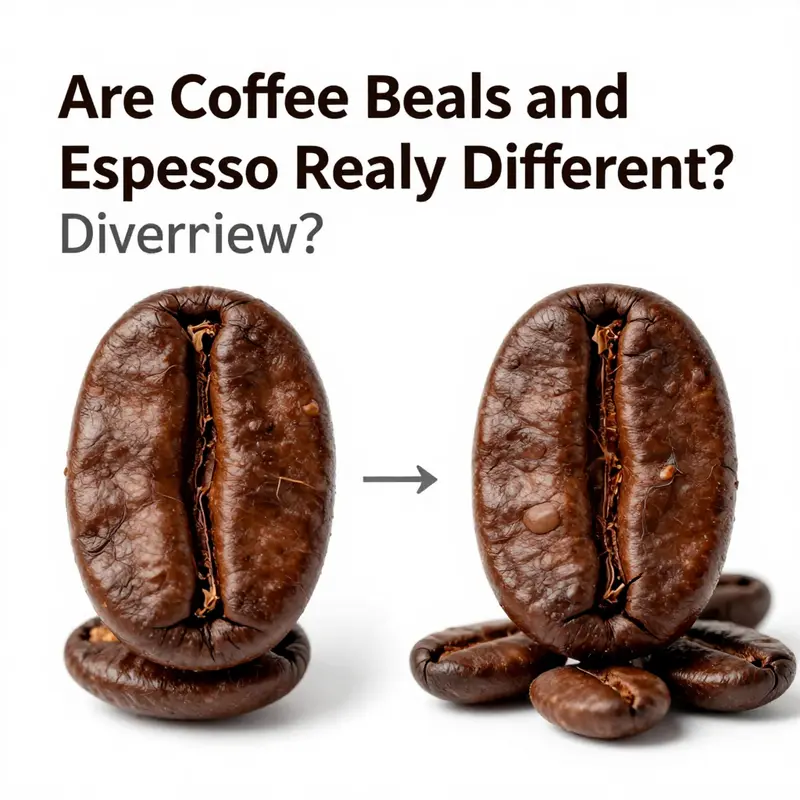
Many ritualized debates in the coffee world boil down to a single question: are there distinct beans for espresso, or is espresso simply coffee roasted and brewed in a particular way? The answer rests not in the seeds themselves but in the art and science of roasting and extraction. Espresso beans are not a separate species; they are the same coffee beans roasted to a profile designed for high-pressure extraction. From origin to cup, a continuum exists: seed, roast, grind, machine, method; flavor is governed more by roasting and technique than by a label on the bag.\n\nTo begin, consider the plant and its seeds in their unroasted form. The Coffea genus includes multiple species, with Arabica and Robusta accounting for most commercially available beans. There is no espresso species. The real divergence happens after harvest during processing, drying, roasting, and especially extraction. Roasting translates the bean’s natural acidity and sweetness into a flavor map that an espresso machine can parse or that a slow brew can reveal.\n\nRoasting is a dialogue between bean chemistry and the roaster’s aims. Lighter roasts preserve acidity and original aromatics—floral notes, citrus, and fruit tones—while darker roasts push flavors toward chocolate, caramel, and roasted oils. The same bean can yield very different experiences depending on the roast. Espresso roasters often favor a medium-to-dark profile for balance, sweetness, body, and crema, the signature sign of a shot under pressure.\n\nFrom a consumer perspective, “espresso bean” is a roast profile, not a separate seed. Espresso is a method: finely ground coffee, high pressure, and short extraction to yield a concentrated shot with crema. Crema’s color, thickness, and stability depend on roast level, freshness, grind size, tamping, and age. A darker roast can yield a robust crema, but a lighter roast can too with proper grind and technique. The key point is that crema is produced when chemistry, grind, and pressure meet water at the right temperature; it is not reserved for any single roast.\n\nThus, the label “espresso beans” reflects a roasting and brewing context more than a botanical distinction. If you want versatility, choose a medium roast that balances brightness with body, suitable for espresso and other methods. If you seek a concentrated, chocolatey, intense shot, lean toward a slightly darker profile crafted for high-pressure extraction. Either way, the product remains roasted beans; the difference lies in roasting curves and brewing technique, not seed identity.\n\nA practical approach is to taste with intention: compare two brew methods on the same bean—pour-over and espresso pull—and note how acidity, body, and finish shift. A bean you thought “espresso-only” might shine in filtered coffee, while a light roast can produce a bright, articulate espresso when ground and brewed with care. The origin matters, but the roast and method choreograph the experience.\n\nFor a concise takeaway: espresso beans are not a separate species. They are ordinary coffee beans roasted to a profile designed for extraction under pressure. The same beans can perform across methods when treated with the right grind, temperature, and timing. The journey from bean to shot is a continuum, and the label should reflect your process and preferences rather than an immutable divide.\n\nIn short, espresso is a technique anchored in pressure and timing; it is not a seed-based taxonomy. The crafts of roasting, grinding, and brewing transform ordinary beans into a short, intense, crema-topped experience. As you shop, taste, and dial in, you’ll discover that your favorite beans can sing in multiple formats when treated with intention.
null
null
From Roast to Ritual: How Brewing Methods Shape the Reality of Coffee Beans and Espresso Beans

The question that threads through both casual mornings and serious tastings—whether there is a fundamental difference between coffee beans and espresso beans—often boils down to a simple truth: the beans themselves are not categorically different in origin. They are seeds from the Coffea plant, typically arabica or robusta, harvested, processed, and dried like any other coffee bean. What changes is not a new species but the choreography of roasting and brewing. The label espresso bean signals a roasting style and a favored extraction method rather than a separate botanical entity. This distinction sits at the heart of how we talk about flavor, aroma, and caffeine delivery. A careful reading of the science shows that the drama unfolds after the beans leave the tree and enter the roaster, grinder, and cup, where roasting profiles and brewing techniques converge to shape the final cup.
As a practical example, espresso is a high‑pressure, short extraction process. A typical shot runs about 25 to 30 seconds under roughly 9 bars of pressure. A well‑tuned grind, stable temperature, and compacted bed of grounds maximize soluble solids in a small water volume. The result is a beverage with body, sweetness, and crema—the pale foam that signals emulsified oils and gas stability. Crema is largely a byproduct of extraction conditions, not a bean fingerprint. Roast level matters: darker roasts tend to yield more oils and fuller mouthfeel, supporting body and sweetness in a short extraction; lighter roasts often bring brightness and nuanced acidity, sometimes with thinner crema. In short, espresso beans are not a separate species; they are a choice within a roasting spectrum tuned to a specific extraction.
That said, the label is not a rigid boundary. Darker roasts sold as espresso beans are popular because they pair well with the method, but the same beans can be brewed in other ways, including filter or cold brew, with excellent results when grounds are adjusted for the approach. The practical upshot is that roast level and extraction method are the main levers, not a fundamental difference in the footprint of the bean. Flavor becomes an emergent property of process as much as origin.
When we turn to extraction chemistry, each brew method uses a distinct set of variables—grind size, water temperature, contact time, and pressure or agitation—that govern how compounds move from bean to cup. In espresso, fine grind and pressure accelerate solubility, packing a large surface area into a short path. The outcome is a concentrated flavor with pronounced sweetness and often a crema‑rich mouthfeel. The darker roast contributes to smoothness and chocolatey notes, as sugars caramelize under heat and pressure.
Pour-over, by contrast, emphasizes clarity and brightness. A gravity‑driven extraction over a bed of grounds yields a clean cup with floral, fruity, or nutty notes that can recede from espresso’s boldness but reveal new nuance. The same seed can thus present different sensory expressions purely from the extraction kinetics.
Other modalities, such as cold brew, introduce another dimension: longer contact times at cool temperatures bias extraction toward smoother, less acidic profiles. Caffeine delivery varies with method; espresso may deliver high caffeine per ounce, but the small serving size balances total intake. Cold brew can carry a substantial caffeine load in a larger serving, influencing perceived intensity.
Beyond taste, roasting and brewing influence antioxidant retention and other bioactives. Cold brew, and brewing conditions in general, can shape which compounds survive the cup. Water quality, minerals, and temperature all influence extraction and flavor, reinforcing that the drink is a product of seed plus setting.
Terminology matters too. Espresso bean has long carried industry meaning as a roast profile aligned with a concentrated extraction. The beans themselves are not engineered to be a particular style; they are prepared to meet the demands of a given brew system. The goal is to choose beans and roasts that suit your preferred method and taste.
In conclusion, the essential difference between coffee beans and espresso beans is not in the seed but in roasting and technique. A bean roasted for espresso can perform well in gentler methods that reward clarity, and a bean not labeled as espresso can yield crema‑rich shots with the right grind, pressure, and time. The espresso label is a guidepost, not a species designation. The map from seed to cup is a multi‑parameter journey where origin, roast, grind, water, and technique converge to shape the final experience.
Practical next steps: experiment with a single origin or blend across a spectrum of roasts, and brew with at least two methods—one emphasizing brightness and clarity (pour‑over) and one emphasizing body and intensity (espresso). Track aroma, sweetness, acidity, and aftertaste, and note how grind size and water temperature shift the balance. Be mindful of caffeine sensitivity and concentrates, calibrating portions to avoid discomfort. Your personal “espresso bean” is less a fixed category than a dynamic relationship between roast, grind, water, and pace.
External resource: For a peer‑reviewed synthesis on how brewing methods shape chemical composition, caffeine extraction, and sensory attributes across espresso and other preparations, see the cited study. This backdrop supports practical observations and shows how method and roast co‑author the cup you drink.
Final thoughts
Understanding the distinctions between coffee beans and espresso beans empowers business owners to create robust marketing strategies and cater to diverse customer preferences. While both types of beans originate from the same plant, the nuances in roasting and brewing can greatly affect flavor profiles and customer choices. Embracing these differences can lead to a more tailored approach in your offerings, ultimately enhancing customer satisfaction and loyalty.