
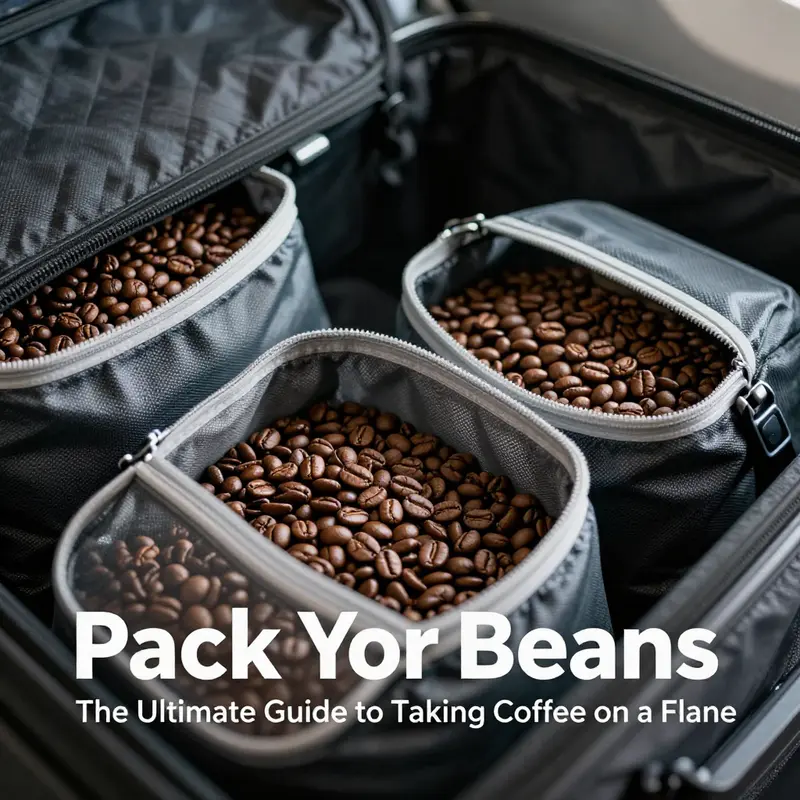
For business owners who rely on coffee as a staple of their operations, understanding the regulations surrounding bringing coffee beans on flights is crucial. This guide delves into essential insights for those who want to take their coffee beans onboard. Each chapter covers a key aspect—from regulatory considerations to best practices for preserving freshness and maintaining travel etiquette. Navigating these details will empower you to make informed decisions when traveling with your beloved beans, allowing you to sustain your business passion even at 30,000 feet.
Bean Bound for the Sky: A Practical Guide to Carrying Coffee Beans on a Plane

On a long flight, the aroma of fresh coffee can feel like a small luxury, a personal ritual that travels with you through security and into the cabin. The question many travelers ask is simple enough: can you take coffee beans on a plane? The short answer is yes. Coffee beans are solid, non-liquid, and for most people, they tread a straightforward path through security and onto the plane with little hassle. But the long answer matters just as much, because luggage rules, aroma, and customs can complicate the journey in small but meaningful ways.
From the moment you pack, the bean itself invites careful handling. Whole beans are non-liquid foods, so they do not trigger the same restrictions as coffee in a cup or a bottle of concentrate. You can place them in your carry-on or your checked bag without a special declaration, and you will rarely encounter a quantity limit for personal use. Yet this simplicity benefits from intentional steps that preserve freshness. The cabin is a volatile environment for aromas and volatile oils, and altitude shifts can affect how coffee feels when you finally grind, brew, and drink it after you land. The simplest precaution is to keep the beans in a sealed, airtight container. Whether you buy a small, airtight jar or repackage them into a sealable tin, the goal is to avoid moisture, odors from other foods, and the subtle drift of aromas that can cling to the cabin air. When you opt for packaging that features a one-way valve—common with freshly roasted beans—you should seal it with tape before you fly. The valve’s function is to vent gasses as the beans degas, but during transit, you want to prevent air from escaping or entering unpredictably. A tight seal helps maintain flavor integrity and minimizes aroma leakage into the cabin’s shared air.
In practice, many travelers discover that the most efficient way to manage beans on a trip is to keep them in a dedicated container within your luggage. A small glass jar or a sturdy plastic jar with a tight gasket can be tucked into a backpack or a carry-on compartment with minimal risk of crushing. If you’re squeezing in a few extra bags of beans for a longer journey, remember that the focus should be on freshness, not volume. Beans do not spoil overnight, but their flavor compounds do fade with exposure to air and heat. The cabin’s pressurized environment, coupled with varying humidity, can accelerate oxidation, nudging the bright notes toward a dull profile before you ever reach your destination. Even so, keeping beans sealed still outperforms leaving them in a bag that’s only partially closed.
The social and logistical side of traveling with coffee beans is often underestimated. There have been viral moments where passengers attempted to grind or brew coffee onboard. Even though it might be technically feasible in some planes, the practical and communal consequences are rarely positive. Grinding in the cabin can create noise, disturb sleeping travelers, and produce aromas that mingle with other scents in the cabin—an experience that can feel disruptive in a compact, shared space. It’s a reminder that the bean suggests a ritual, not a performance. The act of coffee is a personal pleasure, best practiced after landing rather than during the flight.
If your trip involves any liquids that relate to coffee—pre-made coffee in cartons, syrups, or liquid concentrates—your planning must shift to the familiar TSA standards for liquids. The so-called 3-1-1 rule still applies: containers must be 3.4 ounces (100 milliliters) or smaller, and all liquids must fit within a single, transparent quart-sized bag. This distinction is essential for anyone who intends to bring a touch of the coffee shop experience in bottle form. In practice, many travelers navigate this by decanting liquids into travel-size bottles or purchasing ready-to-use products after security, depending on their tolerance for changes in flavor or packaging.
International travel introduces a layer of complexity that domestic flights often sidestep. Coffee beans, especially in larger quantities or when green, can trigger customs checks or agricultural inspections in some countries. The precise rules vary by nation, and some borders require declaration or even prohibit certain imports to protect local ecosystems from pests. If you’re visiting a country with strict import controls, allocate extra time at the border and be prepared to present your beans for inspection or to surrender them if required. The safest approach is to research the destination’s agricultural import policies in advance and consider declaring any coffee beans if you are uncertain about the rules. In many cases, simply having them has no impact, but a few destinations can require forms or inspections, and missteps can lead to delays or the loss of your stash.
The practicality of traveling with coffee beans also depends on how you pack and label them. For personal use, a modest quantity tucked into an airtight container is typically unproblematic. If you plan to take beans that you roasted yourself, you’ll want to consider how you transport them so that their aroma and flavor remain intact. A clearly labeled jar can help security and customs officers quickly verify that the contents are indeed beans and not some other substance. This transparency is appreciated in airports where staff might be reviewing unusual carry-ons. When you choose to place beans in your carry-on, keep them out of the outer pockets and within the main body of the bag where they are shielded from bumps. Fragile glass is avoidable, but even sturdy jars benefit from a padded pocket to protect against impact during handling.
In sum, the act of carrying coffee beans on a plane is a straightforward exercise in practical preparation. The non-liquid, solid form is friendly to both security screening and airline baggage policies, provided you follow the basics: seal the beans to preserve freshness, consider the packaging’s venting mechanism, and avoid treating the cabin as a makeshift cafe. If your travel plan involves liquids, or if you cross international borders, the rules shift in proportion to the risk those products pose to security and ecosystems. The key is to know your destination as well as your own taste preferences. A traveler who understands the difference between a well-sealed, aroma-holding container and a half-open bag of beans is better prepared for the flight and the journey that follows.
For those who want a single, practical takeaway: whole coffee beans are generally permitted in both carry-on and checked luggage, with no formal quantity restriction for personal use. The caveat remains that if you’re transporting any accompanying liquids, you’ll need to contend with the TSA’s liquid rules. And wherever you go, a quick check with the destination country’s customs authority helps avoid surprises. The bean that travels well is the bean that is respected for its own integrity, packaged with care, and enjoyed after the flight, not during. If you want to verify the official rules, you can consult the TSA guidance online, which consolidates the practicalities travelers encounter when crossing security with coffee. For official guidelines, see the TSA page:
https://www.tsa.gov/travel/security-screening/whatcanibring/all
null

null
Grounded and Guarded: Safety, Security, and the Pragmatic Truth About Carrying Coffee Beans on a Plane

If you travel with any passion for fresh coffee, you have probably wondered whether those beans can follow you through the gates and into the cabin. The short answer is yes: coffee beans can travel on a plane, in either carry-on or checked luggage. Yet the longer, more useful answer is a practiced blend of common sense and small, deliberate steps designed to protect the coffee’s quality while staying within the rules that govern air travel. Understanding the logic behind these rules helps keep the journey smooth for you and for the people sharing the aircraft. It also places the ethical responsibility squarely where it belongs—in preserving flavor and in minimizing disruption during security screening and in-flight operations. So, while coffee beans are not a risk in themselves, they still deserve respectful handling, a clear container, and a sense of how to avoid turning a simple bag of beans into a screening concern or a cabin nuisance.
First, the regulatory base is straightforward enough. Coffee beans are considered a solid food item and are not treated like liquids that fall under the famous 3-1-1 rule for carry-ons. The Transportation Security Administration, along with international equivalents, does not list roasted or unroasted coffee beans as prohibited or restricted simply because they are beans. This means you can bring them through security and onto the aircraft without fear of confiscation just for possessing them. The practical upshot is that you won’t be forced to chuck your bag of beans at the security checkpoint, which is good news for travelers who are particular about their brew. Still, the infrastructure of security screening is designed to catch anything unusual or mislabeled, so the core caveat remains: present the beans in a recognizable, non-suspicious container and be prepared for a quick inspection if the bag or its contents raise questions.
The screening room is not a stage for drama, but it is a place where tiny signals matter. If the coffee beans appear ordinary and the container looks like standard consumer packaging, the cashiers of security are less likely to stop you for further inquiries. But if the container looks unusual, or if the packaging is homemade or oddly sealed, they may pull the bag aside for closer examination. This is not a punitive process; it is a routine courtesy to ensure that every traveler and tray is in safe order. The simplest, most reliable approach is to keep the beans in their original packaging or in a clearly labeled, professionally sealed container. A familiar look goes a long way toward a quick pass through the checkpoint.
A common point of confusion concerns the single-use valve frequently found on fresh-roasted coffee packaging. These valves are designed to vent CO2 as the beans off-gas, helping maintain freshness by allowing gases to exit without letting air back in. On a plane, cabin pressure and temperature shifts can affect how aromas behave. If your vacuum-sealed or valve-packaged beans are intended for long-term freshness, it makes sense to ensure the packaging is secure beyond its usual seal. The practical tip is simple: if your beans arrive in a bag with a one-way valve, seal the valve with a small piece of tape before boarding. This prevents any incidental movement of air in or out during the flight and reduces the chance that the bag will momentarily become flagged as suspicious due to an unusual venting pattern. It’s a small, proactive measure that preserves flow and avoids any misinterpretation by security staff.
Another layer of consideration centers on aroma. Coffee’s fragrance can travel and linger, and aircraft cabins are compressed, compact spaces where odors travel quickly. The goal is not to trap aroma in a way that would subdue your neighbors’ senses but to avoid unnecessary disturbance. A sealed container serves a dual purpose: it keeps the beans fresh and minimizes aroma leakage through the cabin. While the act of grinding beans aboard is technically permissible in some jurisdictions, it can be disruptive to other travelers. The ethical courtesy is to avoid turning your in-flight coffee ritual into a shared performance—especially since you can enjoy your brew after landing without compromising the comfort of others in the cabin. If you simply can’t resist the urge to savor your beans at altitude, consider a discreet, quiet approach that respects space and air quality for everyone on board.
A world beyond domestic flights adds additional layers of complexity. International travel often brings stricter customs controls, and with raw or unroasted coffee beans, the conversation shifts from comfort and convenience to biosecurity. Several countries carefully screen imports to prevent pests and plant diseases from entering their ecosystems. Raw beans, particularly unroasted beans that have not been heat-treated, may face more scrutiny or even temporary restrictions in some destinations. The safest practice is to check the destination country’s agricultural and customs regulations ahead of time. If in doubt, roasting at home before travel or purchasing roasted beans from a reputable source that ships in compliant packaging can help avoid friction at the border. The aim is not only to avoid loss of your beans but to ensure you’re respecting local regulations that protect farmers, ecosystems, and consumers alike.
Packing is where preparation translates into peace of mind. The recommendation is simple: use a sealed, airtight container to maintain freshness and to minimize the risk of triggering any security alarms at the checkpoint. For most travelers, a sturdy, clearly labeled container that seals well is ideal. If you prefer to keep the original packaging for its freshness indicators, place it inside a small, sturdy carry container to shield it from pressure changes and minor jostling. If you travel with a larger quantity, consider distributing the beans between two sealed containers. This reduces the chance of a single compromised seal and makes it easier to manage during screening and transit. The practical benefit is clear: fewer surprises, fewer alarms, and a more reliable preservation of the roast’s flavor profile from curb to cabin.
In the end, the act of carrying coffee beans on a plane is a modest exercise in attention to detail. The rules are not onerous, but the best outcomes come from a combination of transparency, proper packaging, and consideration for one another’s travel experience. If you must fly with beans, plan for the screening corridor as a routine part of your trip rather than a roadblock. Keep beans in their original packaging or in a clearly labeled, airtight container. If your packaging includes a one-way valve, seal it with tape to prevent incidental venting. Remember that customs authorities hold the final say for international journeys, and their decisions can vary from country to country, so a quick check of regulations before departure saves time and tension. With these steps in place, your beans can remain a source of pleasure and distinction rather than a point of friction.
For those who cherish the ritual of a fresh cup at journey’s end, the trip itself becomes part of the flavor narrative. The coffee bean’s voyage—through security, across time zones, and into your cup—mirrors the careful passages we navigate in travel more broadly. The practical discipline of packaging, labeling, and respecting communal space is not merely a bureaucratic ritual; it is part of the craft of modern travel. When the final sip arrives, you’ll recall the quiet choreography that kept your beans safe, your seatmate comfortable, and your brew tasting as lively as the city you’re about to explore. In that sense, the question isn’t simply whether you can take coffee beans on a plane. It’s about how well you can steward flavor, respect rules, and contribute to a calmer, more enjoyable journey for everyone on board.
External resource: For the most up-to-date, official guidance on what you can bring aboard, consult the Transportation Security Administration’s travel-security page.
https://www.tsa.gov/travel/security-screening/what-can-i-bring
null

null
Sky-Ready and Fresh: Bringing Coffee Beans on a Plane

Coffee beans travel well in carry-on and are not liquids, so they generally pass through security without issue. To keep them fresh, store whole beans in a sealed, airtight container and consider a sturdy bag with a one-way valve. If the bag has a valve, seal it with tape to minimize aroma leakage during the flight. Grinding or brewing on board can be disruptive, so plan to enjoy the first cup after you land. At security, present the beans if asked and be honest about quantity if you are carrying a large amount. For sustainable travel, carry beans to reduce disposable cup waste, but respect customs rules and limits when crossing borders. With proper packaging and courtesy, you can bring your favorite roast without sacrificing flavor or peace of mind.
Final thoughts
By understanding the regulations, adhering to best practices, recognizing safety concerns, and maintaining proper travel etiquette, business owners can confidently take their coffee beans on flights. This knowledge ensures not only legal compliance but also the opportunity to enjoy high-quality coffee, keeping their routines intact while on the road. Whether for personal enjoyment or fueling business discussions, bringing your coffee beans on a plane is both feasible and rewarding.