
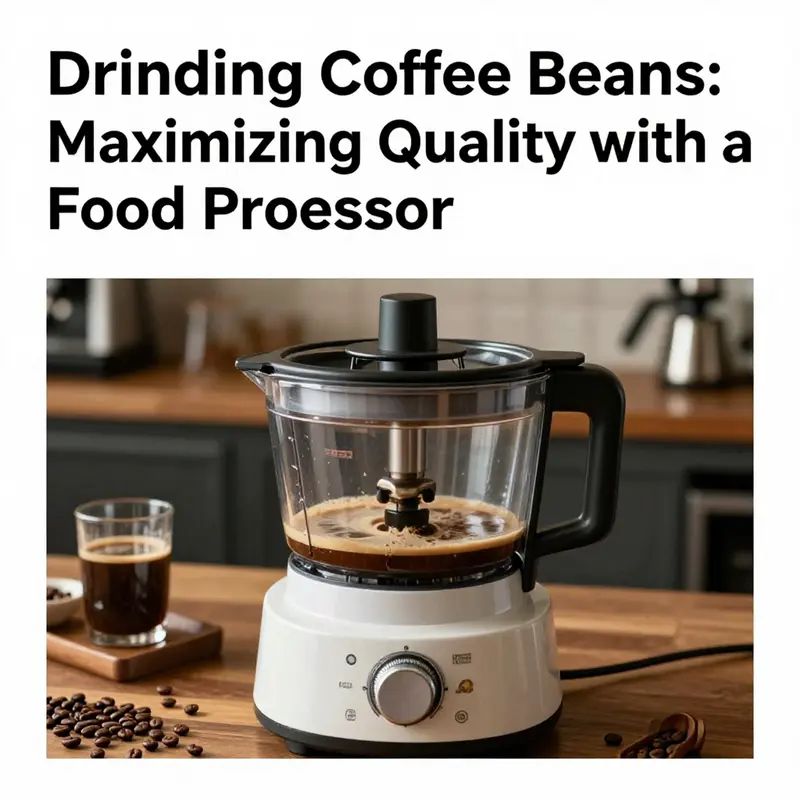
As business owners in the coffee industry, ensuring the best flavor and quality in your brews is paramount. While many might consider using a food processor for grinding coffee beans due to its convenience, understanding both its limitations and advantages is essential. This article delves into the pros and cons of using a food processor for grinding coffee, the scientific principles behind coffee grinding, tips for achieving better results, a comparative analysis with coffee grinders, and the critical impact of grind size on flavor. By the end, you’ll have a holistic understanding of how best to utilize tools at your disposal in your coffee ventures.
From Convenience to Craft: The Real Tradeoffs of Grinding Coffee Beans in a Food Processor
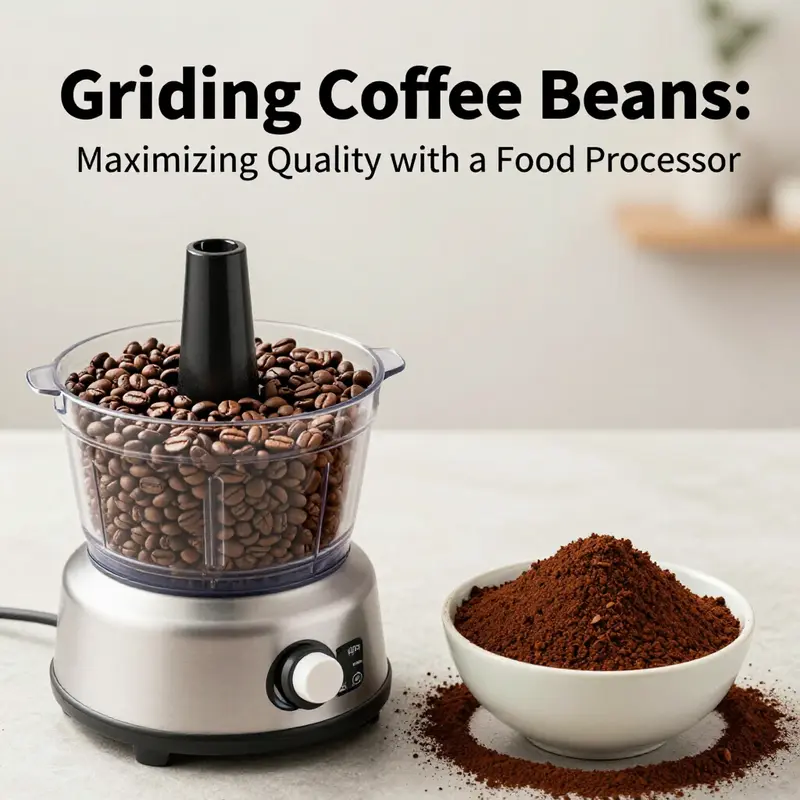
A quiet truth about home coffee is that the moment of grinding matters as much as the water you pour and the heat of the kettle. For many, the food processor sits on the countertop as a multipurpose workhorse—the heavy-duty chopper that handles onions, herbs, nuts, and even a quick batch of hummus. In a pinch, it can also grind coffee beans into a coarse powder. The idea is appealing: grab what you already own, skip an extra gadget, and make do when the morning rush crowding your kitchen leaves little room for purchasing and storing a dedicated grinder. Yet the reality, when you chase consistent flavor and reliable extraction, is more nuanced. The food processor can deliver a coarse, usable grind, but the reality of its design—blades that cut rather than crush, a grinding chamber that invites heat, and a lack of precise grind-size control—creates a set of tradeoffs that reverberate in every cup. This chapter explores those tradeoffs in a seamless, narrative way so you can taste the difference between convenience and craft, and decide how to align your method with your palate, your time, and your coffee goals.
On the surface, the appeal is straightforward. Convenience and accessibility top the list. If a food processor already sits on the counter, there’s no need to invest in a separate appliance. That immediate cost saving matters, especially for casual coffee drinkers who might only brew at home on weekends or when guests are over. And speed is another axis of appeal. Food processors, with their high-speed blades, can break down whole beans into a coarse powder with surprising rapidity. In emergencies, or when you’re trying to process coffee in larger batches for a group, the impulse to reach for the familiar device is strong. The versatility of a food processor adds to its lure: whisking, chopping, blending, and mixing all in one container means less clutter and less equipment to manage. In that sense, the processor stands as a practical, economical instrument for everyday life, not merely a coffee gear choice.
Yet these virtues are tempered by a set of consequential drawbacks that matter, especially when the goal is a cup that sings with balance and clarity. The most obvious is inconsistency. Food processors rely on high-speed blades that are designed to chop rather than grind with precision. The result is a broad particle-size distribution: some grounds end up far finer than intended, while others stay relatively coarse. This disparity translates directly into how a brew extracts. Fine particles swell quickly in contact with hot water, overextract, and can deposit bitterness and astringency that mask delicate aromatics. Coarser shards, meanwhile, surrender flavors more slowly, producing a weak body and underdeveloped sweetness. The home brewer learns to chase a middle ground through guesswork, but that middle ground is unstable because bean density, moisture, and even the age of the coffee shift with each batch.
Another meaningful constraint is thermal stress. A food processor agitates beans with kinetic energy, and as blades whip, friction raises temperatures in the chamber. The oils that give coffee its rich aroma and flavor are sensitive to heat. When those oils heat and oxidize, you can taste a flattening of character—less vibrancy, fewer fruity or floral notes, and a sense that something essential has been nudged out of balance. This is not just an abstract concern; it manifests in the cup as a loss of the signature brightness that distinguishes a well-extracted pour-over from a flat, overprocessed cup. The risk isn’t catastrophic, but it is real, especially if you step through several batches in quick succession and notice a drift in flavor between brews.
Ongoing use of the processor also leaves its mark on the equipment and, by extension, on future cooks who share the kitchen. Coffee oils and fine particulates cling to blades and the bowl, and even with thorough cleaning, residual odors can linger. That odor is more than a nuisance; it can subtly influence the flavor of whatever you grind next—seasonal spices, nuts, or cocoa powders can pick up lingering coffee notes that do not belong. This is a reminder that the kitchen is a shared laboratory, where the chemistry of one experiment can color the next, and it’s a practical reason to weigh the habit before you adopt it as a routine.
A final, practical limitation is control. The tactile feedback of dialing in grind size—tuning a burr grinder to a precise coarseness or fineness—offers a straightforward, repeatable way to influence extraction. A food processor does not provide that same knob. You’re largely at the mercy of time, not texture: you pulse for a set count, possibly grind in batches, and rely on visual or gustatory checks to approximate a grind that will suit a given brew method. In a realm where espresso, French press, and pour-over each demand distinct particle distributions, such a lack of granularity can feel like steering with one hand tied behind your back. In other words, the tool shifts the responsibility to the brewer’s senses, which is not impossible, but it is a handicap when consistency is the goal.
The science behind these observations is intimate with the art of brewing. Coffee grinding is, at its core, a particle-size problem. Uniform particle sizes maximize extraction efficiency by presenting a near-even surface area to hot water. Burr grinders accomplish this with controlled, crushing actions that produce a tight spread of sizes—an essential factor for espresso’s delicate balance or a clean, even pour-over. Blades in a food processor, in contrast, slice and chop with speed, creating a distribution that climbs toward fine fines and coarse chunks in equal measure. The practical outcome is a brew whose rate of extraction hinges on the imperfect distribution rather than on a predictable equilibrium. The result is a cup that can tilt toward bitterness or toward weak, flat flavors depending on minute inconsistencies in grind. The chemistry of this effect is not metaphorical. When extraction runs too quickly, soluble compounds—acids, sugars, and aromatics—cross the line into over-extraction, dragging out bitter notes as pigments and compounds break down unpredictably. When extraction runs too slowly, under-extracted flavors dominate, yielding sourness, grassy notes, or simply a lack of sweetness. The beauty of a burr-ground coffee is that these chemistry-driven outcomes align more predictably with the coffee’s origin, roast, and brew method.
In the spirit of Dr. Christopher Hendon’s emphasis on grinding just before brewing, the strongest case for using a food processor is not to pretend it replaces a proper grinder. It is to recognize when you simply cannot avoid grinding at home in a pinch, and to approach that moment with strategies that minimize the worst outcomes. These strategies start with discipline in technique: short pulses rather than continuous runs, and grinding in small batches to prevent heat buildup and clumping. Pulses give you more control, albeit imperfect, and they help avoid the thermal shock that accompanies nonstop blade action. Grinding in short bursts also reduces the likelihood of overheating the chamber, which preserves more aroma by limiting the oxidation of precious volatile compounds.
Another practical adjustment is post-grind handling. After the short pulses, you can pass the grounds through a sieve to separate the finer particles from the coarser ones. This step narrows the distribution, nudging it toward a more even size, though it cannot fix the fundamental character of the grind. If you have the patience for it, weigh or measure the batch and compare it against a target grind profile for the brew method you’re using. You’ll often discover that a rough, coarse powder is not inherently useless; it can be deployed effectively in certain preparations where uniform extraction is less critical, such as in approximate batch brews or when you’re improvising a pressurized method that tolerates a bit more variance.
Despite these workarounds, the consensus among serious home brewers remains clear: a dedicated grinder, preferably a burr grinder, is worth the investment for those who care deeply about flavor and consistency. The burr variant brings precision and repeatability that a blade-based mechanism cannot match. It offers adjustable grind settings, consistent particle size distribution, and reduced heat transfer to the beans. The difference in flavor between freshly ground coffee from a burr grinder and a food processor is, as many tasters report, unmistakable. You get a cleaner bouquet of aromas, a more defined body, and a more predictable pathway from grind to cup. The chemistry is not a myth or a gimmick; it is a reproducible, observable phenomenon that has made burr grinders a staple in well-loved coffee routines.
So where does that leave the home brewer who loves the convenience of a food processor? It leaves you with a candid assessment: the food processor is a workable emergency tool, not a preferred method for daily, high-quality coffee. It can rescue a morning when you forgot to grind, or help you process large quantities when guests arrive in a hurry. It can teach you something about grind size and its consequences in a hands-on way, making you more sensitive to the nuances that matter in coffee-making. But it should not be your default. The best possible cup, every time, comes from a dedicated grinder that gives you reliable control over grind size, minimal heat transfer, and preservation of the delicate aromatics in the beans.
As you move through your own coffee journey, let the choice reflect your priorities. If daily flavor and consistency are your aim, the investment in a burr grinder becomes a matter of ongoing flavor stewardship. If you’re navigating a budget, a practical compromise might be to reserve the food processor for non-coffee tasks and to keep a low-cost, manual burr option as a transitional tool. Either way, the decision anchors itself in a simple, empowering idea: grinding just before brewing is the moment where chemistry and craft meet, and the quality of your cup depends on how faithfully you honor that moment. In that sense, the food processor remains a curious detour rather than the main road to coffee excellence.
For readers seeking a deeper dive into grind size, extraction, and how to optimize your method across different brewing techniques, a robust external guide on grind consistency offers further perspective. See the Serious Eats guide on how to grind coffee beans for a clearer, research-backed look at grind sizes, extraction curves, and practical adjustments you can apply to your own kitchen experiments. It’s a helpful companion as you weigh whether to keep the food processor in your coffee routine or to invest in a dedicated grinder for the long haul.
Grinding the Bean, Not the Moment: The Science and Limits of Using a Food Processor for Coffee
Grind day begins long before the water hits the coffee bed. It begins in the quiet physics of a single bean meeting metal, and it ends in the aromas that escape as the coffee compounds dissolve into hot water. Many home brewers reach for a food processor because it sits within arm’s reach and seems capable of turning whole beans into powder in a matter of strokes. Yet the science behind that quick pulse reveals why this approach, though convenient in a pinch, rarely yields a consistent, high-quality cup. The goal of grinding is simple in description—maximize surface area so water can extract flavor quickly and evenly. In practice, that means a grind that brings a uniform set of particle sizes into contact with the brew water. When a blade whirs through a batch of beans, it creates a spectrum of particles, from coarse fragments to fine dust. The result is not a smooth line of uniform grounds, but a scattershot landscape where some particles surrender their flavors too quickly and others barely begin to participate. The surface area increases with grinding, but so do the chances for uneven extraction. The fundamental principle is that more surface area improves extraction, but only if that surface is evenly accessible to water. If the particle sizes are all over the map, water will over-extract from the fines and under-extract from the chunks, leaving a cup with bitterness and a body that feels imbalanced. This is not merely a matter of aesthetics; it is a direct consequence of the geometry of grinding and the physics of diffusion and solubility. The purpose of grinding beans is not to turn them into dust for the sake of convenience, but to sculpt the interface between solid and liquid so that flavor compounds can migrate into the brew at a controlled rate. This is why professionals emphasize keeping grind size consistent with the brewing method—drip, pour-over, espresso, or French press each demands a specific range of particle sizes. The science underlying grind size, however, speaks to more than just flavor. It also speaks to energy input. Grinding is an energy-intensive process because it must overcome the internal cohesion of the bean. Researchers describe three main hypotheses about how energy is spent in grinding. The surface area hypothesis suggests energy scales with the new surface created by fracture. The volume hypothesis argues that energy correlates with the material’s volume being reduced. The crack hypothesis posits that most energy goes into extending pre-existing cracks until the bean finally fractures completely. In a perfect world, you could tailor energyinput to create a perfectly uniform cut. In a home kitchen, you rarely achieve that precision with a kitchen appliance not designed for granularity on a macro scale. A food processor is engineered for performance and convenience, not for the uniform particle size that a burr grinder consistently delivers. The blade geometry and the way a processor chops enforce a kind of chaotic, multi-directional impact. The result is a distribution that includes many fines—tiny particles that dissolve quickly in water—and a variety of larger fragments that resist extraction. This is why a food processor can yield a cup that tastes flat or overbearing in the same brew, even if you use the same beans and the same water temperature. The problem extends beyond uneven extraction. Overheating becomes a real risk, particularly when the processor is run for longer bursts in an attempt to reach a finer powder. The heat can alter volatile compounds that contribute to aroma and flavor, diminishing the beans’ delicate floral notes and chocolatey undertones that show up when you grind fresh. The aroma compounds are sensitive to heat and air, and they begin to dissipate even as you press the pulse to chop again. Static electricity can also scatter grounds around the work area, making the process messier and less efficient. Against this backdrop, practical workarounds often surface. Some home brewers advise short pulses rather than continuous blending to reduce heat buildup and to encourage more uniform particle fragmentation. Grinding in small batches can help by limiting the volume the blades must contend with, which in theory allows for more controlled chopping. The idea is to avoid letting the processor drag the batch into a dense, hot slurry of grounds. After grinding, sift the grounds to remove overly fine particles. The rationale is to limit the over-extraction risk by reducing the amount of fines that water will aggressively pull from the bed. It is not a perfect solution, but it is a useful reminder that, even with a food processor, the aim is to steer the outcome toward a more even distribution of particle sizes. For serious coffee drinkers, this is where the science intersects with practice: you can tilt the odds in your favor with technique, but you cannot erase the fundamental limitation of the tool. If your aim is a cup with consistent extraction and a balanced flavor, a tool designed for grinding—specifically a burr grinder—offers the precision that a blade-based device cannot match. In the words of Dr. Christopher Hendon, a computational chemist and author of Water for Coffee, grinding just before brewing is the single most impactful step a home brewer can take to improve their coffee. It’s not magic—it’s chemistry. That chemistry is a function of freshness, grind consistency, and timing. Freshness matters because once the beans are exposed to air, volatile compounds begin to degrade. The minute you grind is the minute you begin the countdown to peak aroma and flavor. If you can, grind only what you plan to brew in the next few minutes, or at most within the same hour. A burr grinder embodies the practical realization of that principle: it gives you a tighter control over grind size, producing a more uniform particle size distribution. When you use a burr grinder, you’re aligning more closely with the extraction physics that science describes. If you must work with a food processor in a pinch, there are still steps you can follow to improve results. Use short pulses rather than continuous operation to limit heat. Grind in small batches to avoid clogging and ensure better distribution of the beans around the blades. After grinding, consider a light sifting to reduce the fines and release a more even bed for extraction. Keep the grounds moving during grinding by shaking the processor slightly between pulses; this helps prevent clumping and encourages the blades to chop more evenly. It is a small act, but it matters when your goal is to draw flavor from every inch of ground coffee. And while these steps can improve probability, they do not erase the underlying limitation of using a blade-based appliance for coffee grinding. In the landscape of home brewing, the best practice remains clear: invest in a burr grinder if you are serious about flavor and consistency. The argument is not about taste alone; it is about controlling the variables that science shows govern the cup’s quality. If you are still unsure about the value of precision, consider this: the grind is the bridge between the bean and the water, and a poorly built bridge floods the river with inconsistent particles. A well-built bridge, by contrast, carries the traveler smoothly from one side to the other. The traveler is the flavor, and the bridge is the grind. Within that mental model lies the practical message for anyone who uses a food processor to grind coffee: accept the constraints, but do not pretend the tool can deliver the uniformity that a dedicated grinder promises. If you need to reference the broader discussion of how tools influence outcomes in other domains, consider exploring related discussions on equipment and techniques that emphasize precision and consistency. For a broader perspective on how proper tools shape outcomes in hands-on tasks, you can explore Tools and Equipment for Occupational Therapists. Tools and Equipment for Occupational Therapists. While the context is different, the underlying principle remains: the quality and suitability of the tool govern the reliability of the result. To return to coffee, the science supports a simple takeaway: when you grind right before brewing with a tool designed for uniform particle production, you maximize surface area in a controlled and predictable way. When you rely on a food processor, you gain convenience but concede a degree of inconsistency that must be managed through technique, batch management, and, ideally, the eventual adoption of a burr grinder. In the end, the choice is about priorities. If your priority is consistent flavor, vibrant aroma, and reliable extraction across different brew methods, a proper grinder is worth the investment. If you are constrained by circumstance, you can still access the science by applying thoughtful pulses, batch handling, and selective sifting—principles that turn a practical, improvised solution into a learning experience about the chemistry of coffee. As you refine your approach, you may discover a deeper appreciation for the delicate balance between bean and water, a balance reflected in the aroma that fills the kitchen and the satisfaction you feel when your cup delivers what you sought: clarity, warmth, and a faithful expression of the beans you chose. External reading can deepen that understanding, and a broad overview of coffee beans can provide context for how the grind interacts with the bean’s intrinsic structure. For a broader reference outside the kitchen, see Britannica’s overview of the coffee bean for foundational context on the bean’s properties and history. Further reading: https://www.britannica.com/topic/coffee-bean
A Pragmatic Guide to Grinding Coffee Beans in a Food Processor: How to Make It Work When a Burr Grinder Isn’t at Hand
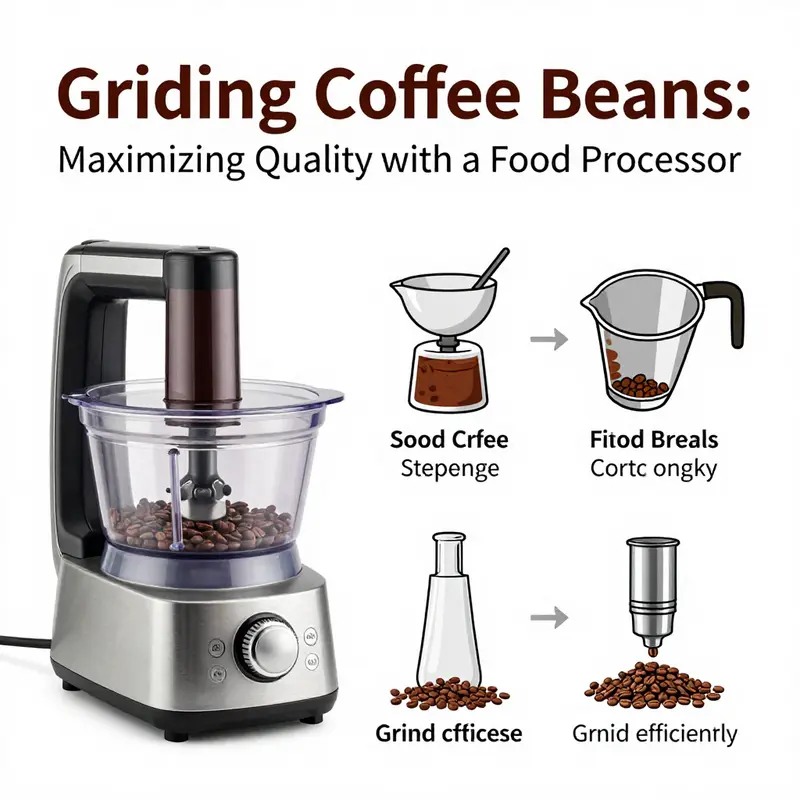
Grinding coffee beans in a food processor is a question that sits at the crossroads of practicality and craft. It’s tempting to reach for the high-powered blade when a dedicated grinder isn’t within reach. After all, the coffee still smells wonderful when the beans crack and release their oils. Yet the reality is that a food processor is not designed for the precision of coffee grinding. Its blades spin fast, its chamber heats quickly, and its action tends to produce a jumble of particle sizes rather than a uniform grind. That unevenness matters. Extraction—the process by which hot water pulls flavor from the grounds—depends on surface area. When you have a spectrum of particle sizes, some bits extract too quickly and become bitter, others linger and underperform, leaving a flat, underdeveloped body. The result is a cup that can taste unbalanced, with a body that feels muddy or thin, depending on the brew method you use. The good news is you can still achieve a respectable cup with thoughtful technique. If you’re committed to using a food processor, you’re not out of luck. You’re simply navigating a different set of rules, where control and restraint matter as much as speed and power. As one respected voice in the coffee world emphasizes, grinding just before brewing is the single most impactful step a home brewer can take. It’s not magic—it’s chemistry. Freshness matters, and so does how you slice it when you don’t have the ideal tool. When you honor those constraints, you can coax through a food processor a grind that works for several methods, while acknowledging its limits for others. This approach isn’t about chasing perfection but about making the best compromises available to you in a home kitchen. It’s about learning to read the texture you’re producing, not just the time you’re saving. And it begins with small, deliberate steps that respect the bean’s integrity and your brewing plan. The most practical mindset is to treat the food processor as a temporary bridge, not a final solution. Start with fresh beans. Freshness matters more than any single gadget. Whole beans retain aroma and flavor far longer than pre-ground coffee. The moment you grind, you begin a clock. Freshly ground coffee has a vivid zing, a more generous bouquet, and a better chance of unlocking nuanced flavors that would otherwise fade. If you must use a food processor, the next steps are where discipline matters more than horsepower. Grind in small batches. Don’t attempt a big haul in one go. Process only about 1 to 2 tablespoons of beans at a time. The processor’s capacity and blade geometry aren’t tuned for coffee, so small batches help you avoid overheating and uneven results. Overheating can dull aroma and oils, making the brew taste flat or scorched. Short pulses are your friend. Run the machine in bursts, not in a continuous grind. Pulsing gives you more control over the grind’s size distribution. It also reduces the chance that the blades turn the beans into a fine powder or a paste. After each pulse, pause and inspect. You want a texture that resembles coarse sand—roughly the size of sugar granules with some specks that are slightly larger. If the mix resembles sand, you’ve likely found a workable middle ground for drip coffee. If it’s too coarse, pulse a bit more; if it’s too fine, you’ve probably over-processed and will need to adjust for the next batch. This is not a one-and-done check. It’s an ongoing calibration: your eyes and fingers become your grind gauge. A key insight from coffee science is that grind consistency matters more than total grind speed. The goal is to minimize the extremes—too fine and too coarse—in a single batch. It’s reasonable to expect some variability. The trick is to brew with that knowledge. For drip-style coffee, aim for a texture that could pass for coarse sand. For other methods that rely on more consistent extraction, you’ll notice the limitation more quickly. If your setup includes a timing feature or a scale, you can use these tools to borrow a little precision from a device you don’t own. Weigh your batches and time your pour, calibrating your expectations against the grind texture you produce. The next practical lever is cleanliness. Coffee oils cling to the bowl and blades, and they can degrade quickly if left to sit. Clean the processor immediately after use. A quick rinse may be insufficient; remove the blade, wipe the bowl, and make sure all surfaces are dry. This simple habit preserves the integrity of your next grind and helps avoid rancidity that can taint future brews. A broader perspective helps too. You’ll find that different brewing methods demand different grind sizes. Drip coffee rewards a finish that’s in the general vicinity of coarse sand. Espresso, by contrast, asks for a much finer grind, often a powder-like texture. A food processor is unlikely to produce that level of uniform fine grinding, which means you may not reach the ideal espresso extraction. If you’re primarily a drip or pour-over brewer, the food processor method can still yield a satisfying cup when you acknowledge the limitations and work within them. This is where the science meets the ritual. Grinding is the moment that defines aroma, sweetness, and body. The quality of the grind sets the stage for how water will pull flavor from the bean’s complex matrix. The more you can align grind texture with your brewing method, the more you can coax out clarity and balance. The practice also invites a moment of reflection about the coffee path you’re on. If you’re serious about flavor, a dedicated grinder—especially a burr grinder—offers precise control over grind size and distribution. The difference can be dramatic. A burr grinder creates uniform particles, minimizing the extremes that lead to over- and under-extraction. It also generates far less heat per gram ground, helping preserve delicate flavors. But even with a burr grinder, the principle remains clear: grind fresh, grind to the target size for your brewer, and brew soon after grinding. If you don’t have a grinder, the food processor can still be used as a compromise tool, provided you approach it with discipline and patience. The tips outlined here—fresh beans, small batches, pulses, texture checks, and immediate cleaning—build a routine that respects the bean and the brew. You’ll likely discover that the coffee you make with this method has more personality than you might expect. It won’t be identical to coffee ground with a proper grinder, but it can be a satisfying, practical alternative when circumstances demand it. For many home brewers, the goal isn’t to chase perfection but to maintain momentum: to keep the ritual of grinding close to brew time, to protect the bean’s freshness, and to cultivate an intuition for grind texture. In this light, a food processor becomes a useful stopgap rather than a replacement. The journey from bean to cup is, in this scenario, less about a flawless grind and more about learning to read your equipment, manage heat, and tune your technique in small, repeatable steps. As you become more fluent in this makeshift method, you may notice a subtler shift in your palate. You’ll pick up flavors that were previously masked by inconsistent extraction—the brightness of a citrus note, the sweetness of a caramel, the fullness of a chocolate aftertaste. You’ll notice how the body changes as the grind texture varies, how the brew evolves with brew time and water temperature, and how even a modest tool can shape your coffee story when you approach it with curiosity and care. If you’re serious about flavor and consistency in the long run, a burr grinder remains the recommended path. But if the kitchen is your playground and the coffee fund is tight, these practices give you a viable bridge to better coffee. They remind us that the art of coffee is not only about the machine—it’s about the choices made in the moment of grind, and the respect paid to the bean’s fragile, fragrant potential. To explore more tested techniques and the science behind grind size in practical kitchens, you can consult established kitchen resources that test and compare methods. For a thorough reference, consider the guidance found at https://www.americastestkitchen.com.
Tooling for a Better Brew: How Food Processors Stack Up Against Dedicated Coffee Grinders
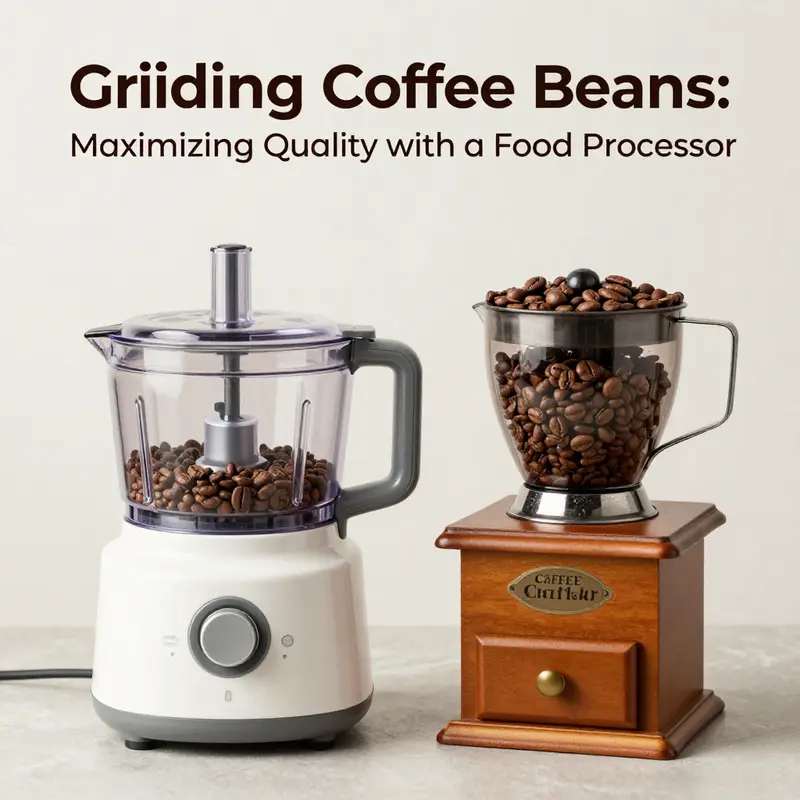
When convenience meets chemistry, the tool you use matters. Grinding coffee beans is the bridge between whole-bean freshness and a balanced cup. The appliance you choose shapes particle size, heat exposure, and ultimately extraction. This chapter explains how food processors differ from purpose-built coffee grinders. It also offers practical guidance for getting the best possible coffee from each tool, so you can make an informed choice that fits your priorities.
A coffee grinder exists to turn beans into an intentionally sized and evenly distributed collection of particles. Uniform particle size means water extracts soluble compounds at a predictable rate. That predictability is vital for methods requiring precision, such as pour-over and espresso. A grinder designed for coffee will commonly employ burrs. Burrs crush beans between two surfaces, producing a narrow distribution of particle sizes. The result is control: you can dial in coarseness for French press or fineness for espresso and expect consistent extraction.
A food processor, by contrast, is a jack-of-all-tasks. It is built to chop, puree, and emulsify dozens of ingredients. Blades inside a food processor slice and tear. These actions are efficient for vegetables and dough, not for producing a uniform coffee grind. The mechanics create a wide spectrum of particle sizes. Some fragments will be fine dust. Others will remain large and chunky. When brewed, this unevenness yields imbalanced extraction: tiny particles over-extract and taste bitter; larger bits under-extract and taste flat. The overall cup can become muddled and less nuanced.
Heat is another important factor. Grinding generates friction. High-speed blades in a food processor can heat beans quicker than slower or calibrated burrs. Heat accelerates volatile aroma loss and starts chemical changes in oils and acids. Those changes reduce clarity and freshness in the cup. Purpose-built grinders, particularly lower-speed burr models, minimize friction and keep temperatures steadier. The end result is a brighter, more articulate flavor profile.
Still, food processors have advantages. They are versatile and often already live on counters. If you rarely drink coffee or if you mainly brew in a style tolerant of coarse grounds, a food processor can be a pragmatic solution. It lets you save counter space and avoid a single-purpose purchase. Additionally, some multi-purpose units ship with grinding attachments that slightly improve performance. When used carefully, these attachments can produce grounds acceptable for simple steeped methods.
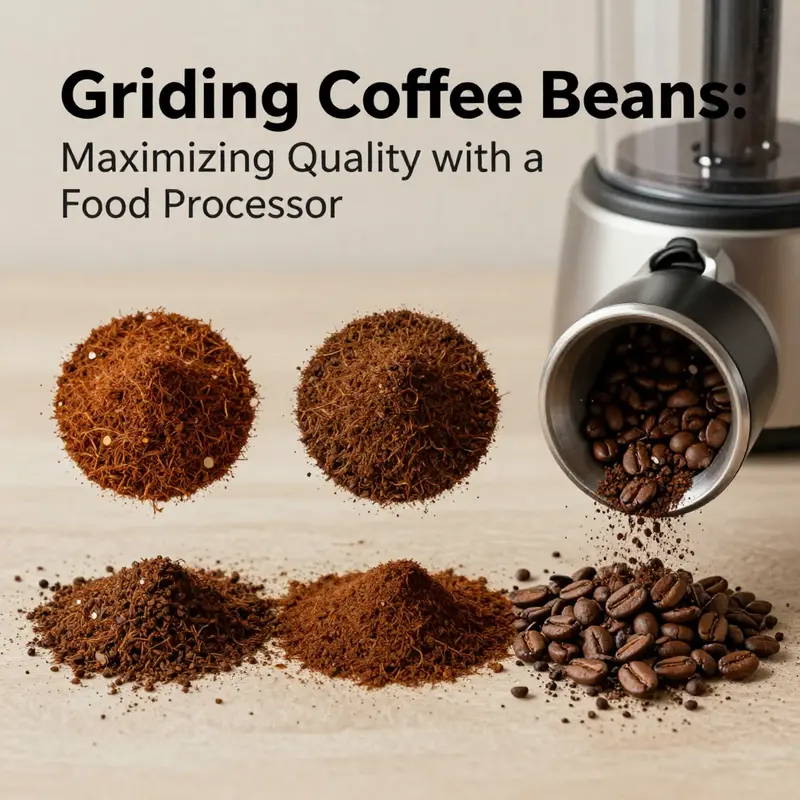
To get decent coffee from a food processor, technique matters. First, use short, controlled pulses rather than running the machine continuously. Pulsing limits heat buildup. It reduces the chance of pulverizing all beans into a mix of dust and pebbles. Second, grind in small batches. A generous heap of beans clumps and mills unevenly. Smaller volumes tumble more freely and hit the blades more uniformly. Third, shake the bowl between pulses. This redistributes beans and helps avoid hot spots and clumping. Fourth, monitor the grind visually. Open the lid and check texture frequently. Aim for a predominantly coarse texture for immersion methods.
Sifting helps salvage uneven batches. A simple kitchen sieve or coarse mesh can separate fines from larger particles. Removing the smallest particles reduces bitter over-extraction and clarifies the cup. Keep in mind, though, that sifting throws away coffee and may alter brew ratios. You might need to adjust dose to compensate for removed fines.
Cleaning practices also influence outcome. Oils from beans can cling to plastic bowls and blades. Wiping and washing after each use prevents stale residues from tainting future batches. If you plan to use a food processor for both coffee and aromatic ingredients, a dedicated bowl or blade is ideal. Cross-contamination can introduce unwanted flavors into your coffee.
When to choose which appliance comes down to three questions: how often you brew, how much control you want, and how important flavor precision is. If you brew once in a while and prefer convenience, a food processor can work. Aim for immersion brews like French press or cold brew. These methods are forgiving of particle-size variation. If you brew daily, care about specific flavor notes, or use pressure-based methods like espresso, invest in a dedicated grinder. The consistent particle size and lower heat of coffee grinders help you reproduce desired results every morning.
Another consideration is cost-per-cup and long-term value. A food processor can be a short-term, multi-use choice. But buying a dedicated grinder often pays dividends in cup quality. For many home brewers, a modest burr grinder unlocks significant improvements. It gives control over grind size and a stable baseline for refining other variables like dose, water temperature, and brew time. In other words, it simplifies troubleshooting and experimentation.
For those weighing a purchase, think beyond the appliance label. Look for features like adjustable grind settings, stable burr geometry, and a durable motor that resists overheating. Also consider the footprint on your counter and noise level during operation. A well-chosen grinder will feel like part of your brewing routine rather than a hindrance.
If you must use a food processor, treat the process like a technique to be refined. Keep your beans fresh by grinding right before brewing. Store whole beans in a cool, dark place in a sealed container. Grind only the amount you need. And remember that no matter which tool you use, water quality and brewing method remain central to the final cup.
There are some practical experiments that demonstrate the difference plainly. Try grinding identical beans in both appliances. Brew two cups using the same method and ratios. Taste them side by side. Notice clarity, body, and aftertaste. The cup made from a dedicated grinder will often show clearer acidity and more defined sweetness. The food-processor cup may seem muddier. These differences become more pronounced with lighter roasts and more precise brew methods.
Maintenance and longevity matter too. Food processors are built for varied culinary tasks, but repeated grinding of dense beans can dull blades and strain motors. A coffee grinder, used as intended, typically wears in predictable ways. Replacement burrs and parts are often available. This maintenance can extend the appliance’s useful life and preserve grind quality.
Finally, remember the human factor. Consistency of technique counts as much as equipment. A skilled brewer can coax good results even from imperfect tools. Short, deliberate pulses; small batches; frequent visual checks; and post-grind sifting can raise the quality of processor-ground coffee. Conversely, an unpredictable grind from a food processor brings greater variability. If you value repeatability, a dedicated grinder reduces the variables the brewer must manage.
In practice, the choice is pragmatic. If your mornings prioritize speed and multifunction appliances, a food processor with careful technique is serviceable. If you savor nuance, chase consistent extraction, or use sensitive methods, a dedicated coffee grinder is the better investment. Either way, grinding immediately before brewing, controlling batch size, and minimizing heat remain essential habits that improve your cup.
For readers interested in comparing specific multi-function machines or investigating attachments, more details can be found at the manufacturer’s product page linked below.
https://www.hamiltonbeach.com/products/stack-and-snap-food-processor-coffee-grinder
null
null
Final thoughts
In conclusion, while a food processor can serve as a temporary solution for grinding coffee beans, its limitations in achieving uniform grind size can hinder the overall quality of your brew. Understanding the science of grinding, utilizing effective techniques, and weighing the pros and cons can help business owners leverage available tools more efficiently. Investing in a dedicated coffee grinder may ultimately provide a superior experience, leading to greater customer satisfaction and loyalty thanks to improved coffee flavors.