

In the world of coffee, a subtle yet profound distinction exists between espresso beans and regular coffee beans. For business owners aiming to serve exceptional beverages, understanding these differences is critical. This article delves into the defining characteristics that set espresso beans apart, focusing on roasting techniques, grind size, and bean blends. By grasping these nuances, you can optimize your coffee offerings and enhance customer satisfaction. Each chapter will provide insight into how these elements contribute to the unique espresso experience, enabling you to make informed choices for your business.
Roast, Ground, and Brew: Tracing How Espresso Beans Distinguish Themselves from Regular Coffee Beans

The question of whether espresso beans are inherently different from ordinary coffee beans invites a closer look at what actually changes from bean to cup. People often imagine a secret species of bean reserved for the espresso machine, a magical difference that makes a shot intense and velvety. In truth, the distinction is less about biology than about technique, roast philosophy, and the specific demands of a high-pressure extraction. When we speak of espresso beans, we are, in the most practical sense, describing a particular approach to roasting and preparation designed to deliver a concentrated, syrupy shot under the constraints of a demanding brewing method. The bean itself remains a coffee bean—Arabica or Robusta or a blend of both—and the vast spectrum of flavors available in any coffee can still appear under the espresso process. What changes are the decisions about roast level, bean selection, grind size, and the way the resulting grounds meet hot water under pressure. This means that any coffee bean can be used for espresso, provided the preparation is tailored to the method’s needs. The distinction, then, is one of purpose rather than origin, of setting rather than species, and of the dialogue between bean, roast, and water that finally determines aroma, body, and balance in the cup.
From the onset, the most visible difference lies in roasting philosophy. Espresso roasts are typically darker than those intended for many other brew methods. That darkness is not merely about color; it marks a functional shift. The oils that accumulate on the surface of the bean during a longer, more intense roast contribute to the way flavors emerge when pressure pushes boiling water through compacted grounds. Darker roasts tend to develop bold notes—chocolate, caramel, toasted nuts—while their acidity recedes, allowing roasted sweetness to anchor the cup. In espresso, this robustness is essential. The high-pressure extraction, usually around nine bars, draws a concentrated flavor in a short time and risks bright, sour or stray bitterness if the roast isn’t robust enough to hold together under heat and force. The crema that crowns a correctly pulled shot also owes something to this roast choice. Oils and gases released during the roast, particularly at deeper roast levels, contribute to the crema’s formation, providing a tactile, foamy layer that serves as the aromatic curtain opening the drinking experience.
But roast level alone does not dictate every outcome. The choice of beans—whether to blend Arabica with Robusta or to stick to a single-origin profile—shapes the final character in equally important ways. Espresso blends often aim for consistency across multiple shots and over the course of a day’s service, a requirement that commercial environments must meet with reliability. Robusta, when included, contributes to a fuller body and a more resilient crema, while Arabica can bring complexity, subtle sweetness, and a wider array of origin-specific flavors. Some premium blends depend on Arabica-only formulations that emphasize clarity and balance, prioritizing a stable, predictable profile across varying grind sizes and extraction times. Conversely, filter coffees tend to lean toward single-origin beans or carefully curated blends designed to showcase terroir and freshness. Those beans may be roasted lighter to preserve floral, fruity, or citrus notes and to keep acidity more pronounced. The contrast is not a claim that one bean type is better than another; it is a reflection of how different brewing methods reveal different facets of the same bean.
Grinding and extraction complete the trio of variables that make espresso so distinct. The grind is almost always finer for espresso than for drip or pour-over, a practical adaptation to the method’s short contact time and the need for rapid, even extraction under high pressure. Ground espresso sees a tight, compact bed, which allows water to pass through quickly yet thoroughly when force is applied. The aim is to extract a bright balance of sweetness and bitterness before over-extraction begins to pull out harsh notes. The typical extraction window for a balanced espresso shot runs roughly from 20 to 30 seconds, though this range can shift with grind size, dose, and machine behavior. When the grind is too coarse, the extraction may finish prematurely, producing a thinner body and underdeveloped crema. Too fine, and the shot risks over-extraction, producing a heavy, astringent finish that masks sweet flavors with bitter tannins. The barista’s task, then, becomes one of dialing in grind, dose, temperature, and pressure so that the espresso reflects a coherent chorus of aromas, mouthfeel, and aftertaste rather than a clamor of disparate notes.
The flavor profile born from this combination of roast, bean selection, and grind is, in many ways, a negotiation with the drinker’s senses. Darker espresso roasts emphasize body and depth, with chocolatey sweetness and a presence that can feel syrupy and satisfying when properly pulled. The oils released by the roast contribute to mouthfeel that lingers on the palate, while the aroma offers roasted, warm, and sometimes smoky tones that invite a second sip. The acidity that characterizes lighter roasts largely recedes, allowing other elements to dominate. Yet even among darker roasts, there is room for nuance: bright fruit-like sweetness can surface in certain beans if the origin boasts distinctive sugars or if the roast level preserves a trace amount of higher-acid character before cooling. This subtle interplay between sweetness, bitterness, and body makes espresso both a science and an art, a practice that relies on precise control as much as on an educated palate.
In contrast, filter-style coffees—whether made by pour-over, drip, or immersion methods—tend to respond well to lighter or medium roasts. Those roasts preserve origin-specific characteristics and a wider spectrum of acidity, often describing notes that mirror the bean’s terroir—fruits, florals, citrus zest, and variable wine-like brightness. The water’s percolation through a bed of grounds, the longer contact time, and the lack of intense pressure allow delicate flavors to bloom slowly and evenly, painting a clearer map of the bean’s inherent attributes. Here, the roast acts as a lens rather than a fire. It can illuminate distinct origin profiles that might be obscured by a heavy roast, which is why filter roasts prioritize transparency and clarity of flavor. The result is a different kind of satisfaction: a cup that speaks softly of origin yet without sacrificing balance or sweetness. And while it’s common to pair beans with a particular brewing method, it is worth remembering again that the same bean can yield very different experiences when prepared under different circumstances. The choice of roast and the choice of brew are two sides of the same coin, each shaping what the other can reveal.
The interaction between bean selection and roast also has practical implications for what a roaster or cafe aims to deliver. Espresso blends are engineered to be forgiving enough for a busy service environment yet nuanced enough to reward repeated pulls with consistent crema and a stable flavor profile. This often means a blend strategy that includes a mix of origin profiles and, in some cases, Robusta to bolster crema and caffeine presence. Filter coffees, meanwhile, are frequently built around the idea of highlighting a specific microlot or region. These beans are often lighter roasted, with a view toward preserving the origin’s natural acidity and aromatic compounds. A single-origin bean roasted with care can reveal a remarkable spectrum of flavors when brewed with a lower pressure method, whereas a thoughtfully composed blend can balance sweetness, body, and aromatic complexity in a way that remains reliable across different grinders and grinders’ temperatures.
Storage and freshness also color the espresso-versus-coffee conversation in meaningful ways. Roasted beans begin to degas almost immediately once cooled, releasing carbon dioxide and shifting aromatics over days and weeks. Espresso roasts, designed for quick but complete flavor development, are often best enjoyed within a window of a few days to a couple of weeks after roasting. For filter coffees, the window can vary more widely depending on roast level and packaging, but the principle remains: oxygen, light, and heat accelerate staling and the loss of nuanced aromas. Grinding just before brewing is a common practice precisely because ground coffee has a much shorter shelf life than whole beans. A finer grind for espresso means an even shorter window for peak freshness, underscoring the daily ritual of dialing in grind size to match the current roast batch, equipment, and water quality. The art of timing—the moment at which the grind meets the water and the machine begins its orchestration—is a kind of choreography that honors both the bean’s character and the method’s requirements.
This conversation about roast profile and bean selection is ultimately a conversation about how a cup of coffee communicates. Espresso, with its shorter, more concentrated extraction, is a story told in bold, condensed sentences. The flavor may seem heavier at first, but the balance often hides a delicate interplay of sweetness and bitterness that has been tamed by the roast and the grind. Filter coffee, by contrast, is more likely to unfold gradually, offering a broader map of notes that emerge as water slowly dissolves boundary lines and reveals the bean’s deeper traits. In both cases, the underlying reality remains that the bean is the same species of plant, harvested, processed, and roasted in ways that shape the pathway from bean to crema to cup. The differences then become less about a separate bean identity and more about a crafted result—an outcome born of intention and technique, a dialogue between what the bean is at origin and how it is treated on the way to the cup.
For readers curious to explore beyond the basics, the field offers a structured way to think about roast profiles and their impact on flavor. The Specialty Coffee Association provides a comprehensive guide to roasting that invites readers to consider roast development as a continuum rather than a fixed category. It is a reminder that the palate and the coffee world itself are dynamic: preferences shift with climate, equipment, and even mood. The guide invites roasters and drinkers alike to map flavor trajectories, to track how caramel sweetness builds as a roast deepens, or how a brighter streak can emerge when a bean with natural high acidity is roasted to a lighter profile. In the end, the journey from green bean to espresso shot to final sip mirrors the transformation of taste itself—an evolving dialogue between origin, roast, and technique that defies any simplistic binary about what makes espresso beans different from the rest. The true distinction is a matter of method and intention, and understanding that distinction can elevate both everyday coffee moments and more deliberate tastings alike.
External resource for further reading: https://www.specialtycoffees.org/learn/roasting
The Fine Line Between Espresso and Regular Coffee: How Grind Size Defines Flavor, Texture, and the Perception of ‘Espresso Beans’
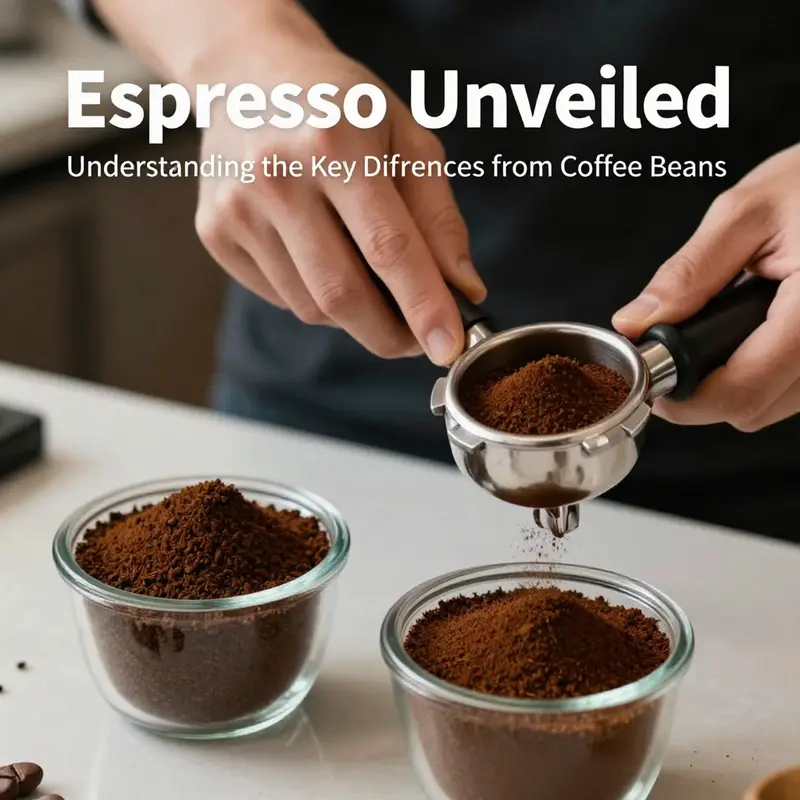
The belief that espresso beans are a distinct kind of bean often travels with a confident cadence. People speak of a special roast, a specific origin, or a unique bean variety as if those factors alone determine why espresso tastes the way it does. In truth, the decisive differences between espresso and other coffee preparations are less about biology or botany and more about process: the roast profile, the grind size, and the method that drives water through a compact bed of grounds under pressure. This is where the idea of an espresso bean as something intrinsically different starts to blur. Any coffee bean can be forged into an espresso, provided the brew is guided by a high-pressure extraction, a tight puck, and a grind that matches the machine’s demands. The core distinction, then, lies not in the bean itself but in how that bean is prepared and delivered to the cup.
When a barista talks about grinding, they are really talking about control. Grind size is the most sensitive dial on the espresso machine, a lever that can shift the entire balance of flavor, sweetness, acidity, and bitterness in seconds. It is the invisible hand that governs surface area exposure, water flow, and contact time—the three variables that determine how soluble compounds inside the coffee grounds are extracted into the brew. In espresso, water is pushed through a dense bed of coffee at high pressure for a short window, typically 20 to 30 seconds. That combination of pressure and time makes grind size feel almost magical in its impact. A finer grind increases resistance, slows water flow, and lengthens contact time just enough to extract more of the deeper, more complex compounds. A grind that is too fine, however, invites over-extraction, where bitterness and astringency can masquerade as depth. A grind that is too coarse fails to develop the full spectrum of flavors, and the resulting shot can taste thin or sour. The delicate balance sits at the intersection of grind and tamp, but the grind is the anchor.
To understand why this matters so much for espresso, imagine the water as a zealous traveler and the coffee bed as a fortress gate. A fine grind expands the gate’s surface area, forcing the water to negotiate a longer, more intricate path through the particles. The quick exposure that a shot requires makes the water’s journey a test of efficiency. The crema—the pale, amber foam crowning a well-pulled shot—becomes a visible record of that efficiency. It forms when emulsified oils and tiny gas bubbles release under pressure, a phenomenon closely linked to how evenly the coffee particles have been extracted. Fine grind, solid tamp, stable temperature, and consistent pressure all collaborate to create a crema that is not merely decorative but informative. The crema’s color, persistence, and thickness offer a sensory cue to the underlying extraction: a balanced shot should flow with syrupy viscosity, a hint of sweetness riding atop a backbone of structured acidity and judicious bitterness.
Yet beyond the technicalities, the conversation about espresso grind size is also a conversation about expectations. People often associate espresso with a particular roast profile—typically darker and fuller-bodied—because many commercial espresso blends optimize those attributes under pressure. The roast level shapes the aroma, the sweetness, and the balance of flavors that interact with the grind and the brew method. A darker roast does emphasize boldness and can mute some acidity, but it is not a universal map for espresso success. What matters more than roast alone is how that roast interacts with grind size and pressure during extraction. A darker roast ground too finely in a very dark, high-pressure system can lead to a bitter aftertaste if the extraction runs beyond optimal stopping points. Conversely, a medium roast with a slightly finer grind can unlock a different spectrum of sweetness and clarity, especially in blends designed to pair specific bean notes with the espresso method. In other words, the bean type can be flexible, while the method demands discipline.
The relationship between grind size and other brewing methods further illuminates why many people conflate espresso with a special kind of bean. In methods such as pour-over or French press, grind size remains critical, but the parameters shift. The water is not blasted through at the same pressure, and the contact time is not constrained by a rigid 20 to 30 seconds window. A pour-over typically rewards a medium-fine grind that strikes a balance between extraction speed and flavor clarity, letting the brewer modulate the flow rate to carve out sweetness and brightness. A French press, with its immersion and longer steep time, benefits from a coarser grind to keep sediment at bay and to prevent over-extraction that would dull the cup. These contrasts highlight a central truth: grind size governs surface area exposure, which in turn governs extraction efficiency. In espresso, that gate is narrow and demands precision; in other methods, the gate is wider and more forgiving, inviting a broader tolerance for minor variances.
There is also a social and perceptual layer to this topic. The term espresso itself refers to a preparation method, not a botanical category. The beans themselves remain the same material that makes up other coffee drinks. Within espresso circles, blends commonly combine Arabica and Robusta to achieve the targeted body, crema, and flavor balance under pressure. But the use of Robusta is not a mandate; it is a design choice, a way to tweak crema formation and perceived mouthfeel. A coffee bean labeled for espresso is not inherently more special; it has simply been part of a blend and a roast profile aligned with espresso extraction. The practical implication for home brewers is empowering: you can experiment with ordinary beans, adjust roast levels, and tailor grind size and tamping to yield espresso-like results on equipment not optimally designed for espresso—though with variable success.
The practical reality is that the everyday distinction most people notice when they drink espresso versus a drip cup often comes down to two linked experiences: intensity and texture. Espresso delivers a compact, syrupy concentration with a sensation that lingers on the palate. The texture is part of the story—the feel of thick, viscous liquid that carries a mosaic of flavors, sometimes sweeter and more caramelized, sometimes with a roasted edge that bite-sizes its brightness. Grinding, tamping, and timing are the performers that choreograph this drama. If the grind is too coarse, the water rushes through, leaving the cup with brightness but little body. If the grind is too fine and the tamp is uneven, channeling can occur, potholing paths through which water preferentially travels, leaving behind under-extracted pockets and a patchy, uneven cup. Channeling is the antagonist of balance; it steals uniform extraction and makes a shot taste inconsistent from pull to pull. A well-tuned shot, in contrast, presents a cohesive profile where sweetness appears earlier, acidity stays in check, and bitter notes only arrive as a natural consequence of over-extraction, not because the grind was misapplied.
From a home-brewing perspective, one of the most liberating truths about grind size is that it lowers the barrier to espresso-like outcomes with the equipment you own. The trade-offs are real and worth acknowledging: a correctly dialed-in grinder can bring a kitchen coffee bar to life, but it also requires patience, measurement, and calibration. Even a one-notch adjustment in grind size can alter the clarity of the cup dramatically. The surface area exposed to water can shift the extraction curve, pushing the brew toward a sweeter, more balanced profile or toward a more astringent finish. The same bean can taste different when ground coarser and brewed with gentle agitation in a pressurized system, or ground finer and subjected to a high-pressure pull with a precise tamp. The lesson is not that one method is right and another wrong, but that each method has an optimal zone for grind size, and that zone moves with roast level, bean origin, and even humidity.
In the end, the concept of an espresso bean as a different species dissolves under scrutiny. The science of grind size explains the dramatic differences in flavor extraction between a espresso shot and a standard cup of coffee, while roast and blend choices explain the other layers of aroma, body, and sweetness. The bean is a substrate—it’s what the water and pressure coax from it that defines the experience. If you chase a particular espresso characteristic, you will likely tune all the way back to grind size first, then adjust roast and blade of a tamp later. The goal is not to worship a mythical espresso bean but to master the choreography of grind, temperature, pressure, and time so that the bean reveals its best possible self under the brew’s demanding conditions.
As you experiment, you’ll notice that the line between espresso and non-espresso experiences shifts with equipment and technique. A well-ground, properly extracted shot will showcase a harmony of sweetness and tension that many consider the soul of espresso. A well-made pour-over will reveal clarity, with lighter bodied, fruit-forward notes that invite different kinds of appreciation. The two experiences can converge in surprising ways, but the strategic lever remains grind size. It governs how much surface area the water contacts and how long that water sits with the grounds. It governs whether a shot is cohesive and round or fragmented and volatile. It governs whether the crema forms and holds or vanishes quickly. In short, grind size is the unseen conductor of an orchestra that includes roast, beans, grind tools, humidity, water quality, and technique. The beans are the instruments; the grind is the conductor.
For readers seeking a practical sense of how this plays out, the quick takeaway is simple: if you want more body and a richer mouthfeel in an espresso-like cup, move to a finer grind within the operating range of your machine and ensure you are tamping evenly. If you crave more brightness and a lighter, cleaner finish, shift toward a slightly coarser grind and monitor extraction time. Each adjustment changes the rate at which soluble compounds dissolve from the grounds, the balance of sugars to tannins, and the proportions of acids and aromatics that reach your tongue. And remember, not every system will yield a perfect shot every time. The journey toward espresso perfection is iterative, with grind size as the most immediate guidepost.
In the broader arc of the article on whether espresso beans differ from regular coffee beans, this chapter has traced a throughline that often gets lost in headline moments. Espresso is about how a bean behaves under pressure, how finely it is ground, and how quickly water is forced through a dense bed. The bean itself is not bifurcated into espresso and non-espresso species. The same beans can become the star of an intense, syrupy shot or the hero of a clean, delicate cup, depending on how they are roasted, ground, and brewed. The real difference lies in the method, not in a magical category of beans. The more you understand grind size, the better you will be able to tune any brew to your taste, whether you chase the familiar comfort of a classic espresso shot or the nuanced clarity of a well-made pour-over.
For those who want to explore further into the practical challenges of grind size and its impact on bitterness and extraction, a comprehensive guide offers nuanced troubleshooting on grind size and tamping. It is a useful companion to the ideas laid out here, anchoring the everyday act of dialing in a shot to a solid understanding of extraction physics and sensory outcomes: https://www.perfectdailygrind.com/espresso-bitter/.
Bean Blends as Architects of Espresso Identity: How Roasts, Regions, and Grinding Shape the Coffee Experience
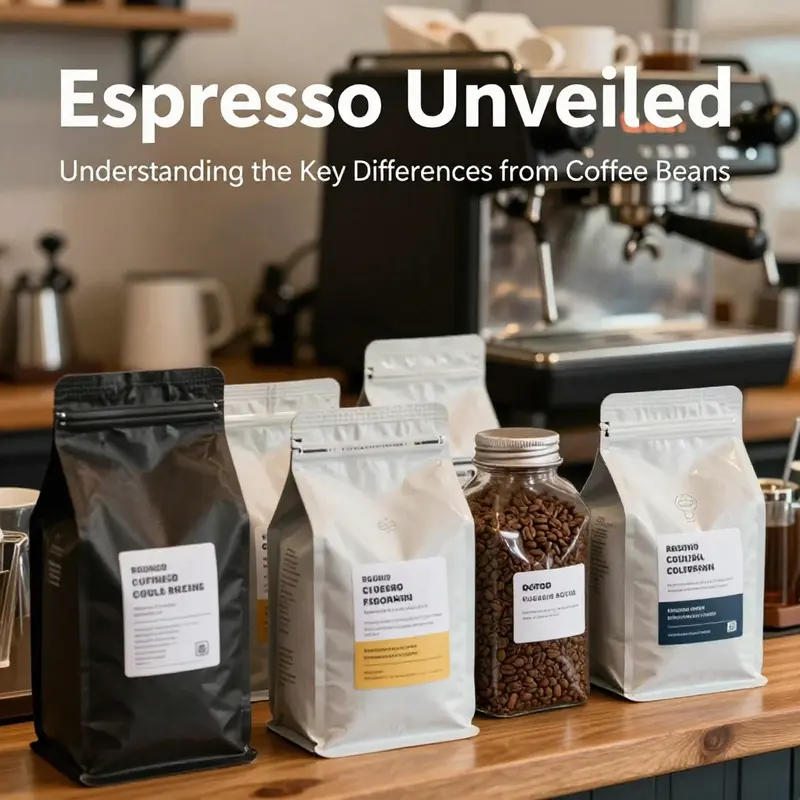
A blend is never a mere collection of beans tossed together; it is a deliberate conversation among origins, roast profiles, and the method by which those beans will meet hot water under pressure. In the realm of espresso, blends function as the quiet engineers of flavor, texture, and aroma. They manage acidity and sweetness, curvature of body, and even the crema that crowns a shot with the kind of frothy halo that hints at the complexity contained within. To understand the role of blends is to peek behind the curtain of espresso’s signature intensity and to appreciate why the same fundamental ingredient—the bean—can yield two dramatically different experiences when shaped by a method and a plan. The distinction between espresso and regular coffee is not born from a different species of bean but emerges from how the roast is tuned, how finely the grind is milled, and how carefully the blend is composed to perform under high-pressure extraction. And within that design space, the art of blending becomes the most proximate answer to the question many curious drinkers ask: what makes espresso taste so bold, so creamy, so distinctly pressing in its intensity?
Blending begins with a philosophy of balance. A well-crafted house blend aims to deliver a familiar, approachable espresso that can win over mornings and convert curious tasters into devoted aficionados. It typically leans toward mild, mellow notes and lower acidity. These traits cultivate a smooth, open palate that presents a gentle entrance for someone new to espresso, letting them experience the beverage without being overwhelmed by brightness or bitterness. Yet balance does not mean sameness. Even within a restrained profile, the choice of beans speaks volumes about what the cup will do under the machine’s pressure and how the aromatics will survive the short, intense extraction window. In such blends, the brewer often seeks a quiet sweetness that emerges as the shot rests briefly in the cup, followed by a lingering, comforting aftertaste that invites another pull rather than demanding a pause to recover from a sharp edge.
Contrast this with blends built to evoke a more dramatic espresso experience—the kind that rewards a confident palate with depth and structure. Here, the components might include beans from regions known for boldness and character. Indonesian coffees, for example, frequently contribute a robust backbone that supports a thick crema and a sense of gravity in the cup. Their bodies carry weight, and their mineral-like, earthy, or smoky notes can be bridged into the crema’s foam by a careful match with harmonizing components. In these darker, more assertive blends, the espresso’s body becomes almost a textural event as well as a flavor event. The crema holds its own with a persistent, velvety crown that speaks of oils and aromatics released by longer roasts and the high-pressure extraction that defines the method. The result is a shot that feels substantial on the tongue, with a brevity of sweetness that makes room for bitter and savory accents to emerge rather than disappear under a blanket of sugar.
The art of blending is inseparable from the roast profile chosen for those beans. Espresso, by its very nature, tends to favor darker roasts, not as a rule but as a practical alignment of flavor tendencies with the constraints of extraction. Darker roasts tend to develop a fuller body, a denser mouthfeel, and more pronounced caramelization notes that can translate into the crema’s color and aroma. They also suppress the delicate high notes that might clash with the machine’s pressure and the short contact time. A blend that leans into these characteristics often uses a mix of origins that can contribute sweetness and body without letting acidity rise to dominant levels. The aim is not one singular flavor but a symphony: a chorus of roasted, fruity, earthy, and herbal notes that sing in harmony when the water penetrates the compacted bed of finely ground coffee. The precise balance is, in turn, a reflection of the blend’s intended use. A morning espresso, for someone who wants immediate comfort and clarity, may rely on a blend that emphasizes gentle sweetness and low perceived acidity. An espresso crafted for a connoisseur who pursues depth will likely feature a backbone of bolder origins and a carefully tuned bitter-sweet edge that lingers with a resinous finish—a finish that the palate can explore in slow, deliberate sips.
The choice of bean origins within a blend helps define the shot’s identity as much as the roast level. Arabica beans often contribute delicate sweetness, nuanced acidity, and a bouquet of fruity or floral aromatics. Robusta beans, when included, bring structure, body, and aish that can amplify crema and give a shot a more assertive edge. Blends that lean toward harmony may minimize Robusta, using it sparingly to reinforce crema and viscosity without overshadowing the more delicate Arabica sweetness. Conversely, a blend that seeks memorability and punch may lean on Robusta to anchor the crema and to build a near-syrupy density that floods the palate with a bold, resinous finish. It is not merely about strength; it is about preserving a sense of balance where the crema remains a friend to the liquid beneath, not a mask concealing a flatter cup. Many espresso-focused blends deliberately curate a limited set of origin notes—perhaps a mild Central or South American bean for brightness and a more assertive region for body and tang—to avoid a chaotic jumble of flavors. In others, the blending is less about contrast and more about layering, coaxing a depth that emerges only when the cup is allowed to breathe and the crema settles anew after a few seconds of exposure to air.
Seasonality and batch-to-batch consistency enter this story in practical, almost invisible ways. Green beans must be sourced with care, roasted with exacting discipline, and blended according to a reproducible protocol that aims to deliver the same sensory profile day after day, batch after batch. The journey from green beans to a finished bag of espresso-ready blend is not linear but iterative. A batch may surprise with higher acidity or a new aromatic spark that wasn’t present in the previous run. The roaster must assess these deviations and decide whether to rebalance the blend, adjust the roast curve, or refine the grind setting to preserve the intended extraction characteristics. In commercial settings, where espresso is produced at scale, these decisions carry material weight. A slight drift in aroma or crema thickness can alter the perceived strength of a shot, affecting customer satisfaction and even the consistency of a brand’s signature experience. The responsibility here falls to the careful curation of green beans, to the precision of the roasting process, and to the discipline of blending rules that govern how much of each origin is allowed to sway the final cup.
Freshness is another critical dimension of a blend’s performance. In traditional espresso setups that rely on freshly ground beans, the volatile aromatics responsible for aroma and initial sweetness are most expressive when ground just before brewing. The moment coffee is ground, those compounds begin to disperse, and some delicate notes can begin to fade if the grounds sit for even a few minutes. For this reason, many who pursue a high-quality espresso experience favor smaller batch sizes and shorter times between grinding and extraction. A blend, then, is not merely a static recipe but a dynamic plan that anticipates the practical realities of home setups, cafe service, and everything in between. A well-managed blend considers storage stability as well, choosing beans and roast levels that retain character over a reasonable window while still delivering the expected intensity on the pull of the lever or the press of the start button.
The practical realities of making espresso on a home counter or in a small cafe also shape how blends are designed. For home brewers, there is often a desire for convenience and consistency, which can drive the choice toward blends that behave reliably under a range of equipment and skill levels. In such contexts, a house blend might be selected for its forgiving nature and ability to deliver a balanced, approachable shot even when the grind size is variable or the extraction time diverges slightly from the canonical 20 to 30 seconds. The result is a drinkable, comforting espresso that welcomes daily ritual and reduces the risk of harsh acidity or overpowering bitterness. For professionals pursuing more demanding experiences, the blending strategy grows into a craft exercise, where the blend becomes a signature that invites careful evaluation, tasting, and refinement. A maestro of sorts in the roastery will experiment with regional beans whose characters can be coaxed into delicate interplay. The goal is not only to achieve a particular taste but to ensure that, across dozens of shots, the same impressions are delivered—consistent crema, aromatic balance, and a body that remains vivid without becoming aggressive.
Grinding, too, is part of the blending equation, though often treated as a separate stage. The grind size must harmonize with both the roast and the bean blend to produce a compact yet extractable bed of coffee. Espresso demands a fine grind to maximize surface area and to enable a rapid, pressurized extraction. The grind acts as the bridge between the blend’s flavor roadmap and the machine’s physics. If the grind is too coarse, the water rushes through too quickly, pulling out insufficient aromas and leaving the cup thin, with a weak crema and underdeveloped sweetness. If it is too fine or tamped with excessive pressure, the extraction can stall, increasing bitterness and dulling the nuanced notes that the blend was meant to reveal. Those who work with blends often find themselves adjusting grind settings as the seasonal bean profile shifts, ensuring that the intended balance remains intact when the shot begins its journey through the machine. Grain by grain, the blend’s identity is preserved not solely through which beans were chosen but through how they are ground and how those grounds are arranged for extraction.
From a sensory perspective, a well-composed espresso blend offers a continuous arc of perception. The aroma in the cup opens with a bouquet that can recall cocoa, dried fruit, or toasted nuts, depending on origin and roast. As the shot seats on the palate, the tongue experiences a line of flavors that may trace from sweetness to brightness and then to a more earthy, resinous finish. The crema, if present, acts as a foil and amplifier for these aromatics, its thickness and color hinting at the body beneath and the overall mouthfeel. A blend’s success lies in how these elements remain in proportion as the shot evolves: aroma leading into taste, acidity maintaining a gentle presence without dominating, and the aftertaste lingering with a sense of place rather than simply a transient impression. When a blend achieves this balance, the espresso becomes more than a drink; it becomes an invitation to explore a map of origins, a narrative of roast decisions, and a demonstration of how craft can coax wonder from the simplest ingredients.
Interpreting the research results on bean blends within this broader frame helps illuminate why blends hold such central importance in espresso’s identity. The cited insights emphasize that blends shape flavor profiles, body, crema, and overall sensory character. A carefully designed blend acts as a conductor, orchestrating acidity, sweetness, bitterness, and aroma to produce a harmonious, complex shot. A house blend with mild notes and low acidity offers accessibility, especially for beginners or morning routines, delivering a smooth, approachable experience that remains satisfying without demanding deep contemplation of every nuance. Yet for those seeking deeper, more challenging experiences, blends that incorporate beans such as Indonesian Java can deliver boldness, depth, and a crema that carries complexity across the tasting spectrum. These regional beans contribute not just a flavor but a structural dimension—an edge to the shot that interacts with roasts to create a sense of cohesion and an intensity that invites closer listening and longer sessions of tasting. The variability of batches, the need for precise roasting and blending protocols, and the importance of freshness all converge to underscore a simple truth: the blend is a living system, a dynamic arrangement rather than a fixed script. The consistent outcome depends on the integrity of the green beans, the rigor of the roasting discipline, and the discipline of the blending method. For those pursuing home brewing or small-batch production, the chapter’s message becomes practical: invest in careful sourcing, practice disciplined roasting, and approach grinding with the same respect given to the roast and blend. Even in a world where modern conveniences allow quick, efficient grinding, the best espresso experiences demand a more deliberate rhythm—one that respects the timing between grinding and brewing and the way each shot’s intensity reveals itself when the crema forms and the aroma rises.
The central takeaway is that the distinction between espresso beans and regular coffee beans is not in the beans themselves but in how their chemistry is marshaled by roasting, grinding, and, most importantly, blending. The blend becomes the architect that defines what the final cup will be, dictating taste, body, crema, and the emotional trace left after swallowing. It is why the same coffee bean can appear in multiple blends, delivering different experiences across cafes and homes, depending on whether the objective is a forgiving morning shot or a towering, signature espresso designed to challenge a discerning palate. In practice, this means the home brewer who admires balance might lean toward a lighter, more nuanced blend that offers a clear path through the palate’s first impressions. The enthusiast who seeks boldness may pursue a blend that includes Indonesian or other robust-origin beans to anchor a full, creamy, longer-lingering finish. And the committed espresso devotee may demand consistency across cycles, expecting a blend that behaves predictably with a precise grind, a stable roast, and an extraction that preserves the cup’s intended arc from aroma to aftertaste.
As this exploration of bean blends unfolds, the larger picture emerges: espresso is not a static product of a single bean; it is an artifact of choice, approach, and discipline. The coffee bean in itself carries a world of potential that the blend unlocks when roasted and ground for a high-pressure, fast extraction. The role of the blend, therefore, is to translate the broad spectrum of regional flavors into a coherent, comprehensible, and deeply satisfying cup that remains faithful to the drinker’s expectations while still inviting curiosity and discovery. In that sense, blends are the unsung architects of espresso identity, shaping not just flavor but experience—the sense of comfort on a quiet morning, the thrill of a richly textured afternoon, or the calm immersion of an evening ritual that rewards patience and attentiveness. They knit together origin, roast, grind, and extraction into a portable, repeatable practice that helps even casual drinkers access the complexity that espresso can offer when approached with care and curiosity.
For readers curious to explore the science and craft further, this topic invites hands-on inquiry: experiment with a balanced, mellow blend designed for everyday espresso, then introduce a contrasting Indonesian-forward blend to observe how crema depth and aroma shift. Note how the body thickens and how the finish evolves as you adjust grind and extraction time. Observe how freshness changes the sweetness and how batch variation can alter the cup’s personality. These are practical demonstrations of the principles discussed, and they reveal why blends matter so deeply in shaping the espresso experience.
External resource for further reading: https://www.brewbound.com/insights/espresso-bean-blends-explained
Final thoughts
Understanding the differences between espresso beans and regular coffee beans is not just an academic exercise; it is a crucial aspect of creating an exceptional coffee experience in your business. From the dark roasting techniques designed to highlight espresso’s bold flavor to the grind size essential for the perfect extraction, each detail plays a role in your offerings. Additionally, knowing how various blends can enhance or alter the taste can help you cater to customer preferences effectively. By mastering these aspects, you can elevate your coffee program and create a loyal customer base seeking quality and expertise.