
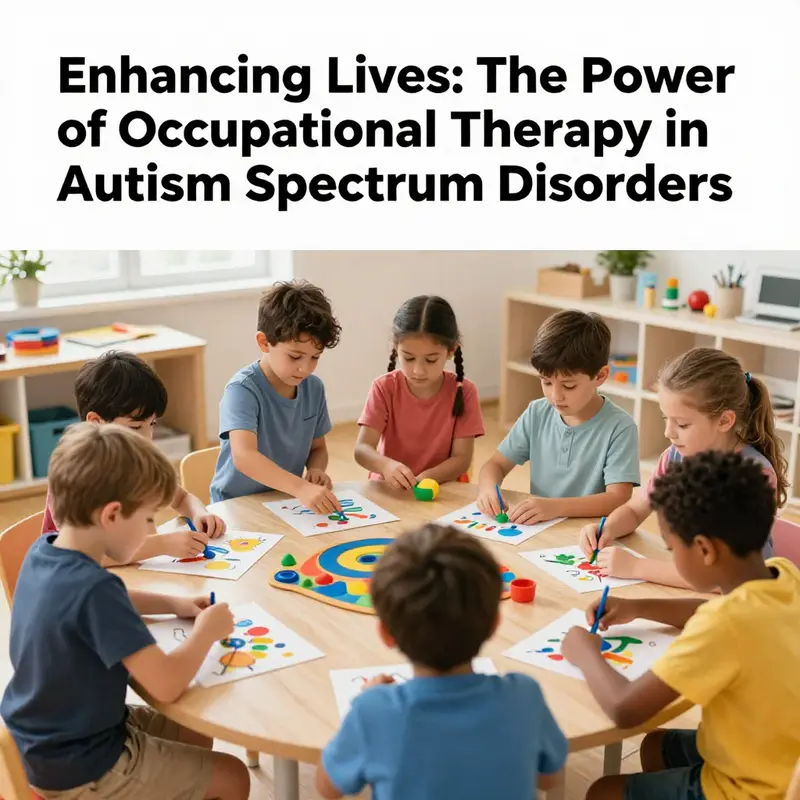
Occupational therapy (OT) serves as a vital resource for individuals with Autism Spectrum Disorders (ASD), specifically targeting the enhancement of daily living skills and quality of life. By focusing on individualized interventions, OT practitioners help children and adolescents develop essential skills like fine motor coordination, sensory processing, self-care, and social interaction. Each chapter delves deeper into the integral impacts of OT in these areas. The first chapter examines the profound effects of OT on everyday activities, shedding light on how targeted practices foster independence. The second provides insights into evidence-based interventions that yield measurable improvements for children with ASD. Finally, the third chapter underscores the role of OT in enhancing social skills, highlighting how well-supported interactions can lead to greater community integration and personal development.
Daily Life Reimagined: The Transformative Impact of Occupational Therapy on Everyday Activities in Autism Spectrum Disorders
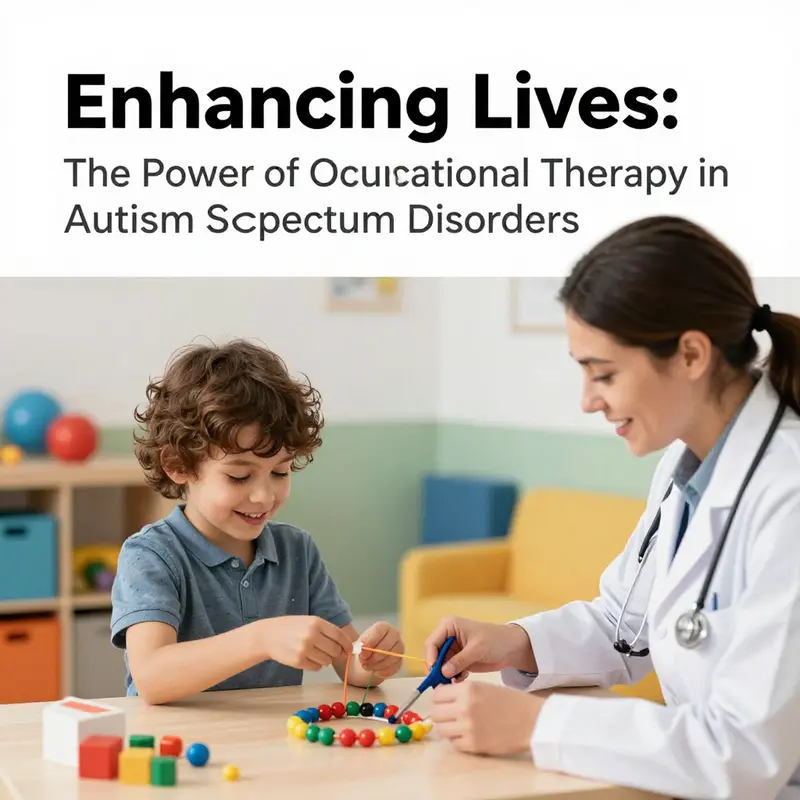
The everyday world can feel like a sequence of demanding tasks for someone on the autism spectrum, even when intentions are clear and support is available. Occupational therapy (OT) invites a different lens on those tasks, one that prioritizes meaningful participation over an abstract definition of “normal” function. In this view, daily activities are not merely chores to be completed; they are opportunities to cultivate autonomy, confidence, and a sense of belonging. OT practitioners approach daily life as an integrated system where sensory experiences, motor abilities, self-care routines, and social engagement interlock to shape who a person is in home, school, and the wider community. By tailoring interventions to the person’s unique profile, therapists help individuals with ASD transform friction points—like changing clothing in the morning, preparing a snack, or joining a group activity—into moments of mastery that ripple into larger life domains. The result is not simply better task performance but a broader rise in quality of life and self-efficacy that extends beyond the clinic or therapy room.
At the heart of OT’s impact is a commitment to functional outcomes. The field has consistently emphasized that improvements in sensory processing and motor coordination translate into more reliable self-care and greater participation in daily routines. For children and adolescents with ASD, the practical benefits often begin with the basics: dressing buttons or zippers that once resisted, eating meals with a spoon and fork without coating the table in spills, and brushing teeth with minimal distress. These are not only milestones of independence; they also reduce the amount of time and energy families must allocate to supervision and correction, freeing space for shared activities that reinforce bonding and communication. In many families, the daily friction that accompanies transitions—moving from one activity to another, managing cluttered backpacks, or adjusting to a new school schedule—evolves into predictability. The predictable rhythm, created by OT-informed routines, can stabilize a household’s atmosphere, easing anxiety for both the person on the spectrum and their caregivers. In this way, OT supports a virtuous cycle: as functional tasks become more manageable, the individual experiences greater autonomy, which in turn fosters more complex participation in social and educational routines.
The daily task mosaic for someone with ASD is deeply influenced by sensory experiences. A sound that appears ordinary to a neurotypical peer can be overwhelming for someone who is hypersensitive to sensory input, or vice versa for someone who seeks sensory stimulation. OT addresses these differences with careful assessment and intervention that respects the person’s sensory preferences while gradually expanding their tolerance and repertoire. A common illustration involves the morning routine. A child who is overwhelmed by the feel of clothing, the sound of the dryer, or the texture of toothpaste may resist dressing or brushing teeth, thereby delaying the start of the day. An OT approach would not merely push compliance; it would identify sensory triggers, adapt the environment, and introduce a sequence of small, attainable steps. For example, providing a preferred garment or a tactile friendly alternative, offering a predictable sequence with visual cues, and allowing for brief, structured breaks can transform a potential struggle into a predictable, tolerable activity. The same logic holds for eating and self-care. Therapists may work on bite-size feeding practice that respects texture preferences, introduce adaptive grips for utensils, or break tasks into stages that align with a child’s current motor skills. Over time, these adjustments enable more complete participation in family meals, which is a foundational social occasion that anchors communication, connection, and shared routines. In this process, OT does not erase individual differences; it helps individuals navigate them with competence, turning sensitivities into adaptable strategies rather than obstacles.
The motor dimension of daily living is equally central. Fine motor coordination, motor planning, and hand-eye coordination underpin many everyday activities—from tying shoelaces to neatly folding laundry, from writing a note to opening a lunchbox. In ASD, these skills can be unevenly developed, creating bottlenecks that hinder independence and self-esteem. Intervention focuses on purposeful practice—repetitive, meaningful activities that are calibrated to the person’s current level of ability. Therapists might design activities that weave together fine motor tasks with real-life goals. For a younger child, a sequence might involve buttoning a coat while naming colors or counting objects in the process; for a teenager, it could involve organizing school materials or preparing a simple snack with measured steps. The aim is not only to increase speed or precision but to promote automaticity so that tasks become less effortful and more reliable, freeing cognitive resources for social interaction and problem-solving. The restorative power here lies in the alignment of motor learning with the person’s lived reality: meaningful tasks with clear purpose that reinforce the sense that one’s body can meet the demands of daily life.
Crucially, OT for ASD foregrounds self-care as a platform for self-determination rather than a chore to perform for others. Dressing, grooming, feeding, and personal hygiene are often reported by families as the most sensitive areas where independence grows or stalls. OT strategies are eclectic but cohesive, blending activity analysis, hand-over-hand guidance when necessary, and cue-based routines that link sensory input with motor output and cognitive planning. A crucial hallmark of this approach is gradual release: therapists model tasks, co-create the sequence with the individual, and then fade support as competence emerges. The family’s role in this process is indispensable. Caregivers provide the context in which these skills are practiced, from selecting appropriate clothing to establishing a pattern for morning routines that minimizes stress during transitions. The partnership between therapist and family is thus not a one-way transfer of techniques but a collaborative journey in which insights from home life inform therapy goals and, conversely, what is learned in therapy reshapes the home environment.
Beyond the private sphere of home life, OT’s impact extends into school settings and community participation, places where daily activities take on a social dimension. In classrooms, for instance, executive functioning, sensory regulation, and motor skills converge to enable participation in group work, note-taking, and the endurance required for a full day of learning. When a student can approach a classroom task with reduced sensory overload and improved hand function, they are more likely to contribute, follow directions, and complete assignments. This shift does not simply reflect improved task performance; it signals a deeper change in how the student experiences school—the sense of possibility expands as tasks that once produced distress now fit within a manageable framework. The social component of daily life—interacting with peers during recess, collaborating on projects, or navigating lunchtime routines—benefits from OT strategies that teach sensory self-regulation, turn-taking, and adaptive communication. In practice, therapists embed social participation into everyday tasks rather than treating it as a separate, abstract goal. For example, a collaborative snack preparation activity can become a venue for practicing shared planning, turn-taking in conversation, and mutual monitoring of sensory comfort, all of which reinforce social connection in a low-stress context.
The evidence base supporting these integrated outcomes has grown steadily. A 2024 study by CCD Jaicks underscores that OT is explicitly applied to individuals with ASD to boost functional skills and increase independence in everyday tasks such as dressing, eating, and personal hygiene. This focus on functional gains aligns with the broader literature that positions OT as a core component of intervention plans for ASD, aiming to enhance functional abilities crucial for daily life. The perspective resonates with a body of work summarized by Oxford Academic, which emphasizes OT’s integral role in designing evidence-based intervention plans that consider not only what a person can do in a clinic but what they can sustain and adapt to across settings. In parallel, a 2016 review by JL Stornelli confirms that treatment by a qualified occupational therapist can meaningfully improve overall functioning and reduce impairing symptoms for both children and adults with ASD. Taken together, these findings sketch a trajectory of improvement that translates into real-world autonomy: the capacity to manage morning routines without excessive planning, to participate in school activities with reduced anxiety, and to engage in social life with greater confidence. What emerges is a picture of OT as a catalyst for long-term development, not just a series of isolated skill drills.
The practical ripple effects for families are equally important to acknowledge. When children gain competence in self-care and sensory regulation, household rhythms become more predictable, and daily stress tends to decrease. The reduction in parental vigilance during routine transitions is not a trivial relief; it often creates space for more positive interactions, shared storytelling, and collaborative problem-solving. As routines stabilize, parents report feeling more competent in guiding their child through daily life while preserving the child’s emerging independence. This dynamic also nurtures emotional well-being within the family unit, since predictable routines can attenuate anxiety for both the child and caregivers. The sense of mutual achievement—parents seeing meaningful progress in autonomy, the child sensing their own growing capacity—contributes to stronger familial bonds and a more supportive environment for ongoing development. In turn, this positive home climate can bolster participation in community activities, further reinforcing a sense of belonging and the opportunity to practice skills in varied contexts.
The long-term benefits of early and sustained OT interventions for ASD extend into adolescence and adulthood, where the skills developed during childhood become the foundation for independent living, education, and employment. Early intervention is associated with foundational gains in self-care, sensory processing, and social participation that can set a trajectory toward greater autonomy later on. The cumulative effect of these gains is not merely a collection of improved score metrics; it is a durable movement toward a life in which daily activities are navigated with confidence rather than fear. The research landscape consistently supports the view that OT is not ancillary but essential to comprehensive care for people with autism, spanning childhood, adolescence, and adulthood. In other words, when OT is woven into a person’s life from the outset and guided by ongoing assessment, it contributes to a durable scaffolding that supports ongoing growth, participation, and adaptation across changing environments and demands.
In considering how best to translate these insights into practice, the field emphasizes a whole-child approach that honors individuality while providing structured pathways toward independence. This means that OT is not a prescriptive set of steps but a collaborative process that honors what the person brings to each task: their preferences, thresholds, strengths, and goals. It means recognizing that daily activities are more than activities; they are stages for identity formation and social inclusion. It also means acknowledging the central role of families and caregivers in shaping routines that are both feasible and meaningful. In practice, therapists work with families to identify realistic objectives, co-create routines that align with the household’s daily pace, and design adaptable tools and supports that can flex with changing needs—whether due to school transitions, a change in routines, or the natural progression of development. This collaborative stance helps ensure that gains are not confined to therapy sessions but permeate everyday life, creating a living, evolving map of independence that grows with the person.
As this chapter has traced, the impact of occupational therapy on daily activities for individuals with autism spectrum disorders is both broad and deep. It encompasses sensory regulation, motor proficiency, self-care, social participation, and the sustainable practice of routines that fortify independence and self-esteem. The evidence—spanning targeted studies, reviews, and clinical practice—points to a consistent pattern: when OT is tailored, staged, and integrated across home, school, and community life, it yields meaningful gains in daily functioning and quality of life. The gains are not merely about becoming more competent at specific tasks; they represent a shift in how individuals perceive themselves and their possibilities. The daily tasks that once felt burdensome or invisible become platforms for agency, choice, and connection. In this sense, OT contributes to an overarching mission within autism care: to support individuals in leading lives that are not defined by limitations but by opportunities for participation, purpose, and growth.
To reflect on the practical dimension of this work, consider the way a therapist might translate theory into a day’s activities. A morning routine could be designed as a sequence of tangible steps with clear cues, a timer, and a simple reward for completing each stage. A snack preparation task might integrate sensory-safe utensils, visual supports, and a cooperative pacing that respects the individual’s sensory processing profile. A classroom adaptation might focus on organizing materials, reducing distractors through sensory-friendly seating, and fostering collaborative problem solving during group activities. These aren’t isolated exercises; they are threads in a cohesive tapestry that weaves independence into the fabric of daily life. The chapter’s closing reflection is not about a cure but about care—care that is informed by evidence, delivered with empathy, and grounded in the day-to-day realities of families navigating ASD with dedication and resilience. For readers seeking to explore the broader landscape of OT’s role in mental health and daily functioning beyond ASD, resources such as how-occupational-therapy-supports-mental-health offer accessible perspectives that complement this chapter’s focus while reaffirming OT’s holistic orientation toward well-being and participation. The chapter also invites contemplation of ongoing research and practice improvements, including deeper exploration of early intervention effects, long-term outcomes across life stages, and strategies that support families in sustaining progress as routines evolve.
For readers who wish to consult the foundational evidence behind these trends, the work cited here includes a peer-reviewed synthesis that situates daily-life outcomes within a broader evidence base. See the original study documenting these functional gains and their relevance to independence in daily tasks at the following external resource: https://academic.oup.com/ajhp/article/73/5/501/287967
Evidence in Action: How Occupational Therapy Builds Daily Skills for Children with Autism Spectrum Disorders
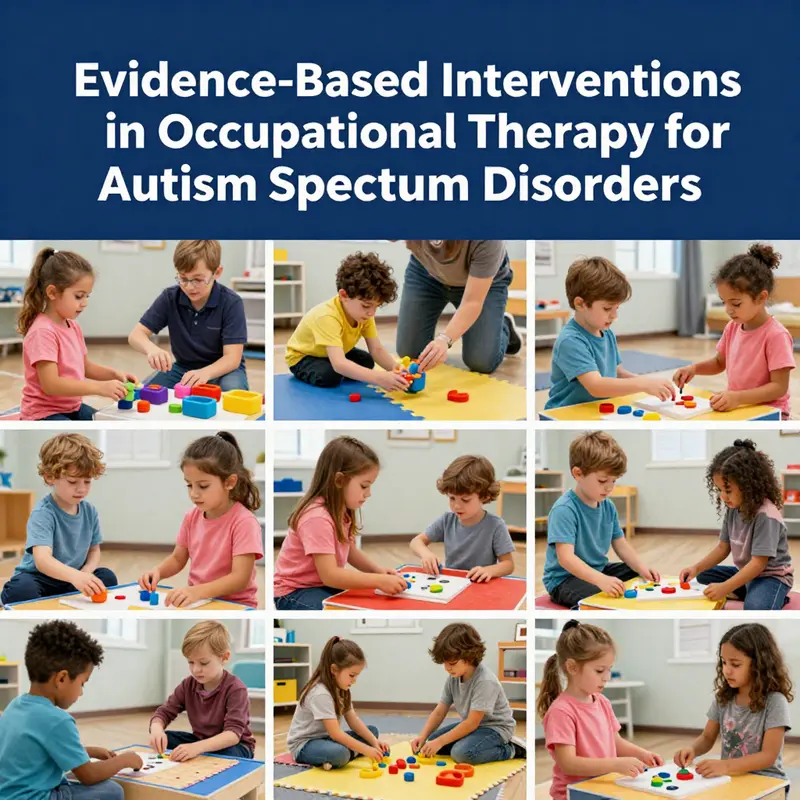
Occupational therapy stands at a pivotal crossroads for children on the autism spectrum, translating scientific understanding into practical gains that touch daily life. It is not only about teaching a child to complete a chore but about shaping the moments that shape identity—self-care, sensory engagement, motor mastery, emotional steadiness, and social participation. In this chapter we move through the landscape of evidence based practice, tracing how established OT interventions are selected, adapted, and integrated across the most familiar settings in a child’s world: home, school, and community. The thread connecting these settings is the shared aim of functional independence that honors each child’s rhythm, interests, and strengths. The best OT work recognizes ASD as a diverse constellation of profiles, not a single blueprint, and it uses structured yet flexible approaches that respond to ongoing assessment, family goals, and the realities of everyday environments. Within this framework, evidence is not a static endorsement but a living guide that informs how therapists observe, adjust, and celebrate incremental gains as children navigate the complex choreography of daily life.
From the outset, the focus of OT for ASD is practical competence. Therapists explore how a child manages the ordinary tasks that most people perform automatically—dressing, feeding, handwriting, organizing a backpack, and moving through space without fear or dramatic effort. Yet these tasks are not neutral; they are converging points for sensory input, motor control, cognitive planning, and emotional arousal. A child who is overwhelmed by the texture of a shirt, who cannot coordinate the fingers for fasteners, who shuts down in the middle of a classroom task, or who struggles to initiate interactions with peers is not simply lagging in a skill set. The child is negotiating a system of inputs and responses that can feel unpredictable. OT seeks to recalibrate that system so that daily activities become manageable, meaningful, and even enjoyable. The work thus begins with careful observation and ends in tailored practice that respects the child’s unique profile, with the family as the primary co-architect of targets, routines, and evaluative milestones.
One of the most enduring pillars of evidence in the field is sensory-based intervention, often framed under sensory integration theory. For many children with ASD, the nervous system processes sensory information differently, which can manifest as overstimulation, withdrawal, or anxiety that disrupts engagement in routines and learning. Sensory integration therapy and related sensory-based approaches employ structured, playfully designed activities to help the nervous system become better organized in the face of sensory input. In practice, this means activities that gently challenge the child’s senses—touch, sound, movement, and proprioception—in a manner that feels natural and motivating rather than forced. The aim is not to erase aversions or sensitivities in a single session but to gradually broaden the child’s range of tolerances and to build adaptive responses that can generalize beyond the clinic or therapy room. The evidence base for sensory approaches has grown since early skepticism, and pivotal syntheses, such as the well-cited 2008 review by Case-Smith and colleagues, highlighted sensory integration and related sensory-based interventions as commonly used and empirically supported components of OT for autism. While large-scale trials continue to refine the specifics of dosage, modality, and population, the consensus remains that well-implemented sensory activities, when embedded in meaningful routines, can reduce distress, promote engagement, and support participation in school and home activities. Yet the field also urges clinicians to track outcomes with careful, child-specific measures and to remain attentive to individual differences in sensory profiles, preferences, and developmental stage. In this sense sensory work is less about a one-size-fits-all protocol and more about a responsive dialogue between the child’s nervous system and the environment that surrounds them.
Emotional regulation stands as another central theme in evidence based OT for ASD. The daily world of a child on the spectrum is often punctuated by moments of tension, frustration, or confusion that can derail learning and social connection. Occupational therapists bring a toolkit of evidence informed strategies that support self-regulation across contexts. Visual supports, emotion charts, predictable routines, and calming techniques provide predictable scaffolds that help a child identify internal states, anticipate transitions, and regulate arousal before behaviors escalate. The strength of these strategies lies in consistency and co operation among home, school, and community settings. When visual schedules and calm down plans travel with the child from therapy into the classroom and the playground, the child experiences a coherent framework rather than disparate expectations. For families and educators, these tools translate into practical language and shared routines that reduce ambiguity and create space for adaptive problem solving. When we look at the evidence, emotional regulation is not a separate skill but a mode of operating that enables a child to participate in learning, play, and peer interaction with reduced stress. The integration of these tools is often enhanced by parent coaching and teacher training, ensuring that the child’s strategy repertoire is reinforced across scenes of daily life. In this regard, OT becomes a bridge that connects neurological tendencies with everyday adaptability, rather than a therapy confined to isolated moments.
Social interaction is not an optional add-on for children with ASD; it is a core arena for growth and inclusion. Occupational therapy approaches to social skills emphasize play and structured activities as powerful motors for peer engagement. Rather than a generic social script, OTs curate environments that invite meaningful social exchange through shared activities, collaborative problem solving, and guided practice with feedback. These interventions are frequently interwoven with cognitive behavioral elements to help children interpret social cues, regulate their responses, and reflect on outcomes with gentle coaching. The underlying idea is to create opportunities for authentic social participation where success is defined by meaningful engagement rather than perfect social performance. In practice, this translates to sessions that blend pretend play, cooperative games, and task oriented challenges that require joint attention, turn taking, and shared planning. The evidence supports that when social skills work is embedded in play, structured activities, and real world contexts, children show improved peer interactions and greater confidence in social settings. The clinician’s eye remains attuned to the subtle balance between guiding a child and honoring their agency, recognizing that social learning unfolds best in situations that mirror real life rather than abstract drills.
Motor skill development both enables and constrains every other facet of daily living. Fine motor delays can hinder handwriting, feeding, cutting with scissors, and managing fasteners, while gross motor challenges can affect navigation through spaces, sports participation, and playground safety. OT adopts a comprehensive view of motor development, incorporating fine motor skill building, postural control, coordination, and praxis—the planning and execution of complex movements. Interventions often involve environmental adaptations alongside direct skill practice and the use of adaptive equipment when appropriate. Even small refinements—such as optimizing desk height, arranging materials within easy reach, or using grip modifications—can reduce wear and frustration and raise a child’s sense of competence. The motor domain does not stand alone; it interacts with sensory processing, emotional regulation, and social participation. A child who can draw or cut with more ease may feel more confident in classroom activities, which in turn broadens opportunities for social engagement and academic participation. The evidence base for motor skills in ASD points to meaningful gains when interventions are targeted, progression is tracked, and tasks are adapted to the child’s interests and daily routines, aligning with the family’s priorities and school expectations.
Beyond isolated techniques, family centered practice forms the backbone of successful OT for ASD. Research across diverse contexts indicates that services are most effective when families and caregivers are active partners in planning, implementing, and evaluating interventions. In practical terms this means joint goal setting that respects caregiver priorities, coaching that equips families with strategies to apply during routines, and collaboration with teachers and other professionals to ensure consistency across environments. The value of this collaborative stance was underscored in 2012 by Kadar in Victoria, Australia, who emphasized that effective OT services for children with ASD arise from a framework built on partnership and shared responsibility. When families are empowered to observe progress, adjust strategies, and celebrate small victories, the therapy becomes an integrated part of the child’s life rather than a periodic event. The school, family, and clinician form a triad in which knowledge flows both ways: families contribute intimate insights about the child’s everyday challenges, while therapists translate those insights into practical, evidence grounded interventions that fit within classroom routines and community activities. This collaborative model supports continuity, reduces fragmentation, and enhances the likelihood that gains persist after the formal therapy period ends.
The narrative of evidence based practice in occupational therapy for autism therefore rests on a tapestry of interconnected strands. A therapist may begin with sensory processing, anchor the child with emotional regulation, offer social skill opportunities through play, support motor capacities for daily tasks, and continually loop back to family and school partners for alignment and generalization. Will and colleagues, in their 2018 synthesis, highlight that multidisciplinary, evidence based interventions implemented by occupational therapists produce functional improvements across multiple domains. The outcomes extend beyond test scores and into the fabric of daily life: a child who can button a shirt, plan a snack, sit through a class activity, or join a game with peers is advancing in independence and self esteem. Yet this progress is not a straight ascent. It moves through gradual calibrations, fluctuating needs, and the necessity of maintenance strategies as a child grows and circumstances change. The field therefore treats evidence not as a final verdict but as a living map—guiding clinicians to tune interventions as children’s priorities evolve, as school demands shift, and as families navigate transitions such as starting kindergarten, changing classrooms, or entering adolescence.
In the core practice of occupational therapy for autism, the question is not whether a single intervention works in all cases, but how a constellation of evidence based strategies can be harmonized into a coherent plan that respects the child’s pace and preferences. The therapist tracks progress with functional measures that reflect real life, not only isolated skills. They monitor how a child dresses, uses utensils, manages school tasks, engages with peers, and handles transitions with reduced distress. They observe whether the child can initiate activities, sustain participation, and recover quickly from a momentary setback. They also track the family’s experience—their confidence, sense of partnership, and capacity to sustain routines at home. When success is framed this way, the therapy becomes more than a timetable of sessions; it becomes a living system of support that aligns with the child’s environment and goals. The evidence base supports this holistic orientation, showing that outcomes improve when OT is embedded in family and school routines and when therapists advocate for inclusive practices across settings.
To illustrate the practical continuity of these principles, consider how an OT might approach a school day. Independence in self care and classroom readiness becomes the anchor, while sensory safety and emotional regulation keep the child engaged with the learning process. A therapist might collaborate with the classroom team to adjust seating to minimize distraction and to implement a predictable transition routine that reduces anxiety during changes in activities. They may integrate a social problem solving activity into a peer collaboration task, prompting the child to initiate a shared goal and to reflect on what helped or hindered the interaction. The child then carries these experiences into the lunchroom, where sensory supports and emotional regulation tools help sustain participation in group dining and conversation. The home routine may be revised to mirror the school approach, with a simple bedtime routine that incorporates calming strategies and a visual schedule, enabling smoother transitions from daytime activities to quiet evenings and restorative sleep. The consistency across settings amplifies the child’s sense of safety, competence, and belonging, which in turn supports ongoing learning and development.
Clinicians also acknowledge the practical challenges and ethical considerations that accompany evidence based OT for ASD. There is no universal pathway, and individual variability remains a defining feature of the population. Therapists thus foreground shared decision making, set realistic expectations, and emphasize quality of life outcomes as much as skill acquisition. They also remain vigilant about potential overreliance on any single modality and advocate for a balanced program that integrates sensory, motor, emotional, and social components with family goals. When families ask about the trajectory of change, clinicians can point to a growing but nuanced body of evidence showing functional gains across daily activities, school performance, and social participation. They can also refer to foundational reviews and syntheses for deeper understanding, such as the classic evidence based review of interventions used in OT for autism, which remains a touchstone in the field and a reminder of the importance of rigorous evaluation and critical application of research findings.
In closing, the practice of OT for autism can seem both highly technical and profoundly human. Its strength lies in translating research into daily life—crafting interventions that respect sensory realities, nurture self regulation, enable social connection through play, and support motor competence that frees a child to participate fully in everyday activities. It is in the intentional collaboration with families, educators, and other professionals that evidence blossoms into sustainable change. When therapists align their interventions with the child’s interests, cultural context, and family routines, OT does more than enhance a particular skill; it expands a child’s world—one moment of dressing, one moment of sharing a toy, one moment of stepping into a classroom with confidence at a time. For readers seeking further grounding, a foundational resource that synthesizes evidence for these approaches can be found in Case-Smith and colleagues’ influential review, which traces the evolution of interventions used in occupational therapy for autism and clarifies how the field translates research into practical, person centered care. For more on this lineage of evidence, see https://doi.org/10.5014/ajot.62.4.416. The ongoing conversation about best practices also invites readers to explore related discussions on how occupational therapy supports mental health, which highlights the broader well being benefits of coordinated, evidence informed OT approaches across life domains: how occupational therapy supports mental health.
Ultimately, the value of evidence based interventions in occupational therapy for ASD lies in their ability to honor each child’s individuality while providing a reliable, practical framework for growth. Therapists translate science into action in a way that supports daily life, fosters independence, and invites children to participate in the world with curiosity, resilience, and dignity. The path forward will continue to build on robust research, deepen integration with families and schools, and refine strategies that help every child move toward greater participation, meaning, and joy in everyday activities.
Weaving Social Threads: How Occupational Therapy Builds Social Skill and Confidence in Autism
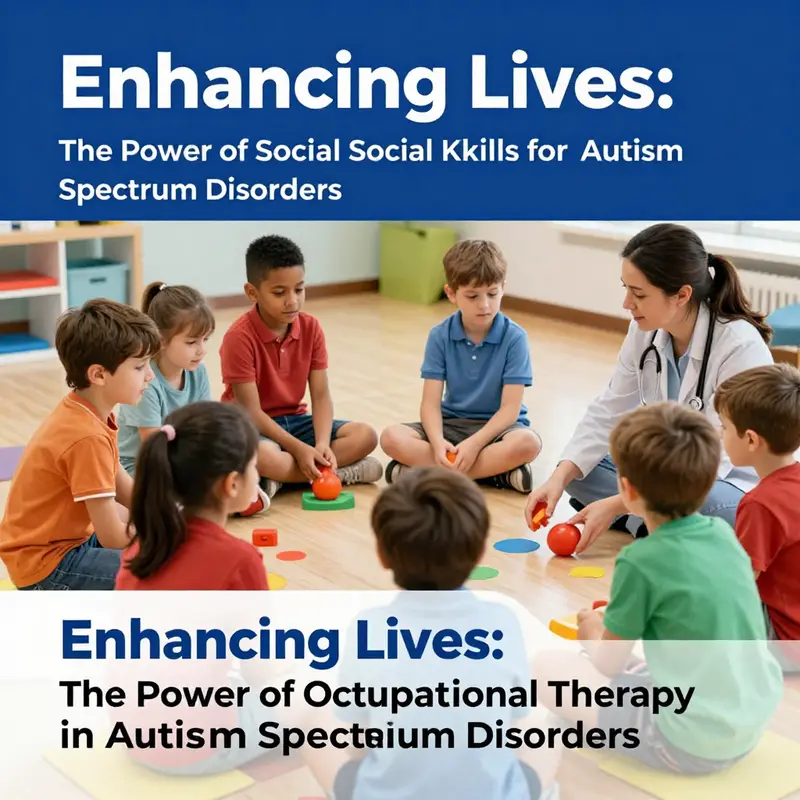
Occupational therapy sits at a unique intersection in autism care. It is not solely about improving dexterity or daily routines in a vacuum; it is about translating foundational abilities into social competence and meaningful participation. When therapists attend to how a child perceives sensory input, how they regulate emotion, and how they coordinate movement, they create a platform from which social interaction can emerge with greater ease. In this sense, occupational therapy becomes a bridge between the child’s inner world and the social worlds they navigate—home, school, playground, and community. The chapter that follows maps this bridge with care, drawing on a robust body of evidence and the lived realities of families and classrooms alike. It emphasizes how targeted OT interventions can transform everyday moments—snack time, circle time, waiting turns, and peer play—into opportunities for social reciprocity, shared attention, and budding friendship. Central to this work is the recognition that social skills do not arise in isolation. They develop through repeated engagement with purposeful activities that align with the child’s developmental timeline, sensory profile, and emotional regulation needs. OT’s strength lies in its holistic frame: therapists attend to sensory processing, motor planning, problem solving, and the capacity to persevere through frustration, all within the context of social exchanges. A developmental approach guarantees that interventions are not momentary gains but investments in long-term participation. Rather than teaching social behaviors as discrete responses, occupational therapists integrate social learning into meaningful tasks that reflect the child’s everyday life. The aim is not merely to perform a social gesture correctly but to inhabit social moments with flexibility, confidence, and a sense of ownership over one’s actions. A cornerstone of OT’s contribution to social development is the deliberate integration of therapeutic goals into daily activities and environments. When goals are embedded in naturally occurring routines—dressing for school, preparing a snack, or joining a game at recess—the child experiences social skill acquisition as functional and relevant. This integration mirrors how activities unfold in real life, where social success depends on the child’s ability to coordinate attention, regulate arousal, and adapt to changing social cues. A therapy plan that respects the tempo of the child’s day—pauses, transitions, and opportunities for practice—allows social learning to happen across contexts rather than being confined to a clinic or a single type of task. In this sense, OT serves as a facilitator of consistency and coherence in social development, ensuring that new skills are not a series of isolated markers but a repertoire that travels with the child. In practice, the social growth enabled by OT is not a solitary achievement for the child. It transforms the social ecology surrounding them. With improved social participation, the child may access a broader range of activities, including cooperative games, shared hobbies, and school-based group projects. Parents report that their child’s willingness to participate in family routines increases, as does the child’s capacity to regulate emotion during transitions and disagreements. Teachers note more sustained attention during group activities, better compliance with classroom norms, and a reduction in disruptive behaviors that stem from social frustration. The collaborative model—integrating care across home, school, and clinical settings—helps ensure that gains are reinforced and that social skills become less about performing to meet an external standard and more about authentic, ongoing engagement with others. The practical implications extend to diverse settings. In school environments, occupational therapists can support social participation by aligning sensory-friendly accommodations with group dynamics. They might advocate for quiet zones during transitions, visual cues that guide turn-taking, and adaptive tools that enable all students to participate in shared tasks. Across these contexts, the therapist’s attention to the quality of interaction—how a child initiates, maintains, and concludes social exchanges—remains central. The emphasis is not on a rigid social script but on the child’s development of social fluency: read social cues, adjust responses, and stay engaged in the moment with peers who have varied interests and communication styles. A note of humility accompanies this work. The field recognizes that social outcomes are influenced by a tapestry of factors beyond the clinic. Family stress, access to resources, school policies, and community attitudes all shape the child’s opportunities for social participation. OT practitioners respond with adaptability—shifting goals, adjusting activities to fit changing needs, and partnering with families to cultivate environments that support social learning. They also remain vigilant about cultural relevance and inclusivity, ensuring that interventions respect the child’s and family’s values, language preferences, and daily realities. The ethical dimension of OT—centering the child’s dignity, autonomy, and right to participate—threads through every decision about activity choice, level of support, and the pace of progression. If there is a through line to carry from this chapter, it is this: social skills are best nurtured when OT reframes social development as an integral part of everyday life. The child does not learn to “perform” social behavior in a clinic and then leave it at the door. Rather, the child is supported to bring social engagement into each moment that matters—the moment of choosing a snack, the moment of asking for help, the moment of inviting a peer to build or play. When therapy builds on the child’s interests, reduces barriers to participation, and coordinates supports across home and school, social growth becomes a natural outcome of living a life that feels accessible and meaningful. In this way, OT does more than teach social skills; it enhances a child’s sense of agency and belonging, which, in turn, fosters resilience, persistence, and continued curiosity about the social world. Ultimately, the evidence base supports a practice that is structured yet flexible, play-centered yet purposeful, and contextually grounded in the child’s real life. A well-designed OT program for social skills will weave together sensory modulation, emotional regulation, social cognition, and practical social behaviors into a cohesive tapestry. It will honor the child’s strengths, address their challenges with compassion, and engage families and educators as co-architects of social development. The result is not a single skill acquired in isolation but a durable pattern of participation—one that opens doors to friendships, to school engagement, and to a broader sense of belonging within the communities that shape a child’s life. For readers seeking additional depth on the broader benefits and applications of occupational therapy in childhood, a comprehensive peer-reviewed synthesis is available in Frontiers in Pediatrics (2024). This review reinforces the value of tailoring OT to individual profiles and emphasizes outcomes that reflect real-world functioning and quality of life. As the field continues to advance, practitioners will increasingly rely on play-based, developmentally informed approaches that integrate sensory processing, regulation, and social learning within meaningful daily activities. The chapter’s narrative thus reflects not only current knowledge but a forward-looking stance: that social skills, nurtured through thoughtful, context-rich OT interventions, can become a lasting source of empowerment for children with autism spectrum disorders and their families. In sum, occupational therapy offers a robust, adaptable framework for cultivating social competence in ASD. By uniting a developmental lens, a focus on daily life, and a collaborative ethos with families and educators, OT helps children move from responsive participation to proactive social engagement. The child who once withdrew from peer groups or struggled to regulate arousal can, with supportive guidance, begin to share interests, negotiate turns, and form meaningful connections. This transformation—underpinned by evidence and everyday practice—resonates with the core purpose of occupational therapy: to enable individuals to participate fully in the activities that give life meaning. Internal resource note: for practitioners and families seeking a broader understanding of how occupational therapy supports mental health in daily life, see the article linked here: how occupational therapy supports mental health. External resource: Play-based occupational therapy intervention on social skills in children with autism spectrum disorder and attention deficit hyperactivity disorder: A case series. https://doi.org/10.4103/ijoth.ijoth519
Final thoughts
Occupational therapy is instrumental in addressing the unique challenges faced by individuals with Autism Spectrum Disorders. With a tailored approach that focuses on improving daily activities, evidence-based interventions, and social skills, OT practitioners foster greater independence and quality of life in their clients. This multifaceted support not only empowers individuals to participate more fully in their homes, schools, and communities but also promotes their overall well-being and self-confidence. As we continue to advocate for and invest in these therapeutic practices, we can pave the way for a more inclusive and supportive environment for individuals with ASD.