

Understanding where coffee beans originated provides essential context for today’s coffee industry, particularly for business owners looking to engage with this rich market. The roots of coffee trace back to Ethiopia, specifically the Kaffa region, where legend intertwines with agricultural practices. This article will guide you through the fascinating journey of coffee, beginning with its Ethiopian roots, delving into the legend of Kaldi, exploring Ethiopia’s historic cultivation of coffee, and concluding with its profound global impact. As we navigate these chapters, you will gain insights that could inform your business strategies in the coffee sector.
Kaffa’s Quiet Birth: Tracing the Ethiopian Roots of Coffee from Highland Wilds to a Global Ritual
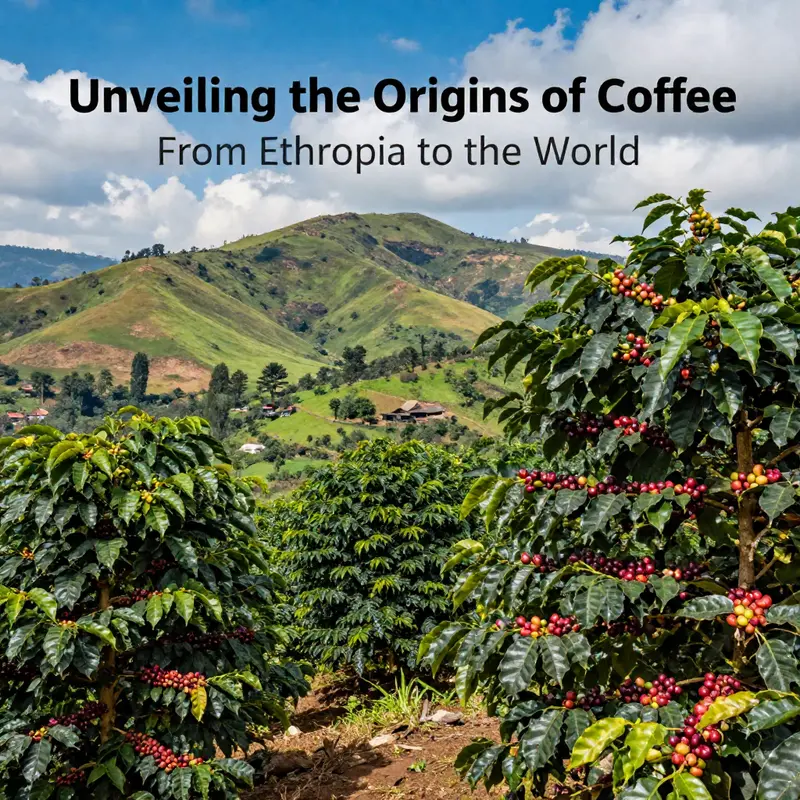
The question of where coffee beans originated invites a journey that threads geography, ecology, and culture into a single, living plant story. The most widely accepted cradle of this plant is the southwestern highlands of Ethiopia, in a place modern maps call Kaffa. Here, wild Coffea arabica trees rose from forest margins, adapted to mist, shade, and volcanic soil. The Kaffa region is a climate and ecosystem that nurtured the genetic reservoir of Arabica for centuries. The plant found a niche that allowed it to evolve with the land, traits that would later become the root of a global industry and a deeply human practice.
The Kaldi legend—of goats dancing after eating certain berries—has become a familiar doorway into coffee’s mythic landscape. Yet scholarship often treats Kaldi as a folkloric beacon pointing to a longer, centuries-old reality: humans discovered the stimulant properties of berries, began roasting and brewing, and built social rituals around the drink. In Ethiopia, early uses were pragmatic and communal: berries were crushed, fermented, and boiled into beverages that sustained gatherings and hospitality. The ceremony-like aspects of coffee culture began to crystallize long before European cafes, shaping how communities share stories and attention around a cup.
From these highlands, coffee moved with traders to the Arabian Peninsula and beyond. Yemen’s ports became gateways through which beans and brewed beverages crossed the Red Sea, fueling a cosmopolitan practice that knit together ritual, commerce, and conversation. The global trade that followed linked farm to roaster to cup in a rapid, interconnected arc. Yet even as coffee traveled, Ethiopian elders, farmers, and cooperatives kept a living record of diversity: heirloom landraces preserved by families and communities, adapted to shade, altitude, and microclimates, producing flavors described as citrusy, floral, and tea-like. Regions such as Yirgacheffe and Sidamo became signals of terroir rather than fixed recipes, inviting cuppers to trace land in aroma and acidity.
Today, Ethiopia remains a repository of varietal diversity and a living example of origin as stewardship. Cooperatives like the Oromia Coffee Farmers Cooperative Union (OCFCU) and the Sidama Coffee Farmers Cooperative Union (SCFCU) link smallholders to markets while preserving transparency and community resilience. The origin is not a single birthplace but a dynamic system—land, people, and practices that continue to shape how coffee is grown, traded, and enjoyed around the world. Flavor now travels with a geography: bright citrus and jasmine from highland microclimates, wine-like fruit from certain zones, and many shades in between. The story of origin is thus a spectrum of beginnings that begin in Kaffa and extend across continents, carried in cups every morning by people who value place as much as pleasure.
This understanding of origin invites us to consider ethics, biodiversity, and cultural heritage as integral to the cup. It reminds us that origin is a map and a memory, a living relationship among farmers, forests, and markets that sustains both communities and flavor. The Kaffa seed, the cooperative network, and the daily ritual of brewing together remain at the heart of coffee’s global journey.
From Kaffa to the World: Kaldi’s Legend and the Dawn of Coffee Beans
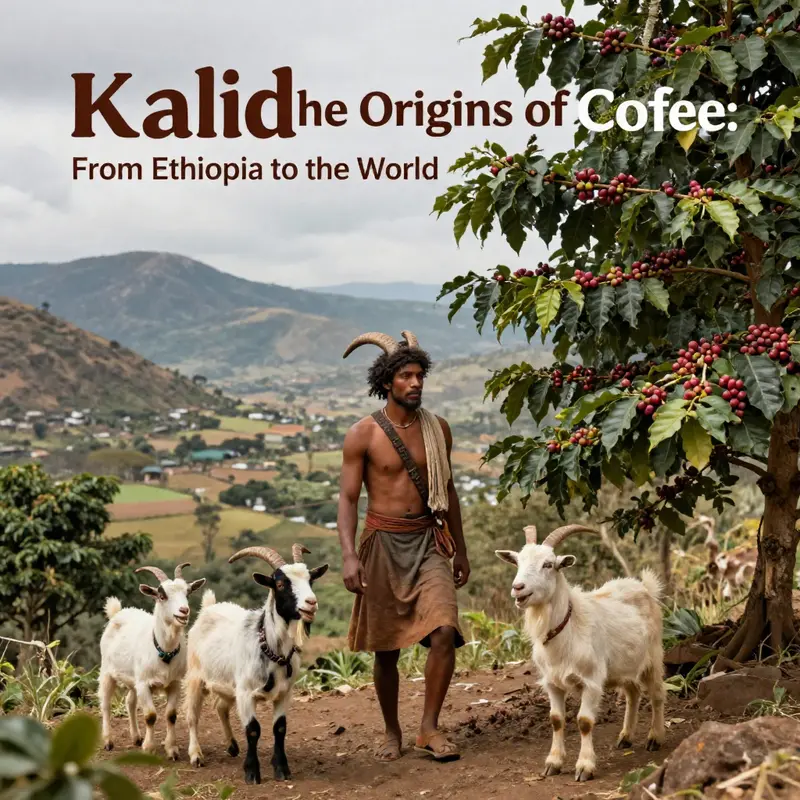
Coffee’s origin is a tapestry rather than a single moment. In Kaffa’s highlands, a goat herder named Kaldi observed his animals dancing after nibbling bright red berries. He tasted the berries and felt a sharpened awareness that carried through his day. Legends vary in detail, but the core image remains: a wild shrub, an attentive observer, and a practical experiment that sparked a global journey. From those hills the plant traveled along trade routes to the Arabian Peninsula, where roasting and brewing added aroma and ritual. In Yemen and beyond, coffee became a social catalyst, a drink that framed conversations and kept councils and markets alert. As it crossed oceans into Europe, coffee houses emerged as centers of debate, trade, and culture. The story underscores how landscapes shape crops and how crops in turn shape cultures. The Kaldi tale endures not as a fixed fact but as a beacon of curiosity, generosity, and the human habit of turning observation into shared ritual.
From Kaffa’s Forest to Global Rituals: Tracing the Place Where Coffee Beans Originated
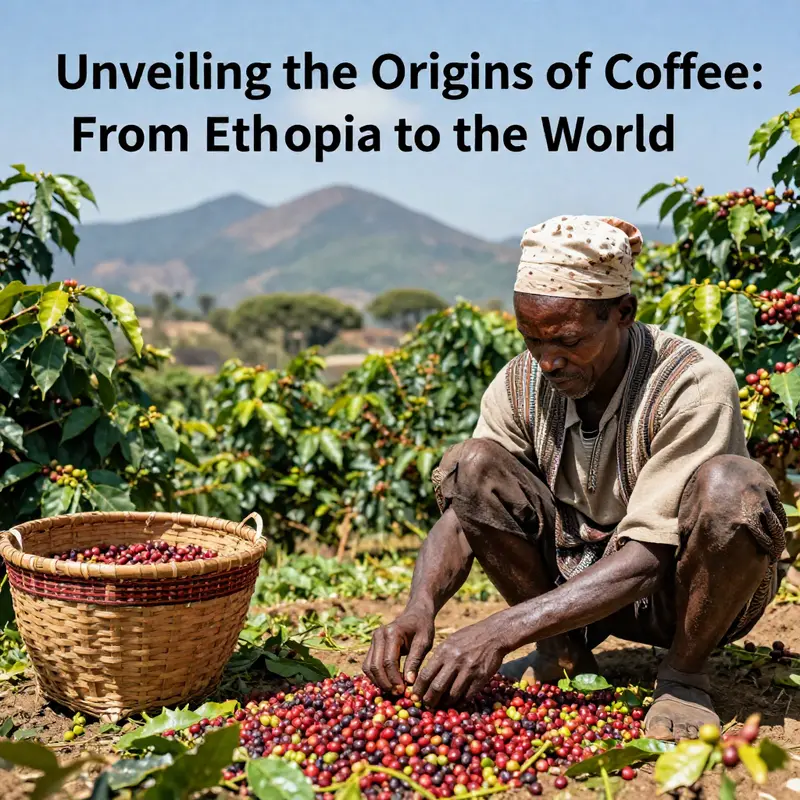
To understand where coffee beans originated is to follow a traceable thread through landscapes, cultures, and economies that begins in the rugged, green highlands of southwestern Ethiopia and reaches into the quiet rituals of morning routines and the vibrant bustle of markets around the world. In academic and ethnobotanical terms, the earliest home of Coffea arabica is widely located in the forested corners of what was once known as Kaffa, a region whose name itself barriers the line between place and plant. There, in the dense understory of the Ethiopian highlands, wild coffee bushes are thought to have grown in a harmony of shade, moisture, and soil that allowed their flavors to mature slowly, a relationship between plant and terroir that modern science grapples to quantify yet deeply recognizes. The geography matters not merely as a backdrop but as a living archive, preserving genetic diversity that later generations would struggle to reproduce in monoculture plantations elsewhere. Within this landscape, the plants thrived in a mosaic of microclimates, from cool mountain slopes to the humid pockets where rivers carve through valleys, and their beans, left to their own rhythms, carried the possibility of a drink that could unify people across social divides. The origin story that travelers and scholars tell—though often enshrined in legend—is anchored by a concrete sense of place: Kaffa, and the broader Limmu Awraja landscape, where the forest and the farm intersect at a moment of discovery that would reverberate far beyond the region’s boundaries. The plant’s botanical identity—Coffea arabica—suggests not merely a geographical origin but a lineage that would come to symbolize a particular quality in coffee: a nuanced acidity, a balance between sweetness and fruit, and a depth that invites slow sipping and careful appraisal rather than quick consumption. In Ethiopia’s southwestern frontier, traditional farming and harvesting practices have historically preserved a rich mosaic of flavors. Much of the country’s coffee still grows under the shade of taller trees, a system that sustains soil health and biodiversity while yielding beans that express the character of their soil, altitude, and microclimates. This preference for forest-grown and semi-wild cultivation is not simply agricultural camouflage; it is a culturally embedded approach that connects farmers to a living ecosystem. The continuity of these practices speaks to a broader Ethiopian ethos where land and community are interwoven; the harvest is a shared event, and coffee is more than a commodity—it is a form of social life that structures daily rituals and seasonal celebrations alike. The first threads of global curiosity about coffee begin, however, not in the fields alone but in the stories that accompany them. The tale of Kaldi, the shepherd who noticed his goats leaping with unusual energy after nibbling berries from a certain bush, has become a paradigmatic legend—a human-facing parable about observation, curiosity, and a practical turn toward experimentation. Even if the details of Kaldi’s encounter are more folklore than fact, the narrative persists because it captures a moment when a community recognized something transformative in the plant’s fruit. It is a reminder that the discovery of coffee was not a single, isolated event but a cultural development braided with daily life, ritual, and the keen senses of ordinary people who learned to extract warmth and wakefulness from the plant’s round, red berries. When monks, travelers, and traders began to experiment with roasting and brewing, the beans entered a new social sphere. The transformation from berry in the forest to a beverage in a cloister or a communal gathering marks a crossing—from a wild plant in a remote landscape to a shared resource that could sustain long hours of contemplation, study, and conversation. The process of roasting, grinding, and brewing, evolving with each community’s needs and tastes, gradually exported coffee beyond its Ethiopian cradle. The move from East Africa to the Arabian Peninsula in the centuries after the initial discovery was not a linear path but a network of exchanges, driven by trade routes, spiritual practices, and the desire to sustain gatherings that could stretch into the night. In Yemen, coffee found a receptive audience among Sufi communities seeking to maintain alertness during long periods of prayer and meditation, a spiritual dimension that would color the drink’s early reputation in the Arab world. From the tea houses and caravansaries of the Red Sea coast to the great ports along the Indian Ocean, coffee traveled as a shared good, its appeal amplified by the social rituals that accompanied its preparation and service. The spread into Europe followed a path of curiosity and colonial encounter, where the drink was encountered by scholars, merchants, and travelers who translated taste into markets and markets into cultures. Yet even as coffee traveled outward, Ethiopia maintained an enduring hold on the plant’s cultural heart and its ecological integrity. In contemporary Ethiopia, a substantial portion of the country’s coffee remains wild or semi-wild, grown in forests and home gardens, well outside the schemes of synthetic fertilizers and large-scale pesticide regimes. The figure often cited—more than sixty percent of the country’s coffee produced in natural forest ecosystems—speaks to a remarkable continuity between traditional practice and environmental stewardship. This is not simply a matter of maintaining biodiversity for biodiversity’s sake, though that is part of the story, but of preserving a way of farming that sustains farm families across generations while producing beans that carry the region’s distinctive flavor profiles. When one tastes coffee from the Ethiopian highlands, especially from areas associated with the historic Kaffa zone or the broader southwestern belt like the districts around Yirgacheffe and Sidamo, the sensory memory often aligns with a landscape memory: bright citrus, a wine-like acidity, and a floral complexity that hints at the plant’s forest origins. The flavor profile is not a uniform stamp but a tapestry woven from altitude, shade, soil minerals, and microclimate. This diversity has long attracted connoisseurs and researchers alike, who see in Ethiopian beans a living archive of genetic variety and terroir that later coffee economies have sometimes bypassed in favor of standardized production. The story of origin, then, is more than a curiosity about how a plant traveled from one region to another. It is a reflection on how people have interacted with a plant over centuries, shaping its cultivation and consumption into a form of cultural currency that brings people together across languages, calendars, and continents. The scholarly voice has also shifted to foreground the historical development of coffee in Ethiopia as a field of study that recognizes not only the plant’s biological origins but the socio-economic mechanism by which coffee spread and transformed societies. A compelling framework for understanding this development is the historical account that centers on Limmu Awraja and its surrounding environs, a region whose landscapes were once more forest than farm, and whose communities have nurtured a form of agroecology built on observation, patience, and respect for the land’s rhythms. This framework, which covers the period from 1900 to 1990 and includes maps, charts, and cross-references, helps scholars see how the origin story becomes a broader story of production, marketing, and adaptation. In practice, this means tracing how coffee’s local roots intersected with national and international markets; how communities navigated droughts, price fluctuations, and changing political landscapes; and how the farmers who steward these forests developed knowledge that allowed them to maintain quality even as demand grew. The ecological dimension—forests as both habitat and economy—remains central to the Ethiopian narrative. In a country where coffee is not merely a crop but a cultural pillar, the ecological relationships between shade, soil, water, and micro-fauna become part of the story of origin. This perspective reinforces the idea that the coffee plant’s success is inseparable from the ecosystems that shelter it and the people who cultivate it. It also points to a broader question about sustainability in African coffee production: can traditional, forest-based practices continue to thrive as global demand intensifies and pressures on land and water intensify? The answer, as many scholars and farmers suggest, lies in balancing preservation with adaptation, in recognizing that long-term viability depends on maintaining biodiversity, soil health, and local knowledge. The literature on coffee’s origin also invites a meditation on language and naming—the way a term as simple as “coffee” carries echoes of Kaffa and qahwa, the Arabic word for a form of drink that was once a ritual and a revelation in coffeehouses, markets, and monasteries. The cross-cultural journey of the word mirrors the plant’s journey, moving through trade, translation, and adaptation. In this sense, naming is not merely semantic but a record of encounter, exchange, and translation across cultures and continents. The enduring question remains, where did coffee beans originate? The answer resonates as a layered narrative that begins with a forest and a region, with a plant that learned to thrive in shade and a people who learned to live with it. It continues with a legend of shepherds and monks, a spread to distant shores, and a farming ethos in which forest stewardship and agroecology are not afterthoughts but the foundation of quality and resilience. It ends, for the moment, with a global commodity that still carries the memory of its homeland: a cup that carries the taste of Ethiopia’s highlands, the aroma of Yirgacheffe and Sidamo, and a reminder that even as coffee travels the world, its roots stay grounded in the forests of Kaffa. For those who want to explore the origin narrative more deeply, there is also a scholarly framework that situates origin, spread, production, marketing, and agroecology in a historical arc from 1900 to 1990, with maps and cross-references that illuminate how place and plant continue to shape one of the planet’s most cherished beverages. In the end, the origin is not a fixed point but a living story—one that continues to evolve as farmers, researchers, and drinkers alike honor the Ethiopian landscapes that first gave humanity a drink that could awaken, sustain, and connect us all. External reference and further reading are available for those who wish to dive deeper into this history: https://www.britannica.com/topic/coffee/History-of-coffee
Kaffa’s Quiet Spark: How Ethiopian Origins Become a Global Coffee Story
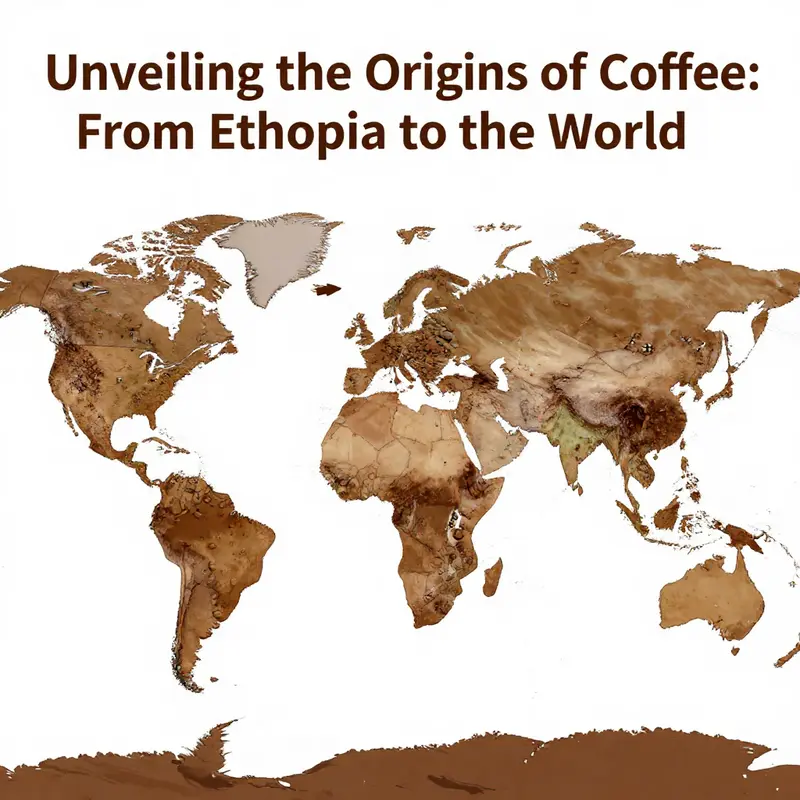
The question where did coffee beans originate invites a journey that begins in a landscape of shaded forests and high plateaus, where the air holds a faint sweetness and the hills carry the memory of many harvests. In southwestern Ethiopia, the region historically known as Kaffa sits at the heart of this story, not merely as a location on a map but as a living place where a wild evergreen shrub found its foothold among the trees and the weathered granite of the land. Here, in the understory and the mist, Coffea arabica likely began its long relationship with humans. The plant thrives where altitude, moisture, and soil weave together to create conditions that coax sugars and acids into complex, delicate flavors. It is tempting to talk of origin as a single point in time, yet the true origin of coffee is a layered inheritance: it emerges from a place that saw the plant thrive, from a people who learned to recognize its gifts, and from a history that carried those gifts beyond the immediate hillside into the broader world of commerce, ritual, and culture.
The earliest references to coffee in the popular imagination are inseparable from a legend, a story from the Ethiopian highlands about a goat herder named Kaldi who noticed that his flock grew unusually lively after grazing on certain red berries. The tale, perhaps myth, remains a powerful beacon for how we imagine discovery itself: curiosity sparked by observation, experimentation that followed, and a ripple effect that opened up social and spiritual possibilities. Kaldi tasted the fruit, felt a change in his own energy, and the belief spread that a plant could influence mood, sociability, and even communal gatherings. The precise chain of events that led from wild berries to cultivated beans is difficult to pin down in a single moment, but the thread is clear enough: a cascade of human curiosity, plant chemistry, and a landscape receptive to cultivation.
From Kaffa, the plant found its way into the hands of traders and travelers who traversed foothill paths and river routes, gradually moving toward the Arabian Peninsula. The movement was less a grand voyage than a series of intimate exchanges: seeds carried, seedlings nurtured, and methods of processing experimented with along caravan routes and port towns. The word used in Arabic to describe the beverage qahwa, and the way it traveled through markets and households, signals a moment when a plant became a social practice. The transition from a forest plant to a cultural commodity required a fusion of horticultural knowledge, culinary curiosity, and commercial networks. As the drink crossed cultural thresholds, it transformed from a local healing plant into a daily ritual, something shared in coffeehouses, homes, and mosques where people gathered to converse, debate, and plan. The naming of the plant and its drink reflects a broader cultural diffusion that will continue to shape the bean’s journey for centuries.
In the arc that followed, the spread from the Ethiopian highlands to the Arabian world altered the plant’s identity in important ways. The cultivation of coffee alongside the desert trade routes created a new ecosystem for the bean: a trellis of grocers, merchants, and ritual servers who refined the method of preparation, the timing of serving, and the social etiquette surrounding consumption. The beverage as it traveled north and west did not merely move as a commodity; it was transformed by the senses it touched. The roast was lighter at first, the grind coarser in some places, and the water’s temperature and mineral content varied with the availability of resources. In every place the drink settled, cooks, baristas, and hosts learned to coax distinctive flavors from the same plant. The result was a diverse palate of experiences—flowering notes that hinted at jasmine, citrus perfumed tangs, or berry sweetness—earned through climate, altitude, and processing style.
Today, the Ethiopian landscape of coffee remains rich in variety. Ethiopia is celebrated not only for its volume of production but for the remarkable diversity of its heirloom varieties. Names that have become shorthand within the specialty world—Yirgacheffe, Sidamo, Guji—signal more than geography. They encode a set of environmental conditions, microclimates, and harvest practices that yield nuanced flavor profiles. The Yirgacheffe profile, for instance, often carries floral aromas and citrus brightness, while Sidamo can present a fruit-forward sweetness and a refined acidity. Guji, a relatively newer geographic designation, frequently offers a constellation of berry and wine-like notes. These regional signatures underscore a larger truth about origin: that the flavor of coffee is inseparable from place. The beans carry quiet witness to the altitude, the seasonal rhythms, the soil, and the shade of the forests that cradle the plants. They also carry a legacy of artisanal farming, where smallholder families tend trees that may have watched their own parents plant the first cuttings, sometimes for generations.
As the conversation around origin has grown more sophisticated, consumers increasingly seek traceability and authenticity. The shift toward single-origin and origin-specific lots is not merely about marketing. It speaks to a broader desire to understand where the coffee came from, who grew it, and how much of the story is preserved in the cup. For farmers in Ethiopia, this emphasis on origin translates into a different kind of value—one measured not only in price but in the ability to share knowledge, to participate in a global conversation about quality, and to stand as stewards of biodiversity in a changing climate. The country’s diverse microclimates, along with a long tradition of careful post-harvest processing, have become a distinctive magnet for roasters and consumers who prize complexity and provenance. The result is a market that recognizes that origin is not a mere tag but a narrative of care, skill, and ecological stewardship.
The modern market for Ethiopian coffee reflects broader dynamics in the global coffee system. Coffee cultivation in Ethiopia is deeply rooted in family farming, with many smallholders tending a few trees, often alongside other crops, and weaving coffee into the fabric of rural life. Yet as demand for high-quality, sustainable, and traceable coffee has grown, so have the pressures and opportunities. The very economics of coffee—susceptible to weather fluctuations, shifting demand for specialty varieties, and the costs associated with maintaining quality—pose both risks and chances for Ethiopian producers. When prices rise for premium lots, farmers can gain improved revenue and invest in their farm’s longevity, but they also confront the realities of climate variability, rising input costs, and the need to maintain careful processing standards that affect flavor and consistency.
Sustainability in Ethiopian coffee farming is now a central axis around which both policy and practice revolve. Producers are increasingly adopting climate-smart farming techniques that enhance soil health, conserve water, and protect biodiversity. They are experimenting with post-harvest processing technologies, like improved drying yards and better fermentation control, to stabilize quality across seasons. These improvements contribute not only to flavor but to economic resilience, because more consistent quality can command steadier prices and reduce the risk of price dips tied to variable harvests. Transparent traceability systems are evolving as well, enabling buyers to trace a lot back to a particular set of micro-lots, farms, or cooperatives. This transparency builds trust with international buyers who are seeking ethically sourced goods and helps ensure that benefits circulate within the communities that nurture the beans from tree to cup.
For those who purchase coffee at scale, the Ethiopian supply chain presents a case study in balancing risk with opportunity. The country’s geography—with river valleys, high plateaus, and a patchwork of microclimates—creates a mosaic of production conditions. It also introduces logistical complexities. Export routes, port handling, and shipping costs can influence the availability and price of certain lots. Yet with a discerning approach, buyers can build relationships that go beyond individual purchases. Direct-trade arrangements, long-term contracts, and collaboration with cooperatives can secure access to high-value lots while supporting sustainable development on the ground. The logic is simple but powerful: when buyers commit to reliable, long-term relationships with Ethiopian farmers, they contribute to the stability of the supply chain and help communities invest in the future of their land and their families. The ripple effects extend beyond the cup; they touch education, health, and the local economy by providing predictable income streams and spaces for farmers to reinvest in soil health and crop diversification.
The role of Ethiopia in the global coffee map thus extends beyond the mechanics of production. It is about identity, and how an origin story shapes expectations around quality and authenticity. The insistence on purity of origin, the pride in heirloom varietals, and the insistence on sustainable practices are not relics of a bygone era but living commitments that influence how coffee is cultivated, processed, and sold. The global palate is becoming more adventurous, seeking the delicate brightness of washed Ethiopian coffees or the more concentrated sweetness produced by natural or honey processing. Each method, in its own way, reveals the relationship between farmer, processor, and roaster, and between consumer and the land that grows the beans. That relationship keeps the origin conversation dynamic, evolving as farmers adopt new techniques, as climate pressures push for adaptation, and as the global community becomes more attentive to how coffee choices affect livelihoods and ecosystems.
This is where the concept of origin intersects with the broader sense of global responsibility. Ethiopian producers, with their long-standing traditions of stewardship and a deep encyclopedic knowledge of local microclimates, are increasingly seen as essential partners in building a more resilient coffee sector. The push toward sustainability and innovation recognizes that origin is not static. It is an evolving negotiation among environmental stewardship, cultural heritage, and market demand. In this negotiation, the notion of origin becomes a guarantee of quality and a promise of ethical practice. Consumers who care about the story behind a cup are not merely tasting flavor; they are engaging with a chain of care that begins in a Kaffa hillside grove and extends to the cupping table in a roastery halfway around the world.
To speak of origin is to acknowledge the human labor that makes coffee possible. It is the farmer who chooses the best pruning practices, the family that guards genetic diversity in heirloom varieties, and the cooperative that coordinates harvest timing and processing choices. It is the baker who roasts a batch to extract a particular profile, the barista who calibrates grind size and water temperature to reveal the coffee’s true character, and the consumer who pays attention to aroma and aftertaste. The origin narrative links farmers and consumers in a chain of trust—an ecosystem built on knowledge, patience, and shared goals. In that sense, the Kaffa spark that began as a legend becomes a living force in a global industry, a reminder that even as coffee travels the world and acquires new flavors, its deepest roots remain anchored in the Ethiopian landscape where the plant first thrived, adapted, and offered its gentle invitation to human curiosity.
If we look ahead, the future of Ethiopian coffee is inseparable from its origin. Climate resilience will hinge on safeguarding genetic diversity while expanding sustainable farming techniques. Investments in education, infrastructure, and cooperative governance can amplify the voice of smallholders within the international market. The single-origin movement, with its emphasis on traceable lots and ethical sourcing, can empower communities to steward land while ensuring fair compensation for labor and expertise. As the world continues to crave the nuanced profiles born from Yirgacheffe’s floral brightness or Sidamo’s fruit-forward sweetness, the origin story will remain a living guide—teaching us to value not only what is in the cup but how the cup came to be, and why the land itself deserves care long after the harvest is in the bag.
In sum, the origin of coffee beans is not a single pin on a map but a holistic narrative of ecology, culture, and human commerce. Kaffa and the Ethiopian highlands give us the seed of a global phenomenon, a plant that moved through deserts and seas to become a shared daily ritual. The journey illuminates how origin shapes flavor, how farmers sustain biodiversity while facing climate challenges, and how global markets respond to a demand for genuineness and responsibility. The coffee bean thus remains a witness to place and time—a small, resilient fruit whose story travels far, carrying the heritage of a land that first recognized its extraordinary capacity to energize conversations, communities, and the world beyond the cup.
External resource for further reading on Ethiopian coffee origins and global impact: https://www.coffeeinstitute.org/ethiopian-coffee-origins-and-global-impact
Final thoughts
The journey of coffee from its Ethiopian roots to its global standing today is not just a testament to the plant itself, but also to the cultural narratives woven into its history. Understanding this rich background allows business owners to appreciate the value of quality sourcing and the stories behind the beans. As you venture into the coffee industry, remembering the powerful legacy of Ethiopian coffee can enhance your offerings and resonate with consumers who are increasingly drawn to authenticity and origin in their coffee choices.