
Coffee, a beloved beverage enjoyed globally, is intricately tied to the regions in which its beans are cultivated. Known collectively as the ‘Coffee Belt,’ these areas near the equator — encompassing parts of Central and South America, Africa, and Asia — offer the ideal climate for coffee plants to thrive. Business owners in the coffee industry must understand these regions to appreciate the unique flavors, quality, and sustainability practices that define their product offerings. In the chapters that follow, we will delve into Latin America’s significant role in coffee production, the distinctive contributions of African countries, the thriving coffee industries in Asia and the Pacific, and the emerging coffee regions, particularly in China, providing a comprehensive overview of where coffee beans are grown and what it means for your business.
Tracing the Coffee Belt: A Global Map of Flavor
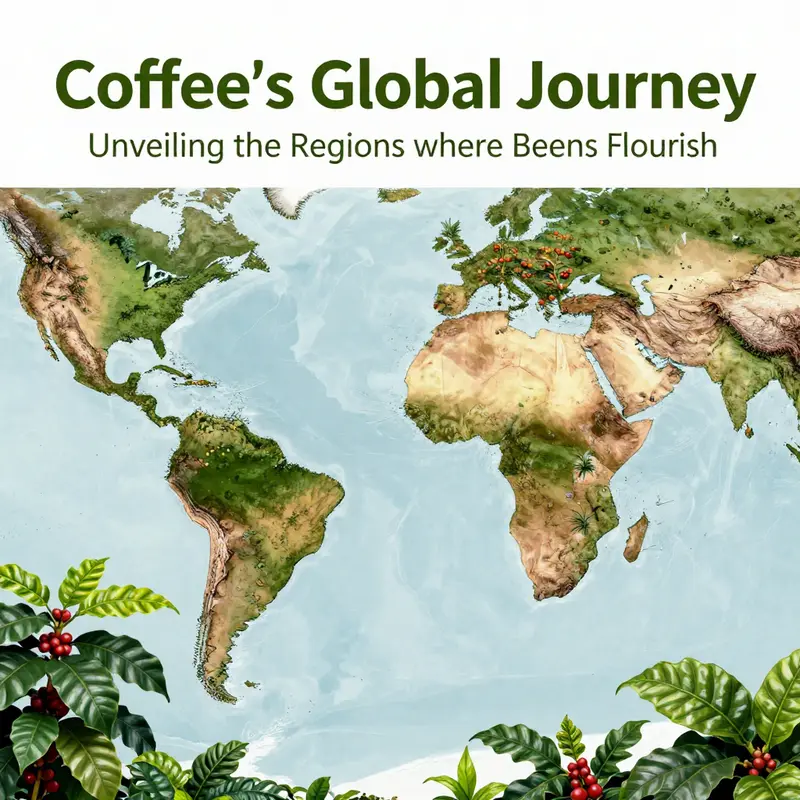
The journey of coffee begins long before a cup touches the lips. It starts in the Coffee Belt, a band of tropical latitudes circling the equator where altitude, climate, and soil converge to shape flavor. Spanning regions from East Africa and the Arabian Peninsula through Southeast Asia to Latin America, this belt is defined by steady warmth, distinct wet and dry seasons, and diverse terroirs. Higher elevations slow bean maturation, allowing complex sugars to develop, and preserving bright acidity, while lower elevations can deepen body and sweetness. Mineral-rich volcanic soils, red clays, and loamy textures contribute character, but it is the interplay of environment and farming practices—shade management, irrigation, varietal selection, and processing—that truly writes the cup’s profile.
In each region, microclimates and farming traditions produce a spectrum of flavors: Kenyan coffees with vivid berry-like brightness; Brazilian beans with nutty sweetness and chocolate notes; Indonesian lots offering depth, earthiness, and spice; Yunnan Arabica delivering delicate fruit and cocoa; and Pacific Island coffees carrying maritime influence. The belt also reminds us that climate change, drought, and shifting rainfall patterns test resilience, prompting farmers to adapt with diversified crops, water-saving processing, and cooperative models that sustain livelihoods while protecting terroir.
For readers imagining these landscapes, picture hillside farms where trees provide shade, cherries ripen to a ruby glow, and the harvest unfolds through pulping, washing, or sun-drying. Each step and each place leave traces in the cup, turning a global belt into a constellation of flavors accessible one sip at a time.
Where Coffee Beans Grow: Latin America’s Pivotal Role in Arabica Flavor and Global Markets
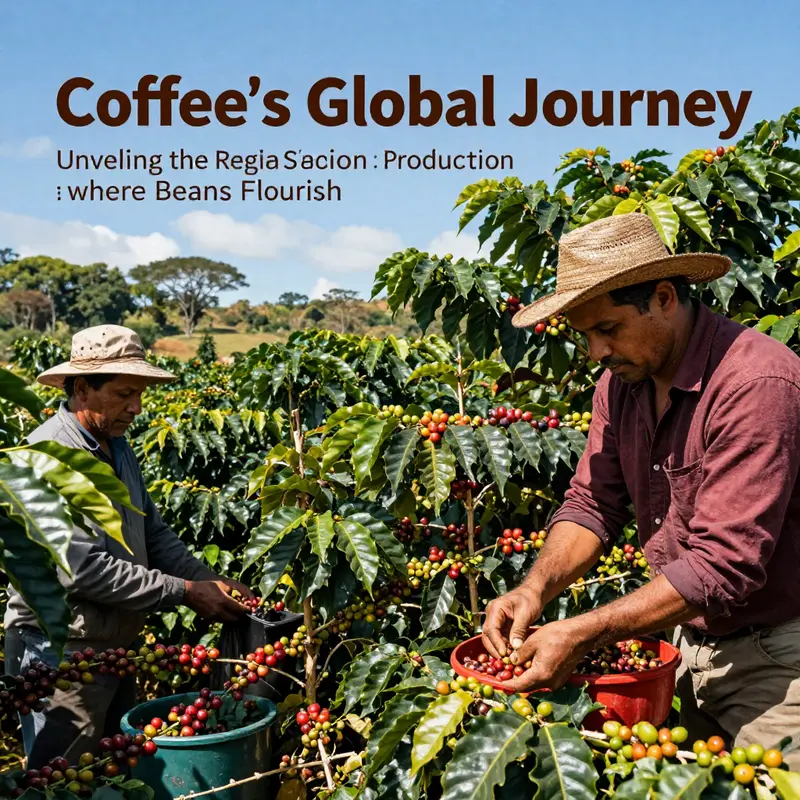
From the moment a coffee cherry ripens on a sun-warmed hillside, the journey toward your cup begins in a place that has long shaped the drink’s character. The equatorial belt, known as the Coffee Belt, cradles vast highlands where climate, altitude, and soil synchronize to coax beans from shrubs into aromatic treasures. Among these landscapes, Latin America stands as the backbone of the global coffee trade, contributing roughly 60 percent of the world’s supply and, more dominantly, about 80 percent of the Arabica market. This is no accident; it reflects centuries of adaptation to tropical conditions that favor slower maturation and complex flavors.
Brazil, the region’s production giant, stretches across diverse terrains. The climate allows abundant rainfall and long dry seasons, while elevations above 900 meters cool nights that slow bean development and intensify flavor. The result is beans with chocolatey and nutty profiles, a dependable sweetness, and a spectrum of body that roasters need for blends as well as single origin cups. Production on such a vast scale also shapes industry norms—from farm to mill to ship—making Brazil a reference point for agricultural practices, processing choices, and logistics that ripple through the world market.
Colombia sits in a parallel but distinct lane. Its coffee grows on steep Andean slopes that catch steady sunlight while staying cool enough to preserve brightness. Altitude and shade combine to yield clean cups with balanced acidity and notes of citrus, cocoa, and almond. Colombia has built a robust Arabica economy with coordinated washing and drying routines that emphasize consistency and sweetness. The country also relies on cooperative networks that help smallholders invest in improved cupping quality, pest control, and post harvest infrastructure. Together with Brazil, Colombia anchors Latin America’s reputation for high quality Arabica across a range of profiles.
Beyond Brazil and Colombia, a network of producers fills the rest of the region with flavor diversity. Honduras, Guatemala, and Nicaragua in Central America bring cups marked by brightness and fruit, often with floral aromas. In the Andean foothills, Peru and parts of Central America contribute smoother, sometimes cocoa-toned cups with a gentle, lingering finish. Each country adds its own fingerprint, from volcanic soils that wake early sweetness to high altitude that preserves delicate aromatic compounds. Taken as a whole, Latin America’s geographic variety creates a living catalog of flavor that shows how landscape translates into taste in every cup.
Processing methods in this region help decide which of those flavors become immediate impressions. Washed Arabica is common in many Latin American areas, letting acidity and clarity shine through. Yet producers also experiment with pulped natural processes to modulate sweetness and body. The choice interacts with altitude, microclimate, and even harvest timing to tilt flavors toward notes of chocolate, citrus, or red fruit. Soil chemistry matters, too; volcanic ash or mineral rich clays can nurture beans toward deeper sweetness or brighter high notes, while loamy soils stabilize structure. The overall effect is a spectrum rather than a single profile, and that spectrum is the key to Latin America’s enduring relevance in the global coffee map.
The region’s prominence owes much to an agricultural history of adaptation. Latin America was among the first to industrialize coffee production, building networks that connect farms to roasters across oceans. But climate change now shifts the playing field. Warmer nights and altered rainfall patterns threaten yields and quality, and plant diseases follow new routes. Farmers respond with shade trees, intercropping, and breeding programs that favor resilience without sacrificing flavor. They adopt water saving mills, crop monitoring, and weather data to time harvests and deter outbreaks. The result is not merely technology; it is a cultural shift toward climate smart farming embedded in long standing practice.
This shift toward resilience aligns with a broader vision of Latin America as a model for sustainable coffee. Producers collaborate with researchers to test varieties tolerant of heat and drought while preserving the aromatic compounds that define their cups. They protect soils through cover crops and agroforestry, safeguarding watersheds on steep slopes and supporting pollinators essential to high quality flavors. In many areas, funding from cooperatives and roasters helps fund replanting and research, ensuring that aging orchards can be reestablished and that new plant stock carries the flavor potential buyers expect. The interplay of tradition and innovation yields beans that are not only reliable in supply but also richer in character.
As global buyers seek both consistency and variety, Latin America remains the anchor of the market. Brazil and Colombia dominate in volume, yet their differences broaden the palate. The Brazilian cup often presents a comforting base with nutty and chocolate notes, while Colombian cups tend to offer clarity, balanced acidity, and cocoa undertones. Together, they enable roasters to craft blends that balance depth and brightness. For consumers, this means an available spectrum of flavors from which to explore, whether sipping a cup that grounds the morning or savoring a cup that reveals delicate fruit and floral clarity. In other words, Latin America’s geographic breadth translates into a sensory map that guides coffee taste worldwide.
Looking forward, the story depends on stewardship as much as harvests. Climate adaptation, soil health, and fair, transparent supply chains will determine whether Latin America can keep its edge while protecting the landscapes where the coffee plant thrives. As farms invest in precision agriculture, shade management, and water efficiency, the region may further enhance flavor potential while reducing environmental risk. The outcome matters beyond cup quality; it shapes livelihoods and cultural heritage that are intertwined with the crop. If these efforts continue, Latin America can sustain its central role in the global coffee economy, offering not only volume but a broad palette of character that reflects the land and people who tend it.
Coffee is a geography of taste, and Latin America writes a large part of that atlas. The region’s mountains, soils, and climates have created a durable, diverse, and respected source of Arabica with a seasonal rhythm that roasters around the world tune into. The story here is not merely about share of production but about how place translates to palate, how family farms across highlands and valleys cultivate beans that carry a sense of place from farm to cup. As markets evolve and climate shifts press on the land, Latin America remains not just a producer but a steward of flavor, a living map that keeps coffee global, intimate, and ever evolving.
External resource: https://www.statista.com/statistics/261453/coffee-production-volume-in-latin-america-by-country/
Africa’s Aromas on the Global Stage: How the Continent Shapes Where Coffee Beans Grow
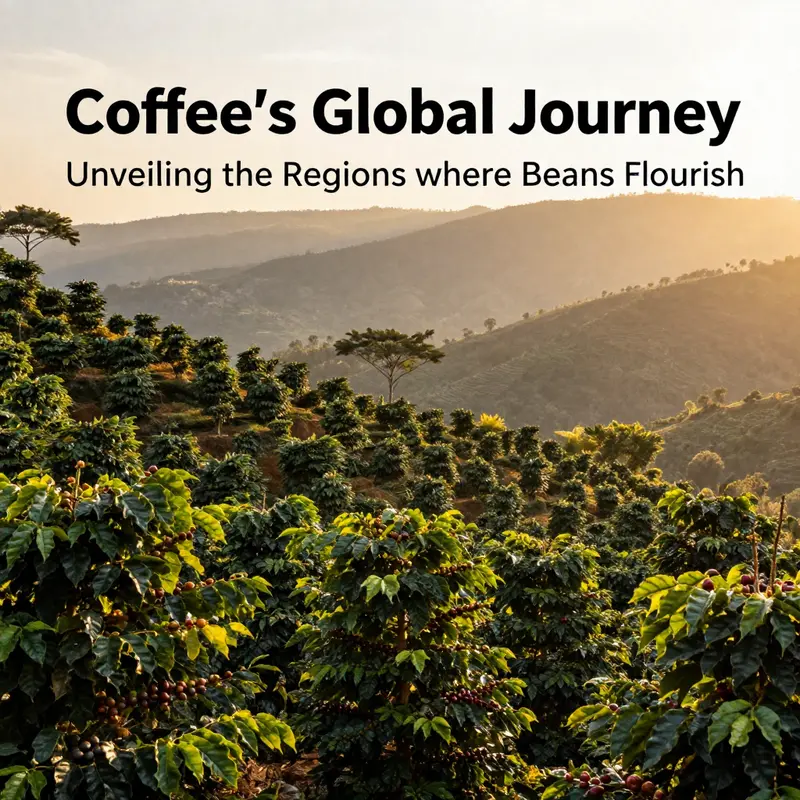
Across the equatorial arc known as the Coffee Belt, Africa occupies a place that predates modern coffee commerce. Its mountains and plateaus host plants that have learned to thrive in thin air and steady rain, in soils forged by volcanic ash or weathered clay. The result is not only volume but a spectrum of flavors that hint at a long, intimate relationship between people, land, and bean. As with other belts, climate sets the stage: steady temperatures typically between 18 and 22 degrees Celsius, regular rainfall, and elevations that climb high enough to slow leaf growth and enrich bean development. In Africa, those conditions are often wrapped in the drama of volcanic soils, the microclimates of coffee forests, and the slow rhythms of hillside farming that preserve biodiversity while cultivating a global staple. The continent’s contribution to the world’s morning ritual is not only about filling cups but about revealing how geography and culture together write the aromatic profile of a bean before it ever reaches a roaster’s heat.
Within this broad continental canvas, each country adds a distinct stroke to the painting of flavor, an effect amplified by farming practices that have evolved through generations of adaptation to local conditions. The elevations, rainfall patterns, and soil chemistry of a given valley or plateau become invisible fingerprints on the coffee’s aroma and body, the silent signatures that roasters seek when they trace a cup back to its origins. The lesson Africa offers is both reassuring and precise: the geography of origin matters, and the flavor of a coffee is a conversation among soil, altitude, and the hands that tend the crop year after year. When you drink a Kenyan coffee with its bright acidity or a Ethiopian cup with its floral lift, you taste a story of place that cannot be replicated in a single field elsewhere. That story helps expand the global palate and reminds us that the very idea of where coffee beans grow is a map of human ingenuity as much as natural endowment.
Ethiopia sits at the heart of this map as a reminder that origin is never a single note but a chorus. Here, the landscape itself behaves like a living varietal catalog. Heirloom trees, often grown in diverse microclimates from highland terraces to misty valleys, create a palate that travels from delicate citrus and jasmine to wine-like berry and stone-fruit nuances. The country’s approach to processing—whether wet, natural, or a hybrid method—acts as a culinary instrument, coaxing sweetness and complexity in different ways while preserving clarity. It is not unusual to encounter a coffee that carries an almost shimmering brightness, paired with a depth that hints at the long, rainy wet-season cycles that nourish the cherries. The Ethiopia story is also a practice of community: farmers, millers, and traders sharing knowledge across generations. In this setting, coffee becomes more than a crop; it becomes a social fabric that ties together land, labor, and lineage in a ritual that travels from hillside farm to urban market and finally into the roast room, where the cup preserves the memory of each step along the way.
Kenya provides a counterpoint with its own precise geometry of flavor, where altitude, soil type, and a network of processing and quality control converge to produce a profile that is both lucid and vivid. The country is famed for its terroir-driven transparency and its celebrated varietals whose lines—SL28 and SL34 among them—are closely aligned with the high elevations and well-drained, volcanic soils that encourage developed sweetness and pronounced acidity. The washing methods common to many Kenyan lots emphasize cleanliness and resonance, letting the inherent fruitiness ride on a firm backbone of mineral clarity. When the cup lands on the palate, you might encounter flavors of blackcurrant or citrus twists that feel both bright and refined, finishing with a lingering sophistication rather than a blunt snap of sourness. Kenya’s system of cooperative pooling further enriches the arc of flavor by enabling smallholders to enter global markets with a consistent, traceable story. That traceability—knowing the lot, the farm, and the community that produced the bean—gives the drinker a sense of place that is as tangible as the cup’s aroma.
Nearby, Uganda and Tanzania present landscapes that are lush and generous, yet each projects its own distinctive coffee voice. Uganda’s valleys and plateaus nurture Arabica in a climate that favors clean, crisp profiles when the washed process is used with care. The country’s soil varieties, often enriched with organic matter from nearby forests and river systems, yield cups that can feel bright with a modest sweetness and a finish that invites another sip. Uganda’s coffee economy also reflects a balance between volume and quality, demonstrating how a nation can grow both the scale of production and the precision of flavor through attention to post-harvest handling and cooperative farming. Tanzania, by contrast, offers coffees from the slopes of Mount Kilimanjaro that carry a cool climate slightly different from the inland belt. The flavors tend to blend depth with fruit—chocolate and tropical notes intermixed with hints of citrus or berry depending on the lot. In Tanzania, the process and the way cherries are dried on raised beds or patios can amplify body while preserving a nuanced acidity that keeps the cup lively and balanced. Across both countries, the interplay of weather, soil mineral content, and altitude lends each harvest a signature that roasters chase when building a diverse, global portfolio of origins.
Rwanda’s ascent in the global coffee story exemplifies how governance, community organization, and commitment to quality can transform a landscape into a refined sensory product. After periods of upheaval, Rwanda invested in sustainability, traceability, and meticulous processing discipline, which translated into coffees that often exhibit a bright, well-balanced profile with notes of red fruits and a clean finish. The emphasis on shade management and soil health underlines a broader philosophy: farming that protects the land while improving quality is the most sustainable path to consistency in flavor. The result is a set of micro-lots where producers can showcase precise wafts of aroma and a sparkling acidity that stays bright through the cup. In Rwanda, as in much of East Africa, the farmer’s choice of processing method—whether a washed approach, a controlled natural, or a hybrid technique—often reflects a deliberate strategy to express the land’s character while meeting the ever-evolving expectations of specialty markets. These Kenyan, Ethiopian, Ugandan, Tanzanian, and Rwandan profiles collectively broaden the world’s understanding of what coffee grown in Africa can offer, challenging roasters to consider not just origin but terroir, stewardship, and social context.
Across the continent, the conversation about where coffee beans grow cannot ignore the practical and ethical dimensions that accompany cultivation. Smallholder farmers increasingly participate in cooperative structures that spread risk and share knowledge about pest management, soil health, and climate adaptation. The push toward sustainable farming—cover cropping, composting, rainwater capture, and careful waste management—appears not merely as a moral imperative but as a practical driver of bean quality and consistency. When farmers prioritize biodiversity, shade trees, and soil remineralization, they often notice a corresponding lift in the beans’ personality. In the tasting room, that translates into cups that reveal clarity, a sense of place, and a resilient sweetness that survives the journey through transport and roasting. The African coffee narrative, then, is a pedagogy in geography: it teaches that land and labor together craft a cup whose aroma is as much a map as a flavor. The continent’s diverse terroirs—Ethiopian highlands with their floral lift, Kenyan high-altitude hills with electric brightness, Ugandan valleys with crisp, clean notes, and the Kilimanjaro–Ruvuma corridor’s depth and fruit—comprise a spectrum that roasters around the world continually seek to understand and celebrate.
If a single takeaway stands out, it is this: Africa demonstrates that the origin of a coffee bean is not just a location on a globe but a lived practice. The interplay of climate, altitude, soil chemistry, and human craft yields flavors that are expressive, complex, and deeply tied to land stewardship. The region’s ongoing investment in sustainable practices and transparent traceability reinforces a global appetite for beans whose stories can be traced from seed to cup. The result is a richer, more diverse global coffee culture—a culture that knows where the beans come from and why that place matters. In that sense, Africa’s aromatic vocabulary continues to expand the world’s concept of origin, reminding us that the question of where coffee beans are grown remains as dynamic as coffee itself, continually redefined by the people who nurture the plants and by the lands that give each harvest its distinct voice. External reference: https://www.sciencedirect.com/science/article/pii/S096085272400314X
Asia-Pacific Coffee Landscapes: Where Eastern Beans Thrive and Shape the Global Market
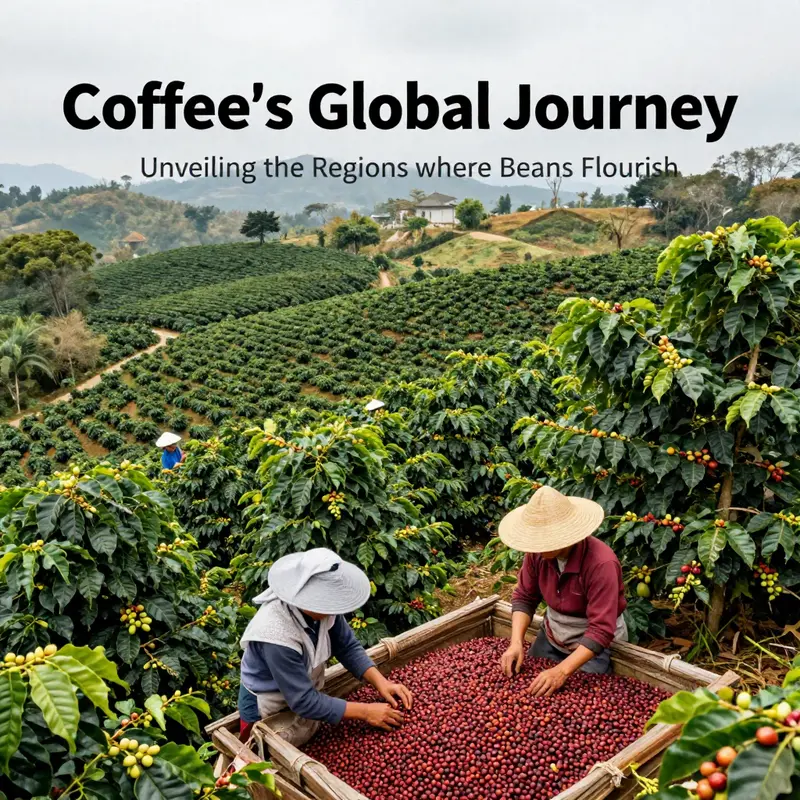
The Asia and Pacific region is where some of the planet’s most distinctive coffee stories unfold. Stretching from India across Southeast Asia to Papua New Guinea and the Pacific islands, this region sits along the southern edge of the Coffee Belt. Its diverse climates, soils, and cultures produce coffee that ranges from intense, earthy Robusta to delicate, fruity Arabica. Understanding where coffee beans are grown here reveals why the region supplies nearly a third of the world’s coffee and why its influence is growing.
Geography and climate set the stage. The region includes tropical lowlands, volcanic highlands, rainforests, and coastal terraces. Altitude varies from sea level plantations to farms perched between 1,000 and 2,000 meters. Temperature bands and seasonal rainfall in these zones often fit the ideal range for coffee cultivation. Many areas maintain steady temperatures, high humidity, and well-distributed rains. Those conditions favor the development of rich, complex bean flavors. Volcanic soils add minerals and good drainage. Mountains and plateaus create microclimates. These microclimates allow farmers to raise Arabica at altitude and Robusta in lower, warmer areas.
Country profiles highlight both scale and character. Indonesia stands out as one of the region’s production powerhouses. Its islands—Sumatra, Sulawesi, Java, and others—deliver full-bodied, earthy Arabica alongside large volumes of Robusta. Distinct processing methods, like wet-hulling used on some islands, shape unique flavor profiles. Vietnam transformed rapidly in recent decades into a global Robusta leader, supplying industrial-scale batches used for instant coffee and blends. India produces both Arabica and Robusta across Kerala and Karnataka, where monsoon winds and shade-grown systems yield smooth, spiced beans. Papua New Guinea and the Philippines are known for smaller-scale Arabica, often cultivated by smallholders on steep slopes and producing floral, bright coffees. In the north, Yunnan Province in China has emerged as an unexpected but competent Arabica region. Yunnan’s high-elevation farms around Pu’er and Lincang produce beans gaining attention for their clean, fruity, and chocolate-forward notes. Hawaii, though geographically part of the Pacific, grows limited amounts of high-elevation Arabica, sought after for its balanced cup.
Production trends in the Asia-Pacific region reflect both growth and complexity. The International Coffee Organization places Asia-Pacific as the world’s second-largest producing region. Production rose notably between 2021 and 2022, with an 8.7% increase in output. Market valuations echo that momentum. The broader Asia-Pacific coffee market reached an estimated USD 32.16 billion in 2026 and is projected to expand to USD 43.58 billion by 2031. The coffee bean segment alone was valued at USD 7.85 billion in 2024 and is forecast to rise considerably by 2033. These figures show rising domestic consumption, expanding export capacity, and growing specialty markets.
Farming systems in the region are diverse. Many producers operate smallholder plots of one to five hectares. These farms often rely on family labor and grow coffee shaded beneath taller trees. Shade systems preserve biodiversity and stabilize soil. Larger estates also exist, particularly in Indonesia and India, where mechanization and scale can increase productivity. Processing practices vary widely. Washed processing, where mucilage is removed before drying, is common in higher-altitude Arabica regions. In other areas, natural or dry processing is used to ripen and dry whole cherries, producing fruit-forward flavors. Semi-washed and wet-hulled techniques, unique to parts of Southeast Asia, yield heavier body and earthy complexity. The interplay of variety, processing, and terroir creates the region’s broad flavor map.
Varietal choices balance yield, resilience, and market demand. Arabica thrives at higher altitudes where cool nights help sugar development in the bean. Robusta, tolerant of heat and pests, grows at lower elevations and yields more per hectare. Hybrid and disease-resistant varieties are increasingly planted to withstand climate stress and coffee leaf rust. Breeding programs in the region aim to combine cup quality with improved hardiness. Smallholders often interplant coffee with shade trees, pepper, bananas, or other crops. These mixed systems spread economic risk and support local food security.
Economic realities complicate the agronomy. Price volatility on global commodity markets affects farmer incomes. Many producers face thin margins and limited access to finance. The rise of specialty coffee offers higher premiums, but specialty buyers require consistent quality and traceability, which can be a barrier for small farms. Certification and direct-trade initiatives have gained traction. They link roasters and importers directly with farmer groups. Those connections can improve transparency, raise prices, and fund farm improvements.
Environmental pressures are reshaping production patterns. Deforestation historically cleared land for coffee and other crops. Now, planting on steep slopes without erosion control risks soil loss. Climate change is shifting suitable growing zones upslope in many places. Warmer temperatures can reduce yields and alter bean quality. Pests and diseases, like coffee leaf rust, have appeared in new areas. In response, some farmers adopt agroforestry, water-conserving practices, and soil restoration methods. Shade-grown systems are promoted both for biodiversity and resilience. Water-efficient processing and renewable energy on wet mills lower environmental footprints. Yet adoption varies, and many smallholders lack funds to transition.
Cultural influence and local consumption are rising. Coffee shops and local brewing traditions support growing domestic markets. In Vietnam, robusta-based drinks remain central to everyday culture, made using simple drip techniques and condensed milk. In India, filter coffee is a daily ritual in many southern homes and cafes. Across Southeast Asia, street-side stalls and cafes blend global trends with regional tastes. These domestic markets reduce reliance on exports and diversify buyers.
The Asia-Pacific region matters for global coffee in both volume and innovation. It supplies large quantities of Robusta needed for blends and instant coffee. It also produces intriguing Arabicas that challenge assumptions about origin and flavor. Yunnan, parts of Indonesia, and specialty micro-lots in Papua New Guinea and India increasingly compete in global auctions. As markets mature, more farmers capture higher value through traceability and quality improvements. Investments in processing infrastructure and training help shift beans from commodity to specialty categories.
Ultimately, the story of Asian and Pacific coffees is one of variety and transition. Geography and climate allow a wide palette of flavors. Farmers adapt through varietal selection, farming systems, and processing choices. Markets respond with demand for both volume and distinctiveness. Environmental and economic pressures push producers toward resilience and sustainability. For anyone mapping where coffee beans are grown, this region offers a crucial chapter. It supplies bulk coffee and unforgettable single-origin cups. It also demonstrates how coffee farming evolves under social and climatic change.
For deeper exploration of regional production trends and farming practices, see the Roast and Post report on Asia-Pacific coffees: https://www.roastandpost.com/blogs/coffee-articles/asia-pacific-coffees
Beyond the Belt: Yunnan’s Rise as China’s Emerging Coffee Frontier
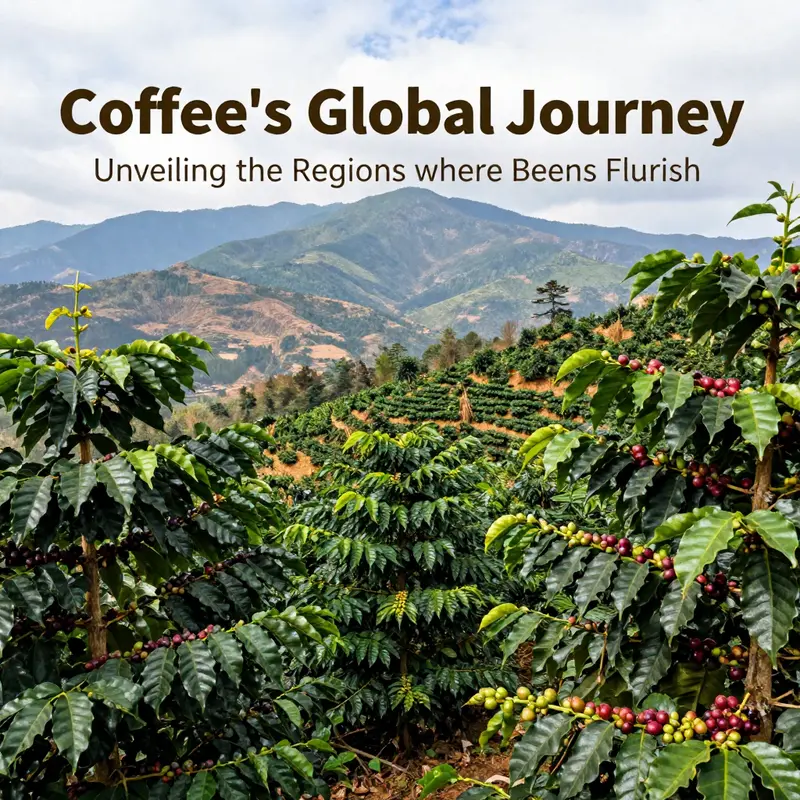
The global map of coffee has long traced a line around the equator—the Coffee Belt—where steady temperatures, abundant rainfall, and mountain altitudes create a cradle for the Arabica and Robusta varieties that define today’s cup. Yet in recent years, the map has begun to bend, inviting new places to assert themselves as serious players in the cultivation of high-quality beans. Among the most compelling developments is the ascent of Yunnan Province in southwestern China, where a subtropical climate and lofty hills have converged with a remarkable tradition of agricultural adaptation. This shift is more than a geographic curiosity; it signals a broader rethinking of where coffee can thrive and how flavor can be shaped by place. Yunnan’s ascent shows how farmers, cooperatives, and researchers are rewriting the terroir story, turning formerly tea-dedicated landscapes into vibrant nodes of the global specialty coffee network.
The Yunnan story begins with climate and altitude, two variables that the coffee world often treats as destiny. The province sits at elevations where cloud-walled valleys and long, cool nights temper the day’s tropical warmth, producing a slow maturation that helps beans develop depth without the harsher notes that can accompany hotter climates. The Pu’er and Lincang districts, in particular, enjoy microclimates that pulse with distinct humidity, soil textures, and sun exposure. In these hills, coffee plants find a foothold alongside tea bushes and fruit trees, sharing space with a biodiversity that keeps pests in check and soil healthier. Over time, farmers learned to blend traditional know-how with modern agronomy—choosing varieties that perform well at altitude, planting shade trees, and adopting water-conserving irrigation strategies. The transformation did not occur overnight; it unfolded through years of experimentation, investment, and a growing belief that China could contribute not just volume, but distinctive, high-quality coffee with a story that resonates with global consumers who crave traceability and character.
In the districts around Pu’er, the narrative has a tangible human face. Baoshan, for instance, has become a beacon in the region for what many observers now call small-bean coffee. The term evokes more than size; it hints at a collector’s mindset in which farmers keep tight control over processing, drying, and sorting to coax every last nuance from a harvest. Farmers like Li have emerged as emblematic figures—not merely growers but stewards of a local flavor that can surprise even seasoned tasters. Their work is as much about culture as it is about agronomy. They blend sustainable practices with a willingness to experiment. Some of these producers partner with established grower families—like Shen Zixiang and other experienced cultivators—who bring decades of know-how into the cooperative framework. The result is a learning culture: a constant exchange of field notes, fermentation experiments, and batch-level tasting that keeps the community moving forward rather than stagnating in tradition. This collaborative spirit matters as much as the coffee’s aroma and cup profile, because it builds a resilient supply chain capable of withstanding market volatility while advancing quality.
The sensory dimension of Yunnan coffee is as telling as its social story. The altitude and soil give beans a clarity of acidity that can be bright yet refined, with floral and citrus notes often mingling with chocolatey undertones. Some lots carry a delicate sweetness reminiscent of stone fruit, while others reveal a more earthy, forest-floor character that speaks to the region’s broader ecological mosaic. The processing methods—whether washed, honey, or natural—interact with altitude to shape the final cup. In high-altitude plots, natural or honey processing can yield a fruit-forward mouthfeel that is vivid yet balanced, avoiding the jamminess that can overwhelm more delicate beans. Washed coffees from Yunnan can lean into cleaner profiles, emphasizing crisp citrus and tea-like brightness, a nod to the province’s dual heritage as a tea heartland and a coffee pioneer. The region’s professionals and hobbyists alike pay careful attention to post-harvest handling, drying curves, and moisture targets, because these details are where the beans’ personality is truly forged. In every lot, there’s a narrative about patience: the patient cultivation of patience in the field, the patient care during processing, and the patient tasting that yields a verdict on quality.
What makes Yunnan’s emergence especially compelling is not simply a handful of notable beans, but a culture shift that redefines what it means to grow coffee in China. The countryside that once poured energy into tea production now supports coffee farms that are anything but provincial in ambition. Cooperatives and independent farms alike are experimenting with scalable models that blend traditional farming rhythms with modern marketing and quality control. The line between artisanal craft and agricultural business becomes increasingly blurred in a positive way, as more farmers gain access to technical know-how, certifications, and networks that connect them to roasters and traders around the world. This cross-pollination is crucial; it ensures that local knowledge is not lost as the region scales its production, and it invites international partners to see in Yunnan a set of flavors and farming practices worth celebrating on a global stage.
The human ecology of Yunnan’s coffee economy deserves particular attention. The region’s farmers have learned to translate a sometimes fickle climate into sustainable livelihoods by diversifying crops, adopting water-saving techniques, and investing in training for younger growers. The cooperative model—whether formal or informal—creates a platform for mentorship, shared equipment, and collective quality control. It also reduces risk by spreading it across a network rather than concentrating it in a few hands. Community-led cuppings and field labs become everyday practices rather than occasional events, turning tasting into a shared language that guides cultivation choices and processing decisions. This culture of collective learning is part of what gives Yunnan its distinctive edge: beans that come with a credible story of place, people, and perseverance.
The shift from tea to coffee in Yunnan has broader cultural implications as well. Tea remains a deeply rooted tradition, but coffee’s rise has catalyzed a new sense of regional identity and international curiosity. Local cafes and tasting rooms have sprung up along roadways that once carried only tea-sellers and market traders. Visitors arriving in Pu’er or Baoshan encounter small-batch roasters who emphasize transparency about origin, processing, and farm practices. They hear the voices of farmers describing how altitude, microclimate, and soil texture coax specific flavors from the beans. They witness a culture in motion, where tasting experiences become a bridge between rural farms and urban consumers halfway around the world. The flame brewer experiences, mentioned in regional stories, symbolize this blend of tradition and innovation: a ritual that respects local craft while inviting guests to participate in a sensory exploration that many outside observers once considered the sole domain of legendary coffee regions. In this way, Yunnan’s coffee economy is not just about beans but about creating spaces where curiosity and craft converge.
The global implications of this emergence extend beyond flavor profiles and farm gate prices. As China proves itself a capable, scalable producer of high-quality coffee, the supply chain becomes more diverse and resilient. Buyers seeking authenticity—beans with verifiable origin, farmer-to-roaster traceability, and environmental stewardship—find in Yunnan a credible option that complements established origins in Latin America, Africa, and Asia. The diversification helps stabilize prices and broadens the palette available to roasters and consumers who crave new cup profiles. It also invites further research into the region’s terroir, climate change resilience, and agronomic techniques that could inform best practices for other emerging coffee frontiers. The ongoing dialogue between growers, cooperatives, researchers, and buyers is, in itself, a form of flavor diplomacy—where science meets flavor, and local knowledge meets global curiosity.
For readers tracking the evolving geography of coffee, Yunnan’s rise offers a compelling case study in how new frontiers can emerge when climate, altitude, and culture coalesce with deliberate care and collaborative spirit. It illustrates that the story of where coffee beans are grown is not static but dynamic—shaped by farmers who innovate, by communities that share knowledge, and by markets that reward distinctiveness and accountability. And while the traditional belts will continue to produce a vast majority of beans and define many of the recognizable flavor signatures, the ascent of Yunnan reminds us that the next great coffee experience may come from a hillside in southern China, where a cooperative’s careful sorting, a farmer’s patient sun-drying, and a roaster’s attentive tasting converge to reveal something genuinely new and memorable in every cup.
External resource for further reading: https://www.xinhuanet.com/english/2025-01/28/c_1310967489.htm
Final thoughts
Understanding where coffee beans are grown is crucial for business owners aiming to create a rich and diverse coffee experience. The Coffee Belt regions each offer unique contributions, from the balanced flavors of Latin American arabica to the vibrant notes of African coffees and the emerging quality of Asian varieties. By harnessing knowledge of these regions, coffee businesses can curate exceptional offerings, align with sustainable practices, and cater to the evolving preferences of coffee enthusiasts. This intricate journey from plant to cup emphasizes not only the rich diversity of flavors but also the importance of responsible sourcing in the coffee trade.