

Coffee beans are not just commodities; they are the heart and soul of an intricate industry that stretches across continents and cultures. For business owners in the coffee sector, understanding coffee beans—from their cultivation to their influence on brewing—can significantly affect product quality and customer satisfaction. This article will delve into the life cycle of coffee beans, exploring their cultivation and characteristics, various processing methods that impact flavor, the roasting process that brings out aromatic qualities, brewing techniques that influence coffee quality, and the economic and cultural importance of coffee beans globally. Each chapter will provide valuable insights, empowering business owners to make informed choices that enhance their offerings and resonate with coffee lovers worldwide.
From Seed to Cup: The Cultivation and Character of Coffee Beans

Coffee beans are more than seeds; they are the quiet outcome of a long journey from sunlit leaves to the moment a warm cup invites a quiet moment of reflection. The beans we grind and brew each day are the pits inside a fruit known as the coffee cherry, a small capsule that forms on evergreen shrubs and trees of the genus Coffea. The science behind these beans begins with place: the tropical belt around the equator where climate, soil, and elevation converge to shape what ends up in our mugs. Two species dominate the scene, each with its own character and narrative: Coffea arabica and Coffea canephora, commonly called arabica and robusta. Arabica tends to offer finesse, brightness, and a broader spectrum of flavors, while robusta carries a stronger body and caffeine kick, often with earthy, bitter notes. Yet the beans carry more than a species label; they carry the story of the land, the farmer, the harvest method, and the careful choices that happen after picking. That story begins in cultivation and travels through processing, drying, sorting, and roasting, each step leaving a fingerprint on aroma, acidity, sweetness, and body.
The cultivation of coffee is a dance with climate. The plants thrive where temperatures are stable year round, where humidity is balanced, and where rainfall supports steady growth without saturating the roots. Elevation matters intensely. Coffee often grows best at higher elevations, typically between six hundred and two thousand meters above sea level. At these altitudes, cooler nights slow bean development, allowing complex flavors to accumulate as the plant matures. This is not just a matter of cooler weather; it is about a longer maturation period that gives the beans time to develop nuanced sugars and acids. The soil beneath the canopy also plays a crucial role. Volcanic soils, rich in minerals and good drainage, tend to support more vibrant caffeine dynamics and a wider flavor range. Shade from neighboring trees can modulate fruit ripening and protect the cherries from sun scorching, contributing to a gentler maturation that favors balance rather than bold, immediate punch. These climate and soil conditions create the foundation on which farmers cultivate both arabica and robusta, though each species often requires different management to reach its best.
Beyond climate and soil, the cultivation process itself is a careful craft. Coffee plants are pruned to maintain structure and health, and pest and disease pressure is monitored with an eye toward sustainability as well as yield. Harvesting is a decisive moment; it is mostly done by hand to select only ripe cherries, ensuring that the beans inside have started to reach their full flavor potential. In some industrial operations, mechanical gathering accelerates production, but hand picking remains the preferred method where flavor quality is paramount. Once picked, the fruit must be processed to extract the clean, green beans that will later be dried and prepared for roasting. The most common approaches are washed, natural, and honey processing. In a washed process, the fruit’s pulp is removed and the beans ferment and dry in a way that emphasizes clarity and brightness in the cup. The natural, or dry, method traps the fruit around the bean as it dries in the sun, often yielding a fruit-forward sweetness and a heavier body. Honey processing, a semi-washed approach, blends aspects of both, leaving varying amounts of mucilage on the beans to influence sweetness and mouthfeel. Each method leaves a distinct fingerprint on aroma, acidity, and texture, shaping how a coffee will evolve when it meets heat and water in the cup.
The technical vocabulary of cultivation is matched by the sensory vocabulary that defines the final product. Arabica beans are widely celebrated for their smooth, balanced profiles and a spectrum that can include notes of fruit, chocolate, and toasted nut. They also carry a higher acidity, which contributes to a bright, lively cup and a perception of finesse. This sensitivity to climate and terroir means arabica plants are more delicate; they demand specific elevations, careful sun exposure management, and meticulous attention to soil health. The trade-off, however, is a potential for greater aromatic complexity when grown under the right conditions. Robusta beans, by contrast, tend to deliver a stronger, more robust flavor, with a characteristic bitterness and a higher caffeine content. They are hardier, more resistant to disease and heat stress, and thus commonly used in blends and commercial coffees where resilience and cost efficiency matter. The difference is not merely a matter of taste; it is a reflection of how each species navigates its environment and how that navigation translates into the awake experience in the cup.
Roasting then becomes the alchemical stage that reveals or revises the character locked inside the green seed. When green beans heat, a cascade of chemical reactions unfolds. The Maillard reaction, where amino acids and sugars react to form a tapestry of new aromas and flavors, unfolds slowly, and caramelization of sugars adds sweetness and depth. Roast level is the loudspeaker through which flavor is heard: a light roast tends to preserve the bean’s original characteristics, letting the bean’s inherent fruit notes, floral hints, and bright acidity come forward. A dark roast, conversely, tends to emphasize roasted, nutty, and smoky notes, smoothing acidity into a bolder, more assertive cup. For arabica, a light to medium roast can highlight delicate fruit tones and wine-like acidity, while for robusta, a darker roast can temper bitterness and bring forward chocolatey, roasted notes. The roast also determines body and aroma, both of which influence how a bean’s story is perceived when hot water meets ground coffee. The journey from green to roasted bean is where cultivation and processing meet consumer perception, and the quality of work in one phase ripples into the experience of the next.
Even within these broad distinctions, variation abounds. Consider a varietal such as Mundo Novo, a hybrid developed to combine resiliency with a dependable yield. Born from a cross of Bourbon and Typica, Mundo Novo has become a workhorse in parts of Brazil and Central America. It offers a smooth, balanced profile with a touch of chocolate and a gentle acidity, making it well-suited to mid-range roasts and everyday brewing. Such a varietal story reminds us that genetics, coupled with climate, management practices, and processing choices, acts as a chorus of factors that come together to shape flavor. The same plant species can yield beans that taste markedly different when grown at different elevations or processed with different methods. This is not a static equation but a dynamic interplay of environment, human skill, and time. Each farmer, each mill, and each drying yard contributes a note to the overall tonal range a coffee can deliver, from the bright and citrusy to the deep and cocoa-like.
Processing, in particular, acts as a bridge between cultivation and taste. Washed coffees tend to exhibit higher perceived acidity and a cleaner cup, with a crisp finish that can resemble citrus or stone fruit depending on origin. Natural coffees often offer a fruit-forward sweetness, with a heavier body and a lingering, sometimes wine-like aftertaste. Honey processes sit in between, offering moderated sweetness with a silky mouthfeel and nuanced caramel or honeyed notes. These profiles are not merely matters of preference; they reflect fundamental changes in how the bean interacts with water during brewing. The outer layers that surround the seed influence how flavors are liberated during extraction. When a bean carries more mucilage or retains more fruit sugars during drying, those compounds can contribute to sweetness and aroma that become apparent in the cup. Breeding, where it exists in practice, may further refine these effects by selecting traits that harmonize with specific processing choices and roasting styles.
In the end, the quality of a coffee bean emerges from the cumulative decision tree of cultivation. It is not enough to characterize a plant by its species. The farmer’s timing of harvest, the shade management strategy, the soil’s mineral balance, the choice of processing method, and the subsequent handling through drying, hulling, sorting, and grading all converge to determine how faithfully a bean can express its origin and species under a roast and brew. This is why origin matters, and why specialty coffee circles prize beans that demonstrate transparent traceability, well-managed processing, and consistency across lots. When these elements align, the result is a cup whose aroma speaks softly of fruit and flowers, whose acidity dances with citrus or wine-like brightness, and whose body carries a weight that feels earned rather than imposed. The entire arc—from seed to cherry to bean to cup—maps a landscape of cultivation where farmers, botanists, mill workers, roasters, and baristas collaborate, each adding a layer of care and expertise that elevates the humble seed into an experience worth savoring.
For readers seeking a deeper dive into cultivation, varietals, and global standards that frame how coffee is grown and traded, an external resource offers a broader, authoritative overview: https://www.coffee.org/.
From Seed to Cup: The Hidden Alchemy of Coffee Bean Processing and Flavor
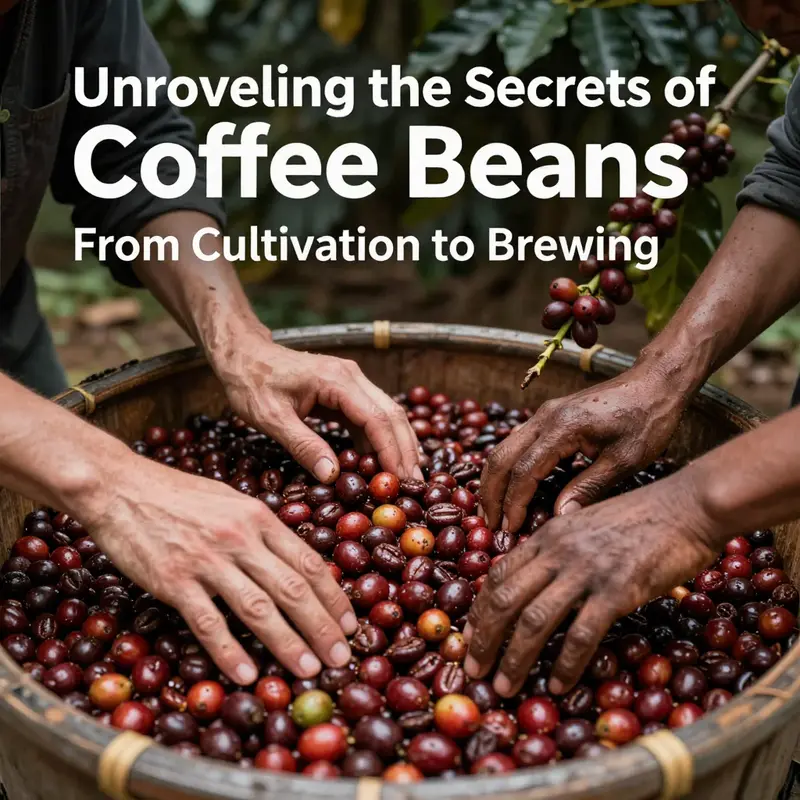
The journey of a cup of coffee begins long before the brew touches water. It starts with the humble coffee cherry, a small fruit that harbors a pair of seeds—the beans that will someday wake the senses. These beans are not true botanical beans but the pits inside the fruity husk. They come from evergreen shrubs and trees in the genus Coffea, and the world’s supply travels from the equatorial belt—the so-called Coffee Belt—through a chain of farmers, processors, roasters, and baristas who all contribute to the final aroma, acidity, sweetness, and body you experience in a single cup. The story of flavor begins here, with the raw material that is shaped by climate, altitude, soil, and the careful hands that harvest and treat each cherry. Yet the most dramatic transformations happen after harvest, during processing, when the fruit’s sugars and mucilage mingle with the bean’s own chemistry, setting the stage for the roast that follows and the brew that ends up in your cup. Understanding what coffee beans are is not just about biology; it is about appreciating a delicate series of alchemical steps that translate terroir into taste, and a farmer’s work into a sensory memory you carry back to your mug every morning.
If you think of the bean simply as a seed that travels from farm to roaster, you miss the artistry that drives flavor. Almost every aspect of a coffee’s character—its sweetness, its brightness, its body, and its aromatic profile—begins with how the bean is processed after picking. Processing refers to how the fruit surrounding the bean is removed and how the mucilage and sugars inside interact with the seed before it is dried and prepared for roasting. The choice of method can tilt a cup toward fruit-forward vinosity, toward clean citrus clarity, or toward a rich, syrupy sweetness. Each method also carries its own risks and demands. Natural or sun-dried processes require steady weather and time; washed processes demand water and controlled fermentation; more experimental approaches like anaerobic or barrel fermentation invite new textures and complexities but require precise control. The result is a spectrum of flavor that roasters exploit to highlight the inherent traits of the bean’s origin while balancing them with the roast and the grind that prepare them for extraction.
A foundational distinction in processing is whether the fruit remains with the seed during part or all of the drying period. In natural or sun-dried processing, the entire cherry is laid out to dry, often on patios or raised beds. The seed ferments inside the fruit as the sugars slowly dehydrate, and the moisture gradually dissipates in the warmth. This method tends to yield a cup with a fuller body and pronounced fruity notes, sometimes wine-like in profile, with flavors reminiscent of berries, dark chocolate, or even exotic stone fruits. But such depth is a double-edged sword: if the fruit sits too long or the temperature swings unevenly, fermentation can veer into off-flavors, and inconsistent drying can lead to uneven bean quality. Regions with a long dry season and ample sun, like parts of East Africa and South America, have refined natural processing into a defining character of their coffees, melding the fruit’s natural sugars with the bean’s own backbone to create a lush, sometimes wild, sensory impression. The result is a bean that carries the imprint of its cherry more directly than in other methods, a trait roasters can either celebrate or temper depending on recipe goals.
In contrast, washed processing removes the fruit from the seed early. The outer skin and pulp are removed, and the remaining mucilage is broken down and washed away through a controlled fermentation and rinsing process. The beans then dry, often in the shade or on raised beds, until they reach the desired moisture level. Washed coffees tend to be cleaner and brighter, with more pronounced acidity and a lighter body. Floral, citrus, tea-like, and delicate herbal notes frequently emerge in washed lots, and the cup can reveal the bean’s origin with a crisp clarity that makes it particularly suitable for blending with fruit-forward producers or for highlighting specific terroirs. Washed coffees reward precise moisture control and careful fermentation, because even small deviations in temperature or time can dampen the brightness roasters seek to preserve.
Honey processing offers a middle path between the extremes of natural and washed. In honey processing, some of the mucilage remains on the bean during drying, creating a hybrid that emphasizes sweetness and mouthfeel without sacrificing too much of the brightness. The classification into yellow, red, or black honey depends on how much mucilage is left and how long the drying takes. Yellow honey leaves about forty percent of the mucilage and typically dries within a week; red honey retains roughly a quarter and takes two to three weeks; black honey keeps most of the mucilage and can extend beyond two weeks. The resulting cup tends to have a syrupy mouthfeel and prominent caramel or brown-sugar notes, often accompanied by ripe stone fruit or berry hints. Honey processing can strike a balance between the fruit-forward intensity of natural processing and the cleaner, more defined character of washed coffees. It is particularly popular in regions that want to preserve sweetness and body without overwhelming the cup with fruitiness.
Less conventional but increasingly influential are anaerobic and barrel fermentation techniques. Anaerobic fermentation borrows from winemaking in its orchestration of oxygen-free environments. By controlling pH and microbial populations, producers coax flavors that can range from tropical fruit brightness to vinous, wine-like complexity, with an often striking tang of sour-sweet notes that carefully balance acidity and sweetness. This approach demands precision in timing and environmental control, but it offers a path to expressive, signature profiles that can define a season or a single lot. Barrel fermentation adds another layer by aging or fermenting the beans in wooden barrels previously used for spirits or wines. The interaction with wood and residual spirit compounds can imprint vanilla, oak, spice, and subtle regional echoes onto the cup. Barrels can lend a refined sense of elegance, providing a nuanced backdrop that supports rather than overwhelms the inherent characteristics of the bean. Together, anaerobic and barrel methods underscore how far processing has evolved—from practical fruit removal to deliberate, craft-driven flavor sculpting—and remind us that the bean’s journey is as much a sensory experiment as a horticultural one.
All these methods share a common purpose: to unlock the bean’s potential while safeguarding its essential identity. The processing choice interacts with the bean’s origin and climate, its altitude, and even the orchid-like microflora of a plantation. The result is a family of flavor profiles that roasters fine-tune through the roast itself. A light roast may reveal the delicate sugars and fruity accents carried by a natural-processed bean, letting the bean’s origin come through with vibrant acidity and a sparkling aroma. A medium roast can offer a balance, allowing sweetness from honey processing to ride alongside the bean’s inherent brightness. A dark roast, conversely, can fuse with the roasted notes to emphasize body and depth, while still letting the underlying processing notes peek through as caramelized sugars, vanilla, or cocoa imprints. In practice, roasters tailor profiles to the bean’s processing history, using temperature, duration, and heat application to guide the Maillard reactions and caramelization that produce aroma compounds, as well as to preserve the intrinsic brightness or fruitiness that processing shapes. The interplay between processing method and roast level ultimately steers the sensory path from bean to brew, revealing a flavor narrative that is both varietal and method-driven.
The science behind these sensory outcomes lies in the chemistry of sugars, acids, and aromatic precursors that the processing steps influence. Natural processing concentrates certain sugars and enhances aromatic compounds as fermentation progresses inside the cherry. Washed processing reduces mucilage-related compounds and shifts the balance toward malic and citric acids, contributing to brightness and a lighter body. Honey processing leaves behind some mucilage that interacts with sugars during drying, magnifying sweetness while preserving a degree of acidity. Anaerobic fermentation imposes distinct microbial ecosystems that produce esters and acids not typically present in more conventional methods, adding tropical fruit or vinous characters that linger on the palate. Barrel fermentation introduces lignin-derived compounds and spirit-driven notes that can render the cup with a sense of spice and warm oak. These chemical pathways are not easily visible, but they are palpably tasted when a cup is brewed and savored. The takeaway is both simple and nuanced: the processing method is one of the most reliable levers a producer has for shaping flavor, alongside the roast and the grind, and it requires a careful alignment of environmental conditions, equipment, and timing to achieve the intended profile.
As coffee travelers and tasting rooms seek to understand what makes a bean sing, they often discover that even subtle differences in the processing stage can translate into a visible variation in the final cup. A lightly roasted, naturally processed Ethiopian bean may present you with an impression of wild fruit and delicate florals, a narrative that sings of sun-drenched patios and a long dry season. A washed Colombian lot might reveal a cleaner, tea-like brightness with citrus zest and a hint of almond, bearing the imprint of high-altitude cultivation and methodical fermentation. A honey-processed Brazilian lot could offer a creamy, caramel-toned sweetness that whispers of chocolate and ripe stone fruits, a mouthfeel that lingers and coats the tongue. An anaerobic-Guatemalan experiment may arrive with a wine-like depth and an acidity that pricks the senses with tropical fruit and nuanced sour-sweet complexity. A barrel-aged bean, perhaps from a Pacific island or a Caribbean-leaning estate, might deliver a velvet texture with vanilla warmth and a gentle spice echoing through the cup. The spectrum is broad, and the quality of the final beverage depends on harmonizing processing with roast, water, and technique, so that each cup tells a coherent story rather than a collage of disparate notes.
To appreciate coffee beans in their full context is to recognize the seed’s biography as inseparable from its processing. The seed’s potential is not merely about what was inside the cherry at harvest but about what the cherry’s interior chemistry becomes when it meets a drying bed, a fermenting vessel, or a barrel. The craft of processing transforms a fragile fruit into a controlled confection of flavors, shaping the sweetness, acidity, body, and aroma that a roaster then draws out, layer by layer, in the heat of the roast. The result is a cup that reflects both the plant’s origin and the human decisions that guided it—from the drying method to the duration of mucilage retention, from the choice of fermentation culture to the decision to age in wood. In this sense, coffee beans are not just seeds awaiting a roast; they are canvases that carry the imprint of cultivation and technique, ready to bloom into a cup that reveals, with each sip, how processing has coaxed flavor from fruit, how water has extracted nuance, and how your palate interprets the chemistry of aroma, sweetness, and acidity.
For readers eager to dive deeper into the mechanics and outcomes of these methods, the broader literature offers extensive analysis on how processing shapes quality across regions and bean types. The nuances of natural versus washed versus honey processing extend beyond taste notes to include influences on bean density, moisture stability, and post-harvest handling practices. The ongoing exploration of anaerobic and barrel methodologies continues to push the boundaries of what is considered possible in bean flavor, encouraging producers to experiment with fermentation curves, timing, and vessel choices. As you consider your own preference, remember that each cup emerges from a collaboration among climate, cultivar, soil, harvest timing, processing choice, and roasting philosophy. The magic is not solely in the bean but in the dialogue between the bean and the method that reveals its story, a story that invites you to taste with curiosity and to seek out the next batch that might surprise and delight you in a new way.
Further reading: Coffee Processing Methods. https://www.coffeeinstitute.org/learn/coffee-processing-methods
The Roasting Odyssey: How Green Beans Become Aromatic Coffee
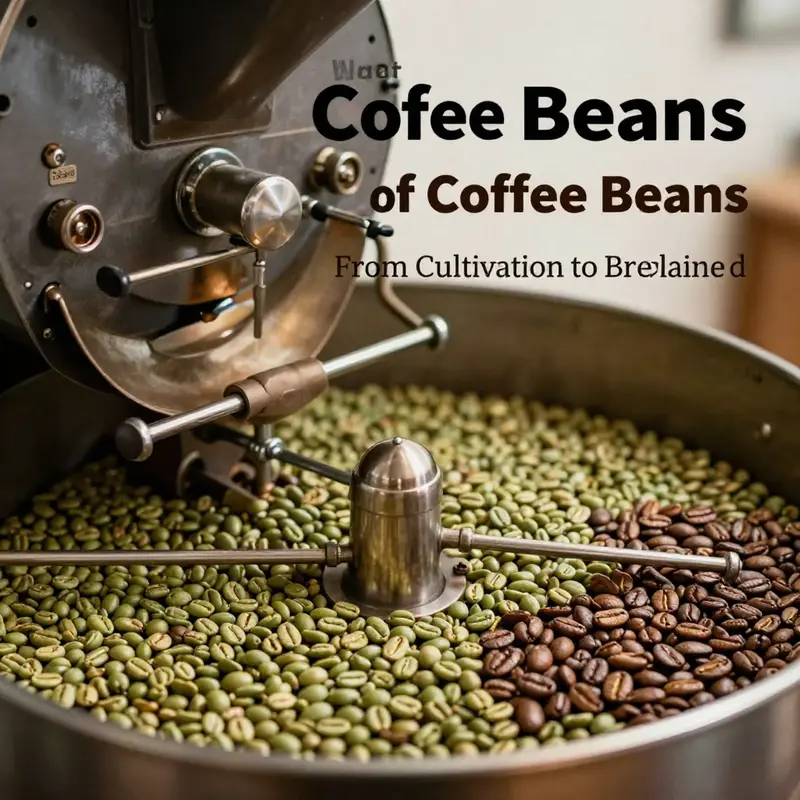
From a green bean to a fragrant brown, roasting is where coffee’s character takes shape. Heat, time, and airflow coax out the bean’s inherent flavor while honoring its origin. The journey begins with moisture loss and color change, then proceeds through early development to the first crack, a cue that the seed has crossed from green toward its true identity. The second crack marks deeper roast levels, where sweetness and roasted notes balance and the cup leans toward body and intensity. Light roasts preserve origin characters; dark roasts emphasize caramelized sweetness and bold, roasted notes. The roaster tunes heat, rhythm, and pause points to craft a profile that will sing with your preferred brew method.
Chemistry sits at the heart of roasting. Maillard reactions, caramelization, and volatile aromatics unfold as the bean heats, while processing and origin imprint subtle differences that emerge in aroma and flavor. In modern practice, roasters use precise profiles—temperature curves, airflow, and mass loss—to iteratively refine outcomes, yet tasting remains the ultimate guide. After roasting, rapid cooling and proper storage protect aroma; ground or whole, beans should be kept in a cool, dark, airtight environment to preserve freshness for as long as possible. The link between roast and grind matters too: light roasts often pair with finer grinds to bloom acidity; darker roasts may suit coarser grinds for certain methods or finer grind for espresso.
Ultimately, the roasted bean carries the memory of origin even as heat reshapes its potential. Understanding the roast helps explain why the same bean can taste bright and fruity in one profile and chocolatey and full-bodied in another. It is a dialogue among seed, soil, processing, roast, and brew, a craft that invites curiosity and experimentation.
From Seed to Sip: How Brewing Choices Reveal and Shape Coffee Bean Flavor

Brewing as Translation: How Technique Lets the Bean Speak
Coffee beans are raw storytellers. They carry origin, soil, altitude, and processing in their green kernels. Roasting translates those stories into aroma and flavor. Brewing is the final act of translation. It is where water meets roasted seed and reveals character. The same bean can narrate very different tales when changed by grind, time, temperature, pressure, or filter. Understanding how brewing techniques influence coffee quality helps you coax specific notes from a bean and shape the cup you want.
Extraction is the core principle. Hot water dissolves soluble compounds from ground coffee. Acids, sugars, oils, and bitter compounds dissolve at different rates. Early extraction favors bright acids and volatile aromatics. Middle extraction releases sugars and complex flavors. Late extraction yields bitter and astringent molecules. Brew parameters set the pace and balance of extraction, and thus determine clarity, sweetness, acidity, bitterness, and body.
Grind size is the simplest throttle on extraction. Coarse grounds expose less surface area. They slow extraction and favor long-contact methods like immersion or cold steeping. Fine grounds increase surface area, speed extraction, and suit short, high-pressure brewing. Match grind to method. Too fine for immersion yields over-extraction and harshness. Too coarse for pressure produces weak, under-extracted coffee.
Water temperature governs which compounds dissolve. Higher temperatures extract more quickly and pull heavier flavors. A range between roughly 90°C and 96°C (194°F–205°F) works for most hot methods. Cooler water highlights delicate acidity and sweetness in light roasts. Hotter water brings forward caramelized sugars and deeper roast notes. Cold-brewing at room or fridge temperature extracts slowly and lightly, producing a smoother, lower-acidity profile.
Brew ratio and time set concentration and extraction yield. Ratio is coffee mass to water mass. Common starting points include 1:15 to 1:18 for pour-over and drip, 1:12 to 1:15 for espresso, and 1:8 to 1:10 for immersion concentrates. Adjust ratio to alter strength. Adjust time to balance extraction without letting bitter compounds dominate.
Filters and vessel materials affect clarity and mouthfeel. Paper filters remove much of the soluble oils and fine sediments. The resulting cup is clear, bright, and focused on acidity and aromatics. Metal or cloth filters let oils through and retain more microsolids. That yields a heavier body and fuller mouthfeel. Glass and stainless steel vessels do not impart flavor but influence heat retention and visual control during manual brews.
Pressure introduces another dimension. High pressure forces water through compacted, fine grounds. The result emphasizes body, crema, and concentrated flavors. Pressure also extracts quickly, highlighting chocolatey, nutty, and caramel notes that suit darker roasts or robust blends. Low-pressure immersion methods extract gently, favoring clarity and floral or fruity notes in lighter, single-origin beans.
Each method highlights different bean qualities. Paper-filter pour-over emphasizes clarity, aroma, and acidity. It’s ideal for delicate, floral, and fruity beans. These beans often come from high-altitude regions where slow cherry development produces intense acidity and layered aromatics. When brewed through a clean filter with precise pouring, those subtle notes stand out.
Immersion methods, such as full-immersion brews, create a rounder, heavier cup. They allow extended contact time and fuller extraction of sugars and body. They also tend to accentuate sweetness and low-end feel. Beans with natural processing, which retain fruity and sugary solids during drying, respond well to immersion. The method can amplify their jammy, syrupy character.
Pressure brewing compresses the sensory experience. It produces a concentrated shot with intense aroma and thick mouthfeel. For espresso and similar high-pressure methods, robustness matters. Beans with higher density and darker roast profiles often hold up under pressure. Robusta components contribute crema, higher perceived strength, and a different bitterness profile that can balance milk in espresso-based drinks.
Cold brew or long cold extractions reveal another side. Low-temperature, slow extraction yields a smooth, low-acidity, and often sweeter cup. This method mutes volatile aromatics but accentuates chocolate and nutty notes. Single-origin coffees with high acidity may lose some brightness, but the approach offers an approachable, mellow beverage, particularly for those sensitive to acidity.
The roast level shapes responsiveness to methods. Light roasts maintain origin character. They are often more acidic and aromatic, and they reveal terroir when brewed gently through paper filters or low-pressure pours. Medium roasts strike a middle ground. They balance origin notes with sweeter, caramelized flavors and work across many methods. Dark roasts emphasize roast-derived flavors and oils. They excel in pressure-brewed drinks and methods that welcome heavier body and boldness.
Processing methods — washed, natural, and honey — interplay with brewing too. Washed coffees, where the fruit flesh is removed before drying, often show cleaner acidity and more pronounced origin signatures. Natural processed beans, dried with fruit intact, offer intense fruit sweetness, fuller body, and sometimes fermented notes. Honey processing sits between washed and natural, providing sweetness with some clarity. Pairing processing with the right brew unlocks intended flavors: paper-filter methods clarify washed beans, while immersion or metal-filter methods amplify natural processed fruitiness.
Blends versus single-origin decisions also guide brewing choices. Single-origin beans present a coherent flavor story. They reward methods that highlight nuance and clarity. Blends aim for balance and consistency. They respond well to methods that demand stability, like espresso machines, where a predictable profile is crucial under milk or milk substitutes.
Practical adjustments turn theory into results. If your cup tastes thin and sour, increase dose, shorten brew time, or use a finer grind. If it tastes flat and dull, try a finer grind, higher temperature, or longer contact time. When bitterness dominates, coarsen the grind, lower water temperature slightly, or shorten time. For more body, switch to a metal filter or use a slightly darker roast.
Tasting the same beans across different methods is the most direct lesson. Use identical roast and grind them freshly. Keep dose and water chemistry constant. Brew once with a paper-filter pour-over, once with immersion, and once with a short, high-pressure extraction. Note how acidity, sweetness, aroma, and body shift. This exercise reveals which technique best amplifies what you love in a bean.
Brewing is not merely a mechanical step. It is the final, creative choice in coffee production. It can clarify origin, amplify sweetness, or build a bold, comforting cup. By understanding extraction, roast, grind, and method interactions, you learn to pair beans with techniques. You learn to shape a desired cup without masking the bean’s voice. Taste widely, adjust patiently, and let brewing be the tool that brings each coffee bean to life.
For a practical guide to matching methods with your taste preferences and equipment, see this detailed resource on choosing the best brewing method: https://www.coffeegeek.com/guide/best-coffee-brewing-method
Bean to World: The Economic Pulse and Cultural Ties of Coffee

The beans at the heart of a daily ritual travel far beyond the kitchen, crossing borders and economies with the ease of steam rising from a hot cup. Coffee beans are not ordinary seeds, yet their journey begins in a familiar fruit—the coffee cherry. Within that bright red casing lie two small seeds whose dimensions belie the vast networks they support. These seeds awaken in roasting rooms, markets, and laboratories around the globe, and their fate is inseparable from money and meaning alike. Plants of the Coffea genus grow in tropical belts near the equator, where climate, altitude, and soil conspire to produce beans with distinctive profiles. But it is not just the flavor that travels. It is the livelihoods carried by millions, the promise of fair wages, and the cultural rituals that shape how communities eat, drink, work, and gather. In tracing the arc from seed to social fabric, one sees how a single crop can become a reliable heartbeat of nations and neighborhoods alike.
If you pause to consider the chain from seed to saloon or café, you glimpse a system that is as much about people as about plants. Coffee is among the most traded commodities in the world, following only oil in monetary value in many reckonings. This ranking rests on more than the beans themselves; it rests on the labor, logistics, and risk-sharing that keep the supply chain moving. The global economy around coffee touches farms, mills, exporters, importers, roasters, and retailers, weaving together countless micro-stories into a single, continuous market narrative. In many producer countries, coffee is not merely an agricultural product but a principal source of income that supports schooling, healthcare, and community resilience. Smallholders, in particular, form the backbone of the supply chain, cultivating beans on plots that can be a few hectares or smaller.
This economic dimension is sensitive and dynamic. Prices on international markets can swing with weather shocks, currency fluctuations, demand shifts, and policy changes. A sudden drought in one region or a frost in another can ripple through the price of a pound of green coffee, altering budgets for farmers who plan their families’ futures around harvest cycles. The International Coffee Organization and other industry bodies track these movements, underscoring how a crop’s health in distant towns can influence grocery prices and regional development elsewhere. The volatility is not simply a financial fact; it shapes investments in better cultivation practices, coffee processing innovations, and community-level adaptation strategies. When prices rise, farmers may invest more in quality improvements or climate-resilient varieties; when prices fall, the pressure to cut costs can challenge environmental standards or worker welfare. These tensions reveal coffee’s role as a barometer of global interconnectedness.
Beyond the price tag, the beans carry cultural weight that is impossible to quantify in dollars alone. In Italy, the ritual of standing at a bar to sip a quick espresso embodies efficiency, sociability, and a shared daily rhythm. The coffee break becomes a microcosm of urban life, a brief pause that threads together strangers and friends in a city’s pulse. In Ethiopia, the birthplace of the coffee plant, the traditional coffee ceremony transforms a simple harvest into a communal act. Roasting, grinding, and brewing take place in a ceremonial setting, inviting neighbors and visitors to witness and participate in hospitality, storytelling, and the passing of time. In Turkey, the preparation and serving of Turkish coffee carry civility and welcome, turning a beverage into a sign of respect and friendship. These rituals transmit cultural values as surely as any music, art, or literature; the beans themselves carry with them inherited practices, stories, and a sense of belonging.
Yet the cultural significance of coffee beans extends into everyday life in ways that may seem ordinary but are deeply consequential. The need to balance tradition with quality has shaped industry standards and consumer expectations. As people gravitate toward beverages that reflect terroir—the idea that origin, processing method, and geography impart a distinct flavor—producers and roasters increasingly emphasize traceability. This shift has given rise to a broader movement toward transparency and authenticity in supply chains. Consumers now often seek assurance that the beans they purchase were grown under environmentally responsible conditions and paid for fairly. The push for sustainability has spurred projects that encourage organic farming, sustainable water use, and climate-smart agricultural practices. Fair trade certification, organic labels, and certification schemes supported by global organizations aim to ensure that producers can invest in their farms and communities rather than merely selling a crop at uncertain prices.
The agricultural and economic narratives intersect with the evolving landscape of quality and innovation in processing and roasting. The path from cherry to green bean involves layers of labor and decision-making that influence flavor, aroma, and body. Processing choices—washed, natural, or honey methods—alter the bean’s interaction with heat and extraction, contributing to a spectrum of taste profiles that roasters and consumers value. These decisions are not cosmetic; they reflect farmers’ knowledge, resource availability, and market opportunities. When a farm shifts toward specialty-grade beans or invests in post-harvest infrastructure, the effects radiate back through the chain. Importers and roasters may respond with long-term contracts, technical support, and capacity-building programs that help farmers improve yields, quality, and sustainability. In this way, the economic story of coffee becomes a story of upgrading risk management and resilience on the ground.
A crucial strand in this narrative is the growing emphasis on sustainability and ethical sourcing. The coffee economy has learned that long-term viability depends on environmental stewardship and fair compensation. Initiatives that promote climate resilience, soil health, and pest management are not only moral commitments but practical strategies to stabilize yields in the face of shifting rainfall patterns and rising temperatures. Coffee’s climate vulnerability has pushed many producers to diversify crops, adopt drought-resistant varieties, and invest in nutrient management. Certification programs and collaborative models aim to ensure that workers receive fair wages, safe working conditions, and predictable buyers. The ripple effects of these changes extend beyond farm gates: they influence community health, education, and social stability. In regions where growers can plan for the future, families invest in schools, healthcare, and local infrastructure, creating a virtuous circle that makes coffee more than a commodity and more like a shared social enterprise.
The gravity of coffee’s cultural economy also fuels the rise of the specialty movement, which valorizes terroir, storytelling, and direct relationships between producers and roasters. This movement reframes coffee as an artisanal product rather than a bulk commodity. It invites consumers to consider origin, processing method, altitude, and farm practices when selecting beans. The result is an appreciation that elevates farmers’ status and gives consumers a sense of participation in a global craft. As transparency increases, producers can capture more value for themselves by highlighting quality and sustainability rather than relying solely on volume. The supply chain thereby becomes a platform for education and connection, encouraging ethical choices and long-term commitments that people are willing to support with their wallets and their values.
The economics of coffee are inseparable from its social and cultural consequences. When a farmer in a highland community greets friends with a fresh batch of roasted beans, the moment is not purely personal joy; it is a microeconomy at work, a demonstration of how a harvest translates into opportunity and social cohesion. When a city barista explains the origin of a bean to a curious customer, the exchange channels science, history, and anthropology into daily life. In this sense, coffee beans do more than fuel mornings; they steer careers, shape civic identity, and color the cultural landscape with notes of cinnamon, cocoa, or citrus that vary with place and practice. The coffee bean thus functions as both economic instrument and cultural artifact, a compact seed that carries a long, interconnected history into every cup poured across continents.
For those who want a broader frame, the global picture of coffee’s economy and culture is continually evolving. It requires attention to climate readiness, fair compensation, and consumer responsibility, all of which influence how beans are grown, traded, and enjoyed. Acknowledging this complexity helps readers appreciate that the beans in their hands are part of a living system—one that binds distant farms to urban cafes, families to markets, and rituals to revenue. The next steps in understanding start with recognizing the cup as more than a beverage. It is a doorway into a network of livelihoods, traditions, and futures threaded together by the same small seed.
Final thoughts
Understanding coffee beans is crucial for any business owner in the coffee sector. From the meticulous cultivation of coffee plants to the careful processing and roasting that shapes flavor, to the brewing techniques that determine the final cup quality, every step plays a significant role in delivering a quality product. Moreover, recognizing the global economic and cultural significance of coffee beans can open up new opportunities for business owners to connect with their customers on a deeper level, creating a sustainable enterprise in a growing market. Investing time and resources to understand the complete coffee journey will not only enhance your products but also enrich the experience for your patrons.