
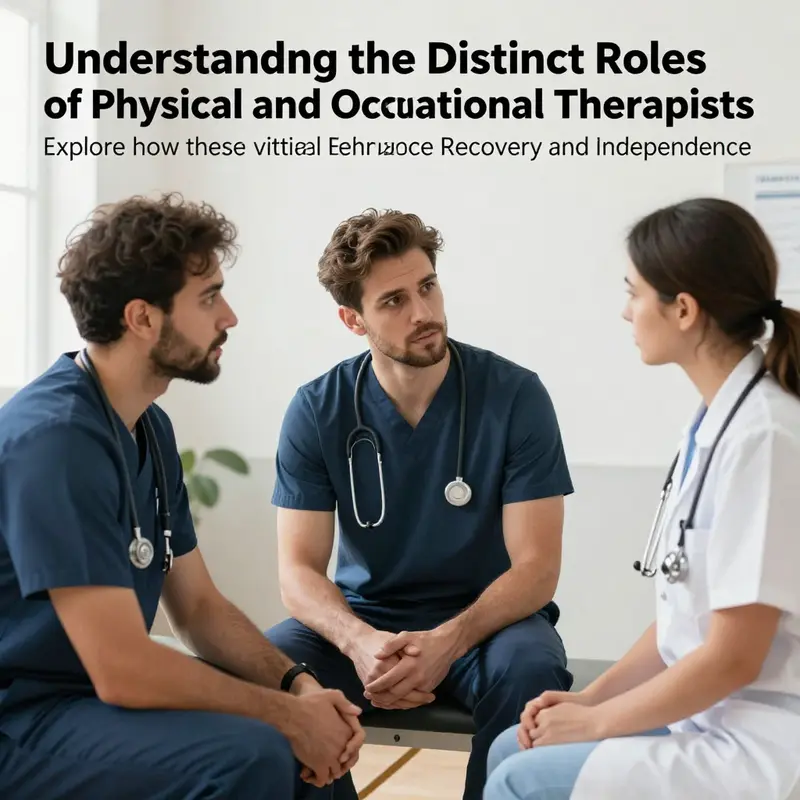
In the realm of rehabilitation, physical therapists (PTs) and occupational therapists (OTs) serve as foundational pillars, each specializing in unique aspects of patient recovery. While both professions aim to restore function and enhance quality of life, they employ different methods and focus on distinct goals. Business owners in healthcare must appreciate these differences, recognizing how both therapists can synergize for improved patient outcomes. The following chapters will delve into their specific responsibilities and methodologies, contrasting the environments in which they operate and exploring the collaborative potential that can elevate patient care and operational efficiency.
从“如何移动”到“如何生活”:物理治疗师与作业治疗师的职责、方法与协作实践
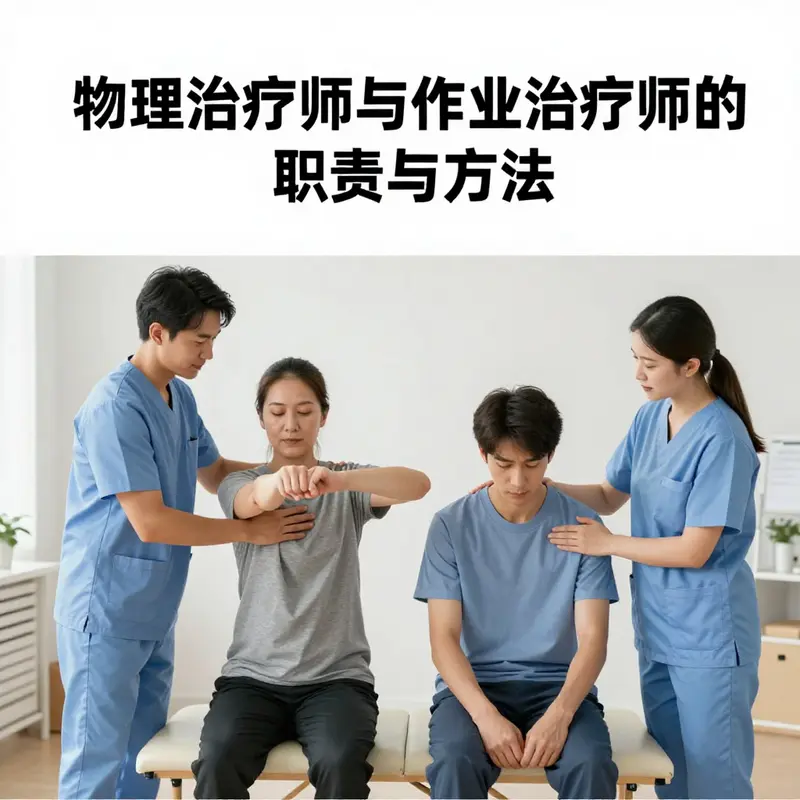
物理治疗师(Physical Therapist, PT)与作业治疗师(Occupational Therapist, OT)在康复领域共同承担着恢复功能、重建生活的使命。两者的目标有共同之处:都希望患者能重新参与重要的活动,提高生活质量;但他们的切入点和具体方法各有侧重。把这两种专业并置来看,可以更清晰地理解康复过程从“能动”到“会做”的转变,以及在这个转变中如何通过评估、治疗和环境调整实现实际的、可持续的功能恢复。
物理治疗师通常以身体运动为核心。他们的工作从全面的物理评估开始,这包括肌力测试、关节活动度测量、平衡与协调用力学评估、步态分析与姿势评估。评估的目的是找出限制运动的生物力学或神经学原因,而不是仅仅记录症状。基于这些数据,物理治疗师为患者制定一个循序渐进的治疗计划,明确短期与长期目标,比如恢复关节的活动范围、减少疼痛、改善步态或提高耐力。实施手段以物理性干预为主:功能性训练、专门的伸展与强化练习、手法治疗以改善软组织与关节可动性,以及电疗、热冷疗或水疗等物理因子治疗。对于神经康复患者,PT会运用步态训练、平衡训练和姿势控制练习,帮助患者重新学习受损神经调控下的运动模式。对于术后或运动损伤患者,PT会侧重于分阶段恢复肌力与关节稳定性,从而减少再伤风险并提升整体运动表现。
作业治疗师的视角则更贴近日常生活的任务与角色。他们关注的是患者在具体情境中执行活动的能力。一个典型的作业治疗评估会考察患者完成自我照顾(如穿衣、梳洗、进食)、家务、工作或学校任务时遇到的障碍。评估不仅关注肢体功能,还重视认知、感知、情绪与环境因素如何影响任务执行。基于评估,OT制定以任务为中心的训练计划,强调在实际活动中逐步建立技能或找到替代策略。例如,手部功能受限的患者通过工序分解、关节受力优化与精细动作练习,逐步恢复如系扣或写字的能力;认知受损的患者则通过分步指导、记忆辅助与时间管理策略重建日常节奏。OT也广泛采用辅助器具与环境改造来降低执行任务的难度。为确保回家后能持续独立,作业治疗师经常建议在厨房、浴室或卧室安装抓手、坡道或调整工作台高度,并训练患者使用适配工具。
两者的区别可以用一句简洁的话概括:PT在解决“如何移动”(How to move),OT在解决“如何生活”(How to live)。但现实中,这两个目标是相互依赖的。以一位中风患者为例,早期康复阶段物理治疗师可能优先处理下肢力量和平衡,目标是恢复安全步行。随着基础移动能力的恢复,作业治疗师介入,训练患者在家中如何上楼、如何在厨房中独立准备食物、如何安全转移坐到立。PT的训练为OT提供了动作能力基础,OT则将这些能力转化为具体的生活技能。两者若能并行设计目标并定期沟通,康复的效果会更快、更稳定。
在方法层面,PT与OT都强调个体化干预,但具体取向不同。物理治疗师经常运用结构化的练习程序,关注剂量、频率和运动质量,强调生理负荷的可控提升。手法治疗与功能训练结合,目标是恢复组织的可动性和肌力平衡。作业治疗师则更常采用以活动为基础的训练,通过真实或仿真的日常任务来练习技能。OT会关注任务的可行性与意义,调整活动复杂度以维持患者的参与感与成就感,并引入辅助工具或行为策略来补偿不可逆的功能缺陷。
评估工具的不同反映了两者的关注点。物理治疗师依赖客观的肌力测量、关节活动度记录、平衡测试与步态分析等生物力学方法。作业治疗师则更常使用功能评估量表,观察患者在自然情境中完成特定任务的表现,记录任务完成的时间、独立程度与安全性,并评估认知与情绪如何影响完成率。这些评估并非孤立,而是相互补充:PT的量化数据可以预测患者完成某些活动的能力,而OT的情境化评估能揭示在真实生活中可能出现的障碍。
职业教育和专业认证也说明了两者的专业定位。物理治疗师通常完成理学或相关学科的系统训练,重点在运动科学、解剖学与神经生理学。作业治疗师的教育更聚焦于人类行为、日常生活活动的分析、环境适配与心理社会因素。两者都需要通过国家或地区的执业考试,并持续参加临床实践与继续教育,以保持证书与更新治疗知识。
在实际工作环境中,PT与OT的分工常会随患者需求与康复阶段变化。在医院病房中,物理治疗师可能安排多个短期的密集训练,以帮助病人早期下床并完成安全的移动。在康复中心或门诊,治疗会更为系统化,包含持续的功能训练和家庭作业。作业治疗师则更常在家庭或社区环境开展评估与干预,通过直接观察患者在真实环境下的表现,提出具体的改造建议。有时OT还会在学校或工作场所提供支持,帮助儿童或成人适应学习与工作角色。
跨专业协作是实现全面康复的关键。有效的团队沟通意味着PT与OT共享评估结果、目标与进展,并在目标设置上保持一致。例如,若物理治疗师在两周内设定目标为提升站立耐力至五分钟,OT会据此设计厨房活动训练的时间分配,确保任务练习既符合生理能力,也具有实际意义。团队还可能包括语言治疗师、心理师、社会工作者与医生,形成以患者为中心的康复网络。在某些情况下,OT会承担环境改造的主导角色,带动家庭成员参与训练;而PT则指导如何使用辅助行走器具并监测步行质量。
为了增强康复效果,现代实践也越来越重视以证据为基础的方法。PT与OT都依赖最新的研究来确定最佳治疗剂量和方法,并用结果测量来评估疗效。物理治疗领域的指南通常强调功能性训练的早期介入和渐进式负荷,而作业治疗领域的研究则突出任务重要性、适应性设备选择与情境重建对长期独立性的影响。
在患者教育与预防层面,PT与OT各有侧重但共同推进自我管理。物理治疗师教授正确的运动方式、姿势调整与预防再伤的策略,以减少未来的运动损伤。作业治疗师则帮助患者学习自我监测、任务分配和使用辅助工具,从策略性角度延长独立生活能力。对于慢性病或退行性疾病患者,这两种教育结合能显著减少功能衰退的速度并提高患者的自我效能感。
具体场景的互动说明了两者的互补性。举例来说,手部损伤后,PT可能先行处理手臂的整体肌肉力量和肩稳定性,确保上肢能安全承受功能性负荷;随后OT会集中训练精细动作与工具使用,恢复如穿衣、写字或烹饪等活动。对于自闭症儿童,OT通过感统训练与日常活动的设计促进社交与自理能力,而PT可能参与促进粗大运动发展与身体协调,为儿童参与同龄人活动打基础。
要获得更权威的职业范围参考,可以查阅世界物理治疗组织发布的职业范围指南,了解物理治疗师在全球范围内的实践边界与核心职责。该指南为物理治疗师在不同系统性疾病中的角色与方法提供了明确依据,有助于理解这一专业的核心定位。 (World Physiotherapy – Scope of Practice: https://www.worldphysiotherapy.org/what-we-do/scope-of-practice)
若想更深入了解作业治疗在特定病种中的实践,例如中风(CVA)患者的功能恢复与生活重建,参考针对中风康复中OT的具体干预会很有帮助。关于这方面的实践细节,可参阅关于“occupational therapy for CVA patients”的资料,获取关于任务训练、环境改造与认知支持的实用方法。 (内部资源:occupational therapy for CVA patients: https://coffee-beans.coffee/blog/occupational-therapy-for-cva-patients/)
总体而言,物理治疗师和作业治疗师在康复旅程中担当不同但互补的角色。物理治疗师打好生理与运动基础,帮助患者恢复安全与效能的运动模式;作业治疗师将这些能力嵌入具体日常任务,帮助患者在真实环境中重建独立生活。两者协作的价值在于,患者最终不只是恢复了动作能力,而是真正回到了他们想要且有意义的生活中。
Beyond Boundaries: Integrating Physical Therapy and Occupational Therapy for Holistic Rehabilitation
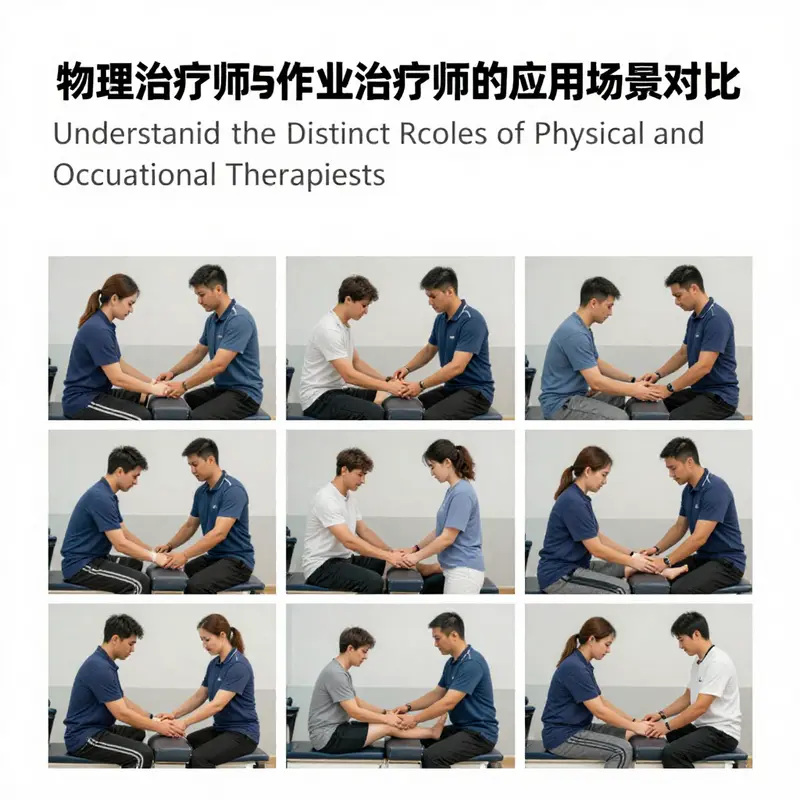
Two wings of rehabilitation lift patients toward renewed function and meaningful daily life: physical therapy (PT) and occupational therapy (OT). Though they share a common goal—the restoration of a person’s capacity to move, to engage, and to participate fully in everyday life—these disciplines approach recovery from different angles, with distinct methodologies, environments, and outcomes in focus. When seen together, they form a cohesive and dynamic partnership that can accelerate recovery, reduce the risk of secondary complications, and expand what patients can do for themselves. The synergy emerges not from a single technique but from a philosophy that prioritizes movement where it matters, and living well in the spaces where life unfolds. In this chapter, we explore the nuanced philosophy of each profession, illuminate how their interventions complement one another, and illuminate the practical implications for patients, families, and practitioners alike. The discussion aims to move beyond the notion of PT and OT as separate services, toward a narrative of integration in which movement and meaning reinforce each other to produce durable, person-centered outcomes. This is especially evident in complex conditions such as stroke, trauma, or degenerative disease, where mobility and daily independence do not recover in parallel but in a carefully sequenced, interwoven fashion. The patient who learns to walk again with the help of a PT may also learn to dress, bathe, and prepare meals with the assistance of an OT. The patient who regains the strength to stand may also regain the confidence to manage a kitchen and a schedule. The chapters to come will show how such interdisciplinary collaboration translates into care that is practical, scalable, and deeply human.
Physical therapy, in its essence, foregrounds the question: how to move? It is a discipline anchored in biomechanics, neuromuscular control, and the optimization of movement patterns. PTs evaluate strength, range of motion, balance, gait, and the overall mechanics that enable a person to accomplish basic and complex tasks. They design treatment plans that typically weave together three pillars: structured exercise to restore and augment physical capacity, hands-on techniques to modulate soft tissue and joints, and physical agents or modalities to alleviate pain and enhance tissue healing. Exercises can be functional—reflecting the activities a patient needs to perform daily—or task-specific—recreating a real-world scenario such as stepping onto a curb with a cane or ascending stairs with a walker. Manual therapy, including joint mobilization and soft-tissue work, aims to restore mobility and reduce guarding or stiffness that can limit function. Physical agents—such as heat, cold, electrical stimulation, or ultrasound—support pain relief, blood flow, and tissue recovery. An important feature of PT is its emphasis on the body’s capacity for movement as the foundation for health across the lifespan. PTs work not only on the mechanics of walking or lifting but also on how to move safely to prevent future injuries. They address postural control, proprioception, and the dynamic integration of movement with cognition and perception, so that patients can engage in activities with confidence and efficiency.
Occupational therapy, by contrast, inquires: how to live? OT shifts the lens from movement to participation. It recognizes that the most meaningful outcomes are not merely the ability to move but the ability to perform everyday tasks with independence, relevance, and satisfaction. OT practitioners assess a person’s performance in activities of daily living (ADLs) such as dressing, bathing, feeding, and personal care, as well as instrumental activities of daily living (IADLs) like meal planning, managing finances, housework, and transportation. They also consider how cognitive, perceptual, sensory, and emotional factors influence a person’s engagement in tasks. The interventions OT offers are diverse and highly adaptive: training in fine motor skills, such as buttoning or handwriting; the use of assistive devices or adaptive equipment to compensate for limitations; environmental modifications to reduce barriers—think of reorganizing a kitchen, adjusting a bathroom layout, or installing grab bars in strategic places; and cognitive-behavioral strategies that support motivation, planning, and problem-solving. OT also emphasizes the social and emotional dimensions of performance: how a person feels about their ability to participate in family rituals, work tasks, or community activities. In this sense, OT is less about how the body moves in isolation and more about how a person moves through life, discovers roles, and sustains identity amid changing capacities.
The differences are not merely academic. They color the patient journey in tangible ways. Consider a person recovering from a stroke. A PT might focus first on restoring the ability to stand, improve leg strength, and reestablish a stable gait. The objective is to rebuild the vehicle’s engine—the legs, the core, the balance that allows mobility. Once a degree of mobility returns, OT steps in to help the person relearn how to participate in daily life: adapting clothing strategies, practicing independent feeding, or learning safe techniques to navigate stairs at home. In another scenario—post-orthopedic surgery or after a significant injury—the PT emphasizes restoring motion and functional strength, while OT concentrates on enabling the patient to return to meaningful activities like cooking, gardening, or volunteering. The two disciplines meet at the crossroads of function and meaning, where the goal is not simply to move well but to live well with the movement that remains.
The language of practice reflects this convergence. PTs speak about mobility, strength, endurance, and neuromuscular control. They speak of gait training and functional transfers, of core stabilization and proprioceptive retraining. OT practitioners, meanwhile, talk about ADLs, radiating through occupation-based tasks, and the use of compensatory strategies, adaptive equipment, and environmental modifications. Yet in the real world, the lines often blur in the best possible way. A PT may guide a patient through a task that requires reaching and fine motor control, while an OT might reinforce the cognitive cues that help a patient remember a sequence of steps during dressing. A well-coordinated team does not separate these tasks into rigid compartments; it blends them. The outcome is a more resilient capacity for daily life, where movement becomes purposeful, sustainable, and integrated into the patient’s routines and values.
Education and certification illuminate the distinct professional paths that sustain this collaboration. Physical therapists typically complete an accredited undergraduate or graduate program, and many pursue a Doctor of Physical Therapy (DPT) as a terminal degree, followed by licensure that validates clinical competence. Occupational therapists commonly earn a Master of Science in Occupational Therapy (MSOT) or a doctoral degree, coupled with national and state licensure. The educational arc emphasizes different competencies: PT education foregrounds biomechanics, motor control, and therapeutic exercise; OT education emphasizes activity analysis, human performance across contexts, adaptation, and environmental design. Yet the training cannot be siloed. Contemporary rehabilitation increasingly requires cross-disciplinary fluency, teamwork, and the capacity to translate research into practice across hospital floors, outpatient clinics, schools, and community settings. This shared commitment to client-centered care means that graduates of both professions emerge as collaborative problem-solvers—professionals who listen closely, observe carefully, and adjust plans as patients grow toward greater independence.
If we examine the clinical landscape, we see that PTs and OTs distribute their expertise across a spectrum of settings. In acute care, PTs help patients prevent decline in mobility and begin early functional activities, whereas OTs assess safety in self-care and community re-engagement within the constraints of hospitalization. In inpatient rehabilitation facilities, the two disciplines coordinate timed regimens that adjust to the patient’s progress; PTs work on endurance, strength, and the acquisition of mobility skills, while OTs address practical tasks that enable reentry into home life and work. In outpatient and community-based settings, PTs might lead people through ongoing gait and balance training, sports rehabilitation, or chronic pain management, while OTs guide return to work, driving, meal planning, and home safety adaptations. The difference, once again, is not that one is right and the other is left; it is that each discipline answers different questions that together support a holistic recovery. This integrated approach is more than a sum of its parts: it represents a philosophy that recognizes the body, mind, and environment as an interconnected system in which improvement in one domain can unlock growth in another.
Crucially, the patient voice remains central in this interplay. A patient’s goals steer the rehabilitation plan. If a patient’s primary aim is to return to a beloved pastime, OT’s focus on meaningful activities becomes a guiding star; PT’s attention to safe movement then translates that aim into physically feasible steps. In other cases, patients value independence in basic self-care, and OT might lead with environmental strategies, while PT ensures that muscle strength and joint health keep those strategies usable. Across cases, the shared objective endures: to restore function not as a mere technical achievement but as a conduit to a life that retains identity, purpose, and dignity. The clinical choreography may differ in tempo, but the rhythm is harmonized by ongoing assessment, patient education, and transparent communication with families and caregivers.
In practice, the collaboration between PT and OT extends into the daily routines of care teams. When a patient is learning to navigate stairs safely after a cerebrovascular event, a PT might concentrate on leg strength, trunk control, and the mechanics of stepping. The OT, in turn, evaluates the home environment for hazard reduction and provides strategies for independent navigation—such as arranging furniture, installing grab bars, and planning a practical bid for energy conservation during self-care. When the patient approaches the cusp of independent living, the PT and OT jointly design an intervention plan that bridges clinic sessions with real-world tasks, ensuring that the patient can replicate the gains in the actual spaces where life happens. This model emphasizes the reciprocal supportive structure of rehabilitation: PT offers the kinetic pathways and stability necessary to move; OT builds the scenarios in which movement becomes purposeful, safe, and sustainable. The result is not a fragmented recovery but a coordinated ascent toward autonomy that respects the patient’s preferences and daily realities.
The chapter would be incomplete without acknowledging the broader evidence base and professional standards that guide practice. Both PT and OT rely on research that informs best practices, and both professions adhere to ethical principles of patient-centered care, safety, and outcomes-based planning. Professional organizations around the world articulate definitions, scope of practice, and standards for education, licensure, and continuing competence. These bodies encourage practitioners to adopt evidence-informed interventions, to document outcomes rigorously, and to collaborate across disciplines to optimize patient trajectories. In recent years, an emphasis on data-driven rehabilitation—through standardized assessments, goal attainment scaling, and outcome measures that capture real-life participation—has reinforced the rationale for integrated care. Practitioners increasingly embrace technology-enabled approaches, tele-rehabilitation, and remote monitoring to extend the reach of PT and OT beyond traditional settings. The patient benefit is clear: a continuous, adaptable care plan that honors what matters most to the individual while leveraging the best of scientific knowledge and clinical expertise.
For readers seeking a concise, globally recognized perspective, the distinction between movement and occupation as focal points of PT and OT is well captured in international resources. These sources reinforce that PT targets movement mechanics, endurance, and functional mobility, while OT centers on participation, independence in daily life, and environmental adaptation. The complementary nature of the two professions is not simply a theoretical construct; it translates into practical strategies that patients can feel—and measure—in real time. The idea of “how to move” and “how to live” does not imply a dichotomy but rather a continuum of care where each intervention strengthens the other. When a patient learns to tolerate a new daily routine, that routine, in turn, becomes a platform for more ambitious mobility tasks. Conversely, when movement improves, patients are more capable of engaging in activities that give life meaning, motivation, and a sense of mastery. This interdependence underscores why rehabilitation programs increasingly rely on multidisciplinary teams whose members respect each other’s expertise, communicate openly, and align their strategies with the patient’s evolving goals.
A practical takeaway for readers—whether patients, families, or clinicians—is to view rehabilitation as a partnership rather than a series of isolated sessions. The most successful pathways are those in which PT and OT clinicians coordinate on assessment, plan, and progression, and where the patient and family remain active participants in decision-making. By acknowledging the strengths of each discipline and embracing their shared commitments to safety, independence, and well-being, rehabilitation becomes more than a path to physical recovery. It becomes a route to a more meaningful life, one in which movement serves purpose, and purpose sustains movement. If you ever wonder how PTs and OTs can work together in practice, consider the small yet powerful moments: a patient practicing a dressing sequence with one therapist while another mentor refines balance during a walker-assisted walk. The patient senses that healing is a process with two engines, not a single sprint. And that perception is itself therapeutic, because it reinforces confidence, reduces fear of failure, and invites ongoing participation in the activities that give life its texture and value.
For those interested in exploring the professional conversation further, consider a concise comparative resource that highlights the distinction and the overlap: occupational-therapy-vs-physical-therapy. This piece captures the essential contrast between the two paths while underscoring their common purpose: to enable individuals to live fully within their abilities. See the linked article for a succinct synthesis that complements the broader discussion above. occupational-therapy-vs-physical-therapy. The ongoing conversation in the field draws on international standards and research from major professional bodies. The World Confederation for Physical Therapy and other leading organizations provide foundational definitions, scope, and practice guidance that anchor daily clinical work in PT. These resources remind practitioners that rehabilitation is a dynamic, evolving field—one that thrives on collaboration, patient-centered goals, and a relentless commitment to improving participation in meaningful life activities. External references begin with the essential notion that moving well is a prerequisite for living well, but they also acknowledge the broader social and environmental determinants that shape a person’s ability to participate. In this sense, physical therapy and occupational therapy do not merely restore function; they restore a sense of agency, belonging, and dignity. The path ahead for rehabilitation lies in strengthening these bonds—between body and life, between movement and meaning, and between professionals who share a common purpose.
External reference for global standards and practice in physical therapy: https://www.wcpt.org/what-is-physical-therapy
教育与协作:物理治疗师与作业治疗师如何在康复中协同构建生活能力

教育与协作:物理治疗师与作业治疗师如何在康复中协同构建生活能力
物理治疗师与作业治疗师各自拥有独立的教育体系和专业技术,但二者在临床实践中并非各行其是。相反,他们通过系统化的教育背景、共享的国际标准和临床中的密切合作,共同推动患者从恢复运动能力到恢复日常生活自主的完整进程。理解两种职业的教育差异有助于把握其临床优势,而洞察实际协作方式则能揭示现代康复团队如何将医疗知识转化为患者可感知的功能性改变。
两类专业在教育上既有交叉,也有鲜明分工。物理治疗教育强调运动科学、生物力学、神经生理学与疼痛管理。这些课程培养学生评估肌力、关节活动度、步态和姿势的能力。通过大量的解剖学与运动控制学习,学生掌握制定以运动疗法、手法治疗和物理因子为核心的干预方案的能力。学制与认证侧重临床实践与循证技能,确保毕业生能够在术后康复、运动损伤或神经系统疾病中恢复患者的移动能力。
相比之下,作业治疗的教育更侧重于日常生活任务的分析、认知功能及环境适配。课程除了医学基础外,还涵盖行为科学、人机工程学和辅助技术应用。学生被训练去理解患者如何在具体情境中完成活动。课程强调评估功能性任务的步骤,识别瓶颈,设计改良工具或环境措施,或教授替代策略以恢复独立性。作业治疗的教育目标是培养能将临床评估与生活情境相结合的专业能力。
国际上,世界物理治疗师联盟(WCPT)和世界作业治疗师联盟(WFOT)分别设定了教育最低标准。它们为课程内容、临床实习时数以及毕业生应具备的能力提供了统一框架。许多高校在引用这些标准时,会根据本国医疗体系和社会需求做本土化调整。在中国,具有代表性的教材和教学指南就在这些国际标准下编写,目的是在保持国际一致性的同时,体现本土临床实践的特殊需求。这样的教育体系既保证了基础知识的深度,又提供了面向社会的适配性。
教育差异直接影响到两种专业在临床中的分工与协作方式。物理治疗师通常先介入以重建或优化身体机能的基础。他们的目标是让患者重新获得必要的运动范围、力量和耐力,使其能够完成基本移动任务。作业治疗师则在身体功能恢复的基础上,聚焦于患者如何在真实生活场景中运用这些功能。两者的工作顺序并不是严格的先后关系,而是一个动态、互补的过程。物理治疗师与作业治疗师会根据患者的康复阶段和目标灵活调整干预重点。
在实际协作中,多学科团队(MDT)是常见的组织形式。团队成员包括物理治疗师、作业治疗师、言语治疗师、医师和护理人员等。团队内部的信息共享非常关键。评估结果、治疗目标与进展会通过病例讨论或电子病历系统及时传递。这样,治疗计划能保持连贯。以中风康复为例,物理治疗师评估并训练平衡与步行能力;作业治疗师评估上肢功能与日常生活活动(ADL)。两者在目标设定时会互相参考,确保下肢力量训练可以支持患者在厨房独立站立,或上肢握力训练能帮助患者自行夹菜进食。
协作不仅体现在评估与目标设定上,也体现在具体的临床操作中。物理治疗师常用的干预包括功能性训练、拉伸、强化练习和手法治疗。作业治疗师则擅长将这些生物力学改善转化为任务导向的训练,例如将手部强化练习融入穿衣或烹饪动作中。辅助器具的选配与环境改造是作业治疗师的强项。通过改变工作台高度、安装扶手或推荐合适的餐具,作业治疗师能够显著降低患者在日常活动中的障碍。这类调整常常依赖物理治疗师给出的功能能力数据,从而保证环境改造既安全又实用。
长期慢性病管理是协作最能体现价值的场景之一。像帕金森病或多发性硬化症这样持续进展的疾病,需要长期功能维护与生活质量管理。物理治疗师侧重于维护或延缓运动功能衰退,例如通过有计划的运动方案维持步态稳定和肌耐力。作业治疗师则着重于每天活动的可持续性,通过节能技巧、辅助技术和环境改造减少日常生活的负担。二者在患者家中或社区康复服务中的联合介入,能直接降低跌倒率,提高独立性,并延缓对家庭照护资源的依赖。
在教育与培训层面,跨专业教学也是协作文化形成的重要环节。许多高校在课程设置中引入联合实训,让物理治疗与作业治疗的学生在模拟或真实病例上共同工作。这种混合式实训让学生理解对方的评估视角、治疗逻辑和沟通方式。学生通过共同制定目标、协同设计干预并相互反馈,学会在团队中分工合作。早期的这种跨专业体验有助于未来的临床配合,使新晋专业人员更快适应多学科工作环境。
技术与辅助设备的兴起也在推动两种职业的协同创新。物理治疗领域的发展带来更多针对肌力与平衡的评估工具。作业治疗在辅助技术领域的应用则使康复成果更快转化为生活能力。例如,可穿戴传感器用于监测步态与姿势,既为物理治疗师提供客观数据,也为作业治疗师评估活动策略的实施效果提供依据。远程康复与虚拟训练平台,让物理治疗师与作业治疗师可以共享患者在家庭环境中的实时表现,从而对训练计划做出同步调整。
有效协作的关键还在于明确的角色边界与共同的功能目标。物理治疗师与作业治疗师都以患者为中心,但他们关注的层面不同。物理治疗师建立的是身体功能的基础;作业治疗师则将这基础转化为独立生活的能力。两者在目标设定上要做到互补而非重复。例如,在术后康复中,如果物理治疗师主要目标是恢复膝关节活动度,那作业治疗师的目标则是教会患者在家中安全上下楼梯并穿脱衣物。这样的分工减少了资源浪费,并提升了康复效率。
在临床管理与政策层面,教育认证与国际标准起着规范作用。遵循WCPT与WFOT的教育框架,既保证了教学质量,也为跨国人才流动与学术交流提供了基础。中国部分高校通过引入这些国际标准并结合本地实践,实现了教育内容的标准化与本土化。通过国际认证的课程,毕业生更易接轨国际临床规范,促进学术与实践的双向提升。
团队协作的成效最终体现在患者的生活质量上。患者不再只是恢复某一项身体功能,而是能够在家庭、工作和社会中重新参与。物理治疗师通过恢复运动控制与减少疼痛,为作业治疗师提供可操作的功能基础。作业治疗师则将这些变化具体化为每日可执行的活动策略与环境改良。两者协同,使康复不仅是医学意义上的修复,更是生活意义上的再建。
在未来,教育与协作将继续并行发展。教育层面需要更多着眼于跨专业沟通与任务导向训练。临床层面则需要更成熟的多学科流程、数据共享与以患者目标为中心的评估体系。技术的进步将继续提供新的工具,但真正能转化为长期改善的,仍是那些在教育中被反复训练、在临床中被紧密协调的团队协作能力。
更多关于国际教育标准的详细信息,可参阅世界物理治疗师联盟发布的教育最低标准文档。
如需进一步了解作业治疗师如何与其他医疗专业人员合作,可参见这篇关于协作方式的内部资源: how-do-occupational-therapists-collaborate-with-other-healthcare-professionals
外部参考来源:
World Confederation for Physical Therapy (WCPT) – Education Standards: https://www.wcpt.org/education-standards
Final thoughts
Understanding the distinct roles of physical and occupational therapists is crucial for business owners in healthcare domains. By recognizing how each professional’s approach contributes uniquely to patient recovery and independence, businesses can optimize service offerings and enhance patient outcomes. As the rehabilitation landscape continues to evolve, fostering collaboration between PTs and OTs will not only streamline care processes but also ensure a holistic approach to patient rehabilitation that addresses both physical capabilities and daily living skills.