
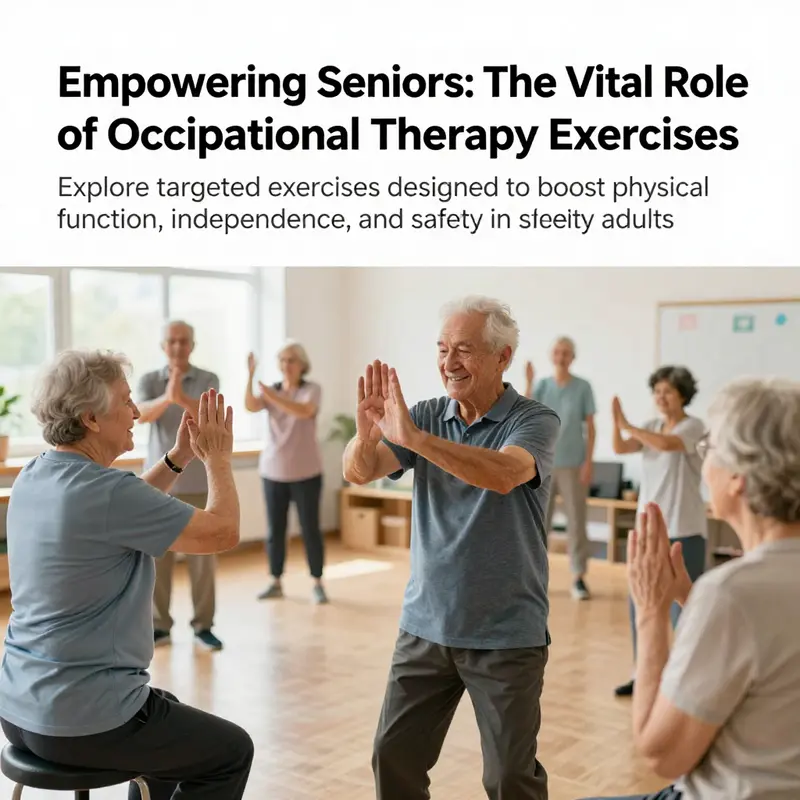
The aging population faces various challenges that affect their daily living skills, physical capabilities, and overall quality of life. Occupational therapy exercises for the elderly serve as an essential tool to enhance their independence and ensure safety when performing everyday tasks. These exercises are thoughtfully designed to maintain and improve strength, coordination, and cognitive abilities tailored to individual needs. Whether it entails functional mobility training, grip strengthening activities, or cognitive stimulation combined with balance improvement, each component plays a pivotal role. This article offers insights into various occupational therapy exercises, targeting key areas critical for fostering the autonomy and well-being of older adults, ultimately contributing to a holistic approach towards health in their golden years.
Practical Functional Mobility Training to Preserve Independence in Later Life
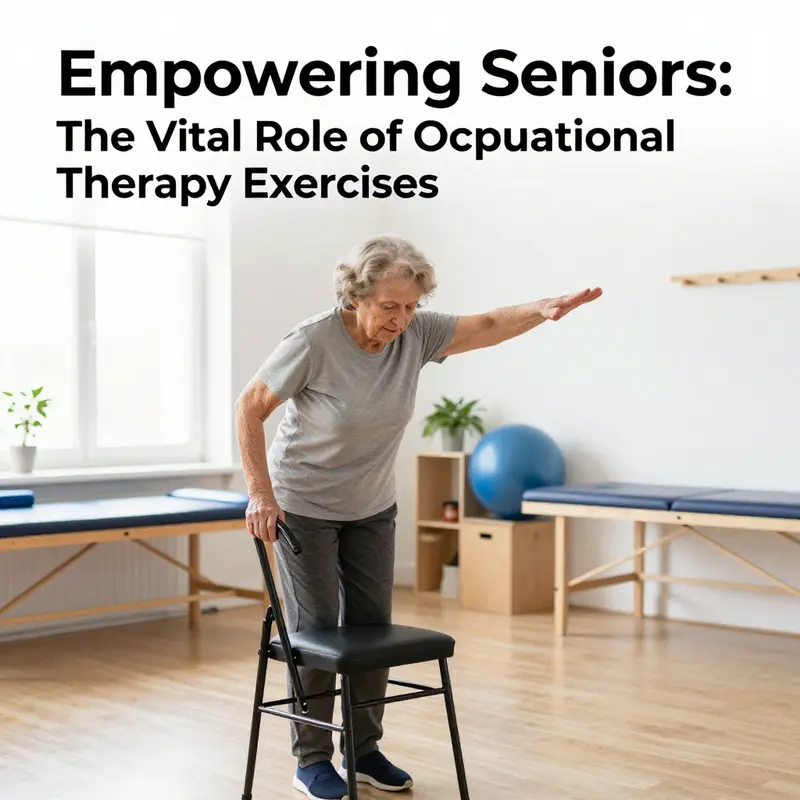
Functional mobility training sits at the heart of occupational therapy for older adults. It is not an abstract set of exercises but a practical, purposeful approach that teaches movement patterns tied to everyday life. The point is simple: help older adults move in ways that let them live safely, confidently, and with the least dependence possible. This chapter describes how therapists translate that purpose into clear goals, meaningful practice, and lasting gains—covering what is trained, how it is taught, and why the approach matters for physical ability, confidence, and safety.
Therapists begin by seeing mobility through the lens of function. Rather than practising generic gym moves, they focus on the movements people actually use: rising from a chair, stepping up a curb, turning in tight spaces, or moving from sitting to standing while carrying an object. Those actions combine strength, balance, coordination, timing, and judgment. Training targets all of those components together so improvements transfer to daily life. For example, improving leg strength alone has limited value unless the person learns to apply that strength when moving from the toilet to standing or when climbing stairs with a handrail.
Assessment shapes every program. Before designing exercises, a therapist evaluates the person’s current mobility across typical tasks. They observe transfers, gait pattern, balance reactions, use of assistive devices, and environmental challenges at home. They also consider diagnoses—arthritis, stroke, Parkinson’s disease, joint replacements—and how those conditions change movement strategies. Cognitive status, vision, sensation, pain, and medications are important because each can alter risk and ability. With that information, the therapist sets realistic, measurable goals that matter to the person: for example, to get in and out of the car without help, to climb two flights of stairs to visit grandchildren, or to walk to the mailbox and back without fatigue.
Practice is functional and graded. Sit-to-stand training is a foundational example. It combines muscle strength, balance, and coordination in a way that affects many daily tasks. Therapists teach safe mechanics: feet placement for stability, using momentum appropriately, leaning forward at the hips before standing, and pushing through the legs rather than relying on the arms. Practice begins with repetitions in a controlled setting, often with the therapist or a caregiver supervising a timed sit-to-stand sequence. As competence grows, difficulty increases—lowering the chair height, reducing arm use, adding a light object to carry, or standing from different surfaces. These graded progressions ensure gains are meaningful and directly applicable to everyday demands.
Walking training moves beyond distance alone. Therapists emphasize varied speeds, turning, and negotiating obstacles, because most falls occur when a person is changing speed, turning, or stepping over something. Sessions include walking on different surfaces—carpet, tile, grass—to practice sensory adjustments. Dual-task walking, where the person carries on a conversation or carries a tray, trains attention and multitasking skills that are essential in real life. Therapists may use timed up-and-go tests not as isolated metrics but as practice frameworks: stand, walk three meters, turn, return, and sit—repeating this sequence while refining rhythm, step length, and safety.
Stepping and stair negotiation receive focused attention because they present high fall risk. Therapists break these tasks into manageable parts. For stairs, they teach safe foot placement, using handrails properly, and stepping strategies such as leading with the stronger leg or taking one step at a time. Step training might use low platforms and progress to higher ones. Emphasis is on controlled movement, weight shifting, and recovery strategies if balance is lost. Therapists also simulate real-world scenarios like navigating a doorway while carrying laundry or stepping onto uneven pavement with a small perturbation to the trunk to mimic distraction.
Balance training is woven through every activity rather than treated as a separate skill alone. Reactive balance—how a person recovers after being nudged—is trained with gentle, controlled perturbations that require stepping or reaching. Anticipatory balance—preparing for a movement like reaching up for a shelf—is practised with tasks that involve varying the center of mass. Static balance is addressed with exercises like single-leg stance or heel-to-toe standing, but always connected to function: holding a grocery bag while turning, or dressing while standing. Therapy often uses environmental challenges that reflect the person’s home: reaching into a kitchen cabinet, turning in a narrow hallway, or stepping over a threshold.
Use of assistive devices and adaptive strategies is pragmatic and individualized. Instead of prescribing a device and moving on, therapists train the person to use it appropriately in context. For instance, a walker may improve safety but can hinder some transfers. Therapists teach how to position the walker for safe sit-to-stand transfers, how to manage stairs with a cane, or how to use a grab bar to steady oneself when stepping into a shower. They also introduce simple compensatory techniques—turning toward the stronger side after a stroke, using momentum to stand safely, or changing foot placement for a wider base of support. These strategies preserve function when impairment limits full recovery.
Repetition and meaningful context are critical for retention. The brain learns movement patterns best when tasks are practiced with intent and purpose. Therapists therefore structure sessions around activities that matter to the individual. If a person wants to be able to climb stairs to visit a friend, much of the training will simulate the stair environment and the actions needed to achieve that goal. Meaningful practice increases motivation, which in turn boosts adherence and outcomes.
Safety is layered into every exercise. Therapists always assess fall risk and adjust training accordingly. Sessions may begin with parallel bars or gait belts for support, then scale down as the person demonstrates control. Environmental modifications are often recommended in tandem with training: better lighting, removal of rugs, and placement of grab bars. Therapists also advise on footwear and pacing activities to avoid fatigue, which increases fall risk. Importantly, they teach recognition of personal limits—how to stop and rest, when to ask for help, and how to plan routes to avoid hazards.
Progression is objective and individualized. Therapists use simple measures to track improvement: number of sit-to-stand repetitions in 30 seconds, timed walk speeds, distance walked before fatigue, or successful stair steps without assistance. These metrics guide the pace of challenge. When a person consistently completes tasks with safety and minimal effort, therapists incrementally raise difficulty—lower chairs, remove hand assistance, add cognitive tasks while walking, or introduce uneven surfaces. Gradual progression avoids injury and ensures new skills are robust under changing circumstances.
Functional mobility training also addresses sensory and cognitive contributors to movement. Vision problems alter balance; numbness in the feet affects gait; medications may cause dizziness. Therapists coordinate with other healthcare providers to manage these factors. When cognitive impairment is present, therapists simplify and repeat instructions, break tasks into clear steps, and use visual cues or routines to support learning. Training may include memory aids or environmental changes to reduce hazards when judgment is impaired. The aim is to maximize safe independence despite these underlying issues.
Caregiver education is a core component. Many older adults rely on spouses or family members for support. Therapists teach caregivers safe assisting techniques: how to provide hand support without causing dependency, how to cue the person for correct body mechanics, and how to set up the home for safer movement. Training caregivers in transfer techniques and in encouraging independent effort prevents over-assistance, which can erode a person’s confidence and strength.
Psychological factors shape outcomes as much as physical ability. Fear of falling frequently limits activity more than actual impairment. Functional mobility training deliberately rebuilds confidence by setting achievable goals, celebrating small wins, and exposing the person to progressively challenging but safe situations. As confidence grows, people often reengage in social and physical activities that further reinforce mobility gains. Therapists monitor mood and motivation, adjusting the program to maintain engagement and prevent discouragement.
Practical tools and simple exercises can maintain progress between therapy sessions. Short practice routines—five to ten minutes of sit-to-stand repetitions, timed walks around the house, or step-ups on a low curb—keep gains active. Therapists often provide written or pictorial guides and teach how to integrate practice into daily routines: standing up from television breaks, marching in place while making coffee, or practicing stepping strategies when loading the dishwasher. Consistency matters more than intensity; frequent, purposeful practice helps skills become automatic.
Technology can support training but is not required. Simple tools like sturdy chairs, step stools with rails, or balance pads provide graded challenges. When available, low-cost devices such as resistance bands or ankle weights can help build strength relevant to transfers and gait. In some settings, therapists may use timers, video feedback, or virtual balance programs to vary practice. Yet the highest priority remains task specificity and safety—technology should serve those goals, not replace them.
Outcome expectations are realistic and hopeful. Age alone is not a barrier to meaningful improvement. While underlying disease or progressive conditions may limit the degree of recovery, targeted functional training often reduces dependence, lowers fall risk, and improves quality of life. Gains can include quicker and safer transfers, longer walking distances, better ability to manage stairs, and increased confidence. These changes ripple into daily life: fewer missed social activities, greater ability to manage personal care, and less caregiver strain.
Finally, functional mobility training is a continuous process, not a one-time fix. As health changes, routines and environments shift, and new challenges arise. Therapists revisit assessments and adapt plans. Preventive maintenance—periodic refreshers and adjustments—helps preserve independence. The best programs teach skills, adapt the environment, and equip individuals and caregivers to handle change.
Functional mobility training therefore blends biomechanics, behavior, and real-world context. It targets the specific movements people need, builds them progressively, and embeds practice in meaningful tasks. The result is mobility that supports daily living, reduces fall risk, and restores confidence—so older adults can move through their homes and communities with greater ease and dignity.
For clinicians and caregivers seeking practical guidance and evidence-based strategies to design and implement functional mobility programs, consult authoritative resources that outline safe, age-appropriate exercise practices and progression principles. One comprehensive guide that aligns with these principles is the National Institute on Aging’s exercise resource: https://www.nia.nih.gov/health/exercise-physical-activity-your-everyday-guide
Rebuilding Hands: Practical Grip-Strengthening Strategies to Preserve Independence in Older Adults
Grip strength is a cornerstone of daily independence for older adults. From opening jars to fastening clothing, from holding a cup to turning a key, the hands do most of the small but vital jobs that let a person live safely and with dignity. Age-related changes, chronic conditions, and periods of inactivity commonly reduce hand strength and coordination. Occupational therapy targets these losses with focused grip-strengthening activities that restore function, reduce frustration, and support meaningful participation in everyday life.
Understanding why the hands weaken with age helps shape effective therapy. Muscle mass gradually declines after midlife, a process called sarcopenia. The small muscles inside the palm and fingers, which control fine manipulation, are especially vulnerable. Nervous system changes can slow reaction time and reduce coordination. Joint stiffness from arthritis limits range of motion and alters how force is applied. Sensory changes decrease tactile feedback, making precise grip modulation harder. Together, these factors mean tasks that once felt automatic become effortful, unsafe, or impossible without help.
Occupational therapists take a practical, person-centered approach. The goal is not to build bulk muscle like in gym training, but to restore functional strength and control that translate to real tasks. Therapy begins with an assessment of hand function. Clinicians observe how an older adult performs routine actions: pouring a drink, turning a doorknob, buttoning a shirt, or carrying a light tray. They measure grip and pinch strength when possible, often using a dynamometer or pinch gauge. Range of motion, joint integrity, skin condition, sensation, and pain levels are documented. Cognitive status and motivation are considered, because learning and adherence influence outcomes.
Once needs are clear, exercises are chosen and adapted to the person’s abilities and goals. Effective programs blend direct strengthening with functional practice. Exercises are progressed slowly, with attention to form and pain thresholds. The following activities are widely used and can be adapted for different abilities.
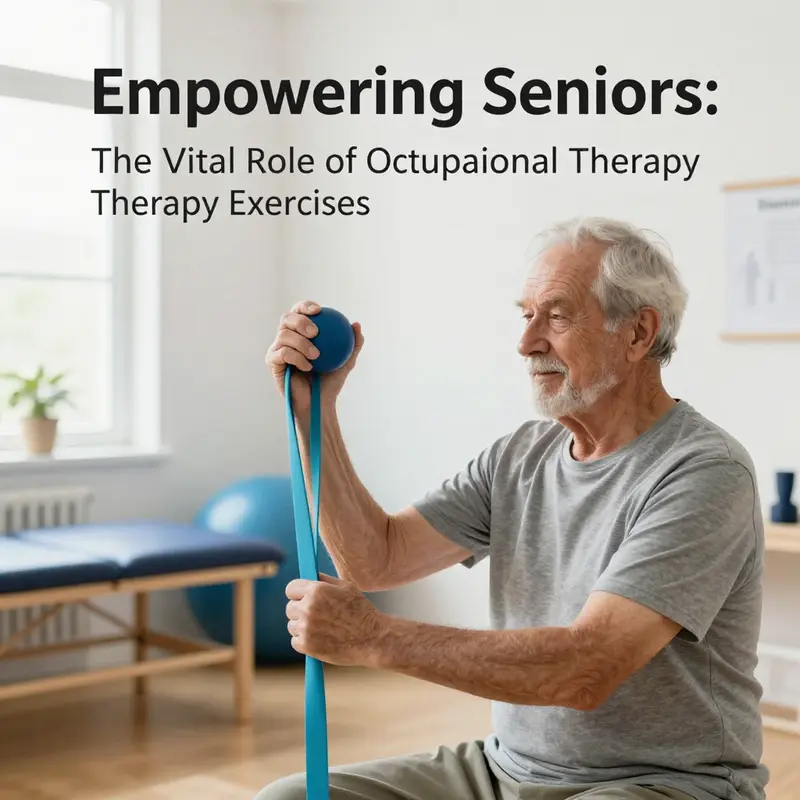
Squeezing a soft rubber ball or stress ball is a simple and powerful starting point. The motion targets intrinsic and extrinsic hand muscles. The person holds the ball in the palm and squeezes, then releases, repeating in controlled sets. Repetitions can be short and frequent to reduce fatigue. Therapist guidance emphasizes full range of motion and avoiding compensatory forearm or shoulder movement. Grading is easy: softer balls at first, progressing to firmer ones. Timed holds add endurance, while short, forceful squeezes build quick strength.
Resistance bands offer versatile options for finger and thumb strengthening. Loop a band around several fingers and the thumb, then spread fingers apart against resistance. This works extensor muscles often neglected in daily tasks. Bands also allow resisted flexion by wrapping around the fingertips and pulling inward. Bands come in graduated resistances, so therapists select levels that challenge without causing pain. Bands can be anchored to stable objects to simulate functional grips, such as pulling a band while holding a cup-shaped grip or mimicking a door handle rotation.
Therapeutic putty or clay provides graded resistance while encouraging dexterity. Kneading, rolling into a ball, pinching off small pieces, or pulling the putty apart targets many hand muscles. Putty exercises are especially useful for older adults with arthritis, because the material is warm and malleable, reducing stiffness while strengthening. Putty also supports creativity; therapists can embed small objects in the putty to encourage varied pinches and retrieval tasks, combining fine motor work with problem-solving.
Functional tasks are essential because strength gains matter only if they translate to daily life. Activities such as opening sealed containers, turning keys in locks, using adaptive utensils, folding towels, or manipulating clothing fasteners make practice meaningful. Therapists break tasks into component movements and practice them with graded challenge. For example, opening jars progresses from using a jar opener to removing the lid with guidance, then to independent attempts with verbal cues. Practicing tasks within real routines increases the likelihood of carryover and boosts confidence.
Seated exercises keep people active when standing is difficult. Simple routines such as seated hand lifts, wrist circles with small weights, and finger taps maintain circulation and joint mobility. These motions also serve as warm-ups before more intense grip work. Ankle and arm movements performed concurrently can help with circulation, reduce fatigue, and integrate hand use into whole-body activities, reinforcing the link between hands and daily mobility.
Safety and individualized progression matter. Older adults should avoid forcing movements through painful joints. Therapists teach proper wrist alignment and body positioning to prevent undue strain. When arthritis flares occur, the program shifts to range-of-motion and gentle strengthening until inflammation settles. For people with numbness or loss of sensation, careful supervision prevents skin injury. Fatigue is monitored, and sessions are brief but frequent to build endurance without overuse. Home exercise plans are written in simple, step-by-step language and often include pictorial cueing for recall.
Measurement and feedback sustain progress. Therapists use objective tools when possible to quantify change. Grip dynamometers provide repeatable values for tracking strength gains. Simple functional measures, like timed jar-opening tasks or the number of clothespins moved in a minute, give context to clinical numbers. Regular reassessment reassures both therapist and client that the plan is effective or needs adjustment. Celebrating small milestones reinforces adherence and motivation.
Specific conditions require tailored strategies. In osteoarthritis, joint protection principles guide exercise selection. Therapists emphasize low-impact strengthening, use of warm-up modalities, and adaptive equipment to reduce joint stress. Splinting for certain finger deformities can allow safe strengthening of unaffected muscles. In post-stroke rehabilitation, exercises often begin with assisted movements and sensory re-education. Bilateral activities—using the less affected hand to guide the affected one—encourage neural recovery. Constraint-induced approaches, where the stronger hand is temporarily restricted, promote use and adaptation of the weaker hand when appropriate.
For people with cognitive impairment, simplicity and routine help. Repetition, consistent cues, and meaningful tasks—such as holding a favorite mug or turning pages of a photo album—improve engagement. Caregivers are trained to cue and supervise exercises and to incorporate hand-strengthening into daily routines, like folding laundry or passing snacks. Engaging activities that have sensory appeal, such as working with textured materials or scented putty, can increase participation in this group.
Assistive devices and environmental changes complement strengthening. Adaptive utensils with built-up handles, jar openers, and button-hooks reduce the force needed for tasks while strengthening programs proceed. Occupational therapists recommend home modifications when needed: improved lighting, non-slip mats, and lever-style door handles reduce slips and awkward grips. The combination of environmental supports and improved hand function often yields greater independence than either strategy alone.
Caregiver involvement multiplies benefit. Family members and aides can prompt daily practice, help grade exercises, and provide encouragement. Therapists coach caregivers in safe assistance techniques and in spotting signs of overuse or joint irritation. Simple logs or calendars help track adherence and provide structure. When caregivers understand the functional goals rather than isolated exercises, they can embed practice in routines—asking a loved one to stir a bowl, hold a mail item, or peel stickers from labels.
Motivation and meaning are central. Grip exercises practiced as isolated drills may feel boring. Therapists therefore emphasize meaningful occupation. A person who loves gardening might practice gripping by potting plants or using adaptive tools. A former artist might manipulate clay or string beads. These activities are therapeutic and enjoyable. They promote skill transfer because they mimic real demands.
Evidence supports these approaches. Research shows that targeted grip-strengthening programs improve hand strength and functional performance in older adults. Gains in grip power often correlate with improved ability to perform activities of daily living. Programs that blend strengthening with functional tasks tend to yield better long-term outcomes than strength training alone. Importantly, improvements contribute to self-efficacy; when people can better manage daily tasks, they report higher confidence and decreased reliance on help.
Practical programming tips make therapy feasible in everyday life. Start with two to three short sessions daily, each lasting five to ten minutes. Frequency supports neuroplastic change and prevents fatigue. Alternate exertion with rest to avoid discomfort. Use objective and subjective measures to guide progression. If strength improves without pain, increase resistance or add complexity—move from squeezing a ball to manipulating a jar lid while maintaining a steady grip. Track progress with simple tasks: count how many times a clothespin can be opened in a minute or how long a paper cup can be squeezed and released steadily.
Common pitfalls are preventable. Overemphasis on maximal force without attention to control can cause tendon irritation. Ignoring wrist position can lead to compensatory patterns, increasing risk of elbow or shoulder strain. Lack of task specificity may produce strength that does not translate to function. To avoid these problems, therapists blend graded resistance, technique coaching, and functional practice. They review progress frequently and keep the plan flexible.
Integration with other interventions is powerful. Balance and lower-limb strengthening reduce fall risk, so hand training is often part of a broader occupational therapy plan. Pain management—through heat, splinting, or anti-inflammatory strategies—can enable more effective strengthening. Cognitive training or behavioral strategies boost adherence. Multidisciplinary collaboration with physicians and physical therapists ensures medical conditions are addressed and that exercise is safe.
A simple week-long example shows how integration looks in practice. Days 1–2 focus on gentle warm-up and low-resistance squeezes and putty manipulation. Days 3–4 introduce resisted finger spreads with a band and practiced jar opening with assistance. Days 5–6 increase resistance slightly and add timed holds and fine-motor tasks like buttoning. Day 7 emphasizes a meaningful functional task—making a simple snack independently. Each day includes breaks, pain checks, and caregiver prompts as needed. Progress is recorded and adjustments made weekly.
Grip strengthening for older adults is more than muscle training. It is a deliberate pathway to independence. By assessing abilities and goals, selecting appropriate activities, progressing safely, and embedding practice into meaningful routines, occupational therapists transform isolated exercises into lasting gains. Stronger hands restore more than function; they restore confidence, dignity, and the ability to engage in life with purpose.
For clinicians and caregivers seeking evidence-based guidance on therapeutic approaches, refer to resources from professional organizations that specialize in occupational therapy and aging care, such as the American Occupational Therapy Association (AOTA): https://www.aota.org/
Cognitive Stimulation and Balance Improvement in Occupational Therapy Exercises for the Elderly
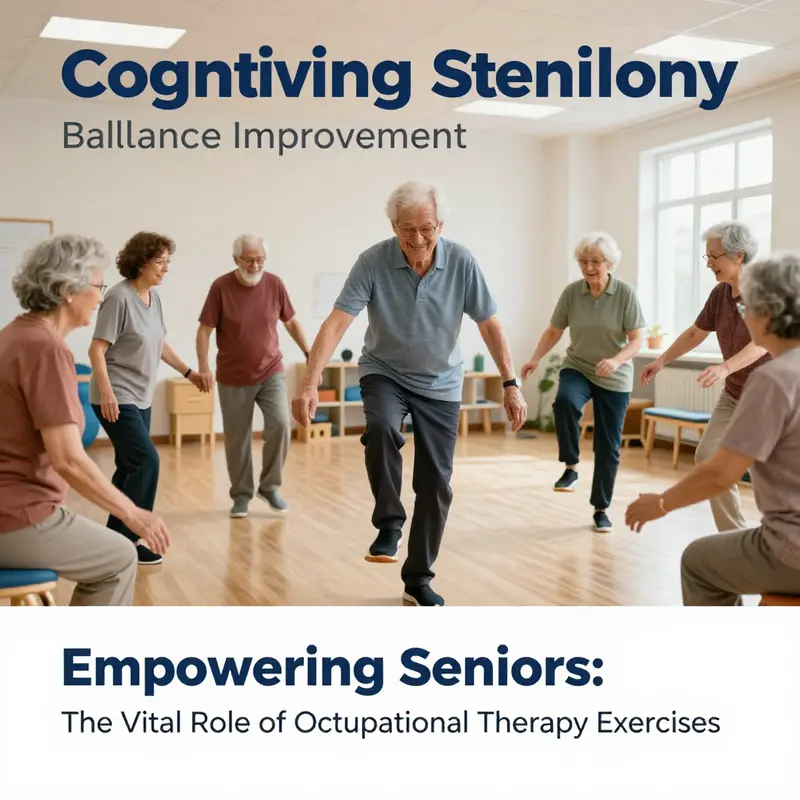
In the practice of occupational therapy, the elderly are met with a unique intersection of mind and body. The daily tasks that once arrived with ease—preparing a meal, choosing clothing for the day, navigating a familiar route to the store—can become fraught with subtle challenges as aging alters cognition, balance, and coordination. The chapter you are about to read follows a throughline that frames therapeutic effort as a seamless integration of cognitive stimulation and balance training. It argues for a holistic approach that treats thinking, processing speed, memory, attention, and problem-solving as closely linked to postural control and functional mobility. The aim is not merely to improve test scores or to tick off a checklist of exercises. It is to foster genuine independence, safety, and emotional well-being by engaging older adults in activities that are meaningful, intentional, and tailored to their everyday lives. This approach recognizes that cognitive and physical health are in constant dialogue, each influencing the other in ways that shape the quality of aging.
At the heart of this integrated method lies the concept of dual-task training. In dual-task contexts, a person performs a cognitive task while engaging in a motor task. Historically, therapists may have treated cognitive or motor domains separately, but emerging evidence supports the view that simultaneous cognitive and physical demands can generate gains in both domains. The rationale is straightforward: real life rarely demands only movement or only thought. We often walk while planning a route, or prepare a meal while keeping track of timers and ingredient lists. The brain must coordinate attention, memory, sequencing, and executive function with the stability and precision of the body. This coordination becomes especially critical as falls remain a leading cause of injury for older adults, and cognitive decline can complicate reaction times and hazard perception. Therefore, careful, structured dual-task activities can simultaneously challenge the brain and the body in a safe, progressive fashion.
A growing body of literature in occupational therapy reinforces this approach. Recent research highlights that cognitive stimulation and balance training can complement each other to reduce fall risk and improve overall functional independence. Therapists designing programs for older adults incorporate problem-solving tasks, memory games, and activities that promote attention and executive function alongside balance-focused exercises. The synergy between these elements produces benefits beyond what either domain might achieve alone. When the cognitive demands are meaningful and aligned with a person’s interests, engagement increases. Motivation matters because it sustains adherence, which in turn reinforces neuroplastic changes and motor learning. This is particularly important for older adults who may experience fatigue, chronic pain, or anxiety about falls. A therapy plan that respects these concerns while offering purposeful, enjoyable activities can transform sessions into experiences of empowerment rather than mere repetition.
The conceptual framework for this integrated practice is well summarized in the recommendations of major professional bodies. The American Occupational Therapy Association (AOTA) emphasizes holistic, client-centered interventions that address both cognitive and physical domains. Therapists are urged to design programs that are safe, effective, and individualized, balancing the need to challenge cognition and balance with the necessity of preserving dignity, autonomy, and safety. The emphasis on client-centered care means asking questions that reveal what matters most to the person—regarding daily routines, social roles, and personal goals—and then aligning exercises with those priorities. When a task reflects a real-world objective—such as reorganizing a kitchen for easier reach, or planning a short trip to a familiar destination—the cognitive load and the motor challenge feel purposeful rather than abstract. This philosophical stance is essential: therapy that resonates with a client’s life tends to yield not only measurable improvements but also a restored sense of competence and belonging.
In practice, the integrated model begins with an assessment that captures more than strength, range of motion, or balance scores. It includes cognitive screening, functional mobility observation, and an exploration of home environments and daily routines. The assessor uses these insights to craft a plan that weaves together cognitive tasks with balance and gait activities in a progression that honors the individual’s pace and safety needs. For instance, a session might begin with a cognitive task that primes attention and working memory, such as recalling a grocery list or solving a simple categorization puzzle. The cognitive demand is then intertwined with a balance challenge: for example, performing a seated or standing march while repeating the items aloud, or walking a measured path while answering memory questions. The sequencing ensures that the brain remains engaged as the body maintains stability, which, in turn, reinforces learning and motor confidence.
The research into such multimodal interventions offers encouraging signals. A notable study from 2025 by Muñoz-Perete explored the benefits of combining cognitive stimulation with resistance training in older adults with mild cognitive impairment. The findings indicated that this multimodal approach improved both cognitive performance and physical function, including dynamic balance and gait stability. The practical implication is clear: resistance exercises, when paired with cognitive tasks that require planning, memory recall, or problem-solving, can enhance the quality of postural control in older adults. The study also highlighted the importance of personalizing cognitive tasks to align with the participant’s interests, thereby boosting engagement and adherence. Engagement is not a mere byproduct; it is a driving force that sustains the dose and duration of therapy and amplifies the potential for meaningful change.
While high-tech solutions and specialized equipment can augment therapy, the core of successful integration lies in thoughtfully chosen, everyday activities. A therapist may select tasks that capture the essence of daily life—organizing a shopping list, planning a route through a familiar neighborhood, or preparing a simple snack—then layer cognitive demands on top of motor tasks. For example, a person may stand at the kitchen counter and perform a sequence of arm movements to simulate cooking tasks, all while counting aloud, recalling steps in a recipe, or making decisions about which ingredients to add next. The dual-task format reframes challenge as an opportunity to practice both mental flexibility and physical coordination in a context that mirrors real life. These moments can produce small but meaningful gains in attention, processing speed, executive function, and balance control. Over time, such improvements accumulate, contributing to a reduced risk of falls and a greater sense of independence in day-to-day living.
The practical implementation of this approach demands careful attention to safety. Balance training, particularly with older adults, must be staged to minimize fall risk. Therapists often begin with stable supports, such as a chair or countertop, and progress to more dynamic tasks only after the individual demonstrates adequate control. The cognitive tasks are calibrated to match the person’s current cognitive status and can be modulated to increase or decrease difficulty. For someone with mild cognitive impairment, tasks might emphasize short-term memory and sequencing; for someone with greater cognitive reserve, the tasks could involve longer lists, more complex problem-solving, or multi-step planning. Difficulty should rise gradually, with frequent checks for fatigue, frustration, or disorientation. The therapist also remains vigilant for signs of sensory overload or anxiety, particularly in individuals with dementia or anxiety disorders. When these signs emerge, the plan is adjusted promptly to protect safety and preserve motivation.
A key element of success is the use of adaptive strategies and tools that enable meaningful participation while preserving safety. Reachers, jar openers, and dressing aids can reduce the physical barrier to tasks that combine cognitive effort with balance work. These tools are not sacrifices to independence but enablers of it. They allow the elder to perform tasks that require thought and movement without the fear that a single misstep could lead to a fall. In the context of cognitive-motor integration, adaptive techniques also support the safe introduction of dual-task demands. For instance, a reacher can help maintain upright posture while the person engages in a memory activity, thereby decoupling some of the motor demands from the cognitive load in a controlled manner. The ability to modify tasks with assistive devices is an aspect of empowerment rather than dependence, reinforcing the therapeutic principle that independence is dynamic and adaptable rather than absolute.
Another dimension of this integrated practice concerns the home environment. Occupational therapists frequently assess living spaces to identify hazards and to optimize conditions that support both cognitive function and balance. Adequate lighting, clear pathways, non-slip floors, and the strategic placement of frequently used items can reduce cognitive load by simplifying the environment. A well-designed home can function as a therapeutic ally, providing opportunities for safe practice of dual-task activities in daily life. Consider an arrangement in which the resident alternates between memory-based decision-making during a routine activity—such as laying out a meal plan or checking ingredient lists—and a balance-based task like stepping in place while counting or reciting the days of the week. Such arrangements integrate therapy into routine life, transforming everyday activities into opportunities for learning and maintenance.
The emotional dimension of cognitive and balance training is subtle but powerful. Meaningful activity acts as a conduit for identity and purpose, and the sense of competence that accompanies successful task completion reinforces self-efficacy. The elderly person who experiences a reduction in daily dependence and an enhanced ability to participate in family life and community activities experiences not only physical benefits but also improved mood, reduced isolation, and a greater sense of belonging. The therapeutic relationship itself plays a central role here. A clinician who listens to concerns, respects preferences, and co-creates goals with a person helps cultivate trust and motivation. When a client recognizes that therapy is tailored to their life story, days feel more navigable, and the practice of cognitive and motor exercises becomes a shared journey rather than a series of prescribed drills.
A broader implication of integrating cognition and balance extends to the trajectory of aging itself. The literature suggests that older adults who sustain cognitive engagement and physical stability retain a greater degree of autonomy longer. The domains of attention, memory, and executive function can influence how safely someone moves through space, how quickly decisions are made in potentially hazardous situations, and how effectively a person can adapt to changes in routine or environment. In this sense, cognitive stimulation and balance improvement are not isolated outcomes but formative processes shaping daily life across several dimensions. The objective is not to erase aging but to support a resilient adaptation to it—an approach that values independence, safety, and meaningful participation as core measures of success.
Practical applications for clinicians and caregivers extend beyond the clinic or therapy room. Programs can be designed for home-based practice that respects the rhythms of aging and leverages the person’s daily patterns. A typical session might begin with a warm-up that primes the nervous system and engages the senses, followed by a cycle of cognitive-motor tasks that are selected for relevance to the individual’s life. The activities can be anchored by a central theme—such as planning a family gathering, organizing a hobby schedule, or preparing a comfort meal for a loved one—and then weaved into a sequence of tasks that require attention, memory, problem-solving, and deliberate, controlled movement. Safety remains the guiding priority, with caregivers or family members trained to supervise or assist as needed. The goal is to create a sustainable routine that the elder can integrate into daily life, thereby preserving function and fostering a sense of purpose.
As with any therapeutic approach, ongoing evaluation is essential. Clinicians monitor cognitive performance, balance metrics, endurance, pain, and overall function, noting how changes in one domain influence others. They adjust task difficulty, introduce new cognitive challenges, and refine environmental modifications as the person progresses or encounters new health considerations, such as arthritis flare-ups, post-surgical recovery, or episodes of delirium in the context of acute illness. The adaptability of the program is critical because the pace of aging and the emergence of comorbidities require a nimble, responsive plan rather than a rigid, one-size-fits-all protocol. The result is a therapy that evolves with the person, maintaining relevance and effectiveness across changing circumstances.
One practical caution is the risk of cognitive overload, particularly in individuals with advanced dementia or psychiatric comorbidities. Therapists must balance the cognitive load with the person’s tolerance and ensure that the tasks remain meaningful and achievable. In some cases, it may be wiser to separate tasks into shorter, more frequent sessions rather than attempting longer blocks of dual-task practice. In others, the focus may shift toward simpler cognitive tasks that reinforce attention and memory within a safer balance exercise. The overarching principle is that therapy should honor the person’s dignity and preferences while pursuing safety and functional gains. The nuanced judgment required to strike this balance is a central skill for occupational therapists who work with older adults facing cognitive and motor changes.
The evidence base and clinical guidance converge to a clear message: cognitive stimulation and balance improvement are mutually reinforcing pillars in occupational therapy for the elderly. The combination is not an optional addendum but a coherent strategy for enhancing independence and life satisfaction. The research cited here, including the 2025 study by Muñoz-Perete and the AOTA position statement from 2023, provides a framework that supports clinical judgment, ethical practice, and patient-centered care. Therapists are encouraged to design safe, individualized programs that address cognitive health and balance in tandem while maintaining a strong emphasis on meaningful engagement. The future of aging well depends on such integrated, person-centered approaches that honor the complexity of aging brains and aging bodies alike.
In closing, the practice of combining cognitive stimulation with balance training embodies a hopeful perspective on aging. It acknowledges that the mind and body are not separate entities but connected streams that can be nurtured together. When this synergy is woven into every therapeutic encounter, older adults gain more than improved scores on a test or longer uninterrupted steps. They gain the confidence to act, the resilience to face daily challenges, and the sense that life remains full of possibilities. That is the core promise of occupational therapy for the elderly: to help people live with dignity, safety, and purpose by fostering both cognitive vitality and physical balance through activities that matter most to them.
External resource: https://www.aota.org/advocacy/public-policy/position-statements/cognitive-rehabilitation-and-fall-prevention-in-older-adults
Final thoughts
Occupational therapy exercises for the elderly are crucial in maintaining their independence, promoting physical and cognitive health, and ensuring safety in daily living. From functional mobility training that enhances their ability to navigate their homes, to grip-strengthening activities that combat age-related decline in hand function, each aspect of therapy is tailored to meet individual needs. Furthermore, incorporating cognitive stimulation and balance exercises not only fosters mental acuity but also significantly reduces fall risks. By recognizing the importance of these exercises and potentially integrating them into your business offerings, you can contribute to improving the quality of life for seniors in your community.