

Roasting coffee beans in-house can significantly enhance the quality of your product while allowing you to tailor flavors to suit your clientele’s preferences. This practice isn’t just about the taste; it also impacts your brand positioning and market differentiation. As a business owner, understanding the intricacies of roasting can lead to more confidence in your coffee offerings and ultimately improve customer satisfaction and loyalty. In this guide, we will explore the essential principles of coffee roasting, practical methods suitable for various equipment, and best practices for cooling and storing your freshly roasted beans, setting the stage for elevating your coffee business.
The Quiet Alchemy of Roasting: Principles, Process, and Pleasure in Home Coffee Beans
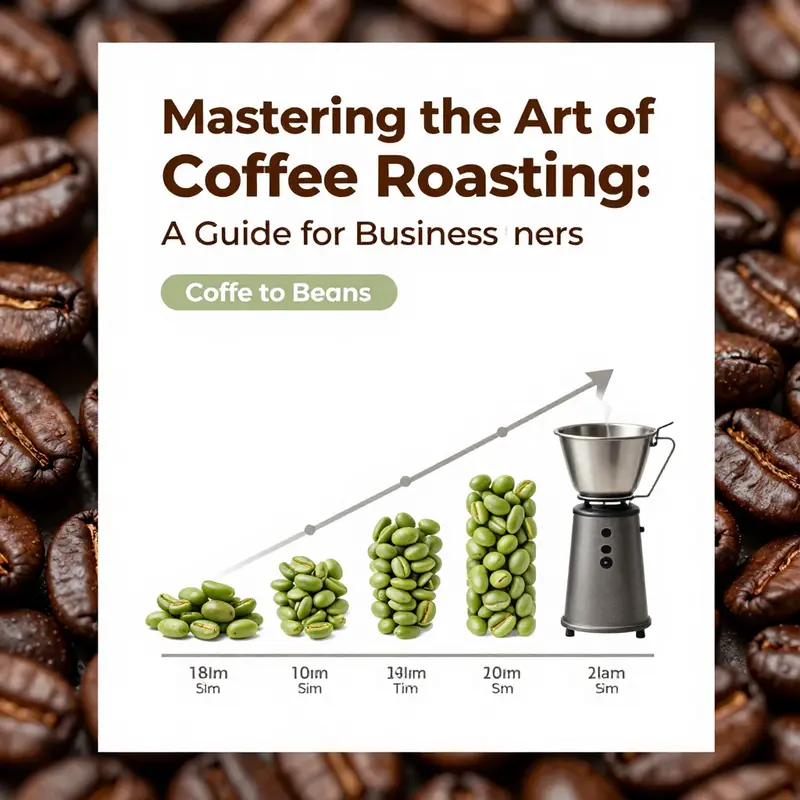
Roasting coffee beans at home is more than a kitchen task; it is a ritual of transformation, a deliberate dialogue between heat, time, and taste that turns hard, green seeds into the fragrant, full bodied beans we grind, brew, and sip. The journey from raw to roasted is not a single event but a sequence of stages, each with its own signals and surprises. To approach it with confidence, you first learn the core principles that govern every roast, then you adapt those principles to the tools you have in your kitchen. Whether you choose an approachable air fryer or a conventional oven, the aim remains the same: a controlled application of heat that drives off moisture, triggers chemical reactions, and develops aroma and flavor in a way that reflects your personal palate. This chapter weaves together the science of roasting with practical, day to day practices so that you can enjoy the process as much as the result, and it invites you to treat each batch as a note in a longer musical score of experimentation and refinement.
The foundation of good roasting rests on three interlocking ideas: heat control, time and temperature profiling, and the understanding of the physical and chemical changes that beans undergo as they heat. Heat control is about how aggressively you apply energy to the beans and how you modulate that energy in response to what you hear, see, and smell. If the heat is too intense or too uneven, the beans scorch or roast unevenly, leaving uneven flavors and a rough mouthfeel. If the heat is too gentle, flavors stay immature, astringent, or flat, and the beans may never fully release their potential. The second pillar, time and temperature profiling, is the art of tracking bean temperature as a proxy for development. Since the color and aroma are imperfect measures on their own, many roasters learn to read a curve: a gentle rise during drying, a rapid turn at first crack, and a steadier, more deliberate tone as flavors develop. The third pillar centers on the physical and chemical metamorphosis inside the beans. The drying phase removes moisture and begins to loosen the envelope around the starches and sugars. Then comes browning, driven by Maillard reactions, where sugars and amino acids cross talk to form hundreds of flavor compounds. Caramelization adds sweetness and depth as sugars soften and brown. The dramatic moments arrive with the audible signs of cracking, but the quiet work continues as aromas intensify and oils slowly surface, hinting at the style you are about to craft. Each roast is a negotiation with heat, a conversation with time, and a careful listening to the visible cues that signals when to pause, rest, and cool.
In practical terms, the drying phase is where moisture leaves the green bean, and it is the prelude to the richer development that follows. During this phase, the beans shift from a pale green to a pale yellow, a signal that moisture is receding and heat is penetrating more deeply. The temperature range commonly observed during this stage sits around 180 to 205 degrees Celsius, and the duration is hands on 3 to 8 minutes depending on bean size, density, and the roasting method used. The goal is to reach a point where the beans feel lighter in weight, the surface colors turn toward a golden hue, and the beans begin to emit a faint, toasty aroma that signals the end of moisture loss and the approach of deeper chemical changes. As the first crack nears, the kitchen may fill with a popcornlike pop and a noticeable shift in the smell, from simple heat to a more complex, sugary, nutty aroma. This is the moment when acidity and brightness start to register, especially in lighter roasts, and it invites you to consider your intended direction for the roast—light, medium, or dark—before moving forward.
The first crack itself is a crucial marker. It is not a single event but a window into the bean’s transformation. The pop sounds indicate that steam and expanding oils are beginning to push their way out of the beans as their internal structure loosens and changes shape. First crack typically occurs around the 4 to 8 minute mark, depending on the roast method and the beans’ density. At this point, the beans have entered what roasters call the development phase. This phase lasts as long as you want to push the flavor forward, but the moment you cross into a different level of heat interaction, you begin to commit to a particular roast style. For a light roast, you might stop soon after first crack, preserving acidity and floral or citrus notes. For a medium roast, you ride the line between the crack and the deeper, more controlled flavor development, aiming for balance between sweetness, body, and brightness. For a dark roast, you continue beyond first crack into the second crack, letting the heat coax deeper caramelization, bittersweet notes, and a fuller body, accepting some loss of nuanced acidity in exchange for stronger chocolate, cocoa, and roasted flavors.
The second crack, a second, faster chorus of pops, signals the beans’ oils surfacing more generously and the onset of the darker roast spectrum. Not every batch reaches second crack, and that choice is deliberate. If you do pursue a second crack, you will be watching a rapid change in color, aroma, and the feel of the beans on your hands as they shift toward a glossy sheen. The safety of this stage rests on constant attention, as the line between a bold, deep roast and burnt, burnt sugar notes can be a fine one. The longer you allow the roast to progress after second crack, the more the inherent sugars break down, the more the oils reveal themselves, and the more intense the mouthfeel becomes. Yet there is a risk of charcoal flavors and a loss of brightness that defined the lighter notes earlier in the roast. This is why the development phase after first crack is so vital: it lets you sculpt the balance, guiding the roast toward a profile that harmonizes sweetness, acidity, body, and aroma in a way that resonates with your brewing method and your taste buds.
Cooling is the hinge that preserves the roast you have chosen. Once you decide a roast has reached its target, you must halt cooking immediately. The simplest way is to spread the beans across a cool, wide surface and introduce a brisk airflow. The objective is to dissipate heat quickly so the beans stop cooking and retain their color, aroma, and structural integrity. Any delay in cooling can push the roast toward overdevelopment, muddling the delicate balance you fought to achieve. It is not unusual to cool beans to room temperature within two to three minutes if you have a flat tray in front of a fan, but the key is speed and thoroughness rather than a specific time. A well cooled batch will keep more aroma and a cleaner flavor profile during storage, and the degassing process begins in earnest once the beans leave the heat, releasing carbon dioxide that has built up inside the bean during roasting. This degassing period is not merely a waiting game; it is a second stage in the craft, shaping how the coffee will present itself after a few days of rest.
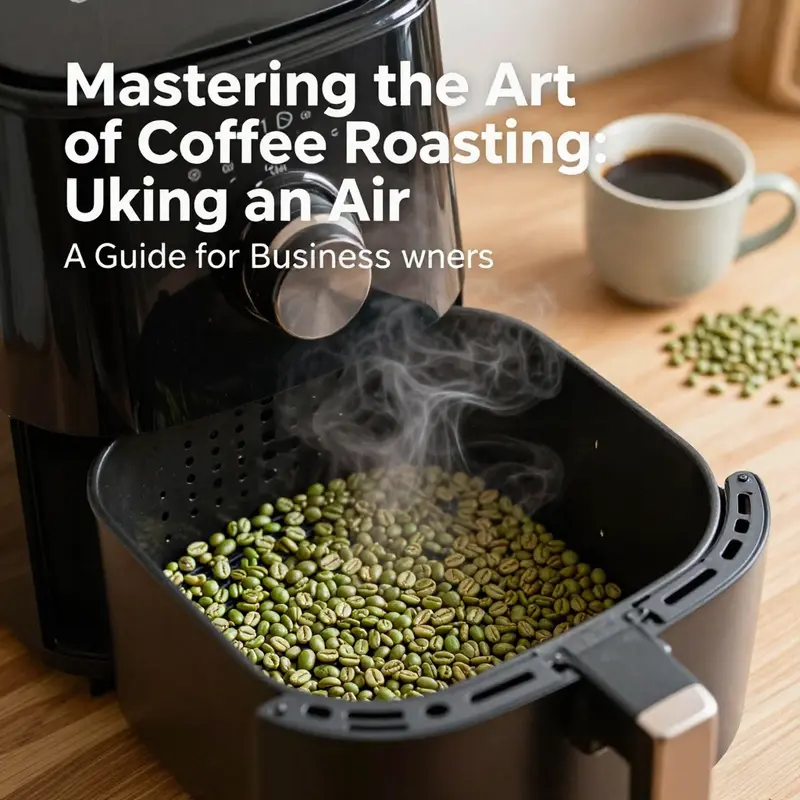
With the science of roast in place, the two most accessible routes for home roasters emerge: the air fryer method and the oven method. The air fryer, prized for its straightforwardness and relatively quick heat cycling, brings consistent airflow and compact size to a home kitchen. In practice, you preheat the device to a modest range around 180 to 200 degrees Celsius, load the beans in a basket no more than about 70 percent full to allow movement, and begin the clock. The first crack typically arrives around the five to eight minute mark, a moment you listen for with intention. For a light roast, you may step away after the cracks slow, around ten to thirteen minutes, while a dark roast may push toward the second crack at roughly fifteen to eighteen minutes. Midway stirring, a gentle shake of the basket every few minutes, helps keep the beans moving and the heat distributed evenly, reducing the risk of scorching on the surface. Once the target is reached, the beans are swiftly transferred to a cool tray or colander, and a fan or cool air is applied to drop their temperature quickly. The essential habit that accompanies the air fryer approach is meticulous note taking: record each batch’s time, temperature, and outcome, crafting a personal roast log that becomes a map for future sessions. Safety remains paramount; the air fryer becomes extremely hot, and many roasters choose to stay in the kitchen, hands protected, to maintain control and prevent fires caused by chaff accumulation. As you accumulate batches, you begin to see patterns: certain origins reach a more vibrant brightness at lighter levels, while others lean toward nutty, chocolatey, or even smoky tones at darker levels. The language of your notes translates into a practical, repeatable method that suits your palate.
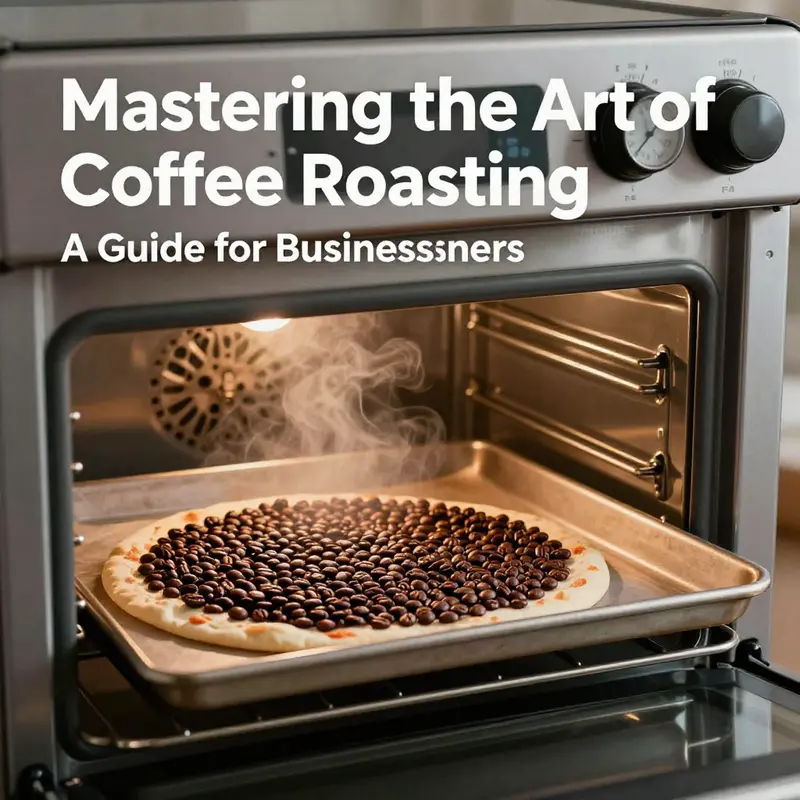
The oven route, by contrast, presents a different set of challenges and opportunities. Conventional ovens lack the fine cross current of air that makes roasting in a dedicated roaster more even, but with the right setup, good results are possible. A perforated or mesh baking sheet lets air pass through, and a hot oven set around 240 to 250 degrees Celsius can still deliver a flavorful roast if you manage the process with care. The process begins with a long preheat to stabilize the chamber, often thirty minutes or more, followed by spreading the beans in a single layer on the sheet. The bake itself tends to be shorter in the sense that the heat is intense and indirect, and the color change occurs quickly. The cook checks color and stirs frequently—every few minutes—yet opening the door too often can drop the oven temperature and undermine uniform development. First crack tends to arrive in the seven to nine minute window, and the task then becomes deciding whether to exit for a medium roast or to continue for a darker finish. Cooling remains essential, and a metal colander paired with a fan helps you quickly shed heat and stop the roast in its tracks. Some roasters enjoy a subtle advantage from the oven’s slower, perhaps more even heat transfer, noting a deeper, more layered development in certain batches. The payoff can be a richly flavored cup with a sense of depth that reflects the longer, steady heat exposure, though it may require more careful management of airflow and temperature fluctuations to minimize unevenness.
Once the beans have cooled, the long arc of the roasting process continues in a more quiet way. The degassing period of roughly three to five days after the roast is when the most expressive flavors reveal themselves. Freshly roasted coffee tends to be vigorous and volatile, with aromas that can overwhelm the senses as carbon dioxide escapes from the bean. Allowing the beans to rest unbrewed while they settle into their new chemical equilibrium helps ensure that the flavors assemble properly once hot water greets the grounds. Storage then seals the experience you have created: an opaque, airtight container keeps light, heat, and moisture at bay, preserving the roast and preventing the rapid oxidation that would dull its brightness. Dark jars or vacuum sealed bags, kept away from the stove and direct sunlight, are ideal allies in this respect. The old advice to avoid refrigeration makes sense here; condensation can ruin a freshly roasted bean by encouraging uneven flavor changes. Freezing is acceptable only if you portion carefully and seal completely, preserving the integrity of aroma until you brew again. The careful balance of degassing and storage allows you to enjoy more of the roast’s personality on subsequent mornings, giving your taste buds a chance to appreciate how the coffee evolves while aging gracefully in a closed environment.
The science behind the flavor is not a single equation but a choreography of chemical reactions and physical changes that respond to origin, density, and processing method of the beans. A light roast tends to preserve fruity acidity and the bean’s inherent character from its growing region, offering a bright cup with a delicate sweetness when paired with a clean water profile. A medium roast sidesteps some of the sharp edges of acidity, yielding a balanced narrative of sweetness, body, and aroma that many drinkers associate with a classic, versatile cup. A dark roast emphasizes roasted notes, caramelized sweetness, and a fuller body, sometimes at the expense of brightness and nuanced origin flavors. Your roasting decisions are shaped by tradeoffs, and you achieve your preferred balance by tracking how small adjustments to time and temperature alter the cup in front of you. Keeping a tasting journal where you note the origin, batch size, aging, roast level, and brew method creates a living map of how your methods translate into flavor. In this way, roasting becomes a practice not of guesswork but of disciplined iteration that mirrors how careful professionals approach any craft. The natural chemistry of the bean responds to careful handling, and the result is a cup that mirrors your choices as a roaster, not just a random outcome.
To stitch together practice with meaning, many home roasters find it helpful to anchor their routine in a method that treats roasting as both an experimental science and an artistic habit. You build a personal rhythm by choosing a target profile for a given origin, and you adjust your heat, airflow, and duration to approach that profile. You taste, you log, you refine. You repeat with new batches and new beans, letting each session teach you how a particular origin behaves under heat. This is where the tactile, sensory dimension of home roasting becomes a form of mindful craftsmanship. It is not about chasing perfection in every batch but about cultivating an ongoing dialogue with your coffee. You learn to recognize what brightness feels like in your own palate, what a balanced mouthfeel implies, and how a hint of chocolate or caramel can emerge from a carefully moderated roast. The process invites you to slow down just enough to hear the beans talk back, to notice how the kitchen air changes as heat builds and aroma expands, and to accept that even imperfect batches are meaningful. There is a quiet satisfaction in the way a well-rested roast unlocks a sense of comfort and ritual in a morning routine, a moment when the house feels more alive because the air carries coffee’s inviting complexity.
In closing, the principles of heat control, development timing, and cooling discipline create a framework you can rely on as you explore the diverse world of coffee origins and roast styles. The two accessible methods you can lean on—air frying and oven roasting—offer different textures of control, yet both demand careful attention to the same underlying signals: the yellowing of the beans as moisture leaves, the crackling chorus that marks development, and the cooling that freezes flavor into a finished profile. The art today is to document your experiments, adjust to your equipment, and listen for the whispers of aroma as the beans settle into their final state. Whether your aim is a bright single-origin cup that awakens the senses with high acidity or a chocolatey, full-bodied blend that lingers with warmth, the path begins with an intention—what you want the cup to tell you—and ends with a practical sequence of steps that brings that intention to life in your own kitchen. The journey from green to aroma is as much about habit as it is about heat, and the reward is a personal repertoire of roasts that reflect your curiosity, patience, and taste. For a broader look at the science and craft that underpins home roasting, the field offers a well of resources that connect temperature, time, and flavor to the coffee you brew. As with any specialized practice, the more you observe, record, and compare, the more your intuition grows, and the more your mornings become a short, authentic ritual that starts with the simple, transformative act of roasting a few green beans.
To deepen the connection between careful practice and persistent learning, consider that the discipline of roasting shares a common thread with broader crafts that rely on precise measurement, steady routines, and a willingness to adjust. In fields such as rehabilitation and therapeutic practice, professionals continually refine techniques through careful observation and documentation. This parallel offers a reminder that even in the quiet, intimate act of home roasting, progress is built on repeatable steps, data gathered from each batch, and the openness to let aroma guide your understanding of flavor. The journey is not a race against time but a thoughtful conversation with your ingredients, your tools, and your own palate. When you finally cup your coffee and detect the subtle play of acidity, sweetness, body, and aroma, you taste the fruit of your attention, the patience you practiced through heat, and the resilience to learn from what did not go as planned. The roast, then, becomes a narrative you author with every batch, a living record of how you learned to coax out the most character from every bean in your kitchen.
For readers who want to explore further the science and practical approaches of home roasting and to see related demonstrations of technique, a broader landscape of knowledge is available online. As you continue to refine your method, you may find it helpful to consult resources that present a structured, research-informed view of roast development and bean chemistry. External resources can complement your hands on practice by offering science backed explanations of why certain steps matter, why rest matters, and how various heat profiles map to flavor outcomes. And for those who wish to explore an odd but informative cross domain example of how careful practice translates into refined results, you can read about the use of controlled heating and methodical data tracking in related crafts. This broader view can illuminate your own roasting journey, helping you understand not just what to do, but why the steps you take shape the final cup. As you grow more confident, you will discover that coffee roasting is not merely a kitchen activity but a small, deliberate engineering in which art and science cooperate to reveal aroma, flavor, and memory in every cup. The work you invest now will yield a vivid, daily reminder of how attention to detail can turn simple raw beans into a ritual you anticipate and savor.
If you are curious to see a practical, science oriented walk through a different roasting setup, you can explore a detailed guide that demonstrates how to use a popcorn maker to roast coffee beans at home. It provides a concrete example of the heat transfer and sensory cues that roasters rely on in real time, and it serves as a useful complement to the more kitchen specific methods described here. occupational-therapy-exercises-for-stroke. For those who want a broader, structured reference on roast profiles, bean chemistry, and sensory evaluation, a professional resource offers deeper dives into the science behind these practical steps. The journey through home roasting is a continuous cycle of observation, action, and reflection, and it rewards patience with a cup that bears the mark of your own careful craft. As you close this chapter, remember that you are not just roasting beans; you are shaping a moment of comfort and curiosity that can travel from your kitchen to the cup you drink, and from that cup to the way you begin your day.
External reference for further reading and practical demonstration: How to Use a Popcorn Maker to Roast Coffee Beans at Home. https://www.seriouseats.com/how-to-use-a-popcorn-maker-to-roast-coffee-beans-at-home-1234567890
null
null
null
null
null

null
Final thoughts
Roasting coffee beans at home or in small business environments offers significant advantages, from quality control to unique flavor profiles that can set your offerings apart. By mastering the key principles of coffee roasting, utilizing accessible methods like air fryers and ovens, and following proper post-roast care for storage, you can enhance your product and business appeal. Embrace the nuances of roasting as you cultivate a distinctive coffee identity that resonates with your clientele while fostering operational excellence.