

Many business owners recognize that the quality of coffee served can significantly influence both customer satisfaction and sales. How much coffee beans per cup is essential to understand for creating a consistent, delightful coffee experience. This article will guide you through the proper coffee bean usage guidelines, optimization of brew strength across different methods, adjustments for individual flavor preferences, and the importance of precise measurements for quality consistency. By the end, you’ll be better equipped to cater to your coffee-loving clientele with the perfect cuppa every time.
From Scoop to Cup: Refining How Much Coffee Beans Per Cup for Flavor, Balance, and Confidence

The act of brewing coffee at home often begins with a simple question: how much coffee beans per cup should I use? Yet that question opens a broader conversation about the relationship between bean quantity, the brewing method, and the sensory result you crave. It is not a fixed formula carved in stone, but a living guideline that shifts with your equipment, your beans, and your palate. The goal is not to hit a theoretical perfect but to align measurements with taste, strength, and aroma. When you begin from that premise, the numbers start to feel less prescriptive and more like a language you learn to speak with your coffee. You quickly realize that what looks like a small adjustment—one extra gram, one less gram, a few seconds more or less in contact time—can tilt the balance between a cup that feels flat and one that sings with a little more body, sweetness, or clarity. In this sense, the debate over how many beans per cup becomes a conversation about fidelity to your own sensory preferences, expressed through the precision of measurement and the discipline of consistent technique.
A practical starting point anchors the journey: for a standard eight-ounce cup of coffee, many home brewers begin with roughly 1 to 2 tablespoons of grounds per 6 ounces of water. Translated into weight, that guideline becomes about 10 to 15 grams of coffee beans per cup, acknowledging that a single cup is not a perfectly fixed object and that the conversion from beans to grounds is not perfectly linear. The visual cue of a tablespoon is helpful in the kitchen, yet the eventual commitment to a scale yields far more reliable results. Scales remove the ambiguity of variables like grind density and bean roasts, turning a soft art into a repeatable science. When you embrace weight-based measurements, you gain the ability to compare outcomes across different days, roasts, and grinders with a precise ledger of what was used and what the cup delivered. The shift from volume to weight is not just a technical adjustment; it is a quiet empowerment, a way to trade guesswork for accountability in your own kitchen laboratory.
Yet even with a weight-based framework, the conversation cannot be reduced to one universal number. Different brewing methods demand different ratios because extraction physics change with contact time, surface area exposure, and pressure. Espresso introduces a conspicuously different set of demands. A typical double shot uses roughly 18 to 21 grams of finely ground coffee, yielding about 36 to 42 milliliters of liquid under high pressure. The goal here is not simply more coffee in more concentrated form, but a delicate balance that delivers sweetness, crema, and a cohesive mouthfeel. The coffee-to-water ratio, in this case, runs higher by weight than in drip or pour-over styles, and the grind is finer to promote the quick extraction that espresso requires. If you were to measure in teaspoons rather than grams, you would quickly encounter inconsistencies due to bean density, grind size, and even how you tamp. The takeaway is clear: per-cup guidelines serve as starting points, but the laboratory of espresso demands a different diction altogether.
Pour-over and pour-through techniques illustrate a slightly different dialect of the same language. In these methods, the ratio typically lands in the 1:15 to 1:17 range by weight, such as 20 grams of coffee for 300 to 340 grams of water. This approach emphasizes control: the water hits the bed of grounds in a regulated fashion, time and temperature are monitored, and the resulting extraction often reveals clarity and nuanced flavors that can be blurred in other methods. The exact numbers will drift with grind size, brew time, water temperature, and the specific coffee itself. A finer grind may extract more quickly, potentially pushing you toward a slightly lower dose, while a coarser grind might require a touch more coffee to reach a similar level of extraction. The key is to treat the ratio as a starting compass rather than a fixed map, then let the sensory feedback guide small, deliberate adjustments.
French press, with its characteristic immersion and slower gravity-driven extraction, often sits in the realm of 1:12 to 1:14 by weight, which translates to roughly 30 grams of coffee for 360 to 420 grams of water for a single brew. The immersion method rewards a somewhat higher initial coffee load to compensate for the longer contact time, allowing the oils and solids to mingle with the water and produce a fuller body. The dynamics here remind us that body and mouthfeel are not merely about dark roasts or roast level; they are intimately tied to the quantity of coffee that meets water and how long that coffee stays in contact with it. The human palate is sensitive to body and texture, and the bean amount is a primary driver in shaping that perception. When you adjust the dose downward, you often reveal more delicate acidity and a brighter signature; when you push it upward, the cup tends to become richer, sometimes toward a fuller sweetness, but also closer to a perceived heaviness if the grind and time are not harmonized with the dose.
The evolving conversation about how much coffee to use also interplays with freshness and grind quality. Freshly ground beans deliver the most vibrant aromatics and the most expressive flavors because oxidation has had less time to dull volatile compounds. Ground coffee, exposed to air, begins to lose potency almost immediately, so grinding just before brewing is a critical habit for dialing in a precise cup. This is not a moral imperative but a practical one: the difference between fresh-ground coffee and pre-ground can be dramatic in aroma and sweetness. The act of grinding is part of the ritual that sets the stage for the cup you ultimately drink. When you adopt a practice of grinding to yield the exact weight you plan to use for that brew, you align every variable—ground coffee mass, water mass, and time—with a clearer expectation of the cup’s outcome. In other words, the person who measures or weighs everything consistently is more likely to discover a reliable routine that yields a satisfying cup across days and roasts.
As with any craft, taste ultimately governs the adjustment process. For those who prefer a stronger brew, a small increase in dose may bring out more intensity, body, and perceptible sweetness without pushing the cup into bitterness. The sweet spot often lies in a modest, incremental adjustment—perhaps a gram or two—paired with careful tuning of grind size and contact time. Conversely, if a lighter, more delicate cup is desired, a slight decrease in dose, a coarser grind, or a shorter contact time can help preserve the inherent aromatics and highlight floral, citrus, or tea-like notes that might be masked by a heavier extraction. The lesson is not about chasing a fixed numeric target but about listening to the cup and letting your measurements reflect that listening.
Another dimension to consider is the coffee’s roast level. Lighter roasts tend to reveal brighter acidity and more nuanced aromatics, but their flavors can vanish into the background if too much coffee is used with an aggressive grind or too long a brew time. Darker roasts, conversely, can tolerate a bit more coffee and longer contact times without becoming harsh, yet they risk tasting ashy or overbearing if the dose is pushed too far. These generalities reinforce a practical guideline: start with a conservative dose, then adjust based on how the cup tastes against the water temperature and the grind level you are using. The relationship among roast, dose, grind, water, and time is a system. Change one variable, and the others need recalibration to maintain balance.
In practice, many home brewers who chase consistency adopt a disciplined approach: measure the coffee by weight, calibrate the grind to the target pour or immersion time, and keep water temperature within a comfortable band—neither too cool to under-extract nor too hot to over-extract. The step from a rough teaspoon count to a precise gram-based recipe is not merely technical; it is a mental shift toward accountability for the cup’s quality. This shift pays dividends when equipment changes or when you explore different origins and roasts. You may find that a 20-gram dose yields a cup that sings with clarity for a particular origin, while a 22-gram dose on the same coffee might push toward a richer body but slightly dim the finish. The point is not to fix the cup on any one setting but to record what you did and how it tasted, so you can reproduce a favorable outcome when the moment demands it.
When you begin to track and compare, you become a more deliberate taster. Your notes become a roadmap: the weight of coffee used per cup, the grind size category you employed, the water temperature you aimed for, the brewing time, and the strength or aroma you perceived. With practice, you learn to read the cup with more nuance, distinguishing whether a cup’s strength came from the dose or from a longer contact time, or whether the fruit-forward notes are a function of roast origin rather than technique. This mindful logging helps you avoid the trap of chasing a single ideal and instead guides you toward a reliable personal standard that adapts as you refine your palate and your equipment. In this way, even a simple metric—beans per cup—transforms from a routine into an instrument of taste.
The broader context of the bean-to-cup relationship also invites attention to the quality of the water. Water is not a neutral carrier but a medium that can accentuate or mask flavors. A cup’s balance depends on mineral content, temperature stability, and cleanliness of the brewing system. If your water is overly hard or chlorinated, you may misread the effect of a given dose, mistaking mineral interference for a lack of balance in the coffee itself. In practice, adjusting dose without considering water quality is a partial exercise; robust results come from a holistic approach: dose, grind, time, water, and temperature tuned together with faithful attention to freshness. The simplest takeaway is this: treat the quantity of beans as one of several interacting levers. You will achieve better flavor, more consistent outcomes, and a stronger sense of control when you learn to anticipate how a given dose interacts with your method and your water’s character.
In the end, the best practice for most home brewers is forward-looking and iterative. Start with broadly accepted guidelines, such as 10 to 15 grams per cup or 1 to 2 tablespoons per 6 ounces, and then experiment with small, controlled alterations. Each tweak—whether in grams, grind setting, or brew time—teaches you something about your coffee and your equipment. The aim is not to pin down a universal standard but to construct a personal standard that travels with you across beans, roasts, and brewing methods. The beauty of coffee at home is that you can calibrate your craft to the outcomes you most value: a balance of sweetness and acidity, a clean finish, a mouthfeel that feels right for the origin, and a cup that invites you back for another round.
If you want a more structured, methodical guide to refining your technique, an expert resource can provide deeper insight into selecting beans and measuring for consistency. For a detailed, practical framework that complements these reflections on dose and method, see Mastering Home Coffee Brewing: Expert Tips for the Perfect Cup Every Time. This guide offers a structured way to approach brewing, including guidance on how to think about ratios, grind sizes, and timing across different brewing styles. It can help you translate your sensory impressions into repeatable steps, making your kitchen a more trustworthy workshop for coffee with every cup you brew.
External resource:
- Mastering Home Coffee Brewing: Expert Tips for the Perfect Cup Every Time: https://www.seriouseats.com/mastering-home-coffee-brewing-expert-tips-for-the-perfect-cup-every-time
Dialing In the Dose: How Many Coffee Beans Per Cup for Every Brewing Method

Finding the right amount of coffee beans per cup is the first step to consistent, enjoyable coffee. The relationship between coffee dose and water volume controls strength, but strength alone does not equal good flavor. Extraction — how much soluble material the water pulls from the grounds — determines balance. Too little extraction tastes thin and sour. Too much tastes bitter and hollow. The dose you choose sets the stage for extraction. From there, grind size, water quality, temperature, and brew time complete the picture.
Start with a simple guideline. For a standard 8-ounce (240 ml) cup, use about 10–15 grams of beans. That equals roughly 1 to 2 tablespoons by volume. This range accommodates most tastes, from lighter to bolder. But real precision comes from ratios. Coffee professionals use coffee-to-water ratios expressed as 1:x, where 1 part coffee meets x parts water by weight. A midrange ratio of 1:16 is a reliable starting point for many methods. For an 8-ounce cup (240 g water), 1:16 gives 15 g of coffee. Shift the ratio to 1:15 for more body, or to 1:17 for a lighter, brighter cup.
Different brewing methods demand different doses and approaches because they vary in contact time and filtration. Espresso, pour-over, and immersion methods like French press use distinct mechanics. Espresso extracts quickly under pressure, pour-over relies on precise flow and uniform extraction, and immersion methods extract over longer times. Each method has a practical dose range suited to its extraction window.
Espresso typically follows a 1:2 brew ratio. That means the weight of liquid espresso in the cup is about twice the mass of ground coffee used. A standard double shot commonly uses 18–20 grams of finely ground coffee to yield roughly 36–40 grams of liquid. The dose is relatively fixed because espresso depends on pressure, fine grind, and short contact time. Adjusting dose here changes concentration, crema, and extraction dynamics. Small dose changes of a gram or two can noticeably alter flavor.
Pour-over methods such as cone drippers and Chemex thrive on precise ratios and control. A 1:16 ratio often produces a balanced cup. For 320–360 ml of water, use about 20 grams of coffee. Adjust toward 1:15 for more body and toward 1:17 for a cleaner, brighter cup. Pour-over brewing rewards even saturation, consistent grind, and steady pouring. Use a scale to measure both coffee and water. Measure pour speed and timing to maintain repeatability. When dialing in, change only one variable at a time: dose, grind, or pouring cadence.
French press and other immersion brews function differently. Coffee steeps fully in water, then grounds are separated by a metal filter. A coarser grind reduces over-extraction of bitter compounds. Immersion typically calls for a stronger dose than pour-over to achieve the same perceived strength because the metal filter allows more oils and fines into the cup. A useful range is 1:12 to 1:14. For 500 ml of water, 30–42 grams of coffee sits comfortably inside this window. Coarse grind and proper steep time are essential to avoid sludgy textures and bitter tastes.
Cold brew works on the same immersion principle but at low temperatures. Low heat reduces extraction speed, so steep times stretch to many hours. Cold brew ratios vary widely, since many people prepare a concentrate. A common concentrate ratio is 1:4 to 1:8, then dilute to taste. For ready-to-drink cold brew, try 1:12 to 1:16 and steep 12–24 hours. The grind should be coarse. Cold brew accentuates sweetness and lowers acidity, so dose decisions are often guided by how the finished concentrate will be diluted.
Grind size ties directly to dose and extraction. Finer grinds increase surface area and speed extraction. Coarser grinds slow it down. If you increase dose but keep grind and time the same, extraction percentage tends to fall. Conversely, if you grind finer without changing dose, extraction increases and stronger flavors emerge. Matching grind to method ensures your chosen dose extracts its soluble solids evenly. Espresso needs a fine, consistent powder. Pour-over favors medium to medium-fine grinds. French press demands coarse, chunky particles.
Water quality matters because water is more than a solvent. It is the vehicle that extracts flavor molecules. More than 98% of brewed coffee is water. Minerals in water, especially calcium and magnesium, help extract desirable solubles. Water with too many impurities or excess chlorine can mask nuances and cause off-flavors. Conversely, distilled water lacks minerals and can produce a flat cup. Aim for filtered water with total dissolved solids (TDS) between about 150 and 200 ppm for balanced extraction. Water temperature also affects extraction rate. Brew between 90–96°C (195–205°F) for most methods. Cooler water slows extraction and accentuates acidity. Hotter water speeds extraction and can bring bitterness if used carelessly.
Measuring dose by weight is the key to precision. Tablespoons vary in density and packing, which makes volume measurements inconsistent. A coffee scale yields repeatable results, and it simplifies ratio math. Weigh beans before grinding, because grind retention and particle segregation affect the final mass if you measure after grinding. For casual brewers, a tablespoon guideline is fine. For repeatable dialing-in, use grams. Write down dose, grind setting, water temperature, and brew time. Taste and record impressions. Small, systematic adjustments lead to predictable outcomes.
If you want a stronger cup without bitterness, alter variables that increase dissolved solids in a balanced way. Coarsely, the goal is to increase extraction of desirable flavors, not simply add more coffee. Start by tightening ratios slightly, for example moving from 1:16 to 1:15. If the taste remains under-extracted, grind a touch finer or raise water temperature by a degree or two. For pour-over, slow your pour or extend contact time. For immersion, slightly increase steep time or raise dose and then taste. Avoid grinding finer and prolonging time simultaneously. Each change compounds effects and makes it harder to diagnose problems.
Roast level influences how much coffee you need. Darker roasts are less dense because roasting drives off water and carbon. Volume measures will therefore show more grounds by volume for dark roasts than for lighter roasts at the same weight. If you use tablespoons, you will likely add slightly more mass when using darker beans. Using weight eliminates this variable. Flavor-wise, darker roasts often taste stronger at the same dose because of roast-derived bitterness and lower perceived acidity. If you prefer a bold flavor with clarity, consider a medium-dark roast and increase dose moderately while adjusting extraction to avoid harshness.
Freshness affects extraction and flavor intensity. Coffee is at its flavor peak a few days after roast and remains vibrant for a couple of weeks. Once ground, volatile aromatics dissipate rapidly. Grind just before brewing to capture the most nuanced flavors. If you cannot grind fresh, increase dose slightly to compensate for lost aromatic intensity. Still, ground coffee will not recover the complexity of freshly ground beans.
Tasting and dialing in is iterative. Brew a base recipe using a midrange ratio like 1:16. Taste and note sweetness, acidity, body, and bitterness. If the coffee tastes thin and acidic, raise dose or lower grind size. If it tastes flat, add dose or grind finer. If bitterness dominates, lower dose, coarsen grind, or shorten brew time. Make one change at a time and taste the result to understand cause and effect. Keep a brewing log. Repeatable records lead to consistent cups.
Practical examples help translate theory into practice. For an 8-ounce cup at 1:16, use 15 g of coffee for 240 g water. For a richer 8-ounce cup at 1:15, use 16 g. For a lighter 6-ounce cup at 1:17, use 10.6 g. Espresso remains around 18–20 g for a double, yielding 36–40 g liquid. French press for 500 ml at 1:14 uses about 36 g of coffee. These numbers are starting points. Tweak them to match beans, roast profile, and taste.
Avoid common pitfalls. Do not assume volume equals weight. Do not change multiple variables at once. Do not ignore water quality or temperature. Overloading an extraction with more grounds without adjusting grind or time often produces a muddy, bitter beverage. Conversely, under-dosing yields thin, sour results. Precision matters more as you chase consistent results. Small adjustments by weight produce predictable changes in flavor.
Ultimately, the right amount of beans per cup is a balance of ratio, grind, water, and method. The same weight of coffee will behave differently across methods because of extraction mechanics. Use a scale, start with a sensible ratio, and adjust methodically. Taste every change and learn how dose interacts with grind size and brew time. This approach transforms guesswork into repeatable skill. For a deeper dive into method-specific ratios and professional guidelines, consult a dedicated ratio guide that covers practical recipes and fine adjustments: https://www.baristahustle.com/learn/coffee-ratio-guide
Your Cup, Your Ratio: Personalizing Coffee Doses to Match Taste, Method, and Daily Rhythm
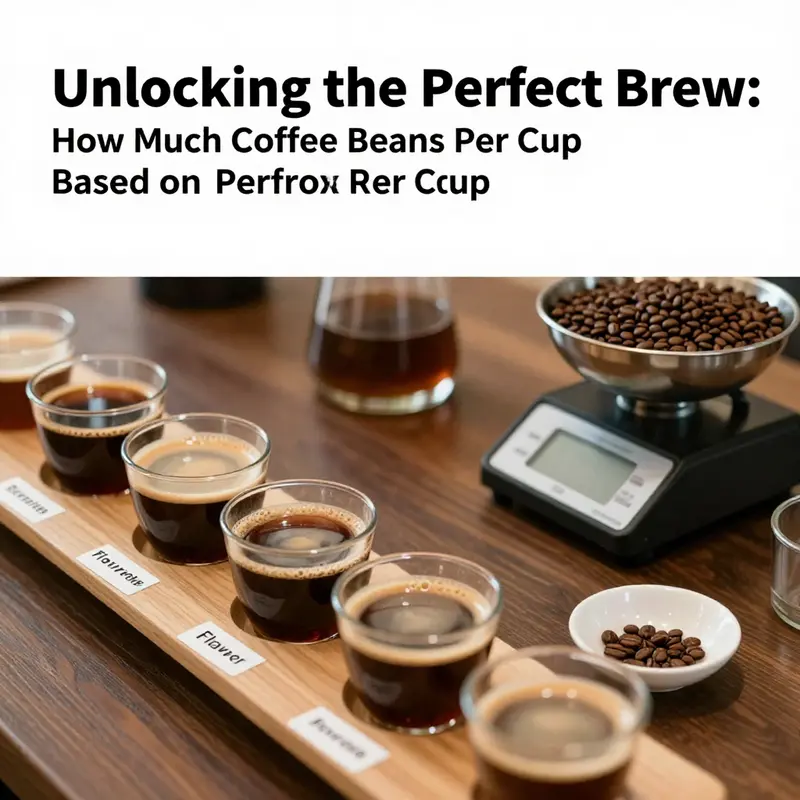
Choosing how much coffee to use per cup is less a fixed rule and more a patient, personal experiment. The question isn’t simply how many beans to grind, but how the dose interacts with your method, your preferred flavor, and the tempo of your day. A small adjustment can sharpen clarity, deepen body, or alter sweetness and acidity in a way that makes your morning routine feel tailored rather than routine. The goal is not a single perfect number but a dependable range that you can tune as the coffee evolves in your kitchen and your taste changes with the seasons or your mood.
A practical starting point is straightforward: for a standard 8-ounce cup, many brewers begin with about 1 to 2 tablespoons of grounds. In grams, that lands roughly in the 10 to 20-gram zone. This is a flexible envelope rather than a rigid rule, because your preferred strength, your grinder’s grind size, and the specific roast all shift how much aroma, sweetness, and bitterness make it from the bean to your palate. If you’re measuring by weight, this range gives you a confident baseline from which to explore. If you’re measuring by volume, you’ll notice the amounts can be deceptive because the density of ground coffee changes with grind size and the grounds’ compaction in your scoop or scale. What matters is consistency: once you’ve settled on a baseline that suits your cup size and method, hold that baseline steady as you refine the flavor through small, deliberate adjustments.
Brewing method matters deeply when you’re adjusting the dose. For pour-over lovers who value clarity and nuance, the water-to-coffee relationship is the most direct lever for flavor. A conventional guideline is to aim for a coffee-to-water ratio around 1:15 to 1:17. That means for every 20 grams of coffee, you pour between 300 and 340 grams of water for a balanced cup. The ratio invites a bright, clean cup with distinct notes, where the beans’ origin, roast level, and grind texture all sing. If you’re chasing more brilliance, you can favor the lower end of that range to allow the water to draw out more lively acidity and aromatic compounds. If you crave a richer body with a touch more sweetness, edging toward the higher end of the ratio can coax fuller extraction without pushing bitterness into the foreground.
In a French press, the relationship shifts because the immersion method changes extraction dynamics. A common starting point for French press is a 1:12 to 1:14 ratio. Practically, that could look like using about 30 grams of coffee for 360 to 420 grams of water. The result leans toward a fuller body with more chocolatey or nutty notes, partly because the metal mesh in a French press allows more of the oils to remain in contact with the cup. With this approach, a slightly higher dose often yields a desirable mouthfeel, but the trade-off is potentially more sediment and a longer, sometimes heavier finish. The key is to taste and adjust: if the cup feels too light or washed out, a modest dose increase can bring back depth; if it tips into heaviness or overextracts, dialing back a touch can restore balance.
Espresso sits in a different world, demanding precise discipline with a focus on concentration and crema. A typical espresso regime uses about 18–21 grams of finely ground coffee for a double shot, producing roughly 36–42 milliliters of liquid. The dose here matters more than in any other method because the extraction window is narrow. Small changes in dose, grind, tamp pressure, and temperature multiply into noticeable shifts in sweetness, acidity, and body. The aim is a compact, richly layered cup that delivers a spectrum of flavors in a small volume. A higher-dose approach with proper grind size and tamping pressure can yield a thicker body and a more syrupy sweetness, while a lighter dose may showcase brighter acidity and more delicate notes, provided the extraction remains clean and balanced.
Yet, even with precise ratios and method-specific guidelines, the most important factor remains your taste. The best amount is the amount that tastes best to you. This is where the journey from guidelines to preference begins. If you love a bold, assertive cup, you will gravitate toward doses at the upper end of the ranges for your chosen method, paired with grind and water temperature adjustments that retain a robust, lingering finish. If you prefer a lighter, more delicate cup, you’ll explore lower doses and perhaps slightly finer grinds to lift aromatics without overbearing bitterness. The core principle is experimentation anchored by mindful tasting and careful record-keeping so that your next batch builds on what you learned from the last.
The size of the cup you pour into also colors flavor perception in subtle but meaningful ways. The Spruce Eats notes that larger mugs—think 10 to 14 ounces—encourage a slower ritual, a cadence of sipping that lets flavors evolve with each sip. The perception of sweetness grows as the beverage cools and the aromatic compounds reveal themselves gradually. A larger vessel can also tempt you to brew with a bit more confidence in your dose, because you know you’ll be sipping over several minutes rather than gulping down a hot concentrate. Conversely, when time is tight and the cup is a busy 16-ounce tumbler, the flavor intensity can feel altered by temperature and dilution as you consume. The fast pace of the day can create a perception of stronger bitterness unless you adjust the dose, grind, or water temperature to maintain balance. Night-shift routines often lean toward smaller, more frequent servings—two back-to-back espressos or an 8-ounce cup—precisely to manage caffeine intake while maintaining alertness. In such cases, the dose per cup becomes a tool for regulating energy without tipping into jitters, a practical art that depends on your circadian rhythm and tolerance.
The beauty of personalizing the dose lies in the ability to adapt to your routine. If you start your morning with a long, unhurried brewing ritual, you might prefer a slightly higher dose because you have time to savor the evolving flavors as the cup cools. If your day starts in a rush, a lighter dose with a brighter profile can offer clarity and focus without overwhelming your senses. The key is to establish a baseline, then refine, not overhaul, as your schedule and preferences change. It’s a learning process that becomes more intuitive the more you taste and compare, because your palate develops its own preferences—the subtle sweetness you notice in a washed Ethiopian, the cocoa-like finish from a Central American origin, or the toasty, almond-like notes from a Colombian roast. These are not fixed properties carved in stone; they are flavors that reveal themselves through the interaction of dose, method, water quality, grind, and temperature.
To bring structure to this exploration without losing the personal touch, think of your dose as a dial rather than a target. Start with a reliable baseline for your main method and cup size. If your first cup feels underwhelming, nudge the dose upward by a small increment—say 0.5 to 1 gram for espresso, or 1 to 2 grams for pour-over or French press—then taste again after a brief rest. If the flavors become harsh or bitter, step back by the same small increment. Keep notes on the grind size, water temperature, and brew time for each adjustment. The true advantage of this method is that it creates a personal map of your preferences: a set of coral-colored tags on your taste spectrum that you can consult when you want a particular mood or effect from your coffee.
A crucial companion to dose is the awareness that flavor evolves across the cup, not just at the moment of first sip. The aroma greets you with initial notes that can shift as the coffee cools. The body may begin with a certain heft, then loosen as solubles settle and volatile compounds continue to release. This means your subjective impression of strength can drift during a single cup; so it’s often worth giving a cup a few minutes to open up before you decide whether the dose is right. In practice, this encourages patience and curiosity rather than quick judgments: your first impression can be bright or sharp, but a moment later your palate may reveal a deeper sweetness or a more pronounced fruitiness that aligns with your ideal profile.
Another layer of control comes from recognizing the interplay between dose and grind. A finer grind typically requires less cup volume to extract a given sweetness and aroma. If you increase the dose but keep the grind constant, you might push extraction toward a richer, thicker profile but risk overextraction if the brew time isn’t adjusted. Conversely, a coarser grind paired with a higher dose can produce a cleaner cup with a brisker finish. The practical implication is that dose adjustments are rarely isolated from grind adjustments. When you adjust one lever, consider how your grind and brew time respond to that change. Small, deliberate changes across a couple of variables—dose, grind size, and water temperature—often yield the most reliable improvements in flavor and balance.
Flavor profiles themselves guide how you calibrate the dose. If you’re chasing a cup with pronounced sweetness and a silky mouthfeel, a slightly higher dose with careful control of water temperature can help extract more of the bean’s natural sugars and oils. If you want brighter acidity and a clearer cup, you might reduce the dose a touch and favor a crisp grind and shorter brew time to preserve delicate notes rather than mask them with heavy extraction. The flavor map you create will be uniquely yours, shaped by your origin preferences, roast level, and even the water you brew with. Water matters: the mineral composition of your water can amplify or suppress certain flavors, so a consistent water profile helps your dose strategy stay reliable over time.
In the end, there is no one-size-fits-all arithmetic for the beans-per-cup question. There is, however, a disciplined approach to discovering your preferred range: begin with a sensible baseline, then make small, iterative adjustments while tasting critically and documenting what you changed and what you found. The goal is not to chase a trendy ratio but to cultivate a sensorial relationship with your coffee. With each cup, you learn a little more about your personal thresholds for strength, body, sweetness, and aroma. You learn how long you can savor a cup without it becoming overpowering or flat. You learn how your mood and energy level color your perception of a given cup. And as you accumulate a bank of experiences—notes about 20 grams for pour-over at 340 grams of water yielding a bright, clean cup, or 30 grams for a French press delivering a lush, cocoa-tine finish—you’ll find a practical map you can rely on for mornings, weekends, and those days when you want to press pause and listen to your coffee.
To anchor your exploration, keep a simple ritual: choose one method you use most and commit to a week of tuning around a single baseline dose. Brew the same cup every day, but vary the dose by ±0.5 to 1 gram at a time, noting the flavor shifts, mouthfeel, and aftertaste. Then switch to another method for a few days with the same discipline. You’ll begin to see how your taste memory adapts and how certain doses produce consistent results across measurements. Over time, you’ll stop chasing a perfect number and start enjoying a flexible range that gives you the flavor you want, when you want it, with the cup size that fits your day.
For readers seeking a deeper technical anchor on these ideas, a broader guide to home coffee brewing offers dependable context on the mechanics of extraction, grind, and temperature as they relate to dose. It’s a useful companion as you tailor your own practice and refine how you measure and perceive flavor in your daily cup. You can explore practical, expert guidance on brewing techniques and tuning your process in trusted, in-depth resources. External reference: Mastering Home Coffee Brewing: Expert Tips for the Perfect Cup Every Time.
External resource: Mastering Home Coffee Brewing: Expert Tips for the Perfect Cup Every Time
The Per-Cup Equation: Precision, Preference, and Consistency in Measuring Coffee Beans

Measuring coffee beans for a single cup often feels like a small detail, yet it anchors the entire brewing journey. The way we translate a pile of roasted beans into a cup of liquid that sings with aroma, sweetness, acidity, and body hinges on a simple truth: precision matters. The standard guidance—about 10 to 15 grams for a six-ounce cup and about 20 grams for a three to four hundred gram brew in pour-over setups—gives a starting line, but the actual number is a conversation between method, roast, grind size, and personal taste. When you step back from the kitchen scale and look at how each variable nudges flavor, you begin to see why a fixed rule rarely suffices. Instead, you develop a working language you can adapt on any given morning.
For most home brewers, weight is the most reliable compass. A kitchen scale that measures in grams turns abstract notions into measurable reality. A teaspoon or tablespoon of beans may feel intuitive, but the density of roasted coffee varies with bean origin, roast level, and even moisture content. Two tablespoons of light-roast beans do not always weigh the same as two tablespoons of dark-roast beans. The difference compounds once you grind, pre-wet, and brew. The weight-based approach—roughly 10 to 15 grams per six-ounce cup, depending on grind and method—provides a repeatable baseline you can lean on as you hunt for your preferred flavor profile.
But numbers alone do not tell the full story. The grind size, the brewing method, and the roast level of the beans interact in intricate ways. A finer grind increases the surface area, accelerating extraction. A coarser grind reduces contact time and can yield a milder cup if you hold other variables constant. The method you choose matters almost as much as the beans themselves. Pour-over and AeroPress tend to emphasize clarity and brightness, responding quickly to changes in grind and ratio. French press delivers a heavier body and a longer extraction that rewards a slightly different balance of coffee to water. Espresso, with its high pressure, transforms a relatively small amount of coffee into a concentrated, aromatic shot. Each of these paths has its own sweet spot for how many beans to use per cup, and the journey to that spot is deeply personal.
Where do these relationships come from in practical terms? A commonly cited starting framework is the coffee-to-water ratio. In broader terms, many roasters and baristas operate around a 1:16 ratio as a baseline. That means one gram of coffee to sixteen grams of water, by weight. If you brew a 12-ounce batch (about 360 milliliters), you would start with roughly 22 to 23 grams of coffee. The math is elegant in its simplicity, but the taste is anything but simple. The ratio provides a stable platform so that, regardless of batch size, the core extraction remains predictable. It also makes it easier to scale your recipe up or down without re-learning your process every time.
However, the story does not end with a single ratio. The roast level of the beans subtly shifts the perceived strength of the brew. A dark roast often carries more oils and a bold, sometimes cocoa-like aroma that can carry the cup even when the weight is slightly lower. A light roast, with its higher acidity and fruit notes, may reveal its character more vividly when you push the balance toward a touch more coffee. The grind size magnifies these adjustments. If you grind finer, you can lean toward a smaller amount of coffee and still achieve intensity; if you grind coarser, you may need to add a touch more to reach the same extraction level. The interplay becomes a choreography, with taste as the soundtrack and each knob—grind, dosage, brew time, temperature—being nudged in small increments until harmony emerges.
To translate these ideas into a practical routine, consider starting with a proven approach and then fine-tuning from there. For pour-over methods, a common rule of thumb is to target a ratio in the neighborhood of 1:15 to 1:17. For example, using about 20 grams of coffee to 300 to 340 grams of water yields a balanced cup that often reveals the beans’ characteristic sweetness and acidity without tipping into harshness. If you lean toward a brighter, more pronounced acidity, you might nudge the ratio slightly toward more coffee, say 21 or 22 grams for roughly 320 to 340 grams of water. If you prefer a softer, more rounded cup, you could bump up the water a touch or dial back the coffee by a gram or two and let the bloom do some of the flavor lifting. The bloom—the initial phase when CO2 is released—also communicates information about freshness and grind size. A vigorous bloom suggests a well-prepared grind with ample surface area, which can translate to richer flavors when extraction proceeds.
In a French press, where immersion extraction produces a different balance, typical ratios tend to be a touch higher in terms of grams per water. A 1:12 to 1:14 range is common, translating to around 30 grams of coffee for a 360 to 420-gram water batch. The longer contact time with metal filtration and a coarser grind emphasizes body and mouthfeel. The result is a cup that fills the palate with a soft, lingering finish, yet it can veer toward bitterness if the measurement drifts too far toward the aggressive end of the spectrum. Here again, precision matters: even a few grams more or less can transform a brew that once seemed perfectly balanced into something noticeably harsher or thinner.
Espresso presents a different animal altogether. It relies on a small volume of water pushed through finely ground coffee at high pressure, extracting intensely concentrated flavors in a short time. A typical double shot uses roughly 18 to 21 grams of coffee, yielding about 36 to 42 milliliters of liquid. The ratio for espresso sits around 1:2 to 1:2.5, though many enthusiasts experiment with your own taste preferences. Because espresso involves compression, temperature stability, and grind consistency in ways that other methods do not, even a minor deviation in dosing can shift the crema, sweetness, and aftertaste in noticeable ways. A single gram here can tilt the balance from a syrupy, chocolatey profile to something lean and chalky. The point is not to chase a universal number but to find a starting point that aligns with your roast, your grinder, and your palate.
Beyond these method-specific guidelines, a central habit underpins consistent results: measure by weight rather than by volume whenever possible. Volume measurements, including tablespoons, are convenient but unreliable across roasts, densities, and grind sizes. A scale gives you a direct readout of mass, which remains constant regardless of bean form. If your kitchen scale reads in grams, you can track precisely how your dosage changes when you revise grind size or roast level. For most home brewers, staying within a 10 to 15 gram window per six-ounce cup is a practical target, with the exact number fine-tuned to taste. If your six-ounce cup grows into an eight-ounce cup, you will typically scale the dosage proportionally, but you should also consider how water absorption and chamber geometry in your brewer influence extraction. A little math goes a long way toward stability, and stability is what yields predictability across mornings and guests.
Another element that often gets overlooked is the quality of water and the temperature at which coffee is brewed. Water quality affects extraction in the same way grind size does. Minerals in water can accentuate sweetness or sharpen bitterness, and they subtly shift the perceived strength of the cup. Temperature acts as the engine for extraction. A typical range for most home brewers lies between 90 and 96 degrees Celsius (195 to 205 degrees Fahrenheit). Within this range, the same dosage can yield different characters depending on the exact temperature and contact time. The relationship among dose, grind, water, and temperature is not linear; it is dynamic and highly responsive to small changes. A precision-focused approach, then, becomes a habit of listening rather than blindly applying a fixed rule.
As you practice, you begin to notice how small shifts in dose influence aroma and body—sometimes in surprising, almost musical ways. A slightly higher dose often intensifies sweetness and chocolate notes while increasing the mouthfeel, but it can also bring a bitter edge if the extraction becomes imbalanced. A lower dose can yield a cleaner cup with brighter acidity and more delicate floral notes. The story of taste is not simply about strength but about equilibrium among aroma, acidity, sweetness, and body. Many tasters describe this equilibrium as a harmony where each sip reveals a layer, and that harmony is a product of measured precision plus time and attention to the beans themselves.
To support these nuanced outcomes, the equipment you choose matters as well. A reliable burr grinder ensures consistent particle size, which reduces the dispersion of extraction across the brew. A scale that measures in grams provides a dependable readout for your dose. Freshly roasted beans—ground just before brewing—deliver the aroma that makes your measurements meaningful. The common mistakes are easy to spot but often hard to correct on the fly: over-measuring leads to a harsh, over-extracted cup; under-measuring yields a weak, watery brew. The goal is not to chase a perfect universal formula but to establish a disciplined process that you can adjust to taste without sacrificing repeatability.
In practice, this means developing a simple, repeatable routine. Start by selecting a baseline: a fixed coffee-to-water ratio, a standard cup size, and a reasonable starting dose for your chosen method. For instance, you might adopt a 1:16 ratio for a 360 ml batch, which translates to about 22.5 grams of coffee. Then brew with a consistent grind size appropriate to the method and a stable water temperature. After that first cup, take a moment to note the sensory results—the sweetness, acidity, body, and aftertaste. If the cup is too bitter, you might reduce the dose by a gram or two or adjust the grind slightly finer to lower extraction yield. If it is too weak, you might increase the dose a little, adjust the grind to be a touch finer, or extend the brew time by a small amount. The key is to alter one variable at a time and taste the effect to develop an intuition for the balance you prefer.
Across the spectrum of home brewing, the value of precision remains constant even as the technique evolves. When you treat measurement as a variable you can control rather than an assumption you hope to meet, you empower yourself to extract the full potential of each batch. The beans, in their roasted state, carry flavors that respond to how you coax them with water, heat, and time. The act of weighing the beans becomes a bridge between the science of extraction and the art of tasting. The more you practice, the more your measurements reflect your preferences: the exact weight you choose, the grind size you favor, the cup size you routinely brew, all of these become levers you pull to reveal a coffee that is uniquely yours.
Beyond the sensory dimension, precision in measurement carries practical advantages for any kitchen or café. Establishing a fixed dose-to-water ratio simplifies scaling up for larger batches without sacrificing consistency. When you copy a recipe from one device to another—say, from a pour-over dripper to a coffee maker with a similar grind and water profile—the same ratio helps maintain balance. And because the measurements are reproducible, it becomes easier to train others in your household or staff to replicate the cup that you have tuned to perfection. The discipline of weighing and timing your brew creates a shared language for taste that transcends personal preference, enabling a more consistent experience for frequent drinkers and occasional guests alike.
If you encounter an obstacle, the fix is often straightforward and rooted in measurement. If a cup tastes flat, you are likely under-extracting or under-dosing. Try increasing the dose slightly or refining the grind toward a finer particle size. If the cup tastes harsh or bitter, you may have over-extracted or over-dosed. In that case, reduce the dose, adjust the grind coarseness, and re-check the brew time. It is rarely one adjustment that makes a cup sing; it is the careful calibration of several interdependent variables—dosage, grind size, water quality, temperature, and brew time—working together in concert. The best habit is to keep a log of your experiments, recording the dose, grind setting, water temperature, and brew time, along with a short subjective note about aroma and taste. Even a compact notebook can become a powerful ally, eliminating guesswork and turning tasting notes into actionable adjustments.
In the end, the number on a scale is a guide, not a decree. The real reward of precise measurement is the confidence that your cup reflects your intention. You learn to articulate what you want from a cup—the level of sweetness that accentuates vanilla and caramel, the brightness that highlights citrus notes, or the full-bodied richness that lingers on the palate. That clarity helps you choose a roast, a grind, and a method with greater consistency. It also makes it easier to adapt when your beans change with the seasons or when you switch to a different roast profile. The per-cup equation is not a fixed ledger; it is a dynamic conversation between you and the coffee. The more you practice, the more your measurements become second nature, and the more your coffee becomes a reliable instrument for daily comfort, a ritual you can rely on even on the busiest mornings.
For readers seeking a deeper, broader framework for precise brewing that aligns with professional standards, there is a wealth of guidance that can be consulted for more formal instruction. The field has long emphasized standardized practices to ensure consistent quality across cafés and home kitchens alike. For more precise, method-specific guidance and recommended ratios, you can consult industry-standard guidelines. For further reading on precise coffee brewing techniques and recommended ratios, refer to the Specialty Coffee Association guidelines: https://www.specialtycoffees.org. This external resource provides the structured guidance that many professionals rely on when calibrating taste and consistency.
This chapter has traced a path from simple intuition to a methodical practice grounded in measurement, science, and taste. The journey from a handful of beans to a cup that carries the aroma of your chosen origin is a transformation that occurs as you become fluent in the language of dosage, grind, water, and time. It is a language that recognizes the value of small increments, the importance of repeatable processes, and the subtle ways that roast level, grind size, and method shape the final experience. The beauty of this approach lies not in chasing a single “perfect” formula but in giving you a robust framework you can adapt. The result is consistent quality that honors your preferences, a cup that you can prepare with confidence, and a ritual that continues to delight with each new batch.
For further in-depth study of how to refine your technique and optimize results for different brewing styles, consider exploring the detailed resources within the field. Embracing this disciplined approach can elevate both everyday coffee and specialized setups, turning the simple act of measuring beans into a practiced craft.
End Note: The external reference above provides a reliable baseline for someone who wants to dive deeper into precise techniques and ratios. You may also wish to consult additional resources that discuss how grind size, heat, and water chemistry influence extraction and flavor profiles.
Final thoughts
Understanding how much coffee beans per cup affects the flavor, strength, and aroma of your brew is crucial for any business owner in the coffee industry. By adhering to the guidelines discussed, optimizing your brewing techniques, adjusting for customer preferences, and maintaining measurement accuracy, you can consistently serve high-quality coffee that delights your customers and enhances their experience. The journey to perfecting your brew starts with the right amount of coffee beans, so take the time to experiment and discover what works best for your clientele.