
Understanding the caffeine content in coffee beans is essential for business owners in the coffee industry. With the two most popular varieties—Arabica and Robusta—each offering distinct caffeine profiles, a nuanced grasp of their differences can aid in product differentiation and consumer satisfaction. This article will explore caffeine levels in Arabica beans, examine why Robusta beans are higher in caffeine, identify factors that influence caffeine content, conduct a comparative analysis, and discuss the implications for both consumers and producers, enabling business owners to make informed choices in a competitive market.
The Quiet Charge of Arabica: Exploring How Much Caffeine Lies in a Coffee Bean
Arabica beans, the most widely consumed coffee species globally, carry a modest but meaningful caffeinated charge that shapes how a cup feels before the aroma even reaches the nose. The question of how much caffeine is in a coffee bean is often answered with a percentage, yet the truth travels through a landscape of cultivation, processing, and storage that can shift the numbers by fractions that matter to a regular drinker and to a producer calibrating a roast profile. In the bean’s quiet chemistry, caffeine acts as a natural defense and a marker of the plant’s metabolism, but its concentration is not a fixed badge stamped once for all beans of a given type. Rather, it is a fluctuating feature, tethered to the living and changing conditions of growth as well as to the human decisions that bring a harvest from the field to the roaster and finally to the cup. For Arabica, the core range is well established, yet the exact amount in a given lot becomes a story of origin, environment, and handling.
Within the broader conversation about caffeine in coffee, Arabica sits at a lower end of the spectrum compared with Robusta. The typical caffeine content for Arabica beans falls in the neighborhood of 1.2% to 1.5% by weight, with many studies positioning the average around the upper end of that range. In practical terms, that means roughly one to one and a half grams of caffeine per 100 grams of green bean. Yet even this seemingly tidy statistic hides a set of subtleties that matter to science, industry, and everyday enjoyment. The same general rule that keeps Arabica in a milder category relative to Robusta also invites closer inspection when we consider what that percentage means in the cup. The average figures describe a living system rather than a laboratory target. They reflect how closely a plant lives to its genes and to its environment, how ripe the cherries were when harvested, how carefully the beans were processed, and how they are stored before roasting.
Empirical work that probes actual measurements in the field helps illuminate this nuance. In a study conducted in Banda Aceh City, researchers analyzed green Arabica beans and found a caffeine content of around 0.815%. This figure sits below the common industry range and underscores that even within a single species, regional cultivation practices, soil chemistry, and microclimates can tilt caffeine levels downward or upward by noticeable margins. The Banda Aceh result does not overturn the mainstream expectation for Arabica; rather, it emphasizes that caffeine concentration is a spectrum shaped by localized growing conditions and post-harvest handling. It is a reminder that the bean carries not just flavor potential but also a traceable chemical signature that can shift with geography, climate, and technique.
If we zoom out from the regional specifics to the broader biology, several interlocking factors emerge as influencers of caffeine concentration in Arabica beans. Growing altitude and climate are first among them. Arabica plants thrive best at higher elevations with cooler temperatures, and those conditions constrain metabolic pathways in nuanced ways. The same cooler environment that favors slow, balanced development of sugars and acids also interacts with the plant’s caffeine synthesis. The result can be a distinctive caffeine profile, one that blends with the bean’s flavor in ways that many drinkers perceive as smoother or more nuanced. At the same time, altitude does not act in isolation. Soil quality, rainfall patterns, and the timing of harvest all feed into the plant’s energy balance and, by extension, its caffeine controls. In practice, some origins at higher elevations might show lower caffeine relative to other Arabica lots, while others at similar elevations may exhibit different levels because of soil nutrients, sun exposure, or plant variety. The upshot is that altitude is a strong predictor of general flavor and aromatic development, but its direct link to caffeine content is mediated by a web of other environmental factors.
Processing methods after harvest further mold the final caffeine picture. Whether beans are wet processed or dry processed does more than alter moisture content and flavor precursors; it also shapes the relative concentration of caffeine by weight. Wet processing tends to remove more mucilage and produce beans with lower moisture by the time they are dried fully, potentially concentrating caffeine slightly when the beans are weighed raw. Dry processing, with a longer exposure to drying conditions, can retain more moisture in the early stages and then reduce weight as drying proceeds, which may subtly shift the percentage of caffeine by weight as the mass changes. The implications matter for roasters and buyers who measure caffeine content in relation to bean mass, because the same caffeine amount dispersed in different moisture contexts can yield different percentages.
Roasting itself is another piece of the puzzle. Caffeine is relatively stable to heat compared with many flavor compounds, and the loss during roasting tends to be small. The literature generally indicates that caffeine declines by less than about 10% across typical roast levels. That means darker roasts do not dramatically lower a bean’s caffeine percentage; instead, the more pronounced changes in a roast’s profile arise from the shifting balance of other compounds, including oils and complex carbohydrates, which alter perception of intensity and brightness in the cup. Yet this stability of caffeine content does not render roasting irrelevant to caffeine experience. The extraction during brewing—the actual amount that reaches the cup—depends heavily on grind size, water temperature, contact time, and the method used. A lighter roast, with its higher cell wall integrity and different leaf–like surface area, can release caffeine at a different rate than a dark roast. The net effect is that two coffees made from Arabica beans with the same raw caffeine content can deliver very different caffeine experiences in the cup depending on how they are roasted and brewed.
Post-harvest processing and storage extend the chain of influence still further. After drying and milling, beans are stored in environments that may have varying levels of humidity, temperature fluctuations, and exposure to air and light. Caffeine itself is a relatively stable molecule, but stored beans can lose some other compounds that shape flavor and aroma, and the per-bean mass shifts as moisture escapes. In practical terms, proper storage is about preserving the integrity of the whole bean so that roasting and brewing can reveal its intrinsic caffeine potential rather than a degraded flavor profile. A well-managed supply chain acknowledges that the caffeine percentage stated on a lab analysis reflects not only chemistry but also the stewardship of beans from farm to roaster.
Against this backdrop of variables, scientists and industry professionals use precise analytical methods to quantify caffeine in Arabica beans. UV–Vis spectrophotometry is a common approach because it provides robust measurements of caffeine concentration in green bean samples. The values reported across studies converge around the same neighborhood but clearly reveal a range that reflects origin, processing, and measurement nuances. For someone trying to translate a percentage into expected caffeine intake, it helps to remember that the bean’s caffeine content is only one part of the equation. Once ground and exposed to hot water, caffeine behaves as a soluble component that the brewing method can extract in different proportions. A single cup may deliver more or less caffeine depending on whether one uses a conical, paper-filtered, or stainless-steel immersion process, among other variables. In other words, Arabica’s caffeine content is a reliable baseline, but the actual caffeine you taste and feel comes from a dynamic interaction between bean chemistry, processing, and technique.
From a producer’s perspective, this variability can be both a challenge and an opportunity. If the aim is to standardize caffeine profiles across lots, growers and processors might select bean varieties with known caffeine tendencies, optimize harvest timing to align with desired metabolic states, and tailor post-harvest handling to minimize drift in caffeine concentration. For consumers and professionals who track caffeine exposure for health or performance reasons, the practical takeaway is similar: the type of bean matters, but so does origin, harvest, processing, and brew method. The same 1.2% to 1.5% range that serves as a working benchmark for Arabica provides a useful starting point for estimating caffeine content in a cup, but it should be treated as a guide rather than a universal guarantee.
In the end, the caffeine content of Arabica beans offers a telling snapshot of a plant’s life cycle, from the quiet upper reaches of a hillside farm to the controlled environment of a roasting facility. It captures how natural variation interacts with human technique to produce the familiar energy boost many people seek in the morning. For those who work in the coffee industry, a foam of questions remains even as numbers settle into place: How does a given lot compare to the baseline? What is the exact impact of a particular processing method on caffeine when the same beans are roasted and brewed differently? And how does storage history shape the final perception of caffeine in a cup? These are not philosophical questions alone; they guide a producer’s decisions about cultivar selection, fermentation practices, and quality control, and they guide a consumer’s expectations about energy levels and flavor.
For readers seeking a deeper technical dive into the standards, methods, and practical applications surrounding caffeine in coffee beans, a comprehensive resource offers broader context and data across species and processing paths. External knowledge in this domain reinforces that Arabica’s caffeine story is part of a larger narrative about how beans carry their chemical signatures through cultivation, processing, and preparation. If you wish to explore the technical details further, see the external resource at https://www.coffeeinsight.com/caffeine-in-coffee-beans-technical-details-and-applications.
Robusta’s Caffeine Pulse: How Higher Caffeine Levels Shape the Robusta Coffee Bean and Its Uses
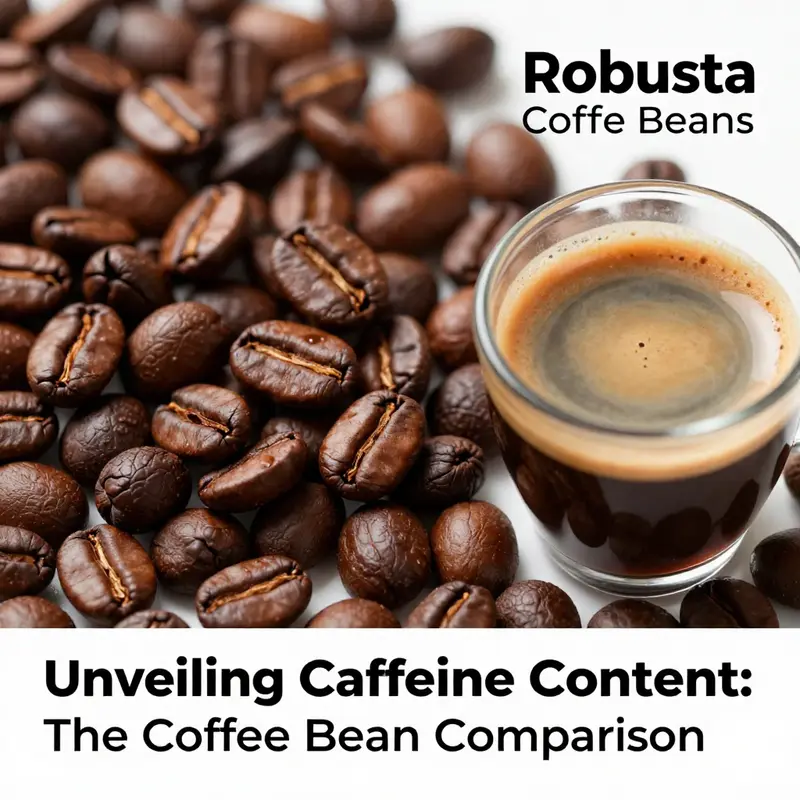
Robusta coffee beans carry a reputation that is almost inseparable from their caffeine content. In the broader conversation about how much caffeine is in a coffee bean, Robusta occupies a distinct place: it consistently carries more caffeine by weight than its more famous sibling, Arabica. This difference is not a mere curiosity of chemistry; it informs everything from how the beans are grown and processed to how they are used in blends, how espresso achieves its signature kick, and how producers market products to caffeine-seeking consumers. To understand Robusta’s caffeine pulse is to glimpse how a plant’s biology and a farmer’s choices together shape a cup of coffee before it ever touches the water. Across multiple studies and industry observations, Robusta beans typically showcase caffeine levels from about 2.2% to 2.7% by weight, with an average near the high end of that band. By comparison, Arabica commonly hovers around 1.2% on average, with a broader but lower ceiling than Robusta. The arithmetic is straightforward yet striking: Robusta beans can deliver roughly twice the caffeine content of Arabica beans for an equivalent bean weight. This quantitative gap translates into practical effects in how the beans are used, how they perform during extraction, and how they taste once brewed. Coffee roasters and blenders leverage this difference to craft products with particular strengths, profiles, and consumer expectations. In espresso blends, for instance, Robusta’s robust caffeine content helps ensure a vigorous extraction and a fast, creamy crema, while Arabica provides aromatic nuance and acidity. The higher caffeine level in Robusta is not simply about wakefulness; it also interacts with texture, body, and bitterness in a way that makes the bean especially suitable for certain styles of coffee, particularly those rooted in intensity and immediacy of impact. Yet caffeine is only part of the story. The plant’s strategy for defending itself against pests and disease has driven Robusta to invest more in caffeine as a chemical shield. This natural defense mechanism is one of the core reasons why Robusta accumulates more caffeine than Arabica. The extra caffeine acts as a deterrent to herbivores and pathogens, a role that becomes even more significant in the environments where Robusta thrives, often in warmer, more humid lowland regions where disease pressures and pest activity can be higher. The plant’s genetics play a central role here. Robusta’s genome appears to carry regulatory pathways that push caffeine synthesis to higher baselines, enabling the species to mobilize greater amounts of this alkaloid as a shield. That genetic predisposition is complemented by the plant’s ecology. Robusta’s historical habitat and preferred growing conditions—environments with ample sun and relatively stable temperatures—have coevolved with its caffeine production to support the plant’s survival and yield. The result is a coffee bean whose intrinsic chemical profile is woven into its biology. For producers, this combination of biology and climate means that decisions about where to plant, how to manage soil and shade, and which processing method to pursue will influence not just flavor but the elemental chemistry that manifests in caffeine content. In practice, Robusta’s caffeine store interacts with processing steps and harvest practices. Height and altitude matter here, even if the effect is nuanced. Beans grown at higher elevations tend to exhibit lower caffeine content, a contrast that highlights how environmental stressors shape the bean’s chemistry. Altitude, temperature swings, and soil composition all contribute to whether a given harvest lands closer to 2.2% or nudges toward 2.7%. The processing method—whether beans are wet processed or dry processed—also bears on the final caffeine concentration. Though caffeine is relatively stable through many post-harvest stages, the concentration that ends up in roasted beans is not entirely fixed by genetics alone. Wet processing can influence moisture content and density in ways that subtly affect extraction during brewing, while dry processing concentrates sugars and oils, potentially moderating perceived bitterness and mouthfeel in a cup. Taken together, these factors remind us that caffeine content in Robusta is a moving target influenced by the plant’s biology and by the hands that harvest, cure, and roast. The practical implications extend from field to cup. Producers who aim to maximize caffeine in a Robusta lot may select high-yielding varieties with strong disease resistance, cultivate in soils that reduce nutrient leaching, and favor processing routes that preserve bean density. Roasters who work with Robusta, particularly in blends intended to deliver punch and resilience, recognize that the caffeine signal will be strong enough to drive immediate impact in extraction, even as the flavor footprint remains deeply influenced by the bean’s traditional notes—earthy, sometimes woody, and markedly bold. Consumers seeking a brisk lift commonly encounter Robusta-based products in espresso or instant beverages precisely for this reason. The caffeine content acts in concert with flavor intensity, not as a separate leverage point. Yet there is more to Robusta than a simple caffeine ledger. Flavor-wise, the higher caffeine level tends to align with a stronger bitterness, a body that can feel heavier, and a profile that can be described as earthy or even mineral. These sensory attributes are not universal, but they recurrently appear in profiles featuring Robusta, making the bean a practical choice for certain recipes and preparations, especially those designed to deliver a quick, decisive caffeine hit. Blending Robusta with Arabica is an art that coffee professionals have refined for decades. The blend can harness Robusta’s caffeine-driven strength and crema-building oils while maintaining Arabica’s nuanced acidity and aromatic complexity. In traditional espresso production, this balance fosters both extraction efficiency and a sensory arc that satisfies a range of palates, from those who crave intensity to those who appreciate layered aroma and brightness. Beyond the grinder and the cup, Robusta’s caffeine profile intersects with questions of accessibility and energy needs. For instant coffee and other quick-dispense formats, Robusta’s resilience and higher caffeine content can translate into a more economical, reliable product that delivers a consistent wakeful effect with a comparable sensory base. In markets where rapid productivity is valued, Robusta provides a practical solution that blends affordability with functional caffeine delivery, a combination that has helped cement its place in many classic and contemporary coffee formulations. All of this points to a broader principle: caffeine content in a coffee bean is less a single metric and more a fingerprint of biology, environment, and human practice. The precise percentage that appears in any given Robusta lot emerges from an interplay of genetics, the plant’s defensive chemistry, growing conditions, and the way the beans are processed after harvest. For producers who seek to standardize a caffeine profile, attention to altitude, soil quality, disease resistance, and processing method becomes as essential as selecting the right seed stock. For researchers and curious readers, the Robusta story is a powerful reminder that numbers tell a part of the story, but context fills in the rest. The numbers—2.2% to 2.7% on average—are meaningful, yet they sit within a larger tapestry of plant physiology, environmental pressures, and practical beverage design. As consumers become more discerning about caffeine intake and as roasters and brands experiment with blends that balance strength, flavor, and sustainability, Robusta’s higher caffeine content remains a central thread. It helps explain why this bean, once a humble alternative in many markets, has evolved into a key ingredient in the modern coffee repertoire. For those who measure caffeine by the cup rather than by weight, the takeaway is straightforward: Robusta brings a stronger caffeine signal to the brew, a trait that can be leveraged to achieve a deliberate, energetic effect without requiring a larger dose of coffee grounds. This makes Robusta a natural partner for beverages designed to deliver quick alertness, intense crema, and a sense of immediacy in aroma and mouthfeel. It also underscores why professionals continue to study how variables like altitude, soil chemistry, and processing choices modulate caffeine content. The science suggests a practical rule of thumb: when Robusta is favored for its caffeine, the bean’s innate chemistry will usually outstrip Arabica by a clean margin, while the final cup’s true strength will also depend on how the bean is roasted, ground, and brewed. In that sense, Robusta’s higher caffeine content is not a standalone feature but a lever within a broader system of agriculture, chemistry, and culinary craft. External resource: For a concise comparative overview of Robusta versus Arabica caffeine levels, see https://www.coffeeinstitute.org/coffee-beans/robusta-vs-arabica
The Caffeine Equation in Every Bean: Species, Environment, and Roast Shaping the Kick in Your Cup
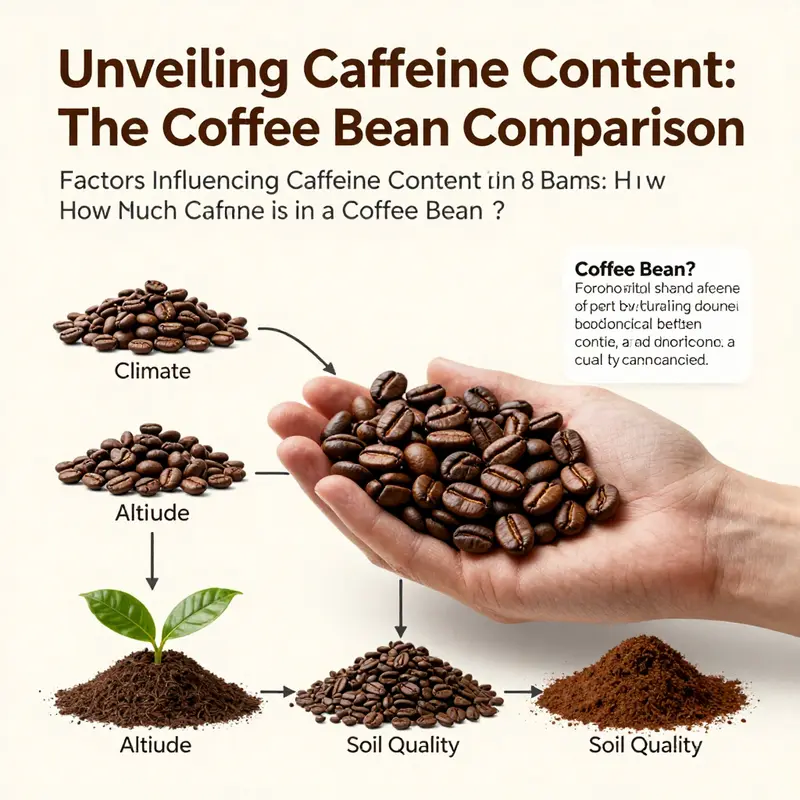
Caffeine in a coffee bean is not a single fixed number but a real-world variable that shifts with the biology of the plant, the place where it grows, and the craft applied after harvest. When you ask how much caffeine is in a coffee bean, you’re really asking about a spectrum that spans species, climate, soil, and the chemistry that unfolds during processing and roasting. The two dominant players are Coffea arabica and Coffea robusta. Arabica beans tend to carry a gentler caffeine load, typically around 1.2% to 1.5% of the bean’s weight, though values can range around 1.0% to 1.6% depending on the lot and measurement method. Robusta beans usually show higher caffeine, often roughly 2.2% to 2.7%, with some contexts reporting higher figures. Per bean, this translates to roughly 2-3 mg for arabica and 4-5 mg for robusta on average, though batch-to-batch variation is common due to bean size, moisture, and processing. Growing conditions amplify the difference. Altitude and shade influence maturation and bean density, with higher elevations sometimes associated with a slightly higher caffeine concentration, though the effect is modest compared to species. Shade-grown coffees can show different chemical profiles, and nitrogen and microclimate factors also play a role. Processing methods affect mass and composition and thus the caffeine per gram, but caffeine itself is relatively stable through drying steps. Roasting has a subtler but important effect: caffeine remains largely intact, but roasting changes mass and density, so light roasts can show a higher caffeine per gram than dark roasts, even though total caffeine in the bean remains similar. In practical terms, if you want more caffeine per weight, choose robusta or blends with more robusta; for less caffeine, arabica is the baseline. Per cup, extraction dynamics matter, so brew method, grind size, and contact time can shift the amount consumed. The key takeaway is that caffeine content is a moving target shaped by genetics, environment, and post-harvest choices, not a single universal number.
Bean Power Unveiled: How Much Caffeine Really Lies in Arabica and Robusta Beans

Caffeine in a coffee bean is not a fixed badge stamped on every bean; it’s a trait shaped by genetics, climate, soil, and how the bean is processed and roasted. When people ask how much caffeine is in a coffee bean, the answer is nuanced: two dominant species account for most cups—Arabica and Robusta—and each carries a different caffeine load by weight.
In numerical terms, robusta beans carry higher caffeine: up to about 2.2% to 2.7% by weight in green beans, whereas arabica typically sits around 1.2% to 1.5%. Some earlier estimates for arabica in the literature approximate it slightly lower, such as 0.9% to 1.4% with an average near 1.2%, but the more detailed measurements concentrate on the higher end within each species. The difference is not trivial: Robusta can hold about roughly twice the caffeine content of Arabica on a weight basis. That disparity is the big lever behind flavor, energy, and how producers formulate blends.
To translate percentages into real-world numbers, one must remember that caffeine is a compound integrated in the seed; the caffeine per bean scales with bean size and density. Robusta beans are generally smaller yet denser and easier to mass-produce, which translates into more caffeine per unit of weight. Arabica beans tend to be larger, with a softer, more aromatic profile, and their caffeine punch is correspondingly milder while preserving a complex flavor spectrum. The practical effect is that a cup brewed from Robusta-heavy beans can deliver a stronger stimulating effect per gram of coffee grounds than a cup of Arabica, assuming similar brew ratios and extraction conditions.
The evolutionary logic behind the caffeine disparity helps explain why Robusta plants are more caffeine-rich. Caffeine acts as a natural defense mechanism, deterring pests and herbivores that would otherwise find the plant palatable. Robusta, which tends to thrive in warmer, lower-altitude environments with higher pest pressure, keeps its guard up with higher caffeine levels. Arabica, by contrast, grows best at higher elevations where altitude itself and the cooler climate present different stresses. Its caffeine investment can be lower, leaving room for nuanced flavor development, subtle sweetness, and more delicate floral notes that define many preferred brews.
Beyond genetics, the environment leaves its mark. Growing conditions—altitude, soil composition, sunlight exposure, and even microclimate shifts—can nudge caffeine content up or down. In theory, beans grown at very high elevations often show a trend toward lower caffeine per seed, even as other quality attributes appreciate. Soil richness, nitrogen availability, and rainfall can subtly influence caffeine biosynthesis in the plant’s seeds. The practical upshot is that a single batch labeled Arabica or Robusta carries a range of caffeine levels depending on where and how the beans were grown. This genetic-environment interaction is why precise caffeine content is rarely a single fixed figure for a given bean type; it is a spectrum with overlapping bounds.
Processing and preparation complicate the picture. Caffeine content is usually reported by weight, but the march from green bean to roasted and ground coffee changes mass and density. Caffeine is heat-stable; roasting changes moisture and mass, so per gram roasted coffee caffeine concentration can appear higher or lower depending on the roast level and the loss of other compounds. Darker roasts are lighter, so a scoop may deliver a different caffeine amount than a scoop of lighter coffee, even if the beans started with the same caffeine content. Brewing compounds this further: espresso uses a fixed dose to increase caffeine per serving, while lighter brews may deliver less caffeine per volume if grind and time aren’t adjusted.
The flavor dimension intersects with caffeine in a revealing way. Robusta’s stronger, often more bitter and earthy profile suits dense, high-energy blends and espresso styles that prize crema and bold body. Arabica’s softer, sweeter, and more nuanced flavor profile tends to pair with longer, more delicate extraction strategies. Yet caffeine is not the sole driver of energy; the total intake in a cup depends on how much coffee is used, how finely it is ground, how long it brews, and what water temperature is employed. Consequently, the same peso of beans roasted and brewed at different times can yield different caffeine experiences, not only because the beans themselves differ, but because the preparation method changes how much caffeine ends up in the cup.
For consumers making choices around stimulation, it is helpful to separate the concept of caffeine content per seed from caffeine delivered per cup. The bean’s kind and its growth conditions set the baseline: Robusta seeds bring a higher potential caffeine load, while Arabica seeds offer a lighter one with a sharper emphasis on aroma and flavor. However, the bite of caffeine in a cup is a function of how much coffee is used, how finely it is ground, how long it brews, and what water temperature is employed. In commercial contexts, Robusta’s higher caffeine content is often leveraged to secure a stronger kick and to optimize crema in espresso blends, while Arabica remains the preferred baseline for a refined tasting experience. Producers and roasters can calibrate these dynamics by selecting seed stock, adjusting altitude ranges, and tuning roast profiles to align the caffeine footprint with the intended consumer experience.
The cumulative message, then, is that caffeine in a coffee bean is not a single fixed value but a gradient shaped by genetics, environment, and processing. The numbers cited in studies and industry summaries point to a roughly twofold gap: Robusta around the low-to-mid two-percent range by weight, and Arabica around the one-percent mark. Those figures reflect green beans, before roasting and brewing complicate the translation into a cup. The practical implication matters to both producers and drinkers: for a stronger caffeine hit, look to Robusta-dominant blends and be mindful of brew ratio and grind size; for a more nuanced, aromatic, and balanced cup, Arabica offers a milder stimulant effect aligned with its complex flavor profile. In both cases, variability is the rule rather than the exception, and real-world caffeine content hinges on many controllable and uncontrollable variables—from seed lineage to rain patterns in the growing season.
Ultimately, the science behind caffeine content in coffee beans invites a careful reading of labels, an appreciation for what goes into the crop from field to cup, and a practical approach to brewing. Understanding that Robusta carries more caffeine by weight and that Arabica holds a lighter line helps demystify why a given espresso shot feels different depending on the bean base. It also clarifies why cup-to-cup comparisons can be tricky when even the same bag of beans can yield variability from harvest to harvest, roast to roast, and brew method to brew. With caffeine described as a stable, inheritable trait that nevertheless shifts with environment and processing, readers can approach their next coffee purchase with a clearer sense of what kind of caffeine experience they are seeking and how to achieve it through mindful selection and preparation.
For a detailed source, see Brewbound: Caffeine Content in Coffee Beans: Arabica vs Robusta (https://www.brewbound.com/industry/caffeine-content-in-coffee-beans-arabica-vs-robusta).
Caffeine Content Across Coffee Species: What Brewers and Buyers Should Know

Caffeine content in coffee beans varies by species, genetics, growing conditions, and processing.
Arabica and Robusta are the two most widely used, with Arabica typically lower in caffeine by percent weight (around 1.0–1.5%) compared with Robusta (roughly 2.2–2.7%).
Liberica and other species exist but are less dominant in the market. The exact caffeine in a brewed cup depends on extraction during brewing, roast level, grind size, water temperature, and serving size.
Higher altitude and careful cultivation can influence caffeine by small margins, while roasting mostly changes density and moisture rather than caffeine percentage in the bean.
Brewing methods like espresso vs drip yield different total caffeine per serving due to contact time and proportion. Consumers can tailor intake by choosing species, roast level, and serving size, keeping guidelines in mind (typical cups range around 90–200 mg per serving). Health considerations include moderation for sensitive groups and awareness of daily caffeine totals.
Final thoughts
In summary, caffeine content plays a pivotal role in coffee selection for both consumers and producers. Understanding the distinctions between Arabica and Robusta beans allows business owners to tailor offerings that meet customer preferences. Evaluating the factors impacting caffeine concentration can further enhance product quality and marketability. By grasping these nuances, coffee businesses can not only improve their product line-up but also create an informed experience for customers, allowing them to appreciate the intricate world of coffee fully.