

The preparation of coffee is as much an art as it is a science, with grinding being a critical factor that directly impacts the flavor and quality of the brew. For business owners in the coffee industry, understanding how to grind coffee beans effectively can enhance not only your product offering but also your customers’ overall experience. The significance of freshness, the importance of matching grind size to brewing methods, and selecting the right grinding equipment will be explored in detail. This comprehensive guide aims to equip you with the essential practices needed to elevate your coffee offerings, sustain freshness, and ultimately, drive customer satisfaction.
Fresh Ground, Fresh Flavor: Mastering Timing and Technique in Coffee Grinding
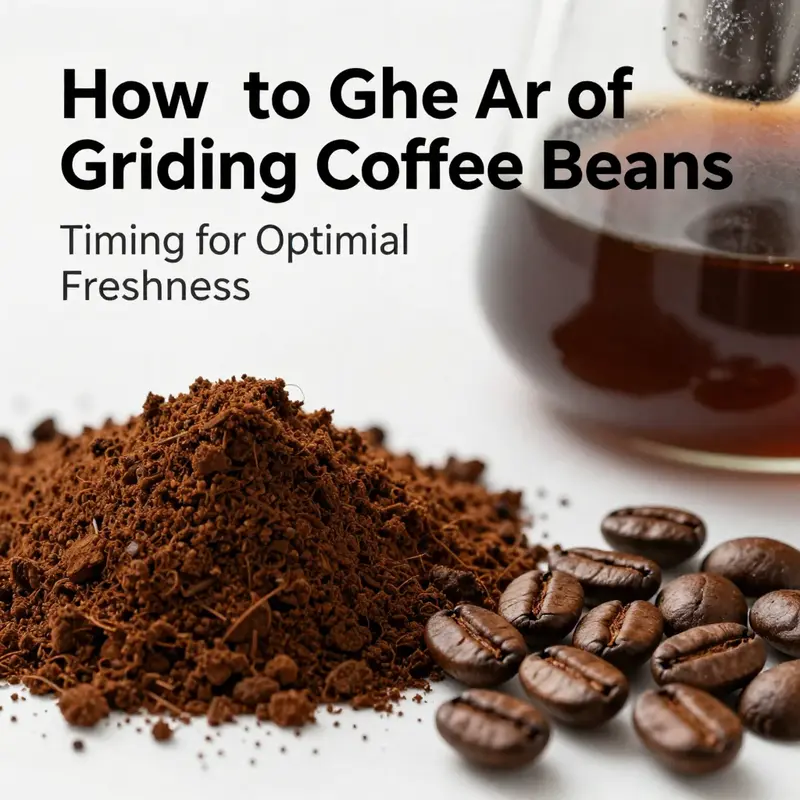
The moment you break the seal on a bag of beans is the moment a small, invisible clock starts ticking. The aroma that rises isn’t just pleasant; it’s the carrier of a complex chemistry that defines the cup you’re about to brew. Grinding, at its core, is the act that converts a static seed into an array of particles with surfaces ready to release flavor. But flavor isn’t liberated in an instant. It’s a dance between air, surface area, and water, and the timing of that first grind matters as much as the grind itself. When you grind immediately before brewing, you’re preserving the bean’s volatile aromatic compounds and the subtle balance of oils that give each coffee its unique personality. Oxidation and moisture exposure begin to erode those qualities as soon as the blade or burr breaks the bean’s integrity. The difference between a bright, floral cup and a dull listener of a cup sits in minutes, not hours, of exposure. The principle is simple, yet the practice requires attention to detail that elevates routine into ritual.
To understand why timing matters so profoundly, imagine the bean’s aroma as an orchestra of volatile compounds, each section playing a different tune. Some notes carry fruity brightness, others espresso-like depth, others chocolatey warmth. When the bean remains intact, these notes are locked away behind a protective shell. But once you grind, the shell is breached, and air rushes into the newly created surface. The more surface you create, the more rapidly those aromas begin to evaporate and oxidize. That loss is not a crime against science; it’s simply the natural consequence of exposing a sensitive, living chemistry to the elements. The trick is to minimize the time between grinding and brewing. The goal isn’t to freeze flavor in time like a museum specimen but to preserve the fresh complexity that makes your chosen beans special. Freshness, then, becomes a practical measure rather than an abstract ideal.
In practical terms, timing translates into a handful of concrete choices that shape the walk from bean to cup. The first choice is the grinder, where surface physics meet user behavior. A conical burr grinder, with its precision and uniform particle size, stands out because it produces a more consistent grind than a blade appliance. Consistency matters because uneven particles behave like a chorus with out-of-sync singers: some parts extract too quickly, others lag behind, resulting in over-extraction in places and under-extraction in others. The monotony of particle size is what unlocks a smoother, more balanced cup. For many home brewers, the difference between a cup that tastes flat and one that sings is evidence of that consistency. When you’re aiming for a type of brew that emphasizes clarity—think pour-over or drip—you want finer control over the grind, so the grinds can interact with water in predictable ways. On the other hand, certain methods tolerate rougher textures because the brewing process itself has built-in filtration or immersion that handles larger particles. The takeaway is not to chase a single, perfect grind but to align the grind with the intended method while honoring the bean’s natural profile.
The tool you choose matters, and so does how you use it. A conical burr grinder is designed to deliver a stable, uniform particle size by guiding the beans between two conical surfaces. The friction generated during grinding does produce heat, but the heat from a well-designed burr grinder is modest enough to preserve delicate aromatics if you operate it in thoughtful bursts rather than continuous, protracted grinding sessions. Blade grinders, by contrast, tend to smash beans into a spectrum of sizes—some nearly powdery, some chunky. This rough fragmentation creates uneven extraction, which can manifest as bitter notes or a flat, one-dimensional cup. If you’re serious about getting the most from your beans, a burr grinder is not an extravagance but a practical starting point for achieving the stable foundation that flavor chemistry requires.
With the tool in mind, the next layer is method. Different brewing approaches demand different grind geometries. A coarse grind for a French press minimizes sediment while preserving body and mouthfeel; it slows extraction to ensure a fuller, richer cup without a muddy texture. A medium grind suits drip-style coffee, where a balanced surface area supports a steady extraction and a clean cup. A fine grind is the ally of espresso, where the goal is rapid, high-pressure extraction that produces a syrupy body with a bright, aromatic crema. And if you’re exploring cold brews, you’ll want to coarsen the grind even more, because extended contact times demand a restrained surface area to keep flavors from becoming harshly concentrated. It isn’t only about strength of brew but about the texture and the perception of sweetness, acidity, and body. When you experiment, you’re not chasing a single correct particle size; you’re learning how the grind interacts with water temperature, contact time, and the coffee’s inherent characteristics. In this sense, grind size becomes a tuning dial, not a fixed rule. But no matter the method, the central principle holds: grind close to brewing time to preserve the identity of the beans.
Another essential piece of the timing puzzle is the cadence of your grinding itself. Heat is an ever-present guest in the kitchen, and even modest warmth can change how aromas are perceived. To minimize heat, grind in shorter bursts rather than long, continuous runs. Pause, breathe, let the burrs cool, then resume. This approach preserves the integrity of delicate compounds and reduces skew in extraction that heat can induce by altering the bean’s surface chemistry. The flip side is that shorter bursts require a little more patience and organization in your ritual. You learn to choreograph the grind so that everything lines up with your brew schedule. When you pour water at the correct temperature and brew for the right duration, you’ll notice that the coffee’s acidity, sweetness, and aroma are integrated rather than fighting for dominance. The timing of grinding, then, isn’t a solitary act; it’s the opening movement of a cohesive brewing sequence, a deliberate act that respects the bean’s structure and the water’s potential to unlock it.
Storage depth is the quiet partner of timing. Even the best grinding routine relies on a stable starting point: whole beans stored properly. An airtight container made of opaque or UV-protected material keeps beans safe from light and air. Place that container in a cool, dark corner of your kitchen, away from heat sources and moisture. The fridge is a tempting option for many, especially in warm climates, but it is a trap for coffee. Condensation during frequent openings can saturate the beans, inviting staling and a muted flavor profile. A pantry shelf or a dedicated cabinet corner often works best. If you purchase coffee in bulk or can’t use it within a couple of weeks, consider cold storage as a temporary measure, but only if you can seal it tightly and resist repeated temperature swings. The aim is to minimize the beans’ exposure to oxygen before they are ground. Ground coffee oxidizes quickly; beans, being intact, keep their aromatic integrity longer but still degrade when exposed to air once ground. By combining airtight storage with grinding immediately before use, you extend the window in which the beans reveal their full flavor range and their natural sweetness.
A practical approach to timing emerges when you combine these elements into a routine. Start with quality beans that have been roasted recently. It’s not essential to chase the freshest possible roast if it disrupts your schedule; rather, aim for a roast level that aligns with your preferred flavor profile and equipment. When you’re ready to brew, weigh your beans by volume or, better yet, by weight if you have a scale. Weight gives you a reliable starting point for consistency. Load the grinder, set your target grind size according to your brew method, and grind in short pulses, tasting as you go to calibrate your senses. The moment you hear a change in texture and see a uniform particle distribution, you’re close. Brew the coffee, and observe the cup’s balance: is the aroma bright and the body clean, or do you notice a muffled bouquet and a muddy texture? Note the result and adjust for the next batch. This process, repeated over time, becomes a personal calibration map. You don’t chase a universal standard; you refine a relationship between your beans, your grinder, and your water, all anchored in the moment of grinding.
The sensory payoff of precise timing is not only about aroma; it’s about mouthfeel and aftertaste as well. A well-timed grind slows the onset of extraction in a way that grants the water access to soluble compounds in a controlled and predictable fashion. The sweetness of a well-balanced cup often emerges when extraction is steady and complete—neither under- nor overdone. When you grind too finely for the chosen method, you risk over-extraction and bitterness; grind too coarsely, and you might encounter a weak cup with a hollow finish. This is where precision and patience become virtues. The best practice is to grind just before brewing and to tailor your grind size to your method and taste preferences, all while respecting the beans’ innate flavor profile. If you approach each brew with curiosity and a willingness to adjust, you’ll experience a continuous improvement arc that rewards your attention more than any single variable ever could.
Beyond the mechanics, there is a philosophical layer to grinding that often gets overlooked. It’s about readiness and respect for craft. Grinding just before brewing embodies a craftsman’s mindset: you honor the beans by not letting them stagnate in a state of disuse. You honor the water by acknowledging that its temperature, mineral content, and contact time shape flavor just as potter honors clay by shaping it on a wheel. In this sense, the act of grinding becomes a bridge between the source of the coffee and the final cup—the point at which terroir, roast, equipment, and technique converge. When you internalize this bridge, you approach every morning with a coherent plan rather than a series of improvised steps. Your coffee becomes not merely a beverage but a small, precise system tuned to your sensibilities and circumstances.
Of course, there is still more to explore in the field of grinding and freshness. The texture of the grind affects not only extraction speed but how the cup presents its attributes. Medium grinds tend to reveal clarity and balance, while finer grinds may emphasize brightness at the risk of bitterness if water temperature or contact time is not carefully controlled. Coarser grinds tend to accentuate body and sweetness, with less perceived acidity, but can produce a dull finish if the brewing method does not allow the water to extract enough soluble compounds. The relationships are nuanced, but they are also learnable. A patient, repeatable routine makes those nuances easier to manage and more likely to yield a satisfying cup regardless of the day’s variables. The art is not to chase a single best grind but to host a conversation between your beans, your grinder, and your water—an ongoing discourse where timing is a central theme and flavor is the living outcome.
In the end, the recommended path is straightforward: grind as close to brewing as possible, choose the grind size based on your method, and store your beans properly to safeguard freshness. The rest is a personal journey toward taste. As you gain familiarity with how your equipment behaves and how your particular beans express themselves, you’ll find you drink coffee less as a fixed product and more as a dynamic experience. The ritual of measuring, grinding, and brewing becomes a mindful practice, a daily chance to rehearse attention to detail and to enjoy the small, almost ceremonial acts that connect you to the craft of coffee. The result is not merely a cup but a conversation between time, temperature, surface area, and aroma. And with each cup you brew, you’re refining your sense of what freshness means for you—an evolving benchmark that keeps you curious, patient, and always ready for the next delightful discovery.
For those who want a concise, externally validated guide that distills these concepts into actionable steps, a detailed resource is available through The Spruce Eats. It offers practical guidance on how to grind coffee beans for the best results, including the emphasis on grinding right before brewing and selecting appropriate grind sizes for different methods. While the specifics of equipment and technique can vary, the underlying principle remains robust: preserve aroma by minimizing the time between grinding and extraction, and tailor the grind to the brew method to manage extraction and flavor development. This external resource complements the experience of developing your own routine and encourages you to experiment with confidence, knowing there is a well-regarded framework behind the advice you follow. External resource: https://www.thespruceeats.com/how-to-grind-coffee-beans-760431
Grind by Design: Aligning Particle Size with Your Brew Method for Peak Flavor

The moment coffee begins its journey from bean to cup is often decided long before the water touches the grounds. The grind is the quiet, powerful handshake that governs how much of the bean’s flavor will be released and how smoothly it will arrive in your cup. In this sense, grind size is not merely a technical detail; it is a design choice that shapes flavor, body, brightness, and even the feel of a sip. When you grind just before brewing, you lock in freshness and minimize oxidation and moisture exposure that dulls aromatic compounds. The coarseness of the grind determines how water interacts with the particles during extraction. Fine grounds expose more surface area, inviting a swifter, more aggressive extraction, while coarser grounds slow that process, inviting a cleaner, more controlled draft of flavor. The art lies in matching grind size to the brewing method, because each method presses water through the grounds with its own tempo, pressure, and contact time. A misalignment—an overly fine grind for a long pour, or a too coarse grind for a brisk espresso—tilts the flavor toward sourness or bitterness, dulling the very complexity you expect from a well-roasted bean.
The science behind grind size rests on a simple, stubborn truth: surface area drives extraction. When the particles are tiny and uniform, water has abundant surface to interact with in a short span. If the grind is uneven, some fragments surrender their flavors quickly, while others stubbornly resist, resulting in uneven extraction and off-flavors. This is why precision matters. A high-quality grinder that produces uniform particles, especially a conical burr design, minimizes the creation of fines—those unhelpful, powdery fragments that can clog filters and contribute a gritty, bitter edge. Precision also means consistency over time. When you dial in a grind size that suits your method, you’re building a repeatable path from coffee to cup, step by step, brew by brew.
Grounds are also a mirror of context. The ultimate flavor you taste on any given morning depends not only on bean quality but on how the grind interacts with water temperature, brew time, and the geometry of your brewer. Espresso demands a different tempo than a pour-over, which in turn differs from cold-brew’s patient, hours-long immersion. To understand why, imagine water as a careful explorer threading through a colony of grounds. In espresso, pressure forces water through a tightly packed bed in about a quarter of a minute. The grounds must be so finely set that water can’t rush through too quickly; if it does, under-extraction happens and the shot tastes weak and sour. Conversely, a too-fine grind for a drip-style brew can restrict flow, surface area still high but contact time excessive, yielding over-extraction and bitter, astringent notes. The aim is balance: just the right amount of contact to dissolve the sugars, oils, and nuanced aromatics without dragging harsh tannins into the cup.
If you’re starting from scratch, the best approach is to anchor your grind to your chosen method and then fine-tune by taste. For espresso lovers, the ground should feel almost like table salt, finer than ordinary table salt but not so powdery that it clogs the machine’s flow. The extraction should settle in around 25 to 30 seconds under pressure, yielding a shot with sweetness, caramelized sugars, and a thick, velvety mouthfeel. For the moka pot, the grind should sit a touch coarser than espresso, a delicate balance that allows pressure to build without forcing through too quickly. The goal is a clean cup that carries the coffee’s brightness while preserving its body. French press requires a coarser grind, roughly like sea salt, paired with a longer brew time—about four minutes. The goal here is generous extraction without a muddy, sludge-like texture. The grounds must not grind too fine, lest the brew become heavy with fines and sediment and take on an overly bitter bite.
Pour-over methods, such as the classic cone or the carefully engineered filter, demand a grind somewhere between medium and medium-coarse. The water’s path should be even, a gentle trickle that invites a clean, bright cup with layered acidity and clarity. The exact size depends on the filter’s density and the brewer’s geometry, but the principle remains constant: consistency is the key to even extraction and predictable flavor. The AeroPress offers a wider playground. Depending on technique, grind from fine to medium-coarse can be used to achieve a cup that runs from syrupy to bright. The method’s short brew time means finer grinds can still work, provided you control immersion and pressure carefully. Cold brew, by contrast, leans on a coarse grind because the extraction occurs over long hours. A coarse grind minimizes over-extraction during the extended steep time, producing a smooth, mellow concentrate that can be diluted to taste.
Across these methods, the science of grind size is in service to flavor, not merely a mechanical checkbox. Ground size dictates how quickly water dissolves soluble compounds and how evenly flavors are drawn from the bean. Irregular particles—those bits that are far finer or coarser than the average—can create pockets of over- or under-extraction inside the same brew. This is why a grinder that consistently delivers uniform particles is a formidable ally. A good burr grinder does this job by splitting beans with two abrasive surfaces that shear the beans rather than chopping them. The result is a more homogeneous grind with fewer fines, which translates to better control over extraction and less risk of clogging filters or producing an astringent aftertaste. A blade grinder, by comparison, often creates a spectrum of particle sizes and can heat the beans, nudging flavors toward unwanted compounds through friction. The heat generated during grinding matters because heat accelerates reaction pathways in the bean’s oils and aromatics, sometimes muting delicate notes or encouraging bitterness. Keeping the grinder cool and working in short bursts can help preserve aroma, especially for lightly roasted coffees that carry vibrant floral and fruity notes.
As you seek to master grind size, you’ll discover that the most reliable path is to start with a consistent setting and refine rather than dramatically changing multiple variables at once. Because water temperature, pour rate, and bloom mechanics all influence extraction, the grinder is the control knob you turn to nudge flavor toward balance. The ratio of coffee to water also matters. A general aim is a stable dose per brew and a consistent grind to preserve the correlation between what you put in and what you taste. The goal, in short, is a predictable translation of flavor compounds from bean to cup, with the least amount of unintended stumbles along the way.
The practical implications of grind size extend beyond flavor. They touch on how you approach your kitchen routine, how you measure, how you time your brew, and how you store your beans. Freshly roasted beans, ground just before brewing, preserve more aroma compounds. Oxygen exposure begins almost immediately after grinding, and even small lapses in timing can dull sweetness and reduce aroma. A simple habit—grinding only what you will brew within minutes—can dramatically improve your daily cup. Proper bean storage is equally important. Store beans in a cool, dark place in an opaque, airtight container to slow oxidation. Avoid freezing or refrigerating beans for extended periods unless you have a well-sealed environment, because condensation cycles can alter the grind’s performance when you eventually grind and brew. When you do grind, aim to go from bean to cup with minimum delay, and keep your equipment clean and dry. Residues in the grinder can impart stale flavors to new grinds, especially if the equipment is clogged or has built-up oils from previous sessions. A quick wipe-down and periodic deep cleaning are worth the effort, especially if you switch between light- and dark-roasted beans, which carry different oil profiles that can linger on surfaces.
The search for flavor balance also invites a broader reflection on the tools you use. The right grinder is not just about particle size; it is about consistency, ease of use, minimal heat generation, and ease of cleaning. Conical burrs are particularly praised for their ability to produce uniform particles and to minimize fines, which helps you keep flavor clean and predictable as you experiment with different brew methods. Maintaining a steady grind environment means avoiding dramatic changes to dialing in a new grind for every brew. A measured approach—dialing in a bit finer or a bit coarser, then pausing to taste and adjust—yields more meaningful results than constant, sweeping adjustments.
In the spirit of deliberate tool use, consider how having the right equipment mirrors other fields where precise tools determine outcomes. The idea resonates with a discussion about tools and equipment for occupational therapists, where selecting the right instrument can meaningfully affect therapy outcomes and client engagement. Tools and equipment for occupational therapists offers a reminder that the quality and suitability of what we use shape what we can achieve, even in environments far from the kitchen. The point is not to imitate one field but to recognize a universal principle: good work starts with good tools, and good coffee starts with a good grind.
To honor the craft of grinding, you should also acknowledge the voice of experience that has shaped modern understanding of grind sizes. As a respected voice in the coffee community notes, grind size is the single most adjustable variable that impacts flavor consistency. When you get this one right, many other pieces of the puzzle tend to fall into place, from bloom to cup. This is not a call to obsess over minutiae, but an invitation to treat grind size as a thoughtful design choice, one that respects the bean, the roast, and the water you’ve chosen. The path to mastery is incremental: you begin with a baseline that respects the method, then you adjust in small steps, tasting as you go, letting your palate become the guide.
Ultimately, the goal is not to chase a perfect formula but to create a reliable, repeatable process that reveals as much of the bean’s character as possible. When you grind with intention—small, deliberate steps rather than sweeping changes—you’ll find your coffee becoming more expressive, nuanced, and congruent with the brew method you favor. The journey from bean to cup becomes less a routine and more a conversation between water, particle size, and flavor. If you ever feel uncertain about where to start, remember that the method itself provides a scaffold for your grind: espresso calls for finesse in fineness and time, pour-over invites balance and flow, French press rewards patience and texture, and cold brew asks for restraint in extraction. In each case, the grind is your lever to tune brightness, sweetness, and body toward a cup that matches your taste and the moment.
External resource: For a deeper dive into the science and practical adjustments of grind size, consider James Hoffmann’s comprehensive grind-size guide. https://www.jameshoffmann.com/coffee/learn/grind-size-guide
Grind Matters: Choosing the Right Grinder to Unlock Coffee Flavor

The journey from bean to cup begins with a decision that many first-time brewers overlook: the grinder. It is not merely a device that turns whole beans into powder. It is the quiet, constant mediator between aroma and extraction, between promise and performance. The grind you choose sets the pace for everything that follows. Ground coffee exposes more surface area to air, moisture, and heat, so the moment you break the beans is the moment you start to lose some of their protected, delicate flavor compounds. This is why grinding immediately before brewing is not a suggestion but a practice that preserves the integrity of what you paid for. The right grinder becomes a stewardship tool, helping you respect the bean’s journey from harvest to cup and giving you a reliable path to flavor clarity rather than a guessing game about extraction time and balance.
To understand why the grinder matters so much, you must first glimpse the two broad families of grinders commonly found in homes: burr grinders and blade grinders. Burr grinders use two abrasive surfaces to shear beans into uniform particles. The bigger idea behind burrs is control. When the burrs rotate, they nip the beans into consistently sized pieces, pushing the grind toward uniformity. That consistency matters because water will chase the path of least resistance through a bed of coffee. If some grains are much finer than others, water will rush through the fine particles, over-extracting them and leaving the coarser particles under-extracted. The end result is uneven flavor, creeping bitterness, and a brew that lacks the clarity you hoped to achieve.
Conical burrs, one of the most common configurations, are celebrated for their smooth operation and their tendency to produce fewer fines—tiny dust-like particles that can cloud the cup. In practice, conical burrs tend to yield a cleaner, more balanced cup with less sediment visible in filter coffee, while still delivering the precise grind required for a shot of espresso. Flat burrs, by contrast, can deliver superb consistency at precise settings, but many users notice a slight difference in texture and a bit more dust. The specific geometry—conical or flat—becomes a personal preference, but both are far more capable of delivering uniform particle sizes than any blade-based approach.
Blade grinders, in their simplicity and affordability, slice beans rather than crush them. The blade’s speed and function resemble a small propeller turning in a jar. The problem is less about power than about predictability. The grind size you get from a blade grinder depends almost entirely on how long you run it, which makes it extraordinarily difficult to reach a reliable, uniform particle distribution. The result is a brew with inconsistent extraction: some grounds extract too quickly, yielding bitterness, while larger fragments stay under-extracted and feel thin or flat in the cup. This lack of control becomes more pronounced as you push toward finer or more precise grind settings, such as those required for espresso or for certain pour-over methods. While blade grinders can be perfectly adequate for casual drip coffee or basic camping setups, they are rarely the best tool when flavor and nuance are a priority.
The choice between these two families isn’t merely about price or convenience. It’s a statement about how strongly you value control over the final cup. If your goal is to reproduce a consistent espresso pull or a bright, well-defined pour-over with minimal sediment, a burr grinder—preferably a conical model—offers a tangible advantage. If you’re primarily brewing simple drip coffee for a busy household or you travel light, a blade grinder can be a stepping-stone. The price gap between these options is real, but it is not just about the sticker price. It’s about long-term consistency, ease of calibration, and the signal you’ll be sending to your brew’s flavors every morning.
Beyond the broad category, the grinder you choose also interacts with your preferred brewing method. Espresso demands a very fine, uniform grind to form a tight, even puck through which water travels under pressure. A burr grinder tuned to a precise density of particles can deliver that consistency hour after hour, reducing the risk of channeling and uneven extraction. For a method like French press, the grind should be coarser and uniform enough to float above the water without breaking into a torrent, creating a robust yet balanced cup with some natural sediment. Pour-over and drip-based methods favor a grind size somewhere in between, where uniformity translates into a smooth extraction profile and a clean cup. These method-specific considerations are not rules etched in stone but guidelines that remind us the grind is a dial, not a fixed outcome.
The relationship between grind size and extraction time is another important thread in this discussion. The coarse grind shortens surface contact with water, slowing extraction, while a fine grind increases contact and accelerates extraction. The goal is to harmonize grind size with brew time so flavor, aroma, and body emerge in balance. A consistent grind ensures the water’s path through the coffee bed is even, yielding even extraction. In espresso, even tiny deviations can lead to channeling, where water finds paths of least resistance and bypasses substantial portions of the puck. That’s why professionals emphasize a steady hand and a calibrated grinder when aiming for a reliable shot with good crema, intensity, and sweetness. In other brewing styles, inconsistent grind can manifest as a cup that tastes inconsistent from one cup to the next, a reminder that precision matters even when you’re not chasing a flawless espresso.
An often overlooked aspect of grinder performance is heat. Friction from grinding raises the beans’ temperature, which can wedge its way into the flavor profile. Heat can accelerate the loss of volatile aromatics and can even alter the perceived sweetness and acidity by changing how compounds dissolve during extraction. This is why many experienced brewers advocate grinding in shorter bursts rather than grinding a long continuous batch. Short pulses really are part of a larger technique: you keep the grind cool, preserve aroma, and reduce the chance of scorched flavors that can dull the cup’s brightness. In practice, this means not overloading the hopper with beans, letting the motor rest briefly after a few seconds of grinding, and choosing a grinder with a design that dissipates heat efficiently. The conical burr design tends to stay cooler during extended sessions compared with some other configurations, partly due to its geometry and the way it moves grounds away from the burrs.
Another key factor is consistency. Even with a great grinder, the trick is to approach grind settings as a dial you can adjust and refine. Start with a baseline aligned to your brewing method. For espresso, you might aim for a very fine setting that creates a compact puck and even water flow. For pour-over, a medium-fine setting that forms a jiggle on the filter bed can yield a bright, clean cup. If your grinder allows micro-adjustments, you can dial in gradually, watching how small changes shift flavor balance. It’s a patient, iterative process: grind a test, brew, taste, and adjust. The goal isn’t speed but reliability and repeatability, which in turn builds your intuition about how your beans respond to grind size and extraction time.
Another practical thread is maintenance and cleanliness. Ground coffee leaves behind oils that can become stale or rancid, especially when left in a grinder for extended periods. These residues can transfer to subsequent grinds, subtly skewing flavor toward old, dull notes. Regular cleaning is a simple investment with a clear payoff: a cleaner burr surface, more predictable grind, and better tasting coffee. The frequency of cleaning depends on how often you grind, how oily your beans are, and which grinder you own. A quick wipe-down of the burr area and a brushing of any loose grounds after each session go a long way. Deeper cleanings, such as burr replacements or disassembly, are typically done every few months for regular home use but may be warranted sooner in high-volume settings.
The decision to purchase a burr grinder also invites a conversation about the engineering behind the tool. Some grinders offer stepped adjustments, which provide reliable reproducibility once you find a sweet spot. Others use a stepless or continuously variable mechanism, allowing finer, more precise control over particle size. The choice between these approaches aligns with how deeply you want to tune your brew. A stepped grinder might be ideal for someone who values repeatability and simplicity, while a stepless model appeals to purists who enjoy small, nuanced shifts in grind that align with shifts in roast level, bean origin, or brewing method. In both cases, the most important behavior is consistency: be deliberate about your settings, keep notes, and commit to a routine that preserves the integrity of your beans.
Price is a reality in the decision, but it should be weighed against the long arc of flavor, waste, and time. A higher investment in a well-made burr grinder can pay dividends in a clearer flavor profile and more dependable results. The space between “good enough” and “excellent” often lies in the ability to fine-tune, frequently clean, and consistently calibrate. A basic burr grinder that is well maintained and used with intention can outperform a more expensive blade grinder used with rough, inconsistent timing. The conversation then becomes not about the price tag but about the discipline of use: how reliably you approach grinding, how you calibrate for your method, and how carefully you track flavor changes as you adjust grind settings.
All of these considerations fold into the recommended approach to selecting your grinder. If you’re just beginning and you want to maximize flavor without a steep learning curve, a quality burr grinder with reliable, repeatable settings and a design that minimizes heat is a wise starting point. If you’re more focused on occasional use or occasional travel, a compact blade grinder might serve, with the understanding that flavor precision will be more variable. Either way, the act of grinding well begins with understanding your brewing goals and recognizing that the grinder is a tool that can either amplify flavor and aroma or introduce avoidable inconsistencies. The best path forward is a deliberate one: match your grinder to your method, respect the importance of timing and particle uniformity, and maintain your equipment so that it remains a steady partner in the discovery of flavor.
In the end, the right grinder is less about chasing a single perfect grind and more about cultivating a reliable, repeatable process that respects the bean’s complexity. It is about establishing a rhythm—a choreography of dose, grind, and brew—that honors the coffee’s origin and the craft of extraction. The journey requires curiosity, patience, and a willingness to observe how tiny adjustments in grind size ripple into aroma, sweetness, acidity, and body. When you align your grinder with your brewing method, you unlock a more consistent, expressive cup that reflects both the bean’s character and your own taste preferences. The difference is not only in the final cup but in the confidence you gain as you learn to interpret the signals your grinder provides. That confidence—born of a well-chosen tool, careful calibration, and disciplined maintenance—transforms a daily ritual into a meaningful, sensory conversation with the coffee you love.
For a deeper look into grinder quality and method-specific grind sizes, see the guide from Coffee Review. https://www.coffeereview.com/
Final thoughts
Understanding the intricacies of grinding coffee beans is paramount for any business owner looking to provide the best possible coffee experience. Through the timely grinding of beans, careful selection of grind size, and choice of grinder, you can enhance the flavor and quality of your offerings. It not only leads to better tasting coffee but also retains the fresh characteristics that your customers will appreciate. By following these principles, you will be one step closer to mastering the art of coffee preparation for your business.