

For business owners looking to enhance their coffee offerings, grinding your own coffee beans can add a distinct flavor profile to every cup. However, without a dedicated coffee grinder, this task may seem daunting. Fortunately, there are various practical methods to grind coffee beans using everyday tools found in most kitchens. This guide explores effective techniques including using a rolling pin, mortar and pestle, blender, food processor, or even a knife and cutting board. By the end of this article, you’ll discover accessible and efficient ways to achieve the ideal grind that suits your brewing needs, ultimately boosting the coffee experience for your customers.
Rolling Pin Alchemy: Crafting Fresh Coffee Grounds Without a Grinder
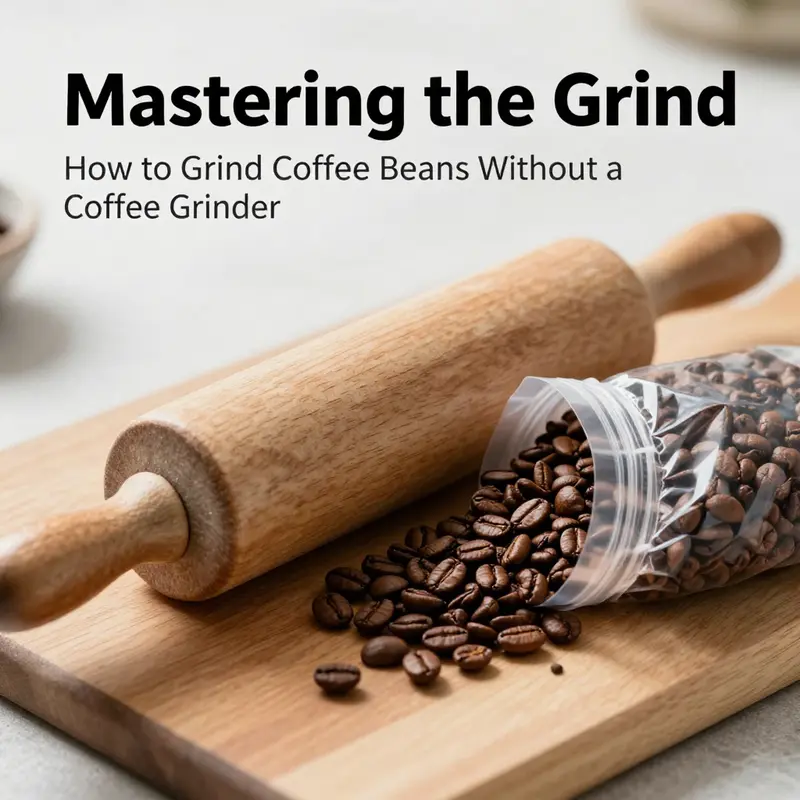
When a dedicated coffee grinder isn’t in reach, the kitchen still becomes a workshop for fresh, aromatic coffee. The rolling pin method isn’t glamorous, but it shines in its simplicity and immediacy. It invites you to rethink what a grinder really does: it shatters beans and exposes oils, aromas, and flavor compounds that begin to fade the moment the grind is done. The trick is to embrace the rhythm of your hands, to treat the rolling pin not as a toy but as a patient, steady tool that can coax a surprisingly even texture from a stubborn bean. The goal is a medium to coarse grind, a texture somewhere between coarse sand and small cornmeal, precise enough for pour-over or drip but resilient enough to resist over-extraction. And, just as importantly, this approach keeps the process intimate and practical, using nothing more than a sturdy bag and a reliable surface. The maxim remains simple: grind as close to the moment of brew as possible, because ground coffee loses its perfume, brightness, and life quickly once it’s exposed to air. This is the core principle that grounds the technique and makes it feel almost ritualistic rather than improvised.
The preparation is deliberately austere. Start with a quantity that’s easy to manage—about 30 grams of beans for two cups—and decide whether you want to roast at home, or you’re grinding pre-roasted beans with the same care you’d give to any essential kitchen task. Place the beans inside a thick, resealable plastic bag or wrap them gently in parchment paper. The bag is practical: it contains the dust, protects surfaces, and keeps the beans from scattering as you work. Seal the bag tightly, pressing out as much air as you can so the bag remains flat and stable. A flat surface is crucial; lay the bag on a sturdy cutting board or countertop, and if you like, lay a clean towel beneath for extra grip and to stop slips. The bag becomes your grind chamber, and your rolling pin becomes the steady, controlled engine of the process.
Begin with a firm, deliberate press to crack the beans apart. The rolling pin should contact the bag’s surface in a way that transfers even pressure without tearing the plastic. Think of it as coaxing the beans apart rather than smashing them indiscriminately. Once you’ve opened a few cracks, roll the pin back and forth across the bag with steady, even pressure. Don’t rush the process; consistency is king here. Rotate the bag to ensure all sides get the same treatment, and keep working until the fragments begin to resemble a coarse, sandy powder. The texture should feel like damp sand in your palm—fine enough to extract evenly, coarse enough to leave behind a little bite that avoids under-extraction, which can yield sour notes or a weak cup. If stubborn chunks remain, switch to the end of the rolling pin and apply a bit more concentrated pressure. This is where a wine bottle can feel surprisingly efficient, its thicker neck offering a narrower, more focused force that helps break stubborn pieces without tearing the bag. A well-timed pound here and there can make a noticeable difference, especially if you’re aiming for a finer finish without overheating the beans.
Texture checks are your seasoning, so to speak. Open the bag and inspect the grounds. If you see large shards or uneven bits, fold the bag back up and give it another round of careful rolling. For pour-over or drip brewing, you’re aiming for a consistency reminiscent of coarse sand or fine cornmeal. If you plan to chase a slightly finer grind, you can persist with rolling and folding until you approach a more uniform particle size. The key is to avoid pulverizing the beans into a powder that behaves like flour, which can lead to clogging and uneven extraction. The balance you seek is one that presents even particle sizes enough to extract evenly without turning the bed into a paste.
In practice, you’ll typically want to grind in batches if you’re brewing a larger quantity. Grinding all at once can overwhelm the surface area of the grounds, while smaller batches maintain freshness and allow you to tailor grind size for the exact brewing method you have in mind. Either way, grind immediately before brewing. The moment the aroma hits the air is a gentle reminder that oxidation has already begun, so your ritual should feel purposeful, not leisurely. After grinding, set the grounds to brew without delay, and keep everything clean and dry to preserve the integrity of the aroma until the moment of contact with hot water.
This rolling pin approach shines most in the medium-coarse range, the sweet spot for pour-over and classic drip. It channels the best aspects of a manual grind: a fresh, bright cup with a clear edge and a clean finish. Espresso fans may find the texture from a rolling pin to be a challenge; the grind tends to fall short of the ultra-fine particles required for true espresso extraction. But even here, a small handful of cautious, targeted rolls with the end of the pin can nudge the grounds toward a tighter texture for more intense home setups. The technique also offers a more forgiving path than a sharp blade or knife method; while the latter can produce far too many inconsistencies, the rolling pin, used with calm, deliberate hands, fosters a more uniform distribution of particles. The absence of metallic flavors that sometimes arise from less precise tools is another subtle benefit; the grounds retain more of the bean’s natural aroma and oils, unaltered by the rough abrading that can accompany harsher apparatus.
To maximize results, consider the practicalities that accompany any DIY method. Use a bag that’s food-grade and designed to withstand repeated pressure without cracking. If you’re concerned about dust, you can line the bag with parchment to further control the spread of fine particles. The surface you work on should be stable and non-slip; a damp cloth underneath can help. Ground coffee left on the counter can quickly disperse its aroma—so move efficiently from grinding to brewing. If you inadvertently grind a little too coarsely, you can still salvage a cup by adjusting brewing time and water temperature to draw out the intended flavors, but your best bet is to aim for that ideal medium-coarse texture from the outset.
The rolling pin method is a resilient, everyday solution that respects the coffee’s fragile anatomy. You’re not just breaking beans; you’re inviting their oils, sugars, and aromatics to mingle with hot water in a way that’s lively but not overpowering. The approach carries with it a philosophy of immediacy, of using what you have to coax the best possible cup from resources that aren’t dedicated to coffee grinding. It also remains compatible with the broader idea that grind size should always be matched to the brewing method: coarse for French press, medium-coarse for drip or pour-over, and fine enough for a crema-tinged espresso if you’re willing to practice patience and nuanced control with the rolling technique. As with any low-tech approach, the rewards are greatest when you remain attentive to texture, aroma, and timing, letting the pressing and rolling do the majority of the work while you monitor the consistency.
In the end, the rolling pin method is less about perfection and more about reliability, adaptability, and a sense of craft in an improvised setting. It respects the coffee’s character by letting you grind in real time, just before it meets hot water, ensuring a cup that is bright, balanced, and lively. It’s a reminder that good coffee doesn’t demand expensive gear; it demands intention, patience, and familiarity with the way your chosen technique shapes extraction. If you’re curious to broaden your understanding of DIY coffee preparation and see how others navigate similar low-cost, high-satisfaction kitchen techniques, you can explore practical guidance in broader kitchen and technique resources. For a visual guide that complements this rolling pin method, see https://www.thespruceeats.com/how-to-grind-coffee-beans-without-a-grinder-760997.
Mortar-and-Pestle Mastery: Grinding Fresh Coffee Beans by Hand When You Have No Grinder
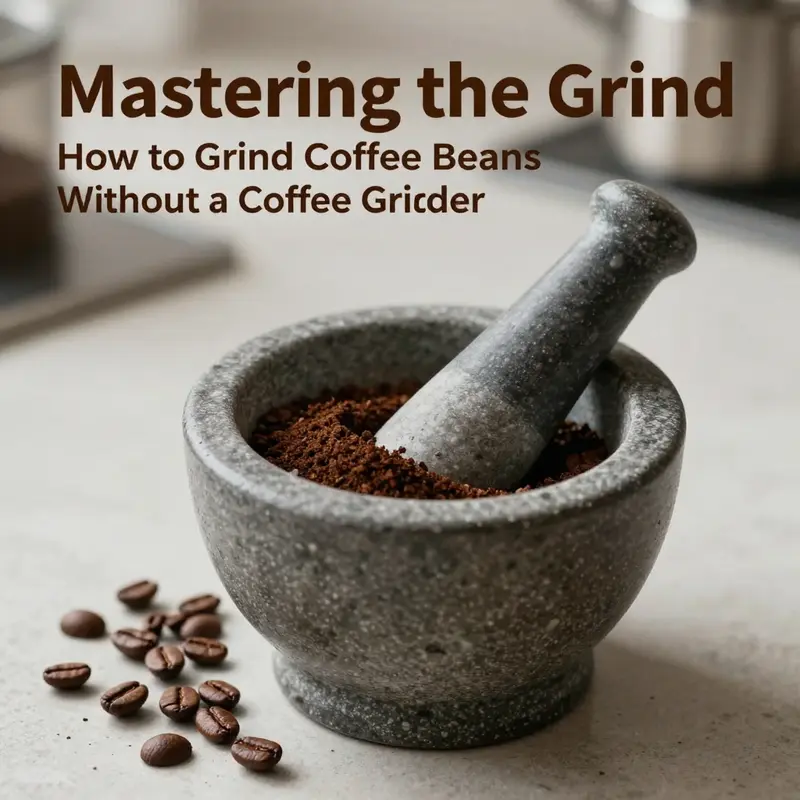
Grinding coffee beans without a dedicated grinder is a tactile, almost meditative process that rewards patience with a surprisingly even, workable texture. The mortar and pestle, a time-honored tool, remains relevant for this task because its friction and control let you tailor the grind with a level of nuance that mechanical devices often struggle to match. While it demands time and steady hands, the resulting aroma and feeling of immediacy—coffee ground moments before brewing—make the effort worthwhile for anyone who values freshness and aroma above speed.
Begin by preparing your tools with care. A clean, dry mortar and pestle is essential; moisture or oil on the surface can cause clumping and uneven grinding. A heavy stone or ceramic mortar works best because it resists slipping while you apply pressure. Plastic or lightweight materials can slide or flex under force, producing uneven fragments and limiting the friction you need to break the beans. Before you start, clear a stable workspace and keep a small bowl nearby to collect the grounds as you work. The goal is to create a controlled process where each batch yields a consistent texture rather than a random, chunky mess.
Start with small batches. The guidance here favors 5 to 10 beans at a time, a cap that protects you from scattering fragments and helps you observe how the beans respond to the pestle’s pressure. Place these few beans in the center of the mortar. Grip the pestle with your dominant hand and press straight down, applying steady, downward force to crack the beans into smaller pieces rather than mashing them into a powder from the outset. You’re aiming for fragments that are manageable and uniform enough to carry through a second phase of grinding without overheating or smearing the oils of the bean.
Crushing is only the first step; the real work comes in rolling and grinding. After the initial crack, use a rolling, circular motion along the inner surface of the mortar. Think of the pestle as a bridge between two textures—the coarse fragments you started with and the finer particles you want to achieve. The friction between the pestle and the ground surface does most of the work, so let your wrist and forearm contribute a measured, consistent motion rather than relying on brute force alone. Periodically pause to check the consistency. You’re looking for a texture that lands somewhere between coarse cornmeal and sand, with enough uniformity that you can pick out the occasional larger piece without them dominating the batch.
Texture is the pivotal variable here because the grind size dictates your brewing method. For drip coffee or pour-over, you want a medium to medium-coarse grind, closer to sand with small, even particles. If you’re aiming for a French press, you’ll push toward a coarser, more uniform texture. The key advantage of the mortar and pestle is the control it affords; you can concentrate friction on stubborn chunks until they match the rest of the batch, rather than relying on a grinder’s preset grind weight. Conversely, if your goal is a finer espresso grind, you’ll need to invest more time, patience, and technique to coax a consistent powder from the beans. While a mortar and pestle may not rival a dedicated espresso grinder for this task, it can still produce workable results for those moments when a grinder isn’t available.
As you grind, pay close attention to aroma. The moment you release the pestle’s pressure, oils release and the room fills with the coffee’s characteristic fragrance. Heat is your adversary in this moment; excessive friction can warm the grounds and nudge flavor notes toward bitterness or scorched tones. To mitigate this, grind in shorter bursts, pause to sniff and assess, and avoid long continuous sessions. If you notice the scent turning flat or acrid, it’s a cue to stop, set the batch aside, and take a brief break before continuing with the next lot. This measured approach preserves the delicate volatiles that define a good cup.
The consistency check is continuous. After grinding a batch, spread the grounds gently on a cool surface and examine their size distribution. Look for uniformity among the fine particles and identify any outliers that will contribute uneven extraction. If you find too many large fragments, reintroduce them to the mortar with a few more seconds of rolling and grinding. The aim isn’t speed; it’s an even distribution of particle sizes that will allow water to extract flavors evenly during brewing. You’ll learn to feel the difference between a batch that’s nearly there and one that needs a few more rounds of attention. This tactile feedback—what you sense in your fingers as you grind and what you smell as the aromas rise—becomes your most reliable guide.
A practical rhythm emerges after you’ve ground a handful of batches. Take fresh beans, align your workflow, and commit to small, repeatable steps: crack, roll, check, adjust, and repeat. You’ll start noticing that some beans resist more than others, and you’ll find yourself adapting your pressure and motion to accommodate them. If you’re grinding for espresso on a rare occasion, you might pursue a finer texture, but remember that the moka pot or a stovetop espresso maker benefits from a much finer grind than drip or pour-over. A general rule to follow is that the more uniform your particle distribution, the more predictably your extraction will proceed. The mortar-and-pestle method isn’t about a single bake-perfect grind; it’s about developing a feel for the beans you’re using and learning how to coax the texture you need through careful, patient technique.
One practical consideration is the beans themselves. Freshly roasted beans grind more readily in this setup, releasing their oils and aromatics more readily than older beans. If you can, work with beans roasted within the past week or two for the best results. Also, keep the environment well-ventilated; the grinding dust can become airborne, and a little breeze helps keep the air fresh and the workspace pleasant. After you’ve finished grinding, wipe down the mortar and pestle to remove oils that might affect future use. A quick rinse with warm water and a thorough drying session is usually enough, but avoid soap unless you intend to resoil the surface for future uses.
The finish line is simple but essential: grind immediately before brewing. Ground coffee oxidizes quickly, and its flavors recede the longer it sits. When you’re ready to brew, plan your grind to align with your coffee’s intended method. The mortar-and-pestle approach may not deliver industrial-scale consistency, but it excels at delivering control and a remarkable degree of freshness. You’ll find that the aroma, complexity, and balance of the cup can surpass expectations, especially when you’ve chosen fresh beans and a method that preserves their delicate oils.
If you’re curious to see a practical, visual guide to the technique described here, you can consult a detailed, reputable resource that walks through similar steps with clear demonstrations. It reinforces the idea that, even without a grinder, you can achieve a satisfying grind by respecting batch sizes, maintaining a steady rhythm, and staying attentive to texture and aroma. The process is not simply a workaround; it’s a deliberate, hands-on approach to coffee that reconnects you with its origins and the craft of preparation. As with any skill, mastery comes with time, practice, and the willingness to learn from each batch you grind.
For readers seeking a concise reference that translates these concepts into a visual workflow, a reputable guide provides step-by-step demonstrations and careful tips to avoid common pitfalls. https://www.thespruceeats.com/grind-coffee-beans-without-grinder-1779869
Blending Without a Grinder: Crafting Fresh Coffee Grounds with a Blender or Food Processor

Using a blender or a food processor to grind coffee beans is not the first suggestion many coffee lovers reach for, but it can save a morning when the grinder is missing or out of reach. The key is to treat the blender as a tool of last resort rather than a replacement for a burr grinder. With care, you can coax a surprisingly usable grind from blades that are designed to chop, not to crush uniformly. The result won’t be as consistent as a proper burr grind, yet for pour-over, drip, or even a makeshift espresso-style shot in a pinch, it can deliver a bright, fresh cup that celebrates aroma over absolute uniformity. The most important principle remains: grind immediately before brewing to preserve the beans’ character. Oxygen starts chewing away flavors the moment the coffee is ground, and the sooner you brew after grinding, the more you capture the bean’s original bouquet.
Begin with a small batch, usually 2 to 3 tablespoons of beans. The smaller the batch, the easier it is to manage particle sizes and avoid overheating. Pour the beans into the dry container of the blender or food processor. Do not fill to the top; overcrowding makes the blades work too hard and can shove large fragments around without breaking them down evenly. If your appliance has two speeds, you can opt for a moderate pulse rather than full high speed, but the emphasis should be on short, deliberate bursts.
The pulse method is the heart of this approach. Instead of letting the blades grind away in a continuous roar, you press the pulse for three seconds, then release and inspect. After each three-second burst, pop off the lid and take a quick look at the texture. You’re aiming for a medium-fine texture that resembles granulated sugar for pour-over or drip coffee. If your goal is a closer match to espresso grounds, you’ll need a finer powder, though be cautious not to turn the batch to a chalky dust. The trick is a little patience and a lot of stopping and checking. Overdoing it with high heat or prolonged grinding can scorch the beans slightly, dulling the aroma and coaxing bitterness forward. If you notice hints of burnt or flat notes, you probably went too long or ground too finely for the chosen brew method.
As you work, keep the container still and avoid tilting during pulses to minimize uneven particle sizes. If your blender or processor has a built‑in blade guard or a frothing cap, use it; a loose cap can trap heat or cause small shards to fly. Between pulses, you can gently swirl the container or tap it against a counter to help settle the grounds and bring coarser pieces into view. The aim is to accumulate a mix of small fragments and larger chunks that can be sorted by texture after grinding. A quick, practical trick is to transfer the grounds to a shallow plate after a batch of pulses and use the back of a spoon to break up any lumps. Then assess how far you are from the target.
Another factor to consider is aroma. The blender’s blades spin fast, and friction generates heat, which can alter volatile compounds and speed up oxidation. The result might lean toward a less vibrant cup if you heat the beans too much. Therefore, after a handful of pulses, allow the container to rest a moment so the grounds cool slightly before smelling or testing a brew. If you pursue a more delicate aroma, you may even spread the grounds on a cool surface for a minute, letting residual heat dissipate before you proceed to brew. This brief pause is worth the mental note: the more you preserve the bean’s volatile compounds, the more you capture that first, enticing coffee aroma when pouring hot water over the grounds.
Cleanliness cannot be an afterthought. Any coffee residue left in the blender or processor can carry flavor forward into future batches or other foods. After grinding, wash the container and blade with warm, soapy water, rinse thoroughly, and dry completely. If you have used the appliance to prepare other foods with strong odors, you might consider letting it air out for a few minutes before you grind again. A quick wipe with a damp cloth between uses can help, but only after you’re sure the blade is dry. If you plan to reuse the appliance soon for something else, a brief rinse is wise, followed by a full dry, to prevent cross-flavor contamination. Drying is critical because even a small amount of moisture can cause clumping in subsequent batches, making the grind feel stickier and less uniform.
Texture can vary significantly between blender-ground coffee and a true burr grind, and that variation is part of the reality of home improvisation. You will sometimes see a spectrum from fine powder to a few larger fragments. That disparity does not erase the coffee’s character, but it does affect extraction during brewing. For pour-over or immersion methods like French press, many readers find the blender method acceptable, especially when a burr grinder is unavailable. When you know what texture you’re aiming for, you can adjust your pacing and batch size in future sessions. The more you practice, the more your eye and palate will recognize the line between a grind that yields a clean, bright cup and one that betrays harshness because the particles are too uneven.
If your goal includes a closer approach to espresso, you’ll need to reckon with the reality that blades create a broader particle distribution. The fine end may be dust, while the coarse particles remain relatively intact. In such cases, you can attempt a two-step approach: grind coarser for the initial extraction and then regrind a smaller portion for a second pass, or simply shift to a different brewing method that tolerates a somewhat rough grind. The important thing is to remain attentive to taste. The blender method offers a viable path when time, space, or budget dictates, but it invites you to learn the limits of your equipment and adjust the brew accordingly. In practice, this means using the blender as a bridge rather than a permanent grinding solution.
In the end, the simplest and most consistent rule here is practical humility: you will get a workable grind with a blender or processor, but not a perfect one every time. The benefit lies in speed, accessibility, and the chance to preserve the coffee’s freshness. If you keep your batches small, resist the urge to run the blades endlessly, monitor temperature, and clean promptly, you can achieve a cup that satisfies, even if the grounds show a bit more texture variance than a precise burr grind would deliver. Remember the guiding principle: grind immediately before brewing. Time spent waiting at the end of the process is time wasted on aroma loss. That’s the subtle truth behind these hack-like methods—their strength is in conserving freshness and enabling experimentation when the ideal gear is not at hand. For those curious to explore more about how to grind beans without a grinder, you can consult practical guides that expand on the same theme. External reference: https://www.britishcoffeeproducts.co.uk/blog/how-to-grind-coffee-beans-without-a-coffee-grinder
Precision by Hand: Mastering the Knife-and-Cutting-Board Grind to Brew Coffee Without a Grinder

Grinding coffee beans without a dedicated grinder can feel like a reclaiming of craft, a small act that keeps the flavor intact and the ritual intimate. When you lack a grinder, the knife-and-cutting-board method offers a surprising blend of control and patience. It isn’t about speed; it’s about shaping texture with intention. The idea is to create a workable grind that matches your brew method, from a coarser, French-press-ready consistency to a finer particle size suitable for certain quick-filter or specialty drips. The approach requires discipline, but with careful steps you can produce a reliable grind that preserves aroma and freshness because you’re grinding immediately before brewing. Treat this as a miniature workflow you can repeat in tiny batches, rather than a one-shot hack. A typical starting point is to process 15 to 30 grams of beans at a time, depending on your batch size and the strength you want. Small batches help maintain uniformity, which matters more when using a manual grind method where the texture can drift with every pass.
To begin, assemble what you need and set up a stable work surface. A large, heavy chef’s knife with a broad blade works best here, because its mass helps you apply steady downward pressure without needing brute force. Put the knife on a non-slip cutting board so it won’t slide while you work. If you’re worried about splatter or stray grounds, a folded kitchen towel placed over the blade can help contain the process and protect your fingers. These little details matter because the goal is control, not chaos. With the board fixed and the blade protected, you’re ready to begin, mindfully moving through the steps with deliberate rhythm rather than quick, careless motions.
Start by placing a small batch of beans on the board. The size of your batch will influence how evenly you can grind, so begin with 15 to 30 grams and adjust as you gain confidence. The flat side of the blade should face down toward the board, while the sharp edge points toward the surface. This orientation keeps the blade stable and gives you a more predictable way to crush without skittering the beans across the board. Press the blade straight down with your palm, applying a steady, controlled pressure rather than a hammering blow. The aim is to crack the beans into smaller but still distinct pieces, not to pulverize them all at once. When you press, imagine working with a slightly magnetic force that keeps the beans from bouncing away. If a few larger chunks remain, don’t press harder in a single spot; instead, move to a new area, allowing others to yield, and return later to nudge the stubborn pieces into fragments.
After the beans have broken into smaller fragments, you’ll switch to a pull-and-slide technique. Lift the blade tip slightly and use the flat side to push the pieces across the board in a back-and-forth motion. This step matters because it transforms uneven fragments into a more uniform texture. You’ll need to rotate the beans as you grind, turning some pieces to expose fresh surfaces and prevent over-grinding in any one spot. The motion should be even and steady, almost meditative. Resist the impulse to rush; consistency will come from pace and attention. If you find you’ve created a few fine powders mixed with coarser bits, that’s a sign you’re close to a workable distribution. Small adjustments—slower passes, more frequent rotation, or slightly changing the angle of the blade—can shave away the last irregularities.
At this stage, it’s time to check the texture against your brewing target. For drip or pour-over brews, a texture akin to coarse sand is often ideal. It should feel gritty enough to hold together when stirred but not so powdery that it clogs a filter or extracts too quickly. For espresso, you’d aim closer to a fine powder, though achieving true espresso fineness with a knife is unlikely and not always necessary; the goal is to get a usable, uniform texture that produces a balanced extraction. If your result skews too coarse, take smaller batches next time and repeat the process, applying a touch more downward pressure during the initial crush and ensuring a thorough, even push-and-pull across the entire batch. If it veers toward dust, you know you need to temper the pressure and shorten the strokes so you don’t over-mill the beans. The key is to treat each batch as a living texture that you refine with each pass, not a fixed target you chase with brute force.
As you become more adept, you’ll develop a sense for when to pause and re-seat the beans. The goal is uniform surface area and consistent fragmentation. That uniformity translates into a more predictable extraction. It’s common to re-test after every couple of batches, because the texture you achieve with one batch informs how you approach the next. If you’re chasing a finer grind for a particular brew method, you can re-grind the same batch by returning to the crush phase and then bringing the texture to the new target with the same back-and-forth motion. It won’t be identical to a dedicated grinder’s grind, but with time you’ll arrive at a stable, repeatable texture that serves the brew you want.
There are practical craftsmanship considerations that can smooth out the process. Work in a clean, dry space, and keep the board dry so the grounds don’t clump or stick to the surface. If you notice moisture on the beans or board, dry everything briefly before proceeding. A light dusting of flour or rice on the board can help you gauge texture by feel, acting as a tiny accretive layer that shows how evenly the particles are breaking. When you scrape the grounds off the board into your brewer, do so with a gentle tilt of the blade and a clean motion; jagged edges in the pile often indicate uneven fragmentation that will yield inconsistent extractions. A small brush or dry cloth can help you clean the board quickly between batches, preserving the scent of the coffee and preventing cross-batch flavor carryover.
This method excels at producing a reliable, medium-to-coarse grind suitable for filter coffee or French press when you prioritize control over speed. It’s not designed to mimic the exact fineness of a high-end burr grinder, but it does deliver a compelling, fresh grind with a clean aroma—especially when you grind right before brewing. One advantage of this technique is the absence of metallic flavors that some grinding methods can introduce if the equipment isn’t perfectly clean. The metal-on-wood interaction here is gentle, and as long as you’re mindful of cleanliness and pressure, you can preserve the bean’s nuanced aromatics through to the cup. If you crave even finer control, you can complement the knife-and-board approach with a quick mortar-and-pestle after the initial chunking. The friction and scraping in a mortar can further break down the pieces without overheating, offering a complementary path to a more uniform texture. However you combine tools, the guiding principle remains: grind fresh, and grind narrowly before you brew.
In the larger scheme of coffee preparation, this hand-ground method embodies a philosophy of restraint and attentiveness. It invites you to observe the bean’s structure under pressure, to listen to the sound of the blade moving across the board, and to adjust your touch with care. It’s easy to underestimate how much control you can have with a tool as familiar as a kitchen knife when you respect the process. The skill comes not from forcing a perfect grind in one motion but from treating the beans as a material field you shape through repeated, deliberate actions. The reward is a cup whose brightness, sweetness, and body reveal themselves anew because the grounds were prepared with intention and patience rather than speed. While this approach demands time, it also returns a sense of empowerment: you become the grinder, not the consumer of someone else’s grind. And if you take a moment to compare the aroma from a freshly ground batch to pre-ground coffee, you’ll notice a marked difference—a reminder that the instrument you choose, and the care you invest, directly influence the quality you taste.
For readers who want a broader view of DIY grinding approaches, this knife-and-board method stands alongside other practical options—such as using a rolling pin and plastic bag, or a mortar and pestle—for different grind targets and equipment availability. Each technique carries its own trade-offs between speed, consistency, and flavor preservation. The overarching message remains straightforward: whatever method you pick, if you aim to brew with the freshest possible aroma, grind immediately before you brew. With practice, the knife-and-cutting-board approach can be a dependable, inexpensive path to a satisfying cup that respects the bean’s character and the brew method you prefer. And if you ever feel the need to refine your technique further, remember that small, patient batches often yield the most consistent results, and that subtle adjustments in pressure and motion can translate into meaningful differences in flavor when the water meets the grounds.
External reference for these techniques can be found in a practical guide on grinding coffee beans without a grinder: https://www.thespruceeats.com/grind-coffee-beans-without-a-grinder-4869475
null
null
Final thoughts
Grinding coffee beans doesn’t require expensive equipment. With common kitchen tools like a rolling pin, mortar and pestle, blender, or even a knife, you can produce various coffee grinds suited for different brewing methods. Each method has its own advantages, allowing for control over the grind size. Remember, the key to great coffee is grinding just before brewing to preserve flavor and aroma. Equip yourself with these skills to elevate your coffee service and impress your customers with freshly ground coffee tailored to their tastes.