
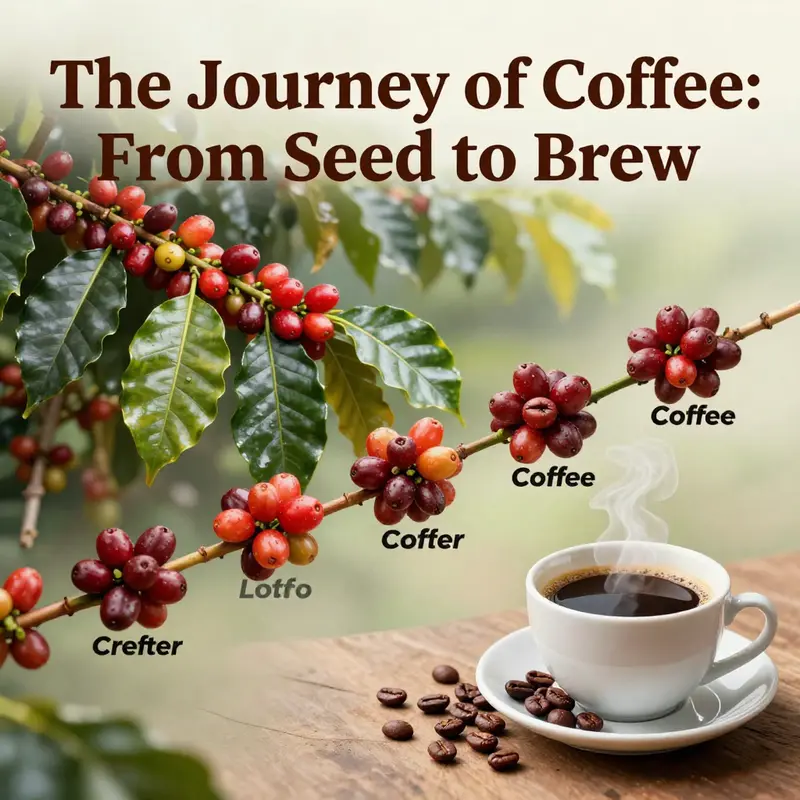
The process of turning coffee beans into a delightful beverage is a fascinating journey that begins on the coffee plant. For business owners and enthusiasts alike, understanding this journey is essential. This article will explore the comprehensive steps of coffee production, including the growth and harvesting of coffee cherries, the processing techniques used to extract the beans, the methods of drying and hulling, the critical sorting and grading processes, and finally, the art of roasting and packaging. Each chapter will illuminate key aspects of how coffee beans are made, enhancing your appreciation of this globally cherished commodity.
From Seed to Cherry: The Growing Life and Harvesting of Coffee Beans
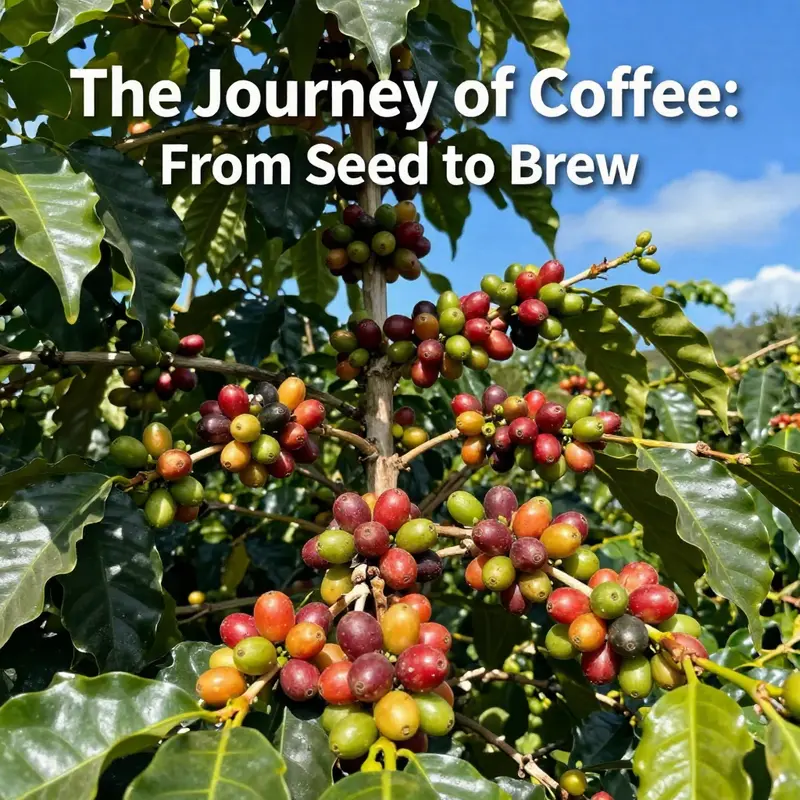
The journey of a coffee bean truly begins long before roasting — it starts with a seed, a nursery bed, and patient hands. Farmers plant coffee seeds in carefully tended nursery beds where seedlings are shielded from pests and harsh sunlight. These early weeks are delicate: seeds need steady moisture, gentle fertilization, and frequent weeding while they develop their first leaves and a sturdy root system. For Arabica varieties, which are more sensitive than robusta, nurseries often use shade cloth and frequent monitoring to protect young plants from sudden temperature or light stress.
Once the seedlings reach a suitable height and strength, they are transplanted into the field. Transplanting is timed to maximize survival: many growers move seedlings at the start of the rainy season so roots can establish more easily. In the new home, young coffee trees often receive partial shade from taller trees or shade structures. Shade plays more than a protective role; it slows growth, encourages denser foliage, and can help preserve the nuanced flavors coffee producers seek. Shade also supports biodiversity, which reduces pest pressure and improves soil health over time.
After planting, coffee trees enter a multi-year maturation period. They are evergreen shrubs that can reach twenty feet or more if unmanaged, but producers typically prune them to around eight to ten feet. Lower profiles make harvesting and maintenance easier and encourage the development of productive branches. During the first three years, farmers focus on soil fertility, weed control, and disease prevention. Regular pruning, mulching, and selective fertilization establish the tree’s architecture and increase future yields. Careful attention in these early years pays off when the trees begin to flower.
Flowering is a dramatic and brief moment in a coffee farm’s calendar. Trees usually bloom after the dry season when the first rains arrive. Tiny, white, jasmine-scented blossoms open over two or three days, covering branches in a fragrant carpet. The sight is transient, but its timing matters: flowering that follows steady rains leads to uniform development of cherries. Flowering also depends on local climate patterns and altitude; higher elevations generally produce slower development and later harvests, which often correlate with denser beans and more complex flavors.
Pollination transforms flowers into fruit. Most coffee species are self-fertile, so a flower can set fruit without cross-pollination, though insects and wind still play supportive roles. The tiny fruits that follow are called coffee cherries. They begin green and then transition through yellow to red as they mature. Inside each cherry, two seeds typically sit with their flat sides pressed together. These seeds are the coffee “beans” familiar to roasters and drinkers.
Ripening is a gradual process. For many Arabica types, cherries take six to nine months to mature after flowering. The length of that period varies with altitude, temperature, and variety. Cooler mountain climates slow metabolism and lengthen maturation, allowing more time for flavor precursors to build. Lower, warmer regions may see faster ripening and higher yields, but sometimes at the cost of subtlety in cup character.
Harvesting is the point at which agricultural patience meets human labor. The aim is to pick cherries at peak ripeness; underripe or overly ripe fruit causes uneven fermentation and muddy flavors. Despite mechanization in some regions, precision matters. Hand-picking remains widespread because it allows selective harvesting—workers return to the same tree multiple times, taking only the reddest cherries. This selective picking produces a more consistent, higher-quality lot. By contrast, strip harvesting removes all cherries in one pass, ripe or not. Strip methods are faster and cheaper, often used where labor shortages or plantation size make selective picking impractical.
The harvest window for a single tree is relatively short. Farmers must collect ripe cherries within a two-month period or less for peak quality. In a farm with many trees or varied microclimates, harvesting can extend for months as producers follow ripening patterns across slopes and exposures. Timing decisions require daily observation; a single rain event or temperature swing can change ripening rates.
Practical choices during harvest affect both quantity and the cup. Some plantations encourage workers to harvest only the top canopy, allowing lower cherries to ripen later. Others practice strip-picking with mechanical harvesters on flat terrain. In mountainous regions where many specialty coffees originate, terrain prevents machines and makes skilled hand-pickers essential. Traditional practices often include small bundles where pickers bring cherries to a central station for immediate processing.
Labor is central to quality. Harvesting is physically demanding and often seasonal work that supports rural livelihoods. Communities around coffee farms develop rhythms aligned to the harvest: family members may help, and children sometimes taste the sweet pulp of fallen cherries. These cultural touches hint at the intimate relationship between people and the crop.
Ecological and agronomic factors shape growth and harvest decisions. Altitude, soil type, and local climate influence varietal choices. Farmers select between Arabica and robusta or within Arabica cultivars to balance yield, disease resistance, and flavor potential. Shade trees, intercropping with food plants or timber, and soil conservation strategies all affect tree vigor and fruit quality. Disease threats, such as leaf rust, require proactive management. Farmers may employ resistant varieties, fungicide programs, or cultural tactics like improved airflow through pruning. Plant nutrition also plays a role; balanced fertilization supports healthy flowering and fruit set.
Yield does not equate directly to quality. Over-fertilized, high-yielding trees sometimes produce cherries with diluted flavors. Conversely, lower-yield systems that stress trees slightly through shade or reduced fertilizer can concentrate sugars and flavor compounds. Many specialty coffee producers accept lower yields in exchange for higher cup scores and a premium price. The grower’s management style and the market they sell into often determine these trade-offs.
As cherries are harvested, they must move quickly to processing. The sugars and mucilage in ripe cherries begin to break down soon after picking. Decisions made within hours—whether to depulp, ferment, or sun-dry the whole cherry—set the stage for the flavor journey that continues after drying and hulling. But those steps depend on having ripe, well-handled cherries in the first place.
The arc from seed to cherry is measured in years, not weeks. It relies on careful nursery work, smart transplanting, patient maturation, attentive pruning, and skilled harvesting. Each stage shapes the bean’s potential: seed stock sets genetic limits, shade and soil influence growth, and the choices made at harvest preserve or diminish the flavors formed over months. Understanding this life cycle reveals why coffee quality often begins long before a roaster opens a bag.
For broader context on global production patterns and industry standards, refer to the International Coffee Organization’s resources at https://www.ico.org.
From Cherry to Seed: How Processing Shapes Every Coffee Bean
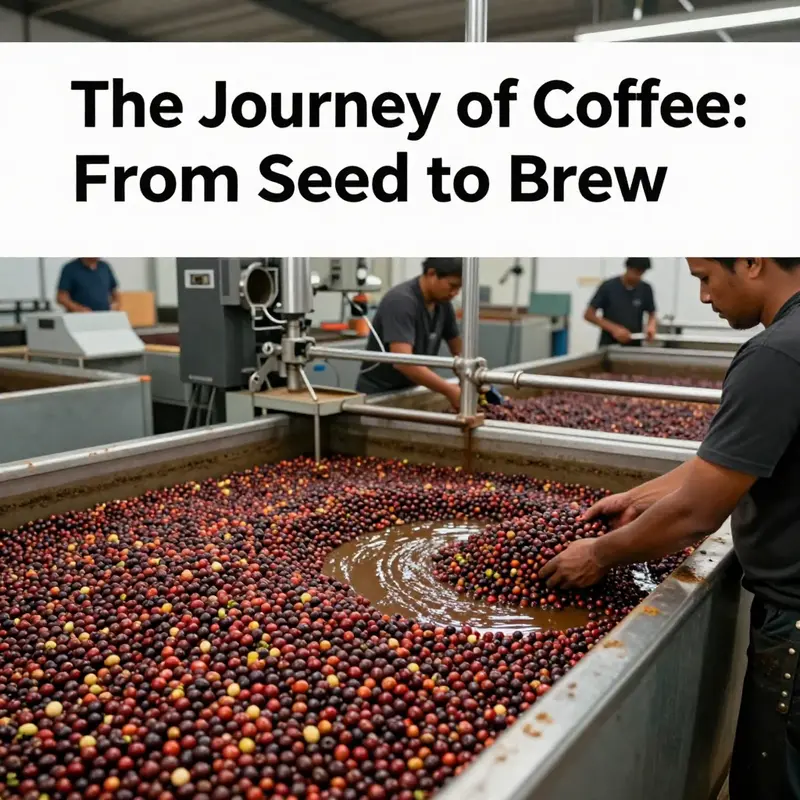
How coffee cherries become the green beans roasters buy is a story of choices. Each step after harvest changes chemistry, texture, and flavor potential. Processing removes the cherry’s skin, pulp, mucilage, and parchment to reveal the seed. But it also creates conditions for fermentation, sugar concentration, and chemical reactions that later define aroma, acidity, body, and sweetness. This chapter follows the practical methods producers use and explains how those choices influence the cup.
Coffee processing begins the moment cherries are picked. Farmers choose between picking selectively by hand or stripping branches with machines. Selective picking targets ripest cherries, which improves uniformity. Machine harvesting increases speed and yields but mixes ripe and unripe fruit. That choice has repercussions throughout processing. Ripe cherries tend to ferment and dry more evenly. Mixed harvests demand more careful sorting to avoid off-flavors.
The oldest and simplest approach is dry processing, often called natural processing. Producers spread whole cherries on patios, raised beds, or mats and dry them under the sun. Workers turn the cherries to ensure even exposure and prevent mold. As the fruit dries, sugars concentrate and the bean remains in contact with pulp and mucilage. This prolonged contact allows the bean to absorb compounds from the fruit, producing flavors described as fruity, wine-like, and syrupy. Natural processed coffees often show heavier body and pronounced sweetness. However, this method depends on consistent sunny weather and rigorous monitoring. Uneven drying risks fermentation faults and mold.
Washed processing takes a different route. Immediately after harvesting, cherries are depulped. Mechanical depulpers squeeze the skin and pulp away, leaving beans coated with sticky mucilage. Those beans enter fermentation tanks where microbes break down the mucilage over 12 to 48 hours. Water and time are the variables used to control this step. After fermentation, beans are washed clean and dried. Washed coffees often present brighter acidity and cleaner flavors. They reveal varietal characteristics and terroir with more clarity than naturals. The trade-off is water. Washed processing uses substantial volumes, and managing effluent is crucial to avoid environmental harm.
Between dry and washed lies honey processing, sometimes called pulped natural. In this hybrid, producers remove the skin and some pulp but leave varying amounts of mucilage. The beans then dry with the mucilage intact. Producers classify honey lots by color terms that reflect mucilage amount retained: yellow, red, and black honey indicate progressively more mucilage. The retained sugars and sticky coating intensify sweetness and body, often producing caramel, brown sugar, or dried-fruit notes. Honey processing requires meticulous drying control. Because mucilage retains moisture, beans must be monitored to prevent over-fermentation and mold growth.
More recent techniques borrow lessons from winemaking and craft fermentation. Anaerobic fermentation places cherries or depulped beans into sealed tanks with controlled oxygen levels. Producers manipulate temperature, acidity, and microbial communities, sometimes inoculating with specific yeasts or bacteria. The sealed environment promotes anaerobic microbes and distinct metabolic pathways. The result can be amplified floral, tropical, or citrus notes with greater consistency than open-air fermentation. Anaerobic methods allow producers to design flavor outcomes with precision. They also require laboratory support, monitoring equipment, and rigorous sanitation.
Barrel fermentation is an artisanal variant that brings aging influence into coffee. Producers ferment or age cherries or beans in wooden barrels formerly used for spirits like rum or whiskey. The wood and residual spirit compounds impart vanilla, oak, and spice cues. Barrel-fermented coffees are niche and expensive, but they illustrate how post-harvest choices expand coffee’s flavor vocabulary. Barrel-aging demands careful control over humidity, temperature, and microbial activity to yield desirable characteristics rather than spoilage.
Regardless of method, drying and hulling are universal. Dried beans reach about 10–12% moisture before hulling. In washed coffees, beans often dry as parchment coffee — the seed enclosed in a papery parchment. Hulling machines then remove parchment and any remaining husk. After hulling, the green bean is revealed. Dry-processed beans are cleaned of the dried fruit layers by mechanical hullers. At this stage, producers sort beans by size, density, and color. Sorting removes defects and groups beans for consistent roasting.
Processing impacts not just flavor, but the bean’s chemical makeup. Fermentation alters sugars, acids, and volatile compounds. Extended contact with fruit promotes uptake of fruit-derived compounds and increases certain antioxidants. Washed coffees may retain higher clarity in phenolic profiles, while naturals can show elevated sugars and fruity esters. These chemical differences change how beans react to heat during roasting. For instance, sugars caramelize and darken bean surfaces. Fermentation-derived acids and volatiles transform into aroma molecules during roasting. Roasters adjust profiles and roast curves to highlight each processing method’s strengths.
Quality control and traceability are now integral to processing. Good mills document lots, record fermentation times and temperatures, and sample regularly for moisture and microbial activity. Many specialty producers record timelines, drying conditions, and cupping notes for each lot. This transparency helps buyers connect cup profile to processing decisions. It also supports premiums for higher-quality coffee.
Processing also interacts with environmental and economic realities. Washed processing demands clean water and effluent treatment. Dry processing needs reliable sun and space for drying. Honey and anaerobic methods often require more intensive labor and monitoring. All methods produce byproducts—pulp, mucilage, wastewater—that must be managed. Some operations convert pulp to compost or bioenergy. Others use mucilage as animal feed after treatment. Sustainable processing seeks to reduce water use, manage waste responsibly, and add value locally.
For farmers and cooperatives, the choice of processing method balances risk, infrastructure, and market demand. Natural processing can yield standout flavors but needs dry weather. Washed coffees fetch high prices in markets valuing clarity. Honey and anaerobic lots attract specialty buyers seeking novel profiles. Barrel-fermented coffees target high-end niches. Producers often experiment with small lots before scaling methods that work in their microclimate.
In the end, coffee processing is both an art and a science. It begins with the cherry and ends with a green bean full of potential. Each method leaves a fingerprint of microbes, sugars, and acids on the seed. Roasters read those fingerprints, then roast to coax desired flavors into the cup. Recent research connects processing choices with measurable changes in bioactive compounds and aroma precursors. For readers who want the scientific background, a detailed review explores processing impacts on coffee chemistry and bioactive stability. See the comprehensive review for a deeper dive: https://link.springer.com/article/10.1007/s11694-025-03121-8
From Cherry to Green Bean: The Drying and Hulling Gatekeepers of Coffee Making
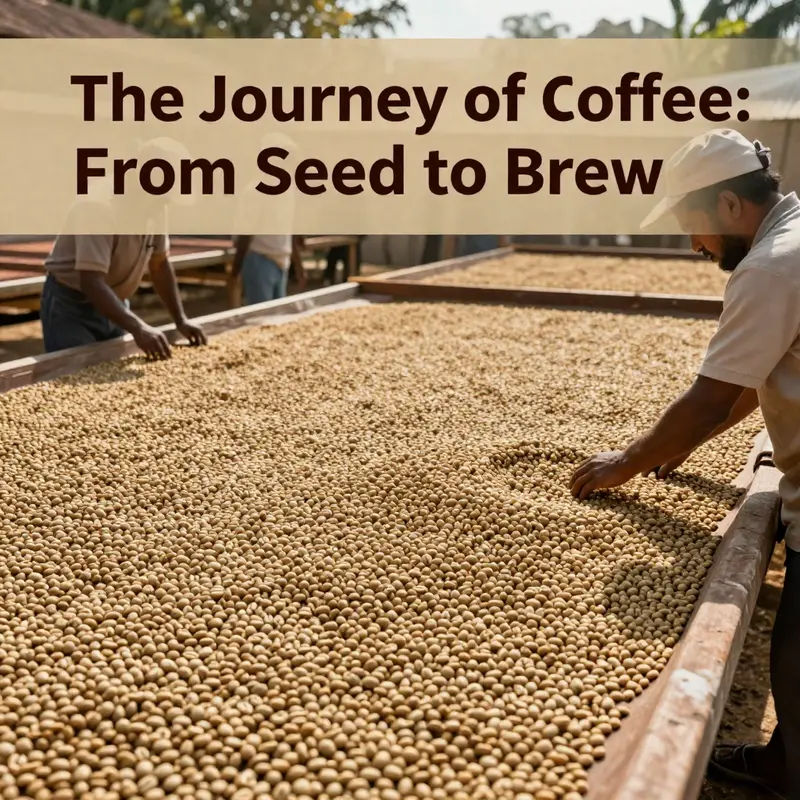
The journey from a harvested coffee cherry to a green coffee bean hinges on a pair of often unseen stages: drying and hulling. These steps are more than mere preparation; they are gatekeepers that determine moisture, texture, and eventual flavor potential long before the roaster lights the first flame. In the chain that carries beans from sunlit trees to bustling roaster rooms, drying and hulling sit between the harvest and the careful sorting and grading that decide a lot’s value. They shape stability during storage, influence how uniformly a bean roasts, and imprint subtle notes that can echo through to the cup. While the earlier chapters may recount the ascent of cherries from branches and the basic idea of seeds inside, this middle act deserves its own attention for the way it quietly seals the bean’s future character. And because the two processes are intimately linked, they are best understood as a single, continuous craft rather than as two isolated mechanical tasks.
When the cherry is picked, the seed that will become the coffee bean is still tightly wrapped in fruit and surrounded by a wet, fermentation friendly environment. Almost immediately after harvest, the fruit must be opened, its pulp removed, and the seed prepared for drying. In this window, producers choose between two dominant approaches, each with distinct implications for the bean’s final profile. In a washed, or wet, process, cherries are depulped to remove the outer layer and then left to ferment in water for a period to break down any remaining mucilage. The beans are washed and then laid out to dry. In a natural, or dry, process, the whole cherries themselves are spread in the sun or on raised beds to dry intact, a method that concentrates flavors on the surface of the bean but also demands careful attention to climate and timing. Drying and the subsequent removal of the parchment layer are the hinge moments that convert a fragile, high moisture mass into a robust, storable form that can travel across continents.
Drying, at its core, is a controlled dehydration. The immediate task after processing is to reduce moisture from roughly fifty percent at the outset to a stable ten to twelve percent, a range that permits safe storage and predictable behavior during roasting. If drying is incomplete or uneven, the risk of mold and spoilage climbs, and flavor development can skew in unpredictable directions. The climate, geography, and the scale of operation all dictate the drying path. On raised beds in tropical sun, coffee piles are turned regularly to expose all surfaces to drying heat and air flow. The raised bed method helps air circulate beneath and around the beans, preventing damp pockets that could foster mildew. In larger operations or in cooler, wetter environments, mechanical dryers step in. These are not the hot air furnaces of imagination, but purpose built machines that regulate temperature, humidity, and air exchange. They can replicate ideal drying conditions even when weather turns unfriendly. In both scenarios, the goal remains the same: a uniform, gradual loss of moisture that preserves bean integrity while preventing overwork of the seed’s delicate structure.
What makes drying a finely tuned art is not only the rate of moisture loss but the uniformity of that loss. Uneven drying creates a gradient within lots, with some beans reaching the target ten percent while others stay closer to twenty percent. Such disparities matter when the beans move into the hull and later into roasting. Uneven moisture trapping can cause cracks, uneven roast development, and ultimately inconsistent cup profiles. Because a single batch may originate from many trees, with cherries ripening at slightly different times, maintaining consistent drying requires careful management—continuous turning, even airflow, and frequent moisture checks. The checks themselves are practical and often modest: moisture meters or refractometers give a reading of the moisture content by analyzing the density of the bean, while the visual cues and feel of the beans guide decisions about turn frequency and drying duration. These are the kind of micro-decisions that accumulate into a reliable, uniform green bean.
The transition from dry to green bean is completed with the removal of the parchment, the thin yet tough silvery layer that encases the seed. This milling stage is called hulling, and it is usually performed after thorough drying has brought moisture down to a stable level. A huller is a machine that uses friction and pressure to crack this parchment away from the seed without harming the bean inside. In practical terms, this means unraveling the protective husk that forms an outer shell around the green bean, revealing what is commonly recognized as the green coffee bean ready for sorting, grading, and eventually roasting. The parchment acts as a buffer during storage and transport, shielding the bean from physical damage and moisture fluctuations. Hulling, then, is less about breaking the seed than about stripping away that protective cover in a controlled, efficient manner. For many coffees, the parchment comes off soon after drying; in some instances and for certain processing styles, parchment removal may be delayed a bit, but the end result remains the same: a clean, husk-free bean that can be measured, packed, and shipped with consistent quality.
Hulling does not occur in a vacuum. It sits at the crossroads of several quality control practices that follow the drying phase. After parchment removal, the green beans enter sorting and grading. This stage is analytical as much as it is tactile: the beans are separated by size, density, and color, and any defects such as broken seeds, mold damaged surfaces, or uneven coloration are culled from the lot. The quality signals are strong here because they translate directly into price, market value, and ultimately the behavior of the bean in roasting. A well hulled and well sorted batch spends less time in the roaster uncovering hidden flaws and more time revealing the intended flavor notes of its origin. The dialogue between drying and hulling and the subsequent steps—sorting, roasting, packaging—exists as a continuous thread where each link depends on the previous one. If the drying phase has done its work with care, and the parchment is peeled back smoothly, the green bean offers a stable surface for even roast development. If not, a roaster will see inconsistencies emerge as the bean heats and expands at varying rates.
Flavor is the quiet beneficiary of good drying and precise hulling. Drying sets the stage for aroma and sweetness, balancing acidity and body in the cup. A uniform moisture profile preserves the bean’s natural characteristics and helps to prevent scorch or underdevelopment during roasting. Parchment removal, meanwhile, retains physical integrity and storage stability that keep the beans steady during transport. It is easy to overstate the drama of roasting and blending, but the real craft takes place long before the beans ever meet the drum. The careful orchestration of speed, heat, airflow, and timing during drying, followed by the delicate choreography of parchment removal in the hull, makes possible the cleaner, more predictable roasting that many coffee lovers rely on.
In a single batch, the path from cherry to green bean can unfold across days or weeks, shaped by climate, labor, and the equipment at hand. The choices made in the drying process ripple forward into the bean’s readiness to be roasted and into the sensory possibilities of the cup. Washed coffees often carry a brightness shaped by the mucilage fermentation and the way their moisture was controlled. Natural processed coffees may emphasize body and fruitier notes tied to the cherry’s own sweetness. Yet regardless of processing lineage, the barrier between the harvest and the roast is the same: a well dried, properly hulled bean that arrives as a stable, ready instrument for flavor. The quiet discipline of these steps is what keeps the coffee value chain moving and protects the integrity of a product celebrated by drinkers around the world.
For readers who crave a deeper technical understanding of these stages, authoritative, practical detail is available through well regarded research resources. These sources discuss the moisture thresholds, drying kinetics, machinery options, and quality control practices that underpin successful drying and hulling in varied geographies and scales of production. By appreciating both the science and the craft behind drying and hulling, one gains a clearer sense of why a coffee can carry such a distinct identity depending on where and how it was processed.
External resource: Coffee Research.
From Harvest to Roast: The Quiet Precision of Sorting and Grading Green Coffee Beans
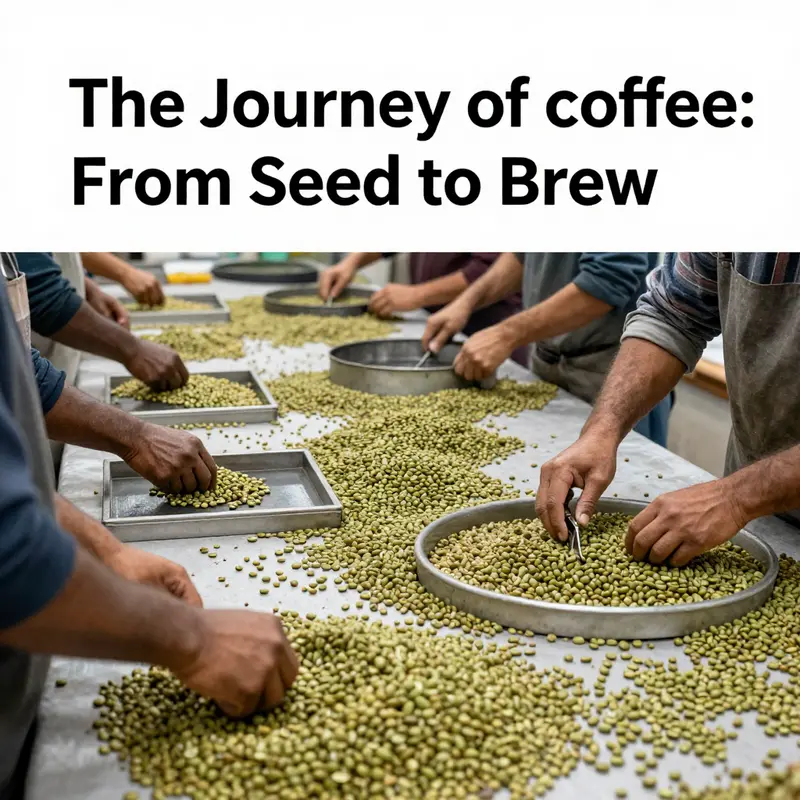
Sorting and grading are the quiet gatekeepers of the coffee-bean journey, the steps that translate a field’s variability into a stable, roaster-friendly product. After the fruit has been processed, dried, and hulled to reveal green coffee beans, the next phase unfolds with a patient blend of simple physics and high technology. The aim is not to alter flavor directly, but to ensure that every batch moving toward roasting carries a predictable profile. In the long arc from farm to cup, sorting and grading condense the season’s complexity into a usable, marketable consistency. This is why they matter as much as the harvest method or the type of processing, for they sculpt both the roast curve and the aroma that will eventually fill a cup. The rigor of this stage, although often taken for granted, is a testament to how modern coffee has tethered artisanal quality to industrial precision without dissolving the subtlety that makes each origin unique.
Sorting begins with the simplest tasks yet remains extraordinarily consequential. It is, in essence, a screening of debris, seeds, and imperfect beans from the array of green coffee that has emerged after drying. Stones, husks, insect-damaged seeds, and moldy beans are removed to prevent any rogue material from surviving into shipping or roasting. On larger operations, a belt of rough screens catches items by size and shape, an inexpensive first sieve that whispers the bean’s future: uniform size facilitates even heat penetration during roasting. Size, in itself, is not a flavor fingerprint, but it is a tool for roast consistency. Beans of vastly different sizes can roast unevenly, creating a spectrum of flavors rather than a coherent cup. The simple physics of heat transfer—surface area, thickness, moisture distribution—works best when the input is harmonized. Therefore, the first layer of sorting is pragmatic and indispensable: separate the usable from the unusable, the uniform from the irregular.
Yet the story quickly grows more sophisticated. Beyond basic sieving, the industry increasingly relies on optical and digital technologies that see what the naked eye cannot. Optical sorters deploy high-resolution cameras, sensors, and sometimes AI-powered software that analyze each bean as it zips along a conveyor. The criteria are color, size, shape, and surface defects that might signal fermentation flaws, mold, or insect damage. If a bean’s color deviates in a way that suggests an internal issue or a fermentation irregularity, the system ejects it with a strike of air. The contrast between the traditional, labor-intensive hand pick and the modern machine is striking. Where hand-picking could miss subtle blemishes or inconsistent hue across a lot, optical sorters can process thousands of beans per minute with a level of precision that is hard to match with human eyes alone. Still, the human factor remains essential: operators set the parameters, monitor performance, and intervene when a sorter’s calibration drifts. The best programs blend automated speed with seasoned judgment, a partnership that yields a far more uniform green lot than either approach could achieve alone.
The market for sorting technology spans the simple and the spectacular. Sieving and sifting machines, time-tested and inexpensive, offer a robust first pass for small to mid-sized operations. They can separate beans by dimensions, filtering out outsized pieces and ensuring a baseline uniformity. Optical sorters, by contrast, represent a more expensive commitment but bring an almost surgical level of discrimination. They catch issues that mechanical screens alone cannot detect—color variations that reveal uneven maturation, surface defects that indicate hidden mold, or deformities that correlate with density differences. The speed and accuracy of optical sorters have transformed how producers manage quality, particularly in regions where climate variability creates more frequent swings in bean appearance from harvest to harvest. In practice, many facilities use both technologies in a layered approach: sieves for the coarse pass, optical sorters for the fine pass. This layered strategy is not merely about cleanliness; it is about shaping a lot that will roast evenly and deliver the intended sensory profile.
Grading, the next major act, moves beyond removing defects to classifying beans into standardized categories that have real economic implications. The most familiar dimension is size grading. Grading systems often translate the physical dimensions of a bean into recognizable categories such as Extra Bold, Bold, and Medium, with sieve sizes like 15/16 or 17/18 serving as benchmarks. Larger beans are not inherently tastier, but they tend to roast more uniformly due to tighter internal consistency. In coffee markets, uniformity translates into predictable export grading sheets, more stable inventory planning, and often a premium in price for premium lots. The second axis of grading concerns the presence and number of defects. International standards, including those used by specialty coffee systems, specify defect thresholds per a sample size—commonly a 300-gram test—so that buyers can gauge how many beans fail to meet the defined quality bar. A popular reference is that Specialty grade limits defects to very few per 300 grams. Defects range from broken beans to insect damage, from fungal infections to underdeveloped beans. The grading system thus acts as a quantitative sentence about quality: it speaks to consistency, not merely to beauty or charm of a single bean.
Color and maturity also enter grading as vital, if more nuanced, criteria. Uniform color across a lot signals consistent maturation and suggests that the beans will respond similarly to heat during roasting. The science behind color assessment has moved far beyond human perception. Modern grading often leans on colorimetry, a precise study of color space that maps hues in a way machines can interpret. The CIELAB color space, for instance, provides a standardized vocabulary for hue, lightness, and chroma. When an optical sorter detects subtle color deviations within hundreds or thousands of beans, it can separate them to maintain cohesion in a final roast profile. That subtlety matters; even slight disparities in color and maturity can echo through a roast, influencing aroma development and the balance of sweetness and acidity in the cup.
The synergy between sorting and grading is what unlocks roast consistency and flavor reliability. Sorting trims away the obvious and the latent defects, while grading communicates the lot’s quality level and its expected behavior in the roaster’s hot chamber. Together, they command value: coffee buyers in specialty markets seek beans that conform to tight parameters, and producers who can consistently deliver well-sorted and well-graded lots become eligible for premium prices and reliable contracts. The value proposition works in two directions. On one hand, meticulous sorting means fewer surprises at the roaster’s end; on the other, robust grading signals to buyers that a particular lot meets explicit quality standards. The result is a smoother supply chain with fewer wasteful rejections, less material pulled from roasting lines, and fewer concerns about inconsistent batches haunting the tasting room.
Technology continues to push these boundaries. A 2025 study in the Journal of Science and Technique highlighted an efficient real-time algorithm that combines shape analysis with the CIELAB color space to sort coffee beans rapidly and accurately. The research demonstrates how on-line classification can achieve high throughput without sacrificing precision, enabling larger producers to implement tighter quality control while maintaining throughput. In practical terms, such advances mean that even as harvests become more variable due to climate, the coffee industry can preserve the roast integrity that consumers expect. The study’s findings reinforce a trend already visible in many mills: when sorting and grading are augmented by intelligent systems, the consistency of flavor across batches improves, and the opportunity to showcase distinct origin profiles becomes more reliable.
The impact of sorting and grading extends beyond flavor and roast performance. It shapes how coffee is valued at every link in the chain. For farmers and cooperatives, a clean, well-sorted bean stream can command higher premiums and reduce the risk of price volatility that accompanies inconsistent crop years. For exporters and roasters, a uniform green stock minimizes the need for post-harvest culling, transfer losses, and batch rework. In a market where specialty demand can hinge on a handful of beans per cup, the small differences that sorting and grading capture become decisive. As such, these steps constitute a form of quality governance that translates agronomic variability into a standardized, tradeable product. They reflect a deliberate choice: to treat coffee not merely as a crop but as a consumable whose inner differences are appreciable—through aroma, sweetness, acidity, and aftertaste—only when the material entering the roaster adheres to a shared standard of precision.
In this light, sorting and grading are more than quality control; they are the practical language of transparency in a global value chain. They tell buyers what to expect, guide roasters on how to dial in heat and time, and, in the end, help ensure that a cup’s story remains intact from origin to aroma. The work is meticulous and sometimes inflected with the romance of the origin story—the soil, the altitude, the microclimate—but it is grounded in measurable criteria that make coffee universally reproducible, even when grown in a hundred different places. As new technologies emerge and as the industry continues to refine thresholds for defects and color accuracy, the balance between human expertise and machine precision will continue to shape how beans are sorted, graded, and ultimately roasted into the flavors that define a region’s identity.
For scholars and practitioners alike, these stages offer fertile ground for understanding how much is at stake long before heat meets bean. The cup’s harmony depends on a chain of choices made long before the first crack of the roast, and sorting and grading are the most visible revelations of that chain’s quality. They are a reminder that the journey from crop to cup is not a single leap but a disciplined sequence of evaluations that transform a harvest into a reliable sensory experience. In the end, the beans that pass through the gates of sorting and grading are more than raw material; they are evidence of a system built to respect variability while delivering consistency—an alignment that makes possible the cherished ritual of daily coffee drinking, one cup at a time.
External resource: https://doi.org/10.1155/2025/9876543
From Green Seeds to Aromatic Treasures: The Roasting Alchemy and Freshness Shield of Coffee Beans
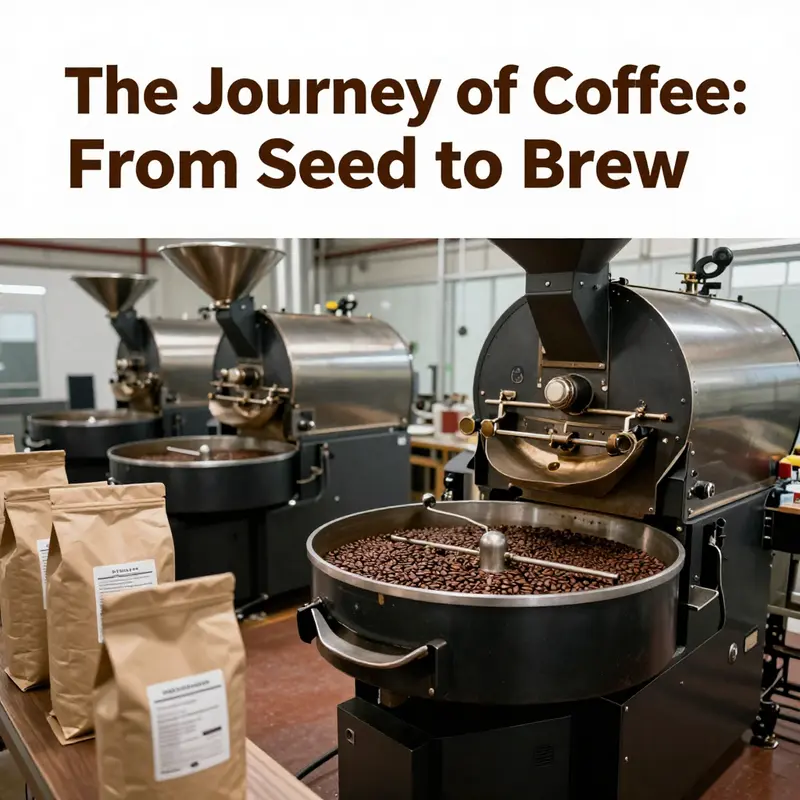
Roasting is where the story truly becomes coffee. Green beans arrive with a pale, almost jade hue, a quiet seed awaiting heat to unlock its senses. Heat transforms them through a sequence of chemical and physical changes. Water inside the bean turns to steam and escapes little by little. Sugars begin to caramelize. Hundreds of volatile compounds rearrange themselves into the familiar oaken, fruity, citrusy, or chocolatey notes that define a brew. This is not magic alone; it is a blend of precise science and human judgment, a duet between machine and palate that keeps evolving with every batch.
The roasting process itself unfolds like a small experiment conducted in real time. Most roasters operate within a window that stretches from roughly 370 to 500 degrees Fahrenheit, or about 185 to 260 degrees Celsius. The beans heat rapidly at first as moisture evaporates and surface sugars start to brown. This early phase sets the stage for flavor development. The characteristic first crack often signals a transition point. When the bean’s internal pressure, driven by steam and air, reaches a threshold, the seed audibly fractures. In a controlled environment, this crack marks the moment when flavor development turns from a gentle to a more assertive arc. For some, that arc favors brightness and clarity; for others, it leans toward body and depth. The second crack, if it occurs, signals a further stage of development, often guiding roasters toward darker profiles where bitterness and roast character begin to dominate the cup. Not every batch reaches a second crack, and that choice is a deliberate part of a roaster’s profile.
Underneath these audible cues lies a network of chemical reactions. The Maillard reaction, a cornerstone of roasting, creates hundreds of new flavor compounds as amino acids meet reducing sugars. Caramelization of sugars adds sweetness and depth, while the development of oily surface sheen, sometimes called the emergence of coffee oil, marks a shift in mouthfeel and aroma. It is important to note that the term coffee oil is a convenient shorthand; the oils are not purely fat-soluble, but they migrate to the surface and carry aromas that become detectable in the steam, in the crack, and in the final brew. The exact balance of reactions is influenced by bean density, moisture content, and the roasting curve—the tempo of heat and the pace of airflow that move through the beans during the process.
Roasting levels are a language of their own. A light roast preserves much of the origin character, a whisper of the bean’s birthplace in the cup, with brighter acidity and more nuanced fruit or floral notes. A medium roast offers a balance, a smoother integration of sweetness with acidity, allowing the inherent story of the bean to harmonize with the roast. A dark roast leans into bold, expressive textures, with reduced acidity and pronounced roast character, often accompanied by chocolatey or smoky tones. Each level has its own rhythm, and roasters calibrate their machines to coax specific profiles from each origin. The craft lies not only in achieving a target color but in shaping the bean’s sensory fingerprint across time and temperature, so that a given lot of green coffee yields a repeatable experience when brewed with a chosen method.
Two broad roasting approaches shape how those profiles come to life. Drum roasting, the traditional workhorse, uses a rotating cylinder heated from the outside. The beans tumble through the heat, receiving steady, even exposure that produces consistent development across the batch. The alternative, hot air or convection roasting, relies on a stream of heated air circulating around the beans. This method can yield more pronounced brightness and faster development, while sometimes requiring closer control of airflow and chamber temperature to avoid unevenness. Each method invites variations in aroma and body, and many roasters experiment with small batches to understand how subtle adjustments in airflow, batch size, and drum speed translate into discernible flavors. The result is not a single correct path but a family of paths that roasters navigate to honor the beans’ complexity while expressing their own artistic signature.
The experience of roasting is as much about timing as it is about temperature. A roaster watches color development, listens for crack events, and samples the beans at intervals to judge aroma and sound. The goal is to reach a precise degree of development where the desired balance of acidity, sweetness, and complexity emerges. When the roast reaches the intended depth, the beans must be cooled quickly. Rapid cooling arrests the cooking process, locking in the flavor compounds just formed and preserving the bean’s character for the moment it meets hot water. If cooling is delayed, the sugars and aromatics can overdevelop, tipping into a roasty sweetness or even a flatness that masks subtler nuances. Cooling is typically achieved with a blast of cold air, sometimes aided by water mist in large industrial roasters, to ensure a quick halt that preserves the intended profile.
After cooling, resting or degassing becomes a quiet but essential stage. Green seeds carry a certain stillness, but roasted beans continue to shed carbon dioxide for hours and days after they come off the roaster. This degassing matters because CO2 can influence extraction during brewing, pushing the brew toward under-extraction if not allowed to settle to a reasonable level. The rests also allow the surface oils to settle, creating a natural sheen that delivers aroma when ground and brewed. The duration of rest needed depends on roast level, packaging date, and the intended method of brewing. In the case of lighter roasts, a shorter rest can preserve more delicate aromatics, while darker roasts may require a longer rest to soften the intensity of the roast’s flavor envelope.
Packaging, the next guardians of freshness, is where the journey from roaster to cup becomes practical for everyday life. Once the beans have cooled and rested, they move toward packaging that protects them from the enemies of flavor: oxygen, light, moisture, and heat. The standard approach today often involves airtight packaging combined with a one-way valve that lets the natural gases escape without letting air back in. This valve is crucial; it prevents pressure buildup inside the bag that could rupture the package or push out aroma, while still maintaining a barrier against oxygen. Beyond the valve, many roasters and retailers choose nitrogen-flushed or vacuum-sealed bags to extend shelf life and maintain the integrity of aroma compounds during storage. The choice of packaging is a practical art in itself, balancing cost, protection, and convenience for consumers who want a consistent cup from bag to bag.
Even with elegant packaging, the story of a coffee bean is not complete without attention to storage and grind size. Whole beans retain freshness longer than ground coffee because the surface area exposed to oxygen is far smaller. Grinding unlocks aroma and speedily accelerates flavor loss, so many coffee drinkers evaluate the trade-offs between convenience and the lift in aroma and intensity that a variable grind size can deliver. For those who brew with espresso or pour-over methods, the grind size, along with the roast depth, interacts with brew temperature, contact time, and water chemistry to reveal the intended flavor spectrum. In this sense, the roasting and packaging choices made at the origin are only a preface to a home-grown ritual of grinding and brewing that brings the beans to life in a cup. The journey from green seed to extracted beverage depends as much on a consumer’s choices as on the roaster’s craft, a reminder that the life of a coffee bean is a collaborative performance across places, processes, and palates.
The story does not end with the bag and the grinder. It continues with how the beans are brewed, because the roast, grind, and water all interact to shape aroma, body, acidity, and sweetness in the cup. A light roast can highlight citrusy acidity and delicate floral notes when brewed with a fast, clean method. A medium roast tends to balance body and acidity, producing a smoother, more forgiving cup that can showcase a wider range of origin characteristics. A dark roast brings forward roast-derived aromas, with a fuller body and a more mellow acidity, but can suppress some of the origin’s nuanced flavors. Each combination of roast depth and brewing technique yields a spectrum of experiences, and this is the living core of why the same green bean can taste dramatically different when prepared in different ways. The arc from seed to sip is therefore not a straight line but a braided path through heat, time, aroma chemistry, and the choices of roaster, packager, grinder, and brewer.
In documenting the lifecycle of coffee beans, it is tempting to treat roasting and packaging as ends in themselves. Yet they are best understood as essential chapters in a longer narrative about how coffee becomes what people expect to taste and feel when they reach for a cup. The science of heat, the art of control, and the discipline of freshness preservation converge to translate the potential held in a green seed into a sensory experience that can brighten a morning, spark a conversation, or anchor a ritual. The green seed carries a latent biography that unfolds only when heat and care unlock its story. As consumers, we participate in that story with our choice of roast level, our method of brewing, and our awareness of freshness. The bean is never simply made in a factory sense; it is awakened through practices that honor balance, patience, and craft, resulting in a cup that carries a trace of origin, an imprint of the roaster, and a moment of personal perception.
For readers who wish to explore a deeper technical panorama of roasting practices and their standards, the following resource provides expansive guidance on technique, development, and quality control: https://sca.coffee/learn/roasting
Final thoughts
The journey of coffee beans, from seed to cup, is not just a process but an intricate labor of love that significantly impacts the quality and flavor of the final product. Each step in the production—from careful growth and harvesting to expert processing, drying, sorting, and roasting—plays a crucial role in determining the quality of coffee we enjoy daily. For business owners, comprehending this journey can foster better sourcing, customer education, and ultimately, a richer coffee experience. By appreciating the effort that goes into each bean, you can better connect with your customers and enhance your offerings.