
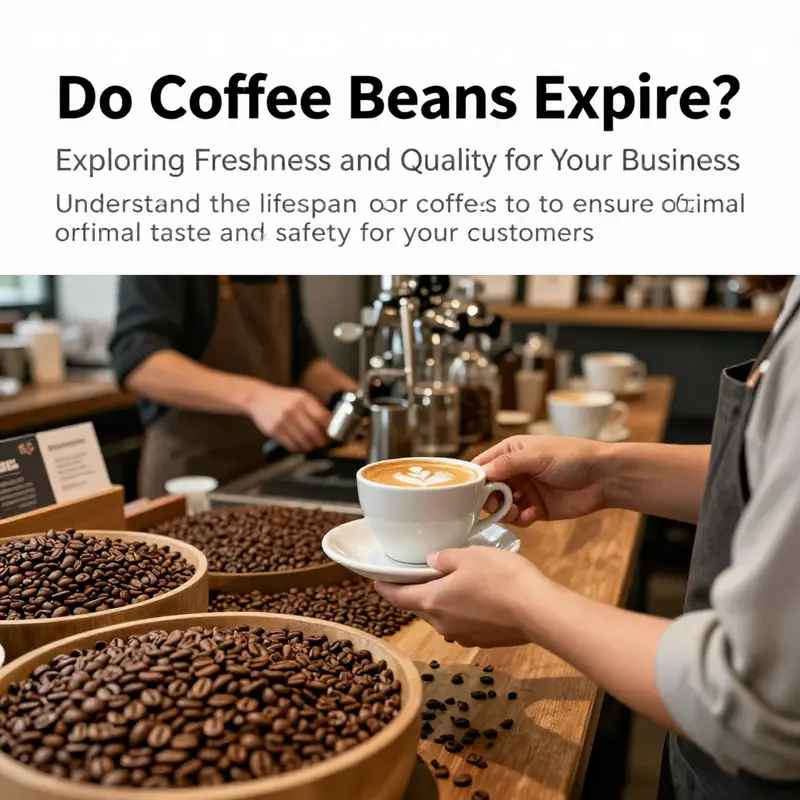
The journey of coffee from the farm to your customer’s cup is riddled with details that can affect the overall experience, including the freshness of the coffee beans. Understanding whether coffee beans expire is not just a matter of safety; it’s crucial for maintaining flavor quality in your offerings. This article will delve into the nuances of coffee bean shelf life, comparing concepts like ‘best before’ and ‘expired,’ exploring how long beans last, identifying signs of spoilage, discussing the viability of expired beans, and outlining ideal storage practices. Each section will arm you with knowledge to make informed decisions, ensuring that your business consistently serves high-quality coffee.
The Difference Between Best Before and Expired Coffee Beans: A Practical Guide to Flavor, Safety, and Freshness

When you reach for a bag of coffee, the first question that often comes to mind is not whether it is safe to drink, but whether it will still taste good. The labels on coffee beans can be confusing, especially when terms like “best before” and “expired” drift into the same conversation. This chapter unpacks those terms in a practical, coffee‑savvy way, tracing how flavor and safety diverge after the beans leave the roaster. The distinction matters not only for a satisfying cup but for how we treat coffee as a daily ritual, a sensorial experience that deserves respect as much as reliability. In the end, the guidance is simple: flavor peaks fade with time, safety remains largely intact for a long while, and smart storage can preserve both quality and peace of mind. Understanding this balance helps us approach our beans with patience and precision rather than haste or fear.
At the heart of the discussion is the idea that coffee beans do not suddenly become dangerous the moment a date passes. Unlike perishable foods—dairy, meat, or prepared meals—roasted coffee beans do not typically cross a safety threshold in a way that makes them acutely hazardous to consume. Yet the flavor profile, aroma, acidity, and body can drift toward flat, dull, or stale once oxidation and degassing continue unchecked. This is where the distinction between best before and expiration becomes meaningful. Best before is a quality indicator; it marks the period during which the beans are most likely to deliver the aroma and complexity that enthusiasts chase. Expiry, in a safety sense, would require a different kind of warning, one that signals a health risk from spoilage or contamination. In coffee, such a risk exists only in rare circumstances—mold growth or rancidity that leads to off smells and potentially harmful byproducts. The practical takeaway is clear: you may still drink beans after their best before date, but you should trust your senses and consider how long they’ve been open or stored.
To translate this into everyday practice, consider the practical timelines that researchers and industry standards have laid out. When beans are unopened and sealed with the one-way valve designed to preserve freshness, they can retain peak flavor for roughly the first one to two months after roasting, with a longer shelf life noted for safety if kept in optimal conditions—generally six to twelve months for flavor potential and up to around eighteen months for safety, provided moisture and heat are kept at bay. Once a bag is opened and resealed, the clock tightens: flavor can begin to fade within a couple of weeks, with best results typically within two to four weeks. The safety margin remains broader but still not unlimited; without signs of mold or rancidity, beans can remain usable for several months after opening, though the aroma and complexity will have deteriorated. Even storing beans in the refrigerator or freezer carries caveats: condensation and moisture intrusion can damage the texture and volatile compounds, sometimes negating the very purpose of careful roasting and storage. The practical rule is straightforward: avoid humidity, keep the beans airtight, and accept that the window for peak flavor narrows dramatically once the bag is breached.
The signs of decline are both simple and telling. A musty, sour, or cardboard-like aroma signals flavor drift more than safety concerns. If the beans show visible mold, white or green spots, or oily clumps, that is a red flag for contamination and possible toxin risk. Texture can betray moisture absorption that invites instability, and taste can reveal bitterness, flatness, or an astringent finish that was never part of the original profile. In worst‑case scenarios, these cues align with mycotoxins such as aflatoxin or ochratoxin A, which have been associated with health risks in a broader context. While the presence of these toxins in roasted beans is not the norm, their potential occurrence underscores why sensorial cues matter as part of a safety check, not just a flavor check. The core message remains: if anything about the coffee feels off—smell, appearance, texture, or taste—discarding the batch is the prudent choice. The safety threshold, though rarely invoked for coffee, is guarded by your senses and your commitment to quality.
But what about the beans that look fine and smell appealing even after the best before date? Can you still use them? The answer is yes, under careful conditions. If the beans are only a few weeks to a couple of months past the best before date and stored properly, they can still yield a satisfying cup. In such cases, you might lean into preparation methods that maximize extraction and mask subtle flaws: cold brew, which extracts slowly and tends to smooth out irregularities, or milk‑based drinks that soften imperfections in the cup. Baked goods and coffee‑flavored desserts offer another outlet where the stronger flavors can be integrated into recipes that benefit from coffee’s robustness. However, once the time beyond the best before extends into many months, flavor degradation becomes pronounced. You may still brew coffee from these beans for experimentation or novelty, but bitterness or dullness will be more likely, and the experience will rarely rival freshly roasted beans. This approach aligns with the broader reality that best before dates are about fresh flavor, not safety; you are simply choosing between peak enjoyment and acceptable, if modest, functionality.
Storage, the silent ally of freshness, deserves its own careful attention. The ideal home practice is simple: store whole beans in an airtight container, kept away from light, heat, and moisture. A dark ceramic or steel container with a tight lid can shield beans from air while a bit of space for exchange helps maintain a reasonable degassing pace. Avoid the kitchen fridge or freezer for daily storage; condensation during frequent temperature changes can undermine texture and aroma. If you must buy in bulk, consider dividing beans into smaller portions and only opening a new portion as needed, which minimizes the time any portion spends exposed to air. For many, buying more frequently in smaller quantities—enough for a couple of weeks to a month—helps preserve the sensitivity of the grind and the integrity of the flavors. Grinding, too, follows a simple principle: grind just before brewing. Whole beans retain oils and volatile compounds far better than pre-ground coffee, and once ground the clock runs quickly. Even a single cup’s difference can be measured in aroma and perceived brightness, making the case for a grinder and a small, strategic purchase cycle.
Proper storage and mindful use illuminate a central theme: while best before dates are a guide to flavor, safety remains a durable foundation for coffee consumption. The habit of enjoying coffee at its peak can be cultivated by paying attention to roast level, storage method, and the timing of grinding. Light roasts may present their best flavors within the first three weeks after roasting, while darker roasts, with their higher oil content, often peak a week or two after roasting and tend to degrade more quickly. These nuances remind us that “fresh” in coffee is not a uniform quantity but a moving target that depends on roast, packaging, and how soon after roasting the beans meet the water. The practical implication is to approach each bag with a sense of timing: plan around a reasonable window from roasting, store with care, grind close to brewing, and trust your palate to guide you when a bag is past its prime.
In a broader sense, this distinction between best before and expiry is not only about cups and comfort. It mirrors the way data and labels function in our daily lives: quality indicators guide us toward optimal experiences, while safety indicators remind us to pause and assess. The labeling framework behind coffee—much like other food products—emphasizes that the best flavor happens within a defined window, but that the absence of a hard expiry date does not equate to a free pass to neglect storage, smell, or taste. A well‑kept bag can still be safe well beyond its peak, but a consistently stale or off cup is a sign that something has changed beyond the normal course of aging. To keep the long arc of coffee enjoyment intact, it helps to treat best before as a flavor map and to reserve safety checks for clear signs of spoilage rather than the ticking of a calendar.
As you navigate this landscape of dates, let practical experience guide you. When you open a bag and notice the aroma still carries fruity or nutty notes, you’re likely in the favorable zone. If the scent seems flat or sour, it may be time to consider a fresh roast. If the texture or color reveals dampness or mold, discard. If the flavor remains acceptable but diminished, you might still use the beans in methods that extract maximum value from imperfect profiles. The goal is not to chase a pristine freshness forever but to balance enjoyment with responsible and informed consumption. In the end, the best strategy is straightforward: drink coffee beans within a sensible period after roasting, keep them dry and airtight, grind them when you brew, and trust your senses to tell you when a bag has passed its prime.
For readers seeking a broader framework on how dates function in food labeling and how they relate to quality versus safety, an authoritative overview is available from official sources on food labeling. This resource clarifies that Best Before is about quality and not safety, and it supports the notion that coffee beyond its Best Before date can still be safe to drink if properly stored and free from spoilage. The precise guidance from labeling standards helps distinguish the often-opaque conversations around “expires” in everyday products from the science that governs flavor chemistry and shelf stability. See the official guidance here: Food Labelling – Dates on Food.
From Roast to Cup: The Real Timeline of Fresh Coffee Beans

Opening a bag of coffee beans can feel like peering into a tiny, fragrant clock. The beans carry a burst of aroma that seems to promise a perfect cup, but time, air, and temperature are quiet forces that alter that promise. The question at the heart of this chapter—does coffee beans expire?—is not a single yes-or-no answer. It is a story about flavor life and safety life. In drinking terms, coffee beans don’t typically turn dangerous the moment a calendar flips. They don’t spoil in the same way as dairy or meat. Instead, they drift away from their peak. They lose brightness, nuance, and the oils that carry sweetness and acidity. If you think of expiration in two lanes—safety and flavor—it becomes easier to navigate the bag you just opened or the one you bought on impulse at the market. You may still safely brew with beans past their prime, but the cup will rarely resemble the aromatic, electric coffee you tasted when they were freshly roasted. The strongest guidance comes from understanding how long flavor lasts after roasting, and how storage shapes that clock. Once roasted, the clock starts ticking. The most flavorful window is a sprint, not a marathon. Yet every bag has a different rhythm, and every home has its own climate. The practical takeaway is simple: aim for flavor first, safety second, and store with intention rather than hope.
Flavor exists in volatile compounds that begin to escape the bean the moment heat seals the roast. The fresher you drink, the more you unlock the bean’s aroma, brightness, and balance. Across light, medium, and dark roasts, the pace shifts. Light roasts tend to lose their peak aroma a little later, while dark roasts, with more surface oils, can oxidize faster and soften more quickly. This difference matters because the same bean can taste dramatically different just a couple of weeks apart depending on roast level and exposure to air. The practical way to think about it is already in the air around you: once roasted, the clock for peak flavor starts ticking from day one and accelerates over the next several weeks. The literature and guides converge on a core idea: flavor peaks in a relatively short window, and the longer you go, the more you trade aroma and acidity for dullness and flatness.
To make this concrete, consider a few widely accepted ranges. Unopened beans packed with a one-way valve stay the safest in a broad sense and can remain usable for many months if storage is ideal. In general terms, unopened bags stored properly stay best within the first one to two months for peak flavor, with a much longer tail for safety and usability. The practical flavor window usually spans roughly six to twelve months for safety, but the peak experience lives in that earlier period. If a bag remains sealed and untouched, the claim is not that it becomes dangerous after a year, but that it becomes less expressive. Once you open the bag, the clock resets in a different way. Once a bag is opened and the beans are exposed to air, flavor quality starts to decline more quickly. The typical guideline is that opened beans stay at or near peak flavor for about two to four weeks if kept in an airtight container away from light and heat. Beyond this window, you still can brew coffee, but the aroma, sweetness, and acidity will often fall away, and the cup may taste flatter or even stale.
Storage itself is the quiet architect of this timeline. A well-sealed, opaque container kept in a cool, dark place can slow oxidation, but it cannot stop it. Light and heat are partners in crime with air, nudging the beans toward staleness. Moisture is a particularly sly threat. Refrigeration or freezing can introduce condensation when the beans move between temperature zones, which invites moisture into the bean’s surface. For most home setups, the recommended strategy is simple and practical: buy only what you can use within two to four weeks, keep the beans in an airtight container, and store them in a dark, cool cupboard away from heat sources. If you must extend storage for months, freezing is possible if you seal the beans airtight and only thaw what you will use soon, but even then, you risk moisture damage and flavor loss once you bring the container back to room temperature. The bottom line remains: the fresher you drink, the richer the experience; the longer you wait, the more your beans drift from that ideal cup profile.
A few rules of thumb can help translate this science into everyday practice. First, understand that “best before” and “expire” live in two different languages. The best-before window is about flavor quality—aroma, acidity, sweetness, and the overall balance of a cup. Safety, though moving, is rarely the limiting factor with ordinary coffee beans. They do not sprout harmful toxins overnight; rather, oxidation and moisture can usher in stale flavors and, in rare cases, mold growth if contamination occurs. Being attentive to smell is a practical early warning sign. A musty or sour odor usually hints that the bean has passed its best, and a moldy spark or a slimy, oily surface calls for disposal. These signs matter because mycotoxins like aflatoxin or ochratoxin A, while not typical in well-stored coffee, can pose health risks in spoiled products. When you notice such signs, safe practice is to discard.
Whether you can use beans after their prime depends on how far past the peak you are and whether there are signs of spoilage. In most cases, beans that are one to three months past a reasonable best-before window, and stored properly, remain safe to drink though not at peak quality. You may try different applications—cold brew, where long extraction can pull residual sweetness from older beans, or flavoring with milk and sugar—that can mask subtle flaws. For coffees that are more than six months past their peak, flavor degradation is usually significant. You may still drink them if there is no odor or visible spoilage, but expect a dull, bitter cup and a noticeable loss of complexity. The chapter’s throughline is practical: safety rarely stops you from consuming, but flavor life does.
In this space, a simple, pervasively useful rule emerges. If you want to maximize the sensory reward, treat the period from roasting to brewing as a tightly managed window. Purchase in modest quantities that fit your weekly or biweekly consumption, grind only what you will brew in the same day or the next, and grind just prior to brewing. This approach preserves the volatile aromatics that define a coffee’s personality. Once ground, coffee loses aroma more quickly, so grinding at the last moment becomes a reliable habit. The sense of time intensifies through method: the less air you expose the beans to, the longer their flavor can stay close to its peak in practical terms. With air exposure minimized, light kept at bay, and moisture controlled, you can extend the usable life of the beans, even if their moment of peak flavor has already passed.
For readers seeking a quick, authoritative reference without wading through multiple chapters, a concise guide on timing can be found in one place. How long do coffee beans last? This digest of the topic offers a compact map of the windows described here and translates them into daily practice. You can read it here: How long do coffee beans last?.
All of this points to a final, practical verdict. Coffee beans do expire—but not in the same sense as perishable foods. The clock is about flavor, not safety. They’re usually safe to consume past the “best before” date if stored properly and show no signs of spoilage. Yet to enjoy the full spectrum of aromas and nuances, the ideal window of consumption sits within a couple of weeks after roasting. In ordinary kitchen conditions, that means planning purchases and storage with a mental calendar rather than a single date on a bag. A reliable routine—buy in smaller quantities, store airtight and away from heat, grind just before brewing—helps you squeeze the most from each roast and keeps the cup aligned with what you originally tasted when you first opened the bag.
External reference for a broader overview and supporting science: The Spruce Eats offers a detailed exploration of bean longevity and storage considerations in its guide on how long coffee beans last. The Spruce Eats—How long do coffee beans last?.
Beyond Freshness: Reading the Signs When Coffee Beans Have Gone Bad
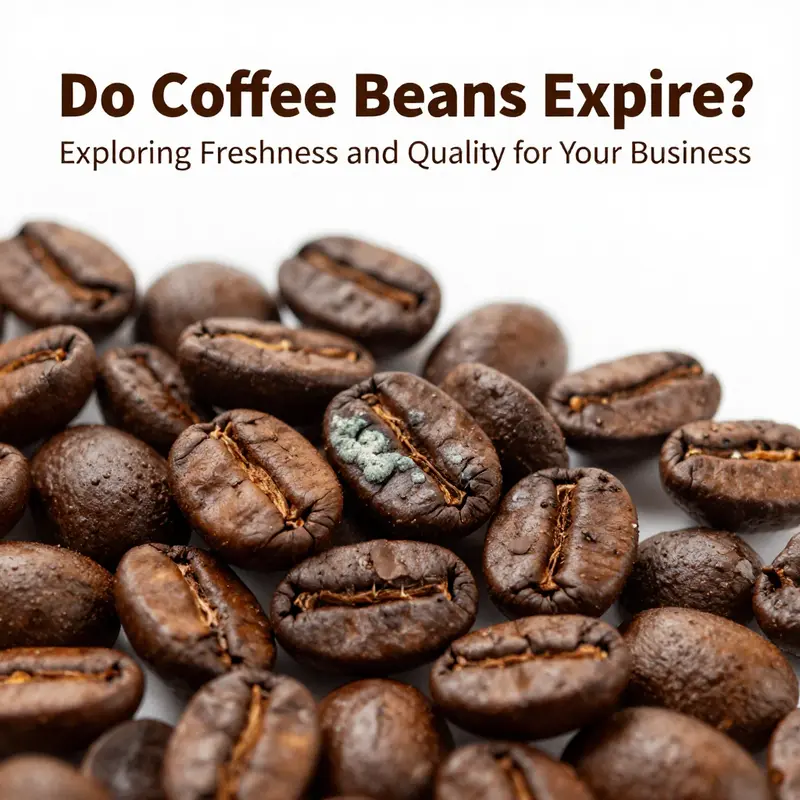
The question of whether coffee beans expire is not a simple yes-or-no answer. It hinges on two intertwined realities: flavor and safety. In a world where dairy, meat, and other perishables carry obvious safety labels, coffee beans dance to a different drum. They do not suddenly become dangerous to drink the moment a date passes, but they do lose the aroma, sweetness, and complexity that define a great cup. This chapter delves into the tangible indicators that beans have slipped from peak freshness into a stale, flat, or even unsafe state. It is a guide to reading the signs with confidence, so you can protect your palate without wasting good beans or risking exposure to spoilage by neglecting the subtle cues that signal degradation.
The most reliable signal, by far, is the offensive smell. Fresh coffee beans carry an inviting spectrum of scents that vary by origin, roast, and processing—floral, citrusy, nutty, chocolatey, or even wine-like in some lots. When those aromatic notes retreat and are replaced by mustiness, mold, or an earthy, damp odor, it is a warning that microbial activity may have taken hold or that mold spores have proliferated. Mold can produce mycotoxins such as aflatoxin, a substance linked to liver health concerns and classified by some authorities as a potential carcinogen. Even if you don’t see visible mold, the aroma itself can betray trouble. A scent that resembles old paper, damp cellar, or stale oils is not a sign to press forward with confidence; it’s a sign to pause and assess.
Visual cues provide a second layer of clarity. Beans should look like themselves—glossy or matte still depends on roast level, but they should not appear dull or discolored. Visible mold—white, green, or fuzzy growth—demands immediate discard. An excessive oily sheen, which can occur in darker roasts, is not by itself a universal indicator of spoilage, but an abnormal sheen on lighter or medium roasts can signal oxidation and rancidity, especially when paired with other signs. Discoloration or a grayish, washed-out appearance often accompanies loss of vitality and flavor potential. Moisture is another red flag; beans that clump, feel damp, or stick together have absorbed humidity, creating a conducive environment for mold and bacteria. In short, the eye can catch what the nose suspects, and when either sense doubts the freshness, caution is wise.
The final piece of the sensory triad is taste—often the last to reveal itself, but also the most convincing in everyday practice. Brewed coffee from stale beans tends to be bland, flat, or watery, lacking the bright acidity and nuanced sweetness that characterize a well-kept batch. Off-flavors can range from a dull bitterness to sourness or even saline notes that don’t belong in the bean’s origin story. A mouthfeel that feels thinner than expected, with a lack of body or cling, often accompanies the decline in flavor. Of course, taste testing must be approached with care. If a cuppa tastes off in a way that echoes the smells and sights you’ve noted, it’s a sign the beans have moved past their prime. If you detect only subtle changes, a small-batch experiment—perhaps with a different brew method or a masked preparation like a latte—can help determine whether the flaw is in the beans or in the extraction. But the moment you notice a combination of off aromas, visible signs of spoilage, and dull flavor, the odds are high that the beans should be retired.
The practical art of judging freshness also depends on date and storage context. The roast date on the bag provides a crucial cue. The general rule is that peak flavor lives within a window closely tied to the roast: the freshest, most aromatic profiles emerge in the early days to weeks after roasting, with a gradual decline as weeks turn into months. Crucially, the way beans are stored governs how forgiving that decline is. Proper storage—an airtight, opaque container kept away from heat, light, and moisture—can slow degradation, but it cannot halt it completely. Condensation from refrigerator or freezer storage can damage beans by introducing moisture that promotes staling and mold growth. If you have stored beans in suboptimal conditions, signs of decline may appear sooner than you’d expect. The bottom line is simple: even if a bag is technically within a suggested “best before” or roast-date window, poor storage magnifies the risk of flavor loss and, in some cases, spoilage. This is why many coffee professionals emphasize buying in smaller quantities, enough to use within a few weeks, so freshness is practically baked into the ritual.
When any of these signs appear, heed them. Do not gamble with safety by assuming that the absence of a single perfect odor or appearance guarantees harmlessness. If you detect a musty or rancid smell, visible mold, or a noticeably damp texture, discard the beans. The risk isn’t just about an off-taste; mycotoxins can accumulate in spoiled beans, and the potential health consequences are not worth testing. If only one sign exists in isolation, you may still want to proceed with caution and consider whether your brew technique might be amplifying negative flavors rather than indicating true spoilage. But if you encounter multiple warnings simultaneously, disposal is the safest course.
For those curious about how to navigate “expired” beans in everyday practice, there is a pragmatic middle ground. Beans aren’t suddenly dangerous the day their “best before” label passes. They can remain safe for consumption beyond that date if they show no spoilage signs and have been stored properly. The challenge lies in distinguishing a simple flavor decline from actual spoilage. In many instances, beans that are a few weeks past their peak can still be a decent component in the kitchen: cold brew is particularly forgiving, as longer extraction can reveal residual flavor notes while masking minor flaws. Milk-based drinks or dessert applications like baking or ice cream also provide opportunities to repurpose beans whose brightness has faded but still carry character. Once the window extends beyond several months past peak flavor, however, the likelihood of a dull, unbalanced cup grows, and it becomes less sensible to push flavor boundaries through elaborate preparations.
To extend freshness and reduce the chances of encountering the signs described above, proper storage remains the most effective shield. Keep beans in an airtight container that blocks light and heat. A dark ceramic or steel canister with a tight-sealing lid is ideal, especially when kept in a cool, stable environment away from direct sunlight. A vacuum-sealed bag also helps, though it’s important to avoid seal-expansion issues that can introduce odors back into the beans. Whole beans typically stay fresher longer than ground coffee, so buying in smaller quantities—enough for two to four weeks of use—encourages regular rotation and minimizes the chance of aging beyond usefulness. The single most tempting mistake to avoid is refrigeration or freezing for ordinary home use. Condensation during temperature changes can invite moisture damage; the occasional freezer-safe approach may work for long-term storage, but it requires meticulous sealing and careful thawing to preserve texture and aroma. For most households, a stable, light-protected environment at room temperature under an airtight seal delivers the best balance of flavor and safety.
The signs, then, are not merely a checklist but a storytelling device. They tell you how the bean’s journey from harvest to cup has progressed. A musty nose, a dull visual, or a flat cup are not random flaws but signals that the bean’s aromatic and flavor potential has slipped away. The conversation between your senses and your storage choices becomes a practical guide: when in doubt, err on the side of caution and discard; when in doubt but signs are faint, consider a cautious test brew and a quick evaluation of aroma and taste before committing more of the batch to future drinks. Even in days when a roast date has passed, the decision often rests on the ability to maintain integrity through careful handling and immediate use.
The broader takeaway aligns with what the coffee world has long asserted: freshness matters, but it is not merely about a calendar date. It is about the integrity of aroma, appearance, and flavor, and the environmental conditions that nurture or degrade those elements. The signs to watch for are practical, observable, and surprisingly straightforward when you approach them with curiosity rather than fear. They empower a more mindful approach to buying, storing, and brewing—one that honors the bean’s journey and respects the palate that depends on it. If the aroma carries you away, the beans are alive with potential; if it stales into a musty echo, it is time to move on. And if you want a broader, science-backed framework for freshness and storage standards, the specialty coffee community offers a comprehensive guide that situates these signs within a larger conversation about quality and consistency in every cup. For a detailed, standards-driven perspective, see the Specialty Coffee Association’s guidance on freshness and storage.
In practical terms, the signs you notice—smell, sight, and taste—are your best allies in judging whether a batch has truly gone bad. They remind us that coffee is a product of time, temperature, and care, not merely a ticking clock. By attending to those cues, you preserve the integrity of your brew and, perhaps more importantly, safeguard your enjoyment. The distinction between safety and flavor remains at the heart of the matter: beans rarely pose immediate danger, but they can betray you in flavor when their freshness has truly faded. Observing and honoring the signs ensures every cup is a testament to careful handling and a respectful approach to a beloved daily ritual.
External resource for further reference: https://www.specialtycoffee.org/
Expired Coffee Beans: Safe to Keep, Not for Drinking—A Practical Guide to Reuse, Storage, and the Limits of Freshness

Coffee lives on in the memory of its aroma long after the last sip has vanished. The question of expiration is less about safety in the traditional sense and more about flavor, aroma, and the odd habit of oil and air to rewrite what a bean once promised. When we talk about does coffee beans expire, we are really asking two questions at once: how long can beans stay safe to consume, and how long will they taste like themselves. The distinction matters, because it reframes the everyday choices a home roaster or casual coffee drinker makes. Coffee beans do not suddenly become dangerous in the same way perishable foods can. They age rather than spoil in a way that endangers immediate health. Yet the moment the clock ticks past the peak flavor, the cup can lose its complexity, its brightness, and its long, lingering finish. The practical upshot is simple: keep in mind the difference between safety and flavor, and let that guide your decisions about buying, storing, and, critically, reusing those beans once they have passed their most vibrant days.
To understand what happens with expired beans, we need to anchor the discussion in a practical frame. Fresh coffee begins with the roasting date because that date marks the moment when volatile compounds—those delicate aromas and flavors we chase in every brew—start to drift away. Light roasts, with their higher acidity and brighter fruit notes, typically flirt with their peak within a few weeks after roasting. Medium roasts tend to offer their best within a couple of weeks, while dark roasts, rich in oils, evolve more quickly and may begin to show signs of oxidation within a week or two. This is not a verdict on safety but a map of flavor. If you are buying coffee with the expectation of savoring it at peak, you plan around that window. If you are stocking for later, you plan around how you will use what remains once the aroma has faded.
What follows is less a tale of doom than a practical guide to handling beans after the flavor window has closed. The safety question—are expired beans still safe to drink?—usually tilts toward yes, provided there is no sign of contamination. Mold, musty odors, or visible discoloration are warning signs that the beans have crossed into a zone where mycotoxins can appear. The literature on this topic is clear: drinking coffee beans that show mold or rancidity can carry health risks, and in such cases disposal is the prudent choice. But absent those signs, you may still have beans that are safe, just far from their best-tasting self. In other words, a bean can be safe to consume well beyond its flavor peak, but the experience of drinking it will likely be unsatisfactory. This distinction matters for households that keep their beans for longer periods or those who find themselves with a surplus at the end of a roast cycle.
The practical lifetimes of beans under different storage conditions further clarify what is possible. Unopened, sealed bags with one-way valves can keep flavor in the best window for six to twelve months, with peak flavor typically in the first one or two months. Once opened, the same bags quickly shed their freshness—usually within two to four weeks for optimum flavor, and up to six months in the absence of mold or rancidity. Refrigeration or freezing, while tempting as a long-term option, is generally discouraged for whole beans. Condensation and moisture migration can damage the beans and ruin texture and aroma when you eventually grind and brew. The rule of thumb is simple: if you value flavor, avoid the fridge and freezer for long-term storage, and instead prioritize airtight, light-proof containers kept in a cool, dry place. This is not just about taste; it is about preserving the volatile compounds that give coffee its identity. The advice aligns with professional standards for coffee freshness and storage, which emphasize protecting beans from light, heat, and moisture rather than chasing an indefinite safety margin.
But what about the moment when the scent shifts from lively to stale? There are telltale signs that the clock has run its course for drinking. A musty, sour, or cardboard-like aroma usually signals that the aromatic compounds have faded or joined with oxidized oils. Visually, you might see oil separation, bloom, or discoloration that hints at fat rancidity rather than fresh oil sheen. The texture can betray the beans too; once they feel soft, damp, or sticky, they have absorbed moisture and lost the crisp integrity that makes for a good grind. Taste is, of course, the final arbiter. When brewed coffee tastes flat, bitter in a way that lacks complexity, or shows a gritty or off-putting aftertaste, it is a sign that the beans have passed the point of being a rewarding drink. In such cases, the simplest and most responsible choice is to discard them rather than risk a disappointing cup. It bears reiterating that safety concerns, while important, are typically about spoilage symptoms rather than an inherent toxin in ordinary coffee beans. If there is no mold, no mustiness, and no visible signs of deterioration, the beans have not become dangerous—they have simply lost their vibrancy.
If the beans do show spoilage, the course is clear: throw them away. But if they do not, there is a practical, creative path forward. The chapter in front of us invites a different kind of brewing: the art of repurposing rather than reusing as a beverage. Expired beans can still contribute value, albeit not in a direct, drinkable form. They can enrich compost, providing nitrogen and organic matter that support soil structure and microbial life. Ground spent grounds can be spread around acid-loving plants to help moderate soil pH and to act as a gentle mulch that conserves moisture. In the garden, coffee byproducts often serve as a natural deodorizer, helping to neutralize odors in refrigerators or closets when left in bowls or sachets. They also make a mild abrasive for cleaning tasks, useful in a kitchen or workshop for scrubbing away grease or burnt residue when used as a scrub with a bit of soap. For those who enjoy culinary experiments, spent grounds can flavor baked goods or ice cream in subtle ways, though the strength of the brew must be moderated to avoid overpowering the final product. In short, expired beans can leave a trace rather than a cup, and that trace can be useful as a resource rather than waste.
The practice of repurposing, however, should always align with basic safety and stewardship. If the beans show signs of mold or rancidity, the responsible path is disposal, followed by compost or recycling channels where allowed. When the beans are merely past their flavor window, consider the best non-consumption uses described above. This approach mirrors the broader ethos of waste reduction and mindful consumption. It also reflects a realistic approach to a hobby that many people cherish: the ritual of brewing and the ritual of tending a pantry. By recognizing the limits of freshness, you preserve the experience of coffee in its best form while giving the leftovers a second life that honors the resource from which they came.
What about the practical act of buying and storage in real life? The best advice balances frequency with purpose. Buy whole beans in quantities that can be consumed within two to four weeks for peak flavor, and store them in a dark, airtight container away from heat and moisture. Avoid grinding until you are ready to brew to minimize exposure to oxygen. If you do have an excess, keep in mind that the flavor fades first, so plan to use older beans for methods that tolerate or even benefit from a milder profile. For those who love the science behind freshness, the Specialty Coffee Association provides standards that help translate these guidelines into everyday practice and experimentation, marrying taste with a disciplined approach to storage. If you want to explore a deeper analysis of shelf life and safe handling, a reliable external resource offers a structured overview that aligns with practical home use and the occasional experimental kitchen project.
In the end, the question of whether to drink expired beans is not a binary one. The safer and more practical answer is nuanced: drink them within the window of peak flavor if you can, and if not, reimagine them. Do not drink beans that show signs of mold or spoilage. If they are merely past their best, enjoy them in non-drinking roles or in preparations such as cold brew that can tolerate a different flavor profile. The core message remains consistent across the literature: flavor, aroma, and quality degrade with time, but safety does not automatically vanish with the calendar. By treating expired beans as a resource rather than a burden, you honor the journey from farm to cup while embracing a broader, more sustainable relationship with your pantry. For readers who want to anchor these ideas in a trusted authority, the SCA provides science-backed standards for freshness, and ongoing research continues to sharpen our understanding of how to stretch every bean without compromising safety or joy. For those eager to read further into the practicalities of expiration and safety, a detailed expert exploration is available online through credible sources such as Cafely, which examines what it means to drink or not drink expired coffee and offers guidance on safe handling and creative reuse: https://www.cafely.com/blog/can-you-drink-expired-coffee/.
Guarding the Peak: The Subtle Art of Storing Coffee Beans to Preserve Flavor

The question of whether coffee beans expire often triggers a practical mix of caution and curiosity. In truth, the shelf life of beans is less about safety and more about flavor fidelity. Coffee beans rarely become dangerous to drink in the way perishable foods do; instead, they gradually lose the aromatic intensity, balance, and sweetness that define a great cup. The distinction between best-before flavor peak and safety is essential. Best-before marks when the beans will taste their best in aroma, acidity, and overall complexity. It is a guide to peak experience rather than a warning that the product will harm you. For most roasts, the window shifts with the roast level: light roasts shine brightest in the first couple of weeks after roasting, medium roasts in a slightly shorter arc, and dark roasts—rich with oils and more prone to rapid oxidation—tading toward their best earlier still. Safety, on the other hand, pertains to whether the beans have become contaminated with mold or developed rancid oils. In practical terms, coffee beans do not feverishly spoil into a health hazard in the way dairy might, but they can become musty, sour, or cloaked in an off odor that signals something has gone wrong. The bottom line is straightforward: beans are generally safe to drink well past their best-before dates, provided they have not picked up moisture, become moldy, or absorbed strong, disagreeable odors. Yet the flavor will fade, sometimes noticeably, and for the true connoisseur, that fade matters as much as any safety concern.
The practical timing of freshness hinges on storage. Unopened, sealed coffee beans with a one-way valve maintain their peak flavor for roughly six to twelve months, with the peak often in the first one to two months after roasting. The safety window—how long they remain usable without becoming unsafe—extends further, potentially up to around eighteen months if the beans are kept in a stable environment. Once a bag has been opened and resealed, however, the clock contracts drastically. Peak flavor usually lasts two to four weeks, while safety may stretch to about six months if there are no signs of mold or rancidity. The act of refrigerating or freezing storage is controversial. Condensation from shifting temperatures and moisture can dull flavor and invite off notes, so refrigeration is generally discouraged for ordinary household use. Freezing can be a viable long-term option when portions are carefully prepared, but it demands discipline: divide beans into single-use portions, seal them airtight in vacuum bags or opaque containers, and thaw at room temperature when you intend to brew. The beans should not be refrozen once thawed. This approach preserves the most important variable—aroma—by limiting exposure to air and moisture during the thawing process.
Beyond numbers, the signs of decline are tangible and practical. A musty, sour, or cardboard-like scent is a red flag. Visually, you might notice mold, pale or oily clumps, or discoloration. The texture can betray trouble if the beans feel soft or sticky, indicating moisture intrusion. When brewed, the coffee may taste flat, bitter, or harsh, sometimes with an astringent bite that betrays degraded oils and diminished sweetness. If any of these signals appear, it is wise to discard the batch. Aflatoxin and ochratoxin A are the obscure risks people fear with moldy products, though the most reliable safeguard remains avoiding moisture and storing beans away from heat and strong odors. In practical terms, a sniff test and a quick visual check can spare you a bad cup and a compromised pantry.
What should a mindful consumer do with beans that are not fresh but not spoiled? The guidance is nuanced but straightforward. Within one to three months past the “best before” mark—and when storage has remained consistent and clean—beans can remain safe and useful. They find second lives in cold brew, where longer extraction can draw out what remains of their character, or in latte-based drinks and recipes where milk, sugar, and dairy fats mellow any subtle flaws. Coffee-based desserts and baked goods also tolerate the faintest notes better than a straight cup. If the time since best before has stretched beyond six months, expect a significant drop in flavor. You may still grate, grind, or brew them for non-sensory uses—but for a faithful cup, the odds favor fresh beans.
To extend freshness, the first principle is airtight protection. Air is the primary agent of flavor loss; it oxidizes the volatile compounds that give coffee its aroma, acidity, and nuanced sweetness. A non-transparent, airtight container with a rubber gasket remains one of the best tools for keeping your beans in good shape. The container should be kept in a cool, dry, and dark place. Temperature and humidity matter as well. The recommended range is roughly 15°C to 25°C (59°F to 77°F). In that zone, a pantry or a cupboard away from heat sources—stovetops, direct sunlight, or appliances that radiate heat—helps preserve both aroma and structure. Light is not merely a nuisance; it can chemically alter beans over time, dulling the very flavors that make coffee compelling. In short, the key to preserving freshness is shielding beans from air, light, heat, and moisture.
Moisture presents a particularly pernicious risk. Condensation can occur when cold air meets warm beans, or when a lid is removed repeatedly during daily use. That is one reason why freezing is sometimes recommended for long-term storage. If you must freeze, portioning into single-use quantities and sealing tightly is essential. When you retrieve a bag, allow it to return to room temperature slowly before opening to prevent condensation from forming inside the beans. Once thawed, resist the urge to throw the rest back into the freezer. Repeated freeze-thaw cycles are a recipe for flavor loss.
For more typical, short-term storage—two weeks or so—the guidance is simpler: keep the beans in their original packaging if it still has a functional seal, or transition them into a suitable airtight, opaque container. Do not open the bag frequently, as every opening introduces oxygen that accelerates oxidation. And above all, avoid placing beans near strong-smelling foods. Coffee is a sponge for aromas, and nearby onions, garlic, or spices can overpower the delicate, intricate notes you worked so hard to cultivate.
The practical verdict is clear: coffee beans do expire, but not in the dangerous sense some products do. They lose flavor and aroma over time, and the timing of that decline depends on roast level, storage conditions, and exposure to the elements. The ideal goal is to drink beans within a window that preserves aroma and character—ideally within one to two months of roasting for peak experience. Still, the reality is gentler than a hard deadline. When stored properly, beans can remain safe beyond the best-before date, especially if you monitor for signs of spoilage and adjust your use accordingly. The interplay between safety and flavor is the nuanced core of coffee bean storage, a quiet science that rewards careful attention more than bold decisiveness.
From a practical standpoint, if you anticipate buying in bulk, plan for that inevitable two-week-to-month turnover. Buy whole beans in modest quantities that you can consume while they are still at their best. In that way, you honor the inherent complexity of coffee—the bright top notes, the evolving mid-palate, and the lingering finish—without surrendering convenience or peace of mind. The latest guidance from professional sources emphasizes that, while beans do degrade with time, the real shield is mindful storage and disciplined consumption. As you refine your routine, you begin to notice not only whether a cup is good but whether it has a lasting, lively edge that makes a morning brighter rather than just acceptable. That edge is the scent of past roast humming within a clean, properly sealed environment.
For additional, science-backed details on storage standards and best practices, see the authoritative guide on coffee bean storage. It consolidates the research on how air, light, heat, and moisture drive flavor loss and how thoughtful containment can slow that loss. This resource helps translate the everyday act of sealing a bag into a careful ritual that protects the sensory heart of coffee for as long as possible.
External resource for further reading: https://www.coffee.com/guides/coffee-bean-storage
Final thoughts
Understanding the expiration and shelf life of coffee beans is key to maintaining the integrity and taste of your coffee offerings. By differentiating between ‘best before’ and ‘expired,’ recognizing spoilage signs, and practicing proper storage, you can enhance the quality of your products and satisfy customer expectations. In a competitive market, this knowledge not only helps in serving better coffee but also boosts your brand’s reputation as a quality-focused coffee provider.