

The world of espresso often leads to a significant question: can you use regular coffee beans for this intricate brewing method? As business owners in the thriving coffee industry, understanding the versatility of coffee beans and their impact on espresso is crucial. While it is theoretically possible to use any coffee beans for espresso, the outcome hinges on several factors including roast profile, bean type, and preparation techniques. In this exploration, we will delve into the compatibility of regular coffee beans for espresso, the diverse flavor profiles they offer, the essential grinding techniques for optimal extraction, and best practices for achieving the perfect espresso shot. Together, these insights will empower your business to serve high-quality espresso that meets customer expectations and elevates their coffee experience.
Espresso Without the Special Beans: A Deep Dive into the Compatibility of Regular Coffee Beans

Espresso is not a bean type, nor is it a fixed recipe locked to a single set of origins. It is a brewing method that harnesses high pressure, a short extraction time, and a finely tuned grind to transform hot water into a concentrated, syrupy shot. Because of that, the question of using regular coffee beans—those not marketed as espresso-specific—is less a matter of “can” and more a matter of “how.” The answer is yes, you can use regular coffee beans for espresso. Theoretically, any coffee bean can be pressed into a dense, crema-laced shot when the variables align: grind, dose, water temperature, pressure, and extraction time. Yet the flavor journey you embark on depends as much on the bean’s roast and freshness as on the machine you pull with. Understanding this helps explain why some espresso attempts with ordinary beans taste bold and chocolaty, while others glow with bright, even candy-like fruit notes, and why crema can be a fickle friend rather than a reliable companion for every bean you own. The science behind the pull is simple in one sense and intricate in another: espresso concentrates certain attributes of a bean, but those attributes shift with roast level, origin, and the rapid extraction that defines the method.
Regular beans, often roasted light to medium and frequently single-origin, are typically tailored for slower extraction methods such as drip, pour-over, or French press. These methods give time for acidity, floral aromatics, and nuanced fruit notes to blossom. When those same beans are forced through high-pressure extraction for a brief period, the profile you experience is reassembled by physics and chemistry. Water, heated close to but not exceeding a boil, is forced through a compact puck at roughly nine bars of pressure. The result aims for a balance between sweetness, body, and a clean aftertaste. But the outcome is not guaranteed to replicate a store-bought espresso blend or a roaster’s carefully designed espresso bean. The crema, that delicate golden cap on top, is particularly sensitive to the bean’s oils, freshness, and grind fineness. Regular beans can produce a respectable crema, but it may be less stable or less resilient across a variety of machines and environments than a purpose-built espresso blend.
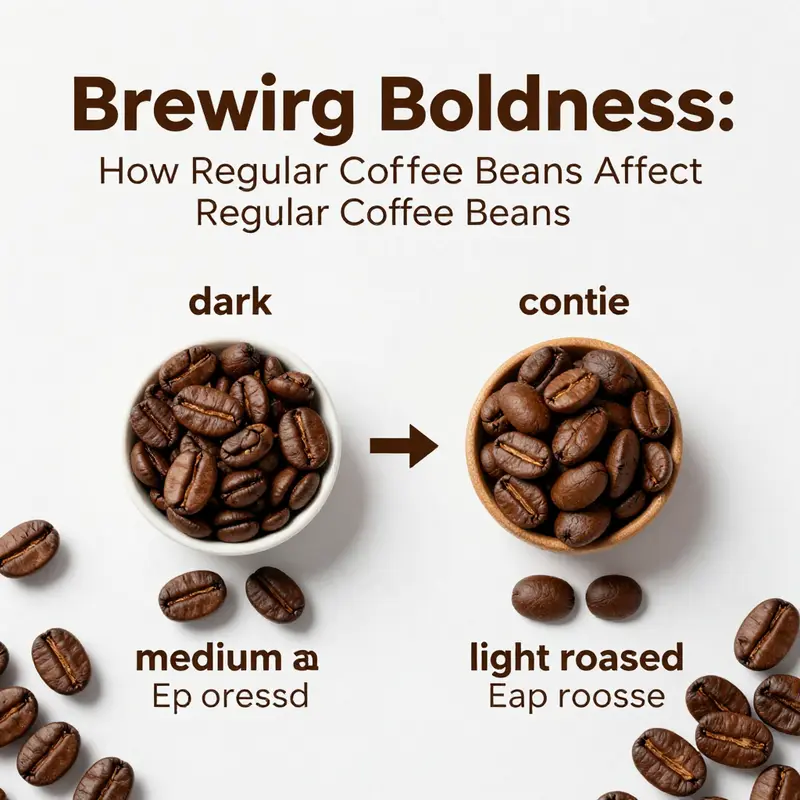
One of the clearest distinctions between “regular” and “espresso” beans lies in roast philosophy. Dark roasts are a staple in many espresso routines because they tend to present a bold, low-acid, chocolatey or caramel-forward flavor that holds up well when milk is added. They also tend to solubilize more readily under rapid extraction, which helps maintain a consistent crema and a smoother mouthfeel. This is why many popular cafes leaning into milk-based drinks favor darker profiles. Yet the intensity of a dark roast can sometimes mask the more nuanced notes that lighter roasts reveal—citrus zest, tropical fruit, or floral perfume—when you pull a shot that’s meant to be bright and layered rather than stout and syrupy. Lighter or medium roasts, including some single-origin coffees, can yield astonishingly vivid shots when dialed in properly. They may carry lemon brightness, wine-like berry hints, or cocoa-dusted sweetness, but they demand careful control of grind size, dosing, and extraction time to avoid underdeveloped sweetness or overpowering acidity.
In practice, many home baristas experiment with regular beans by adjusting three core levers: grind size, extraction time, and dose. The grind must be finer than what you would use for drip, but the exact degree depends on the machine, the bean, and the roast. If the grind is too coarse, the water speeds through the puck, yielding a weak shot with thin crema and under-extracted flavors—sour, grassy, or unhealthy in a way that reminds you more of tea than espresso. If the grind is too fine, the shot can stall, with channeling creating an uneven extraction, a burnt edge to the flavor, and a potentially bitter finish. Dose matters because a denser puck with more coffee increases resistance, which can slow extraction and intensify sweetness and body when done right, or magnify bitterness and unevenness if the grind isn’t matched to the machine’s pressure profile. Tamp pressure, distribution, and evenness play a quieter but equally crucial role; a poorly tamped puck can yield inconsistent flow and a surface sheen that betrays the underlying instability of the extraction.
Freshness compounds all of these variables. Coffee begins to oxidize the moment you roast it, and the aromatic oils that contribute most to the perceived sweetness and complexity begin to volatilize after grinding. Ground coffee sits at the mercy of the air, and even a small amount of oxygen can erode nuanced flavors within minutes. For espresso, many enthusiasts insist on grinding just before extraction, especially when using regular beans that still carry bright acidity or delicate floral notes. A fresh, medium-dark roast that is ground immediately prior to pulling can strike a favorable balance: it preserves sweetness and a robust body while still delivering some of the lighter, fruity impressions that regular beans may offer when roasted with a lighter hand. When roasted too dark, even a fine-tuned shot can feel heavy, with a roasted, sometimes smoky finish that crowds out subtler notes. When roasted too light, a true espresso pull may reveal unexpected brightness but risk a harsh acidity if the shot time isn’t carefully managed.
This is where the concept of espresso blends—often a careful marriage of origins and roast levels—gains relevance. Espresso blends are engineered to deliver a predictable crema, a balanced sweetness, and a sturdy yet refined body under pressure. They are designed to thrive in a short extraction window, maintaining compatibility with a wide range of machines and water conditions. Regular beans, particularly those not roasted with espresso in mind, can still produce a compelling shot, but the result may be more variable from machine to machine and day to day. The same bean that sings in a pour-over may yield a different kind of magic in a 25-second espresso pull, and that magic can tilt toward chocolatey richness, caramel brightness, or even a subtle fruitiness depending on how the roast was built and how carefully the shot is coaxed along. The trade-off is often a trade-off in stability: crema stability may dip, mouthfeel can feel lighter, and the overall flavor profile may be less layered than what a true espresso-focused blend might deliver.
For those who prioritize clarity of expression in the cup, the suggestion to aim for a proper balance is practical. If your aim is to appreciate the bean’s natural characteristics, a medium-dark roast optimized for espresso and freshly ground remains a reliable path. It tends to deliver a more forgiving texture under pressure, a forgiving level of sweetness that can carry through even with minor extraction imperfections, and a crema that holds its place on top, providing that familiar visual cue of a well-extracted shot. Yet even without a purpose-built espresso bean, you can discover a nuanced cup by choosing a regular bean that has already demonstrated a gentle sweetness and a body that remains intact under quick extraction. In this sense, regular beans are not a dead end; they are an invitation to calibrate your technique so that you can surface a flavor profile that otherwise sits behind the curtain of a standard drip experience.
The practical takeaway is straightforward: there is value in experimentation, but expectations should be calibrated. When you use regular beans for espresso, anticipate a wider range of possible outcomes. Crema may be less consistent, the shot’s volume might feel more or less than a traditional double, and the flavors you experience could shift more dramatically from day to day based on roast date, grind, and machine behavior. For some, those fluctuations become part of the charm—the daily surprise that makes the ritual of pulling a shot both a craft and a dialogue with the bean. For others, the lack of uniformity stands in the way of a satisfying, repeatable experience. If you are chasing a certain espresso archetype—a velvety body, a caramel sweetness, and a stable, lasting crema—then turning to beans explicitly designed for espresso or a well-curated espresso blend remains the more reliable path. If, however, you relish brightness, a touch of acidity, and a palate that shifts with the bean’s origin and roast, regular beans can still be a doorway to discovery.
In describing how to approach this at home, the narrative centers on balance. Start with a bean you already like when brewed by other methods. Choose a roast level that aligns with your taste for intensity and sweetness. Grind just before brewing, and tempo-tune your extraction time by small steps—watch for crema formation, listen for the flow rate, and taste as you go. If the crema is thin and the body feels insubstantial, you might need a slightly finer grind or a touch more coffee in the dose. If the flavors tilt toward bitterness or a hollow finish, dialing back the extraction time or loosening the grind a touch can help. This is not a skip-the-espresso-chapter shortcut but a reminder that good espresso can emerge from regular beans when the operators’ hands are steady, the grind is precise, and the timing is patient. It is about learning to read the puck as a living indicator of how the coffee and the machine are cooperating, rather than expecting a fixed template to apply regardless of the bean you choose.
Ultimately, the best approach depends on what you value in the cup. If you prize a clean, consistent, deeply chocolatey espresso that can stand up to milk and chocolate syrups, the conventional route—espresso blends at a medium-dark roast, freshly ground—often delivers the most dependable results. If you relish a shot that speaks of its origin—notes of citrus, berry, or floral perfume—regular beans can still deliver a concentrated, expressive espresso with the right adjustments and a bit of patience. The journey is as much about the experiment as the outcome, and that curiosity is part of what makes espresso culture so vibrant. Each pull becomes a small conversation with the bean, a negotiation between roast, grind, and time, and a reminder that coffee, in all its forms, remains an art as much as a science.
For readers seeking a broader frame on how these dynamics are discussed within the specialty-coffee landscape, a detailed external resource offers a deeper dive into espresso compatibility and bean selection. It complements the reflections offered here by situating the everyday home experiment within a broader industry conversation about how roasts, origins, and extraction interact under pressure. See https://www.coffeereview.com/ for a more expansive exploration of how different beans perform under espresso parameters and how tastings across roasts and origins can illuminate what you taste when you pull a shot.
Regular Beans, Rich Espresso: Navigating How Everyday Coffee Becomes a True Espresso
Espresso is not a breed of bean or a single origin; it is a method. The word itself signals a specific way of brewing coffee under high pressure to extract a concentrated, aromatically dense shot. The bean you start with—whether everyday, mass-market beans or carefully sourced, specialty-grind purchases—shapes the journey but does not dictate its endpoint. The real hinge factor is how the beans are roasted, ground, and prepared for that precise moment when pressure, temperature, and time collide to reveal the shot’s character. In other words, you can use regular coffee beans for espresso, but the experience you get will hinge on roast level, freshness, grind size, and the care you bring to the brew. The theory aligns with what many baristas and roasters observe: espresso extraction is a regulated art, and any bean can be coaxed into a compelling shot if you honor its natural tendencies and adjust the setup accordingly.
Roast level, perhaps more than bean lineage, sets the stage for the drink’s mood. Darker roasts are a common choice for espresso because they tend to deliver boldness, a fuller body, and a smoother, less acidic profile that can pair harmoniously with milk. This approach can yield a drink with a cocoa, caramel, or toasted-nut backbone—savory and comforting, with a crema that coats the palate and lingers pleasantly. Yet that same roast profile can mute bright, nuanced notes and flatten delicate fruit or floral aromatics that lighter roasts sometimes deliver. Lighter and medium roasts, especially those from well-chosen, high-quality beans, offer the possibility of brighter acidity and more nuanced flavors—think citrus zest, berry brightness, or subtle florals—when the extraction is tuned just right. In those cases, you’re not chasing darkness but clarity, seeking a concentrated shot that preserves the bean’s character rather than smoothing it away. The trade-off is that brightness can turn sharp if the grind, water temperature, or extraction time aren’t carefully controlled. The bottom line is that a regular bean can sing in espresso, but the melody will vary with roast profile and how you handle the brew.
Within that broad framework, the bean type itself matters less than how well the roast and the roast-to-brew pairing are aligned with espresso’s demands. Arabica blends, often serving as the backbone for a smoother, more balanced crema and a soft mouthfeel, are frequently favored for espresso that aims to be approachable and versatile. They tend to show notes of chocolate, caramel, and a gentle nuttiness, providing a well-rounded experience that can support milk-based drinks or stand on its own in a robust shot. By contrast, 100% Arabica single-origin beans can bring more pronounced complexity—fruity, sometimes floral profiles that reflect their origin terroir. The trade-off here is real: those complex notes can emerge beautifully in espresso, but they also demand careful roasting and precise extraction to avoid bitterness or excessive acidity that may overwhelm the palate. The preference for blends versus single-origin essentially boils down to what you value more: consistency and balance across shots, or the interest of a distinctive, origin-driven profile. Either path can yield excellent espresso; the choice rests with individual taste and the willingness to calibrate roast and technique to the bean’s strengths.
Freshness is the quiet accelerator in this equation. Espresso, recognized for its potent aroma and vivid crema, rewards freshly ground beans with heightened aromatic intensity and a more expressive crema that clings to the edge of the cup. A few minutes can make a measurable difference; minutes can turn a vibrant, lively shot into something flatter if the grind has already oxidized or lost volatile compounds. Ground coffee sits on a chemical clock, and espresso demands a grind sized for rapid extraction. The grind must be fine enough to resist rapid flow under high pressure but not so fine that it chokes the machine and over-extracts, pulling harsh tannins and overbearing bitterness. A regular bean, ground just before brewing, can deliver a surprisingly crisp and full shot—provided the grinder is consistent and the dose is measured. Dose and tamping then become the second act in this performance: enough coffee to create a compact puck that resists channeling, with even pressure to ensure uniform extraction. The result is a shot with a cohesive body, an even crema, and a flavor profile that fans across the palate rather than punching straight through in a single, sharp note.
People often ask whether there is a single “best” roast for espresso, and the honest answer is that the best choice depends on your goals. If your aim is a smooth, chocolate-forward shot that works well with milk, a medium-dark to dark roast with a balanced sweetness usually serves you well. If your intention is to savor the intrinsic character of the bean in a more assertive espresso, a well-chosen medium to medium-light roast can deliver a chorus of notes—citrus, stone fruit, herbaceous tones—paired with an espresso backbone that still supports body and crema. The key is to manage acidity without stripping brightness from the shot. Acidity, after all, contributes vitality and clarity, but when it dominates, it can feel thin or sharp. The strategy for dialing in a less acidic profile isn’t to erase acidity but to select beans whose natural profile leans toward sweetness and to roast them to a level that reduces perceived sharpness without erasing life in the cup. Then, the brewing parameters—water temperature, extraction time, and pressure—should be adjusted to coax sweetness and balance into the foreground. The art lies in balancing brightness with body, perfume with restraint, and aroma with a finish that invites another sip rather than a hurried swallow.
The practical takeaway for anyone curious about whether regular beans can become espresso is that the bean is not a prison term—the roast, grind, and method are the real variables. A well-chosen regular bean can produce a shot that, when brewed with attention, offers a satisfying crema, a clean extraction, and a repeatable experience shot after shot. If you’re after a dependable baseline, a medium-dark roast with a balanced profile often works well for black espresso and for drinks built on the espresso’s strength. If you crave the extravagance of origin flavors, you can push toward a lighter or medium roast with careful control of grind size and extraction time to preserve the delicate notes while ensuring the shot remains coherent and drinkable.
As you explore, you may notice that the journey resembles a choreography more than a recipe. The grinder’s grind setting, the machine’s temperature stability, the tamp’s evenness, and the coffee’s freshness all move in concert. Small deviations can cascade into a noticeably different cup. This is why experimentation—adjusting one variable at a time while keeping others constant—is the recommended path. A small change to grind size can transform a sour-edged shot into a vibrant, syrupy pull. A slightly longer or shorter extraction can reveal or mute aromatic notes and alter the finish. The exercise in patience is part of what makes espresso a living practice rather than a fixed outcome. And the beauty of starting with regular beans is precisely that: there is room to learn, to adapt, and to discover a personal preference that aligns with the household ritual of morning coffee or the quiet ritual before a long afternoon work session.
For readers who want to connect this exploration with broader routines and well-being, a tangential but valuable reference point appears in related discussions on how routine and habit interface with mental health. See how-occupational-therapy-supports-mental-health as a reminder that our daily rituals, including how we organize and enjoy a cup of coffee, can contribute to a stable and meaningful day. This kind of cross-disciplinary reflection is part of what makes the everyday act of brewing coffee feel more than a simple taste experience; it becomes a moment that anchors memory, mood, and momentum.
Ultimately, the path to espresso with regular beans is not about compliance with a single standard but about finding a personal equilibrium between roast, grind, and technique. It’s about recognizing that every bean has a potential profile, and that potential can be unlocked through careful preparation. If you begin with a solid understanding of the bean’s baseline—its sweetness, its acidity, its body—and couple that with a roasting level that complements those traits, you can craft a shot that is distinctly your own. The science behind this is straightforward: espresso is extraction under pressure, and the flavor curve you experience is the result of chemistry meeting craft. The art is listening to the cup and letting the coffee tell you what it wants to be when it grows up as an espresso. In that sense, regular beans are not merely acceptable for espresso; they are a proving ground where technique reveals character, where experimentation yields preference, and where the simple act of pressing a lever can translate a humble bean into a moment of small, precise magic. For a more in-depth exploration of how bean type and roast influence flavor profiles, consult this comprehensive guide: How Regular Coffee Beans Affect Espresso Taste.
The Espresso Equation: Can Regular Coffee Beans Truly Shine Under Pressure?

Espresso is not a bean type; it is a method that presses hot water through finely ground coffee at high pressure to coax flavor into a concentrated shot. Because of that, the simple question can be answered with nuance: yes, you can use regular coffee beans for espresso. The theory is straightforward: any bean can be ground, brewed, and pressed into a dense, aromatic shot. The practical outcome, however, follows a more complex logic. The roast level, the bean’s physical characteristics, and the freshness of the grind all become part of a dynamic system. In other words, the bean is not an interchangeable backdrop; it participates in a physics-driven drama where grind size, bed permeability, and contact time dance with pressure and temperature to sculpt flavor, mouthfeel, and aroma. The result you taste in a pulled shot depends far more on how the bean reacts under heat and pressure than on the bean’s origin alone. This is not a denial of tradition but a reminder of espresso’s engineering essence: you shape the brew as much as you select the bean.
Within this framework, the roast level emerges as a primary navigator. Darker roasts are often favored for espresso because their stronger, less acidic profile collaborates well with milk in drinks like lattes and cappuccinos. They present a bold presence that can mask delicate aromatics and fruit notes, offering a familiar, comforting intensity that many drinkers expect from a quick, resilient shot. Yet the very strength that makes dark roasts appealing can also conceal subtle, nuanced flavors—floral notes that whisper of distant gardens, citrus brightness that lingers like a zest on the palate, or candy-like sweetness that brightens a solo shot. Lighter and medium roasts, frequently labeled as single-origin or specialty beans, can yield a different kind of espresso magic. When ground and extracted with care, these beans reveal concentrated flavors that taste like a travel log of citrus, berry, or stone fruit, often described as candy-like or candy-drop sweetness. A well-structured medium-light espresso can deliver a mouthful of flavor that remains on the tongue after the sip, a reminder that the bean’s inherent character can emerge even under pressure.
But roast alone does not determine the outcome. The bean’s physical characteristics—density, moisture content, and cellular structure—play a crucial role in how the grind behaves and how the bed responds to water flow. Denser beans with tighter cellular walls, such as certain specialty cultivars, resist grinding a bit more and can require a finer grind to achieve the same extraction surface area as a less dense bean. In practical terms, this means that two beans of the same roast level can demand different grind settings to reach a balanced extraction. Conversely, lighter, less dense beans may shatter more easily during grinding, producing a higher proportion of fines. Those tiny particles can clog the coffee bed, reducing permeability and altering flow. Scientific exploration into this phenomenon has shown that an increased share of sub-100 micron particles can dramatically slow extraction by constraining water movement through the bed. In other words, even with identical settings, the internal physics shift with bean type and roast, and the shot can veer toward sourness or under-extraction if the grind is not tuned to the bean’s innate traits.
This is why the idea of a universal espresso grind can be misleading. The espresso experience is the result of a precise choreography among several variables: grind size distribution and its changes with bean density, the roast’s brittleness or integrity, dose, tamping pressure, water temperature, and extraction time. Dark roasts, being more brittle, tend to shed more fines during roasting and may clog the bed if ground too finely or if the dose is too high, leading to a slow, syrupy shot with a harsh edge. Lightly roasted or medium-light beans often preserve more cellular structure, which can yield a more consistent particle size distribution, but they may require a finer grind to unlock the full surface area and achieve a robust extraction without tipping into sourness. The balancing act is not only about flavor; it is about the bed’s permeability and how water percolates through it under a given pressure. The goal is a shot that flows smoothly, with a time and yield that allow the soluble compounds to contribute to balance, aroma, and sweetness rather than to a piercing, linear sourness or a dull, flat finish.
To navigate these complexities, a practical mindset is essential. Start with a general approach that honors the bean’s traits: if you want a forgiving espresso that maintains classic punch and crema, a medium-dark roast provides a stable baseline. If you prefer to explore the bean’s distinctive candy-sugary or fruity notes, begin with a lighter roast and proceed with careful adjustments. The key is to observe how the shot’s time and color respond to changes in grind, dose, and tamp. A common starting point for many home and cafe setups is a dose in the range of 18 to 20 grams for a double shot, ground to a fineness that yields a shot time in about 25 to 30 seconds once the water is flowing. If the shot pulls too quickly, suggesting under-extraction, grind finer or increase the dose slightly while checking for a balanced flow. If it pulls too slowly, risking over-extraction and a bitter edge, loosen the grind or reduce the dose. Temperature should stay within a stable range—roughly 90 to 96 degrees Celsius (194 to 205 degrees Fahrenheit) for most beans—again, with small adjustments depending on the roast and bean density.
Freshness multiplies the effects described above. Freshly ground beans, used within a short window, reveal more of the bean’s character because the aromatic compounds and oils are less oxidized. When the grounds age, the surface area exposed to air increases, and subtle notes can fade or shift. This makes the grinder a critical ally in espresso preparation. The grind should be tuned not only for the bean but also for the equipment and environment, since humidity, grinder burrs, and even the temperature at which you grind can alter particle size distribution. The result is a reminder that the art and science of espresso are intimately linked to the specifics of the bean you hold in your hand, and to the conditions under which you brew.
From a sensory standpoint, it matters not only what notes the bean can reveal but also how the extraction carries them. A dark roast can deliver a comforting, robust cup with a smooth mouthfeel and a forgiving crema, while a lighter roast can present a sharper acidity, an electric brightness, and a long, resonant aftertaste. For those who want to preserve these nuanced flavors, accurate grind control and a mindful approach to the shot’s timing become essential tools. The same framework that helps a barista dial in a café espresso—calibrating grinder settings, monitoring shot time, and evaluating yield—also serves the home brewer who wants to respect the bean’s intrinsic voice. The bean’s type, roast, and freshness come together as a system rather than as separate variables, and the brew’s success lies in recognizing how these attributes interact with the machine’s pressure and heat.
In practice, this means embracing flexibility rather than rigidity. If you have a denser, high-moisture bean, be prepared to use a slightly finer grind and watch the shot time closely as you adjust. If your bean is lighter and less dense, you might start with a finer grind but be ready to back off if the extraction becomes astringent or the crema fades quickly. The goal is a balanced shot with a distinct aroma, a smooth body, and a lingering sweetness rather than a single loud note. And if you ever wonder how routine and consistency factor into espresso, consider the parallel with structured daily practices used in therapeutic settings where routine supports wellbeing.
Ultimately, the bean type is not a flavor variable alone but a factor that changes the physics of the brew. With thoughtful adjustments to grind, dose, and temperature, even regular beans can deliver a satisfying espresso experience that respects the bean’s identity while taking advantage of the espresso method’s intensity. The practice invites curiosity and patience. It invites a tuned sensitivity to how a denser bean resists grinding, or how a delicate, light roast shifts in aroma as the water makes contact. The result is not a single universal standard but a spectrum of outcomes that depends on the harmonious alignment of roast, bean, grind, and technique. This is what makes espresso, at its core, an intersection of science and craft—the moment when a bean, no matter its origin, is pressed into service under pressure to reveal its truth.
For readers seeking a window into the physics behind these observations, a recent generation of studies into the role of particle size distribution in coffee beds highlights the nuance that smaller particles can slow extraction by reducing bed permeability. This line of research reinforces the practical takeaway: when working with any bean, you must adapt grind and extraction parameters to the bean’s unique structure and to the roast’s fragility or resilience. The payoff is a shot that expresses the bean’s character without surrendering balance, a reminder that espresso is a dialogue between material properties and human technique, and that even regular beans can speak loudly when given the right kind of pressure.
From Regular Beans to Rich Espresso: Mastering Flavor, Texture, and Crema

Ask whether you can brew espresso with regular coffee beans, and the short answer is yes. The longer answer reveals the art behind the process: espresso is less about the bean’s origin than how it’s roasted, ground, and pushed through under pressure. When you treat the brewing method as a system—roast level, grind, dose, tamp, water temperature, pressure, and extraction time—the result can be a focused shot that reveals the bean’s character rather than masking it. The landscape of possibilities widens once you recognize that “regular” beans encompass a broad spectrum, from darker, oil-rich roasts to brighter, more delicate mid-tones. The decisive factor is how those beans are prepared to meet the demands of high-pressure extraction. In practice, there is a helpful hierarchy of decisions that, together, shape what ends up in your cup: the roast profile, the grind and dosing, the tamp, and the tuning of the extraction parameters. Each choice nudges the flavor, texture, and aroma toward a different equilibrium, and each adjustment can unlock a new facet of the bean’s potential. The journey begins with the roast, because the roast sets the stage for what the machine can coax from the bean. Darker roasts tend to surrender more oils and a fuller body under high-pressure extraction, creating a crema-rich shot with a bold, often caramelly or chocolate-forward profile. The downside, if you push into the realm of darkness without care, is a risk of reduced acidity nuance and a flavor that can veer toward bitterness, especially when the grind, dose, and extraction timing aren’t precisely controlled. The mouthfeel can become almost syrupy, and the drink may lose the bright notes that lighter roasts carry well when dialed in. In contrast, lighter and mid-range roasts, including many single-origin or specialty beans, can deliver more pronounced fruit, floral, or citrus notes. When properly tuned, these beans can produce a concentrated shot that feels bright and crisp, with a lingering sweetness that hints at origin stories from the hillside or the forest floor. Yet to coax those delicate flavors through a short espresso extraction requires meticulous attention to grind size, dose, and the speed at which water interacts with the grounds. In other words, the same bean can yield very different experiences depending on how you treat it. The practical upshot is simple: if you want the fullest expression of a regular bean in espresso, you’ll want to choose a roast that supports espresso extraction and then adjust your technique to reveal its intrinsic flavors rather than masking them with general espresso-defaults. The commonly advised middle ground—a medium-dark roast designed with espresso in mind—often provides a reliable balance. It offers sufficient sweetness and oil for a creamy texture without overwhelming bitterness. But a well-prepared bright or mid-toned bean can surprise you with a concentrated, nuanced shot that still carries the signature fruit or citrus notes you might expect from a lighter roast. The key is a disciplined approach to preparation that respects both the bean’s character and the machine’s demands. The next layer of control occurs at the grind and dosage. Espresso’s efficiency hinges on producing a fine, uniform bed of coffee that water can permeate evenly. The grind should resemble fine sand—neither too coarse nor so fine that it clogs the machine. If the grind is off, the extraction leans toward under-extraction, leaving sourness or flattening flavors, or toward over-extraction, which exposes bitterness and astringency. A high-quality grinder helps here, but even with great gear you’ll want to adjust the setting batch to batch. Dosing matters as well. A common target for a double espresso is around 18 grams of ground coffee, though adjustments up or down may be necessary depending on the bean, the roast, and the machine’s pressure profile. The goal is consistency; a precise dose offers a stable baseline from which to tune everything else. Tamping completes the mechanical preparation. An even, flat tamp is essential to prevent channeling—where water finds the path of least resistance and bypasses parts of the bed. In practice, apply steady, even pressure with a slight, deliberate twist to smooth the surface. The surface should appear level and compact; any hollows or ridges can create uneven extraction and a skewed flavor. With the dose and tamp under control, you move toward refining the extraction. Timing, temperature, and pressure must be aligned to produce a balanced shot. A typical espresso extraction aims for a yield of about 36 milliliters from an 18-gram dose, setting the stage for a concentrated beverage that reveals more than just caffeine. The extraction time commonly falls within a 25 to 30-second window. Water temperature is another critical lever, usually kept between 90 and 96 degrees Celsius. Pressure, the engine of espresso, hovers around 9 bars, though some machines may offer slight variations that can be exploited with careful grind and dose adjustments. The art of tuning is iterative: if the shot runs too fast, the grind might be too coarse or the dose too light, and you’ll likely see under-extraction with a sour bite around the edges. If the shot lingers too long, you risk over-extraction and a heavy, bitter finish. In such moments, adjustments to grind size or dose can recalibrate the flow and the pace of extraction. The result is a cup whose crema—the thin, amber-colored layer that crowns the espresso—reflects the interplay between oiliness from the roast and the efficiency of extraction. Darker roasts typically produce a more robust crema, with a satiny texture and a chocolate- or caramel-forward aroma. Lighter roasts can yield a lighter crema but may still deliver a satisfying mouthfeel if the grind and pressure are tuned to extract the bean’s brighter notes without turning sour or thin. Freshness matters as a quiet but decisive factor. Coffee begins to lose its vibrancy soon after roasting, and flavors can fade if beans sit too long. Within a two-week window after roasting, and when stored properly in an airtight, opaque container away from light and moisture, beans retain much of their aroma and flavor potential for espresso. The oils that contribute to crema degrade over time, and stale beans often exhibit flatter aroma and muted sweetness. Therefore, selecting beans that are fresh to the machine and grinding them just before extraction can dramatically improve the espresso’s perceived intensity and complexity. Storage is equally important. Keep beans sealed and shielded from air and humidity. Whole beans retain their integrity longer than ground coffee, making it advantageous to grind only what you need for a shot. Ground coffee, exposed to air, loses volatile flavors more quickly and can lead to inconsistent results over the course of a day if not handled carefully. While the aim is to maximize flavor and crema, there is also a practical reality: not every batch will yield an ideal shot straight away. Espresso is unforgiving in its demand for uniformity. Beans that arrive from a different harvest or a different origin may require a fresh calibration of grind, dose, and extraction parameters. Adjusting one variable—grind size—often cascades into changes in dose, tamp pressure tolerance, and even the acceptable range for extraction time. The aspirational takeaway is that regular beans can deliver remarkable espresso when treated as a system rather than as a set of fixed rules. The roast, the grind, the dose, the tamp, and the extraction conditions all interact in a dynamic way. Rather than chasing a single “optimal” recipe, consider developing a small set of target profiles for the kinds of beans you frequently purchase. For a darker roast designed for milk-based drinks, aim for a smooth, moderate extraction with a crema that supports body and sweetness. For brighter or more delicate beans, focus on preserving nuanced acidity and fruit notes, accepting a slightly longer or shorter shot, depending on your equipment, to capture those flavors without harsh bitterness. In this sense, the espresso you craft from a regular bean becomes a personal signature—one that reflects how you balance the variables and how you respond to the bean’s natural tendencies. As with any craft, the payoff is incremental mastery. Start with a reliable roast-to-espresso baseline, then refine your grind, dose, and extraction rhythm. Record what works, what surprises, and what falls flat. Over time, you’ll develop a sense for when a regular bean can sing within an espresso framework and when it might be better reserved for a different brewing method. The conversation around using regular beans for espresso is not about strict limits but about informed adjustment and respect for the bean’s character. With careful selection, precise grinding, disciplined dosing and tamping, and attentive extraction tuning, a coffee that sits in the “regular” category can yield an espresso that is not merely acceptable but satisfyingly expressive. The journey invites curiosity and patience, two qualities that enrich both the brewing ritual and the everyday ritual of coffee itself. In the end, the question returns to a simple truth: the espresso you create is less about the bean’s categorization and more about your ability to shape the extraction so that the bean’s inherent flavors emerge clearly, gracefully, and with personality. That is the essence of brewing espresso with regular coffee beans: a disciplined practice that reveals if a bean is ready to be more than just ordinary in a cup.
Final thoughts
Using regular coffee beans for espresso presents an exciting opportunity for business owners to diversify their offerings and enhance customer satisfaction. Understanding the compatibility of different beans, their flavor profiles, and the importance of proper grinding techniques will foster an appreciation for the nuanced art of espresso. By applying best practices in preparation, you can elevate your coffee business, providing a memorable espresso experience that entices customers and keeps them coming back for more. Embrace the versatility of regular coffee beans, and transform your coffee menu to meet your clientele’s evolving tastes.