

For business owners in the coffee industry, the quality of brew can make or break customer satisfaction. While specialized equipment can enhance coffee flavor, many may wonder if they can simply use a blender to grind coffee beans. This inquiry is not just about convenience; it’s about understanding the nuances that affect brewing and ultimately, customer experience. Each chapter below explores various facets of this topic, from the basics of blender capabilities to the effects of grinding on flavor and aroma. We will compare blenders to burr grinders, discuss the advantages and disadvantages, and provide practical tips. By the end of this article, you’ll have a well-rounded understanding of whether a blender can meet your coffee grinding needs effectively.
Blender Grounds: What Happens When You Grind Coffee Beans at Home
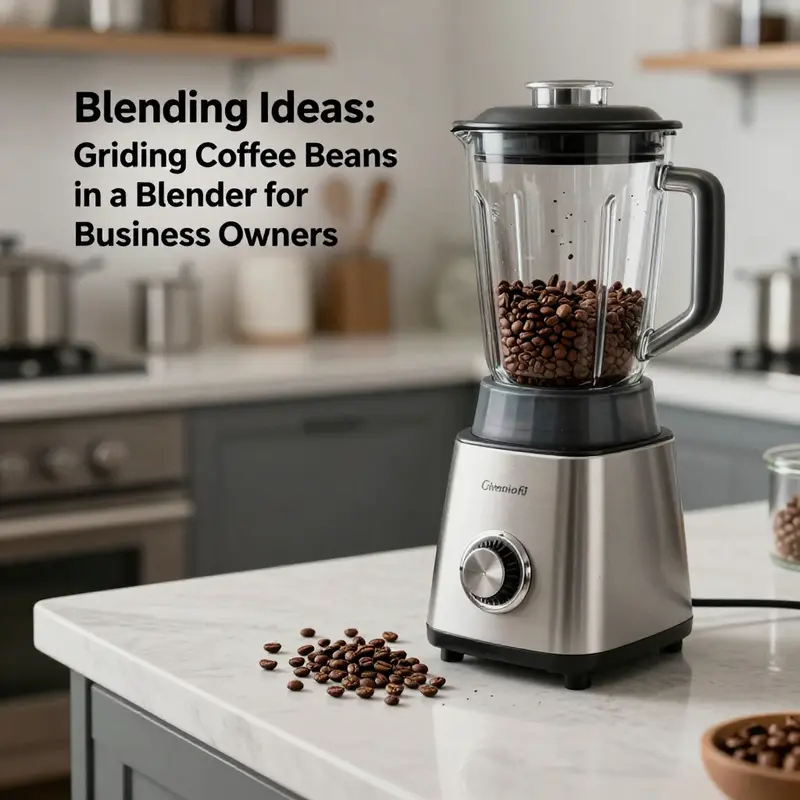
How a blender changes coffee grounds
Grinding coffee beans in a blender is a workable shortcut, but it forces a series of compromises you should understand. A blender will break whole beans into pieces, yet it does so in a way that rarely matches the control and consistency that coffee extraction needs. That gap matters because your brew depends on how evenly and how quickly water extracts oils and soluble compounds from the grounds. Inconsistent particle size translates into uneven extraction, which shows up as sour, bitter, or flat flavors in the cup.
One of the clearest differences between a blender and a grinder is the mechanism. Blenders use high-speed blades that chop by impact. Dedicated grinders use burrs or wheels that crush and shear the beans between two surfaces. Crushing produces uniform particles that sit in a narrow size distribution. A blender’s chopping action, combined with the turbulent air and motion inside the jar, produces a wide spread: from dust-like fines to large chips. Those fines over-extract. The chips under-extract. Side-by-side in a single brew, they pull the coffee’s character in opposing directions.
Heat is another important consequence. Blenders spin very fast and concentrate energy into a small space. That creates friction and air movement that warm the beans during grinding. Coffee contains volatile aromatics that evaporate or break down with heat. Even a few degrees of additional warmth will dull bright, floral, or fruity notes in lightly roasted beans. For darker roasts, heat can accelerate the release of bitter compounds. The result is a different sensory profile than you would get from properly milled grounds.
Practical results vary by brewing method. If you plan a coarse, forgiving brew like a basic steep or French press, a blender can sometimes give acceptable results. The large particles will still allow more flow and fewer fines in the cup. For pour-over, drip, or especially espresso, the blender’s inconsistency becomes a real problem. Espresso needs a precise, compact bed of evenly sized particles for controlled resistance. A blender cannot reliably produce that.
There are ways to make a blender work better when you must use one. First, grind very small batches. Smaller volume exposes more beans to the blades evenly and reduces crowding. Second, use short pulses rather than a continuous run. Pulse in quick bursts of one to two seconds, pausing to shake the jar between bursts. This motion helps move larger pieces toward the blades and prevents excessive heat build-up. Third, monitor the texture closely. Stop early, inspect, and sift by eye. If you see too many fines, give a few longer shakes to let them redistribute or remove the darkest dust you can skim off.
Another useful technique is to cool the beans before and between pulses. A brief chill in the freezer for a few minutes will make them slightly firmer and less prone to smearing. Likewise, allow the blender to rest if it becomes warm. This protects both the flavor and the motor. Clean, dry equipment matters too. Residual moisture or older grounds will introduce off-flavors quickly. Wash and dry the jar thoroughly before grinding.
Expect a higher proportion of fines when using a blender. Those fines can travel through filters and reach your cup, especially with paper filters that allow some micro-grounds through. If you notice excessive silt or sludge, a quick settling step will help: let the brewed coffee sit for a minute after steeping, then pour slowly to separate clearer liquid from the settled fines. For drip or pour-over, use a double filter if possible. That will remove the dust that contributes bitterness and muddy texture.
Motor strain and safety are practical concerns. Blenders are built for liquids and soft solids, not for sustained dry grinding of dense beans. Avoid running the machine for long continuous periods. Overheating can shorten motor life and blow thermal fuses. Work in short intervals and keep the blender base ventilated. If the jar smells like burning or the motor sounds strained, stop and let it cool.
Taste expectations must be realistic. With a blender you can produce drinkable coffee, often good enough in a pinch or for casual everyday cups. Yet the subtleties that coffee enthusiasts prize—layered acidity, precise sweetness, floral highs—will be muted. If you evaluate such brewed coffee against a cup made with uniform grounds, the blender version will usually fall short. That’s not a condemnation. It’s a note about limits and priorities. Convenience and availability can outweigh nuance for many people, and a blender fills that role well.
Consider the beans themselves when deciding whether to use a blender. Freshly roasted, lightly roasted, or single-origin beans benefit most from careful, uniform grinding. If you want those bright or complex notes to shine, a method that preserves aromatics and particle uniformity is important. If your beans are darker, or if you plan to mask nuance with milk or sugar, the blender’s limitations matter less.
There are cost and convenience trade-offs to consider. A dedicated grinder represents an investment in consistency. It rewards you with repeatable results and less frustration tuning recipes. A blender requires more attention and technique to produce similar outcomes. But when time, budget, or storage space constrains you, a blender can be an effective stopgap. Adopt the right techniques and manage expectations.
Finally, think about the broader ritual of brewing. Grinding fresh matters, but how you treat the grounds afterward affects flavor too. Measure by weight, control water temperature, and time your brew. Those variables interact with grind quality. With practice, you can learn how your blender’s typical output behaves in your chosen brew method. You may discover preferred pulse lengths or target textures that produce a consistently pleasing cup. That learning transforms a blunt tool into a personalized technique.
If you want a deeper dive into the pros and cons of using a blender for coffee, this practical guide summarizes the main points and offers hands-on suggestions. https://www.brewbition.com/blog/coffee-bean-grinding-in-a-blender-what-you-need-to-know
Blender Grind Realities: Navigating Convenience, Consistency, and Coffee Quality
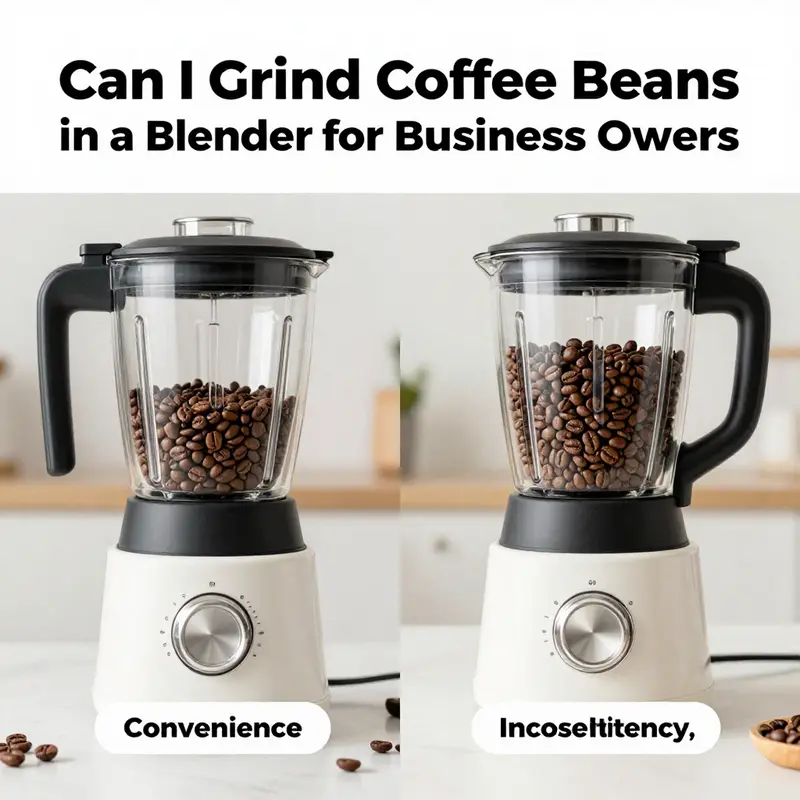
When the morning rush hits and a bag of fragrant beans sits beside a familiar blender, a question often surfaces with almost cinematic clarity: can I grind coffee beans in a blender? The impulse feels practical. A blender is already plugged in, familiar, and capable of transforming hard, cool beans into something usable in minutes. Yet the deeper truth, echoed by roasters and baristas alike, is that blenders and coffee grinders aren’t designed for the same job. The blade geometry, the speed, the heat, and even the way the machine handles debris all conspire to produce a grind that is not simply a finer or coarser version of what you want, but a different creature altogether. It’s a question of trade-offs. Convenience versus control. Speed versus flavor. In the tale of a blender grind, you will often find a clear scorecard: it can deliver for the moment, but it comes with a cost to uniformity, aroma, and overall satisfaction of the cup.
The first thing to acknowledge is the fundamental distinction between a grinder and a blender. A grinder, whether burr or blade, is engineered to break beans into particles and to do so with a predictable distribution of sizes. A burr grinder, in particular, is designed to separate and deliver consistent particles, so the brewing chemistry—extraction rate, surface area, and contact with water—unfolds in a controlled way. A blender, by contrast, is built to pulverize ingredients for smoothies, sauces, and batters. Its blades spin at high speed, stirring everything in the mix rather than shaping the grind. The result is a mixture that can range from powdery dust to uneven chunks, with a lot in between. The difference isn’t merely academic. The size distribution of ground coffee has a direct impact on extraction during brewing. A narrow, uniform particle size promotes even diffusion of water into the grounds, producing a balanced cup. An ensemble of fine particles and large chunks, as a blender often delivers, creates zones of over-extraction and under-extraction in the same brew. That discordant extraction manifests as sour notes and dull, flat flavors fighting for prominence in the cup.
Still, there are undeniable advantages to using a blender when the circumstances push you toward a quick, no-fuss option. If you already own a blender, there’s no additional gadget to buy, and that immediacy has undeniable appeal. In practice, blenders can be surprisingly efficient at producing a coarse grind—ideal for French press or cold-brew methods—which don’t demand the same fineness as an espresso or a careful pour-over. The coarse route matters because these brewing methods tolerate a wider range of particle sizes. When you’re after a fast, consistent coarse grind for a weekend cold brew or a last-minute batch of French press coffee for guests, the blender becomes a practical stand-in. The cost angle also matters. A blender you already own represents a one-device solution that might suit a casual coffee routine or a household that doesn’t grind coffee daily. If the day begins with a coffee ritual that emphasizes convenience over precision, the blender’s ready availability can feel like a quiet, reasonable win.
But the trade-offs are worth naming in full. One of the most significant disadvantages is the inevitable inconsistency in grind size. Blenders are not tuned to deliver uniformity; their blades chop and whirl through beans, creating a spectrum of particle sizes. That mixture means some grounds dissolve quickly while others resist, leading to uneven extraction. The taste consequence can be subtle at first—a shy sourness peeking through the edges of a cup, a whisper of bitterness that lingers longer than it should—but over time, with repeated use, the flavor balance can drift away from the coffee’s true profile. That drift is precisely what more discerning brewers try to avoid, and it’s one of the strongest cautions against leaning on a blender for daily precision.
Another clear constraint is heat. The act of blending in a high-speed blender generates heat, and coffee’s aromatics—volatile oils and delicate compounds—are sensitive to warmth. As temperatures rise, some of those aromatic compounds volatilize or degrade, altering the aroma and flavor you expect from the beans. The result can be a cup that tastes less vibrant, with a muted complexity that tells you the roast and provenance intended something brighter and livelier. This is not a universal doom for every batch, but it is a reliable risk that tends to increase with longer blending sessions or larger quantities. If your goal is to preserve the coffee’s nuanced aroma, this heat-induced compromise becomes a meaningful consideration.
A further practical caveat concerns residue and cleanliness. Coffee grounds can become trapped in the crevices, blades, and rubber o-rings of a blender you use for other purposes. The taste from a previous batch can ghost future brews, even after a thorough rinse, because fine particles cling to seams and corners. That lingering flavor is maddening to coffee lovers who pride themselves on clean, bright cups. It’s not just about taste either; it’s about maintenance. A blender used for coffee will generally demand more meticulous cleaning practices to prevent cross-contamination of flavors, which can be more time-consuming than cleaning a dedicated grinder or even another kitchen appliance. And because the blender is not designed to handle coffee with the same care as a grinder, you may notice more static, clumping, or uneven flow when you transfer grounds to a hopper, filter, or portafilter, further highlighting the gap in suitability between the two tools.
A final critical limitation is that blenders are inherently ill-suited for the fine, uniform powders many modern brewing methods require. Espresso and precise pour-overs operate best with a fine, consistent powder, and even good blenders tend to trail behind when tasked with producing that level of finesse. The blades cannot autonomously tune to a precise micro-level of grind needed to extract evenly through a fine filter or an espresso puck. For enthusiasts chasing a precise flavor profile, the blender’s lack of control over grind fineness becomes an insurmountable obstacle. In short, the blender excels at roughing up beans into workable particles, especially if the target is a coarse grind, but it stumbles when the grind must be fine, uniform, and reproducible.
Given these realities, many readers will still wonder how best to approach blending as a practical solution. If you find yourself needing coffee in a rush, or you’re brewing a large batch for French press or cold brew and you don’t own a burr grinder, a blender can be a temporary workaround. The key is to manage expectations. Grind in small batches to minimize heat buildup, and blend in short pulses rather than a continuous grind. Keep the blender at a gentle tempo and give the beans time to rest between bursts to avoid overheating the grounds. Rely on a coarse grind to maximize compatibility with the brewing method and to reduce the risk of over-extraction. After blending, allow the grounds to settle, then use a sieve or screen to separate the coarser particles from finer dust. This step helps approximate a more uniform texture, albeit imperfectly, and it can improve the extraction even if it cannot fully equal the consistency produced by a burr grinder.
If you must push the blender’s limits for espresso or pour-over, the outcome will inevitably reflect the instrument’s constraints. Flavor balance may become a matter of luck rather than a repeatable process. The bitter notes of over-extraction and the sour hints of under-extraction may appear in roughly equal measure, and the cup’s aromatics may lack the intensity you expect from properly ground beans. In contrast, a dedicated grinder—particularly a burr system—offers predictability and control. It can deliver a grind profile that aligns with your brewing technique, whether you seek the delicate clarity of a pour-over or the concentrated structure of an espresso shot. The cost of this precision is measured in time, money, and a degree of ritual that some home brewers are happy to embrace. A grinder becomes less a gadget and more a foundation for repeatable, high-quality results.
The bottom line is clear: a blender can function as a stopgap, a practical choice for coarser grinds and casual brewing, or situations where speed trumps precision. It is not the ideal tool for daily use if your aim is to maximize flavor and consistency. Those who prize consistency, aroma, and the full expression of a coffee’s origin and roast will likely prefer a dedicated burr grinder. For occasional, low-stakes experiments, or for households that want a one-device solution that covers several tasks, the blender offers a viable, if imperfect, path to coffee ready in minutes. The important thing is to approach it with an honest assessment of what you’re sacrificing in pursuit of convenience—and to adjust your expectations and methods accordingly.
For readers seeking a broader view of how different approaches to grinding influence flavor and extraction, there is a detailed discussion of blender-based grinding and its trade-offs in practitioner-focused coffee resources. It’s worth reviewing to calibrate your own expectations and to decide when a blender serves your routine best. External resource: https://www.staresso.com/blog/can-you-grind-coffee-beans-with-a-blender/.
From Blender to Brew: The Flavor and Aroma Trade-offs of Grinding Coffee Beans in a Blender

Curiosity nudges many home brewers toward experimenting with the tools already in their kitchen, and a blender sits at the ready. It’s fast, convenient, and familiar, a kind of default appliance that promises to turn whole beans into something immediate and drinkable. Yet when the topic shifts to extracting flavor and aroma, a blender’s limitations become more evident. This chapter delves into how a blender really influences the coffee you brew, moving beyond convenience to the heart of taste and fragrance. It’s a story of particle size, heat, oxidation, and the way a quick choice can tilt the balance between a bright, nuanced cup and a murkier muddle that hides the coffee’s true character. The goal isn’t to shame the blender but to illuminate what happens in the grinder-to-brew pipeline so you can decide when a blender works as a stopgap and when the results aren’t worth the trade-offs.
The first and most tangible consequence of grinding coffee beans in a blender is particle-size inconsistency. Unlike a purpose-built burr grinder, which pins the grounds to a predictable range, a blender shatters beans into a spectrum. Some fragments tremble on the fine end, others hover coarse and stubborn. When you pour hot water over that spectrum in contact with a given brew method, the result is uneven extraction. The finer particles saturate quickly, pulling flavors from the bean’s sugars and oils too aggressively and releasing bitterness or sourness as over-extraction dominates. Meanwhile the coarser chunks resist water flow, leaving behind under-extracted notes that taste flat or hollow. The net effect is a cup in which bright acidity and delicate aromatics compete with intenser, less desirable flavors, producing a mug that can feel muddled rather than balanced.
This unevenness matters not only to taste but to the coffee’s aroma, those volatile compounds that headline a great cup. Blenders spin at high speed, generating heat as a byproduct of friction and blade motion. That heat isn’t just a nuisance; it touches the very oils and aromatics that give coffee its fragrance and complexity. When delicate compounds heat up, some volatilize and dissipate, while others migrate and degrade. The result is a measurable shift in aroma: less nuance, slightly diminished brightness, and a aroma profile that can feel flatter. The smell of a coffee that has been ground in a blender can be less inviting, and that scent signature often foreshadows a less vibrant cup. You don’t need an expensive lab to sense the difference; it’s a perceptible gap between the initial aroma of fresh grounds and the aroma that greets you after the brew.
Freshness is another casualty of grinding in a blender. Once a coffee bean is exposed to air, oxidation begins. The larger surface area created by breaking the bean accelerates this process. When you grind in a blender, you expose more surface area than whole beans but without the controlled, consistent particle distribution you get from a burr grinder. The result is a double whammy: the grounds oxidize more rapidly than whole beans did, and the presence of heat from blending exacerbates moisture uptake and scent loss. Even if you brew the same grounds the same day, you’re likely to notice a small but real shift in flavor and aroma compared with a grinder’s output. The difference might be subtle in a casual morning cup, but for anyone chasing a precise flavor profile or cloneable recipe, it matters.
If you’re committed to using a blender despite these drawbacks, there are practical steps you can take to minimize the damage. Short bursts are essential. Instead of letting the blender run continuously until you think you’re done, pulse in quick, short intervals, pausing between bursts to prevent heat buildup. The goal is to reduce the time the beans spend under blade heat, the very factor that accelerates aroma loss and flavor degradation. Keep the batch small, too. A half cup of beans will produce a much more manageable mix than a full pitcher, allowing you to monitor grind consistency as you go and interrupt the process as soon as you reach a rough compromise between fines and boulders.
After grinding, the cleaning routine cannot be neglected. The oils released during grinding cling to the blender’s interior and can influence the flavor of future batches, especially if you use the blender for other kitchen tasks. A thorough rinse with warm water, followed by a gentle scrub of blades and the container, helps prevent cross-contamination of flavors. If your blender has a dry blade or a different configuration, consult the manual, but the principle remains: remove oils that would otherwise mingle with subsequent uses and potentially muddy future grinds.
The brewing method you plan to use also interacts with the grind you produce in a blender. For methods that are more forgiving, such as some press methods, the imperfect grind may still yield a drinkable cup. But for techniques that prize precision—pour-over, espresso, or other high-clarity brews—the consequences of an uneven grind become more obvious. In such cases, a burr grinder remains the preferred ally, delivering uniform particle size and much less heat per gram of coffee, thereby preserving aroma and ensuring a steadier, more reliable extraction. The contrast isn’t merely theoretical; it translates into a cup that tastes more like the bean’s essence and less like a recompiled version of it.
The value of a blender in coffee routines should be judged against personal priorities. If you routinely brew in small, impromptu batches and your goal is speed rather than peak flavor, a blender can function as a temporary solution. It can be a useful tool in ad hoc situations, a way to get caffeine into your system when a grinder isn’t available. The key is to set expectations accordingly: the resulting cup may be perfectly adequate for a casual morning or for travelers who lack access to a grinder, but it isn’t the method you’d choose when you’re aiming to maximize flavor and fragrance. In those moments, the lure of a burr grinder—whether manual or electric—becomes clear. The more consistent grind size, the more predictable extraction, and with that predictability comes the ability to dial in a flavor profile that matches your beans, roast, and preferred brewing method.
For readers who want a more structured approach to adapting equipment use without sacrificing kitchen safety or independence, there is a broader conversation to be had about how people optimize their environments for daily tasks. In many homes, small appliances are anchor points for routines, and the way we interact with them can either support or hinder autonomy, especially for those managing fine motor challenges or cognitive shifts. The practical advice around grinding, whether in a blender or a dedicated grinder, dovetails with broader strategies for maintaining independence in the kitchen. It invites readers to consider not just what a tool does, but how a space and its workflows shape the quality of outcomes. This perspective aligns with practical guidance from occupational therapists who emphasize adapting environments to patient needs and choosing equipment that supports safety, efficiency, and confidence in everyday tasks. For those curious about how professionals approach adapting environments for patient needs, you can explore the topic here: how-do-occupational-therapists-assist-in-adapting-environments-for-patient-needs. This context helps frame the blender question as part of a larger conversation about tool choice, task design, and personal capability, rather than a simple binary of “good or bad.”
Ultimately, the decision to grind coffee beans in a blender rests on a balance of practicality and aspiration. If you prize every last aromatic nuance and aim for a consistent extraction, a dedicated burr grinder is the clear path. It reduces heat, delivers uniform grounds, and preserves the integrity of volatile oils that color a coffee’s aroma and flavor. If, on the other hand, you’re working with constraints—limited equipment, a desire to brew quickly, or a need to experiment without purchasing a new device—the blender can still play a role. Expect the cup to reveal its compromises in aroma and balance, and approach it as a temporary measure rather than a standard practice. In that spirit, your blender becomes less a rival to a burr grinder and more a reminder of the broader craft of coffee—where grind, heat, surface area, and timing converge to tune the brew you hold in your hand. The science behind flavor and aroma is a quiet teacher; it rewards patience, deliberate technique, and a willingness to adjust when the evidence points toward a different path.
External resource: for a detailed perspective on why grinding coffee beans in a blender is generally discouraged, see this reputable guide: https://www.seriouseats.com/why-you-shouldnt-grind-coffee-beans-in-a-blender
Blender vs. Burr Grinder: How Using a Blender Shapes Your Coffee’s Flavor
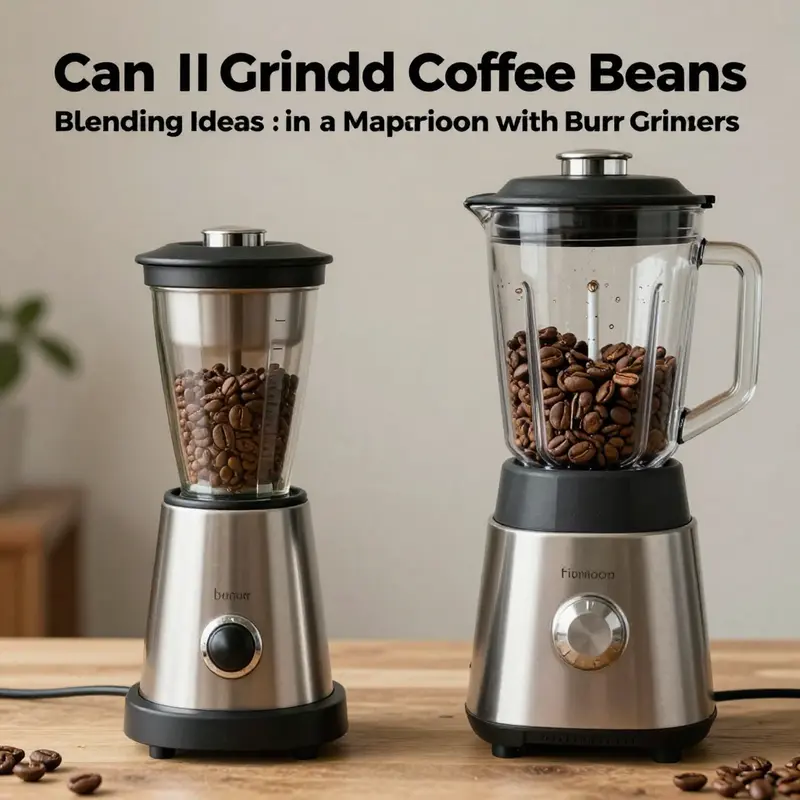
Can you grind coffee beans in a blender? Yes — but the result and the experience differ sharply from using a dedicated burr grinder. Understanding those differences helps you decide when a blender is an acceptable stopgap and when it will actively harm the cup you brew. This chapter explains what happens to the beans inside a blender, how that affects extraction and flavor, and practical steps to get the best possible results if a blender is your only option.
When whole beans meet a blender blade, the mechanics are simple and imprecise. Blenders rely on high-speed spinning blades that cut and shear rather than crush. That action creates a wide range of particle sizes in a single run. You’ll often see fine dust next to larger shards of bean. This uneven particle distribution matters because coffee extraction depends on surface area. Fines extract quickly, coarse pieces extract slowly. When fines and coarse bits coexist in a brew, parts of your grounds over-extract and taste bitter, while others remain under-extracted and taste sour or thin. The net result is a cup that lacks clarity and balance.
Heat is another crucial difference. Blenders run at high RPMs, and friction from rapid blade movement warms the beans. Heat accelerates the loss of volatile compounds that give coffee its bright, aromatic character. It also encourages early release of bitter compounds. In short, grinding in a blender can dull delicate notes and introduce harsher flavors, especially if you grind for too long or process large batches at once. By contrast, burr grinders are engineered to crush beans between two surfaces at controlled speeds. That produces uniform particles and generates far less heat, preserving the bean’s aroma and nuance.
The effect of inconsistent grinding shows up differently across brewing methods. Espresso and other pressure-based extractions demand a very narrow particle distribution to build proper pressure and extraction. A blender’s uneven grind will make consistent shots almost impossible. For pour-over and drip methods, unevenness can produce an over-extracted bitter layer at the bottom and an under-extracted weak layer at the top. French press tolerates coarser particles, but it still benefits from uniformity; a blender can still produce excessive fines that slip through the mesh and add unwanted grittiness and bitterness. If you care about predictable results and tasting the subtle differences between beans, a burr grinder is the right tool.
That said, a blender can function as an emergency solution. If you only brew occasionally, or if convenience outweighs nuance, a blender is a pragmatic choice. Treat it as a temporary fix rather than a replacement. Work in very small batches and use short pulses. Pulse for one second, then pause for a couple of seconds, and repeat. This approach reduces heat buildup and lets you check the grind between pulses. Shake the container between bursts to move larger pieces closer to the blades. If your blender has variable speeds, use a lower setting to reduce heat and violent chopping. Stop before you reach a uniform appearance; intentionally leave the grind slightly coarser than your ideal, then sort or sieve the grounds if necessary.
Sifting can improve blender results. A fine-mesh sieve helps separate fines from larger fragments. Remove the dust and use the remaining particles for methods that require coarser grounds, like French press. Conversely, you can reserve the fines for a second brew that tolerates finer grounds, such as a strong moka-style steep. While not elegant, this manual sorting reduces the extremes in particle size and makes extraction more even. Be aware that sieving creates mess and static cling; ground coffee will cling to container walls and sieve surfaces. A quick tap and a soft brush help release trapped grounds.
Temperature control matters too. Allow the blender motor to cool between short grinding cycles. If the container becomes warm, stop and let everything rest. Some people pop the beans into the freezer for a few minutes beforehand, which can slightly reduce heat transfer during grinding. This won’t eliminate the problem, but it can help preserve aromas for a little longer. Avoid grinding very oily or flavored beans in a blender, as oils can coat blades and the container, making cleanup harder and encouraging rancidity if not cleaned promptly.
Cleaning is another practical consideration. Coffee oils and tiny particles settle into crevices. Clean the blender thoroughly after each use to avoid stale flavors transferring to other foods. Use warm, soapy water and a brush to reach around the blades and seams. If your blender uses a separate jar, remove it and hand-wash it immediately. Leaving grounds or oils to sit invites rancidity and unpleasant flavors in subsequent blends.
If you are evaluating long-term choices, consider what you want from your coffee. A burr grinder is an investment in consistency and flavor control. It allows you to dial in grind settings for different brew methods and to reproduce results with confidence. A blender cannot offer the same repeatability. The difference shows quickly when you switch between beans or brewing styles. For anyone working to taste the differences between origins, roast levels, and processing methods, the precision of a burr grinder becomes essential.
Still, there are real-life scenarios where a blender makes sense. When camping with limited gear, when outfitting a small temporary kitchen, or when you need to produce grounds for a quick pot, a blender will get the job done. The key is to adjust expectations and technique. Grind small amounts. Use pulses and rest cycles. Sift when necessary. Clean thoroughly. Expect a cup that is serviceable, but not as nuanced or consistent as one made from burr-ground coffee.
Finally, watch for signs that your home grinding practice is holding you back. If your brewed coffee tastes consistently flat or imbalanced, or if you struggle to reproduce a satisfying cup, inconsistent particle size or heat damage from grinding may be the cause. Upgrading to a purpose-built grinder is the simplest way to remove that variable. It delivers steadier extraction, quieter operation, and a clearer expression of the beans’ character.
A blender is a versatile kitchen tool. It can approximate coffee grinding in a pinch. Yet it introduces variability and heat that can alter flavor. For quick, occasional use, follow the pulse-and-rest method and consider sieving. For predictable, repeatable, and high-quality coffee, choose a burr grinder designed for the job.
For an in-depth examination of the pros and cons of using a blender for grinding, see this detailed external resource: https://www.seriouseats.com/should-you-use-a-blender-to-grind-coffee-beans
Blending for Brew: Navigating the Realities and Routines of Grinding Coffee Beans in a Blender

When you reach for a blender to grind coffee, you’re already choosing a path of speed over precision. The question in many kitchens isn’t whether a blender can do the job, but what you’re willing to trade off in pursuit of convenience. The short answer is yes, you can grind coffee beans in a blender. The longer answer—the one that matters for flavor and consistency—centers on understanding the trade‑offs, applying careful technique, and recognizing when the shortcut makes sense for your day‑to‑day routine and when it doesn’t. The blender’s blade and motor are designed to move quickly, smash through ingredients, and whirl them into a smooth texture for smoothies, sauces, and batters. Ground coffee beans, however, demand a different kind of consistency. Coffee accepts a spectrum of grind sizes, but the brew’s extraction does not. A uniform grind leads to even extraction, resulting in a balanced cup with predictable brightness, body, and aroma. A blender, by contrast, tends to produce a jumble of particle sizes. Some fragments become almost powder, others stay coarse. In practice, that means an uneven extraction: some of the surface area dissolves quickly, while larger pieces lag behind. The water’s contact with those tiny particles can overextract the finer fragments and underextract the larger ones, yielding a cup that tastes flat, bitter, or strangely off even when the beans themselves are fresh and fragrant. These physics of grinding are not subtle. The goal of a grinder is to produce a repeatable, uniform particle size that mirrors the intended brew method, whether it’s espresso, pour-over, or French press. A blender’s speed and blade geometry make even that goal elusive. Yet there are contexts in which a blender becomes an acceptable stand‑in—if you approach the task with deliberate technique and clear expectations. In a pinch, for a single cup or a quick test run, a blender can deliver workable grounds. The key is to respect the limitations and to tailor the process to minimize heat and maximize control. Heat is the most immediate adversary here. High‑speed blending generates a surprising amount of friction. The heat can nudge the aromatic oils in coffee toward volatility and even push some chemical reactions toward a faint roast note, subtly altering the coffee’s character before you brew it. If you’ve ever picked up a cup and noticed a diminished aromatic bouquet, a touch of warmth from blending could be a contributing factor—even if the beans were recently roasted. This is not a fatal flaw, but it is a real effect that matters for coffee enthusiasts who chase nuanced flavor. The practical response is to keep sessions short, use small batch sizes, and employ pulses rather than a continuous run. Short bursts allow you to interrupt the blade before the beans heat up, and pausing between bursts gives the mixture a chance to cool slightly. A common approach is to measure out a modest amount of beans, perhaps a teaspoon or tablespoon, and pulse in 5‑ to 10‑second intervals with brief rests in between. This habit reduces heat buildup and gives you a rough, workable grind without turning the batch into a powdery mess. It’s also wise to keep the blender dry and clean before grinding. Any residual moisture or oils can cling to particles and alter grind behavior, creating a slurry that behaves more like a smoothie than a dry coffee bed. A dry run, in which you pulverize only to a coarse, uneven texture, is not a failure; it’s a diagnostic step. You discover how the blender handles the beans and where the rough edges lie in your particular setup. The outcome won’t be identical from one blender to another, and it won’t be identical to a burr grinder ground for the same brew method. The inconsistency is an ever‑present reality, and it’s why many experienced brewers keep a dedicated grinder on hand. In the grand scheme, the best practice for home brewing remains clear: use a burr grinder when you can, especially if you value a repeatable grind that maps neatly to your preferred brew method. Burr grinders, with their interlocking burrs, crush beans rather than slice and smash them, producing uniform particles that behave consistently during extraction. The texture you’re aiming for depends on the brew you envision. For a French press, a rough, chunky grind is ideal; for a pour‑over, a medium‑coarse grind that resembles sea salt; and for espresso, a fine, almost powdered texture. The blender’s output rarely matches these precise categories. It can land somewhere between coarse and fine, often with a lot of fines that burn off in contact with hot water, which can push the cup toward sourness or bitterness depending on timing and technique. With that caveat, there are practical tricks you can apply to maximize the blender’s utility in a pinch and to minimize damage to the coffee’s flavor profile. Start with a small test batch. If you grind too much, you risk overheating a larger mass. Instead, grind a spoonful or two and brew a quick test cup. Taste reveals immediately whether the texture will extract evenly. If you detect unevenness—sharp sour notes or a heavy sludge at the bottom—adjust your approach. You might need to shorten the burst times, switch to a coarser grind by interrupting longer blends, or simply accept that the results will be uneven and plan for a slightly different brew technique in the future. Another pragmatic step is to aim for a textured result rather than a powdery one. A blender can produce a more uniform result than some blade grinders, particularly if you carefully manage the pulse rhythm and batch size. If the goal is a make‑do pour‑over or a quick espresso attempt, you can steer the outcome toward something drinkable by focusing on extraction control rather than grind perfection. The conversation about tools is not limited to coffee alone. In many crafts and routines, the right tool—whether a burr grinder or a reliable blender—acts as a hinge between intention and outcome. In this sense, the broader lesson echoes the guidance in broader practical handbooks: tools shape results, and the choice of tool should align with goal, time, and taste. For a thought experiment beyond coffee, consider the parallel in a field that often uses specialized equipment yet relies on adaptable practices when speed is essential. In a related context, the discussion around appropriate equipment is echoed in guidance about selecting appropriate tools for different tasks, such as those discussed in resources about occupational therapy and the equipment that supports practical daily activities. If you’re contemplating this parallel, you might explore the ideas at a resource focused on tools and equipment for occupational therapists. It serves as a reminder that the right instrument can unlock more consistent and safer outcomes, whether you’re shaping a patient’s day or shaping your morning cup. For readers who want to explore a broader, more technical foundation of grind size and extraction, a deeper scientific look helps connect the practicalities to the chemistry of brewing. The detailed literature on why grind size matters shows that uniform particle distribution and surface area govern how quickly flavors dissolve into the water and how flavors balance in the cup. The takeaway is not to demonize a blender but to recognize its place in a kitchen toolkit: a quick, flexible option for small batches when time or equipment constraints trump peak quality. If you’re serious about flavor, however, pair the blender’s occasional use with a burr grinder for regular days. In those moments when you want to experiment without committing to a new machine, you still have the option to master a technique that minimizes heat and maximizes control. The practice of pulsing, keeping batches small, and testing a small brew before scaling up becomes a reliable ritual that respects both the coffee and the moment you’re trying to capture in a cup. And when you do transition to a dedicated grinder, you’ll often notice the difference in texture, in aroma, and in the steadiness of your extraction from cup to cup. That consistency is not just a technical advantage; it’s a daily invitation to savor the craft of coffee making—an invitation that begins with understanding what a blender can and cannot do. Ultimately, a blender is a useful stopgap, a clever hack for those moments when the schedule is tight or the equipment is unavailable. It is not, by its nature, a precision instrument for coffee. By embracing the proper technique and setting reasonable expectations, you can enjoy a you‑are‑here cup that satisfies the moment, even if it doesn’t perfectly mirror a bowl of grounds produced by a burr grinder. And when you’re ready to invest in better consistency, the path is straightforward: add a burr grinder to your kitchen, and let the ground coffee meet its moment with predictable texture, stable flavor, and a brewing experience that honors the beans as they were intended to taste. For those who crave further reading on the science behind grind size and extraction, the external resource linked here offers a thorough exploration of how particle size shapes flavor, a topic that underpins every home experiment with coffee, whether you use a blender, a burr grinder, or anything in between. https://coffeescience.org/2023/04/18/why-grind-size-matters/ Also, to connect the practical idea of choosing the right tool with broader day‑to‑day tasks, consider examining the concept of tools and equipment used by professionals in related fields, such as the discussion found in this resource: https://coffee-beans.coffee/blog/tools-and-equipment-for-occupational-therapists/
Final thoughts
Ultimately, the decision to grind coffee beans in a blender comes down to the balance of convenience and quality. While blenders can serve in a pinch, understanding their limitations is crucial for businesses committed to brewing excellence. For those aiming for precise grind consistency and rich flavors, investing in a dedicated burr grinder may be prudent. As business owners, you must prioritize the quality of your coffee offerings. With the right tools and knowledge, you can elevate your brew and satisfy your customers’ tastes.