
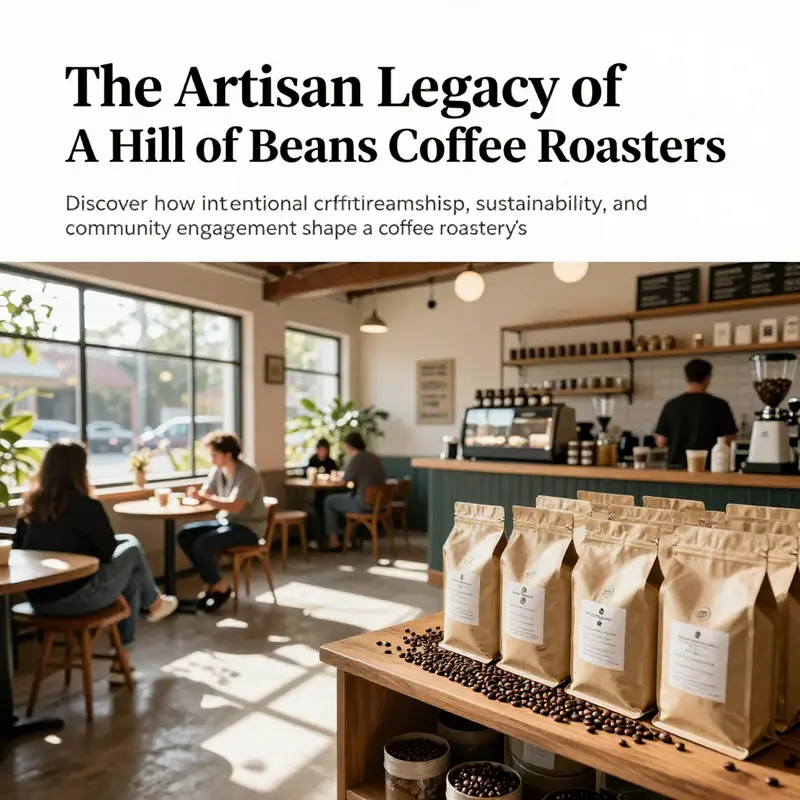
A Hill of Beans Coffee Roasters isn’t just about brewing coffee; it’s an embodiment of passion, quality, and community focus. Located in Omaha, NE, they specialize in artisan-roasted beans that cater to discerning buyers seeking fresh flavors. This article explores the artisan approach they take in coffee roasting, their sustainable practices, and the positive community impact they cultivate. Each chapter dives deeply into these aspects, illustrating how A Hill of Beans stands out in the local coffee scene and serves as a model for business owners in the food and beverage sector.
The Quiet Forge: Crafting Coffee as Art at A Hill of Beans

On the quiet stretch of West Center Road in Omaha, a small roastery makes a claim that feels both humble and grand: every batch is a story, and every story deserves a patient hand. A Hill of Beans Coffee Roasters does more than roast; it practices a sensibility learned from the long arc of the coffee trade. The space is intimate enough to hear the whisper of the roaster’s drum and bright enough to invite a visitor to linger with a cupping spoon in hand. Freshness is not a marketing vow here but a daily discipline. The roastery roasts coffee every day in its Omaha facility, a ritual that binds the person who tastes to the person who harvests. In that simple rhythm—green beans arriving, a Master Roaster watching the drum, aroma blooming, beans cooling—the heart of the artisanal project reveals itself. This is not mass production wearing a craft coat; it is craft, in quiet, audible form, shaping flavor with intent rather than chance.
The artisan ethos here begins with the choice to roast small batches. The decision to limit batch sizes is not about scarcity but about control. In each batch, the roaster can watch color development, hear the crackling chorus of the beans, and measure the way heat, time, and air move together. Small batches are laboratories in which a precise roast curve can be tested and refined. The Master Roaster’s eyes stay attentive through every minute, tracking changes in aroma, texture, and sweetness. The goal is not to impose a uniform profile but to honor the bean’s individuality. The result is a spectrum of roasts, each tuned to reveal what the green seeds have to say and to forego the temptation to flatten vibrant notes into sameness. This approach aligns with the broader specialty coffee movement, which places data and intuition in dialogue rather than in competition.
Yet the artistry is not confined to the roasting drum. It begins much earlier, in relationships with farmers and cooperatives across regions where coffee’s personality first takes shape. A Hill of Beans works directly with farms and farming communities in places like Ethiopia, Colombia, and Guatemala. Direct trade here is more than a sourcing term; it is a commitment to transparency, fairness, and shared risk. Long-term relationships are built on trust, not quarterly results. That trust translates into predictable support for sustainable agricultural practices, and it gives farmers a degree of security that is rare in the commodity market. The beans arrive carrying stories of terraces carved into high altitudes, microclimates that shift the sweetness of a cherry into bright, citrus-like acidity, and processing choices that can tint the cup with chocolate, fruit, or floral notes. The single-origin and micro-lot selections—where the terroir is legible to the palate—become the raw material for the roaster’s craft, not mere components for a blended end-product. The careful curation of origin is, in this sense, the preface to the roast’s narrative.
The direct-trade impulse also anchors a deep respect for the work that happens after harvest. Farmers’ livelihoods, the stability of farming communities, and the sustainability of land and water are not peripheral concerns but foundational to flavor. When a Farm-to-Cup story is told with candor, the consumer learns to listen for heritage in the cup—the brightness of an Ethiopian washed coffee, the depth and cocoa of a Colombian lot, the honeyed sweetness of a Guatemalan profile. The roaster’s job is to recognize these threads and weave them into a coherent experience for the drinker. That requires more than technical mastery; it requires listening. The Master Roaster listens first to the green beans’ potential and then to the sensory feedback of each roast. A profile is not a fixed map but a living conversation with the bean, its origin, and the moment of brewing that follows.
The roasting technique itself is a practice of precision and restraint. The equipment—a batch roaster favored by small‑scale operations, chosen for its responsiveness—offers a calibration surface where temperature, airflow, and roast duration can be tuned with careful curiosity. In this environment, the team explores roast curves that preserve origin character rather than mask it. They avoid aggressive darkening, which can compress delicate aromatics into a single note. Instead, they lean toward lighter to medium roasts that preserve brightness, clarity, and a sense of place. The result is a cup that invites the drinker to trace a bean’s journey—from the soil and seed, through the hands of careful cultivators and meticulous processors, to the crisp crack of the roaster, and finally to the moment of extraction in a cup. This is not merely brewing; it is interpretation. The roaster’s craft translates the bean’s botanical story into a composition of sweetness, acidity, and aroma that can be perceived anew with each sip.
The sensory discipline that guides this craft reads like a good book: the pages announce themselves in aroma and the margins reveal themselves in mouthfeel and aftertaste. The Master Roaster’s palate is trained to discern a cascade of notes that signal origin, processing, and roast level. A citrusy brightness may point to a washed Ethiopian lot, with bergamot and lemongrass dancing on a clean base. A chocolatey depth might emerge from a honey-processed Colombian bean, suggesting a maturation of sweetness that lingers without heaviness. Floral whispers can ride on a Guatemalan micro-lot, opening the cup to lilac and jasmine while keeping the body light enough for clarity in a filter brew or a pour-over. Each batch is cupped, tasted, and compared against a standard of consistency that never becomes dogma. The aim is not sameness but reliability in expressing a particular origin’s truth, a truth that connects the consumer to the field where the beans grew.
Packaging and branding complete the artisan circle with the same quiet restraint that guides the roast. The labels are minimal, and materials are chosen with recyclability in mind. The information printed on the package does not merely identify the roast date or the origin; it tells a compact story of the bean’s provenance and the processing method. For the informed consumer, the packaging is a map: origin, processing, altitude, and a suggestion for brewing method. The knowledge invites a responsible approach to consumption. It rewards those who value transparency and who want to understand the work behind the cup. In this light, the roasting space itself becomes a stage where science and storytelling share the same air, and the consumer becomes a fellow traveler rather than a passive recipient of a flavor profile.
The narrative of a Hill of Beans is not a single arc but a tapestry. It begins with care for people—the farmers who nurture the plants, the cooperatives that enable fair trade, the roastery staff who orchestrate the daily ritual of roast and rest. It continues with care for land and water, recognizing that sustainable farming practices sustain flavors that deserve to be celebrated. It moves through care for the consumer, who seeks a cup that is not loud with bitterness or gimmick but bright with truth and balance. And it ends where it begins, in the moment when a drinker holds a cup and tastes a memory in bloom—the memory of a hillside in Ethiopia, a sunlit altitude in Colombia, a rainy season in Guatemala, and the patient hands that labored to bring these flavors to life. This is the artisan’s promise—that every cup can be a careful, deliberate act of connection between grower, roaster, and drinker, a chain of care that makes a hill of beans into something meaningful.
The craft does not exist in a vacuum. It speaks to a modern palate that seeks nuance and origin expression. The contemporary coffee drinker is not satisfied with a one-note roast; they crave clarity, balance, and a sense of place. The artisan approach honors that desire while insisting on responsibility. It treats the coffee bean as a renewable archive rather than a disposable commodity. It recognizes that the value in a cup grows over time—through careful sourcing, patient roasting, informed brewing, and thoughtful packaging. In this light, A Hill of Beans embodies a philosophy in which science and artistry are not opposing forces but complementary disciplines. The Master Roaster’s lab is as much about sensory perception as it is about precise control of heat curves. The farmer’s field is as much a laboratory as the roastery, where soil, altitude, and microclimate shape the future cup’s profile. The consumer’s kitchen is a forum where the bean’s potential is realized or neglected, depending on how faithfully the roast and the brew honor the bean’s origin.
What emerges from this integrated practice is a cup that carries the weight of its origins without becoming heavy or opaque. The art lies in balance: enough brightness to lift the cup, enough body to carry sweetness, enough afterglow to remind the taster of the journey. The artisan approach disciplines taste by inviting curiosity rather than coercing it. It asks the drinker to look beyond the immediate sensation of warmth and aroma and to consider the path that the bean traveled, the hands that tended it, and the choices that shaped its final form. In this way, the roastery’s work becomes a gentle pedagogy—an invitation to experience coffee as a living, evolving conversation rather than a fixed product. The quiet, steady practice of roasting, sourcing, and packaging becomes a craft that teaches patience, gratitude, and discernment. And this is precisely the essence of the artisan ethos: a continuous, evolving relationship with flavor that honors both the bean and the people who bring it to life.
External resource: https://www.ahillofbeans.com.au/about-us
Roasting with a Conscience: Sustainability Practices at A Hill of Beans Coffee Roasters
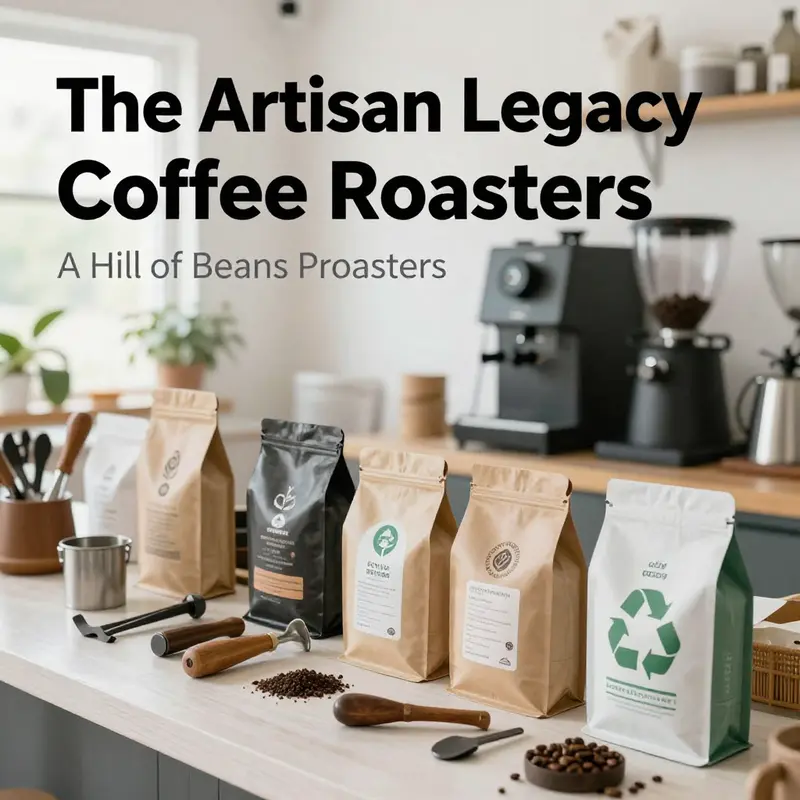
In the quiet hours before dawn, when West Omaha begins to stir and coffee fans start craving that first, honest cup, A Hill of Beans Coffee Roasters operates with a simple premise: freshness is a craft, and craft carries responsibility. The roastery sits at 14512 W Center Rd, a location that anchors a neighborhood beloved for its practical accessibility and its willingness to embrace small, human-scale production. In this setting, the daily act of roasting is more than a routine ritual; it is a deliberate decision about how a business treats the land, the people who cultivate the beans, and the workers who transform those beans into the drink that keeps mornings moving. The roastery’s reputation for fresh, thoughtfully roasted Arabica is not achieved by accident. A Master Roaster oversees each batch, guiding the beans through precise development to bring out unique flavors and character. This mechanical care—watching color, listening for the crack, measuring time and temperature—coexists with a softer, more expansive thread: a commitment to sustainability that permeates sourcing, roasting practices, packaging, and the broader footprint the business leaves on the community and the environment.
The available sources describe a company that places sustainability at the core of its identity, yet the exact details of their strategies are not exhaustively documented in public records. That gap invites a closer, more reflective examination of what sustainability looks like for a local roaster you can visit, sample, and talk to. It invites us to consider not only what is done, but how it is done, why it matters, and how customers can participate in a cycle that honors both great coffee and a healthier planet. If you walk through the roastery, the air may carry the scent of fresh beans and woodsy smoke, but it also carries a sense of accountability. It is a reminder that a good cup of coffee is not merely a product; it is the culmination of a chain that begins on distant farms, travels through countless hands, and returns to a neighborhood that can choose to reward thoughtful stewardship.
Sustainability in a coffee business of this size is almost always a mosaic. Some tiles are vivid and easily described: beans sourced from farms that share transparent practices, roasting operations tuned to minimize energy use without compromising quality, packaging designed to minimize waste, and a point of sale that encourages customers to participate in sustainable choices. Other tiles are subtler: supplier relationships built on long-term partnerships rather than episodic purchases, attention to waste streams within the roasting facility, and ongoing conversations with the local community about how to align business growth with environmental and social goals. What makes the mosaic compelling is not any one bright tile but the way the pieces fit together to form a coherent picture of responsibility. For A Hill of Beans, the Master Roaster’s daily oversight signals a commitment to consistency, but the sustainability lens requires looking beyond flavor alone. It asks how the beans are sourced, how the roaster’s energy is used, how waste is managed, and how the business uses its platform to educate and empower customers toward more mindful consumption.
One of the most meaningful starting points in understanding sustainability at a local roastery is sourcing. In coffee, the journey from seed to cup is fraught with ethical and environmental considerations. Transparent sourcing supports not only quality but also accountability. For a roastery like A Hill of Beans, the ideal scenario would involve strong ties to producers who are paid fairly, who practice sustainable farming methods, and who can provide verifiable information about crop cycles, shade-grown arrangements, and soil management. When a roastery emphasizes fresh, daily roasting, it underscores a desire to minimize time from roast to cup. Freshness truly matters for flavor, but it also aligns with the principle of reducing waste, since beans that are roasted closer to the time of purchase are less likely to sit unsold for long periods or lose their vitality in bulk storage. The challenge, of course, is balancing supply chain realities with the ideals of sustainable procurement. Local or transparent sourcing is a powerful way to support ethical practices and to reduce the environmental footprint associated with long-distance transport. If a customer questions the origin of beans, a roastery with a clear, traceable narrative can respond with confidence, adding another layer of trust to the coffee experience.
In the absence of explicit public documentation detailing A Hill of Beans’ sourcing arrangements, the broader conversation about sustainability invites us to consider what responsible sourcing looks like in a small roastery. It means choosing beans from farms that maintain biodiversity and resilient ecosystems, promote fair wages for workers, and invest in community development where coffee is grown. It means asking suppliers for traceability data and engaging in ongoing conversations about seasonality, quality, and the environmental costs of cultivation. It also means recognizing the value of direct trade or farm-to-roaster relationships, which can shorten the chain between harvest and roast and help ensure that farmers receive fair compensation for high-quality coffee. When a roastery asserts its commitment to daily roasting for ultimate freshness, it also implies a respect for the bean’s lifecycle, from harvest to home brewing. Each step is an opportunity to reimagine conventional practices and to invite customers into a shared, more transparent journey toward sustainable coffee.
Roasting, the oxygen-steeped moment when a green bean transforms into the brown, aromatic seed we recognize, is itself an environmental crossroads. The energy required to heat a roaster, the emissions produced during the process, and the waste generated by the roasting cycle all demand attention. A Hill of Beans’ emphasis on daily roasting suggests a philosophy of keeping batches tightly controlled and manageable, rather than producing large volumes that may sit on shelves. In theory, smaller, well-regulated batches can facilitate precision in roast profiles, reducing the chance that coffee is roasted too aggressively, overdeveloped, or left to age beyond its peak. The Master Roaster’s oversight becomes more than a flavor-centric discipline; it is a practice of stewardship. A careful roast minimizes the risk of waste by ensuring that each batch is optimized for flavor while also preserving the beans’ vitality for a longer window of time. In practice, this means the roastery can source beans with confidence, apply roasting profiles that reveal the beans’ true character, and steward the sensory experience in a way that encourages timely consumption rather than prolonged storage.
From a sustainability standpoint, roasting facilities can also look for opportunities to minimize energy use, manage heat recovery, and streamline workflows to cut down on waste. For instance, batch roasting operations can be designed to recover heat after the roast or to utilize energy more efficiently across multiple roasts in a day. The concept of waste reduction in roasting includes not only energy and emissions but also physical byproducts like chaff and parchment skins. While chaff is often seen as a waste product, it can be repurposed in composting systems or as mulch in gardens and urban green spaces. A roastery that takes a thoughtful approach to waste can transform a byproduct into a resource, closing the loop between roasting and soil health in the community. Even when the public record does not specify a particular chaff management strategy, it is reasonable to assume that a facility committed to sustainability would consider such recycling opportunities as part of its broader environmental program.
Packaging and the in-store experience complete the circle of sustainability for many small roasters. In the absence of comprehensive public disclosures, we can still explore the practical ways a local roastery might reduce its packaging footprint. Recyclable or compostable bags and inner linings are common starting points, but the sustainable mindset pushes beyond material choices to consider how packaging communicates freshness and supports waste reduction for customers at home. For example, providing guidance on proper recycling streams or offering a refill or return program for packaging could extend a roastery’s influence beyond its walls. The customer’s role is crucial here: sustainable coffee is not just about where the beans come from or how they are roasted; it is also about how the beans reach the cup. By encouraging customers to bring their own containers, offering incentives for reusable mugs, and providing practical information about storage and freshness, a roastery can deepen its relationship with the community while reducing single-use waste.
In parallel with the in-house practices, community engagement offers a powerful vector for sustainability. A Hill of Beans, as a locally owned operation, sits at the convergence of local economy and environmental stewardship. Engaging with neighborhood organizations, schools, and farmers markets can amplify the roastery’s positive impact. Such engagement does not merely boost visibility; it creates opportunities for knowledge exchange. For instance, the Master Roaster or other staff might host tasting sessions that also serve as mini-education about environmental considerations in coffee production. The value of these sessions lies in demystifying the journey from farm to cup and in highlighting the environmental tradeoffs that every choice entails. When customers understand the costs and benefits of different sourcing options, roasting practices, and waste management strategies, they can make more conscious decisions about how they consume coffee. This is where the social dimension of sustainability becomes most tangible: it transforms a casual purchase into a collaborative act of stewardship.
A local roastery’s sustainability program also hinges on transparency and ongoing learning. In a field where best practices are continually evolving, a willingness to share progress and to acknowledge gaps can empower customers to participate more fully in the journey. A Hill of Beans could embrace this ethos by maintaining an open channel for inquiry about sourcing, roasting, and waste management. Even if some specifics are not publicly posted, a direct conversation with the roastery can yield a more precise understanding of where improvements are being pursued and what challenges are being navigated. For many consumers, this level of access—paired with consistently excellent coffee—becomes a defining factor in choosing where to shop. It creates a relationship based on trust, curiosity, and shared responsibility rather than on a single moment of flavor satisfaction alone.
When we measure sustainability in the context of a neighborhood roastery, we must balance idealism with practicality. It would be naïve to presume that every practice can be optimized overnight. Yet there is value in the pursuit itself: a path of incremental improvements that aligns the business’s growth with ecological mindfulness and social fairness. For a roastery like A Hill of Beans, this means prioritizing long-term supplier relationships with farms that can demonstrate responsible land use, soil health, and fair labor standards. It means investing in roasting technology and workflows that optimize energy efficiency and minimize emissions, all while preserving the nuanced profiles that customers expect from a skilled Master Roaster. It means packaging choices that respect the planet and clear guidance that helps customers recycle, compost, or repurpose. It means inviting the community to participate in a shared standard of stewardship, not as a punitive requirement but as a collaborative aspiration that deepens both flavor and meaning in every cup.
Details about the precise methods and metrics used by A Hill of Beans remain best obtained from the roastery itself or from its official online presence. The current documentation highlights a clear value system but does not enumerate a public scorecard of sustainability outcomes. This openness gap, however, is not unusual for small, locally owned roasteries. It invites interest rather than suspicion. For readers who care about sustainable coffee, the recommended path is to engage directly with the roastery, ask questions, and observe how their practices translate into everyday operations. The narrative of sustainability in this context is not a single achievement but a living conversation—between farmer, roaster, barista, and customer—about how to keep the beloved ritual of coffee drinking aligned with responsible stewardship of resources. It becomes a story told through the beans themselves: the origin, the roast, the flavor, the packaging, and the way the business treats the ground from which these beans came.
In the broader landscape of sustainable coffee, the guidance and ideas noted in reputable sources emphasize two enduring truths. First, transparent sourcing matters. When a roastery can trace beans to origin farms, communicate the farming practices used, and ensure that producers are compensated fairly, it becomes easier to claim a responsible supply chain. Second, roasting and packaging must be designed with waste in mind. Efficient roasting routines reduce energy use and emissions, while packaging and consumer education reduce household waste. The combination of these elements—transparent sourcing, careful roasting, responsible packaging, and active community involvement—forms a robust framework for sustainability that a small roaster can aspire to, evolve into, and demonstrate to customers through consistent daily practice.
As a reader or patron reflecting on A Hill of Beans, it is natural to wonder how a local roastery translates philosophy into everyday outcomes. The truth is that the most meaningful indicators of sustainability for a shop like this may not always be the loudest or most quantifiable. They show up in quieter, practical choices: the willingness to discuss sourcing with candor, the discipline of producing and delivering fresh coffee in a way that respects both flavor and the environment, and the commitment to diminishing waste through all stages of the coffee’s lifecycle. If a visitor steps into the tasting room or a back-room roastery space, they might sense the careful choreography of operations that enable these outcomes: measured heat, controlled airflow, deliberate batch timing, and a culture that treats waste as a resource rather than a nuisance. The cumulative effect of these decisions is a ripple outward—the way a neighborhood learns to value sustainable practices, how a café approach shapes consumer expectations, and how a small business can model responsibility for others to imitate.
For readers seeking practical steps to engage with sustainability in coffee, the literature offers actionable ideas that align with the spirit of what a local roastery might pursue. These include choosing whole beans from transparent roasters, supporting direct or traceable sourcing, and favoring pre-washed or sun-dried processes that optimize resource use. It also involves considering roasting profiles that minimize waste, adopting energy-efficient equipment where possible, and implementing waste-reduction strategies in the shop and packaging that extend the life of the product while reducing end-of-life impact. The conversation also invites us to reflect on how customers are participants in sustainability. By choosing coffee responsibly, bringing their own containers, composting grounds, and supporting roasteries that publish their practices, customers contribute to a virtuous cycle that rewards both taste and care for the planet. In this way, every cup becomes a small act of environmental stewardship and community investment, not merely a morning habit.
Ultimately, the sustainability story of A Hill of Beans Coffee Roasters is a living one—part tradition, part experimentation, and part partnership with a broader environmental ethos that values fair treatment of people, care for the land, and a thoughtful use of resources. The public record may not yet reveal a comprehensive blueprint, but the elements described above offer a plausible portrait of a roastery dedicated to doing right by the coffee and by the world it travels through. If readers carry this portrait into their own coffee routines, they may find that sustainable practices are not a distant ideal but a series of practical decisions they make together with the roastery: choosing beans with strong provenance, paying fair prices, supporting energy-conscious roasting, reducing waste, and engaging the community in ongoing dialogue about what taste and responsibility can coexist in a single, satisfying cup. In that shared space, the humble act of roasting beans becomes a catalyst for a more mindful relationship with the environment and with the people who cultivate the beans, hundreds or thousands of miles away, whose labor and land deserve respect and fair reward. The result is a coffee experience that nourishes more than the palate; it sustains a standard of quality that travels beyond the cup and into the daily routines of a community that values both flavor and integrity.
For those who wish to explore sustainability further, practical guidance and frameworks exist that can help any coffee lover evaluate and improve their own consumption habits, whether at home, in a café, or at a roastery like A Hill of Beans. While the specific public documentation of this roastery’s internal metrics may still be developing, the overarching philosophy remains clear: sustainable coffee is not a destination but a discipline. It asks for curiosity, accountability, and a willingness to adapt. It invites customers to participate in a shared journey toward a more equitable and environmentally conscious coffee culture. As this chapter closes, the takeaway is not merely a catalog of practices but an invitation to notice how every choice—origin, roast, packaging, and purchase—shapes the story of coffee in a community and in the world. The next time you sip a cup from a roaster in West Omaha, you might listen for more than aroma; you might hear the quiet, persistent hum of responsibility that makes each bean matter more because it matters to the people who grow it, to the planet that sustains it, and to you who chooses to drink it.
External resource for sustainable coffee practices: How To Make Your Coffee Order Sustainable Without Sacrificing Taste
Brewing Community: How A Hill of Beans Coffee Roasters Redefines Local Impact
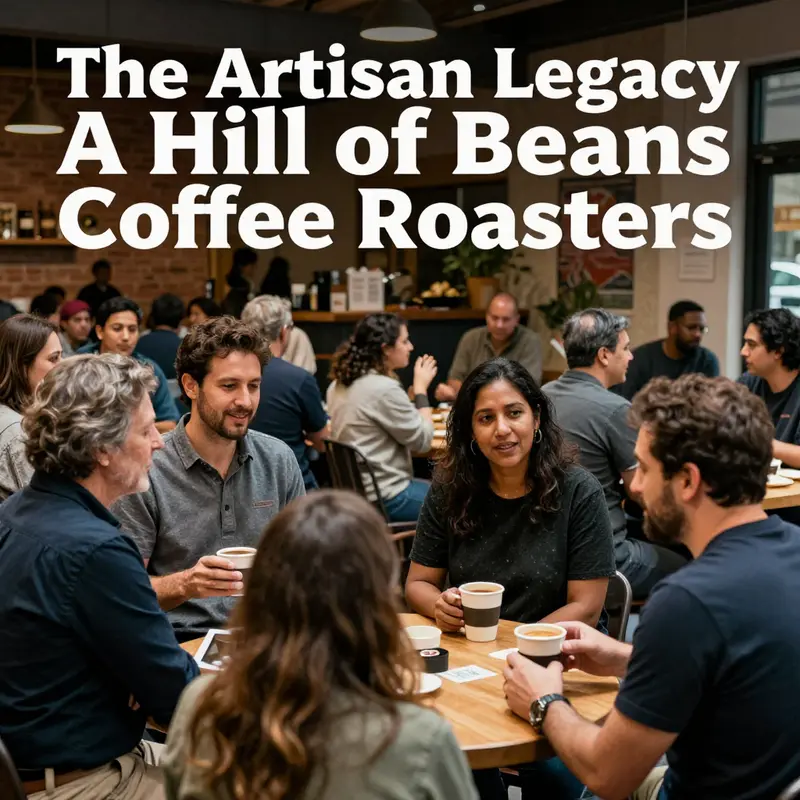
The hum of a roaster is a steady heartbeat inside A Hill of Beans Coffee Roasters. Daily roasting in Omaha breathes life into small batches of Arabica beans, and the work is deliberate, guided by a Master Roaster whose attention to aroma, color, and timing translates into a consistent experience for customers near and far. Yet the roastery is more than a place to chase flavor; it sits at the center of a broader local economy, a conduit for fairness, education, and opportunity that remains faithful to the flavor profile that defines its founding.
Direct sourcing from smallholder farms is more than a choice; it is a philosophy in action. Engaging farmers in regions like Ethiopia and Colombia aims for fair pricing and lasting partnerships built on trust. A direct-trade mindset moves beyond commodity cycles and creates a shared pathway where the farmer’s risk is mitigated by predictable demand, and the roaster gains beans with traceable provenance. This clarity becomes a strategic asset that supports consistent flavors and stable incomes for families who rely on coffee.
The direct-sourcing model also strengthens the social fabric of connected communities. Transparency becomes a lived practice: price transparency, labor transparency, and environmental transparency. Baristas learn to discuss harvest timing and processing methods with farmers; customers learn to appreciate what their purchase supports. This clarity teaches people to ask questions about supply chains and to care about where coffee comes from as a way of caring for others. It is not only about sustainability in the abstract; it is a dependable system that supports fair wages, safe working conditions, and livelihoods that endure across generations.
The ethos of direct sourcing extends into a broader field of community engagement. A Hill of Beans hosts events, cupping sessions, and barista training that invite neighbors to observe the artistry of roasting and to learn the language of aroma and flavor. The programs act as bridges to opportunity, equipping locals with practical skills that can translate into steady employment or entrepreneurial ambition within the coffee ecosystem. The roastery becomes a training ground where talent is discovered and carried outward into the wider economy.
Environmentally, the company prioritizes renewable energy in roasting and waste-minimization, including repurposing spent grounds as soil amendments and choosing recyclable packaging. These choices matter for the health of the local environment and the broader climate that shapes agricultural viability around the world. The sustainability narrative is not a brochure; it is reflected in daily practices and shared with customers who value accountability and responsibility.
Ultimately, the story of A Hill of Beans reframes how outsiders perceive the coffee trade in Omaha and beyond. The roastery differentiates itself by embodying a model of ethical commerce that connects farmers, workers, neighbors, and customers. Each purchase acts as a vote for fair treatment, environmental care, and community resilience. The West Omaha location becomes a microcosm of a larger dream: that coffee can be a force for fairness, learning, resilience, and everyday joy. And as customers return cup after cup, they join a shared enterprise that values transparency, opportunity, and stewardship as core ingredients in every blend.
Final thoughts
A Hill of Beans Coffee Roasters exemplifies the intersection of quality, sustainability, and community engagement in the coffee industry. Through their artisan roasting techniques, commitment to ethical sourcing, and dedication to local impact, they create a model for business owners who aim to build meaningful connections with their customers and environment. Their success stands as a testament to how a coffee roastery can be more than just a place to grab a cup—it’s a hub for craftsmanship and communal growth.