
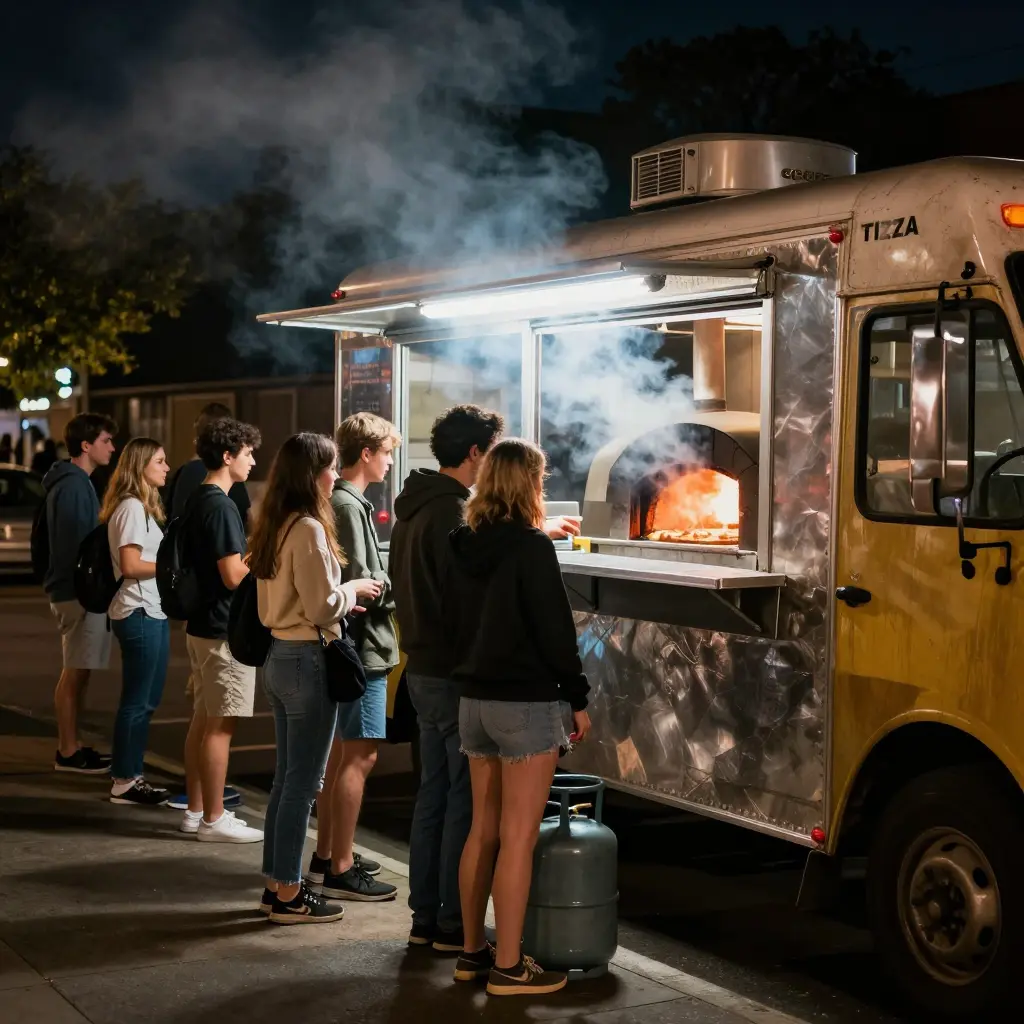
Why Pizza Truck Propane Supply Fails on a Busy Friday Night
A mobile pizza oven burns more propane than everything else on the truck combined. Most builds pair it with a griddle, a fryer, a water heater, and a refrigerator, and the oven still outdraws them all together. On a slow Tuesday that is just a design number. On a Friday night it decides whether dinner service finishes on time.
Friday dinner service squeezes peak demand into a three-hour window. From about 6 to 9 p.m., orders land in clusters, and the deck or conveyor oven stays at full fire to keep up. When a food truck propane system cannot deliver BTUs as fast as the oven burns them, the oven starves: the flame drops, the deck loses temperature, and service slows or stops outright. The pies come out pale and underdone, and the line outside gets longer.
There is rarely a single culprit. A reliable pizza truck propane supply depends on four things working together: tank size, vaporization rate, regulator capacity, and the diameter and length of the lines between them. If any one of them falls short of the oven’s draw, the whole system loses the Friday night rush. Cold weather makes it worse by slowing how quickly liquid propane turns into usable vapor.
The fix starts with understanding what the oven actually pulls.
The BTU Demand Side: What Your Oven Actually Pulls
A BTU is a unit of energy: roughly the heat needed to raise one pound of water by one degree Fahrenheit. A commercial oven’s spec sheet rates it in BTUs per hour, and that number drives everything downstream — tank size, regulator, hose diameter.
Mobile pizza ovens are hungry. A deck oven typically pulls 60,000 to 100,000 BTU per hour; a conveyor oven 80,000 to 120,000.
That draw does not stop when the line does. To hold temperature the burner cycles on again and again, so pizza oven gas consumption stays high whether you sell one pie an hour or twenty.
- Larger decks and longer conveyor tunnels increase BTU demand.
- Faster recovery speeds demand bigger burners, which burn more gas.
- Higher BTU per hour drains food truck propane capacity faster.
That steady pull is what empties a tank on a busy Friday. Fuel leaves at a predictable rate, no matter how many pies go out the window.
The Vaporization and Pressure Side of the Equation
Propane leaves the tank as vapor but is stored as liquid, so it has to boil before the burner can use it. That phase change — vaporization — pulls heat from the surrounding air through the tank walls. The propane vaporization rate depends on two things: the outside temperature and how much liquid surface area touches the inside of the tank.
On a warm afternoon the liquid boils easily, propane tank pressure holds, and vapor flows. On a cold Friday night, heat transfer slows, the liquid boils sluggishly, and pressure falls. Heavy draw causes the same effect: burners pulling hard chill the liquid faster than the tank walls can reheat it.
A propane regulator sits between tank and appliance, stepping tank pressure down to a steady delivery pressure — usually about 11 inches of water column on a low-pressure system. What it cannot do is create vapor that is not there.
When vapor demand outruns the tank’s vaporization rate, regulator output sags, the burners starve, and the flame weakens or the oven shuts down mid-service.
That is the usual mechanism behind a failing pizza truck propane supply at peak load.
Tank size is the biggest single lever, so it helps to see how capacity, sustained output, and runtime line up. Note that the service window is set by vaporization rate — how fast the tank can turn liquid into gas under load — not by liquid volume alone.
| Tank Size | Approx. Propane Capacity | Typical Sustained BTU Supply per Hour | Estimated Friday-Night Service Window Supported |
|---|---|---|---|
| 20 lb | ~4.7 gal (~430,000 BTU) | ~40,000 BTU/hr | ~1 to 1.5 hours |
| 30 lb | ~7 gal (~640,000 BTU) | ~55,000 BTU/hr | ~2 to 2.5 hours |
| 40 lb | ~9.4 gal (~860,000 BTU) | ~70,000 BTU/hr | ~3 to 3.5 hours |
| 100 lb | ~24 gal (~2,160,000 BTU) | ~135,000 BTU/hr | ~6 to 7 hours |
| Twin 100 lb | ~47 gal (~4,300,000 BTU) | ~270,000 BTU/hr | Full night, 10+ hours |
An undersized tank starves the oven: once burner demand outruns vaporization, sustained output collapses and the deck cools mid-service. Sizing up — or plumbing twin tanks together — keeps supply ahead of the busiest hour.
Warning Signs Your Pizza Truck Oven Is Starving for Propane
Starvation seldom announces itself. It shows up as small clues you can easily miss, usually at the worst possible time. Catch them early and you can swap a tank or check a regulator before the rush turns ugly. Watch for:
- Slower bake times – pies that once took eight minutes suddenly stretch past twelve
- Uneven deck heat, with one side of the pizza browning while the other stays pale
- A flame that shifts from crisp blue to lazy yellow or orange
- Frost or condensation forming on the regulator body
- Tank frosting near the valve, hinting at low pressure or high draw
- A sputtering or roaring burner that surges and drops as you cook
- Weak, inconsistent recovery between back-to-back orders
Any one of these can seem minor. Two or three at once usually mean demand is outrunning supply and the oven is starving for fuel.
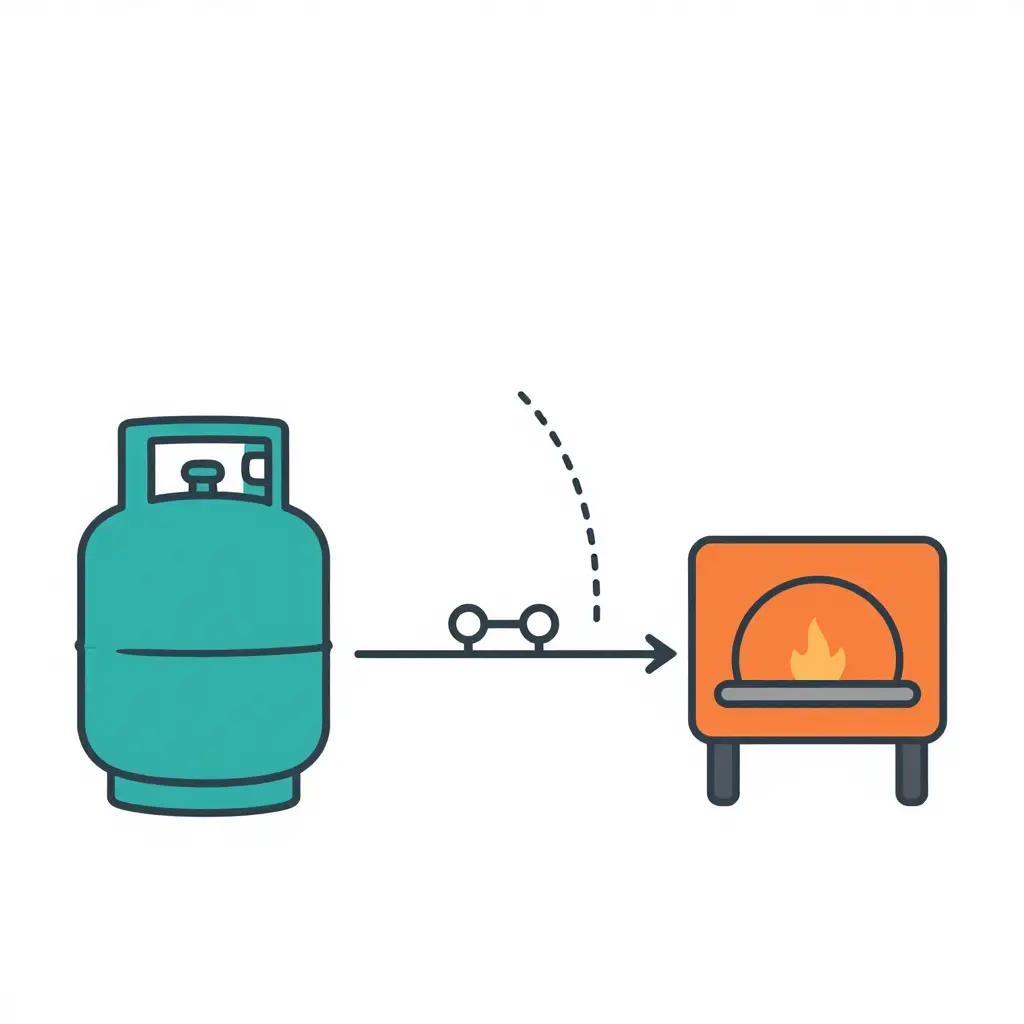
Figure 1. The propane supply chain at a glance.
Follow the path left to right:
- Tank – liquid propane sits here, waiting to vaporize as pressure drops.
- Regulator – the bottleneck. It converts high tank pressure into the steady, low pressure the burner needs.
- Oven – the burner demands a volume of vaporized propane that the regulator has to be able to match.
The dashed arrow is the part owners miss. Fire up several burners at once and the tank’s vaporization rate and the regulator’s throughput fall behind the oven’s appetite. Flow gets pinched, and the flame weakens right when you need it.
Starvation begins in that pinched section, not in the oven. Diagnosing a slow, sputtering pie night starts with following the fuel, not the flame.
Why the Oven Starves: Root Causes
Propane starvation is a sizing and physics problem, and it repeats the same way every time.
Undersized tanks. A tank sized for light weekday service cannot carry peak demand. Vapor output depends on wetted surface area, and a small tank does not expose enough of it, so supply runs short just when demand is highest.
Cold ambient temperatures. Propane vaporizes only as the liquid absorbs heat through the tank walls. As the evening air cools, the liquid gets colder and vaporizes more slowly, internal pressure falls, and the appliances get throttled.
Too many high-BTU loads on one supply. An oven, griddle, fryer, and water heater on one line all compete for the same vapor. Together they can exceed what the mobile pizza oven gas supply is sized to deliver.
Restrictive regulators or long hose runs. Undersized regulators and long, narrow hoses add resistance and pressure drop, so the burner gets less gas than it needs.
Partway refills. A half-full tank exposes less liquid surface and holds less thermal mass, which cuts vapor output further.
Any one of these can cause a failure. Correct food truck propane capacity planning sizes for all five at once.
The Friday Night Starvation Curve
If your pies start coming out pale around 7:30 on a Friday, the chart below shows why. Plot deck temperature and supply pressure across one evening service and the moment the oven starts to starve becomes obvious.
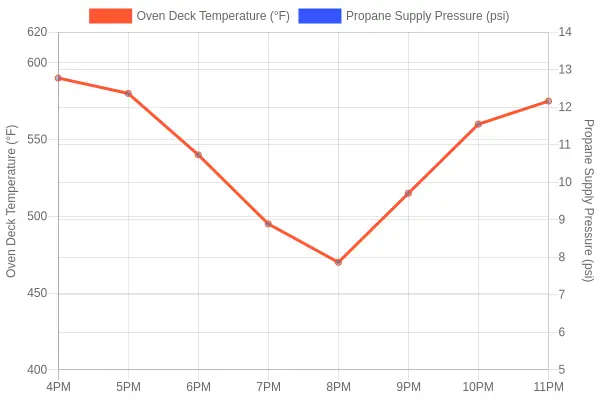
What the trend shows. From 4 to 5 p.m. the system is comfortable: the deck holds near 590°F while supply pressure sits at 12.5 in. w.c. As orders climb into the 6-to-8 p.m. rush, the two lines fall together. Pressure drops to 6.5 in. w.c. and the deck sags to 470°F – a 120-degree deficit that stretches a four-minute bake to seven. After the queue clears at 9 p.m., pressure recovers and the deck climbs back toward its setpoint. Because both recovered together, the dip was a supply problem, not a failing burner.
Reading the two axes
The dual axis lets you watch both problems on one timeline:
| Axis | Series | Healthy Range | Red Flag |
|---|---|---|---|
| Left | Oven deck temperature (°F) | 560 – 600 | Below 500 |
| Right | Propane supply pressure (in. w.c.) | 11 – 13 | Below 8 |
Why the lines move in lockstep
An LP gas system balances vaporization against draw. The regulator holds delivery pressure only while the tank can boil liquid fast enough to replace what the burners pull. Light two or three ovens plus a fryer at once and draw outruns vaporization, line pressure sags, and a starved burner cannot hold deck temperature.
What makes the sag worse on a crowded Friday:
- A tank that is under 20 percent full, which shrinks the wetted surface area available for vaporization
- Cold ambient temperatures or a tank chilled by wind, which slow evaporation further
- Long, undersized liquid or vapor lines that add pressure drop between the tank and the oven
- A first-stage regulator sized for a single oven rather than your full cooking load
- Simultaneous ignition of every appliance during the dinner push instead of staggered light-up
What healthy operation looks like
When the supply is right-sized, the pressure line stays nearly flat through the rush. A dip of 1 in. w.c. or less is normal; a drop of 4 to 6 in. w.c. paired with a 100-degree temperature loss means the oven is gas-starved. Log both numbers nightly and “slow Fridays” become a measurement instead of a complaint.
Long service nights also wear on the crew – shoulders, focus, stamina. If that side of the job matters to you, this guide to occupational therapy techniques for stress relief is worth a look for keeping everyone sharp when the tickets pile up.
The fix is rarely exotic: size the regulator correctly, keep the tank above half on weekends, insulate or move the tank out of the wind, and stagger ignition. Stabilize pressure and the deck temperature – along with your ticket times – will follow.
Practical Fixes for Propane Starvation on a Busy Friday
When the oven sputters at 7 p.m. on a Friday, theory does not help. These pizza truck propane supply solutions run from quickest to most involved.
- Upgrade the regulator. A single-stage regulator often cannot keep up when demand spikes. Move to a two-stage or high-flow regulator so vapor pressure stays steady across multiple appliances.
- Add a second tank. Two tanks in parallel keep vapor flowing without a dip. When one runs low, the other carries the load until you swap.
- Install a propane manifold for food truck setups. A manifold draws vapor from several tanks at once, feeding the oven evenly and removing the single-tank bottleneck.
- Warm or insulate the tank. Cold propane vaporizes poorly. An insulated or heated tank holds pressure better on chilly nights.
- Resize for your real load. Oversizing a propane tank for a pizza oven looks counterintuitive, but a larger tank exposes more surface area for vaporization and carries a deeper reserve.
- Schedule refills before the weekend. Do not let Friday arrive with a half-full tank. Set midweek deliveries so your busiest nights start full.
Weighing Cost Against Reliability
Each option trades money for dependability. A higher-flow regulator is cheap but limited; a manifold or a larger tank costs more upfront and prevents the mid-rush flameout that sends customers home. For most operators the best value is the cheapest fix that removes the bottleneck, plus the one upgrade that matches your busiest night.
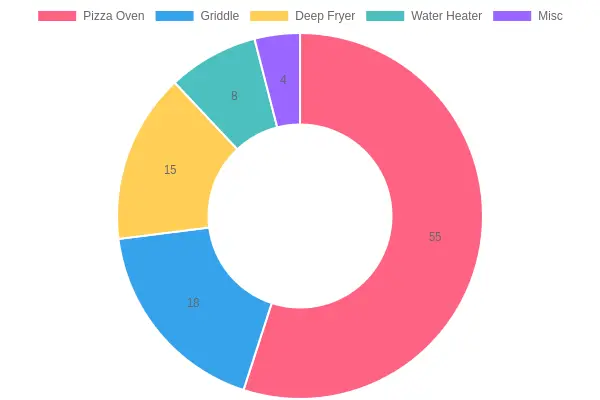
How a Pizza Truck Actually Burns Through Propane
Add up every burner and pilot light on a busy truck and one appliance stands out. The pizza oven dominates propane consumption, taking more than half the tank on its own. The chart above shows where the rest goes during a Friday night rush.
| Appliance | Share of Propane Use |
|---|---|
| Pizza Oven | 55% |
| Griddle | 18% |
| Deep Fryer | 15% |
| Water Heater | 8% |
| Misc (lights, pumps, warmer) | 4% |
That 55% share is why the oven feels the pinch first. When tank pressure drops during a spike, the biggest load starves before anything else, which makes a sagging oven flame the earliest sign that you need fuel.
Pizza Truck Propane Supply: Frequently Asked Questions
Why does my oven starve only on busy nights? On a slow night the burner fires now and then, so vapor demand stays low. During a rush it runs continuously and pulls vapor faster than a small tank can replace it. That mismatch is why your pizza truck propane supply seems fine at noon but fails at 7 p.m.
What tank size is right for a pizza truck? A 40-pound (roughly 10-gallon) cylinder handles a single oven for many operators; high-volume trucks running several burners often step up to 100-pound cylinders. The right propane tank size depends on your burner’s BTU rating and how many continuous hours you cook. When in doubt, size up, because an oversized tank rarely hurts but an undersized one always does.
Why does cold weather worsen propane supply? Propane boils into vapor more slowly as temperatures drop, and vapor is the only part your burners can use. In the cold the tank cannot release gas fast enough to feed a busy oven. Insulating or warming the tank, or moving to a larger one, restores steady flow.
Can I run the oven and a griddle off one tank? Yes, but only if the tank and its vapor outlet are rated for the combined BTU load. Two appliances firing at once can exceed a single tank’s vaporization rate and starve both. Consider a manifold with adequate capacity or a second dedicated tank.
How do I know if my regulator is the problem? A failing propane regulator usually shows up as a small yellow, flickering flame instead of a steady blue one, or as pressure that drops the moment demand rises. Check the tank level first, then test the regulator with a manometer. If flow is weak on a full tank in warm weather, the regulator is the likely culprit.
The Real Reason Your Oven Starves on a Friday Night
When the line stretches down the block, a starving pizza oven is rarely bad luck. It is a supply-and-demand mismatch bounded by three physical limits: how fast the tank vaporizes, how hard the appliances pull, and how cold it is.
A tank can vaporize only so much fuel per hour, and cold weather lowers that ceiling. Fire multiple burners, a stone deck, and a water heater at once and demand can outrun what the tank can deliver as gas, so the flame weakens exactly when you need it most. Getting your pizza truck propane supply right means respecting that ceiling, not just checking how full the tank looks. Good food truck propane planning accounts for peak-hour draw and ambient temperature, and sizes the hardware and fuel so your mobile pizza oven holds up on the busiest night rather than the average one.
Operators who match capacity to peak demand – right-sized or multiple tanks, refills scheduled around volume – keep the oven hot when it counts.