
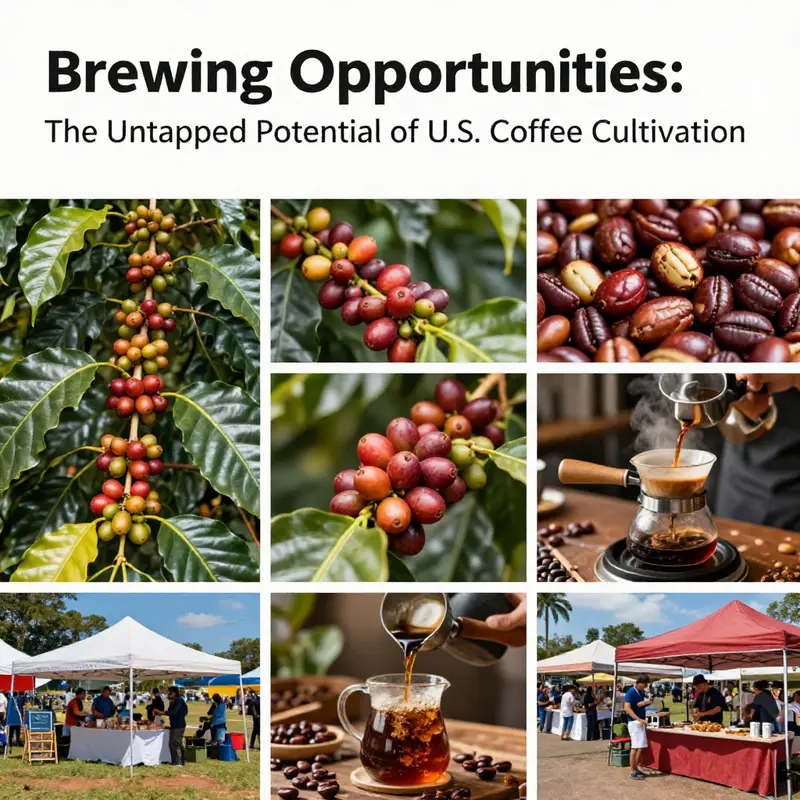
Coffee enthusiasts and business owners should take note: coffee beans are indeed grown in the U.S., primarily in Hawaii and Puerto Rico. While these areas may not match the large-scale production of countries like Brazil or Colombia, U.S.-grown coffee holds a special place in the specialty coffee market. In this exploration, we will uncover the details of coffee cultivation in the U.S., discussing the climatic and geographical necessities for growth, the economic contributions to local communities, the unique varieties and quality of domestic coffee, and the future prospects for expansion in this intimate agricultural field.
Flavor from Fire and Sand: An Inside Look at U.S.-Grown Coffee Cultivation
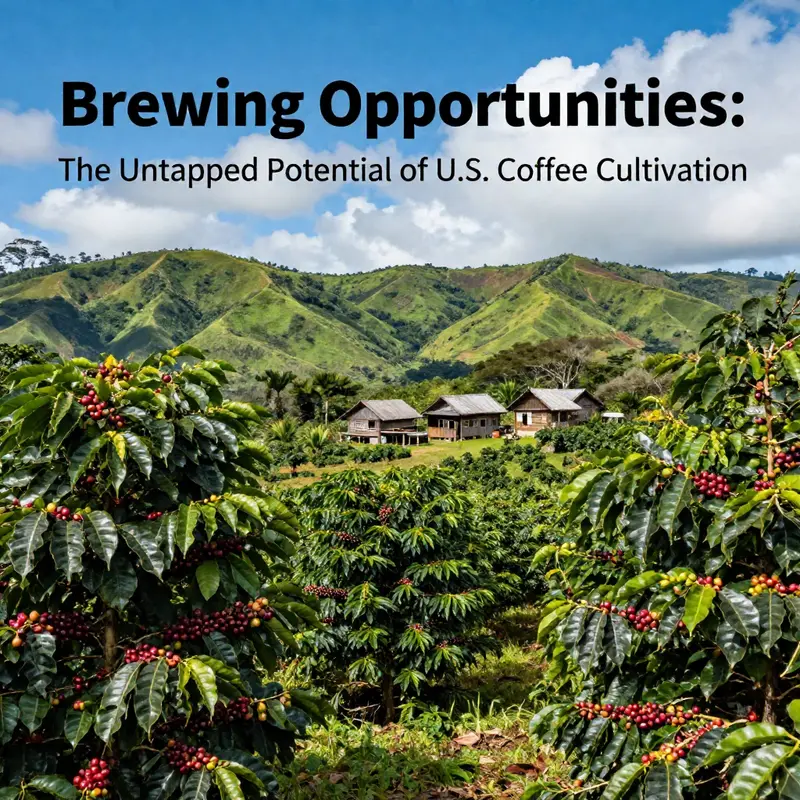
The notion of coffee grown within the United States sits at once beside and apart from the global narrative of coffee. It sits beside because it is undeniably part of the broader story—the labor, science, and markets that shape coffee from cherry to cup. It sits apart because the scale, climate, and historical footprint differ markedly from the great coffee regions of the tropics. Yet the United States does produce coffee, and in some places that production has carved out a distinct, almost ceremonial role in domestic markets. The conversation about U.S.-grown coffee is less about volumes and more about terroir, resilience, and the craft of nurturing high-quality beans in climates that are, in coffee terms, off the traditional map. The primary cradle of this effort remains Hawaii, with Puerto Rico continuing to cultivate coffee at a modest but meaningful pace, and Florida opening a new chapter of experimental growth in pockets where warmth and water balance can sustain coffee plants. While domestic production accounts for a small fraction of global output, its impact ripples through specialty roasters, local economies, and the idea of what is possible in a country known for many climates but not for large-scale coffee farming.
The heart of U.S. coffee cultivation beats strongest on the Big Island of Hawaii. Here, the Kona region stands as both a geographically defined belt and a cultural milestone for American-grown coffee. The volcanic soils that characterize much of the island are not merely a feature of geology; they shape the very flavor profile that Kona beans carry to the cup. These soils, forged by ancient eruptions, hold minerals and minerals in balanced abundances that interact with the plant during the high-stakes years of development. Elevation adds another layer to the equation. In Kona, coffee is grown at elevations that provide cool nights and steady daytime warmth, a climate that invites the Arabica varieties to develop nuanced sweetness, vibrant acidity, and a clean, lingering finish. The result is a flavor spectrum frequently described as smooth, with aromatic complexity that hints at cocoa, fruit, or spice depending on microclimates, processing choices, and farm-level decisions. Tastings of Kona coffee often reveal a bright clarity that stands up to light roasts, letting individual tasting notes emerge without the heaviness that sometimes accompanies beans grown in harsher tropical conditions. The reputation of Kona is not merely about flavor; it is about a place and a method—the careful stewardship of shade, soil, and water, and the intimate knowledge of a landscape that has, for generations, rewarded patient growers with distinctive beans.
Beyond Kona, Hawaii’s agriculture includes other coffee-producing zones where climate and soil interactions still offer favorable conditions for Arabica. The island chain’s microclimates create pockets where coffee can thrive, and local growers continually adapt to weather patterns, pests, and market pressures with methods that emphasize quality and consistency. The emphasis on specialty markets shapes cultivation choices, from seed selection to shade management and harvest timing. Even within Hawaii, the path from cherry to cup hinges on small decisions that magnify when scaled across a region: careful pruning to balance yield and flavor, selective picking to maximize ripeness, and meticulous green- and post-harvest handling that preserves the beans’ delicate aromatics. These practices are not merely agricultural; they are cultural, built on a tradition of regional pride and a shared commitment to a product that, in many markets, is celebrated not only for its aroma and taste but for its origin story.
Puerto Rico, a U.S. territory with its own unique history of coffee cultivation, remains part of the domestic narrative even as the scale of production has declined from its earlier peaks. Arabica varieties continue to be grown there, reflecting a climate capable of supporting high-quality beans, albeit in a landscape that has faced economic and agricultural shifts over the decades. The Puerto Rican coffee story is one of continuity under pressure—continuity in the sense that growers still chase the same fundamental objectives: maintaining tree health, ensuring ripeness at harvest, and delivering a cup that embodies the island’s terroir. The region’s ongoing cultivation contributes to the broader tapestry of U.S.-grown coffee by reaffirming that climate-appropriate, high-quality Arabica can be produced outside the primary mass-market belts. Although Puerto Rico’s share of global production remains modest, its presence matters to local communities and to the broader consumer awareness of American-grown beans.
If one looks beyond the established and storied locales, Florida appears as the most ambitious and perhaps most exploratory frontier for U.S. coffee cultivation. Southern Florida’s warm winters and moist summers offer a window where certain microclimates can sustain coffee plants, provided growers manage the delicate balance of heat, humidity, and irrigation. The Florida experiments sit at the edge of traditional coffee horticulture, where growers test varieties, grafting techniques, soil amendments, and shading strategies designed to coax reliable yields from climate conditions that diverge markedly from Hawaii’s volcanic terroir or Puerto Rico’s island-wide climate. These efforts, though still small in scale, signal a broader curiosity about regional adaptation—an awareness that coffee can be grown in more parts of the United States than the long-standing tropical stereotype would suggest. The challenges are not trivial: sustainability concerns, water management, pest pressures, and the need for efficient supply chains to connect small, local farms with roasters and consumers who increasingly value provenance. Yet the potential is real enough to inspire farmers, researchers, and entrepreneurs to see Florida as a proving ground for future domestic coffee cultivation in warmer latitudes.
Taken together, these regions illustrate how the United States approaches coffee cultivation less as an appetite for mass production and more as an exercise in place-based farming and craft. Production statistics reinforce the perspective: U.S.-grown coffee represents a fraction of global output—less than one percent—yet this fraction carries a disproportionate weight in domestic specialty markets and in the ecosystems that support them. The value of domestic production is not simply the beans on a shelf; it is the network of farm families and local businesses that sustain coffee culture in areas where coffee farming aligns with other regional identities, including tourism, agriculture, and culinary artistry. In Kona, farmers often cultivate relationships with nearby mills, roasters, and retailers who celebrate the uniqueness of Kona beans through schedules of harvest, processing, and cupping events that educate both locals and visitors. In Puerto Rico, coffee remains a touchstone of community, seasonality, and resilience, a reminder that farming traditions can endure even as markets evolve. In Florida, the small-scale experiments are as much about research and innovation as they are about production, with institutions and growers collaborating to understand how climate, soils, and irrigation interact to support sustainable yields and quality standards over time.
This domestic narrative also intersects with consumer expectations and regional identity. Home roasters who purchase U.S.-grown beans often seek more than a caffeine fix; they want a story of locality, seasonal attention, and ethical stewardship. The Kona bean, for instance, is frequently marketed not just for its flavor but for its sense of place—the way a cup can evoke a particular hillside, a particular breeze, and a particular shade structure that protects ripening cherries from the midday sun. The flavor profiles that emerge from Kona’s volcanic soils and mid-elevation climates tend to convey clarity and a nuanced sweetness, qualities that sharpen the experience of lighter roasts and early sips of the day. The alliance of terroir, science, and craft in Hawaii speaks to the broader American appetite for specialty coffee that is transparent about origin and value-driven in its cultivation practices. It also raises questions about accessibility and scale, inviting a nuanced discussion about what it means to cultivate, process, and distribute beans that originate in a country where coffee farming remains largely a niche enterprise rather than a nationwide industry.
As the domestic landscape evolves, ongoing research and observation continue to shape the choices made by growers and the expectations of consumers. The climate realities that Hawaii contends with—microclimate variation, soil health, water management, and pest pressures—are not abstract concerns but immediate factors in every harvest. Likewise, the Florida experiments remind us that climate adaptation is not a single leap but a sequence of adjustments: selecting resilient varieties, refining shading approaches, optimizing irrigation, and developing market channels that can support small quantities of highly specialized beans. Puerto Rico’s enduring practice underscores the importance of sustaining agricultural communities and preserving know-how that links farmers to land, at a time when global supply chains often favor large-scale, standardized production. The synthesis of these experiences is a reminder that domestic coffee cultivation, while modest in volume, holds a meaningful place in the cultural and economic fabric of the United States. It also invites a broader discussion about how climate, soil, and human ingenuity shape what counts as good coffee in different corners of the country.
For those seeking a deeper connection with U.S.-grown coffee, the practical pathway is to explore regional producers, to attend cupping sessions that highlight Kona’s particular strengths, and to consider how local farms integrate environmental stewardship with market demands. The Hawaii Coffee Association offers resources and updates that illuminate the structures supporting Kona and other Hawaii-based coffees. While broader access to U.S.-grown beans may be limited by scale, the experience of tasting them—understanding their origin, the hands that nurtured them, and the soils that gave them character—provides a lens into the intimate relationship between place and cup. As consumer curiosity continues to evolve, the domestic cultivation story is likely to become more integrated with the national identity around specialty food and drink—an understanding that good coffee can come not only from distant lands but from fields that lie within a country’s own borders.
External resource: For more information on the domestic landscape of coffee cultivation and to explore the regionally focused work that supports U.S.-grown beans, see the Hawaii Coffee Association’s resources at https://www.hawaiicoffee.com.
Coffee by Climate: The Geography of U.S.-Grown Beans
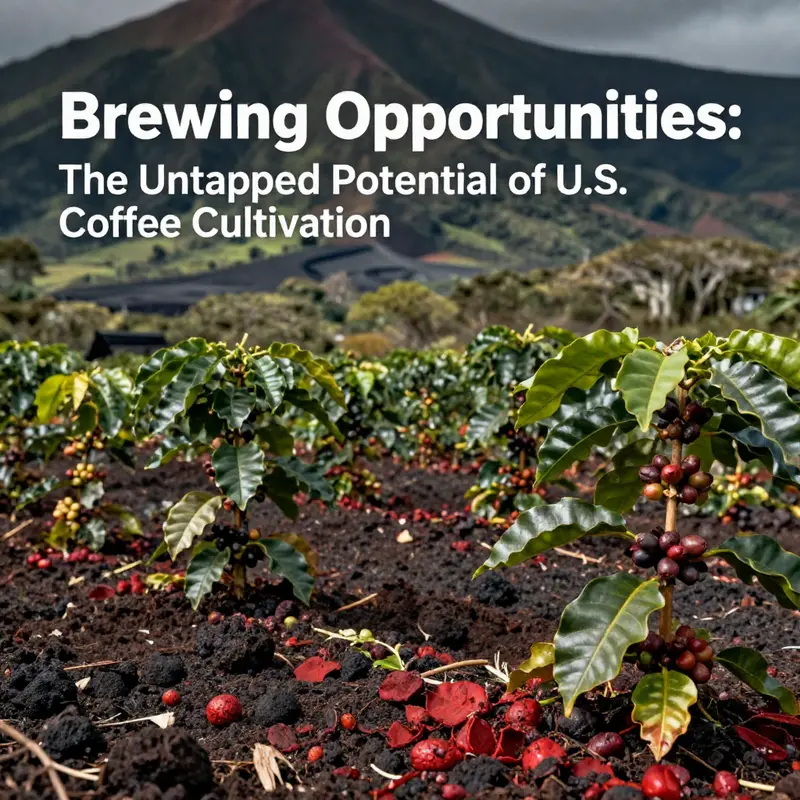
In the United States, coffee grows as a mosaic of microclimates rather than a single broad belt. Hawaii anchors the story with volcanic soils and elevated farms that slow maturation and concentrate aroma. Kona, perched on the Big Island, blends mineral-rich soil with cool nights to yield beans noted for balance and clarity. Across Kauai, Maui, and Oahu, varied elevations and shade structures produce a range of cups—from bright, floral profiles to more chocolatey, full-bodied examples. The mainland hosts experimental plots in warm coastal pockets, where growers emphasize irrigation, soil health, and frost resilience to chase consistent quality. Climate change adds both uncertainty and opportunity: shifting rainfall and warmer temperatures may expand suitable sites in some places while stressing others, underscoring the need for careful site selection and adaptive farming. In all cases, place shapes flavor, and the geography of origin remains central to how American-grown coffee is perceived by roasters and drinkers alike.
Brewing Local Prosperity: The Economic Footprint of U.S.-Grown Coffee in Hawaii and Beyond
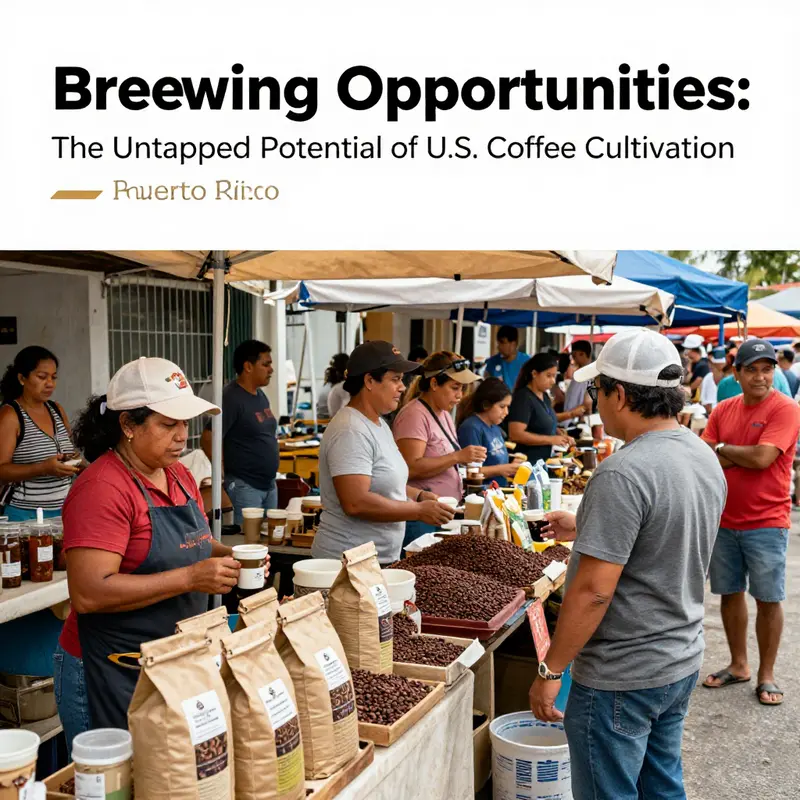
In the United States, coffee is grown in select regions that can sustain high-quality Arabica beans. The most visible landscape of U.S. production sits on Hawaii’s volcanic soil, where hillside terraces cradle coffee trees that flourish at elevations optimal for aroma and acidity. Beyond Hawaii, Puerto Rico contributes a small but meaningful share to domestic supply, and researchers and farmers are testing new frontiers in Florida and southern California. The chapter examines not just the beans themselves but the lives they touch, the communities that form around farms, and the local economies that depend on this perennial crop.
Kona coffee stands as the national showcase. Its designation as a Protected Designation of Origin, under U.S. law, protects the name and anchors a premium price in the market. This quality branding is more than marketing; it translates into real economic energy for rural communities. Farms here tend to be family-run, with generations applying careful cultivation practices, soil stewardship, and meticulous harvesting. Workers find stable seasonal employment during the harvest window, and small processing facilities sustain additional jobs in milling, sorting, and packaging. The entire supply chain—from farm gate to tasting room—becomes a micro-economy capable of supporting local schools, merchants, and service providers during peak seasons.
The economic contributions extend beyond direct employment. Agritourism is a defining feature of Kona and similar coffee-rich regions. Visitors come for guided farm tours, coffee-picking experiences, and on-site roasteries where beans reach departing customers fresh from the roaster. Tasting events and coffee festivals draw travelers who might stay in local bed-and-breakfasts, dine at neighborhood eateries, and buy souvenirs, little driven entirely by the coffee itself and the stories that surround it. In this way, a single harvest reshapes the calendar in ways that ripple through family incomes, school fundraisers, and the local tax base. The premium price commanded by high-grade coffees also supports farm-level investments—new shade canopies that protect soils, improved irrigation systems that conserve water, and training programs that raise productivity without compromising flavor.
The economic contributions extend beyond direct employment. Agritourism is a defining feature of Kona and similar coffee-rich regions. Visitors come for guided farm tours, coffee-picking experiences, and on-site roasteries where beans reach departing customers fresh from the roaster. Tasting events and coffee festivals draw travelers who might stay in local bed-and-breakfasts, dine at neighborhood eateries, and buy souvenirs, little driven entirely by the coffee itself and the stories that surround it. In this way, a single harvest reshapes the calendar in ways that ripple through family incomes, school fundraisers, and the local tax base. The premium price commanded by high-grade coffees also supports farm-level investments—new shade canopies that protect soils, improved irrigation systems that conserve water, and training programs that raise productivity without compromising flavor.
Sustainability and quality are inseparable in the U.S. approach to coffee. Many Kona farms incorporate shade-grown practices that foster biodiversity while moderating temperatures and reducing disease pressure. The emphasis on ethical sourcing—clear, transparent relationships with buyers, and short supply chains—creates reliability that helps farmers plan for the long term. Because premium coffees can fetch a higher price in domestic and international markets, there is an incentive to invest in quality from the first bud break to the final grind. The result is a virtuous cycle: better agronomic practices lead to better cup profiles, which in turn command stronger price points, enabling farmers to maintain soil health and water stewardship for future harvests.
The climate conversation adds another layer. Temperature rises and shifting rainfall patterns threaten the delicate balance that makes Kona coffee possible. Farms are experimenting with modular shade canopies, drought-tolerant varietals, and micro-irrigation to preserve consistency in flavor and yield. These adaptations require capital and knowledge, often supported by extension services and cooperative networks that link farmers to researchers and markets. The aim is not simply to survive warming trends but to embrace strategic diversification that can cushion rural economies against volatility in any single crop cycle. In this sense, economic resilience and environmental stewardship grow together, reinforcing the appeal of U.S.-grown coffee to discerning consumers who prize both taste and responsibility.
Puerto Rico’s hillside estates add texture to the national story. Here, smallholders cultivate varieties like Caturra and Typica on terraced slopes, often with family labor that has sustained communities for generations. While production volumes are far smaller than Hawaii’s, the unique microclimates and the island’s hospitality industry create niche markets for Puerto Rican coffee in domestic and export roasters who prize distinct acidity and aroma. Encouraged by cooperative models and direct-market arrangements, some farms diversify into on-site visits, boutique roasting, and educational programming that helps younger residents see agriculture as a viable livelihood rather than a fading memory of the old sugar era. The island’s coffee economy thus complements rather than competes with Hawaii’s, contributing to a balanced national tapestry of specialty offerings.
Still, the U.S. scene remains modest in scale compared with leading producers around the world. This modesty is not a weakness but a signal of a market tuned to specialty—where quality, provenance, and story matter more than sheer volume. The domestic focus on premium, traceable coffee strengthens regional economies by rewarding careful farming, local processing, and direct-to-consumer channels. It also invites experimentation. Agricultural research, climate adaptation, and investment in perennial crops are being tested in Florida and parts of southern California, where farmers explore shade management, microclimates, and pest control that could someday support larger plantings. Those trials are guided by the knowledge that any expansion must respect water resources, energy use, and the cultural character of rural communities that have formed around coffee.
Policy and programmatic support from federal and state agencies help this delicate balance. While large-scale production remains limited here, government programs that assist specialty crops, provide technical assistance, and foster marketing initiatives help growers access markets, reduce risk, and invest in the social infrastructure that keeps farms viable. The economic impact is felt not just at harvest but in the year-round work of maintenance crews, soil testers, truckers, roasters, and retailers whose livelihoods are tied to coffee as a local asset rather than a distant export commodity. In such ecosystems, the worth of a well-tended plot of land extends beyond yield; it becomes the anchor of family stability, school partnerships, and community pride.
The story is complex and layered. It is not only about beans but about the social and economic fabric they support. The Kona PDO designation preserves a geographic heritage that gives producers leverage in a crowded market, while the broader U.S. approach to coffee emphasizes the narrative of craft, sustainability, and local resilience. The result is a landscape where coffee is grown not merely to fill cups but to nurture communities—where farm gates open to visitors, where processing facilities hire neighbors, and where the aroma of freshly roasted beans travels through town like a quiet invitation to participate in a shared enterprise. In rural Hawaii and in the island communities that accompany it, coffee farming is more than agriculture; it is a system of relationships that sustains schools, clinics, and cultural life as much as it sustains livelihoods.
As consumers, we encounter this economic tapestry whenever we pick up a bag labeled with origin and story. The price we pay for a cup of local-origin brew can reflect a chain of decisions—from soil health and manure management to fair labor practices and on-site tasting rooms that host visitors who want to understand where their drink begins. The price signals more than cafeteria flavor; it signals a commitment to place, to people, and to long-term stewardship that keeps rural economies viable. The Kona experience—its PDO protection, its blend of tradition and innovation, its farm-to-table hospitality ethos—offers a chorus of voices about how a small-scale agricultural sector can be deeply integrated into local economies. Whether a visitor attends a farm tour, a coffee cupping, or a seasonal harvest festival, they participate in a living economy that teaches value, patience, and pride. Even as new regions test the limits of heat and rainfall, the conversation remains grounded in the real people who nurture the land and the communities that benefit from their dedication.
For official data and broader context, see the U.S. Department of Agriculture resources: https://www.usda.gov/
From Kona to Homegrown: Tracing the Varieties and Quality of American-Grown Coffee
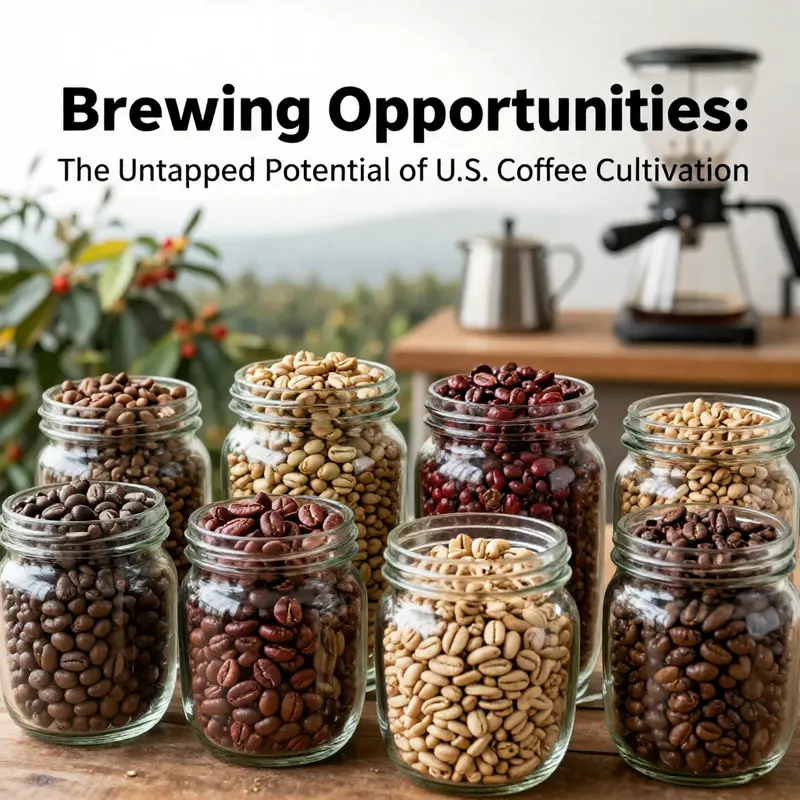
Coffee beans grow where the climate offers the right balance of heat, sun, rain, and soil. In the United States, that balance is found in pockets of Hawaii, with Kona on the Big Island standing as the most famous example, and in smaller efforts on other islands and in limited mainland experiments. The result is a narrative of specialty coffee rather than volume, a story built on terroir, careful farming, and a dedication to quality that resonates with growers, roasters, and drinkers who chase distinctive flavors. Yet this narrative is not a single arc. It weaves together a long history of agricultural experimentation and climate adaptation, a present-day focus on small-scale farms and micro-lots, and a future that contemplates sustainability and climate resilience. To understand what it means to have coffee grown in the United States, one must first understand the geography that makes it possible, then meet the people who grow it, and finally taste the varieties that emerge when careful cultivation meets a particular place.
Hawaii anchors the story. The Kona coffee that bears its name is not merely a product but a reputation—an emblem of what can be achieved when soil and sky align with patient cultivation. The hillsides around the volcanic slopes of Hualalai and Mauna Loa provide volcanic soil that is deeply mineral and well-drained. The elevation on these slopes sits within a range that allows the beans to mature slowly, a critical factor in developing the complex sweetness and layered aromatics for which Kona beans are celebrated. Coffee here is largely Arabica, a species that tends toward the delicate and nuanced rather than the bold intensity of Robusta. The picking is frequently done by hand, a labor-intensive practice that preserves the ripest cherries and minimizes defects before processing begins. The result is a bean that can carry notes of chocolate and fruit, with a smooth, refined finish that many describe as clean and balanced. The sensory profile is not accidental; it is the outcome of a sustained attention to hillside microclimates, consistent rainfall patterns, and a tradition of meticulous post-harvest handling.
Outside Kona, Maui has emerged as another frontier within Hawaii, offering its own micro-regions and experimental plots. Maui’s elevation bands and coastal influences can create slightly different flavor signatures from Kona, but the overarching lesson remains the same: in Hawaii, small-scale cultivation paired with careful processing can yield beans with distinctive character that command premium prices in specialty markets. The focus on quality over mass production is a through-line that characterizes much of domestic coffee grown in the United States. Puerto Rico and the U.S. Virgin Islands have contributed to this broader story as well, adding their own regional expressions to the domestic portfolio. Each location has a climate niche that influences maturation, bean density, and aroma, and each niche invites a different cupping profile that roasters and cafes celebrate as a national richness rather than a single national flavor.
The United States is not a global powerhouse of coffee production in the way Brazil or Colombia is. Its domestic footprint remains relatively small when measured against those giants, and that scale is by design. The American market for coffee grown at home leans toward specialty, with farms that emphasize traceability, hand-crafted processing, and small-batch roasting. This focus supports local economies and creates intimate connections among growers, roasters, and consumers. It also means the domestic supply chain, though thinner, can be more resilient to certain kinds of shocks because it relies on tightly knit networks of growers, processors, and roasters who know their farms, their beans, and their markets intimately. The taste of American-grown coffee, therefore, is as much about the system that supports it as it is about the beans themselves. What the system asks of a grower is precision in planting, pruning, harvest timing, and post-harvest handling; what it offers in return is a reward—the opportunity to claim a distinctive origin and to price that origin based on demonstrated quality.
Beyond Hawaii, the mainland and other territories are experimenting with how far climate and soil conditions can be coaxed toward coffee production. The research and practice in controlled environments—greenhouses on the mainland, shaded cultivation, and micro-regional testing—point to a future where more places may contribute to domestic coffee varieties. These ventures, while not yet large-scale, reflect a broader willingness to explore sustainability and adaptation. They emphasize responsible stewardship of water resources, soil health, and biodiversity, all of which become core values in a market that is increasingly aware of climate pressures on flavor and yield. In these spaces, growers often pursue specialty-grade beans that are judged not only by cup quality but by considerations of ethical labor practices, local environmental impact, and the long-term viability of smallholdings. This is not a footnote to Kona; it is a growing chorus that suggests American-grown coffee can diversify in flavor profiles as it diversifies in geography.
The flavors that emerge from American-grown coffee tend to reflect a broader spectrum of climate-driven nuance. Kona is the archetype—smooth, with a gentle sweetness and a subtle chocolate-fruit spectrum. The best lots can present clear aromatics and a clean finish that invites a lingering aftertaste of warm spice or roasted cocoa. In Maui and other Hawaiian plots, the range broadens; varietal differences and processing choices can tilt the cup toward brighter citrus notes, stone fruit, or delicate florals, while still maintaining the overarching balance that characterizes high-quality Arabica. In emerging mainland experiments, roasters often highlight the novelty of terroir-driven profiles, where climate-controlled cultivation aims to preserve brightness, avoid overripe flavors, and sustain consistent acidity. The result is not a single American flavor profile but a constellation of profiles that can be traced back to place, practice, and purpose.
One important thread in this narrative is the continuous emphasis on quality and authenticity. In Kona, the control of harvest timing, the purity of processing streams, and the maintenance of farm-level traceability help to safeguard the reputation of the region. The label on a bag of Kona beans carries expectations: that the beans come from a specific hillside, that they have been harvested at peak ripeness, and that they have been carefully dried and stored to preserve aroma. When a coffee is marketed as a Kona blend, that blend may draw on multiple lots, but the consumer interest remains anchored in the possibility of a true origin story and a consistent sensory experience. Producers and traders alike are mindful of the tension between maintaining a premium price for origin-specific beans and offering blends that can provide balance and accessibility without diluting the identity of the premium lots.
This careful attention to origin, processing, and sensory evaluation also translates into a broader cultural and economic effect. Local economies benefit when small farms can sustain their operations through specialty markets. Tourists and coffee enthusiasts are drawn to the prospect of visiting farms, tasting cuppings, and learning about terroir in real time. The educational value of these experiences extends beyond the tasting room; it informs how producers plan and how consumers choose. In communities where coffee is grown, the story of the bean becomes an opportunity to discuss soil health, water use, climate adaptation, and the social responsibilities of farming. It is a narrative that invites more people to see coffee not simply as a commodity but as a product of place, labor, and expertise.
As the domestic scene evolves, the public conversation about American-grown coffee often intersects with questions of sustainability and resilience. The geographic realities of the United States—from volcanic soils to subtropical climates—pose both opportunities and limits. Growers who succeed in Hawaii have learned to work within narrow climatic margins, refining their approaches to irrigation, shade management, and pest control. Those experimenting in Florida or California pursue different pathways, such as optimizing microclimates or harnessing innovations in agricultural technology, to push the envelope of what is feasible in a domestic setting. The challenge remains balancing flavor, yield, and cost while preserving the social and ecological commitments that many readers value. In this sense, American-grown coffee embodies a broader promise: that the United States can contribute meaningful, high-quality coffee beyond the well-established export markets, not by competing on volume but by elevating the craft of small-batch, terroir-inspired production.
For readers who are curious about the flavor landscape and the practical realities behind the cup, there is a growing body of resources that map regional expressions and trace the journey from farm to cup. The landscape, while intimate, is also a web of relationships—between grower and roaster, between hillside and drying yard, between the cupping table and the consumer’s palate. The flavor stories are anchored in place, but they travel through markets that value transparency and storytelling. In the end, what it means for coffee beans to be grown in the United States rests on two pillars: the promise of high quality and the sincerity of the agricultural economy that supports it. Kona remains the beacon, signaling what can be achieved with soil that has borne witness to centuries of volcanic activity and with hands that tend the trees with patience and care. Yet the broader American landscape—its emerging micro-lots, its experimental mainland plots, and its commitment to sustainability—offers a richer, more diverse chorus of flavors that deserve a place alongside the celebrated Kona profile.
External resource: TasteAtlas highlights regional varieties and profiles that help readers contextualize the American flavor map: https://www.tasteatlas.com/articles/16-best-coffee-beans-in-north-america
Quiet Beans, Bold Horizons: The U.S. Coffee Frontier in Climate Change and Experimental Cultivation
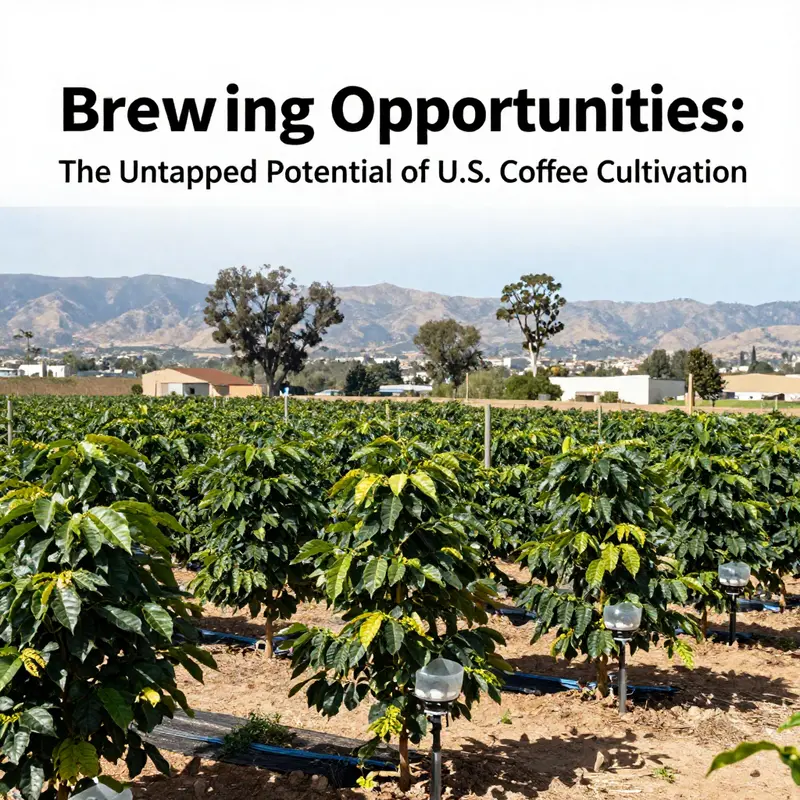
The United States has carved out a modest but meaningful place in the world of coffee, a place that sits somewhere between historical novelty and genuine specialty cultivation. In reality, coffee beans are grown here, but on a scale that speaks more to niche markets, regional pride, and experiments in climate resilience than to mass production. The best-known symbol of domestic coffee is Hawaii, with Kona coffee often standing in for what American-grown beans can achieve when grown in precise places under exacting conditions. Kona’s reputation rests on a combination of volcanic soil, elevation, and a climate that minimizes the risk of frost while maximizing steady moisture and a long growing season. That combination yields beans with a particular balance—smooth, nuanced, and aromatic enough to be described as distinctly “American-grown” in the global specialty ladder. Yet Kona exists within a broader landscape that also includes the subtler, sunnier soils of the Southeastern coast and the island territories that fall within the United States, like Puerto Rico, where warm weather and consistent rainfall can sustain plantings that remind us coffee can be more than a distant commodity—it can become a local craft, a cultural engine, and a line of connection between farmer and consumer.
What today looks like in the United States is a mosaic rather than a single, uniform crop. Hawaii remains the anchor of domestic production, not because the U.S. grows coffee everywhere, but because its climate, altitude, and soil have proven capable of supporting high-quality Arabica beans that compete on the world stage for aroma, body, and flavor. The Kona variety, in particular, has become a standard by which many Americans assess the domestic coffee narrative: a crop that grows in a limited belt of the Big Island, harvested with careful attention to microclimates, and celebrated for a dependable, if seasonal, yield of beans that can command premium prices in specialty markets. The Kona phenomenon illustrates both the potential and the limits of U.S. cultivation—the potential to produce world-class coffee in a nation not typically associated with large-scale coffee farming, and the limits imposed by geography, climate, and the economics of scale.
Beyond Hawaii, the U.S. presence in coffee is more modest, yet real enough to affect local economies and seed curiosity in other regions. In the Southeastern states, there are pockets of activity in Florida and, as a U.S. territory, Puerto Rico, where warmth and humidity combine with longer growing seasons to enable experimental plantings and smallholder farms. These areas are not yet set against the same options as Hawaii, where altitude and volcanic soil offer a nearly ideal combination for high-quality Arabica. Still, they matter. They represent a national interest in seeing whether climate, soil management, and innovative cultivation practices can coax coffee plants to thrive in climates that previously seemed too hot, too wet, or too devoid of the microclimate nuances that Arabica typically requires. The conversation here is less about replacing traditional producers and more about diversifying the U.S. agricultural landscape, building resilient food systems, and exploring the possibilities of a domestically sourced beverage in markets hungry for provenance and locality.
If we step back to the larger climate story that frames these domestic efforts, the picture grows more complex. Climate change is not a distant specter for farmers; it is a tangible, immediate constraint that reshapes decisions about where beans can be grown. A leading line of inquiry, as highlighted by climate researchers like YakeClimate, suggests that nearly half of the farmland currently suitable for growing coffee could be lost by 2050 as climate zones shift and water resources become scarcer. That projection does not erase the romance of growing coffee in the United States, but it does force a sober reckoning with risk, investment, and the pace at which adaptation must occur. It also reframes experimentation not as a sideline activity but as a necessary component of national agricultural strategy, a way to understand whether the U.S. can extend the geographic envelope of coffee production without compromising quality or sustainability.
In this context, experimental cultivation becomes a narrative of resilience. California, traditionally associated with wine, has started to test climate-adaptive farming techniques that might, in some scenarios, allow coffee to germinate and mature in more temperate southern locales. These experiments are not simply about pushing a crop into places where it does not belong; they are about testing refined cultural practices, including shade management, soil moisture retention, and precise irrigation scheduling that respects water limits while providing the plant with a steady rhythm of hydration. The northern areas, too, are part of this exploration, where less predictable temperature swings and shorter growing seasons challenge growers to rethink varietal choices, harvest windows, and post-harvest handling. The aim is not to pretend that a new belt of coffee will replace traditional production in the tropics, but to understand what an enhanced domestic production system could look like—one in which the United States can contribute to a diversified supply chain that emphasizes sustainability, local economies, and geographic redundancy against global disruptions.
The practical implications of these experiments extend beyond the field. They touch on water management, pest control, and soil health, all of which become critical when climate metrics shift. Shade-grown strategies, for example, can moderate microclimates within plantations, reducing evapotranspiration and creating a buffer against heat spikes. Well-managed shade can also preserve soil structure, promote beneficial biodiversity, and lower the likelihood of erosion on sloped terrain. These practices, when paired with careful cultivar selection and staggered harvest plans, can help ensure a steadier supply, even as the climate rewrites the rules for what kinds of crops can thrive in a given location. Yet the reality remains that domestic coffee farming is labor-intensive and capital intensive, particularly when the goal is to produce beans with the high sensory profiles demanded by specialty markets. In this sense, the U.S. coffee frontier mirrors other efforts to domesticate a crop that has historically proven more amenable to other climates: the work is ongoing, iterative, and deeply tied to place.
An important thread in this discussion is the social and economic texture of domestic cultivation. In areas where coffee is grown, farms tend to be smaller, intimately connected to local communities, and structurally different from the industrial-scale plantations that dominate much of the global supply chain. For these communities, even incremental improvements in yield stability or quality can translate into improved livelihoods, school funding, and local infrastructure. The domestic market for coffee bought and roasted close to home also carries symbolic weight. It signals a belief in local production and a desire for transparency about origin. The enthusiasm around domestic coffee is not merely about flavor; it is about regional identity, the story of a crop as it adapts to new climates, and a commitment to sustainable farming where water, soil, and labor standards can be monitored more directly by concerned consumers. In this sense, experimental cultivation acts as both a technical project and a cultural moment—a way to reimagine agricultural possibility while honoring the heritage of a crop that, for many Americans, tastes like a morning ritual and a moment of reflection.
The expectations around future production must be tempered with realism. Climate data and local conditions suggest that any expansion in the United States will be incremental and cautious, built on small successes that can be replicated or scaled with care. The Kona model provides a blueprint in one sense: it demonstrates what high-quality product looks like when grown under carefully managed conditions, but it also underscores the geographic limits of that model. Florida and Puerto Rico present a different set of opportunities and challenges, often shaped by humidity, disease pressure, and soil dynamics that require tailored management strategies. In California and the northern experiments, the emphasis shifts toward adaptability—finding ways to coax coffee to flourish where the climate is becoming less forgiving. Across all these efforts, the thread that holds them together is a shared commitment to learning. Each trial, whether it yields a marketable harvest or serves as a data point toward understanding plant resilience, adds to a growing body of knowledge about what is possible within a U.S. agricultural framework.
As this chapter threads through climate adjustment, regional variation, and experimental cultivation, it also invites readers to consider the broader implications for research, policy, and consumer expectations. The U.S. coffee narrative is not about replacing the classic coffee-growing nations but about cultivating a complementary path—one that respects the ecological limits of American land, acknowledges the realities of climate volatility, and celebrates the ingenuity of farmers who pursue better water use, soil health, and microclimate management. The conversations around future prospects are as much about sustainability and resilience as they are about taste and aroma. They invite a broader public to contemplate what it means to grow a bean that begins its journey on a patch of Earth that is, in some places, volcanic and steep, in others, flat and sun-soaked, and in still others, a little too warm for comfort. The result is a nuanced tapestry, where success is measured not by hectares harvested or the speed of expansion, but by the degree to which a crop can be coaxed to thrive in harmony with changing weather, with water availability, and with the communities that cultivate it.
For readers who want to situate these developments within a wider global trend, climate-focused analyses provide essential context. They remind us that the United States is not isolated from the shifts battering farming systems worldwide. The same climate signals that press on U.S. farms also pose challenges to traditional coffee belts in other parts of the world, making the question of adaptation a global one with local expressions. In this light, the U.S. experiments become part of a larger conversation about how humanity can approach crop production with greater precision, environmental stewardship, and cultural sensitivity. They reflect a growing conviction that the future of food and drink rests on our capacity to innovate without sacrificing flavor, sustainability, or regional character. The pursuit of domestic coffee is thus as much about identity and locality as it is about the beans themselves, embodying a delicate balance between passion for a beloved beverage and responsibility toward the land that nourishes it.
Ultimately, the question of whether coffee beans will be grown in larger swaths across the United States remains unsettled. The best-supported conclusion at present is that small, targeted, and highly managed experimental cultivation will continue to expand in select regions. If climate adaptation technologies advance and water management becomes more efficient, a broader, more resilient domestic coffee scene could emerge. But even in the near term, the U.S. coffee narrative already shows how a country with diverse climates can offer a laboratory for cultivation that blends artisan craft with scientific inquiry. It is a story rooted in place—volcanic soils and high elevations in Hawaii, warm and humid terrains in the Southeast, and the testing ground of California and northern locales where researchers and farmers collaborate to reimagine what a cup of coffee can tell us about resilience, locality, and the human capacity to grow what we crave in a changing world.
External resource for further reading on climate-driven shifts in U.S. coffee cultivation: https://www.yakeclimate.com/coffee-cultivation-regions-in-the-united-states
Final thoughts
The cultivation of coffee beans in the U.S. is more than a niche; it’s a microcosm of opportunity for business owners in the coffee industry. With the $4 billion specialty coffee market thriving, understanding domestic production can empower businesses to tap into local resources, promote unique products, and connect with consumers eager for quality. As climate challenges evolve and new technologies emerge in coffee cultivation, the potential for U.S. coffee production continues to grow. This landscape presents a compelling avenue for investment and innovation, ensuring that U.S.-grown coffee remains a critical player in the global market.