

Coffee is more than just a beverage; it’s an essential part of many businesses, fueling productivity and creativity. The number of coffee beans per cup is a vital consideration for business owners looking to serve the perfect brew to their customers. Understanding this aspect can enhance customer satisfaction, optimize costs, and may even elevate your brand’s reputation. In this exploration, we will break down the essentials, starting with the basic principles of coffee bean usage, then delving into how various brewing methods influence bean quantity. We will also assess the impact of bean size and roast level, before providing practical tips for accurate measurement, ensuring you serve the perfect cup.
Counting Beans, Crafting Flavor: A Practical Guide to How Many Coffee Beans Per Cup
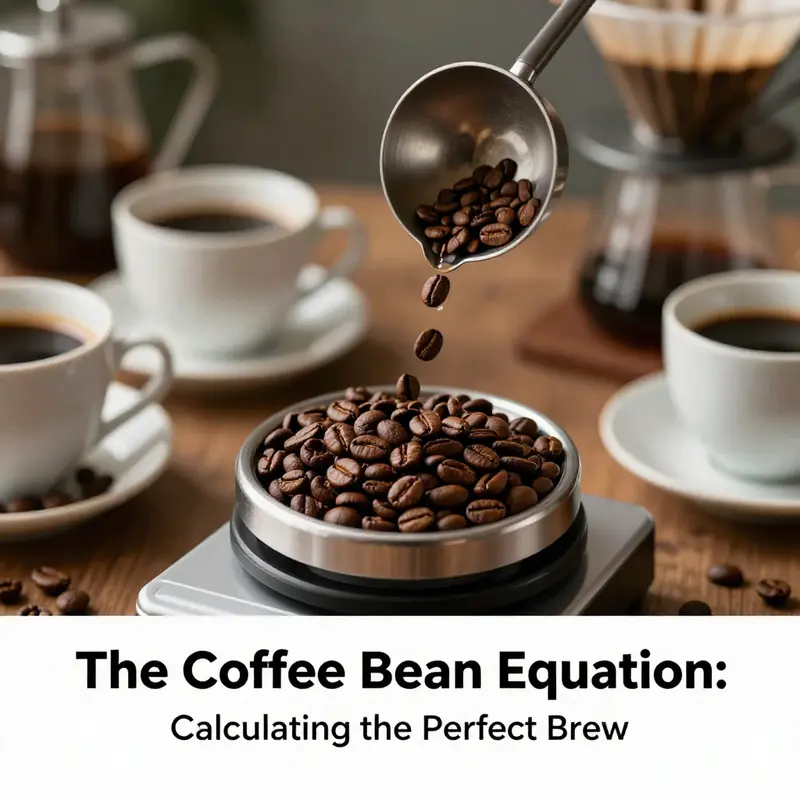
Every cup of coffee begins with a question that seems simple, yet it opens a world of nuance: how many beans should you use per cup? The short answer is that there isn’t a universal number. The quantity depends on a braid of variables—brewing method, bean size and density, roast level, and, not least, your taste for strength. In practice, most home brewers start with a weight-based approach rather than counting whole beans. When you shift the focus from counting beans to weighing coffee, you invite a level of precision that translates into consistency from one morning to the next. Still, understanding the rough counts behind those weights can be instructive. It helps you picture what’s happening in the kettle, the patience you invest in grinding, and the way your cup can swing from bright and delicate to bold and heavy with small adjustments. This chapter uses a few widely cited benchmarks as a map, not a rule book, and it emphasizes the idea that your palate should be the final arbitrator. If you ever want a precise, reproducible result, weigh the coffee, then tune water to taste. The bean count will then emerge as a curious footnote rather than a rigid standard, a reminder of the physics behind your brew rather than a stubborn dictate carved in stone.
The most common baseline many home brewers rely on for a standard eight-ounce cup (roughly 240 milliliters) is a small mass of ground coffee—about 14 to 16 grams. That weight aligns with the classic “coffee to water” guideline of roughly 1:15 to 1:18. In other words, for every 1 gram of coffee, you should aim for about 15 to 18 grams of water. Applied to a single eight-ounce cup, that translates to about 240 grams of water and 14 to 16 grams of coffee. But here is where the math meets reality in a most human way: if you try to count the beans instead of weighing the coffee, the numbers shift with every batch of beans you pick. Depending on the bean, the roast, and the origin, the same 14 to 16 grams of ground coffee could contain a wide range of whole-bean counts. Some sources estimate roughly 70 to 80 beans for that 14–16-gram dose, while others, using different assumptions about bean size, density, and moisture, arrive at markedly higher counts. The actual count can swing because one bean can weigh quite a lot more or less than another, even within the same roast level. What matters most in the end is the final weight of the grounds and how the brew tastes after extraction, not the number of beans in the bag you started with.
There is a practical thread that runs through these numbers: you should expect variability. The size and density of a bean are not fixed. A lighter roast often changes the volume and density, sometimes making beans appear larger but weighing more per bean, while a darker roast loses moisture and mass, making each bean lighter. Those changes don’t just alter the aroma and flavor; they alter the math of bean counts too. In other words, a cup that tastes bright and clean may have slightly more beans by count but less weight per bean, while a cup with a heavier body might involve fewer beans by count yet more mass per bean. This is why relying on weight is a sturdier compass than counting alone. When you grind by weight, you’re anchoring the brew to a stable quantity that translates reliably across batches and equipment, even when the roast or origin changes.
For those who like to connect the numbers to the everyday ritual, thinking in terms of grams can be a more faithful mirror of your day-to-day routine. A common home-brewing scenario uses a scale to measure coffee and water. If you aim for a 1:15 ratio, 16 grams of coffee for 240 grams of water is a typical starting point for many pour-over and drip brews. If you switch to a 1:18 ratio, you’re looking at about 13 grams of coffee for the same eight-ounce cup. Those small tweaks can subtly shift the perceived strength and the balance of flavors. It helps to remember that the strength you perceive is not just a function of grind size or the amount of coffee; it’s also a reflection of extraction time, grind freshness, and water temperature. The bean count, in turn, is a rough proxy for the density and volume of your grounds before they meet the water. Once you accept that proxy’s roughness, you gain permission to experiment with taste rather than fight the numbers.
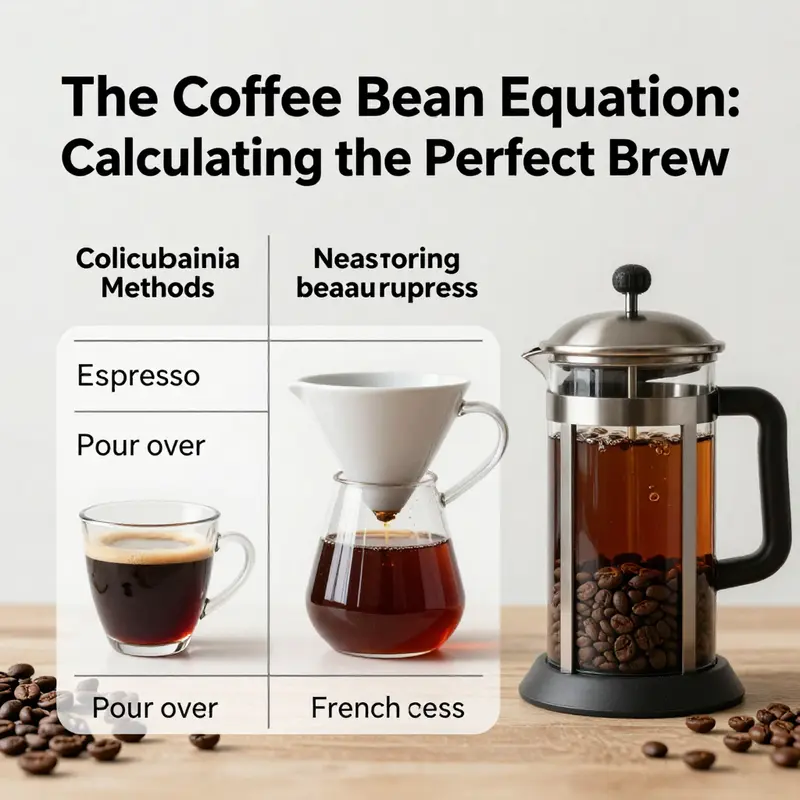
As a result, a practical way to think about eight-ounce cups is this: weigh your coffee for the default method you use most often, then adjust by taste. If you’re using a French press, the visual cue of 1 to 2 tablespoons of grounds per eight ounces is a helpful starting point, but those tablespoons are not a fixed legal measure. They translate differently depending on grind size and how compactly you scoop. Some baristas count this amount in terms of grams as well—rather than relying on tablespoons—to keep the brew consistent across days and different devices. For a French press with a medium grind, 1 to 2 heaped tablespoons is often about 5 to 10 grams of coffee. That may align approximately with 50 to 70 beans by count if you were to count them before grinding. But again, the exact bean count will vary with the bean’s density and size. The key takeaway is to use the weight as your anchor, then let the number of beans be an optional curiosity, not a controlling factor.
If you pull toward espresso, the numbers diverge again, but the same philosophy holds. An espresso shot—roughly one ounce (about 30 milliliters)—usually requires about 7 to 9 grams of coffee, which translates to roughly 35 to 45 beans for many routine blends. The espresso world, with its tight extraction windows and high pressure, makes precision particularly critical. In this context, counting beans can feel almost academic, because the density and roast level combine with grind size and tamp pressure to create a precise extraction profile. Still, the idea remains: weight-based dosing is the backbone of consistent espresso. The bean count, while interesting to observe, should not replace a careful measurement of grounds by weight.
Pour-over and drip methods sit somewhere in the middle of this spectrum. A typical 12-ounce (360-milliliter) pour-over might call for around 18 to 20 grams of ground coffee, which, in many cases, translates to roughly 90 to 120 beans if you counted them before grinding. Those numbers can surprise people who expect a neat, round figure for beans per cup. In practice, this is another illustration of why beans-per-cup counts are less reliable as universal rules. The actual coffee-to-water ratio, the grind consistency, and the water temperature all influence extraction. A slight adjustment in grind size or pouring cadence can alter the eventual taste dramatically even if the weight remains constant. This is the reason many coffee teachers and enthusiasts emphasize the ritual of weighing rather than counting; the beans are the raw material, but the weight is the translator between the coffee’s potential and the cup’s realized flavor.
The broader lesson, across methods, is simple. If you want a predictable, repeatable cup, weigh your coffee and calibrate your water. Use the 1:15 to 1:18 range as a starting compass. Texture and mouthfeel are nourished by grind size and the time water spends with the grounds, not by a precise bean-count per cup. The bean count should be viewed as a rough guide that hints at density, roast effects, and the practicalities of your chosen method. It’s useful for beginners who want to understand what a handful of beans represents and for curious cooks who enjoy counting as a game in the kitchen. But it’s not a substitute for precise dosing. And as taste develops, you’ll likely drift away from any counting exercise altogether, letting the weight-based discipline lead your palate toward a more personal and reproducible brew.
To assist in grounding these ideas, consider one final thought: while counting beans can be a delightful educational exercise, the most important habit in coffee making is consistency. If you embrace a scale and a stable ratio, your morning cup becomes less about a perfect number of beans and more about a reliable flavor profile you can replicate. You may still notice subtle differences between beans, roasts, and even harvests, but those fluctuations become manageable, predictable variations rather than wild swings. You can then experiment with slight adjustments—perhaps a touch finer grind for a brighter cup, or a hair more coffee for a richer body—without losing track of a framework that guarantees a satisfying result time after time.
For readers who want a concise reference to cross-check when you’re away from your scales, here is a practical set of ballpark figures. For an eight-ounce cup of standard drip or pour-over coffee, about 14 to 16 grams of ground coffee is a good starting point. That mass often corresponds to roughly 70 to 80 beans, though this bean-count range can widen or narrow based on bean size and roast density. If you’re using a French press and can only estimate by volume, 1 to 2 tablespoons of grounds per eight ounces of water roughly lands in the 50 to 70-bean vicinity when counted before grinding. For espresso, anticipate about 7 to 9 grams per shot, or approximately 35 to 45 beans. If you’re aiming for a 12-ounce pour, 18 to 20 grams of coffee is a standard starting point, typically yielding around 90 to 120 beans in pre-ground counts. Yet the anchor remains, always, the weight. Let the scale be your steady compass, and the bean count will follow as a flexible, informative curiosity rather than a dictate.
In sum, the journey from bean to cup is most faithfully navigated through weight and timing, not by counting beans alone. Beans tell a story about density, roast, and origin; weight tells a story about extraction and consistency. When you treat weight as the backbone of your recipe, you give yourself the freedom to explore the vast landscape of coffee with curiosity and confidence. And if you ever feel compelled to tally beans for the sake of curiosity alone, you’ll find that the numbers offer more insight when viewed through the lens of weight and flavor, not as rigid rules.
External resource: https://www.coffeegeek.com/coffee-beans-per-cup
null
null
Counting Beans, Not Just Grams: How Bean Size and Roast Shape the Count per Cup

The question of how many coffee beans end up in a cup is easy to ask and surprisingly intricate to answer. Most home brewers, aiming for consistency, measure by weight rather than by counting whole beans. Yet the relationship between bean size, roast level, and the count that tumbles into the cup reveals a nuanced balance between physics, chemistry, and taste. In a standard eight-ounce cup, the widely cited ground-coffee guideline—about 15 to 20 grams of coffee—acts as a practical anchor. When translated into whole beans, this range becomes highly variable: roughly 450 to 800 beans per cup, depending on how those beans pack mass into space. The math looks simple on the surface but hides a set of subtleties that matter for both home brewing and the search for a more reproducible routine. Bean size and roast level are central to those subtleties, because density, volume, and extraction behavior are all tied, in one way or another, to how big a bean is and how dark the roast has roasted it to become.
Bean size brings an immediate and visible difference to the conversation. Larger beans, such as those often associated with sumatra origins, tend to have a different density and volume profile compared with smaller beans from regions like ethiopia or kenya. In practical terms, for the same weight of coffee, you will encounter fewer large beans than small ones. This means that if you measure out, say, 15 grams of larger beans, you will be holding fewer individual pieces than if you measured the same 15 grams of smaller beans. The consequence is intuitive: while the total mass that goes into the grinder or the scale stays the same, the visual and tactile count changes. For those who like to count, this matters; for those who depend on scales and grind settings, the impact is less direct. The core takeaway is straightforward: bean size can alter the bean-count per cup, but it does not magically alter the mass that determines extraction. The weight remains the driver of flavor and strength more than the exact number of beans.
The roast level adds a second layer of complexity because it reconfigures density and volume. Roasting transforms beans from their green origin by driving off moisture and altering cellular structure. As a result, roasted beans lose mass and expand in volume. The density of the bean shifts with the roast level: lighter roasts tend to retain more moisture and can be denser, while darker roasts expand more and become lighter per unit mass. In the literature, the relationship between density and bean count per gram becomes intricate. Some discussions suggest that lighter roasts can be denser, implying more beans per gram in a fixed weight, whereas other observations emphasize that dark roasts, by virtue of greater expansion, occupy more space per gram and can be rendered with more volume than their lighter counterparts. A practical way to view this is to recognize that per gram, a dark roast might yield more individual beans because each bean weighs less after the extra dehydration and charring. Yet because dark roasts also expand, the total number of beans per given cup can still align with lighter roasts when you fix the weight. The result is a nuanced picture: density and volume shift with roast, but the impact on the cup’s bean-count is mediated by how precisely you weigh the coffee and how you brew it.
To ground this discussion in numbers that many home brewers recognize, consider the standard eight-ounce cup again. If you prepare 15 grams of light-roast beans, and if you accept the premise that lighter roasts can be denser and yield more beans per gram, you might find yourself closer to the higher end of the bean-count range—perhaps around 600 or more beans. If you switch to a darker roast, with a lighter density and greater expansion, you may see the count per gram shift downward, potentially yielding a different total that still lands within the same general cup-range when measured by weight. The key point, again, is the weight-to-water ratio. That ratio—often framed as a 1:15 to 1:18 coffee-to-water yield by weight—remains the anchor for brewing accuracy. Whether you are chasing a fatter cup with more body or a cleaner cup with sharper clarity, the mass of coffee you start with is the decisive variable. In a typical pour-over or drip setup, the guideline of 18–20 grams for a 360-milliliter brew translates into roughly 550–800 beans in the cup, again depending on size and roast and the exact density of the batch you’re using.
The practical implications of these distinctions extend beyond curiosity. For most home brewers, bean size and roast level are secondary to the measurement technique. A kitchen scale anchors every successful brew, making the raw count of beans less critical than the total mass of ground coffee that enters the process. This is not merely a matter of convenience; it is about repeatability. When the weight aligns with the intended water-to-coffee ratio, the system has a better chance of producing a similar extraction profile across batches, even if the beans themselves come from different lots or destinations. In other words, while a given bag of beans might vary in size, you can still achieve a stable cup by controlling what you control most reliably: the mass of coffee and the water that greets it in the brewer.
That said, the chapter’s central insight—how many beans per cup—gains texture when we look at the physical differences that shape density and volume. Sumatra Mandheling, as an example, often yields larger beans with a different density profile than many African or Central American varieties. This size difference contributes to a lower mass per bean in some cases and a higher mass per bean in others, depending on moisture retention and processing method. The practical upshot is that the same gram amount of coffee will produce a different count of beans, even while it yields a similar weight in ground coffee. But because home brewers rely on scales, that difference rarely translates into a visible delta in the cup’s strength or flavor. Instead, it manifests as a potential cue for adjusting grind settings or extraction time when one switches from one origin or roast level to another. A denser, lighter roast might tolerate a slightly coarser grind without losing flow, while a lighter, less dense batch may demand a finer grind to achieve the same extraction balance.
The extraction dynamics themselves respond to density and porosity. Lighter roasts, being denser and sometimes more moisture-retentive, can resist water slightly more at the edge of the grind, inviting a more careful grind and pour technique to coax out sweetness and acidity. Darker roasts, with their more porous structure, allow water to traverse the bed more readily. This can mean a faster extraction and, occasionally, a need to use slightly less coffee by weight to avoid over-extraction and bitter notes. Once again, the metric wins: weigh your coffee, adjust your grind, and tailor your technique to taste. The number of beans per cup is a fascinating variable, but it tends to become an abstract curiosity once you anchor the process in weight, time, and agitation.
In practical terms, the takeaway for most readers is straightforward. Bean size and roast level matter in how many beans you might instinctively expect in a cup, but they do not derail the reliability of a weight-driven approach. A typical eight-ounce cup will land in a broad range of 450 to 800 whole beans, with the exact count hovering around that band only because every bean has its own mass, shape, and density. The more robust takeaway is this: measure by weight, not by count. If you want to compare different coffees, weigh out your dose, calibrate your grinder for the target grind size, and use a consistent brewing method. The counts will vary with origin and roast, but the strength and balance will be governed by the scale you trust.
The broader implication, when we zoom out from the cup and consider the ritual of coffee-making, is a reminder of how physical properties translate into sensory outcomes. The density and volume of the bean influence not only how many beans you could drop into your grinder, but how the beans release their flavors under heat. Lighter roasts, with their denser but still structurally complex beans, may require adjustments in grind and contact time to coax out the intended brightness. Darker roasts, with their increased porosity, reward changes in agitation and flow, ensuring that extraction remains balanced rather than runaway. The interplay between bean size and roast level is a reminder that coffee chemistry is a chain of cause and effect. Start with weight, then observe how your grind and brew behave under heat, and you will map a more precise path to the cup you imagine, even as the count of beans in that cup remains a dynamic, variable piece of its character.
As you navigate those choices, the literature on density and extraction offers a useful caveat: the relationship between roast depth and density is not linear, and the practical effect on bean count per cup can be subtle. Deep-roasted beans can exhibit up to roughly 20 percent greater volume than their light-roast counterparts at the same weight. That disparity speaks to the way volume expands as moisture escapes and charring progresses. In such cases, the same weight translates into more space and more individual beans if the beans are lighter in mass per piece, or fewer beans if the beans are denser per piece. Either way, the cup’s character—the balance of sweetness, acidity, and body—will reflect those physical changes through the extraction dynamics rather than the raw bean count alone. The bottom line remains consistent: for precise results, weigh the coffee, adjust the grind, and brew with a steady hand. The number of beans per cup is an interesting variable, but it is not the lever that controls flavor; it is the weight, the timing, and the method that do the heavy lifting.
For readers who want a deeper dive into how roast density impacts extraction, a recent deep dive into density and extraction is a useful reference. See the external discussion that documents the nuanced ways roast depth can alter volume and dissolution behavior in the bean, which helps explain why the practical impact on cup strength remains anchored by weight rather than by the count of beans. The broader message holds true across origins: a scale and a method that respect the coffee-to-water ratio will yield consistent cups even as bean size and roast level shift the count in your hand.
External resource for further reading: https://www.seriouseats.com/roast-levels-coffee-density-extraction
Weighing the Moment: Precision, Ratios, and the Craft of a Perfect Cup
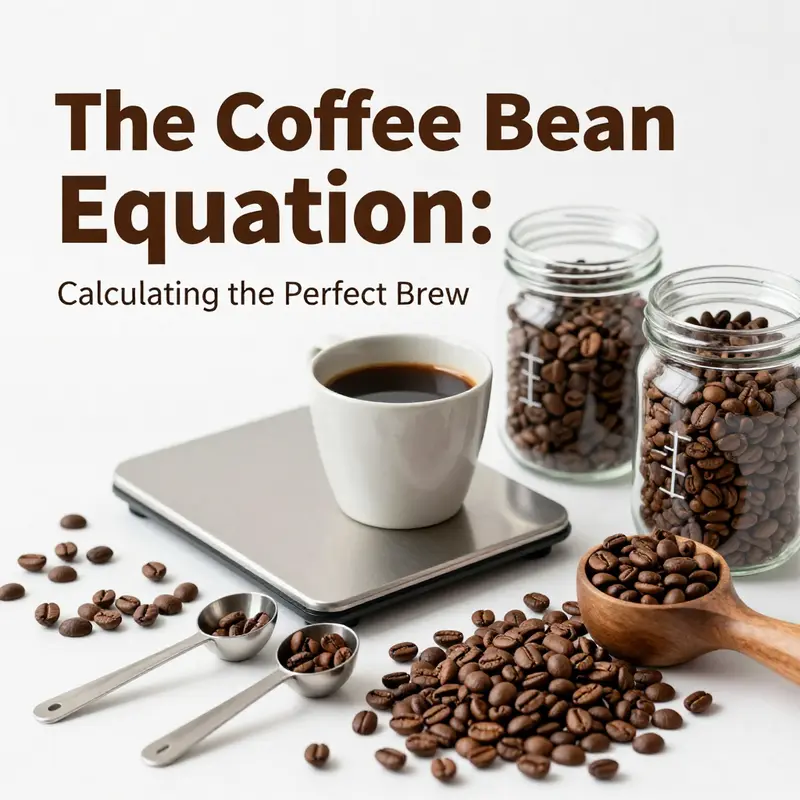
A cup of coffee is more than a flavor. It is a dialogue between beans, a scale, and water. From grind to sip, precision frames the experience. The idea that a cup’s character hinges on exact weights is not merely technical; it guides reproducible results. In this chapter we explore how many beans per cup translates into practice, and why a kitchen scale becomes a brewer’s trusted ally. When we talk about beans per cup, we are talking about measurements that translate taste into repeatable numbers. The baseline guidelines are straightforward: for an 8-ounce cup, roughly 15 to 20 grams of ground coffee. If we estimate the number of whole beans per gram, the range varies with density and size. A practical ballpark is about 30 to 40 beans per gram; a lighter roast can yield more beans per gram, a darker roast fewer. From this, a cup can range roughly 450 to 800 whole beans. The math matters because it anchors the brew: weight, not volume, is the guardrail. Measuring by weight is the simplest way to bring consistency. Scoop volumes vary due to packing, grind, and freshness. A scale removes these variables, letting you quantify both coffee and water with the same language. The tare function resets the scale to zero so only what you add counts. This small act sets the stage for a cup that tastes the same morning after morning. As you weigh your beans, you begin to establish a relationship between coffee and water that is science as art. A common starting point for pour over is a water to coffee ratio of 1:15. That means 15 g of coffee with about 225 ml of water. The ratio is a scaffold you can adjust to taste. For a brighter cup push toward 1:18; for a stronger cup, 1:12. The beauty of ratio based brewing is that it scales with your method and your equipment. The practical steps are simple: weigh the beans, tare an empty container, add until you reach the target, then measure water by weight as well. The process invites a reflective practice: note the exact bean weight, the exact water weight, and how the cup tasted. This habit builds a living table you can revise as gear and preferences evolve. In practice, small shifts in bean weight or water amount can nudge a cup from bright to velvety. The scale lets you test adjustments methodically, not by memory. The goal is not chasing a number but discovering a relationship that yields your cup. The discipline of weighing becomes the anchor for consistency, even when mornings are hurried or rituals are changing. In closing, the basic numbers—15 to 20 grams for an 8 ounce cup, and 30 to 40 beans per gram—are starting points. The journey unfolds through ratios, tasting, recording, and adjustment.
Final thoughts
Mastering the correct number of coffee beans per cup is vital for any business owner aiming to provide an exceptional coffee experience. By understanding the basics, recognizing how brewing methods and bean characteristics influence your measurements, and implementing practical strategies for accurate measurement, you can ensure that every cup meets your standards of quality. This knowledge not only enhances customer satisfaction but also fortifies your brand’s position in the competitive market of coffee consumption.