

In the competitive world of coffee, maintaining quality from roast to brew is crucial for businesses. Understanding how to effectively freeze coffee beans can extend your inventory’s shelf life, particularly beneficial for bulk purchases or light roast varieties that are more susceptible to flavor degradation. This guide will delve into optimal freezing practices, mistakes to avoid, the science behind flavor preservation, and best-storage techniques, equipping you with the knowledge to enhance your offerings. Explore how freezing coffee beans correctly can bolster your business’s reputation for quality.
Cold Storage, Fresh Flavor: Deciding When Freezing Coffee Beans Makes Sense
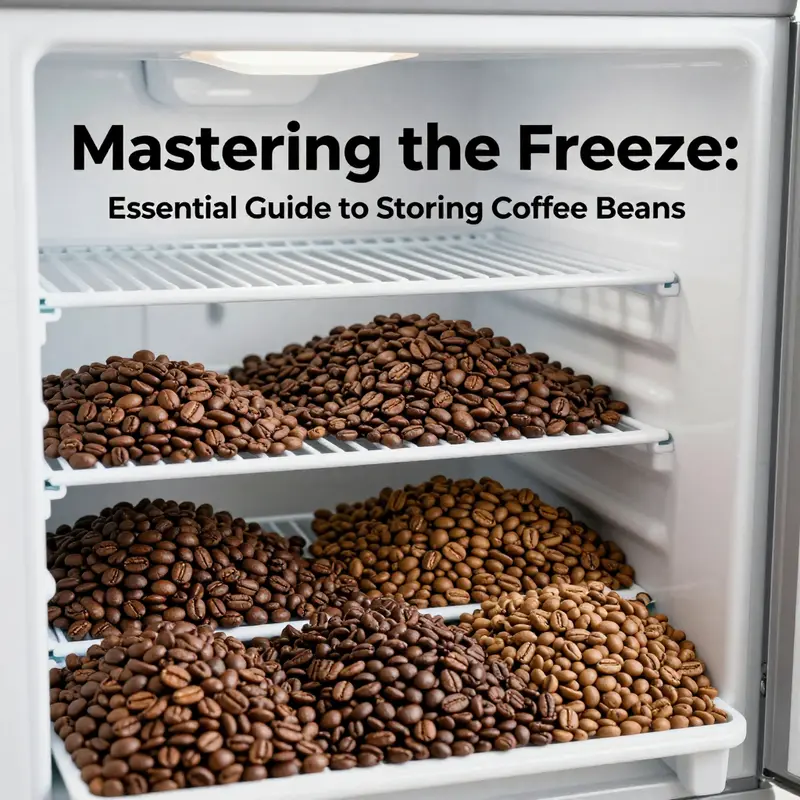
Freezing coffee beans is a topic that still stirs debate among coffee lovers. Some purists argue that freezing should only be a last resort, a lifesaver for those who must buy in bulk or who rarely finish a bag before its flavors fade. Others see freezing as a practical tool for preserving delicate flavors when time and volume collide. The truth sits somewhere in between: freezing can slow the clock on oxidation and help stretch a bag’s life, but only when it is done with discipline and a clear understanding of the tradeoffs. A well-executed freeze can suppress the rapid chemical changes that dull aroma and sweetness, especially for light roasts with vibrant, fragile profiles. But missteps—especially moisture exposure and repeated freezing cycles—can undo the benefits and introduce off notes or soggy textures to the grind. Degassing, the post-roast release of carbon dioxide, adds another layer of timing to the decision. Beans are most stable after they have rested for a day or two, a period that allows volatile compounds to settle. Freeze too soon, and you trap a volatile, evolving chemistry that may surprise you in a less favorable way once brewed. Freeze too late, and you’ve bypassed the window in which freezing could have meaningfully extended freshness. In practice, the choice to freeze should align with how you buy, store, and brew, as well as how much you drink in a given period. If you routinely purchase in bulk or find yourself sitting on a sizeable stash of high-value or rare beans, freezing becomes a practical option worth mastering. The logic is straightforward: large quantities, when kept in controlled conditions, can ride out the months until they are used. In particular, light roasts—coffee with a pronounced brightness and delicate floral or fruity notes—tend to be more susceptible to flavor loss, so there is a stronger case to consider freezing these beans if your consumption pace outstrips a month or two of usage. The goal is not to turn freezing into a flavor enhancer but to slow flavor degradation long enough to preserve what you bought until you are ready to brew. The decision, therefore, rests on two pillars: quantity and frequency. If you are a daily drinker who goes through beans within two weeks, freezing offers little advantage and may invite avoidable risks. If, however, you routinely stock up during promotions, or you keep a rotating cast of beans you don’t want to see go stale, freezing can be a sensible part of a broader storage strategy. The safety margin widens when the beans you freeze are not simply any beans, but those you intend to drink within the next several months—particularly prized or hard-to-source options that would be painful to replace on short notice. Yet even in these scenarios, freezing is not a cure-all. The most cited drawbacks revolve around moisture and condensation. When you remove a frozen bag from the freezer and expose it to room temperature, water can condense on the surface of the beans or inside the bag. That moisture has a direct impact on your grind and your cup, often manifesting as off flavors described by some as soapy or damp. Oxidation continues at a glacial pace even in frozen storage, but as the freezing period lengthens, critical aromatic compounds gradually fade. In short, freezing can slow the decline, but it cannot restore the moment of peak freshness that occurs at or near the roast’s apex. For this reason, the practical takeaway in many expert circles is to adopt freezing only for larger quantities or for long-term storage, while keeping daily consumption anchored in room-temperature storage that protects flavor integrity. If you choose to freeze, a disciplined, methodical approach makes all the difference. First, divide the beans into single-use portions. Think roughly 15–20 grams per package, small enough to be used in a single brewing session. This prevents repeated opening of the same bag and minimizes the number of times you expose a large stock to the freezer’s cold, dry environment. Second, seal the portions in airtight, high-barrier packaging. Vacuum-sealed bags or specialized tins with low oxygen transmission rates help to limit moisture exchange and oxygen exposure, both of which quietly degrade flavor over time. Third, tuck the sealed portions into the back of the freezer, where temperature stability is greatest. Fluctuations are your silent flavor killer, so the more you can shield the beans from temperature swings, the better. Fourth, never open a container until you are ready to brew. The goal is to limit the beans’ exposure to ambient air and moisture as much as possible. Fifth, when you do need to use a portion, handle it with care and be mindful of condensation. The most cautious practice recommended by recent expert guidance is to avoid thawing before grinding. Instead, remove only what you need and grind directly from the freezer. This minimizes surface moisture and preserves the integrity of the aromatic compounds. Sixth, do not refreeze any portion after it has been thawed or partially thawed. The stability equation is disrupted each time you cycle through freezing and thawing, and the risk of moisture migration increases with each pass. If you follow these steps, freezing can function as a temporary holdship for a bag until you are ready to drink it all. But the broader flavor reality remains: freezing slows the decline, it does not prevent it, and it is not a magic cabinet that will restore a stale roast to its original brightness. According to the most current guidance, light roasts may retain a surprisingly high proportion of their nuanced character when stored at −18°C, potentially extending freshness for several weeks beyond typical room-temperature shelf life. In practical terms, this means that light, delicate beans can maintain their character for roughly 12–16 weeks if frozen properly, while darker roasts tend to hold up best for a shorter window of about 4–6 weeks. Those numbers illustrate a general rule of thumb: the lighter the roast, the more you gain from freezing, but the more careful you must be with handling after removal. For most daily drinkers, the sensible default remains a steady approach—store beans in an airtight, opaque container at room temperature, out of direct light and away from heat or moisture, and grind just before brewing. Freezing then becomes a strategic option reserved for large purchases or long-term storage needs. There is also a practical operational layer to consider: the timing around roasting and resting. Beans should not be frozen immediately after roasting. They need a degassing period of at least one to two days to allow volatile compounds to stabilize. Freezing too early traps these volatiles and can blunt the very flavors you want to preserve. Once the beans are frozen and portions are extracted for use, they should be consumed within a defined window to avoid flavor drift. The general consensus is that, once removed from the freezer, you should use the portion within two weeks to minimize quality loss, and you should keep the remaining beans back in the freezer. This is a careful balance: you protect the overall stash, but you maintain a pace that respects the fruit-like notes of lighter roasts and the deeper chocolatey notes of darker roasts. In the end, the narrative around freezing is not a declaration of superiority or a universal rule. It is a calibrated option, a tool for certain circumstances that, when used correctly, can extend the practical life of beans without tipping into flavor compromise. The best practice, for most readers, remains straightforward: buy in quantities you can finish within a month, store them in a cool, dark, dry place, and grind immediately before brewing to maximize aroma and sweetness. Freezing serves as a measured exception—an option for a specific set of conditions, a compromise that slows deterioration rather than reversing it. For those who choose this route, the discipline of portioning, sealing, and handling from freezer to grinder is essential to keeping flavor from slipping away. External resource: https://pubmed.ncbi.nlm.nih.gov/
Preventing Flavor Loss: How to Avoid Mistakes When Freezing Coffee Beans
Avoiding costly mistakes when freezing coffee beans starts with understanding why people freeze beans in the first place: to slow oxidation and preserve volatile aromatics that define a great cup. Freezing can be an effective tool, but only when you respect three vulnerabilities of roasted coffee—gas release, moisture, and temperature swings—and how they interact. Many of the common errors stem from treating frozen storage like a simple extension of a pantry shelf. In reality, the freezer is a very different environment, and coffee beans need careful handling to survive it intact.
First, timing matters. Roasted beans release carbon dioxide in a process called degassing. That gas helps protect the beans briefly but also means the internal environment of the bean is in flux for a short window after roasting. Freeze too soon—within hours of roast—and you trap gases and heat. When the beans cool and later thaw, that trapped moisture can condense on the bean surface. Condensation is the enemy: it dilutes flavor compounds, promotes staling, and can even encourage mold if moisture accumulates. Wait at least 24 to 48 hours after roast before freezing. That short delay allows volatile compounds to stabilize and reduces the risk of internal moisture issues.
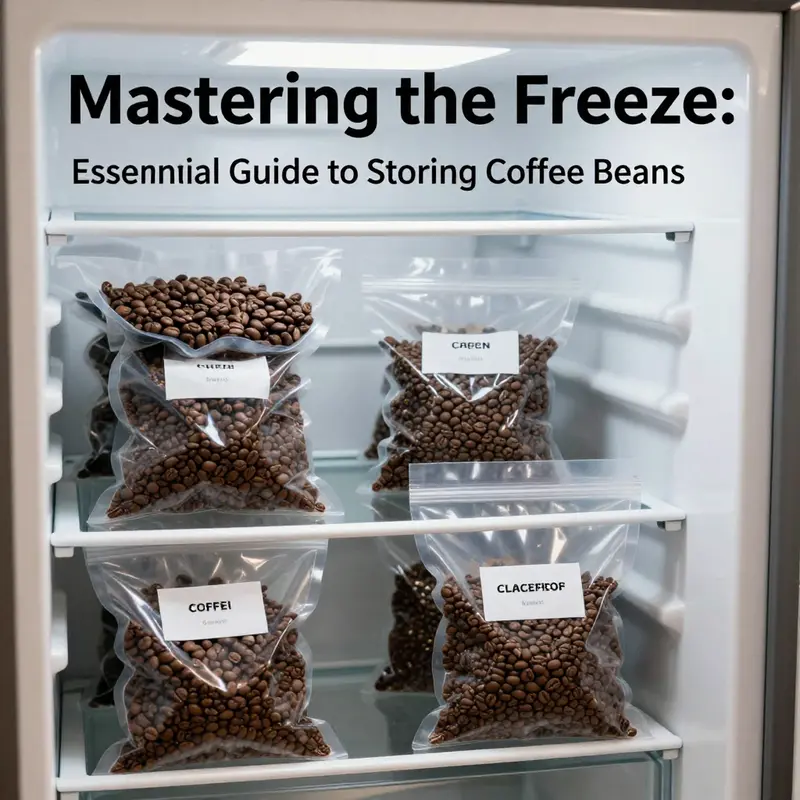
Packaging is the second critical area where well-meaning coffee lovers commonly fail. Freezer air contains both moisture and strong odors. Beans stored in ordinary plastic bags or open containers absorb ambient scents and gain moisture that accelerates flavor deterioration. Use high-barrier, airtight packaging specifically designed to limit oxygen and water vapor transmission. Vacuum-sealed bags are ideal; high-barrier foil pouches with low oxygen transmission ratings also work well. Whatever you choose, portion the beans into small, single-use packages before sealing. That way you only expose a small amount to thaw cycles and avoid repeatedly opening a single container—a practice that introduces warm, moist air and triggers oxidation each time.
Portioning is more than convenience; it’s a preservation strategy. Divide bulk beans into the exact amounts you will use in one session, then seal each portion independently. For home brewing, single-use portions are often in the 15–20 gram range for espresso or 30–50 grams for drip. This approach prevents repeated freezing and thawing of the whole stock. Repeated freeze-thaw cycles cause microfractures in the beans and encourage moisture migration, which steals aromatics and flattens the cup. Remember: freeze once, use once. If you thaw a package, do not refreeze it.
Where you place the beans in the freezer matters too. The back of a domestic freezer tends to be the most temperature-stable zone because it is farthest from door openings and compressor cycles. Store sealed portions in that stable region to reduce thermal flux. Also avoid storing beans in the freezer door or near frequently used items that cause temperature swings. Maintaining a steady temperature close to −18°C (0°F) helps reduce oxidation rates and preserves delicate aromatic compounds, especially in light roasts.
Thawing demands deliberate technique. When you need beans, remove a single sealed portion from the freezer and let it come to room temperature while still sealed. Do not open the package while the contents are cold. Cold surfaces attract moisture from the air and will cause condensation inside the packet when opened prematurely. Let the portion rest sealed for 10–15 minutes, or until the package reaches room temperature, then open and grind immediately. Grinding right after opening locks in the aromatics for brewing. Leaving thawed beans exposed at room temperature for long stretches allows them to reabsorb moisture and odors, so aim to grind and brew without delay.
Avoid these common misconceptions: freezing does not improve the quality of stale beans, and it cannot restore flavors lost to prolonged exposure. Freezing only slows the chemical processes that degrade flavor; it does not reverse them. If you buy beans that have been sitting for months in suboptimal conditions, freezing will preserve the current level of freshness, not revive it. Also, some assume dark roasts benefit more from freezing than light roasts. In practice, light roasts often gain the most from proper freezing because they rely on fragile floral and fruity aromatics that oxidize faster. Dark roasts are more robust in the face of time but still lose nuance with poor storage.
Be mindful of the duration you keep beans frozen. Recent guidance indicates freezing at −18°C can reduce oxidation by 40–60%, extending the window of optimal freshness: light roasts may retain peak flavor for 12–16 weeks, while dark roasts typically remain good for about 4–6 weeks. Beyond three to six months, even frozen beans begin to lose the best of their volatile profile. Label packages with roast date and freeze date to track time, and rotate older packages toward use first.
Cleanliness and odor control are often overlooked. Freezers can harbor strong food odors—fish, spices, or freezer-burned items—that cling to porous materials and will taint coffee if packaging is imperfect. Keep the freezer clean and avoid storing beans near pungent foods. For extra protection, consider placing sealed coffee packets in a secondary rigid container before tucking them into the freezer. This adds another barrier against accidental punctures and odor transfer.
Finally, accept when not to freeze. If you roast or buy beans in quantities you will consume within two weeks, room-temperature storage in an opaque, airtight container is often preferable. Daily drinkers benefit from keeping a small working batch at room temperature and freezing only the surplus. Freezing is a strategy best reserved for bulk purchases or when you must preserve special origin coffees for weeks rather than days.
When practiced correctly—waiting to freeze until after degassing, using proper high-barrier packaging, portioning into single-use bags, storing in the coldest, most stable part of the freezer, thawing sealed portions before opening, and avoiding refreezing—you can extend coffee freshness without sacrificing the aroma and flavor that define a satisfying cup. For a practical, step-by-step reference on freezing and storing coffee beans, consult this comprehensive guide from The Spruce Eats: https://www.thespruceeats.com/how-to-freeze-coffee-beans-1796357
null
null
How Freezing Slows Staling — The Science Behind Preserving Coffee Beans
Freezing slows staling, but only when done with care. The immediate moments after roasting set the clock for flavor loss. Roasted coffee beans release volatile aromatic compounds in a process called degassing. These volatiles deliver floral, fruity, and nuanced notes. As they escape, the coffee’s sensory complexity fades. Simultaneously, exposure to oxygen triggers oxidation, producing stale, cardboard-like flavors. Heat accelerates these chemical reactions, and light—especially UV—breaks down delicate organics. Moisture is the most dangerous element: it promotes hydrolysis, encourages mold, and turns oils rancid. Any plan to extend coffee life must consider all four players: oxygen, heat, light, and moisture.
Freezing operates by slowing molecular motion and chemical kinetics. At typical household freezer temperatures (~−18°C / 0°F), reaction rates decline sharply. Recent analyses show freezing can reduce oxidation by roughly 40–60%, depending on roast level and packaging. Light roasts, which carry fragile aromatics, benefit most. When handled correctly, freezing can keep a light roast tasting close to fresh for 12–16 weeks, while darker roasts tend to show optimal retention for a shorter window. But the benefits hinge on controlling two threats that freezing does not eliminate: temperature fluctuations and moisture introduction.
Temperature swings create condensation. When frozen beans leave the freezer, cold surfaces meet warm, humid air and water vapor condenses on the beans. Even a thin film of water is enough to accelerate chemical breakdown and invite biological growth. Moisture combines with residual oxygen and the oils in coffee to produce off-flavors fast. That is why the improper cycle of freezing, thawing, and refreezing is worse than never freezing at all. Each cycle multiplies the chance of condensation and texture change, and each time the beans sit warm again, degassing continues, releasing aroma and altering the bean’s internal chemistry.
Packaging is the other essential control. A true vacuum barrier prevents oxygen and moisture exchange. High-barrier materials with low oxygen transmission rates keep the headspace near inert. Vacuum sealing removes most oxygen, and one-way valves on certain bags allow trapped CO2 to escape without letting air in. For freezing, divide beans into single-use portions. That limits the need to open a larger package and reduces thaw cycles. Ideally, pack amounts you will use within a single session—enough for a few days of brewing—so you can remove one package and leave the rest undisturbed.
Timing matters too. Never freeze beans immediately after roasting. Freshly roasted beans continue degassing for 1–2 days; volatile compounds stabilize during this period. Freezing too early traps CO2 and unstable molecules in ways that can change the cup profile. Let beans rest briefly before sealing and freezing. Conversely, don’t leave beans at room temperature for weeks before deciding to freeze them. Freeze when you realize consumption will exceed two weeks, particularly if you purchased in bulk or bought a special single-origin lot you want to protect.
Where in the freezer you store beans makes a difference. The back of the freezer is usually the most thermally stable zone. Keep packages away from the door or areas that cycle frequently, like near the ice maker or fresh-food compartment. Stable cold reduces likelihood of repeated, small temperature changes that produce micro-condensation over time. Once placed, do not open the package until the beans have reached room temperature. Opening while they are still cold invites humid kitchen air to condense on the surface.
Thawing protocol is simple and important. Remove a single sealed portion and let it warm to room temperature before opening. Ten to fifteen minutes is often enough for small portions; larger packages may take longer. Leaving the package sealed while it warms preserves the low-humidity microenvironment and prevents moisture from condensing on the beans. After opening, grind and brew within a short span to capture the preserved aromatics. Avoid storing thawed beans back in the freezer.
One reason people consider refrigerators instead of freezers is accessibility, but refrigerators are typically unsuitable. They sit at temperatures above 0°C and have higher relative humidity than freezers. They also expose beans to household odors every time the door opens. Coffee readily absorbs external smells, which competes with its own aromatics and degrades cup quality. For these reasons, refrigeration is generally worse than proper pantry storage.
For many home drinkers, the simplest approach yields the most consistent results. Store whole beans in an opaque, airtight container, in a cool, dark, dry place away from heat sources. That practice preserves peak flavor for roughly three to four weeks post-roast. Freezing should be considered a targeted tool, not a default. It suits people who buy in bulk, want to protect a rare roast, or need to store beans for months. When applied correctly, freezing can buy several weeks to months of retained sensory quality. When applied poorly, it accelerates the problems it aims to prevent.
Practical choices make the difference. Use high-barrier packaging and divide beans into single-use portions. Wait 1–2 days after roast to seal and freeze. Store at the back of the freezer and never open a frozen package until it reaches room temperature. Never refreeze thawed beans. These steps minimize the two real dangers of freezing: moisture and temperature fluctuation. Follow them and the freezer becomes a tool for extending freshness rather than a source of ruin.
The scientific consensus is balanced: freezing is not inherently harmful, but it requires meticulous control. For most daily drinkers, airtight opaque storage at room temperature is the recommended baseline. Use freezing selectively, as a way to preserve a prized bag or to manage bulk purchases. When freezing is done with care, it slows oxidation and preserves complex flavor compounds. When it is done carelessly, it introduces moisture, encourages off-flavors, and shortens the enjoyable life of the beans.
For a concise reference on the science behind storage recommendations, consult the Specialty Coffee Association’s storage guidance: https://www.sca.coffee/learn/the-science-of-coffee-storage
How Long Should You Keep Frozen Coffee Beans? Practical Limits and Flavor Windows
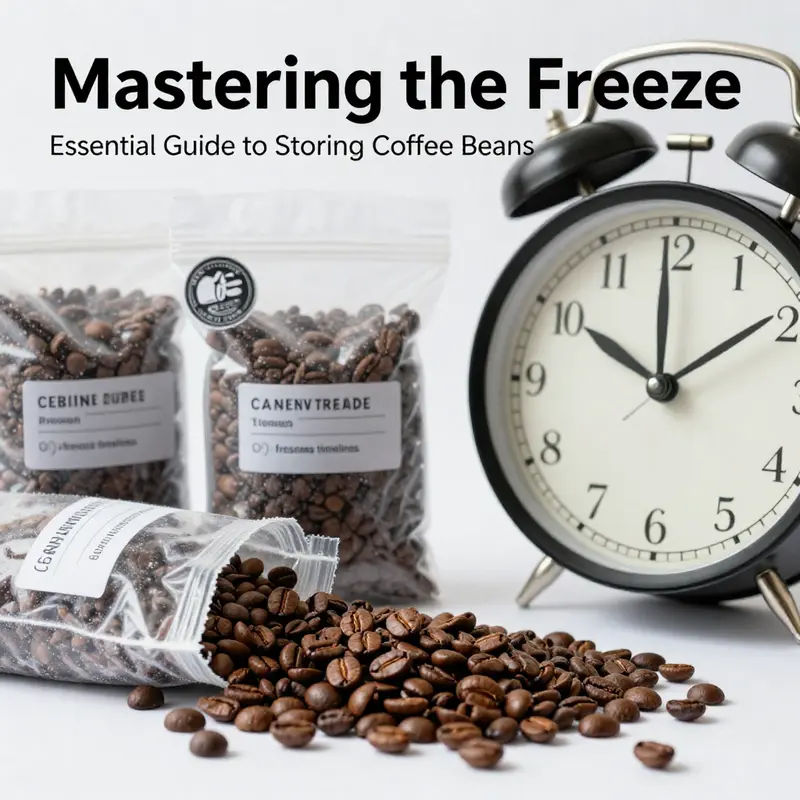
How long should you keep frozen coffee beans? The short answer for most home brewers is that frozen coffee beans taste best when used within two to three months of freezing. That guideline balances the real benefits of freezing—slowed oxidation and preservation of volatile aromatics—with the practical limits of moisture control, packaging technology, and the particular roast profile of the beans.
Freezing is not a magic bullet that indefinitely locks in peak flavor. Instead, it slows the chemical processes that erode aroma and taste. Oxidation, the breakdown of oils and aromatic compounds, proceeds more slowly at freezer temperatures. Recent expert guidance shows freezing at about −18°C (0°F) can reduce oxidation by roughly 40–60%. That slowdown is meaningful: light and medium roasts, which depend on fragile floral and fruity notes, maintain their characteristic profiles much longer when frozen under good conditions. But even at these temperatures, time eventually takes its toll. After two to three months, aroma loss and subtle shifts in flavor become perceptible to most drinkers. Beyond three months, the decline accelerates and the beans may still be safe to brew, but their vibrancy is diminished.
The two- to three-month window arises from the interaction of several factors. First, packaging integrity matters. Vacuum-sealed, low-oxygen barrier packaging prevents both oxygen ingress and moisture transfer—two major culprits in frozen-bean degradation. When oxygen is excluded, lipid oxidation slows dramatically. When moisture is excluded, freeze–thaw condensation and the staling effects of water are minimized. Using high-barrier foil bags or true vacuum sealing achieves this best result. If you use less robust packaging, such as zipper bags or thin plastic, the protective effect drops and quality loss accelerates. In those cases, aim for closer to a two-month horizon rather than three.
Second, freezing and thawing behavior matters. Repeated temperature swings are far worse than steady cold. Every time beans are removed from the freezer and exposed to warmer air, condensation can form inside the bag once the beans cool back to freezer temperatures. That tiny amount of moisture is enough to accelerate staling and, in extreme cases, encourage off-odors. To avoid this, divide beans into single-use portions before freezing. Remove only one portion at a time and do not re-freeze a previously thawed portion. Let a frozen portion reach room temperature sealed before opening—this prevents surface condensation and preserves aroma.
Third, roast level and roast method influence the optimal duration. Lighter roasts carry more delicate aromatics and lose them faster at room temperature; freezing helps them disproportionately. Medium roasts often show the best long-term balance when frozen, retaining complexity longer than deep dark roasts. Dark roasts, which have already lost many subtle volatiles during roasting and emphasize roast-derived oils and bitters, show less dramatic improvement from freezing and often reach a point of flatness sooner. Some slower roast profiles, where development is controlled and sugars caramelized gradually, also respond better to low-temperature storage and can stay acceptable closer to the three-month end of the range.
Practical storage advice flows from these mechanisms. Start by portioning: measure single-use amounts (for example, 15–20 grams for an espresso shot or 30–40 grams for a V60) into individual, airless packages. Seal them tightly with a vacuum sealer or use high-barrier foil sachets and press out as much air as possible. Store the portions in the back of the freezer where temperature is most stable. Mark each package with a freeze date so you can rotate older packs first and keep within the recommended window. When brewing, remove only one package and let it sit sealed at room temperature for 10–15 minutes before opening to avoid condensation on the beans.
If you are using non-vacuum packaging, shorten your time expectations. Non-vacuum bags allow a small amount of oxygen and moisture transfer even in the freezer. In that case, plan to use the beans within three months and ideally within two months to enjoy the most pronounced flavors. And regardless of packaging: do not freeze freshly roasted beans. Allow beans to degas for 24–48 hours after roasting. This short rest stabilizes volatile compounds and prevents pressure build-up inside sealed bags.
Storage duration also depends on how sensitive you are to flavor changes. Casual drinkers may find beans acceptable past three months. Enthusiasts and those seeking peak expression—especially from single-origin light roasts—will notice a dulling of aromatics and subtle acidity after eight to twelve weeks. For them, freezing is a tool for bridging the gap between a big bulk purchase and daily freshness, not a substitute for frequent small purchases.
One more practical consideration: label and rotate. Treat frozen beans like any perishable ingredient. First-in, first-out rotation avoids letting older packs linger beyond the quality window. Use the beans within three months as a rule of thumb and two months as the ideal for delicate roasts. If you plan to keep beans longer than three months, accept that flavor will degrade and consider blending older frozen beans with fresher ones to smooth the decline.
Ultimately, the goal is to preserve the coffee’s intended flavor expression. Freezing does that well when done correctly and used judiciously. It extends the period during which your beans remain close to peak, particularly for light and medium roasts. But the freezer is a preservation strategy, not indefinite storage. For daily drinkers, airtight, opaque room-temperature storage remains the best option. For bulk buyers or those who need to hold beans beyond two weeks, freezing with proper portioning and packaging reliably keeps beans tasting fresh for two to three months.
For a concise, practical reference on freezing duration and best practices, see the recent review on frozen coffee bean storage which recommends the two- to three-month window and outlines proper packaging and handling: https://www.thespruceeats.com/frozen-coffee-bean-storage-4146977
Final thoughts
By mastering the art of freezing coffee beans, your business can serve higher quality coffee with longer-lasting freshness. Whether you’re stocking up in bulk or ensuring your light roast varieties maintain their intricate flavors, applying the right practices is crucial. From avoiding common mistakes to employing scientific methods for flavor preservation, businesses can remain competitive and satisfy even the most discerning coffee lovers. Embrace these techniques and elevate your customers’ coffee experience.